稀土战略

Search documents
财经观察:力求全面自产,印度稀土能“卖全球”吗?
Huan Qiu Shi Bao· 2025-07-01 22:46
Core Viewpoint - India aims to reduce its reliance on China for rare earth elements by investing between 35 billion to 50 billion rupees in domestic production initiatives, potentially positioning itself as a significant alternative supplier outside of China [1][5]. Group 1: Government Initiatives - The Indian government has launched the "National Critical Minerals Mission" to enhance domestic rare earth supply and reduce dependency on imports, particularly from China [2][6]. - The government plans to provide incentives for local companies to establish rare earth processing and magnet production facilities [2][3]. - A "Critical Minerals Excellence Center" has been established to support technology development and monitoring of mineral resources [11]. Group 2: Industry Developments - Sona Comstar, India's largest rare earth magnet importer, plans to produce magnets domestically, responding to government policies [3]. - The Indian automotive industry is facing challenges due to shortages of rare earth components, leading to potential delays in electric vehicle production [8][10]. - The Indian government has canceled import duties on 12 types of critical mineral waste to boost recycling efforts and increase the recovery rate of rare earth elements [11]. Group 3: Challenges and Bottlenecks - India faces significant challenges in developing its rare earth industry, including technological shortfalls, high production costs, and a lack of a complete supply chain [8][10]. - The country has only explored less than 20% of its rare earth reserves, and the existing regulatory and refining technologies hinder industry growth [8][10]. - The cost of developing new mines is estimated between 40 billion to 80 billion rupees, with a preparation period of up to ten years [9]. Group 4: International Collaborations - India is actively seeking international partnerships for mineral exploration and production, including projects in Africa, South America, and Australia [12][13]. - The country has signed agreements with Malawi and Chile to enhance its rare earth and lithium resource capabilities [13]. - India is also exploring deep-sea mining opportunities in the Pacific Ocean to secure additional mineral resources [12].


大摩宏观闭门会:政治局会议前瞻,稳定币解读及房地产市场更新-纪要
2025-07-01 00:40
Summary of Key Points from Conference Call Records Industry Overview - **Industry**: Chinese Economy and Real Estate Market - **Key Economic Indicators**: - China's GDP growth rate for the first half of 2025 reached 5.2%, with a second-quarter growth of 5% [2][10] - The nominal GDP is affected by deflation, but actual GDP meets targets, indicating limited short-term policy shifts [2][10] Core Insights and Arguments - **Economic Growth Drivers**: - Growth in the first half was primarily driven by export surges and proactive fiscal policies, including local debt swaps and social welfare spending [2][10] - However, growth showed signs of slowing in June, prompting a focus on quarterly reports rather than monthly data [2][10] - **U.S. Market Performance**: - The U.S. financial market, particularly the stock market, has been performing strongly, with oil prices down 20% year-on-year, reducing inflationary pressures [4][19] - The Federal Reserve is expected to maintain a cautious stance on interest rates, with potential cuts anticipated in the following years [4][19] - **Stablecoin Development**: - Beijing is increasingly focused on the development of stablecoins to reduce reliance on the SWIFT dollar system, with Hong Kong testing a stablecoin pilot [5][7] - The aim is to enhance financial autonomy and facilitate cross-border trade settlements [5][7] - **Programmable Payments**: - Programmable payments are applicable in various scenarios, including resource exports and supply chain payments, particularly in the context of China's dominance in the rare earth market [8][9] Important but Overlooked Content - **Real Estate Market Trends**: - The Hong Kong residential market is showing signs of stabilization, with prices expected to remain flat in 2025 after a significant drop in previous years [28][29] - Factors supporting this recovery include rising rents, improved affordability, and reduced land supply [29][30] - **Investment Potential**: - Companies like Henderson Land and Sun Hung Kai Properties are viewed as having strong investment potential due to their solid performance and strategic positioning [31] - Conversely, New World Development and Wharf Holdings are viewed with caution due to financial challenges and cash flow issues [32] - **Global Rare Earth Supply Chain**: - The global rare earth supply chain is expected to gradually detach from Chinese control, with new projects emerging in various countries by 2030 [21][22] - China has implemented strict controls on rare earth technology exports, impacting the ability of foreign firms to replicate production capabilities [22][23] - **Future Economic Outlook**: - The third quarter of 2025 may see increased downward pressure on GDP growth, potentially falling below 4.5% [17][18] - The upcoming political bureau meeting is expected to maintain a cautious stance, with new policies likely to be introduced in the fall [2][10] This summary encapsulates the critical insights and trends discussed in the conference call records, providing a comprehensive overview of the current economic landscape and future expectations.
24小时换三帅!稀土巨头突发人事地震,一粒稀土芯,万里国土安
Sou Hu Cai Jing· 2025-06-28 04:52
Core Viewpoint - China is accelerating the review of rare earth export license applications to stabilize global supply chains, establishing a green channel for eligible EU applications, which alleviates trade friction with Europe and strengthens the global rare earth supply chain [2][12] Group 1: Personnel Changes - The resignation of three key figures from China Rare Earth Group, including Chairman Yang Guoan, has raised concerns about the future direction of China's rare earth strategy amidst ongoing geopolitical tensions [4][6] - The rapid appointment of new non-independent directors, including Guo Liangjin, Mei Yi, and Yang Weny, indicates a strategic response to the crisis, with all new appointees possessing significant industry experience [8][14] Group 2: Strategic Importance of Rare Earths - Rare earth elements, comprising 17 metals, are critical for modern industries such as automotive, semiconductors, aerospace, and defense, with China controlling 69% of global rare earth production and 92.3% of separation capacity [10][12] - The strategic advantage of rare earths allows China to maintain a dominant position in geopolitical negotiations, as demonstrated by past actions to impose export controls in response to U.S. pressures [12][14] Group 3: Global Supply Chain Dynamics - China's establishment of a green channel for rare earth exports to the EU reflects its commitment to global cooperation while managing its national interests, potentially reducing tensions in trade relations [2][12] - The recent personnel changes within China Rare Earth Group may be a necessary measure to navigate complex international circumstances and uphold national interests in the rare earth sector [14]

急了,事关稀土,美国不允许乌克兰对中国做这件事!乌会答应吗?
Sou Hu Cai Jing· 2025-06-15 10:03
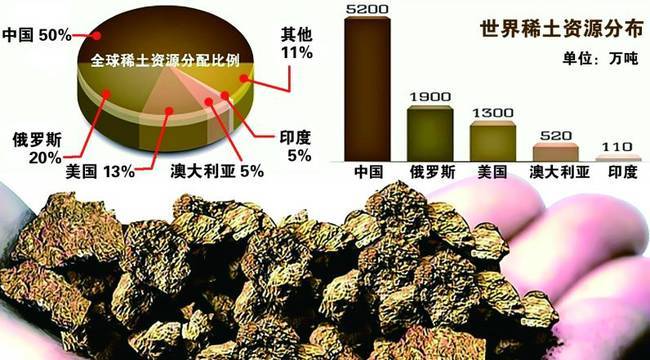
Core Viewpoint - The United States is increasingly anxious about its access to rare earth resources, leading to demands on Ukraine to prevent Chinese companies from entering its rare earth market, particularly during the post-war reconstruction phase [1][3]. Group 1: U.S. Demands and Ukraine's Position - The U.S. has reiterated its demand to Ukraine to block Chinese enterprises from accessing its rare earth resources, highlighting the urgency of U.S. needs in this sector [1]. - The majority of Ukraine's rare earth deposits are located in conflict zones, making extraction challenging and uncertain [3]. - Ukraine's total rare earth reserves are estimated between 500,000 to 1.5 million tons, with approximately 300,000 tons being heavy rare earths critical for the U.S. military [3]. Group 2: China's Dominance in Rare Earths - China holds over 44 million tons of proven rare earth reserves, accounting for more than 37% of the global total, solidifying its dominant position in the market [3][5]. - The country not only possesses abundant resources but also leads in rare earth extraction technology, controlling about 90% of the global production capacity [5][6]. - China's strategic investments in the rare earth industry over the past three decades have established its monopolistic status, despite environmental costs [5]. Group 3: Implications for U.S. Strategy - The ongoing conflict in Ukraine raises questions about the feasibility of U.S. demands, as prolonged warfare may render Ukraine's rare earth resources less relevant [3]. - Even if Ukraine complies with U.S. demands, China's established dominance and technological superiority in rare earth extraction mean that U.S. efforts may have limited impact [6]. - The integration of China's rare earth industry into a few state-controlled entities has enhanced its market power and control over global supply chains [6].
特朗普称中美已达成协议,美国将对华征收55%关税,商务部回应来了
Sou Hu Cai Jing· 2025-06-14 00:26
Group 1 - The article discusses the ongoing trade tensions between the U.S. and China, highlighting Trump's announcement of a 55% tariff on Chinese goods as a politically motivated move ahead of the midterm elections [1][10] - The breakdown of the 55% tariff includes a 10% base tariff, a 20% penalty tax on fentanyl, and a 25% trade war tariff, which the article describes as a complex and misleading calculation [2][4] - China's response to Trump's tariff declaration is characterized as strategic and measured, emphasizing the importance of adhering to WTO rules and opposing unilateral tariffs [5][10] Group 2 - The article highlights the significance of rare earth exports in the trade negotiations, noting that while the U.S. has received a temporary export license from China, it is limited and excludes military applications [7][10] - The U.S. finds itself in a difficult position, needing rare earth materials for its industries while also facing the challenge of acknowledging its reliance on China in the trade war [7][9] - The article suggests that China's approach to rare earth exports is a strategic maneuver, allowing limited access while maintaining leverage in the negotiations [10][12] Group 3 - The article concludes that the trade negotiations represent a new normal in U.S.-China relations, with the U.S. increasingly relying on public relations to mask its negotiating weaknesses, while China employs a more subtle and strategic approach [12][13] - The upcoming six-month period regarding the rare earth export license is framed as a critical test of Washington's political credibility and Beijing's strategic resolve [12][13]
中国打出稀土这张“万能牌”,全世界明白过来,不能跟中国作对
Sou Hu Cai Jing· 2025-06-13 17:17
Group 1 - Major automotive companies like General Motors, Toyota, and Volkswagen are sounding alarms over potential production halts due to a shortage of rare earth elements from China, with a warning that factories could shut down within 40 days if supplies are not secured [1][8] - The price of rare earth elements has surged from $425 per kilogram in April to $850, more than doubling, causing significant disruptions in production lines, including Tesla's robot production line [1][8] - The global manufacturing sector is experiencing panic buying, with U.S. companies stockpiling six months' worth of supplies, leading to a dramatic increase in orders [8][10] Group 2 - China controls 36% of global rare earth reserves and 92% of refining capacity, making it a critical player in the supply chain for high-tech industries [6][10] - The U.S. and other Western countries are struggling to find alternative sources for rare earth elements, with efforts like the "Rare Earth Independence Plan" projected to meet only 20% of demand by 2027 [10][13] - The G7 summit faced significant challenges, with divisions emerging among member countries regarding their stance on China and rare earth supply issues, leading to the cancellation of a joint statement for the first time in 19 years [13][15] Group 3 - The military sector is particularly vulnerable, with reports indicating that the F-35 production line could permanently shut down if rare earth supplies are not restored within three months [8][10] - The technological gap between China and the West in rare earth processing and production capabilities is widening, with China holding 80% of global separation patents and achieving higher production yields [10][17] - The geopolitical landscape is shifting, with countries like Australia and Canada reconsidering their positions and seeking dialogue with China amid the rare earth supply crisis [13][15]

亮明底线:重稀土管控绝不让步!手里有粮心里不慌!
Sou Hu Cai Jing· 2025-06-11 00:40
Core Viewpoint - The discussion around "heavy rare earths are not a bargaining chip" highlights the strategic importance of heavy rare earths in modern military applications, with China holding a leading position in the global rare earth industry [1][3]. Group 1: Strategic Importance of Rare Earths - Heavy rare earths are essential for manufacturing key military equipment such as fighter jets, missiles, and radars, making them critical resources for national security [1]. - China has implemented a total mining control policy since 2011, reducing heavy rare earth mining quotas to 105,000 tons in 2023, indicating a strategic approach to resource management [3]. Group 2: Domestic and International Reactions - China's heavy rare earth inventory is sufficient to meet domestic military needs for only three months, reflecting a tight supply situation [3]. - Japan has restarted domestic rare earth exploration since 2022, and the EU plans to invest €2 billion to establish a strategic reserve for rare earths, indicating a global shift in response to China's policies [5]. Group 3: Technological Innovations and Market Changes - The Gansu Rare Earth Group has launched a blockchain platform that provides unique electronic IDs for each kilogram of rare earth products, enhancing transparency in the supply chain [5]. - This innovation allows downstream companies to access critical information about the origin and composition of rare earth materials, indicating a significant transformation in the domestic market [5]. Group 4: Diplomatic and Economic Strategies - China maintains a principle of linking rare earth control to external conditions, responding firmly to U.S. tariffs on steel and aluminum, emphasizing that actions harming Chinese interests will face retaliation [7]. - The narrative around rare earths is framed not just as an economic issue but as a matter of national sovereignty, highlighting the importance of controlling key resources in the context of technological competition [7].
中国稀土出口管制升级,外媒:全球高端制造业或受冲击
Sou Hu Cai Jing· 2025-06-02 11:41
Core Viewpoint - The ongoing trade war initiated by the U.S. under Trump's administration is significantly impacting the development of the sixth-generation fighter jet, particularly due to the reliance on rare earth materials supplied predominantly by China [1][9][12]. Group 1: Impact on Military Development - The U.S. military's sixth-generation fighter jet project, specifically the F-47, is heavily dependent on rare earth elements such as neodymium, praseodymium, dysprosium, and terbium, which are crucial for high-performance magnets and radar systems [7][12]. - The recent approval for Boeing to produce the F-47 occurred just before China announced new export controls on rare earth materials, creating uncertainty for the U.S. military's development plans [9][12]. - The lack of sufficient rare earth supply could lead to significant delays or even halts in the production of critical military components, affecting the overall military readiness of the U.S. [7][12][18]. Group 2: China's Export Control Measures - China's new export control measures restrict seven categories of medium and heavy rare earth elements, which are vital for military, aerospace, and high-tech applications [12][26]. - The majority of medium and heavy rare earth supplies come from China, which possesses the largest reserves globally, creating a strong supply chain that the U.S. heavily relies on [12][19]. - The implementation of these controls has led to a near halt in rare earth exports from China, with U.S. companies facing potential inventory shortages and uncertainty in securing new supplies [26][28]. Group 3: Strategic Implications and Alternatives - The strategic significance of rare earth elements is underscored by their essential role in various industries, including military, aerospace, and high-tech sectors, where their absence could severely hinder production capabilities [12][16]. - While the U.S. may consider sourcing rare earth materials from other countries, challenges such as the lack of processing technology and infrastructure in those nations limit the feasibility of such alternatives [19][20]. - The U.S. government is exploring deep-sea mining as a potential solution to the rare earth supply crisis, but this approach faces significant technological and environmental hurdles, making it a long-term and uncertain solution [24][28].

特朗普宣称不再对华 “做好人”,中国已完成三大全球战略布局
Sou Hu Cai Jing· 2025-06-01 01:58
特朗普这么着急,恰恰说明稀土问题真的戳到美国的痛处了。之前美国媒体就说过,美军 6 代机项目可能因为稀土问题 泡汤,现在看来,这话还真有可能成真。 特朗普现在这一系列操作,也让我们更加确定,中国在稀土问题上留一手,是非常明智的。而且,在这段时间里,中国 在全球范围内已经完成了 3 大顶级布局,特朗普可能都还没反应过来呢。 中美互降 115% 关税这事,才过去两周,特朗普就坐不住了。华盛顿时间 5 月 30 日,特朗普在他的个人社交媒体上对 中国火力全开。他主要表达了两点,一是说两周前美国和中国达成的互降关税协议,那是他出于好心,想帮中国,可中 国却违反了协议;二是宣称他不会再在中国面前当什么好人了。 就在同一天,特朗普还宣布,要再次对进口钢铁加征关税,直接从现在的 25% 加到 50%。明眼人都看得出来,这就是 冲着中国等钢铁大国来的。从这些事来看,这场波及全球的贸易战,不但没有要结束的迹象,反而再次升级了。 现在大家都在猜测,特朗普说中国违反协议,到底指的是什么呢?《纽约时报》等好多媒体都觉得,这应该和中国对关 键稀土矿产的管控有关。最近这段时间,中国对稀土出口把控得还是很严格。但问题在于,中美在日内瓦达成 ...
关于稀土,中方提了一个要求,马斯克等巨头没得选只能服从
Sou Hu Cai Jing· 2025-05-26 06:01
Core Insights - Rare earth elements are crucial for modern technology, including electric vehicles, robotics, and military applications, with China dominating the global market [2][3][5] - In 2023, China accounted for over 70% of global rare earth production and 90% of refining capacity, highlighting its significant role in the supply chain [3][5] - The cost of extracting and processing rare earths in the U.S. is significantly higher than in China, making it difficult for Western countries to compete [3][5] Industry Overview - The global demand for rare earths in 2022 was approximately 170,000 tons, with China supplying 120,000 tons [3] - China's Baotou rare earth mine holds over 40% of the world's rare earth reserves, providing a substantial competitive advantage [3][5] - The rare earth separation technology in China achieves 99.99% purity, while Western countries max out at 95%, affecting downstream product quality [3][5] Export Dynamics - In 2022, over 60% of global rare earth exports originated from China, with the U.S., Japan, and Europe relying heavily on Chinese supplies [5][6] - New regulations from China require strict approval for rare earth exports, particularly concerning military applications, impacting U.S. defense contractors [5][6][9] - The anticipated export value of China's rare earths is projected to reach $15 billion by 2025, doubling from 2023 [9][10] Strategic Implications - China's control over rare earths is not only an economic strategy but also a geopolitical tool, influencing global supply chains and technology sectors [6][10] - Major companies like Tesla and Ford are facing production delays and increased costs due to stringent Chinese export regulations [7][9] - The future of rare earths is expected to play a critical role in global high-tech supply chains, with predictions that China could dominate 80% of this market by 2030 [10]