经济改革

Search documents
美国为阿根廷“输血”200亿美元!贝森特宣布美财政部干预阿汇市,比索上涨
Hua Er Jie Jian Wen· 2025-10-09 20:14
Core Points - The U.S. government has taken significant measures to support Argentina's economic reforms, including a $20 billion currency swap framework and direct market intervention to purchase Argentine pesos [1][2] - U.S. Treasury Secretary Yellen emphasized the importance of Argentina's economic reforms and the need for immediate action to stabilize the market [2][3] - The announcement led to a rise in Argentina's 2035 sovereign bonds by 4.3 cents, reaching over 60 cents, and a 0.7% increase in the peso against the dollar, reversing a previous decline of up to 2.7% [1] Currency Swap Framework and Direct Intervention - The U.S. Treasury has finalized a $20 billion currency swap framework with Argentina, following intensive meetings with Argentine officials [2] - Direct market intervention by the U.S. Treasury involved purchasing Argentine pesos, which is seen as a critical action to address Argentina's liquidity crisis [2][3] - Secretary Yellen stated that only the U.S. could act swiftly in this situation, highlighting the urgency of the measures taken [2] Political Support and Economic Cooperation - Secretary Yellen's statements reflect strong political backing for Argentina's reforms, positioning them as strategically important for U.S. interests in the region [3][4] - The U.S. aims to strengthen economic ties with Argentina, with discussions on investment incentives and support for strategic partnerships [3] - High-level interactions between U.S. and Argentine leaders are expected to enhance economic cooperation and political coordination [4]
欧投行强调改革与制度构建是波黑经济发展的关键基石
Shang Wu Bu Wang Zhan· 2025-10-01 15:07
Core Insights - The European Investment Bank (EIB) emphasizes that reforms and institutional building are essential for the economic development of Bosnia and Herzegovina [2] - EIB's future focus in Bosnia will be on four key areas: transportation and energy infrastructure, green transition, social projects, and enhancing corporate competitiveness [2] Investment and Infrastructure - EIB has invested over €3.5 billion in Bosnia over the years, targeting critical sectors such as transportation, energy, water management, and social infrastructure [2] - Ongoing projects include the "Vc Corridor" road construction, which has improved traffic efficiency and reduced accident rates [2] - In energy security and green transition, EIB supports renewable energy projects like wind power, grid upgrades, and energy efficiency initiatives [2] Social and Urban Development - Urban and social infrastructure projects include improvements in water supply, wastewater treatment, flood protection facilities, and affordable housing [2] - EIB is assisting Sarajevo in implementing a "net-zero emissions" plan to tackle winter air pollution issues [2] Reform and Institutional Framework - The representative stresses that reforms are a prerequisite for development, urging Bosnia to accelerate reform efforts, particularly in enhancing its institutional framework and legal standards to align with EU requirements [2] - Delays in reforms have resulted in Bosnia missing out on over €100 million in EU "growth plan" funding [2]
默茨:德国处于最具挑战性阶段之一 必须改革推动经济增长
Yang Shi Xin Wen· 2025-09-24 09:44
Group 1 - Germany is facing one of the most challenging periods in modern history, necessitating substantial reforms to drive economic growth and maintain social stability and national competitiveness [1] - The current economic climate in Germany is characterized by stagnation and pressure for reform, with the need for economic growth to fulfill government social policy commitments [1] - A special two-day cabinet meeting will be held to discuss national competitiveness and government modernization, with specific reform measures to be proposed for parliamentary review [1] Group 2 - The external environment is complex and poses significant challenges for the German economy, which relies on openness and a rules-based order [1] - The government is urged to build a consensus on the inevitability of reforms, prioritizing technological innovation and corporate competitiveness [1] - Opposition parties have criticized the government's policies, with accusations of excessive debt leading to increased burdens on citizens, lack of transparency in budget arrangements, and an overemphasis on military spending at the expense of social sectors [2]
美国财长称准备好以“大规模有力”行动为阿根廷提供金融支持
Xin Hua Wang· 2025-09-23 12:19
Core Viewpoint - The U.S. is prepared to provide "large-scale and strong" financial support to Argentina, with specific measures to be announced after a meeting between President Trump and President Milei at the UN General Assembly [1][4]. Financial Support - U.S. Treasury Secretary Becerra stated that all options are on the table to stabilize Argentina's finances, including currency swaps, direct currency purchases, and using the U.S. Treasury's "Foreign Exchange Stabilization Fund" to buy government bonds denominated in dollars [3][4]. - The U.S. government will not impose new conditions beyond those already established in Argentina's loan agreement with the International Monetary Fund (IMF) [4]. Political Context - The U.S. support is seen as an effort to boost President Milei's electoral prospects ahead of the upcoming congressional midterm elections in October [1][5]. - Milei's government has implemented significant economic reforms, including reducing tariffs and lifting import restrictions, which have led to a decrease in monthly inflation from nearly 26% to 1.9% since he took office [5]. Market Reactions - Following a recent electoral defeat in Buenos Aires, Argentina's financial markets experienced turmoil, prompting the central bank to sell over $1 billion to stabilize the currency [5]. - The Argentine government announced a temporary suspension of export withholding taxes on agricultural products to increase dollar supply and stabilize the currency [5]. Expert Opinions - Analysts believe that U.S. financial support could positively influence Milei's election campaign, although concerns remain about the overvaluation of the peso and its potential inflationary effects [6].


美财长:美国已准备好为阿根廷提供金融支持
Yang Shi Xin Wen· 2025-09-23 10:58
阿根廷外交部长赫拉尔多·韦特海因22日也向阿根廷米特雷广播电台证实,阿美双方正就金融支持事宜 磋商,但贷款金额远低于外界传言的300亿美元。 据美国《华尔街日报》报道,美国财政部"外汇稳定基金"创办于20世纪30年代,财长获国会授权可全权 动用相关资金,为面临严重资金困难的外国提供贷款。如果贝森特决定动用这一基金,将标志美国政府 对阿根廷援助的"重大升级"。 阿根廷金融市场在本月初一场地方选举后陷入动荡,这场选举给米莱政府对10月国会中期选举的期许蒙 上阴影。分析人士认为,美国政府支持阿根廷,意在提振米莱选情。 强力支持 贝森特当天早些时候经由社交媒体表示,为稳定阿根廷金融,所有选项都摆在桌面上,包括但不限于本 币互换、直接购买货币,以及用美国财政部"外汇稳定基金"购买以美元计价的政府债券。 米莱随后经由社交媒体感谢美国政府"无条件支持阿根廷民众"。国际货币基金组织总裁格奥尔基耶娃也 欢迎贝森特表态。 贝森特22日晚些时候告诉媒体记者,将视市场和资金流向情况来判定美国是否应即刻采取行动,但没有 人应质疑本届政府与他本人的决心。他未透露美国可能采取的具体举措,只说将是"大规模有力"行动。 贝森特同时仅代表美国财 ...
卢比汇率跌至历史新低、投资者撤离…印度的麻烦真来了
Guan Cha Zhe Wang· 2025-09-15 05:18
Group 1 - The Indian Rupee has become one of the worst-performing currencies in Asia this year, primarily due to mixed signals from U.S. President Trump regarding tariffs on India, which could lead to further depreciation if the trade war with the U.S. is not resolved [1][6] - The Indian Rupee hit a historical low of 88.491 against the U.S. dollar on September 11, exacerbated by a 50% tariff imposed by the U.S., the highest in Asia, leading to foreign investor withdrawals and a negative economic outlook [1][4] - Economists predict that if the U.S. maintains the 50% tariff, the Rupee could depreciate to 89 per dollar by early next year, while a resolution to the tariff dispute could stabilize it around 88 per dollar [1][3] Group 2 - The high tariffs are impacting multiple sectors in India, including textiles, apparel, and seafood, with some exporters lobbying the central bank to allow them to exchange profits at a rate of approximately 103 Rupees per dollar [4][6] - The Indian economy's growth rate could decline by 50 to 60 basis points if the tariffs persist, with the GDP growth rate for the last fiscal year slowing to 6.5% from 9.2% the previous year [6][7] - Despite the challenges, India is projected to remain one of the fastest-growing major economies, but it must enhance its resilience against external shocks, as highlighted by the ongoing tensions with the U.S. [7][8] Group 3 - The Indian government aims for an average annual economic growth rate of around 7.8% over the next few decades to become the world's third-largest economy by 2047 [7][8] - To achieve these goals, India needs to diversify its trade relationships and reduce protectionist barriers, which currently account for about 40% of its trade barriers [8] - Reforming the internal market is essential for India to respond effectively to external pressures, such as the tariffs imposed by the U.S., and to attract private capital for growth [8]
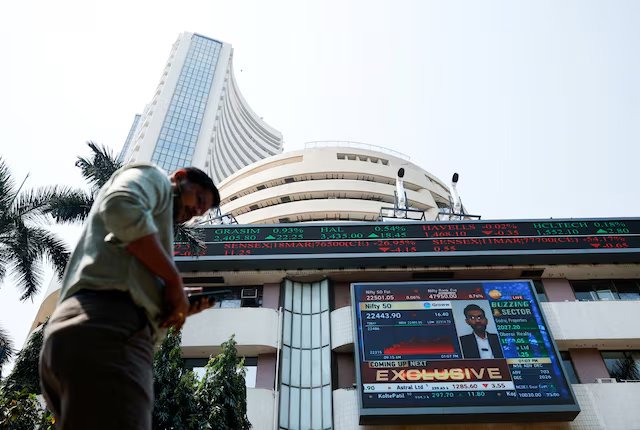
申铉松:全球经济动荡时期的稳定力量
3 6 Ke· 2025-07-29 12:10
Group 1 - The global economy is at a crossroads, facing significant uncertainty due to trade disruptions that may reshape economic relationships that have sustained global prosperity for decades [1] - Policymakers play a crucial role in maintaining economic stability, requiring coordinated actions to uphold public trust and ensure sustainable growth [1][2] - The anticipated rise in global tariff levels could reach heights not seen in decades, severely impacting global economic growth and inflation, particularly in an already challenged environment [1][3] Group 2 - Trade fragmentation exacerbates structural challenges, with productivity growth stagnating and demographic issues like aging populations hindering economic vitality [3] - Public debt levels in many countries have surged to post-World War II highs, making economies vulnerable to shocks and increasing inflationary pressures [3][4] - Sustainable public finances are essential for long-term prosperity, necessitating the reduction of large deficits and the rebuilding of fiscal buffers to withstand future economic shocks [4] Group 3 - The global financial system has undergone profound structural changes, with government bond markets and asset management firms becoming central, posing risks to financial stability [4][5] - Regulatory measures must be comprehensive, ensuring that both banking and non-banking institutions adhere to strict standards to enhance resilience against economic shocks [5] - Trust in policymakers' ability to maintain public interest is critical for achieving price stability and addressing underlying vulnerabilities in the economy [5]
整理:昨日今晨重要新闻汇总(6月19日)
news flash· 2025-06-18 22:39
Domestic News - The People's Bank of China announced eight significant financial opening measures at the 2025 Lujiazui Forum [5] - The China Securities Regulatory Commission (CSRC) introduced the "1+6" policy measures to deepen reforms, establishing a new growth tier for technology innovation [5] - The CSRC will allow qualified foreign investors to participate in ETF options trading, effective from October 9, 2025 [5] - The State Administration of Foreign Exchange released a draft notice on deepening cross-border investment and financing foreign exchange management reforms [5] International News - The Federal Reserve maintained interest rates unchanged for the fourth consecutive time, with the dot plot indicating two rate cuts this year, but the number of officials not expecting cuts increased to seven [3] - Trump reiterated that the Federal Reserve should cut rates by 200 basis points, suggesting that a 250 basis point cut would be very beneficial [5] - Brazil's central bank unexpectedly raised interest rates by 25 basis points to 15%, while the market had anticipated a hold at 14.75% [5] - Foreign investors' holdings of U.S. Treasury securities are nearing record highs, with China reducing its holdings in April while the UK and Japan increased theirs [5]
国际货币基金组织第一副总裁:斯里兰卡必须将贫困率降低至24.5%,打击腐败,并继续减少国内债务。斯里兰卡在经济改革计划中没有犯错的空间,必须保持改革的动力。
news flash· 2025-06-16 04:40
Core Insights - The International Monetary Fund's First Deputy Managing Director emphasizes that Sri Lanka must reduce its poverty rate to 24.5%, combat corruption, and continue to decrease domestic debt [1] - Sri Lanka has no margin for error in its economic reform plan and must maintain the momentum of reforms [1] Economic Reform Requirements - Sri Lanka's target poverty rate is set at 24.5% [1] - The necessity to combat corruption is highlighted as a critical component of the reform strategy [1] - Continued reduction of domestic debt is essential for economic stability [1]
人民币推行受阻,陈云出手稳定大局,毛主席称意义不下于淮海战役
Sou Hu Cai Jing· 2025-06-11 03:51
Core Viewpoint - The article discusses the challenges faced in promoting the Renminbi (RMB) in 1949, particularly in Shanghai, where the currency was struggling against the dominance of silver dollars and speculative practices by capitalists [1][3][9]. Economic Context - In the first half of 1949, the Communist Party gained a significant advantage in the civil war, liberating most cities, but the economic transition was fraught with difficulties due to the strong resistance from the bourgeoisie [3]. - The economic turmoil was exacerbated by rampant speculation and manipulation of currency by capitalists, leading to severe inflation and instability in daily life for the populace [5][15]. Challenges to RMB Adoption - Prior to the liberation of Shanghai, the city experienced extreme price fluctuations due to capitalist speculation, which hindered the normal functioning of the economy [5]. - The RMB was nominally recognized but not actively used in transactions, with silver dollars maintaining a dominant position in the market [7][8]. Government Response - Chen Yun emerged as a key figure in addressing the economic crisis, proposing a combination of political and economic strategies to promote the RMB [4][9]. - On June 10, 1949, a coordinated crackdown on speculation was initiated, targeting the Shanghai Stock Exchange, which was a hub for currency manipulation [11]. Measures to Stabilize the Economy - Chen Yun implemented a series of measures to gradually replace silver dollars with RMB, including the introduction of physical bonds to back the currency's value [17]. - The People's Bank introduced a new savings model that allowed citizens to store physical goods instead of currency, mitigating concerns over currency devaluation [20]. - The Shanghai government also ensured that essential goods were made available in the market, mandating that all transactions be conducted in RMB, thereby forcing the conversion of silver dollars into RMB for purchases [21]. Outcomes - These measures effectively reduced speculative activities and facilitated the rapid circulation of RMB, stabilizing the market [19][23].