
美国经济衰退风险

Search documents
避险情绪降温 金价上涨阻力明显
Zhong Guo Zheng Quan Bao· 2025-05-14 20:31
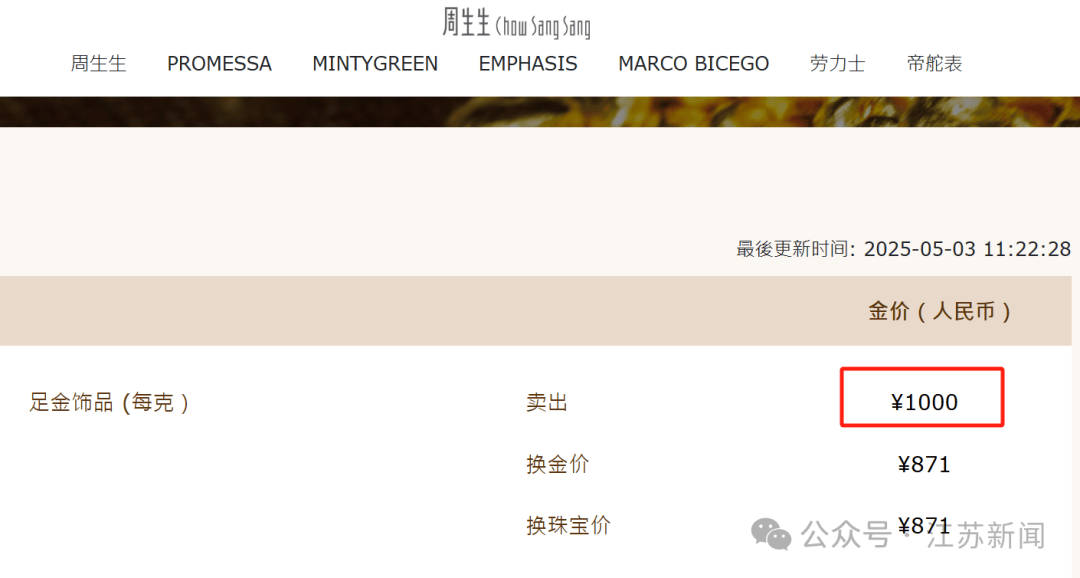
Core Viewpoint - Recent global risk aversion has decreased, leading to significant fluctuations in international gold prices, with key resistance at $3250 per ounce and a drop below $3230 per ounce observed [1][2]. Market Trends - On May 14, the London spot gold price fell to below $3230 per ounce, reaching a low of $3221.45 per ounce, while COMEX gold futures also dropped below $3230 per ounce [2]. - Domestic jewelry gold prices have also declined, with prices for gold jewelry falling below 1000 yuan per gram, specifically to 992 yuan per gram for Zhou Shiliu and 980 yuan per gram for Caibai [2]. Investment Flows - In April, global physical gold ETFs saw inflows of $11 billion, with Asia accounting for 65% of the total inflow, primarily driven by the Chinese market, which saw inflows surpassing the total for the first quarter of 2025 [3]. Trading Activity - April recorded an average daily trading volume of $441 billion in gold markets, a 48% increase month-on-month, with the London Bullion Market Association (LBMA) seeing a 31% increase in off-exchange trading volume [4]. - As of the end of April, net long positions in COMEX gold futures decreased by 30% to 566 tons, with fund managers' net long positions dropping to 360 tons, a 35% decline from the average level in 2024 [4]. Short-term Outlook - Market sentiment is cautious regarding short-term gold price movements, with expectations of a potential adjustment as the U.S. Federal Reserve maintains a hawkish stance [4]. - Analysts predict that while short-term pressures exist, the risk of U.S. economic recession may lead to a shift towards looser monetary policy in the second half of the year, supporting a medium-term upward trend in gold prices [4][5]. Long-term Projections - Institutions remain optimistic about the long-term outlook for gold prices, with Goldman Sachs maintaining a year-end target of $3700 per ounce and predictions from other analysts suggesting potential increases to $4000 per ounce [5]. - Factors such as declining confidence in U.S. assets, concerns over economic recession, and ongoing geopolitical tensions are expected to support gold prices in the long run [5].
忍不住了,特朗普当场大怒!两字形容美联储主席,出乎所有人意料
Sou Hu Cai Jing· 2025-05-12 14:07
Group 1 - Trump criticizes Fed Chair Powell, calling him "too late" and incompetent, while claiming that inflation is nearly nonexistent and costs are decreasing [1][4][9] - The Federal Reserve maintains the federal funds rate target range at 4.25%-4.5%, with Powell emphasizing that Trump's demands for rate cuts will not influence the Fed's decisions [3][6] - Powell warns that ongoing tariffs could lead to rising inflation, economic slowdown, and increased unemployment, highlighting the uncertainty in the current economic environment [3][7] Group 2 - Trump's ongoing pressure for rate cuts reflects his belief that lower rates are essential for economic growth, contrasting with Powell's cautious approach [4][9] - The U.S. economy faces risks of simultaneous inflation and economic slowdown, complicating the Fed's policy decisions [7] - Recent tariffs imposed by Trump are believed to exacerbate recession risks, with public sentiment turning negative regarding job prospects and the impact of tariffs on daily expenses [7][9]

保德信固定收益全球经济副主管Katharine Neiss答21:关税政策不确定性高悬,美国经济衰退风险显著攀升
2 1 Shi Ji Jing Ji Bao Dao· 2025-05-12 09:26
Group 1 - The U.S. GDP is projected to shrink by 0.3% on a year-over-year basis in Q1 2025, primarily due to a significant increase in imports and a record trade deficit [1] - The risk of recession in the U.S. economy is increasing, with a technical recession being declared if there is another contraction in Q2 [1] - Maintaining economic growth in 2024 is expected to be highly challenging, with previous growth driven by improvements in labor market participation, investment, and energy production [1] Group 2 - Uncertainty surrounding policies, particularly tariffs, is weakening market confidence, leading to delayed investment decisions that could suppress economic growth [2] - Concerns about unemployment, linked to government layoffs, may indirectly impact consumer spending despite the labor market not showing significant weakness [2] - The expectation of interest rate cuts by the Federal Reserve is seen as a key variable in mitigating recession risks [2]
Trump把黄金的多头逻辑极大加强
2025-05-08 15:31
Summary of Key Points from Conference Call Industry Overview - The discussion primarily revolves around the **gold market** and its dynamics influenced by various macroeconomic factors, particularly in the context of U.S. economic policies and geopolitical risks [1][2][3][4]. Core Insights and Arguments - **Gold's Mid-term Trend**: The gold market is expected to maintain an upward trend supported by multiple factors, including the Federal Reserve's hesitance to cut interest rates, uncertainties surrounding Trump's policies, and geopolitical risks. Short-term corrections are anticipated to form a solid bottom in the $3,150 to $3,200 range [1][2]. - **Impact of Trump's Policies**: Trump's inconsistent policies have led to increased market distrust in U.S. dollar assets, accelerating the decline of the dollar and driving funds into the gold market. This mirrors the "buy the expectation, sell the reality" pattern observed in 2016-2017 [1][3][4]. - **U.S. Policy Uncertainty**: The current U.S. policy uncertainty index has reached levels higher than in 2020, indicating significant negative impacts on market confidence and pushing funds towards safe-haven assets like gold [1][5]. - **Economic Indicators**: The actual interest rates in the U.S. are similar to those seen from 2005 to 2007, suggesting a substantial risk of economic recession. Historical patterns indicate that when the federal funds rate exceeds nominal GDP growth, a recession is likely [1][9][10]. - **Gold Price Behavior During Recession**: Historically, during U.S. economic recessions, gold prices typically experience a slight decline (around 20%) followed by a significant increase (approximately 67%) [1][11]. - **Inflation Expectations for 2025**: The expectation for U.S. inflation in 2025 is tilted towards downside risks, with key indicators such as oil prices and used car prices being crucial. A drop in CPI to around 2.2% is anticipated [1][12]. - **Geopolitical Risks**: Ongoing geopolitical tensions, particularly the Russia-Ukraine conflict, and U.S.-China tariff negotiations are expected to influence gold prices. A resolution in these areas could lead to a temporary decline in gold prices [1][15]. Additional Important Insights - **Speculative Positions and CME Gold Inventory**: There is a divergence between speculative long positions and CME gold inventory, indicating a potential shift in investor behavior. This could suggest that the current market phase is nearing its end, although the exact timing remains uncertain [1][7]. - **Comparison with Historical Economic Conditions**: The current economic situation bears similarities to the latter half of 2007, where prolonged high-interest rates led to economic downturns. This historical context raises concerns about the sustainability of the current economic environment [1][8]. - **Stock Market Implications**: Both U.S. and A-share gold stocks are expected to have upward potential as long as the gold price continues to rise, despite recent fluctuations [1][16][17]. This comprehensive analysis highlights the intricate relationship between gold prices, U.S. economic policies, and geopolitical factors, providing a nuanced understanding of the current market landscape.
金价,上涨!
Sou Hu Cai Jing· 2025-05-05 07:01
Core Viewpoint - The rapid increase in gold prices has led to a significant rise in investment demand, while consumer demand shows signs of fatigue, indicating a market divergence [5][6]. Group 1: Gold Price Trends - International gold prices have surged over 70% in less than a year, reaching around $3,500 per ounce from approximately $2,050 per ounce [5]. - In the first quarter of this year, gold prices increased by about 19%, a rise not seen since the 1970s and 1980s [5]. - Major financial institutions like Goldman Sachs and UBS have raised their gold price forecasts, with Goldman predicting prices could reach $3,700 per ounce by year-end and $4,000 by mid-2026 [5]. Group 2: Market Dynamics - The domestic market for gold ETFs has grown significantly, nearing 160 billion yuan, reflecting a strong investment demand [6]. - Conversely, the physical gold consumption market is showing weakness, with gold outflow from the Shanghai Gold Exchange dropping by 35.7% year-on-year in the first quarter [6]. - The rapid rise in gold prices has led to a booming gold buyback market, as investors sell high-value gold bars [7]. Group 3: Factors Influencing Gold Prices - Concerns over the credibility of the US dollar and geopolitical uncertainties are driving the demand for gold as a reserve asset [9]. - Structural changes in gold allocation, such as regulatory approvals for insurance funds to invest in gold, are supporting demand [9]. - Despite the rising demand, gold supply is not expected to increase significantly, with central bank purchases projected to remain above 1,000 tons for the third consecutive year [9]. Group 4: Investment Behavior and Risks - The surge in gold prices has led to increased speculative behavior among investors, with discussions around "gold trading" gaining traction on social media [11]. - Financial institutions are warning against using credit for gold investments, highlighting potential legal risks and financial losses if prices decline [12]. - Many domestic investors view gold as a short-term speculative tool rather than a long-term asset, which may lead to irrational investment behaviors [12].
美股、美债、比特币强劲反弹,但怀疑者紧盯"美国经济崩溃迹象"
华尔街见闻· 2025-04-26 12:38
Group 1 - The core viewpoint of the article highlights a divergence between the optimistic sentiment in financial markets and the underlying economic indicators that suggest a potential slowdown, particularly due to the impacts of the Trump trade policies [1][10][11] - Recent weeks have seen a warming sentiment in U.S. financial markets, with a notable decline in the 10-year U.S. Treasury yield by over 20 basis points, alleviating concerns of large-scale foreign capital withdrawal [2][5] - Risk assets have shown a comprehensive rebound, with bullish leveraged ETFs attracting approximately $7 billion in inflows over the past month, indicating a renewed embrace of risk assets by most investors [5][3] Group 2 - High-frequency data is signaling a slowdown in economic activity, with a significant decline in the number of container ships traveling from China to the U.S., which may lead to higher consumer inflation and substantial layoffs in trucking, logistics, and retail sectors [7][8] - A Bloomberg economist survey indicates that the median probability of the U.S. economy entering a recession within the next 12 months has risen from 30% in March to 45%, with consumer confidence hitting a recent low [10] - The uncertainty surrounding Trump's policies has led investors to adopt a defensive stance, waiting for clearer economic signals, as mixed signals from the administration contribute to market volatility [11][12]
被市场大跌吓到“改口”?特朗普称无意解雇鲍威尔 美股美元应声反弹
智通财经网· 2025-04-23 00:18
智通财经APP获悉,美国总统特朗普表示,他无意解雇美联储主席鲍威尔,尽管他对美联储没有更快地 降息感到失望。特朗普周二对记者说:"从来没有(打算解雇鲍威尔)。媒体总是把事情搞得一团糟。我 希望看到他在降低利率的想法上更积极一些。" 上周五,白宫国家经济委员会主任凯文·哈塞特告诉记者,特朗普正在研究他是否能够解雇鲍威尔的问 题;在此之前,特朗普在社交媒体上发表了一系列批评美联储的帖子和公开评论。上周,就在欧洲央行 将基准利率下调25个基点至2.25%(约为美联储利率4.25-4.5%的一半)之前,特朗普发表了一篇针对鲍威 尔的"长篇批文",他在Truth Social上的一篇文章中说,"鲍威尔被解雇的速度再快都不为过!" 特朗普一再抱怨美联储降息速度不够快。特朗普周二重申了这一批评,尽管他坚称,他的言论引发的争 议——这些言论扰乱了市场——被夸大了。特朗普说:"我们认为现在是降低利率的完美时机,我们希 望看到我们的主席提前或准时,而不是迟到(降息)。" 本周,在特朗普威胁解雇鲍威尔和美国经济衰退风险引发"抛售美国"交易后,投资者抛售美国股票、债 券和美元,金价飙升至历史新高;周一,美元跌至2023年12月以来的 ...
IMF首席经济学家Gourinchas:尚未预测美国经济将出现衰退,但衰退的风险已上升至接近40%。
news flash· 2025-04-22 13:10
IMF首席经济学家Gourinchas:尚未预测美国经济将出现衰退,但衰退的风险已上升至接近40%。 ...
美元资产,遭遇大抛售!
证券时报· 2025-04-12 09:40
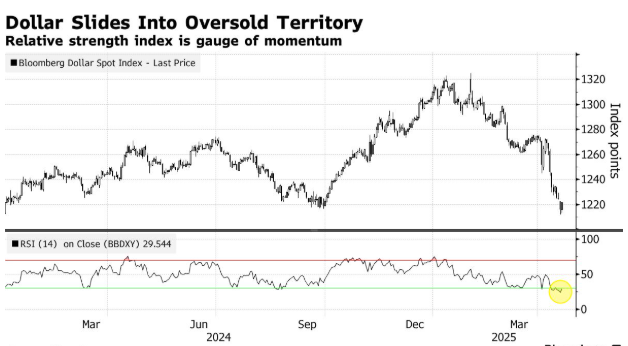
Core Viewpoint - The article highlights a significant sell-off in U.S. Treasury bonds and the U.S. dollar, indicating a loss of confidence among foreign investors in U.S. assets due to rising interest rates and economic uncertainties [1][2][10]. Group 1: U.S. Treasury Bonds - U.S. Treasury bonds have experienced a continuous decline, with the 10-year Treasury yield rising by 6.86 basis points to 4.4876% and the 30-year yield increasing by 0.72 basis points to 4.8723% [1][4]. - The 10-year Treasury yield has surged nearly 50 basis points this week, marking the largest weekly increase since 2001, while the 30-year yield has risen over 46 basis points, the largest since 1982 [1][4]. - The increase in yields suggests a negative correlation with bond prices, indicating that higher yields lead to lower bond prices [4][6]. Group 2: U.S. Dollar - The U.S. dollar index fell sharply, dropping nearly 2% and breaking below the 100 mark for the first time since July 2023, with a cumulative decline of over 3% for the week [1][8]. - The euro and yen have shown strong rebounds against the dollar, with the euro rising nearly 3.6% and the yen over 2% during the week [8]. - Analysts suggest that the significant drop in dollar demand reflects a reevaluation of reliance on the dollar as a reserve currency, which could negatively impact the sustainability of the U.S. economy [10]. Group 3: Economic Implications - The rise in Treasury yields may lead to increased borrowing costs for mortgages and corporate loans, potentially impacting the U.S. economy negatively [6]. - There are concerns regarding the loss of confidence in U.S. policies, particularly in light of tariff uncertainties, which may lead to a broader market impact [7][11]. - Economic forecasts remain pessimistic, with predictions of a slowdown in U.S. GDP growth and rising unemployment rates, despite the government's decision to delay high tariffs on several trade partners [11].

国金证券-3月FOMC会议点评:降息受限或加快衰退风险暴露
SINOLINK SECURITIES· 2025-03-20 07:49
Investment Rating - The report maintains a cautious outlook on the economic environment, indicating a potential shift from "concern" to "reality" regarding recession risks, with the Federal Reserve's ability to lower interest rates being constrained [3]. Core Insights - The Federal Reserve's decision to keep the federal funds target rate in the range of 4.25%-4.50% reflects ongoing economic uncertainties, particularly related to inflation and growth forecasts [3]. - Economic growth forecasts for 2025, 2026, and 2027 have been revised downwards by 0.4pct, 0.2pct, and 0.1pct respectively, with the 2025 GDP growth now projected at 1.7% [3]. - The unemployment rate forecast for 2025 has been adjusted upwards to 4.4%, while the core PCE inflation forecast has been raised to +2.5% [3]. - The report highlights concerns over inflation driven by tariffs and the impact of Trump's policies on economic growth, suggesting a negative outlook [3][4]. Summary by Sections Economic Outlook - The Federal Reserve's recent meeting emphasized increased uncertainty in economic prospects, with a notable shift in the tone of the statements regarding inflation and growth risks [3]. - The updated economic projections indicate a significant downward bias in growth forecasts and an upward bias in unemployment rate predictions [3][8]. Inflation and Monetary Policy - The report discusses the impact of tariffs on inflation, suggesting that while recent strong commodity inflation readings reflect tariff-induced price increases, the Fed remains cautiously optimistic about the long-term inflation outlook [3][4]. - The Fed's ability to lower interest rates is limited, which may accelerate the transition of recession risks from concerns to reality [3]. Sector Recommendations - Gold is recommended as a strong investment opportunity, with expectations of price increases driven by a potential "hard landing" in the U.S. economy and a renewed Fed easing cycle [4]. - The pharmaceutical sector, particularly innovative drugs, is seen as having upside potential due to the Fed's easing cycle, with expectations of improved revenue in the medium to long term [4]. - U.S. equities are viewed as facing downward adjustments due to increasing economic risks and uncertainty in earnings growth [4].