超级周期

Search documents
花旗:上调Palantir评级至“买入” 今年有望迎来“超级周期”
Ge Long Hui· 2026-01-13 07:20
Group 1 - Citigroup upgraded Palantir's rating from "Neutral" to "Buy" [1] - The target price was raised to $235 based on an accelerating defense supercycle and potential tailwinds [1] - The company is expected to experience a "super cycle" in both commercial and government business this year [1]
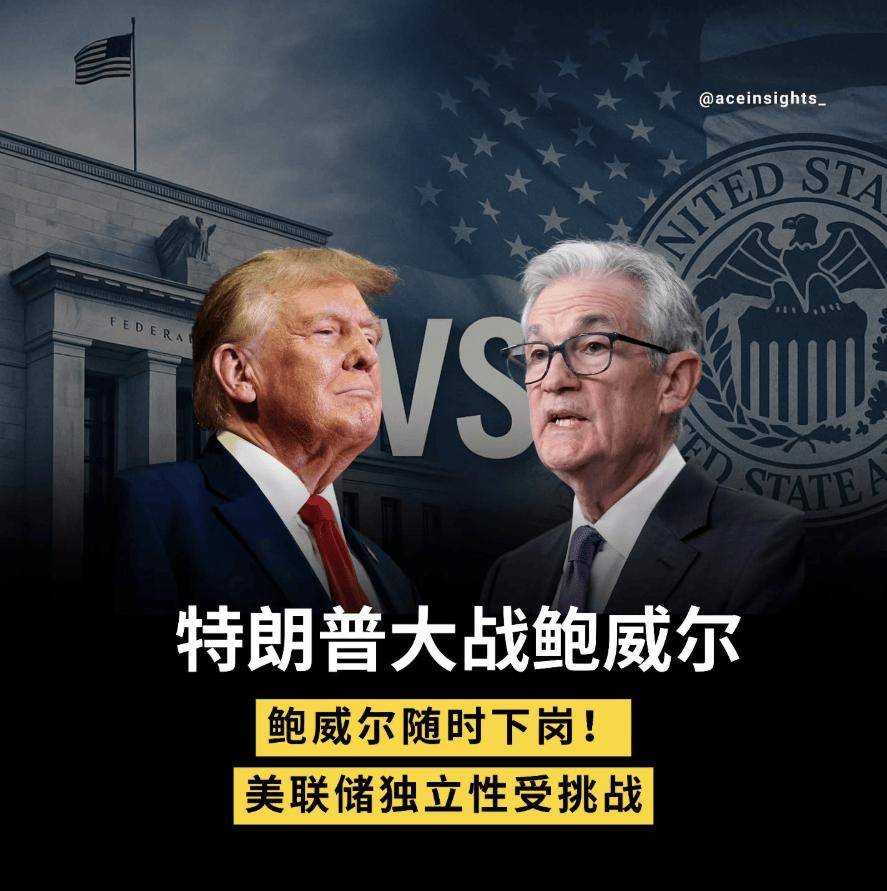
美联储的制度信用面临重新定价
Sou Hu Cai Jing· 2026-01-13 01:52
Core Viewpoint - The independence of the Federal Reserve is being publicly and systematically challenged, marking a significant moment in the financial landscape, with Bitcoin positioned at the center of this conflict [1][3][5]. Group 1: Federal Reserve Independence - The criminal investigation into Jerome Powell, the current Federal Reserve Chairman, is notable for its political implications, led by a Trump-appointed federal prosecutor [3]. - Powell's response emphasizes that monetary policy should be based on evidence and economic realities rather than political will [4]. - The independence of the Federal Reserve is crucial as it underpins the credibility of the dollar system, which relies on the premise that monetary policy is not subject to presidential influence [7]. Group 2: Bitcoin as a Beneficiary - Bitcoin's role is evolving as it is seen as a "neutral asset" that is not influenced by any jurisdiction or political power, thus gaining a premium in the current environment [7][9]. - If political pressure can alter monetary policy, it would permanently alter the pricing model of dollar assets, leading to a preference for decentralized and non-sovereign assets like Bitcoin [8]. - The recent stability of Bitcoin's price at $92,000 amidst significant political uncertainty indicates a shift in how some investors view it, moving from a "risk-on" asset to a hedge against institutional uncertainty [10][11]. Group 3: Market Dynamics and Institutional Perspective - The narrative of a "super cycle" in Bitcoin reflects a structural change in demand, suggesting that the price logic will evolve as this demand becomes a long-term variable [12][14]. - The market is not merely focused on short-term fluctuations but is reassessing the function of Bitcoin within investment portfolios, indicating a broader concern about institutional reliability [11][14]. - Historical financial crises often stem from a realization that previously stable institutions are not as reliable as believed, and the current discourse around the Federal Reserve's independence is a reflection of this concern [14][15].

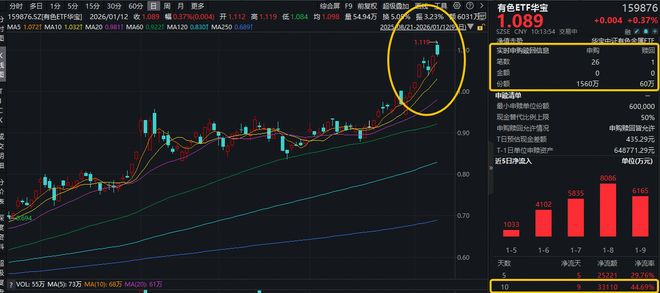
ETF盘中资讯 突破4600!金价再创历史新高!有色ETF华宝(159876)盘中拉升2.5%,刷新上市以来的高点!近10日狂揽3.3亿元
Jin Rong Jie· 2026-01-12 02:32
Group 1 - The core viewpoint of the articles highlights the surge in gold prices due to escalating geopolitical risks, with gold reaching a historical high of over $4600 per ounce, and predictions of further increases in the coming years [3] - The Huabao Nonferrous ETF (159876) has seen significant inflows, with a net subscription of 15 million units and a total of 331 million yuan in the last 10 days, indicating strong investor interest [1][3] - Major stocks within the nonferrous sector, such as Zhongjin Rare Earth and Shengxin Lithium Energy, have experienced notable price increases, reflecting the overall bullish sentiment in the market [1][3] Group 2 - Goldman Sachs forecasts that gold prices will rise to $4900 per ounce by the end of 2026, while Yardeni Research has raised its long-term gold price target from $5000 to $6000 per ounce, with a potential peak of $10000 per ounce by the end of the decade [3] - The nonferrous ETF Huabao covers a wide range of metals including copper, aluminum, gold, rare earths, and lithium, allowing investors to capture the beta performance across different market cycles [4] - The market outlook suggests that due to loose liquidity, frequent supply disruptions, and strong structural demand, various metals including copper, aluminum, and battery metals are expected to continue their upward trend [3]
国泰海通:预计航司25Q4将同比继续大幅减亏 春运客流高峰票价可期
智通财经网· 2026-01-08 05:57
Core Viewpoint - The aviation industry in China is expected to continue its recovery, with significant improvements in demand and a potential turnaround in profitability by 2025, driven by a strong rebound in passenger traffic and strategic pricing adjustments [2][5]. Group 1: Short-term Outlook - The upcoming New Year holiday is anticipated to see robust air travel demand, with significant increases in both volume and pricing compared to previous years [4]. - The Spring Festival travel peak is expected to maintain active business and personal travel, although the holiday's impact may be weaker than in previous years [4]. Group 2: Demand and Supply Dynamics - Passenger traffic is projected to grow by 5-6% in 2025, with domestic routes increasing by 4% and international routes by over 20% [2]. - The industry is entering a low growth phase in supply, with a projected fleet size increase of approximately 3.7% by November 2025 compared to the end of 2024 [2]. Group 3: Performance Metrics - The passenger load factor is expected to reach a historical high, with a year-on-year increase of 1.7 percentage points, while ticket prices remain at historically low levels [2]. - Domestic ticket prices are estimated to decrease by 2-3% year-on-year, while international ticket prices may see significant increases in the latter half of the year due to strong inbound demand [2]. Group 4: Quarterly Performance Expectations - In Q1, passenger traffic is expected to reach new highs due to strong personal demand, but ticket prices may decline by about 10% year-on-year, limiting profitability improvements [3]. - Q2 is projected to see significant reductions in losses due to active business travel and favorable supply-demand conditions [3]. - Q3 may experience weaker business demand, impacting profitability despite a slight increase in ticket prices driven by recovering demand from September [3]. - Q4 is expected to continue the trend of significant loss reduction, supported by strong holiday travel and stable load factors [3]. Group 5: Long-term Outlook - The Chinese aviation industry is anticipated to enter a "super cycle," with sustainable growth in demand and a recovery in pricing and profitability expected to begin in 2026 [5]. - The market has achieved price liberalization, and the focus on improving network quality will be crucial for traditional airlines' future profitability [5].

AI芯片股走强,海光信息涨超10%,沐曦股份涨超5%,寒武纪涨超4%
Ge Long Hui· 2026-01-08 03:26
Group 1 - The A-share market saw a collective surge in AI chip stocks, with notable gains including Haiguang Information rising over 10%, Yanshan Technology approaching a 10% limit up, and Moer Thread increasing by over 7% [1] - The strong performance of semiconductor equipment and AI chips is attributed to two main factors: the initiation of a global semiconductor "super cycle" and the deepening of domestic chip "replacement" [1] Group 2 - Specific stock performances include Haiguang Information with a 10.04% increase and a total market value of 56.97 billion, Yanshan Technology up by 9.53% with a market cap of 58.6 billion, and Moer Thread rising by 7.28% with a market value of 311.4 billion [2] - Other notable stocks include Muxi Co. with a 5.76% increase and a market cap of 255.6 billion, Anfu Technology up by 4.55% valued at 12.9 billion, and Cambrian rising by 4.31% with a market value of 613.6 billion [2]


存储价格飙升背后的博弈:云服务厂商“财大气粗” 支付溢价超手机厂商50%至60%
Mei Ri Jing Ji Xin Wen· 2026-01-07 23:57
Core Insights - The storage industry is experiencing a significant price surge, primarily driven by the increased demand for AI computing power, leading to a severe supply-demand imbalance [1][8] - Major storage manufacturers like Samsung, SK Hynix, and Micron are reallocating production capacity towards HBM and DDR5, which is squeezing the supply of older memory types like DDR4 [1][8] - Cloud service providers are aggressively purchasing storage, accepting higher prices, and are willing to pay a premium of 50% to 60% over mobile manufacturers [2][8] Price Trends - The memory market has entered a "super bull market," surpassing historical highs from 2018, with suppliers' bargaining power at an all-time high [9] - Counterpoint Research forecasts memory prices to rise by 40% to 50% in Q4 2025 and again by 40% to 50% in Q1 2026, with an additional 20% increase expected in Q2 2026 [3][9] - The rising memory costs are impacting the Bill of Materials (BoM) for hardware manufacturers, with memory costs potentially exceeding 20% for flagship models [10][9] Supply Chain Dynamics - The supply of NAND Flash is tightening, with delays reported by manufacturers like Transcend due to supply chain issues from major suppliers [11] - New factory constructions by storage manufacturers will take at least two years to complete, meaning supply constraints are expected to persist until late 2027 [5][11] - The forecast for global smartphone production has been downgraded from a 0.1% increase to a 2% decrease for 2026 due to rising memory prices [12] Demand Projections - Demand for DRAM and NAND Flash in general and AI servers is projected to grow significantly, with a 20% increase in DRAM demand and a 19% increase in NAND Flash demand for general servers in 2026 [13] - AI server demand for LPDDR is expected to grow by 15%, while NAND Flash demand is anticipated to surge by over 70% [13] - The current cycle in the storage industry is expected to last longer than previous cycles, driven by the financial strength and resilience of cloud service providers [14]

全球存储芯片供应短缺点燃投资者热情 相关厂商股价走高
Xin Lang Cai Jing· 2026-01-05 15:40
Core Viewpoint - The global supply shortage of storage chips, driven by surging demand for artificial intelligence infrastructure, is leading investors to bet on further price increases in storage chips, resulting in a collective rise in stock prices of major storage chip suppliers [1][3]. Group 1: Supply and Demand Dynamics - Samsung's co-CEO stated that the current supply shortage is "unprecedented," with other manufacturers echoing similar warnings about the tight supply situation potentially lasting for months [1][3]. - Manufacturers are shifting production capacity towards high-bandwidth memory chips for AI servers, causing a tightening of supply for flash memory chips used in devices like USB drives and smartphones [1][3]. - According to TrendForce, prices for some storage chip categories have doubled since February of last year, attracting many traders who believe there is still room for price increases [1][3]. Group 2: Stock Performance - Micron Technology's stock rose approximately 2% in early trading on Monday, while SK Hynix and Samsung Electronics saw their stock prices close up nearly 3% and 7.5%, respectively [1][3]. - Samsung Electronics' stock doubled last year, and SK Hynix's stock surged nearly threefold [4]. - Smaller competitors like Western Digital, Applied Digital, and Seagate also saw their stock prices rise over 3%, with SanDisk's stock increasing by about 1.5% [5]. Group 3: Market Outlook - Analysts from Morningstar and JPMorgan expect the current "super cycle" in the storage chip market to potentially last until 2027 [5]. - Micron's CEO indicated that the supply tightness in the storage chip market is expected to persist until after 2026, with the company's stock soaring 240% in 2025, significantly outperforming the industry benchmark index's 42% increase [1][3].
HBM,最新预测
半导体行业观察· 2026-01-05 01:49
2026年,全球半导体行业将进入转型期,市场结构和价值链将进行调整以适应人工智能基础设施的扩 张。预计整个市场规模将接近1万亿美元,其中存储半导体将成为需求和盈利能力的关键驱动力。尤 其值得一提的是,业内专家预计SK海力士将成为这一转变的主要推动力,因为这家芯片制造商拥有 独特的优势,是唯一一家能够可靠地交付HBM3E和下一代HBM4的供应商。 根据世界半导体贸易统计(WSTS)的数据,2026年全球半导体市场将同比增长超过25%,达到约 9750亿美元,其中存储器领域的增长率将达到30%。市场研究公司和投资银行预计服务器和数据中心 存储器市场将出现特别强劲的增长,一些机构估计2026年存储器市场规模将超过4400亿美元。 分析表明,随着人工智能训练和推理服务器投资的增加,每台服务器的DRAM和HBM内存容量也在 稳步增长。与此同时,对企业级固态硬盘(eSSD)等存储设备的需求也在上升,导致整个人工智能 基础设施中内存和存储的占比结构性增加。 自2024年以来,业内人士一直用"超级周期"来形容存储器行业的强劲增长势头。美国银行(BofA) 将2026年定义为"类似于上世纪90年代繁荣时期的超级周期",并预测全 ...

国泰海通 · 晨报1231|建材、交运
国泰海通证券研究· 2025-12-30 14:28
Group 1: Waterproof Industry Insights - The waterproof industry has experienced the most severe clearing among consumer building materials, with the top four companies expected to capture nearly 50% market share by 2024 [3][4] - The industry's profitability is at a bottom position, with leading companies nearing breakeven in B-end engineering business, indicating potential for recovery in 2026 as price stabilization and recovery attempts begin [3][4] - The rapid increase in industry concentration reduces unnecessary price competition and enhances the feasibility of price increases among leading firms [4] Group 2: Future Profitability and Market Dynamics - In 2026, the industry is expected to continue attempts at price recovery, supported by lower asphalt prices at the beginning of the year, which will aid in profitability improvement [5] - The improvement in competition dynamics is anticipated to positively impact sales expenses, employee numbers, and accounts receivable turnover days for major companies [5] - Major companies are diversifying their business expansion beyond traditional domestic waterproof engineering, which may further enhance their market position [5] Group 3: Aviation Industry Outlook - The Chinese civil aviation sector is projected to continue recovering in 2025, with passenger traffic expected to grow by 5-6%, leading to a significant reduction in losses and potential profitability [10] - The supply side is entering a low-growth phase, with fleet size expected to increase by approximately 3.7% by November 2025, while passenger load factors are anticipated to reach historical highs [10][11] - The industry is expected to experience a "super cycle" starting in 2026, driven by steady demand growth and a recovery in customer structure, which will support price and profitability increases [12]

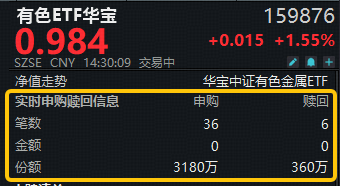
云铝股份、天山铝业齐创新高!电解铝概念震荡走强,有色ETF华宝(159876)盘中拉升2.2%,获净申购2820万份
Xin Lang Ji Jin· 2025-12-30 06:42
Core Viewpoint - The recent performance of the Huabao ETF (159876) indicates strong investor confidence in the non-ferrous metals sector, with significant net subscriptions and notable price increases among key stocks in the industry [1][6]. Group 1: ETF Performance - The Huabao non-ferrous metals ETF saw an intraday increase of 2.27%, currently up by 1.55%, with a real-time net subscription of 28.2 million shares [1]. - The ETF attracted 15.36 million yuan in investments yesterday, reflecting positive market sentiment towards the non-ferrous metals sector [1]. Group 2: Key Stocks Performance - Major stocks such as Yun Aluminum and Tianshan Aluminum reached new highs, while Hai Liang, China Aluminum, and Huayou Cobalt saw increases of over 4% [1][2]. - Other stocks like Yahua Group, Luoyang Molybdenum, and Guocheng Mining also experienced upward movements [1]. Group 3: Industry Insights - The National Development and Reform Commission has encouraged large-scale mergers and restructuring in the aluminum and copper smelting sectors to enhance competitiveness [2]. - The aluminum market is evolving, with aluminum now seen as a core carrier of energy value, potentially leading to independent upward momentum driven by the copper-aluminum ratio and increased demand for aluminum as a substitute for copper [3]. Group 4: Investment Opportunities - The current phase of the non-ferrous metals industry is characterized by a reversal in fundamentals, with traditional cyclical industries showing signs of recovery and long-term investment potential [3]. - The "anti-involution" policy is expected to guide industry development towards more efficient investment strategies, focusing on upgrading and cost reduction rather than inefficient expansion [3]. - The rise of AI is creating new opportunities in the non-ferrous sector, particularly in materials used for advanced packaging and electronic components, which are expected to see increased demand [4]. Group 5: Investment Strategy - A diversified investment approach through the Huabao ETF and its associated funds is recommended to capture the overall beta performance of the non-ferrous metals sector, mitigating risks associated with investing in single metal industries [6].