
高质量增长

Search documents
流量红利褪去,服饰商家的“双11”这一仗还能怎么打?
Sou Hu Cai Jing· 2025-11-13 12:20
Core Insights - The fashion industry is shifting from aggressive channel expansion and price competition to a focus on quality growth and brand value, as indicated by the keywords "steady growth" and "stock competition" [2] - E-commerce platforms are expected to leverage their data capabilities to enhance brand management and operational quality, especially during peak sales events like Double 11 [2][4] - Brands that emphasize originality and cater to niche markets are showing higher growth potential during this year's Double 11 [4] Group 1: Market Trends - The first phase of Double 11 saw Tmall's apparel sales exceed 50% of the total market, with a growth rate of 15.8%, leading the industry [2] - Brands like Uniqlo, Bosideng, and Snow Flying achieved significant sales milestones, indicating strong market demand and recovering consumer confidence [4] - The focus on "long-term value" and "high-quality growth" is becoming crucial for fashion brands to resist homogenization and enhance brand loyalty [4] Group 2: Consumer Behavior - Consumers are becoming more rational, prioritizing value over price, especially in the apparel sector where emotional satisfaction and individual expression are key [11] - The rise of domestic luxury brands reflects a shift towards quality and design, with brands like Songmont achieving over 10 million in sales within the first 10 minutes of Double 11 [11][18] - The trend of "cloud down jackets" emerged from consumer demand for lightweight, warm, and stylish options, showcasing the importance of trend alignment in product development [12][18] Group 3: Brand Strategies - Tmall's approach includes providing brands with trend insights and resources to optimize product launches and marketing strategies, enhancing the likelihood of success [17] - Successful brands during Double 11 are those that have consistently focused on quality and innovation over the past year, leading to significant sales growth [23] - The collaboration between brands and platforms is essential for creating trends, with a focus on shared insights and consumer feedback driving product development [15][16] Group 4: Future Opportunities - The evolving consumer landscape presents opportunities for brands to innovate and capture new market segments, as consumer preferences become more nuanced [28] - Tmall aims to be a steadfast partner for brands, helping them identify trends and create high-quality digital content that resonates with consumers [29] - The continuous refinement of products and brand values is crucial for long-term success, beyond just peak sales events [29]


周六福(6168.HK)双十一狂揽2.87亿:35%增长背后的破局密码
Ge Long Hui· 2025-11-13 01:00
Core Insights - The 2025 "Double Eleven" event has evolved from a simple sales competition to a battleground for brand strength, particularly evident in the gold and jewelry sector [1] - During the event, Zhou Li Fu's e-commerce subsidiary achieved a total shipment value of 287 million yuan, a year-on-year increase of 35.28% [1] - Zhou Li Fu's stock price has risen over 28% since October 23, reflecting positive market sentiment towards its performance [1] Group 1: Performance in Context - Zhou Li Fu's performance must be viewed against the backdrop of a structural adjustment in the gold consumption market, which is experiencing a complex situation of "ice and fire" [2] - In the first three quarters of 2025, China's gold consumption decreased by 7.95% to 682.73 tons, with gold jewelry consumption dropping significantly by 32.50% [2] - Conversely, investment products like gold bars and coins saw a 24.55% increase in consumption, indicating a shift towards gold as an asset allocation tool rather than a decorative item [2] Group 2: Profitability and Growth - Zhou Li Fu achieved a comprehensive gross margin of 22.05%, an increase of approximately 10 percentage points year-on-year, defying the industry norm of price cuts during promotions [3] - From January to October 2025, Zhou Li Fu's e-commerce revenue grew by 32%, while net profit surged by 71%, with a net profit margin exceeding 8% [3] - The significant growth in net profit relative to revenue indicates the company's strong operational capabilities in both revenue generation and cost management [3] Group 3: Product and Channel Strategy - Zhou Li Fu's success is attributed to systematic innovations in product matrix and channel layout, which have built its core competitiveness [4] - The brand has developed a differentiated product matrix, including the main brand "Zhou Li Fu," "CHAOJIN潮金," and "FENS," catering to various consumer segments and mitigating market risks [4] - The "CHAOJIN潮金" brand targets the Gen Z market with trendy, personalized gold products, while "FENS" focuses on high-end consumers with 18K gold and diamond jewelry [4] Group 4: Online Channel Optimization - The increasing online penetration of gold jewelry consumption has been a key factor in Zhou Li Fu's success during the Double Eleven event [5] - The company capitalized on trends by establishing official flagship stores on major platforms and utilizing exclusive live-streaming promotions to enhance conversion rates [6] - Zhou Li Fu's robust online customer service and after-sales support have addressed consumer trust issues regarding gold products [6] Group 5: Future Outlook - The brand's core competitiveness is shifting from price competition to value competition, focusing on consumer-centric strategies [7] - Zhou Li Fu's approach of differentiating products, optimizing channels, and innovating operational models positions it well for long-term growth [7] - The current consumption downturn presents both challenges and opportunities for the gold jewelry industry, with brands that adapt to changing demands likely to gain market share [7]
在不确定性中锚定增长:2026年资产配置展望
EBSCN· 2025-11-10 11:05
Core Insights - The source of uncertainty in asset returns is influenced by the trend of "de-globalization," which continues to affect economic fundamentals and is gradually incorporated into valuation assumptions [3][10] - Asset diversification is considered a "free lunch" in asset allocation, with its value derived from the correlation between different assets [4][17] - In the current uncertain environment, investment strategies should focus on anchoring growth through income-generating assets, leveraging to enhance returns, and recognizing the ongoing macro narrative surrounding gold [5][21][38] Source of Uncertainty in Asset Returns - The "de-globalization" trend has emerged and will continue to impact economic fundamentals, with the potential for structural risks and profit expectations in certain sectors [10] - The internal macro environment is facing risks of slowing economic growth and a transition in economic drivers, moving from a high-growth phase to a medium-low growth phase [12] - The changes in Sharpe ratios across different asset classes indicate varying performance and risk profiles, with a notable downward trend in bond yield spreads since 2011 [14][15] Asset Diversification - The essence of asset diversification lies in investing in different asset classes to reduce overall portfolio risk while balancing returns, with the underlying value stemming from asset correlations [18] - Historical performance data shows significant fluctuations in quarterly returns across different years, highlighting the importance of diversification in managing risk [18] Income-Generating Assets - Income-generating assets, such as bonds and high-dividend stocks, provide predictable cash flows, enhance liquidity, and can hedge against inflation, making them essential in a diversified portfolio [23][21] - High-dividend strategies focus on stable cash flows and valuation recovery, with companies in mature industries typically exhibiting a higher propensity for dividends [26][28] Leveraging for Growth - The core value of introducing leverage in a portfolio is to enhance expected returns while maintaining overall risk balance, particularly in a risk parity framework [34] - Leveraging can amplify returns from low-risk assets without disrupting the risk contribution structure of the overall portfolio [34] High-Quality Growth - High-quality growth is identified as a key driver for the new phase of economic growth, emphasizing the importance of technological innovation and productivity improvements [35][37] - The focus on new quality production capabilities aims to enhance total factor productivity, with specific attention to sectors such as digital economy, high-end manufacturing, and renewable energy [36] Gold as a Strategic Asset - The ongoing geopolitical tensions and the questioning of the dollar's safety have led to increased global demand for gold as a risk diversification strategy [38][39] - Historical data indicates a significant rise in gold reserves among global economies since 2008, reflecting a shift away from dollar dependency [40]
优衣库中国市场总监黄佳莹:消费者追求时髦的同时更在乎舒适性;国泰航空:预计第四季度货运旺季需求持续强劲丨消费早参
Mei Ri Jing Ji Xin Wen· 2025-11-06 23:19
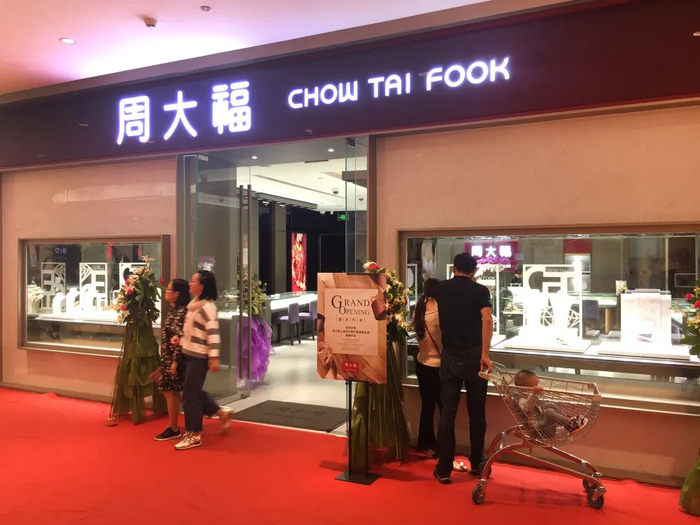
Group 1: Uniqlo's Market Strategy - Uniqlo's China market director emphasizes the importance of comfort alongside fashion in consumer preferences [1] - The brand is expanding its product categories and has established a presence in over 200 cities in China [1] - Uniqlo is adapting its localized business strategies based on consumer feedback, rather than focusing on specific regions [1] Group 2: Cathay Pacific's Cargo Demand - Cathay Pacific anticipates strong demand in the fourth quarter, which is traditionally a peak season for air cargo [3] - The airline plans to adjust its network to focus on high-demand routes in Southeast Asia and China [3] - The company aims to maintain a competitive edge through nine specialized cargo solutions [3] Group 3: Michelin's Investment Focus - Michelin's future investments in China will focus on capacity upgrades, localized innovation, and diversified business expansion [4] - The company has been operating in China for 36 years and is committed to aligning with local market demands and carbon neutrality goals [4] - The expansion of the Shanghai factory and sustainable tire development reflect foreign investment confidence in China's high-quality growth [4] Group 4: LEGO's Product Launch - LEGO showcased five globally launched new products at the China International Import Expo, targeting various age groups [5] - The company has been investing in brand building, retail innovation, and sustainable development since its first participation in 2018 [5] - The expo serves as a platform for LEGO to connect with Chinese families and enhance its market presence [5] Group 5: Chow Tai Fook's Retail Strategy - Chow Tai Fook has reduced its retail network by 611 stores in six months, with a significant impact in the mainland market [6][7] - The closure primarily involves underperforming franchise stores, reflecting a strategic optimization of the channel structure [7] - This move aims to improve overall efficiency and prepare for a focus on high-quality locations and enhanced store performance [7]

周大福6个月减少611家零售点
Di Yi Cai Jing· 2025-11-06 09:01
Core Viewpoint - Leading gold brands are shifting their focus from physical store expansion to enhancing e-commerce channels due to declining terminal sales and changing consumer behavior [2][3]. Group 1: Store Network and Performance - Chow Tai Fook reported a reduction in its retail network, with over 70% of its retail points being franchise stores, totaling 6,041 locations, down from 6,644 as of March 31, representing a decrease of 603 stores [2]. - The most significant decline occurred in the mainland market, where retail points fell to 5,663, a reduction of 611 stores since March [2]. - The company continues to close underperforming stores while selectively opening new ones with higher productivity [2]. Group 2: Market Challenges and Strategic Adjustments - The shift from expansion to quality improvement poses challenges, including short-term revenue fluctuations, employee placement costs, and restructuring relationships with franchisees [3]. - The closure of stores primarily involves franchise locations, indicating a strategic adjustment to optimize channel structure and enhance overall operational efficiency [3]. Group 3: E-commerce Growth and Consumer Behavior - High gold prices, weak consumer demand, and intensified competition have pressured the profitability of inefficient stores, leading franchisees to consider exiting the market [4]. - Major brands like Chow Tai Fook and Lao Feng Xiang have adopted "high-quality growth" strategies, focusing on single-store efficiency rather than quantity expansion [4]. - E-commerce channels are experiencing significant growth, reflecting a shift in consumer trust from physical stores to brand official flagship stores, particularly for standardized products and IP collaborations [4]. - While e-commerce growth is promising, there remain essential in-store experiences such as trying on products, value retention, and after-sales service that cannot be replaced, leading brands to pursue an "online drive + offline experience" integrated approach rather than large-scale store closures [4].
温氏股份(300498) - 2025年11月1日投资者关系活动记录表
2025-11-04 01:12
Financial Performance - In the first three quarters of 2025, the company achieved a net profit of approximately 54.65 million yuan, with the pig farming segment contributing about 61.5 million yuan in profit, while the poultry segment incurred a loss of 7 million yuan and the waterfowl segment a loss of approximately 2 million yuan [2][4] - In Q3 2025, the net profit was reported at 19.15 million yuan, with the pig farming segment generating a profit of 15 million yuan, and the poultry segment reaching a breakeven point [2][4] Production and Sales - The company sold a total of 2,767,249 pigs (including live pigs, fresh products, and piglets) and 9.45 billion chickens (including live chickens, fresh products, and cooked food) in the first three quarters [2][4] - The sales of piglets are expected to reach approximately 2 million heads in Q4 2025 due to established external sales channels [3] Cost Management - The production cost for piglets in Q3 2025 decreased to around 260 yuan per head, with a meat pig comprehensive breeding cost of 6.2 yuan per jin [5][6] - The comprehensive cost for meat chickens was reported at 5.8 yuan per jin, influenced by rising feed prices [7] Risk Mitigation Strategies - The company maintained a debt ratio of 49.4% by the end of Q3 2025, focusing on stable operations and reducing financial risks [9] - Despite facing temporary losses in the pig farming sector, the poultry segment performed well, providing a buffer against market risks [9] Shareholder Returns - The company distributed a cash dividend of 3 yuan per 10 shares, totaling 19.9 billion yuan, which accounts for 38% of the net profit attributable to shareholders in the first three quarters [11] - A stock buyback program is in place, with a total of 900 million yuan allocated for repurchase from September 2024 to September 2025 [12] Strategic Initiatives - The company is focusing on high-quality growth, aiming to enhance its breeding capabilities and optimize its product structure, with a target for piglet sales to account for 5%-10% of total pig sales [16][17] - Plans to expand into international markets are underway, prioritizing the export of poultry products, followed by pork and duck products [21] Brand Development - The company is launching new brands, including "Wens Food," "Wens Livestock," and "Wens Ingredients," to better segment its product offerings [14] - Efforts to promote the cultural significance of Chinese native chickens are ongoing, including partnerships and events to enhance market understanding [13]

贵州茅台(600519):Q3环比降速纾压,公司踏上新征程
HTSC· 2025-10-30 08:56
Investment Rating - The report maintains a "Buy" rating for the company [6][4]. Core Insights - The company reported total revenue and net profit for Q1-Q3 2025 of RMB 130.9 billion and RMB 64.63 billion, respectively, reflecting year-on-year growth of 6.3% and 6.2% [1][2]. - In Q3 2025, total revenue was RMB 39.81 billion, with net profit at RMB 19.22 billion, showing a year-on-year increase of 0.4% and 0.5% [1][2]. - The company is focusing on enhancing market confidence through refined operational strategies and governance, alongside expanding its overseas market presence [1][4]. Revenue and Profitability - For Q1-Q3 2025, revenue from Moutai liquor and series liquor was RMB 110.51 billion and RMB 17.88 billion, respectively, with year-on-year growth of 9.3% for Moutai liquor but a decline of 7.8% for series liquor [2]. - The gross margin for Q1-Q3 2025 was 91.5%, with a slight decrease of 0.2 percentage points year-on-year [3]. - The net profit margin for Q1-Q3 2025 remained stable at 49.4% [3]. Future Projections - The report projects revenue for 2025-2027 to be RMB 185.53 billion, RMB 202.70 billion, and RMB 221.67 billion, respectively, with expected year-on-year growth rates of 6.6%, 9.0%, and 9.4% [4][10]. - The earnings per share (EPS) estimates for 2025-2027 are adjusted to RMB 73.39, RMB 80.01, and RMB 87.54, respectively [4][10]. - The target price is set at RMB 1,920.24, based on a 24x PE ratio for 2026 [4][6].

贵州茅台(600519):迈向高质量增长
GUOTAI HAITONG SECURITIES· 2025-10-30 07:15
Investment Rating - The investment rating for Guizhou Moutai (600519.SH) is "Accumulate" with a target price of 2040.00 CNY [1][6]. Core Insights - The company reported a slowdown in growth for Q3 2025, with total revenue of 130.9 billion CNY, a year-on-year increase of 6.3%, and a net profit attributable to shareholders of 64.6 billion CNY, also up 6.2% year-on-year. The Q3 revenue was 39.81 billion CNY, showing a slight increase of 0.3% year-on-year, while net profit for Q3 was 19.22 billion CNY, up 0.5% year-on-year [2][14]. - The report indicates that the company is focusing on sustainable high-quality growth, with a rational approach to pricing and inventory management, which is expected to alleviate pressure on pricing and inventory levels in the industry [14]. Financial Summary - Total revenue projections are as follows: - 2023: 150.56 billion CNY - 2024: 174.14 billion CNY - 2025: 183.13 billion CNY (growth of 5.2%) - 2026: 192.21 billion CNY (growth of 5.0%) - 2027: 201.77 billion CNY (growth of 5.0%) [4][15]. - Net profit attributable to shareholders is projected as: - 2023: 74.73 billion CNY - 2024: 86.23 billion CNY - 2025: 90.10 billion CNY (growth of 4.5%) - 2026: 94.63 billion CNY (growth of 5.0%) - 2027: 99.71 billion CNY (growth of 5.4%) [4][15]. - Earnings per share (EPS) estimates are: - 2025: 71.95 CNY - 2026: 75.57 CNY - 2027: 79.63 CNY [14]. Market Performance - The current stock price is 1,431.90 CNY, with a market capitalization of 1,793.13 billion CNY. The stock has a 52-week price range of 1,403.09 CNY to 1,649.14 CNY [7][14]. - The report notes a slight decline in stock performance over the past 12 months, with an absolute decline of 3% [11]. Industry Context - The report highlights that the liquor industry, particularly the white liquor segment, is expected to develop healthily under the leadership of major players like Guizhou Moutai, despite current challenges [2][14].
亚太经合组织秘书处执行主任接受《环球时报》专访:“期待中国明年主办APEC会议”
Huan Qiu Shi Bao· 2025-10-29 23:05
Core Points - The APEC informal leaders' meeting will be held in South Korea, with expectations for China to successfully host the next meeting in 2026, contributing to the APEC Vision 2040 [1][2] - The rise of protectionism and unilateralism poses significant challenges to global trade, making APEC a crucial platform for open dialogue among member economies [1] - Cooperation remains the central focus despite uncertainties in trade, with an emphasis on unexpected collaborations rather than divisions [1] - Discussions on tariffs and trade protectionism have been candid, with a broader focus on achieving high-quality growth through productivity and inclusive market structures [1] - China is recognized for its role in APEC, having previously hosted meetings and proposed initiatives like the Free Trade Area of the Asia-Pacific (FTAAP) [2] Summary by Sections APEC Meeting and China's Role - The upcoming APEC meeting in South Korea is significant, with China set to host the next informal leaders' meeting in 2026, building on past experiences [1][2] - The APEC Vision 2040 aims to create an open, vibrant, resilient, and peaceful Asia-Pacific community by 2040 [2] Trade and Economic Cooperation - The current global trade environment is challenged by protectionism, but APEC provides a platform for honest discussions about trade policies and expectations [1] - The focus is not solely on tariffs but also on fostering high-quality growth through enhanced productivity and service-driven economies [1] Regional Trade Agreements - Various regional trade agreements, such as CPTPP and RCEP, are viewed as pathways towards achieving the FTAAP, with efforts to promote understanding among member economies [2]
鸣鸣很忙更新招股书 2025上半年GMV达411亿元
Zheng Quan Ri Bao Wang· 2025-10-28 13:13
Core Insights - The company "Ming Ming Hen Mang" submitted updated listing application materials to the Hong Kong Stock Exchange on October 28, 2023, and is expected to maintain its leading position in the snack food and beverage retail sector in China [1][2] Group 1: Financial Performance - As of June 30, 2025, the company reported a cash balance exceeding 2.394 billion yuan and a net current asset value of 2.827 billion yuan, indicating strong liquidity and efficient asset turnover [2] - The net operating cash flow for the first half of 2025 was 1.395 billion yuan, showcasing robust cash generation capabilities [2] - The inventory turnover days were only 11.7 days, significantly better than the industry average, highlighting effective supply chain management [2] Group 2: Market Position and Growth - In the first half of 2025, the company achieved a gross merchandise volume (GMV) of 41.1 billion yuan and revenue of 28.12 billion yuan, with an adjusted net profit of 1.034 billion yuan [1] - The total number of stores reached 16,783, covering all 28 provinces, 1,327 counties, and all tiered cities in China [1] - The company is recognized as the first in the industry to surpass 20,000 stores as of September 2025, further solidifying its market leadership [1] - The company is positioned as the only representative from the snack retail sector among the top 10 in China's chain industry for 2024 [1][2]