
高阶智驾

Search documents
车企打响L3冲刺赛
华尔街见闻· 2025-12-17 10:25
以下文章来源于Auto有范儿 ,作者柴旭晨 就在准入车型公布的同一天,华为车BU发文称极狐阿尔法S采用的是乾坤智驾ADS系统,搭载了 包含三颗激光雷达在内的34颗高性能传感器。这意味着,在华为的托举下,北汽成功入围L3智驾 赛道。 随后,小鹏、理想也先后官宣获得L3级道路测试牌照,后续分别在广州、北京两个城市开展常态 化L3级道路测试;华为的鸿蒙智行以及比亚迪则已联合深圳相关部门开启L3级有条件自动驾驶内 测。小鹏、极氪等品牌也宣布,其市售车型已经为L3级自动驾驶做好了硬件预埋。 显然,车企们已经在高阶智驾的赛道上摩拳擦掌。然而,透过宣发的喧嚣,我们看到的并非技术的 瞬间爆发,而是一场更为谨慎、克制且漫长的马拉松起跑。 根据此次工信部的发文,深蓝SL03和极狐阿尔法S这两款车型将分别在北京和重庆的路段开展L3 测试工作,且有一定的限制。 其中,深蓝SL03的准入场景目前仅限指定路段的交通拥堵环境下高速公路和城市快速路单车道 内,极狐阿尔法S的准入场景目前限定在指定的高速公路和城市快速路单车道内。测试路段主要围 绕机场快速、城市快速等相对封闭且没有行人混杂的路段展开。 Auto有范儿 . 讲述独特的汽车故事。 ...

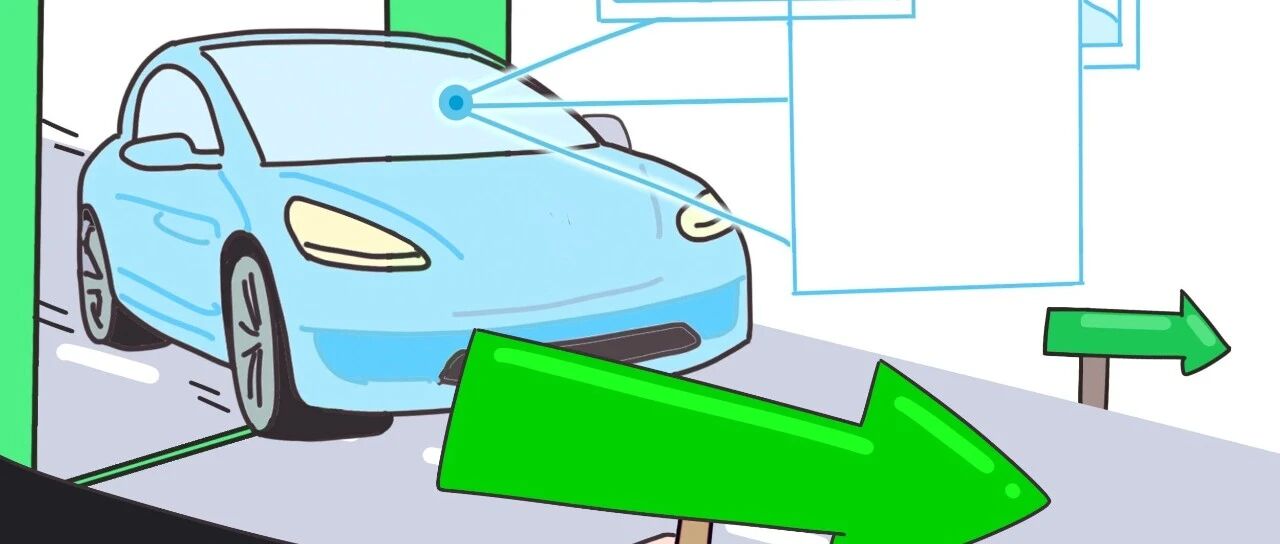
车企打响L3冲刺赛
Hua Er Jie Jian Wen· 2025-12-17 07:05
P 175 随后,小鹏、理想也先后官宣获得L3级道路测试牌照,后续分别在广州、北京两个城市开展常态化L3级道路测试;华为的鸿蒙智行以及比亚迪则已联合深 圳相关部门开启L3级有条件自动驾驶内测。小鹏、极氪等品牌也宣布,其市售车型已经为L3级自动驾驶做好了硬件预埋。 作者 | 柴旭晨 编辑 | 周智宇 由系统掌权的智驾时代渐行渐近。 日前,工信部公布了首批L3有条件自动驾驶功能车型准入许可,首批准入车型包含深蓝SL和极狐阿尔法S(L3版)。 就在准入车型公布的同一天,华为车BU发文称极狐阿尔法S采用的是乾坤智驾ADS系统,搭载了包含三颗激光雷达在内的34颗高性能传感器。这意味着,在 华为的托举下,北汽成功入围L3智驾赛道。 据了解,申报需要明确试点车型、使用场景、速度范围等限制性条件,若工信部决定准入的,需要设置准入有效期、实施区域等限制性措施。同时,随着政 策要求的升级调整,会产生一些新的变化,这就要求车企跟着最新的标准或要求走。 对此,中国汽车标准化研究院总工程师孙航表示,此次发布特别强调了附条件准入,将允许开启自动驾驶功能的路段限定在典型、低风险场景中,意在通过 小切口起步、安全有序推进自动驾驶技术稳妥落地 ...
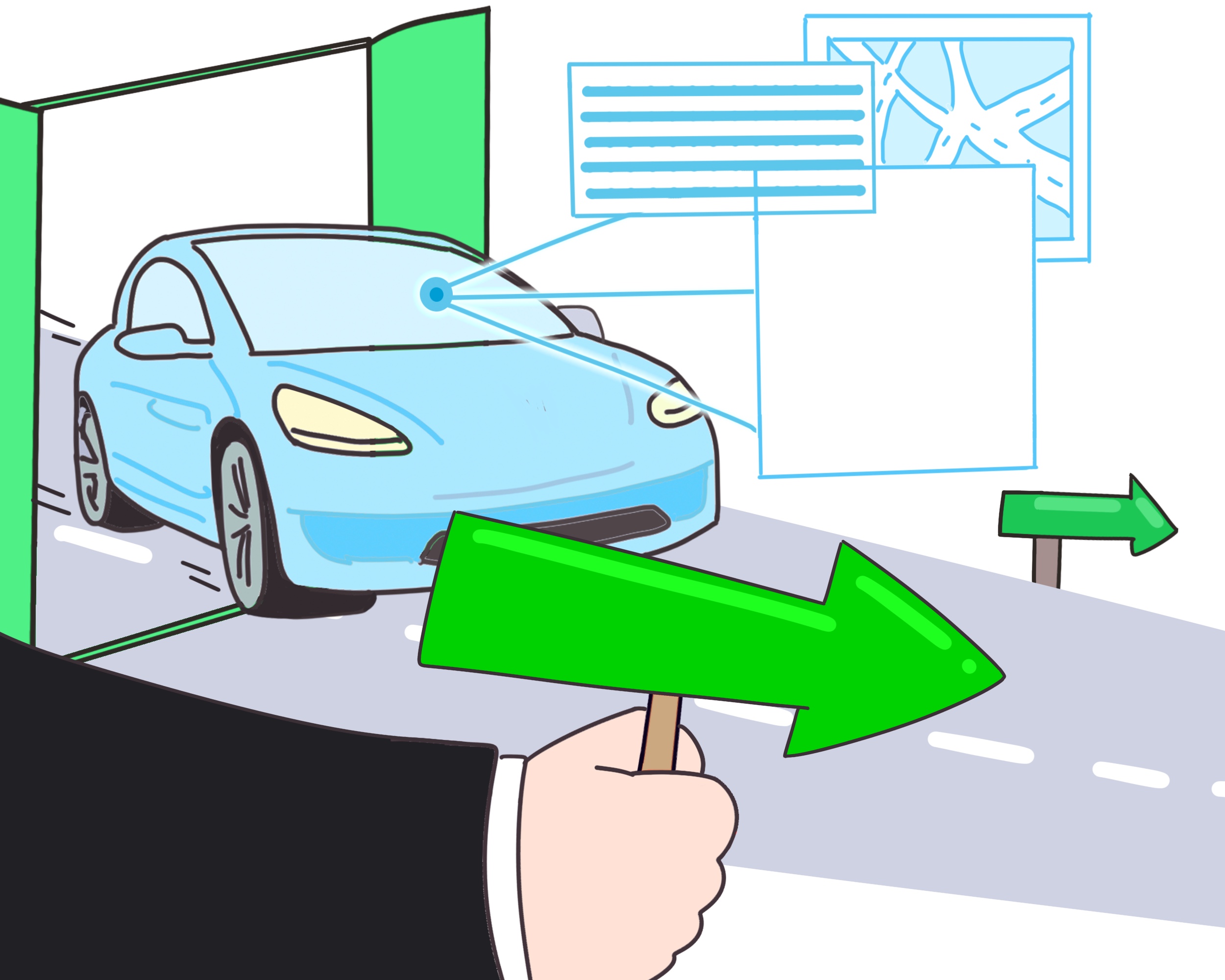
东兴证券:汽车行业L3商用加速落地 有望推动智能底盘批量应用
智通财经网· 2025-12-17 01:35
Core Viewpoint - The approval of L3-level autonomous driving vehicles by the Ministry of Industry and Information Technology (MIIT) marks a significant step towards the commercialization of L3 autonomous driving in China, which is expected to accelerate the adoption of smart chassis technologies [1][2][3]. Group 1: Event Summary - The MIIT has granted conditional approval for Changan Automobile and BAIC BluePark Magna Automotive to produce L3-level autonomous vehicles, following the submission of their applications [2]. - The approval is part of the 401st batch of announcements by the MIIT, indicating a regulatory framework supporting the introduction of L3 autonomous driving products in the market [2][3]. Group 2: L3 Commercialization Impact - L3 autonomous driving allows for conditional self-driving capabilities, where the system controls vehicle movement and responds to environmental stimuli within a limited operational range, requiring driver intervention outside this range [3]. - The vehicles approved include Changan's Deep Blue model and BAIC's Arcfox Alpha S (L3 version), which features a high-performance sensor system with 34 sensors, including three LiDARs, ensuring comprehensive safety and redundancy [4]. Group 3: Smart Chassis Development - The commercialization of L3 driving is expected to drive the mass application of smart chassis technologies, including active suspension, electronic brake-by-wire (EMB), and steer-by-wire (SBW) systems [4][5]. - Active suspension systems will integrate air springs and variable damping to enhance vehicle handling and comfort, while EMB represents the future direction of braking systems, supported by mandatory national standards set to take effect in 2026 [4][5]. Group 4: Investment Strategy - The approval of L3 vehicles provides policy support for the widespread adoption of advanced autonomous driving technologies, benefiting companies that are actively investing in this sector [6]. - Key investment opportunities include automakers collaborating with Huawei, such as Seres, JAC Motors, BAIC BluePark, SAIC Group, and Changan, as well as companies in the smart chassis supply chain like Baolong Technology and Top Group [6].

线控制动/转向:法规渐松绑,有望加速步入放量周期
Hua Yuan Zheng Quan· 2025-12-15 11:13
Investment Rating - The report rates the automotive parts industry as "Positive" (First Time) [1] Core Viewpoints - The loosening of regulations is expected to accelerate the mass production of electronic mechanical brakes (EMB) and steer-by-wire (SBW), leading to a significant market expansion [3] - The domestic market for line-controlled chassis is projected to exceed 100 billion by 2030, driven by advancements in high-level autonomous driving [3][30] - The report emphasizes the importance of focusing on high-quality Tier 1 suppliers and upstream components such as motors and lead screws [4][9] Summary by Relevant Sections Line-Controlled Chassis - The pursuit of human-machine decoupling in line-controlled chassis is fundamental for achieving L3/L4 autonomous driving [9] - The market for line-controlled braking systems is expected to reach 50 billion by 2030, with EMB projected at 16.4 billion [3][30] - The line-controlled steering market is anticipated to reach 50 billion by 2030, with SBW projected at 21.5 billion [3][30] Regulatory Developments - Regulations allowing EMB to be implemented in vehicles will officially take effect on January 1, 2026 [3][26] - New policies regarding SBW are expected to be catalyzed within the year, although specific certification details remain unclear [3][26] Market Dynamics - The report highlights that the penetration rate of line-controlled chassis is expected to rise from 5% in 2025 to 30% by 2030 [31] - The overall market for intelligent chassis in China is projected to exceed 100 billion by 2030, with a compound annual growth rate (CAGR) of 37% from 2025 to 2030 [30][29] Key Companies to Watch - The report suggests focusing on leading Tier 1 suppliers with comprehensive platform capabilities, such as NEXTEER, ZF, and others [4][9]





Robotaxi系列报告(二):曹操出行提“十年百城千亿”战略目标
Shanghai Aijian Securities· 2025-12-12 11:15
Investment Rating - The industry investment rating is "Outperform the Market" [5] Core Insights - On December 3, 2025, Cao Cao Mobility announced its "Ten Years, One Hundred Cities, One Hundred Billion" strategic goal, aiming to establish five operational centers globally over the next decade, covering 100 cities and achieving a total transaction value (GTV) of 100 billion yuan [2] - The company has initiated a "three-step" strategy for its Robotaxi operations, which includes technology validation and small-scale testing, moving towards automation and large-scale deployment, and developing a third-generation vehicle for global market operations [2] - Cao Cao Mobility integrates its Robotaxi services within Geely's ecosystem, launching the first "Green Intelligent Passage Island" in Hangzhou, which features automatic battery swapping, vehicle cleaning, intelligent scheduling, and automatic settlement [2] - The company has established a comprehensive operational capability by combining smart customized vehicles, intelligent driving technology, and smart operation systems, significantly reducing operational costs and enhancing efficiency [2] Summary by Sections Industry Overview - The report highlights the differentiation in annual sales target completion among car manufacturers, with a focus on the performance of smart vehicles [1] Strategic Developments - Cao Cao Mobility's strategic plan includes a phased approach to Robotaxi deployment, with initial operations starting in Hangzhou and Suzhou in February 2025, transitioning from closed testing to real commercial environments [2] - The company plans to expand its operations to 10 core cities by 2027, targeting over 80% coverage of major urban roads [2] Technological Integration - The integration of Geely's satellite technology and the establishment of a battery swapping network are key components of Cao Cao Mobility's strategy to enhance communication and positioning capabilities in complex urban environments [2] - The company has developed a smart operation system that manages 37,000 self-operated vehicles across 163 cities, ensuring efficient order processing for future Robotaxi operations [2]
Robotaxi系列报告(三):特斯拉Robotaxi取消安全员,纯视觉方案商业化提速
Shanghai Aijian Securities· 2025-12-12 10:18
Investment Rating - The industry investment rating is "Outperform the Market" [5] Core Insights - Tesla's CEO announced the removal of safety drivers for Robotaxi in Austin, Texas, marking a significant step towards the commercialization of a pure vision-based autonomous driving solution [2] - As of October 2025, Tesla's Robotaxi has accumulated over 400,000 kilometers in Austin and 1.6 million kilometers in the Bay Area without major accidents, providing a foundation for validating the safety of the autonomous system [2] - The removal of safety drivers is expected to save over $100,000 in annual operating costs per vehicle, with significant reductions in labor costs [2] - Tesla plans to launch the Cybercab, a dedicated autonomous taxi, in Q2 2026, aiming to reduce the vehicle cost to $30,000 to support larger-scale commercialization [2] - The report suggests that the successful implementation of the Robotaxi business model relies on a safe, cost-effective, and easily scalable advanced driving solution, benefiting automakers and key component suppliers with strong control over the supply chain [2] Summary by Sections Industry Overview - The report highlights the differentiation in annual sales target completion among car manufacturers, particularly in the smart vehicle segment [1] Tesla's Developments - Tesla's Robotaxi initiative is advancing with the removal of safety drivers, supported by extensive road testing data [2] - The company is enhancing its Full Self-Driving (FSD) capabilities, with improvements in complex driving scenarios [2] Cost and Pricing Strategy - The report details the cost savings from eliminating safety drivers and outlines Tesla's dynamic pricing strategy for Robotaxi services [2] Investment Recommendations - The report recommends focusing on companies with strong capabilities in advanced driving technology and supply chain management, including Xiaopeng Motors, Li Auto, Xiaomi Group, and Leap Motor [2]
中金:11月乘用车出口续创新高 期待年末新能源“翘尾”收官
Zhi Tong Cai Jing· 2025-12-09 08:39
展望2026年,如果维持一定的央地补贴,预计国内需求有望保持平稳,国内新能源销量有望保持双位数 增长,自主车企海外销量有望继续增长。得益于头部自主品牌持续加码、第三方智驾供应商赋能车企, 2025年高阶智驾经历了发展拐点,预计2026年高阶智驾渗透率仍将持续提升,带动产业链软硬件供应商 放量。 11月狭义乘用车零售承压,环比下降主要系地方补贴收缩、电池供应紧缺的影响。1-11月狭义乘用车累 计零售销量2148.3万辆,同比+6.1%,据乘联会数据,前11个月以旧换新申请量达1120万辆,政策支持 对全年汽车消费起到了有力的支撑作用。11月乘用车出口续创月度新高,其中新能源乘用车出口同比增 长2.4倍,比亚迪单月出口量增至13.2万辆。 新能源同环比延续增长,12月有望"翘尾"收官 11月新能源乘用车批发170.6万辆,同比增长18.7%,环比增长5.8%;零售132.1万辆,同比+4.2%/环比 +3.0%,表现优于乘用车整体水平,零售口径新能源渗透率达59.3%,同比+7ppt。分车企看,鸿蒙智 行、零跑汽车(09863)、蔚来-SW(09866)、岚图同比增长亮眼。展望12月,伴随电池供应边际改善、新 车 ...
乘联分会:扩内需等举措有望推动“十五五”时期国内汽车销量破3500万辆
Cai Jing Wang· 2025-12-05 02:36
12月4日,乘联分会发布简析"十五五"规划建议,其中指出,"十五五"规划更强调"质的有效提升",这 意味着经济增长将更多地由全要素生产率的提高、科技创新贡献度的提升以及绿色低碳转型来驱动。扩 内需增强内循环等举措有望推动"十五五"时期国内汽车销量规模突破3500万辆,新能源汽车渗透率突破 70%,高阶智驾向下普及。 ...
【财闻联播】中国150家企业入选全球独角兽500强!宁德时代:三年内纯电船舶有望驶向远洋
券商中国· 2025-12-04 12:33
Macro Dynamics - The People's Bank of China will conduct a 10,000 billion yuan reverse repurchase operation on December 5, 2025, to maintain ample liquidity in the banking system, with a term of 3 months (91 days) [2] Bilateral Investment - The Chinese Ministry of Commerce and the French Ministry of Economy, Finance, and Industrial and Digital Sovereignty signed a memorandum to strengthen bilateral investment, encouraging enterprises from both countries to increase mutual investments and ensure a fair and predictable business environment [3] Automotive Industry - The "14th Five-Year Plan" emphasizes qualitative improvement, with domestic automobile sales expected to exceed 35 million units during this period, and the penetration rate of new energy vehicles projected to surpass 70% [4][5] Unicorn Enterprises - In the 2025 Global Unicorn Enterprises 500 list, China maintains its leading position with 150 companies, contributing significantly to the overall valuation of 39.14 trillion yuan, which has increased by over 30% compared to 2024 [6] Space Exploration - The Shenzhou 21 astronaut crew is set to conduct their first extravehicular activity soon, having completed various tasks since their arrival at the space station on November 1, 2025 [7] Financial Regulations - The U.S. SEC has postponed the deadline for hedge funds and large investors to comply with short-selling and related stock lending disclosure regulations to January 2, 2028, and September 28, 2028, respectively [8] A-Share Market Outlook - UBS Securities analyst Meng Lei forecasts that A-share earnings growth may rise to 8% in 2026, driven by improved nominal GDP growth, narrowing PPI declines, and supportive policies [9] Market Data - On December 4, the market rebounded, with the ChiNext Index rising over 1%, while the total trading volume in the Shanghai and Shenzhen markets was 1.55 trillion yuan, a decrease of 121 billion yuan from the previous trading day [11] Financing Trends - As of December 3, the financing balance in the two markets decreased by 3.685 billion yuan, with the Shanghai Stock Exchange reporting 1.24699 trillion yuan and the Shenzhen Stock Exchange reporting 1.210675 trillion yuan [12] Hong Kong Market Performance - On December 4, the Hang Seng Index rose by 0.68%, with the Hang Seng Tech Index increasing by 1.45%, led by gains in the innovative drug and robotics sectors [13] Company Developments - CATL aims to achieve ocean-going capabilities for pure electric vessels within three years, currently holding a 40% global market share in providing power solutions for various types of vessels [14] - Country Garden's debt restructuring plan for nine bonds totaling over 13.858 billion yuan has been approved by creditors [15] - Nezha Auto is recruiting impact bond investors, planning to raise up to 100 million yuan through this initiative [16][17]


乘联分会:扩内需增强内循环等举措有望推动“十五五”时期国内汽车销量规模突破3500万辆
Zheng Quan Shi Bao· 2025-12-04 09:24
人民财讯12月4日电,乘联分会发布简析"十五五"规划建议,其中指出,"十五五"规划更强调"质的有效 提升",这意味着经济增长将更多地由全要素生产率的提高、科技创新贡献度的提升以及绿色低碳转型 来驱动。扩内需增强内循环等举措有望推动"十五五"时期国内汽车销量规模突破3500万辆,新能源汽车 渗透率突破70%,高阶智驾向下普及。 ...