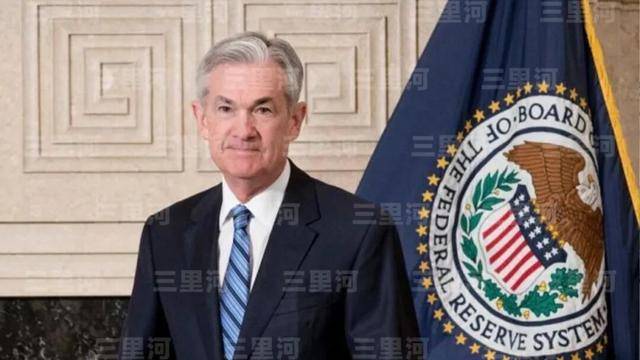
鸽派

Search documents
光大期货金融类日报12.03
Xin Lang Cai Jing· 2025-12-03 01:25
金融类 热点栏目 自选股 数据中心 行情中心 资金流向 模拟交易 客户端 股指: 昨日,A股市场震荡回调,有色和TMT板块跌幅居前。Wind全A下跌0.64%,成交额1.61万亿元,中证 1000指数下跌1%,中证500指数下跌0.87%,沪深300指数下跌0.48%,上证50指数下跌0.51%。随着6月 以来的流动性行情告一段落,市场重新聚焦基本面逻辑,目前以AI为首的新质生产力题材普遍对未来 三年的增长水平存在乐观预期,尤其是科技领域的上游硬件制造环节,供需错配下涨价预期明显,中期 盈利能力可观。但是,对应题材自6月以来涨幅均较大,临近年底缺乏进一步事件性催化,自11月逐渐 进入震荡行情。另一方面,以消费和周期题材为首的传统经济领域仍然处在震荡复苏的过程中,尽管存 在一些补涨的逻辑,但短期很难进入基本面牛市。海外科技股同样存在预期分化,英伟达业绩指引继续 强劲,谷歌也发布了升级版大模型,但AI应用层持续盈利能力受到质疑。随着美联储主席换届临近, 2026年如能超预期降息可能继续推动科技板块强势运行。在此背景下,市场成交量和波动率逐渐降低, 风险偏好下降,预计指数短期以震荡为主。 国债: 昨日国债期货收盘, ...


光大期货有色金属类日报12.03
Xin Lang Cai Jing· 2025-12-03 01:20
Copper - Copper prices experienced a rise and subsequent decline, with domestic refined copper imports maintaining losses. The anticipated appointment of a dovish Federal Reserve chairman may strengthen market expectations for monetary easing, but balancing monetary stimulus and inflation remains a challenge [3][10] - Domestic electrolytic copper production is estimated at 1.1688 million tons in December, reflecting a month-on-month increase of 5.96% and a year-on-year increase of 6.69%. Domestic smelting enterprises continue to ramp up production towards year-end [3][10] - LME copper inventory increased by 2,375 tons to 161,800 tons, while Comex inventory rose by 2,351 tons to 391,851 tons. SHFE copper warehouse receipts decreased by 927 tons to 30,568 tons [3][10] Nickel & Stainless Steel - LME nickel fell by 0.91% to $14,740 per ton, while SHFE nickel dropped by 0.58% to 117,060 yuan per ton. LME inventory decreased by 396 tons to 254,364 tons [4][11] - Nickel iron prices are declining, and the stainless steel market is showing weak performance with increasing inventory levels. The raw material supply remains tight in the new energy sector, but a decrease in production of ternary precursors is expected in December [4][11] - The pressure on primary nickel inventory is increasing, with production expected to rise in December. The cost of producing nickel is estimated at 110,000 yuan per ton [4][11] Aluminum & Alumina - Alumina prices showed a slight decline, with AO2601 settling at 2,648 yuan per ton, down 1.08%. SHFE aluminum also experienced a minor drop, closing at 21,840 yuan per ton [5][12] - Market expectations for environmental production limits in northern alumina plants have not materialized, leading to a correction in prices. Aluminum prices are expected to remain supported, but demand momentum may not sustain [5][12][13] - The aluminum ingot inventory is decreasing smoothly, aided by reduced shipments from northern regions [5][12][13] Industrial Silicon & Polysilicon - Industrial silicon prices are experiencing a downward trend, with the main contract settling at 8,975 yuan per ton, down 2.18%. The supply dynamics show a reduction in the south and an increase in the north [6][13] - Polysilicon prices are also weak, with the main contract at 56,315 yuan per ton. The demand from the photovoltaic sector is declining, leading to a negative feedback effect on the industry [6][13] - The strategy of maintaining production without price reductions is being adopted by silicon material manufacturers amid a lack of upward driving forces [6][13] Lithium Carbonate - Lithium carbonate futures fell by 0.72% to 96,560 yuan per ton, while the average price for battery-grade lithium carbonate rose by 50 yuan to 94,400 yuan per ton [7][14] - Weekly production decreased by 265 tons to 21,865 tons, with expectations for a 3% increase in supply in December. However, demand for ternary materials is projected to decline by 7% [7][14] - Total inventory turnover days decreased to 26.3 days, indicating a potential slowdown in inventory reduction or accumulation in the future [7][14]
21评论丨美联储持续降息仍是大概率事件
Sou Hu Cai Jing· 2025-12-01 22:13
Core Viewpoint - The recent release of the Federal Reserve's Beige Book serves as a critical indicator for the future direction of U.S. monetary policy, especially following a prolonged government shutdown and a lack of economic data [2][3]. Economic Activity - The Beige Book indicates that most of the twelve Federal Reserve districts experienced little change in economic activity compared to the previous period, with two districts showing "moderate decline" and one showing "modest growth" [2]. - Overall consumer spending in the U.S. has declined, except for high-end retail, while manufacturing activity has generally increased, although tariffs and uncertainty surrounding them remain obstacles [2][3]. Labor Market - Approximately half of the districts reported a weakening in labor demand, with wage growth remaining slow [2][3]. Price Pressures - The report highlights that rising costs due to tariffs have put pressure on manufacturing and retail sectors, leading to increased input costs [2][3]. Market Reactions - Following the Beige Book's release, Wall Street interpreted the contents as a clear signal for potential "hawkish rate cuts," resulting in significant gains across major U.S. stock indices [3][4]. - The Dow Jones Industrial Average has risen by 11.48%, the Nasdaq by 20.22%, and the S&P 500 by 15.83% year-to-date, reflecting the market's positive response to anticipated monetary easing [3]. Monetary Policy Outlook - The probability of the Federal Reserve restarting rate cuts in December has surged to 85%, with expectations that the Fed will prioritize achieving a 2% inflation target while also promoting full employment and economic growth [4][5]. - There is an ongoing debate within the Federal Reserve regarding the approach to inflation, with "hawks" advocating for a tougher stance and "doves" favoring a more lenient approach [4][5]. Economic Perspectives - There is a growing consensus that the Federal Reserve may continue to lower interest rates and increase tolerance for inflation to address the evident economic slowdown [5]. - Some economists argue that inflation can lead to higher wages and costs without necessarily eroding purchasing power, suggesting that a moderate level of inflation could benefit consumption, particularly for younger, debt-laden demographics [5][6]. Leadership Changes - The impending change in leadership at the Federal Reserve has amplified the consensus for potential rate cuts, with current White House economic officials advocating for immediate action based on available data [6].

明年FOMC票委的政策倾向?
一瑜中的· 2025-11-30 15:43
Core Conclusion - The composition of the FOMC's 12 voting members is likely to be 4 doves, 4 hawks, and 4 neutrals, indicating a marginally dovish shift compared to the current composition of 3 doves, 4 neutrals, and 5 hawks [2][8] Group 1: FOMC Personnel Changes - The current Fed Chair Powell's term ends in May next year, with five candidates considered for the position, all of whom are dovish [3][9] - The candidates' winning probabilities are as follows: Hassett (57%), Waller (23%), Walsh (14%), Riedel (4%), and Bowman (1%) [3][9] - Powell's decision to remain as a board member after stepping down as chair could limit the selection of the new chair [3][11] Group 2: Board of Governors - Among the current governors, Waller, Milan, and Bowman are dovish, while Barr is hawkish, and Powell, Jefferson, and Cook are neutral [4][12] - Milan is likely to have his term extended, with low probability of Cook being dismissed [4][13] - The new chair's selection and Powell's potential continuation as a board member will influence the board's composition [4][14] Group 3: Regional Federal Reserve Presidents - The current regional Fed presidents are all hawkish, while the incoming presidents for next year include a neutral and three hawks [5][15] - Trump faces challenges in altering the appointments of regional Fed presidents through the board, making it difficult to change the FOMC's policy stance [6][16]

美联储米兰:昨日公布的数据明显是偏向“鸽派”。
Sou Hu Cai Jing· 2025-11-21 13:42
Core Viewpoint - The data released yesterday is clearly leaning towards a "dovish" stance from the Federal Reserve [1] Group 1 - The recent data indicates a shift in the Federal Reserve's approach, suggesting a more accommodative monetary policy [1]
日本央行内部鹰声四起 12月加息或提上议程
Xin Hua Cai Jing· 2025-11-21 02:42
Core Viewpoint - The Bank of Japan's Governor Ueda Kazuo indicated that the continued weakness of the yen may further increase inflation, as import prices rise due to the yen's depreciation, leading companies to be more willing to raise wages and product prices [1] Group 1: Monetary Policy Implications - Ueda emphasized that the impact of exchange rate fluctuations on prices is more significant than in the past, necessitating the central bank to remain highly vigilant [1] - There is a growing inclination towards supporting an interest rate hike in December, especially if Ueda votes in favor, aligning with two hawkish committee members who called for a rate increase in the October meeting [1] Group 2: Committee Dynamics - Committee member Koeda Junko expressed hawkish views, indicating rising concerns about inflation risks within the policy-making body [1] - Although Deputy Governor Iwata Noriyuki maintained the status quo in the last meeting, he is still viewed as leaning towards hawkish policies [1] - Currently, only Noguchi Akira holds a firm dovish stance, while the new member, who is seen as centrist, is expected to align with the mainstream opinion led by Ueda [1]
鹰退鸽进!美联储“大换血”在即 降息派或借势特朗普占据上风?
智通财经网· 2025-11-18 03:39
Core Viewpoint - The upcoming changes in the Federal Reserve's leadership, particularly the retirement of Atlanta Fed President Raphael Bostic, may lead to a more dovish stance in monetary policy, influencing the Federal Open Market Committee (FOMC) towards potential interest rate cuts [1][2]. Group 1: Leadership Changes - Atlanta Fed President Raphael Bostic announced his retirement effective February next year, leaving a key position currently held by a hawkish member [1]. - The appointment of a more dovish successor could shift the FOMC's stance towards further rate cuts, despite Bostic's non-voting status until 2027 [1]. - The Federal Reserve Board is expected to approve the reappointment of all 12 regional Fed presidents for new five-year terms starting March 1 [1]. Group 2: Potential Impact of Supreme Court Ruling - A Supreme Court ruling in January regarding the potential dismissal of Fed Governor Lisa Cook by Trump could create another vacancy, allowing for the appointment of a new member aligned with lower interest rate policies [2]. - Analysts do not anticipate dramatic changes in the confirmation process for regional Fed presidents, despite the potential for a new appointee [2]. Group 3: Current Voting Members' Stance - All four current voting regional Fed presidents lean towards a hawkish stance, with concerns about inflation remaining high [4][5]. - Boston Fed President Susan Collins and St. Louis Fed President Alberto Musalem support rate cuts but emphasize caution due to inflation concerns [5]. - Kansas City Fed President Jeff Schmieding and Chicago Fed President Austan Goolsbee express higher thresholds for further rate cuts, citing persistent inflation [5]. Group 4: Future Voting Members' Perspectives - Incoming voting members, including the Philadelphia Fed President, may lean hawkish, with Minneapolis Fed President Neel Kashkari expressing reservations about further rate cuts [6]. - Cleveland Fed President Beth Hammack and Dallas Fed President Lori Logan also show hesitance towards rate cuts, focusing on inflation issues [6]. Group 5: Expected Divisions within the Committee - The composition of the regional Fed presidents is expected to be more hawkish, while the Board of Governors may lean dovish, leading to potential divisions within the committee [7]. - Three distinct factions are anticipated: a dovish group led by the new Fed Chair and certain governors, a hawkish group from regional presidents, and a more neutral group comprising other governors [7].
本周美股回顾(上):突然市场变得担心人工智能的估值和通货膨胀
Sou Hu Cai Jing· 2025-11-15 22:13
Core Insights - The main driver of rising yields is nominal economic growth, which is distinct from the yield increases caused by policy tightening [1] - The Federal Reserve is likely to maintain current policy rates for an extended period, as indicated by Boston Fed President Susan Collins [1] - The uncertainty surrounding the December meeting outcomes is heightened due to a lack of official economic data, exacerbated by the government shutdown [1] Summary by Sections Federal Reserve Policy - Susan Collins emphasized that further easing should have a "high threshold" and suggested that policy rates may remain unchanged for a while [1] - Fed Vice Chairman Jefferson highlighted the need for caution as the Fed approaches neutral rates, indicating that the lack of data makes it prudent to be cautious [1] - There are currently 6 voting members supporting the maintenance of rates, while only 3 are in favor of a rate cut, with 3 non-voting members taking a wait-and-see approach [1] Market Reactions - The market's shift in expectations for rate cuts is driven more by the absence of data rather than positive economic indicators [1] - The current environment is characterized by a hawkish tilt in the Federal Open Market Committee's (FOMC) response mechanism, despite a lack of positive adjustments in economic outlook [1] - Risk assets are feeling uneasy due to this hawkish sentiment, contrasting with the ideal scenario of a dovish Fed and a strong economy [1] Economic Indicators - The stock market's recent performance has been supported by a loose Financial Conditions Index (FCI) and AI-related stocks [1] - A tightening FCI driven by hawkish tendencies, coupled with rising real yields, could lead to challenging times ahead for the market [1]
海外市场点评:特朗普施压FOMC的“三板斧”
Minsheng Securities· 2025-11-03 10:40
Group 1: Monetary Policy and Economic Impact - Asymmetric monetary policy has led to higher U.S. Treasury yields being maintained for longer periods, adversely affecting the real economy[2] - The Federal Reserve's hesitation to implement aggressive rate cuts is due to persistent inflation concerns, contrasting with previous rate hikes[2] - The urgency for rate cuts is particularly strong from the White House, as the government’s fiscal power relies on manageable debt levels[2] Group 2: Trump's Influence on the Federal Reserve - Trump's strategy to increase his influence over the Federal Open Market Committee (FOMC) involves a three-step approach to restructure the Federal Reserve's power dynamics[3] - The first step is to secure a "shadow chairman" to align monetary policy with his expectations, marking the beginning of his intervention[3] - Trump aims to gain a majority on the Board of Governors, currently holding 3 out of 7 seats, needing just 1 more to achieve a majority[4] Group 3: Regional Federal Reserve Presidents - The regional Federal Reserve presidents have gained significant influence in FOMC decisions, with a historical trend showing they cast more dissenting votes than Board members[6] - Since 1936, 72% of dissenting votes from regional presidents have favored tightening policies, compared to only 30% from Board members[6] - Trump's control over the Board of Governors is crucial for influencing the appointment of regional Federal Reserve presidents, as he needs at least 3 supportive votes from them[5] Group 4: Key Upcoming Events - The court ruling on the Cook case in January 2026 will be pivotal for Trump's ability to control the Board majority[5] - The end of terms for all 12 regional Federal Reserve presidents in February 2026 presents an opportunity for Trump to reshape the FOMC by appointing more dovish members[7]
美联储“裱糊”美国经济
Sou Hu Cai Jing· 2025-11-02 09:27
Core Viewpoint - The Federal Reserve has lowered the federal funds rate target range by 25 basis points to between 3.75% and 4.00%, marking the second rate cut of the year, but Chairman Powell's hawkish comments indicate that further cuts are not guaranteed [1][4]. Group 1: Federal Reserve Actions - The Federal Reserve announced a 25 basis point rate cut, bringing the target range to 3.75% to 4.00% [1]. - This is the second rate cut by the Federal Reserve in 2023 [1]. - Despite the rate cut, Powell's statements suggest a cautious approach towards future cuts, indicating uncertainty in the economic outlook [1][4]. Group 2: Economic Conditions - The U.S. economy is facing significant uncertainty due to government tariff policies, complicating the Federal Reserve's decision-making process [4]. - Inflation remains high, with September figures reaching the highest level since January, driven by rising prices of essential goods [5]. - The labor market is showing signs of slowing, raising concerns about potential stagflation, which poses a dilemma for the Federal Reserve in balancing inflation control and employment [5]. Group 3: Government Shutdown Impact - The ongoing government shutdown has delayed the release of key employment data, hindering the Federal Reserve's ability to assess the labor market accurately [6][8]. - The last employment report indicated a decline in job creation and an increase in the unemployment rate to 4.3%, the highest since 2021 [8]. - The inability to access timely labor statistics complicates the Federal Reserve's decision-making regarding interest rates [9].