加息

Search documents
日本央行内部加息呼声渐涨 但10月非“锁定”之选
Zhi Tong Cai Jing· 2025-09-30 04:45
Core Viewpoint - The Bank of Japan retains sufficient space for potential interest rate hikes but does not explicitly indicate an action for October, with a growing number of committee members suggesting the necessity for future rate increases due to high inflation levels in Japan [1][2]. Group 1: Monetary Policy Decisions - The Bank of Japan decided to maintain the benchmark interest rate at 0.5% during the September monetary policy meeting while announcing plans to reduce holdings of exchange-traded funds (ETFs) acquired during years of large-scale stimulus [1]. - A committee member expressed that it may be time to consider another rate hike, but emphasized the need to assess more data before making a decision [1][3]. - The minutes reveal that while most committee members prefer to wait for more data, the proportion of those advocating for a rate hike is gradually increasing [1][2]. Group 2: Market Reactions and Expectations - Following the release of the minutes, the probability of a rate hike at the October 30 meeting is estimated at around 70% according to overnight swap indices, although the yen slightly depreciated against the dollar, indicating that investors did not find clear signals for an imminent rate hike [2]. - A committee member suggested that raising rates in September could surprise market participants, indicating a desire for clear policy signals before any adjustments [2][3]. - The upcoming quarterly Tankan survey is expected to show improved confidence among large manufacturing firms, which could further elevate market expectations for a rate hike if confirmed [3]. Group 3: Economic Outlook - A committee member noted that concerns regarding U.S. tariff policies and overseas risks have eased in the current economic outlook assessment by the Bank of Japan [3]. - The member indicated that it may be time to return to a stance of raising policy rates based on the current economic conditions [4].
东京CPI夸大放缓幅度 日本央行10月仍有望加息
Jin Tou Wang· 2025-09-30 04:03
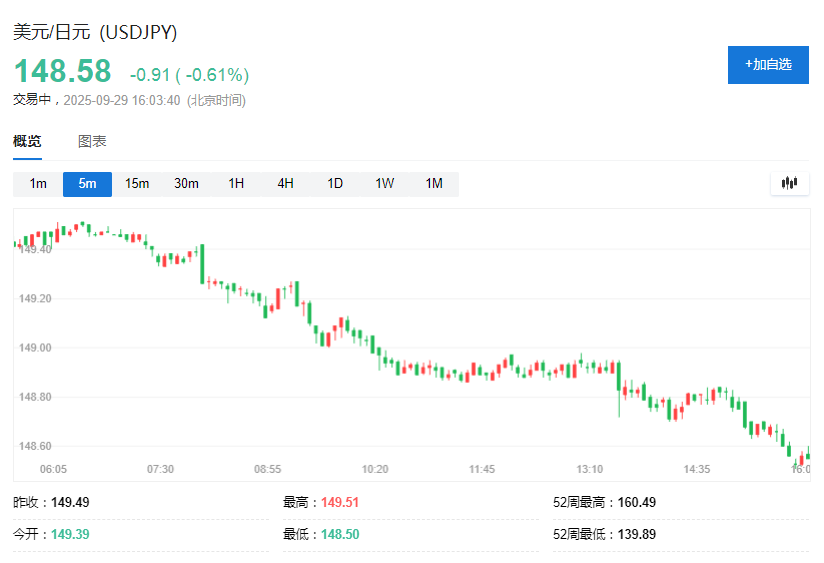
Group 1 - The core viewpoint of the articles indicates that the USD/JPY exchange rate is currently stable around 148, with recent CPI data from Tokyo suggesting a slowdown in inflation, which may impact monetary policy decisions in Japan [1][2] - According to Capital Economics, the weaker-than-expected CPI data in Tokyo has exaggerated the perception of nationwide inflation slowing down, leading to speculation about the likelihood of an interest rate hike in October [1] - The report estimates that recent measures, such as free childcare initiatives, have lowered Japan's overall inflation rate by approximately 0.7 percentage points, with expectations that the nationwide inflation rate will decrease from 3.3% to 3.1% [1] Group 2 - The USD/JPY is currently supported at the 200-day moving average around 148.40, with indicators showing that bullish momentum remains intact despite some weakening [2] - If the USD/JPY breaks above 149.00, it may face resistance in the 149.40-149.45 range, with a potential challenge to the psychological level of 150.00 [2] - Conversely, if the exchange rate falls below the support level of 148.40, it could lead to a rapid decline towards targets of 148.00, 147.50, and the 147.20-147.15 area, with a shift to a bearish trend if it drops below 147.00 [2]
每日机构分析:9月29日
Xin Hua Cai Jing· 2025-09-29 13:53
Group 1: Eurozone Inflation and Central Bank Policies - Pantheon Macroeconomics suggests that inflation in the Eurozone may be higher than expected, with economists predicting a rate of 2.2%, but the actual figure could be around 2.4% due to low base effects in France and Spain, putting pressure on the European Central Bank's hopes for rate cuts by year-end [1] - Standard Chartered Bank maintains its view that the Reserve Bank of Australia will keep the cash rate at 3.60% in the upcoming meeting, but unexpected economic data and rising CPI could increase the risk of pausing rate cuts in Q4 [1] - Nomura forecasts increased volatility in the USD/JPY exchange rate, with attention on the Bank of Japan's upcoming Tankan survey and U.S. government shutdown developments affecting market sentiment [1] Group 2: Japan's Inflation and Economic Measures - Capital Economics indicates that Tokyo's lower-than-expected CPI exaggerates the speed of inflation slowdown across Japan, with overall inflation expected to drop by about 0.7 percentage points due to measures like free childcare [2] - The nationwide inflation rate, excluding fresh food and energy, is projected to decrease from 3.3% to 3.1% [2] - Capital Economics maintains that the Bank of Japan will resume tightening policies in the October meeting despite the recent CPI data [2] Group 3: Emerging Markets and Trade Uncertainty - Asian currencies and emerging market stocks rose as the dollar fell, but uncertainty surrounding a potential U.S. government shutdown could limit the gains [2] - Galaxy Securities notes that Singapore's manufacturing outlook is weak due to trade uncertainties, with factory output declining by 7.8% year-on-year, particularly in the electronics and biopharmaceutical sectors [2] - Indian bond traders are hopeful for a dovish signal from the Reserve Bank of India to revive market sentiment, with potential rate cuts expected to lower 10-year bond yields [3]
10月加息信号增强!日本央行鸽派官员“倒戈”,日元、日债收益率走高
Zhi Tong Cai Jing· 2025-09-29 11:19
Core Viewpoint - The increasing demand for interest rate hikes in Japan is highlighted by a dovish Bank of Japan (BOJ) committee member, indicating a shift in the support for policy action, while still acknowledging existing overseas risks [1][2] Group 1: Economic Indicators and Interest Rate Expectations - Asahi Noguchi, a BOJ member, stated that Japan is making steady progress towards its 2% inflation target, suggesting a more urgent need for policy rate adjustments [1] - Following Noguchi's remarks, the Japanese yen appreciated against the US dollar, and the yield on 10-year government bonds increased, as traders interpreted his comments as a signal for imminent rate hikes [1] - Approximately one-third of economists surveyed expect an increase in borrowing costs at the upcoming policy meeting, reflecting heightened market anticipation for a rate hike [1][2] Group 2: Market Reactions and Predictions - Swap traders estimate a 60% probability of a rate hike during the October 29-30 meeting, a significant increase from earlier expectations [2] - The key inflation indicators in Japan have remained above 2% for three consecutive years, with second-quarter economic growth surpassing economists' median forecasts [2] Group 3: Policy Considerations and Risks - Noguchi emphasized that the risks to Japan's price levels and economic activity are trending upwards, necessitating a careful evaluation of the current monetary policy [3] - BOJ Governor Kazuo Ueda is expected to address the impact of US tariff measures on the domestic and international economy in an upcoming important speech [3] - The political landscape in Japan, particularly the upcoming leadership election in the ruling Liberal Democratic Party, could influence the timing of any interest rate adjustments [4]
10月加息定了?日本央行鸽派委员转向:现在更需要加息
Hua Er Jie Jian Wen· 2025-09-29 09:37
Core Viewpoint - The necessity for interest rate hikes by the Bank of Japan (BOJ) is more urgent than ever, as indicated by BOJ board member Asahi Noguchi, marking a significant hawkish signal from the central bank [1][4]. Group 1: Economic Indicators and Interest Rate Hike - Strong economic indicators suggest steady progress towards the BOJ's 2% price stability target, increasing the urgency for policy rate adjustments [1][5]. - The swap market pricing indicates a 60% probability of an interest rate hike during the BOJ's meeting on October 29-30, more than double the likelihood from earlier in the month [4]. Group 2: Inflation and Wage Growth - Various inflation expectation indicators are aligning with the BOJ's 2% target, with core inflation remaining above 2% for over three years [6]. - Actual wage growth is lagging, which may impact consumer purchasing power and inflation dynamics, as noted by Noguchi [8]. Group 3: Monetary Policy and Asset Management - Noguchi advocates for reducing the central bank's balance sheet while ensuring market stability, warning against the risks of excessive quantitative easing [9]. - The upcoming Tankan survey is anticipated to show improved business confidence, serving as a critical reference for the BOJ's economic assessment [6][9].

10月加息定了?日本央行鸽派委员转向:现在“比以往任何時候”都更需要加息
Hua Er Jie Jian Wen· 2025-09-29 08:07
Core Viewpoint - The necessity for interest rate hikes by the Bank of Japan (BOJ) is more urgent than ever, as indicated by BOJ board member Asahi Noguchi, suggesting a shift towards a more hawkish stance [1][4]. Economic Indicators - Strong economic data supports the case for interest rate hikes, with corporate profits increasing and companies more easily passing on rising costs to consumers [5]. - Various inflation expectation indicators are gradually aligning with the BOJ's 2% target, with core inflation remaining above 2% for over three years [5]. Internal Support for Tightening - The internal support for tightening measures within the BOJ is growing, as evidenced by two committee members voting in favor of rate hikes earlier this month [4]. - Market expectations for a rate hike during the upcoming BOJ meeting on October 29-30 have surged, with traders pricing in a 60% probability, more than double from earlier in the month [4]. Risks to Economic Outlook - Despite the rationale for rate hikes, there are still risks to the economic outlook, including potential slowdowns in consumer inflation rates due to easing import price pressures [6]. - Actual wage growth, a key variable affecting consumption and inflation, may take time to show an upward trend, putting pressure on household purchasing power [6]. Asset Purchase Policy - Noguchi advocates for reducing the size of the BOJ's balance sheet while considering market stability, emphasizing the need for the market to determine asset prices [7]. - He warns against the consequences of prolonged quantitative easing, suggesting that excessive reduction of reserves could hinder the BOJ's ability to control money market rates effectively [7]. Upcoming Events - BOJ Governor Kazuo Ueda is scheduled to visit Osaka and hold a press conference, where he may comment on the Tankan survey results, potentially indicating shifts in economic assessment [8]. - Political instability following Prime Minister Shigeru Ishiba's announcement of resignation may complicate the BOJ's operations, especially if a pro-easing candidate wins the ruling party's presidential election [8].
两票“鹰啸”压顶植田和男 日本央行10月加息呼声愈发响亮
Zhi Tong Cai Jing· 2025-09-29 03:03
(原标题:两票"鹰啸"压顶植田和男 日本央行10月加息呼声愈发响亮) 智通财经APP获悉,日本央行在本月货币政策会议上出现的鹰派与鸽派阵营分裂,无疑增加了偏向鸽派 立场的央行行长植田和男加快加息步伐的压力,大幅提高了最早在10月日本央行就可能再次收紧货币政 策的前景概率。 日本央行本月早些时候如市场所预期的那样将基准利率维持在0.5%不变,但两名货币政策委员会成员 呼吁加息25个基点的异议震惊全球市场,被解读为日本央行对经济逆风的担忧较先前市场想象的要少。 两名持异议者,无疑凸显出日本央行委员会的鹰派转向;该央行货币政策委员会在7月讨论了物价压力及 加息必要性,迄今数据已缓解市场对于美国、日本经济前景的担忧;但是部分分析师仍然怀疑经济数据 能否说服植田和男在10月采取加息行动。 目前尚不确定此举是否旨在有意向市场发出加息迫近的信号,但资深的"日银观察家"岩下真理表示,这 反映了日本央行委员会成员中一种日益增长的观点:下一次加息的条件正在成熟。 "鉴于加息迟早会发生,持异议者可能希望推动植田和男更快行动,把加息落地。"岩下在采访中表示。 自2023年出任日本央行行长以来,植田和男实现了17年来的首次加息,但在过 ...
9月东京CPI意外持平,支撑日本央行谨慎立场
Zhi Tong Cai Jing· 2025-09-26 02:21
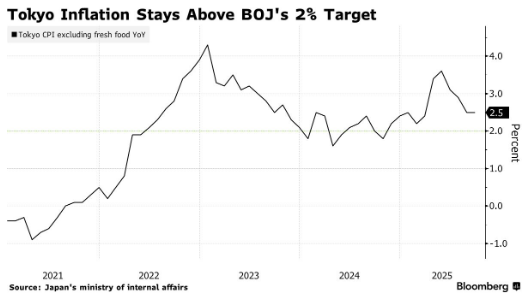
Core Insights - Tokyo's consumer inflation rate remained unexpectedly stable due to temporary subsidy policies, supporting the Bank of Japan's cautious stance on interest rate hikes while not deviating from the overall upward path for rate increases [1][3] Inflation Data - The Tokyo core consumer price index (CPI), excluding fresh food, rose by 2.5% year-on-year in September, lower than the Bloomberg survey median expectation of 2.8% [1][3] - The "super core" inflation index, which excludes energy and fresh food, also increased by 2.5% year-on-year, below the economists' expectation of 2.9% [3][4] Government Policies - Government subsidies aimed at alleviating rising living costs significantly impacted inflation data, leading to fluctuations in inflation trends [3] - The Tokyo city government expanded free childcare services, contributing a 0.3 percentage point drag on the inflation index, while a reduction in water fees further suppressed inflation growth [3][4] Energy Prices - Energy prices provided some support to the inflation index, with a year-on-year increase for the first time in three months, influenced by the base effect from last year's utility subsidy policies [3][4] Food Prices - Processed food prices rose by 6.9% year-on-year in September, down from 7.4% in August, indicating ongoing food inflation pressure [4] - Rice prices surged by 46.8% year-on-year in September, although this was a decrease from the 67.9% increase in August, raising concerns about future price stability [4] Political Context - The resignation of Prime Minister Shigeru Ishiba was influenced by public dissatisfaction with rising living costs, which played a key role in electoral defeats [5] - The upcoming Liberal Democratic Party presidential election on October 4 will see candidates promising measures to alleviate household cost pressures [5] Monetary Policy Outlook - The Bank of Japan's decision to maintain a 0.5% policy rate faced dissent, with some members advocating for a rate hike, leading to increased market speculation about a potential rate increase in the upcoming meeting [5] - The current sticky inflation environment suggests that the Bank of Japan may have conditions to raise rates, depending on the assessment of U.S. tariff policy impacts [5] Real Estate Market - The Tokyo real estate market is experiencing significant price increases, with the average price of family-type second-hand apartments in central Tokyo rising by 38% year-on-year to 107 million yen (approximately 719,700 USD) [5]
美联储戴利:不应一路加息至中性利率水平,风险太大。
Sou Hu Cai Jing· 2025-09-25 19:46
Core Viewpoint - The Federal Reserve's Daly suggests that increasing interest rates all the way to the neutral level poses significant risks [1] Group 1 - The Federal Reserve should avoid a continuous rate hike to the neutral level due to potential risks involved [1]
DLSM外汇平台:日本央行想加息,美联储很谨慎!美元兑日元现在啥情况?
Sou Hu Cai Jing· 2025-09-25 02:56
Core Viewpoint - The USD/JPY exchange rate is experiencing slight fluctuations, currently trading around 148.65, down approximately 0.16%, following a period of risk aversion in the financial markets and a cautious stance from the Federal Reserve [1] Group 1: Market Sentiment and Economic Indicators - The release of the Bank of Japan's July meeting minutes has increased market confidence in the yen, although the Federal Reserve's cautious approach continues to support the dollar [3] - The market is awaiting the final GDP data for the second quarter from the U.S., which could exert downward pressure on the USD/JPY exchange rate if any signs of economic weakness are detected [3] Group 2: Bank of Japan's Monetary Policy - Key points from the Bank of Japan's July meeting minutes indicate that members discussed future monetary policy directions, noting that trade agreements between Japan and the U.S. have reduced uncertainty, but attention must be paid to the impact of tariffs on the economy and prices [4] - Some members emphasized the need to evaluate the impact of the interest rate hike from January this year [5] - All members agreed that if economic and price trends align with expectations, the Bank of Japan should continue to pursue interest rate hikes [6] Group 3: U.S. Federal Reserve's Influence - Federal Reserve Chairman Jerome Powell expressed caution regarding further policy easing, indicating that the Fed will balance high inflation and a weak job market when making future rate decisions [8] - Financial markets predict potential rate cuts of 25 basis points in the remaining meetings of this year and in the first quarter of 2026, based on the Fed's guidance from last week's meeting [9] Group 4: Technical Analysis of Exchange Rate - From a technical perspective, the USD/JPY exchange rate is currently in an adjustment phase after a strong upward trend, with expectations of a continuation of the upward movement post-adjustment [10] - The Relative Strength Index (RSI) is above the midpoint, indicating a bullish bias for this currency pair [10] - The Moving Average Convergence Divergence (MACD) is approaching the zero line, suggesting that the USD/JPY may remain in an adjustment state in the short term [12]