
绿色经济

Search documents
国际观察丨数智服贸 互惠共赢——中国高水平对外开放为全球服务贸易描绘新图景
Xin Hua Wang· 2025-09-14 05:06
Core Insights - The China International Service Trade Fair (CIFTIS) emphasizes the importance of service trade in the global economy, showcasing China's commitment to high-level opening-up and international cooperation in service trade [1][2][3] Group 1: Event Overview - The 2025 CIFTIS in Beijing focuses on the theme "Digital Intelligence Leading, Service Trade Renewed," highlighting the broad cooperation prospects, deep innovation, and high openness perceived by international guests and exhibitors [1] - The fair serves as a platform for enhancing international service trade cooperation networks, especially in the context of pressures on goods trade growth [2] Group 2: Economic Impact - The global digital service trade is projected to reach $4.64 trillion in 2024, with an annual growth rate of 8.3%, indicating a continuous expansion of service trade [2] - The fair has been recognized as a significant international platform for policy exchange and innovation cooperation in the service economy, reflecting China's determination to strengthen international service trade [3] Group 3: Technological Integration - China is accelerating the development of digital service trade and new business models such as "AI + service trade," injecting new vitality into global service trade through technological empowerment and innovation [4] - The integration of advanced technologies like AI, 5G, and big data with service trade is transforming production and lifestyle, showcasing China's leadership in high-value service trade [4] Group 4: Global Cooperation - The fair promotes a collaborative approach to service trade, with emphasis on mutual benefits and shared development opportunities among countries [5][6] - China's efforts in reducing service trade barriers over the past decade have significantly contributed to the liberalization of service trade in various sectors, including computer services and air transport [6] Group 5: Future Outlook - The ongoing development of service trade in China is seen as a solution to structural challenges in the global economy, fostering deeper collaborative innovation among countries [7] - China's commitment to building an open world economy is expected to enhance global economic cooperation, promoting a more inclusive and balanced economic globalization [7]
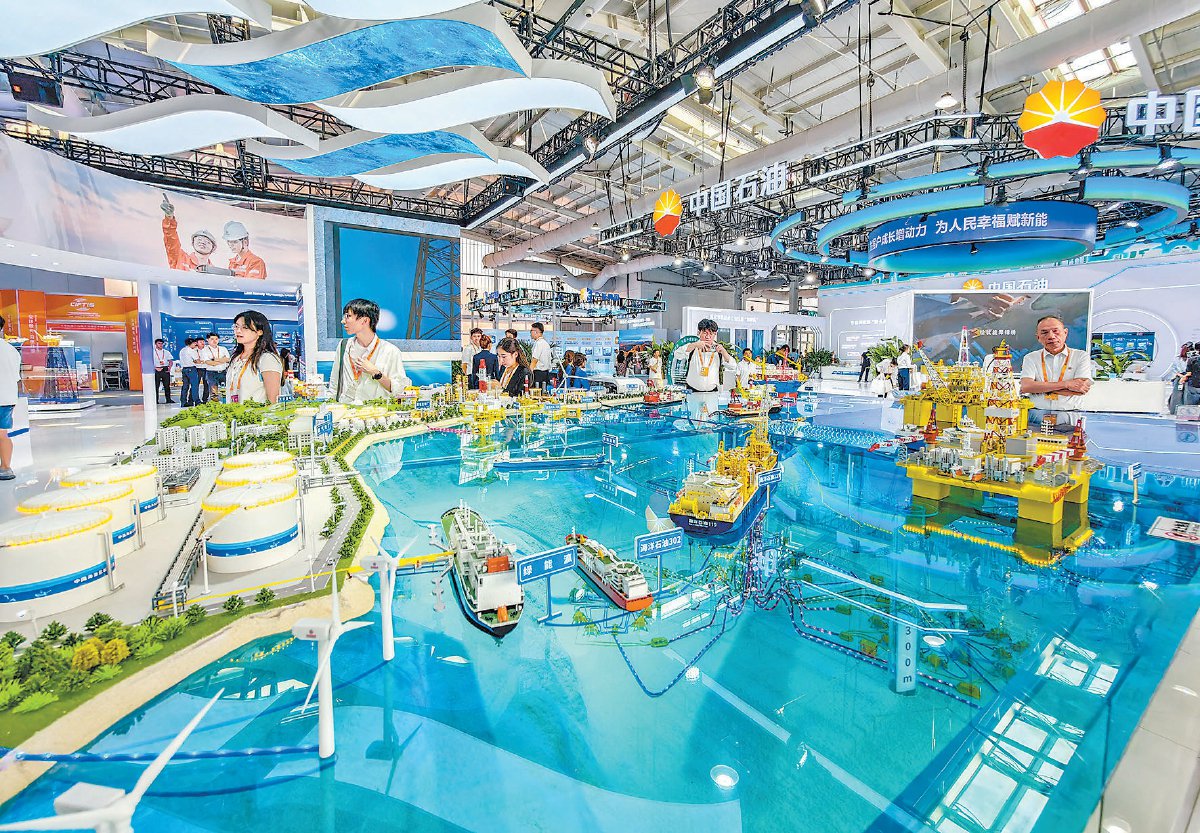
绿色创新 绘就双碳新画卷
Bei Jing Ri Bao Ke Hu Duan· 2025-09-13 22:25
Group 1: Environmental Services Exhibition Highlights - The exhibition at Shougang Park focuses on three key areas: new energy and low-carbon services, ecological services and circular economy, and green low-carbon digital technologies [1] - The newly established zero-carbon park concept is gaining traction, with over 10 exhibitors showcasing innovative technologies and solutions for zero-carbon park construction [6] - Beijing Energy Group has completed a smart heating renovation of 72.5 million square meters in the past three years, enhancing energy efficiency and reducing carbon emissions [6][7] Group 2: Technological Innovations in Water Management - The exhibition features a water technology innovation area, showcasing new devices and technologies for water management, including satellite remote sensing and smart rain gauges [8][9] - The introduction of intelligent water quality monitoring systems allows for real-time data collection on various water quality parameters, enhancing environmental monitoring capabilities [8] Group 3: Global Green Economy Forum - The "Global Green Economy Development Forum" discussed innovations and global cooperation in green economy, emphasizing China's achievements in sustainable development [10] - The transition of China's foreign trade from traditional exports to new energy products like electric vehicles and solar components reflects a significant structural change towards sustainability [11] - Beijing's government plans to incorporate the development of an international green economy benchmark city into its upcoming "14th Five-Year Plan," focusing on seven strategic green industries [11]

寻路全球绿色经济新空间
Bei Jing Shang Bao· 2025-09-13 16:06
Group 1: Global Green Economy Development - The global green transition has entered a critical stage driven by innovation, focusing on sustainable development goals (SDGs) and global cooperation [1] - Future green bonds and SDGs bonds are expected to become important financial tools to achieve the UN's 2030 sustainable development agenda [1] - Emerging markets, particularly in Asia, Africa, and Latin America, are anticipated to become significant growth engines for China's green industry [1] Group 2: Carbon Market and Energy Transition - The expansion of the mandatory carbon market will create new growth points for enterprises by integrating various emission reduction costs and subjects into a unified management system [2] - The green low-carbon transition in the energy sector requires a multidisciplinary approach and tailored solutions for different projects and enterprises [2] - Artificial intelligence is emerging as a core engine driving the transformation of green energy and equipment manufacturing, enhancing efficiency and smart capabilities [2] Group 3: Zero Carbon Park Construction - The construction of zero carbon parks focuses on optimizing energy structure and improving energy efficiency through various steps, including energy supply and consumption accounting [3][4] - The core value of creating zero carbon parks lies in cost reduction and efficiency enhancement, which can improve economic benefits and brand image [4] - Zero carbon parks aim to foster green industries and create new economic growth drivers through technology development and industrial transformation [4]
2025年服贸会“全球绿色经济发展论坛”在京举办
人民网-国际频道 原创稿· 2025-09-13 09:11
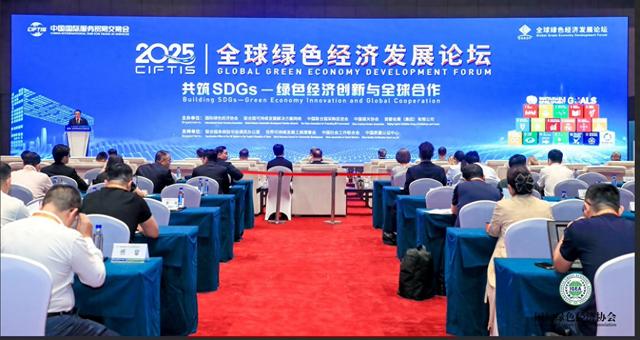
Group 1 - The "Global Green Economy Development Forum" was held at the Shougang International Exhibition Center, focusing on the theme "Building SDGs Together - Green Economic Innovation and Global Cooperation" [1][2] - The forum gathered over 300 participants, including officials from the UN and EU, diplomats from 10 countries, and representatives from various sectors to discuss key topics related to sustainable development goals (SDGs) and green economy [1][2] - Key discussions included "SDGs and Green Economy," "Green Trade and Carbon Footprint," "Green Innovation and Industrial Transformation," and "Zero Carbon Park Construction and Development" [1] Group 2 - The UN's 2030 Sustainable Development Agenda has only five years left, urging immediate action from the international community, with China recognized for its achievements in green economy and AI [2] - The Chinese Social Work Association emphasized the importance of implementing ESG principles across organizations and developing a standardized ESG evaluation system [2] - Beijing aims to become a benchmark city for green economy, focusing on green technology, industry cultivation, and policy environment in its upcoming "14th Five-Year Plan" [2] Group 3 - Various experts and diplomats shared insights on the 2030 SDGs and green economy, discussing topics like green trade, carbon footprint, and green supply chains [3] - The forum announced the establishment of a green economy platform linking the UN and international community, along with the release of several significant reports and guidelines related to sustainable development [4] - Two international cooperation agreements were signed, including a partnership for sustainable development actions and a project for AI intelligent energy-saving technology [4]
热议绿色经济,服贸会传递创新与全球合作声音
Bei Jing Ri Bao Ke Hu Duan· 2025-09-13 05:00
Group 1 - The "Global Green Economy Development Forum" was held with a focus on "Building SDGs - Green Economic Innovation and Global Cooperation" to discuss the advancement of the UN's 2030 Sustainable Development Goals (SDGs) [1][3] - Out of the 17 SDGs, 9 are directly related to the green economy, with only 35% of the 169 targets showing satisfactory progress according to the UN's July report [3] - Key areas of significant progress include public health, education, energy, and digital connectivity, while slow progress is noted in safe drinking water, sanitation services, and climate change [3] Group 2 - The forum emphasized the need to revive multilateralism and build ambitious global partnerships as essential for achieving the SDGs [3] - Former UN Deputy Secretary-General Sha Zukang highlighted that green trade, carbon footprints, zero-carbon parks, and AI applications in green industries are core areas for global cooperation [3][4] - The UN Resident Coordinator in China praised China's achievements in green economy initiatives, particularly in electric vehicles, and suggested enhancing international collaboration in green innovation, technology sharing, and standard recognition [4] Group 3 - Beijing is actively working to establish itself as a benchmark city for green economic development, focusing on green technology innovation, industry cultivation, and creating livable green cities [5] - The city government plans to incorporate the goal of becoming an international green economy benchmark city into its upcoming "14th Five-Year Plan" [5] - Seven strategic green industries will be prioritized, including advanced energy, synthetic biology manufacturing, alternative protein, smart connected vehicles, climate resilience, ecological protection, and green finance [5]
帮主郑重:8月金融数据暗藏玄机!M2增速放缓,这些信号股民必须看懂
Sou Hu Cai Jing· 2025-09-12 22:38
Group 1: Monetary Policy and Economic Indicators - M2 growth rate decreased to 8.8% with a total balance of 331.98 trillion yuan, indicating a tightening of liquidity in the market [3] - Corporate medium to long-term loans increased by 7.38 trillion yuan in the first eight months, suggesting strong investment in sectors like manufacturing and technology [3] - Household deposits surged by 9.77 trillion yuan, reflecting a conservative outlook on future income and a lack of consumer confidence [4] Group 2: Interest Rates and Borrowing Costs - Interbank borrowing rates and repurchase rates hit new lows at 1.4% and 1.41% respectively, reducing borrowing costs for businesses [5] - High-debt industries, such as real estate, may benefit from lower interest rates, potentially alleviating financial pressures [6] - Technology companies are encouraged to borrow for innovation due to lower interest rates, particularly in sectors like semiconductor equipment and AI [7] Group 3: Cross-Border Transactions and Currency - Cross-border RMB settlement reached 1.47 trillion yuan, with goods trade accounting for 1.11 trillion yuan, indicating accelerated RMB internationalization [8] - The growth in cross-border trade along the Belt and Road Initiative may benefit companies involved in construction machinery and infrastructure materials [8] - Companies involved in the development of the CIPS system, such as Sifang Jingchuang and Shenzhou Information, are likely to see stable stock performance [8] Group 4: Foreign Investment and Market Sentiment - Foreign exchange reserves reached 3.322 trillion USD, the highest in recent years, reflecting international confidence in the Chinese economy [9] - Northbound capital inflows exceeded 50 billion yuan in August, primarily targeting leading consumer and technology stocks [9] - The increase in foreign exchange reserves may lead to greater currency volatility, necessitating hedging strategies for those holding foreign assets [9] Group 5: Investment Opportunities and Risks - Opportunities identified include manufacturing and technology sectors, supported by a 7.38 trillion yuan increase in corporate loans [10] - The green economy is highlighted as a potential growth area, with a 29.5% increase in carbon trading volume [10] - Risks include the sluggish recovery in the real estate sector, with only a 1.08 trillion yuan increase in household long-term loans [11] - A liquidity trap is indicated by M1 growth at 6%, suggesting businesses are hesitant to spend, which could lead to market stagnation [12]

多项服务贸易新标准发布
Bei Jing Shang Bao· 2025-09-12 16:20
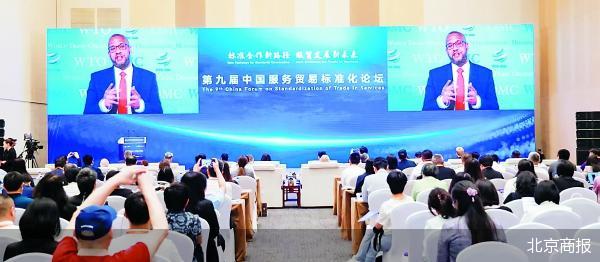
Core Insights - The rapid development of international service trade has made standardization a crucial component of international economic cooperation [1] - The 9th International Service Trade Standardization Forum was held during the 2025 Service Trade Fair, focusing on "New Paths for Standard Cooperation, New Futures for Service Trade" [1] - The forum launched multiple industry standards, established international platforms, and initiated international projects to support Chinese enterprises in navigating international market regulations [1][3] Group 1: Standardization and Compliance - Chinese enterprises are accelerating their global expansion, with standardization leading compliance, service upgrades, and brand building as key to enhancing competitiveness and sustainability [3] - The current global service trade is entering a new transformation and innovation phase, driven by digital technology, green economy, and artificial intelligence [3] - The Ministry of Commerce aims to strengthen inter-departmental collaboration and promote standardization in emerging industries, establishing a comprehensive management standard system [3][4] Group 2: Trade Barriers and Market Dynamics - The lack of unified global standards creates "invisible barriers" that pose significant challenges for enterprises going abroad, driving the need for service trade standardization [4] - China's service trade scale is projected to exceed $1 trillion in 2024, ranking second globally with a year-on-year growth of 13.2%, outpacing the global average growth rate [4] - Service exports reached $445.9 billion, growing by 17%, while imports totaled $610.6 billion, increasing by 10.6% [4] Group 3: Standardization Initiatives - The forum announced the release of 19 group standards, which are expected to lower international trade transaction costs and promote connectivity and innovation [5] - The 2025 "Service Trade Standardization China Case" was officially released, featuring 10 standard projects, highlighting China's growing influence in international standard-setting [6] - Experts agree that standardization is essential for service trade development, serving as a key link between innovation, cooperation, and inclusivity [6]
贸易、经济、开放,尼尔·布什谈中国发展
2 1 Shi Ji Jing Ji Bao Dao· 2025-09-12 14:53
Group 1: US Economic Concerns - The US economy is facing pressures such as slowing domestic demand and job growth, with the International Monetary Fund (IMF) noting that the downward adjustment of employment data is greater than historical averages [2] - The US tariff policy, based on the flawed assumption that trade deficits are harmful, is predicted to have detrimental effects on the economy, leading to a slowdown and potential recession [3][4] - Recent data from the US Department of Labor indicates that from April 2024 to March 2025, the number of new jobs added is 910,000 less than initially reported, suggesting a cooling job market [3] Group 2: China Economic Outlook - Confidence in China's economic growth is bolstered by its rapid development in the green economy, particularly in solar and wind energy technologies, where China is seen as a global leader [5] - In the first half of the year, China's total automobile sales reached 15.653 million units, with new energy vehicles accounting for 44.3% of sales, attributed to the extensive deployment of charging infrastructure [5] - An investment initiative is underway, with collaboration between a US investor and a Chinese auto parts company to establish a factory in Saudi Arabia, with future plans to enter the European market [5] Group 3: Personal Insights on China - The individual has a long-standing connection with China, having visited over 180 times, and notes the significant increase in China's internationalization and openness, enhancing the experience for foreigners living and doing business in China [6]
贸易、经济、开放 尼尔·布什谈中国发展
2 1 Shi Ji Jing Ji Bao Dao· 2025-09-12 14:42
Group 1: US Economic Concerns - The US economy is facing pressures, including slowing domestic demand and job growth, as highlighted by the IMF [2] - The IMF noted that the downward adjustment of US employment data is greater than historical averages, indicating potential economic challenges [2] - Neil Bush criticized the US tariff policy based on the flawed assumption that trade deficits are harmful, suggesting it could lead to greater economic harm and job market deterioration [3][4] Group 2: Employment Market Insights - The US labor market is showing signs of cooling, with a reported decrease of 910,000 jobs from initial estimates for the period from April 2024 to March 2025 [3] - Companies are responding to economic uncertainty by halting expansions and cutting costs, which may further exacerbate job market issues [3] Group 3: Chinese Economic Growth - Neil Bush expressed confidence in China's economic growth potential, particularly in the green economy sector, where China is making significant advancements [5] - The Chinese automotive industry reported a total of 15.653 million vehicles sold in the first half of the year, with new energy vehicles accounting for 44.3% of sales [5] - Bush is actively collaborating with a Chinese auto parts company to support investments in Saudi Arabia and potentially enter the European market [5] Group 4: Personal Insights on China - Neil Bush has visited China over 180 times and noted the significant increase in China's internationalization and openness compared to previous years [7] - His early experiences in China, including interactions with local tourists, reflect the evolving perception of China as a vibrant place for tourism and business [6][7]
2025服贸会 | 国内外政、企、学界代表共话绿色经济创新与全球合作
Bei Jing Shang Bao· 2025-09-12 14:28
Group 1: Global Green Transition - The global green transition has entered a critical stage driven by innovation, with discussions focusing on green economic innovation and global cooperation at the 2025 Service Trade Fair theme forum [1] - Future green bonds and SDGs bonds are expected to become crucial financial tools for achieving the UN's 2030 Sustainable Development Goals, with multilateral development banks playing a significant role in financing and technical assistance [2] Group 2: Emerging Markets and Green Industry - Emerging markets in Asia, Africa, and Latin America are becoming increasingly important growth engines for China's green industry, shifting from "product export" to "industry export" through local operations and technology licensing [3] - The competitive advantage in the green industry will transition from price advantage to value leadership, focusing on brand competitiveness, technological originality, and standard-setting [3] Group 3: Carbon Market and Business Growth - The expansion of the mandatory carbon market in China will create new business growth opportunities for enterprises by broadening market control and integrating various stakeholders into a unified management system [4] - The improvement of the carbon market is expected to foster rapid development in emerging fields such as carbon verification, monitoring, consulting, and finance [4] Group 4: Energy Sector Transformation - The green low-carbon transition in the energy sector is a multidisciplinary technical integration challenge, requiring tailored solutions for each project and strong project management capabilities [5] - Artificial intelligence is becoming a core driver for the transformation of green energy and equipment manufacturing, enhancing efficiency and enabling cost reduction and zero-carbon goals [6] Group 5: Zero Carbon Parks - The construction of zero-carbon parks focuses on optimizing energy structure and improving energy efficiency through various steps, including energy supply and consumption accounting, carbon emission assessment, and feasibility analysis [7] - The core value of creating zero-carbon parks is to achieve cost reduction and efficiency improvement, enhance brand image, and foster green industry development through technological innovation and industrial transformation [8]