
自动驾驶

Search documents
北极星股价震荡上行,机构下调目标价与评级
Xin Lang Cai Jing· 2026-02-21 15:13
Group 1 - Morgan Stanley maintains a hold rating on Polaris (PII.N) but lowers the target price from $81 to $74 due to revised delivery expectations, additional financing needs, and unclear autonomous driving strategy [1] - Cantor Fitzgerald downgraded another company named Polestar (PSNY) from neutral to underweight, which is distinct from Polaris (PII) [1] Group 2 - Polaris stock price has shown volatility, closing at $66.37 on February 20, 2026, with a daily increase of 1.55% and a 5-day cumulative increase of 0.42%, but a 20-day decline of 6.42% [2] - On February 20, 2026, trading volume was 664,700 shares with a transaction value of approximately $44.03 million, and the stock experienced a daily fluctuation of 4.15% [2] - The automotive sector saw a slight increase of 1.21% during the same period, slightly outperforming the individual stock performance of Polaris [2]

特斯拉 Autopilot 辅助驾驶致死案败诉:2.43 亿美元天价赔偿落定,曾拒绝以 6000 万美元庭外和解
Xin Lang Cai Jing· 2026-02-21 03:25
Core Viewpoint - A federal judge has officially rejected Tesla's request to overturn a jury verdict requiring the company to pay $243 million in damages related to a fatal accident involving its Autopilot system, marking a significant legal setback for the company [1][5]. Group 1: Legal Proceedings - The Miami federal court ruled that the evidence presented during the trial "fully supported" the jury's decision, and Tesla did not provide sufficient new arguments to overturn the verdict [1][5]. - The jury found Tesla 33% at fault for the accident, which resulted in a $43 million compensatory award and $200 million in punitive damages, marking Tesla's first loss in a wrongful death case involving Autopilot [5][7]. - Tesla had previously rejected a $60 million settlement offer before the trial, but now faces a much larger payout [5][7]. Group 2: Ongoing Legal Challenges - Following the August 2025 verdict, Tesla is facing a wave of lawsuits related to Autopilot incidents, with at least four additional cases settled to avoid further uncertainty [7]. - New lawsuits continue to emerge, including a January 2026 case involving a Model X accident that resulted in the deaths of a family of four [7]. - Tesla is also under increasing regulatory scrutiny, with a California judge ruling in December 2025 that the use of the term "Autopilot" in marketing is misleading and violates state law [7][8]. Group 3: Corporate Response - Tesla has indicated plans to appeal the ruling and is attempting to limit punitive damages to three times the compensatory amount, although this would still result in a nine-figure payout [7]. - To avoid a 30-day sales ban in California, Tesla agreed to completely abandon the "Autopilot" name [8].


模拟芯片,机会在哪里?
3 6 Ke· 2026-02-21 02:14
Core Insights - The article discusses the transformation in analog circuit design over the past decade, highlighting both challenges and opportunities in the field [2][19] - The shift in workforce demographics, with a significant increase in foreign-born engineers dominating the sector, is a key factor in this transformation [3][4] Workforce Dynamics - Over 55% of PhD-level engineers in the U.S. are foreign-born, with over 60% of engineering PhD students being international [3] - The average salary for analog integrated circuit design engineers ranges from $145,000 to $220,000, which is significantly lower than salaries in high-value fields like software engineering [3] Structural Changes - The relative importance of analog circuits in chips has decreased due to the shrinking process nodes and the explosive growth of digital circuit density [5] - Analog circuits do not benefit from process scaling like digital circuits do, leading to increased challenges in performance at advanced nodes [5][6] - Analog circuit design is labor-intensive, with design cycles averaging 2-3 times longer than digital circuits [6] Market Trends - The semiconductor IP market is projected to reach $8.5 billion by 2024, with analog and mixed-signal IP expected to grow at over 15% annually [7] - The overall analog integrated circuit market is expected to grow from approximately $76 billion in 2024 to over $124 billion by 2032, driven by specialized applications rather than generic modules [8] High-Growth Areas - The SerDes market is projected to grow from $750 million to $2.4 billion by 2032, with a CAGR of 13% to 14% [9] - The automotive semiconductor market, particularly for battery management systems, is expected to grow from $4.9 billion in 2025 to $26 billion by 2035, with a CAGR exceeding 18% [10] - The CMOS image sensor market is forecasted to reach $23.2 billion in 2024, growing to over $30 billion by 2030, with Sony and Samsung as market leaders [12] Specialized Fields - Power semiconductors are projected to grow from $26.2 billion in 2024 to $43.3 billion by 2030, with GaN and SiC materials leading the charge [13] - The sensor market is driven by the explosion of IoT devices and healthcare digitalization, requiring ultra-low power and high precision [14] Career Outlook - The semiconductor industry is expected to face a shortage of over 67,000 workers by 2030, highlighting the demand for specialized knowledge [19] - Professionals in the field must decide whether to focus on cost advantages in commoditized areas or develop irreplaceable expertise in specialized domains [19]
特斯拉新车来了,网约车司机饭碗难保
汽车商业评论· 2026-02-20 23:06
Core Viewpoint - The article discusses the launch and implications of Tesla's Cybercab, a fully autonomous vehicle designed for ride-hailing, which could revolutionize the transportation industry by significantly reducing operational costs and changing the dynamics of vehicle ownership and usage [6][11][24]. Group 1: Cybercab Overview - Cybercab is a two-seater vehicle without a steering wheel or pedals, relying entirely on Tesla's Full Self-Driving (FSD) system, with a 35kWh battery providing approximately 320 kilometers of range under CLTC conditions [6][9]. - The vehicle is set to be mass-produced at Tesla's Texas Gigafactory, with a target annual production capacity of around 2 million units, potentially surpassing the production of other Tesla models [9][11]. - The manufacturing process utilizes a new "Unboxed" assembly technique, allowing for faster assembly times of 5-10 seconds per unit, significantly shorter than the Model Y's 34-35 seconds [13][16]. Group 2: Cost and Efficiency - The expected price range for Cybercab is between $25,000 and $30,000, with a focus on reducing production costs through fewer components—approximately half the parts of the Model 3 and 60% fewer structural components than the Model Y [18][16]. - The operational cost for Cybercab is projected to be $0.20 per mile, significantly lower than traditional ride-hailing services, which could lead to a shift in urban transportation dynamics [24][41]. Group 3: Regulatory Challenges - Despite technological advancements, regulatory hurdles remain significant, with current U.S. laws limiting the number of autonomous vehicles without steering wheels to 2,500 per manufacturer annually [26]. - Ongoing discussions in Congress aim to increase this limit, but face opposition, which could impact the speed of Cybercab's market entry and expansion [28][42]. Group 4: Market Potential - Goldman Sachs predicts that the Robotaxi market will accelerate commercialization by 2026, with U.S. revenues reaching $95 billion by 2030, and a global market potential exceeding $500 billion [41][42]. - The shift from personal vehicle ownership to using transportation services is seen as a transformative trend, with Cybercab positioned to capitalize on this change by leveraging Tesla's existing fleet for ride-hailing services [43].
美国法官维持针对特斯拉自动驾驶致命车祸案的2.43亿美元判决
Xin Lang Cai Jing· 2026-02-20 14:47
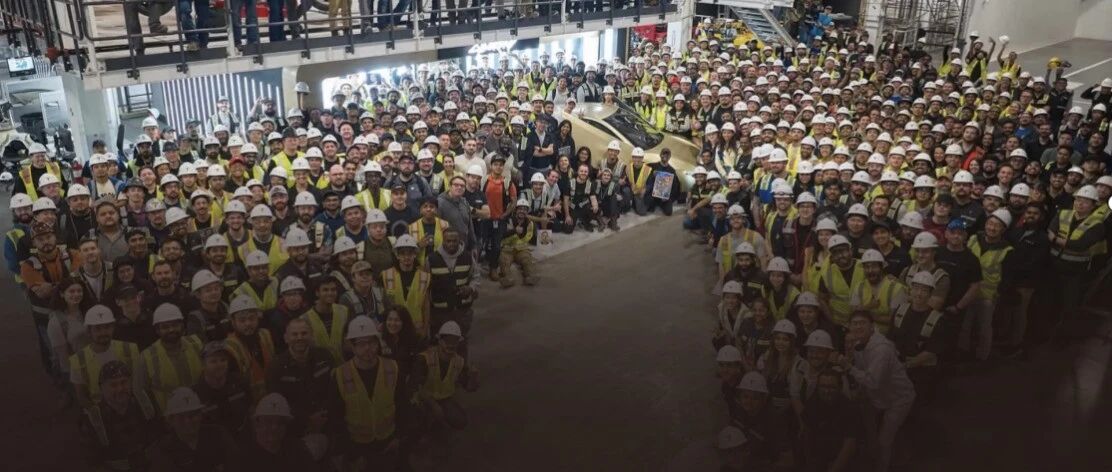
责任编辑:李桐 美国一名联邦法官驳回了特斯拉提出的异议,维持向2019年一起配备自动驾驶系统的ModelS致命车祸 受害者支付2.43亿美元的判决。 在周五公开的裁决中,迈阿密联邦地区法官贝丝·布鲁姆(Beth Bloom)表示,庭审证据"完全足以支 持"该判决,而特斯拉未提出任何新的理由来推翻判决。 在周五公开的裁决中,迈阿密联邦地区法官贝丝·布鲁姆(Beth Bloom)表示,庭审证据"完全足以支 持"该判决,而特斯拉未提出任何新的理由来推翻判决。 责任编辑:李桐 美国一名联邦法官驳回了特斯拉提出的异议,维持向2019年一起配备自动驾驶系统的ModelS致命车祸 受害者支付2.43亿美元的判决。 ...
2026年全球半导体销售额将首破1万亿美元
Xin Lang Cai Jing· 2026-02-20 13:11
Core Insights - The global semiconductor sales are projected to reach $791.7 billion in 2025, representing a 25.6% increase from $630.5 billion in 2024 [1][5] - The fourth quarter of 2025 is expected to see sales of $236.6 billion, a 37.1% increase compared to the same quarter in 2024, and a 13.6% increase from the third quarter of 2025 [1][5] - Monthly sales in December 2025 are estimated at $78.9 billion, up 2.7% from November 2025 [1][5] Regional Performance - In 2025, the Asia Pacific and other regions are expected to grow by 45.0%, the Americas by 30.5%, China by 17.3%, Europe by 6.3%, while Japan is projected to decline by 4.7% [4][8] - Monthly sales in December 2025 show growth in the Americas (3.9%), China (3.8%), and Asia Pacific/All Other (2.5%), while Europe (-2.2%) and Japan (-2.5%) experienced declines [4][8] Product Category Performance - Logic chip sales are projected to grow by 39.9% in 2025, reaching $301.9 billion, making it the highest-selling product category [4][8] - Memory chip sales are expected to increase by 34.8%, totaling $223.1 billion, ranking second in sales [4][8] Industry Outlook - The semiconductor industry is anticipated to achieve its highest annual sales in history, nearing $800 billion, with projections for 2026 sales to reach approximately $1 trillion [2][6] - Emerging technologies such as AI, IoT, 6G communication, and autonomous driving are expected to drive strong demand for chips [2][6]
5.999万美元起!特斯拉(TSLA.US)上架最便宜Cybertruck 最贵Cyberbeast亦降价
智通财经网· 2026-02-20 08:59
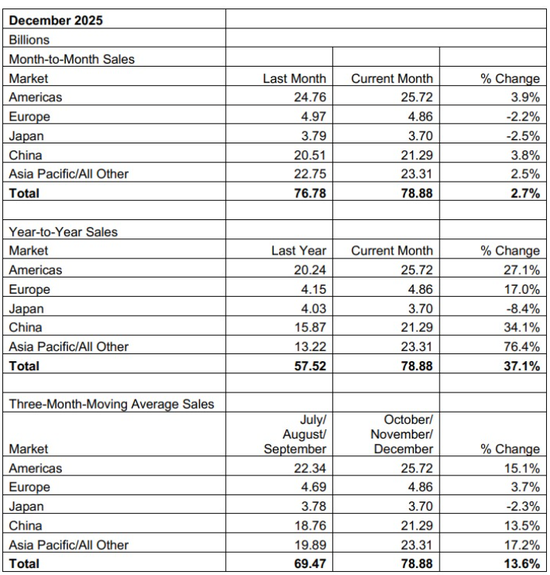
Core Viewpoint - Tesla has launched a new lower-priced Cybertruck model starting at $59,990, while also reducing the price of its most expensive model, Cyberbeast, from $114,990 to $99,990. This comes amid a reported 3% decline in revenue for 2025, marking the company's first annual revenue drop on record, as it faces pressure to boost electric vehicle sales and meet autonomous driving delivery targets [1][2]. Group 1 - Tesla's new Cybertruck model is priced at $59,990, making it the cheapest version in the series [1] - The price of the Cyberbeast model has been reduced from $114,990 to $99,990 [1] - Tesla's revenue is projected to decline by 3% in 2025, indicating the company's first annual revenue drop [1] Group 2 - A senior executive, Raj Jegannathan, has left Tesla after 13 years, highlighting a period of evolution for the company [1] - Tesla's stock price has dropped over 8% year-to-date, reflecting a shift in investor focus towards AI and autonomous driving rather than just vehicle delivery numbers [2] - Tesla's electric vehicle sales in the U.S. have also seen a decline this year, according to state registration data [2]
方向盘消失之后:特斯拉Robotaxi真要来了
Jing Ji Guan Cha Bao· 2026-02-20 06:35
公开资料显示,该车型为两座纯电自动驾驶车辆,取消方向盘与踏板,完全依赖自动驾驶系统运行,被 定位为Robotaxi网络核心终端。 平完成商业部署 (原标题:方向盘消失之后:特斯拉Robotaxi真要来了) 在安全数据层面,特斯拉披露的统计显示,在监督模式下运行FSD的车辆发生重大碰撞与轻微碰撞前的 平均行驶里程均显著高于人工驾驶水平。其中重大碰撞平均间隔里程约为530万英里,明显高于人工驾 驶平均水平;轻微碰撞平均间隔里程约160万英里,同样远超行业均值。该数据被视为公司推进自动驾 驶商业化的重要技术背书。 2026年2月18日,特斯拉在官方社交平台确认,首辆专为无人出租场景打造的Cybercab已在美国得州超 级工厂正式下线。这标志着其自动驾驶商业化战略从概念验证与测试阶段,进入实车落地阶段。 Cybercab的推出意味着特斯拉自动驾驶战略进入关键执行阶段。公司计划于2026年4月启动规模化生 产,并推动Robotaxi网络逐步落地。此前特斯拉已在美国部分城市开展自动驾驶运营试点,测试商业化 模式与调度体系。马斯克曾表示,在获得监管批准的前提下,未来完全自动驾驶车辆有望覆盖美国相当 比例区域。 整体来看,首 ...
小鹏汽车固态电池技术突破,AI战略转型加速
Jing Ji Guan Cha Wang· 2026-02-19 21:12
Group 1 - Core viewpoint: Xiaopeng Motors has made significant advancements in solid-state battery technology and is accelerating its transformation into an AI technology company, while short-term subsidies during the Spring Festival are providing support to the new energy vehicle market [1] Group 2 - Recent event: On February 16, 2026, Xiaopeng Motors announced the completion of full-scene road testing for its solid-state battery, which has an energy density of 450Wh/kg, a range exceeding 1000 kilometers, and can charge to 80% in 10 minutes, enhancing its competitive edge in the new energy sector [1] - Spring Festival market stimulus: During the Spring Festival period (up to February 19, 2026), multiple subsidy policies have driven the demand for new energy vehicles, particularly in county markets, with Xiaopeng Motors experiencing increased foot traffic in its county stores and strong demand for models priced between 100,000 to 150,000 yuan [1] - AI strategic transformation: On February 14, 2026, Xiaopeng Motors clarified its positioning as an "AI technology company," focusing on autonomous driving and robotics, aiming to reconstruct its profit model through AI technology and enhance its influence in the industry [1] Group 3 - Stock performance: From February 13 to 19, 2026, Xiaopeng Motors-W (09868.HK) saw a price fluctuation of -0.57%, closing at 69.65 HKD on February 16, while Xiaopeng Motors (XPEV.N) in the US experienced a -0.68% change, closing at 17.58 USD on February 19 [2] - Fund flow: On February 13, 2026, Xiaopeng Motors-W in the Hong Kong stock market had a net inflow of 10.0341 million HKD, indicating some investors are positioning themselves at lower prices [2] - Technical analysis: As of February 16, 2026, Xiaopeng Motors-W's stock price was below the middle band of the Bollinger Bands (71.5 HKD), with the MACD histogram turning positive, suggesting a potential need for short-term consolidation [2]
纽约叫停无人驾驶出租车扩张计划
Xin Lang Cai Jing· 2026-02-19 18:08
Core Insights - Waymo's opportunity to introduce autonomous taxis in New York State has been temporarily hindered due to the withdrawal of a proposal by Governor Kathy Hochul that aimed to modify vehicle and traffic regulations for the legalization of autonomous taxis outside New York City [1][4] Group 1: Proposal Withdrawal - Governor Hochul's spokesperson confirmed that the proposal was withdrawn due to insufficient support from relevant stakeholders, including the state legislature [1][4] - The withdrawal represents a setback for Waymo, which has been attempting to test and eventually deploy autonomous taxis in New York for several years [1][4] Group 2: Future Prospects - Waymo expressed disappointment over the decision but remains committed to bringing its services to New York and will continue to engage with the state legislature to advance this issue [5] - The company highlighted the demand from New Yorkers who have experienced Waymo services in other cities and wish to have similar options at home [5] Group 3: Existing Regulations - Even if the proposal had passed, it would not have fully opened the market for autonomous companies, as it included several restrictions, such as prohibiting operations in cities with populations over 1 million and requiring state transportation commissioner approval along with a $1 million fee and proof of at least $5 million in financial security [2][5] - The current autonomous vehicle pilot program in New York, which has stricter limitations, is expected to continue, allowing companies to apply for exemptions to the "one hand on the wheel" rule for testing but not for commercial services [6] Group 4: Current Operations - Waymo is currently testing in New York City, with permission to operate until March 31, and is allowed to test up to 8 Jaguar I-Pace autonomous vehicles, provided they have a human safety driver present [3][7] - The company operates commercial autonomous taxi services in multiple states, including Atlanta, Austin, Miami, Phoenix, Los Angeles, and the San Francisco Bay Area, providing over 400,000 paid rides weekly, with a goal of reaching 1 million rides per week by the end of the year [3][7]