
产业升级

Search documents
北京广告业“破圈”增长!8.2%增速背后藏着这些“硬招”
Xin Jing Bao· 2026-01-28 03:45
Core Insights - The Beijing advertising industry is experiencing rapid growth, with a projected revenue growth rate of 8.2% for large-scale advertising companies by 2025, leading the nation [1] Industry Overview - The market regulatory department in Beijing is playing a dual role as both a "service provider" and a "catalyst" in the ongoing industrial upgrade [1]
2026年01月28日:期货市场交易指引-20260128
Chang Jiang Qi Huo· 2026-01-28 02:50
1. Report Industry Investment Ratings - **Macro Finance**: Long - term bullish on stock indices, suggesting buying on dips; government bonds are expected to move in a range [1] - **Black Building Materials**: Short - term trading for coking coal, range trading for rebar, and waiting and seeing for glass [1] - **Non - ferrous Metals**: Waiting and seeing or holding long positions in small quantities for copper; strengthening observation for aluminum; waiting and seeing for nickel; range trading or taking profit on previous long positions for tin; range trading for gold; bullish movement for silver; range - bound oscillation for lithium carbonate [1] - **Energy and Chemicals**: Range trading for PVC, caustic soda and soda ash for the time being, range trading for styrene, rubber, urea, and methanol; weak oscillation for polyolefins [1] - **Cotton Textile Industry Chain**: Oscillatory adjustment for cotton and cotton yarn, oscillatory movement for apples and jujubes [1] - **Agriculture and Animal Husbandry**: Opportunities for short - selling on rebounds for hogs; hedging post - festival contracts on rallies for eggs; being cautious about chasing highs and waiting for rebounds to hedge for corn; bearish on rallies for soybean meal; bullish oscillation for three major oils [1] 2. Core Views of the Report The report provides trading suggestions for various futures products based on their current market conditions, including macro - economic factors, supply - demand relationships, and cost factors. It also emphasizes the importance of paying attention to policy changes, inventory levels, and external market factors [1][5][7] 3. Summaries According to Relevant Catalogs Macro Finance - **Stock Indices**: Medium - to long - term bullish, suggesting buying on dips. Market is volatile due to factors such as the Fed's interest - rate decision, China's industrial profit data, and consumer spending intentions [5] - **Government Bonds**: Expected to move in a range. There is no significant negative news in the bond market, but there is limited downward space for bond yields without more capital inflows [5] Black Building Materials - **Coking Coal**: Short - term trading. The coal market shows short - term fluctuations, but the price increase may not be sustainable due to factors like weak downstream demand and stable supply [7] - **Rebar**: Range trading. The futures price is slightly higher than the valley - electricity cost of electric furnaces and lower than the flat - electricity cost. There is no significant supply - demand contradiction in the short term [7] - **Glass**: Waiting and seeing. The supply is stable, the market speculative demand is weak, and the downstream inventory is high. The price is expected to oscillate between 1050 - 1070 [8] Non - ferrous Metals - **Copper**: High - level oscillation. Macro factors provide support, but the fundamentals are weak. It is recommended to wait and see or hold long positions in small quantities, and beware of the risk of a pullback before the Spring Festival [9] - **Aluminum**: High - level oscillation. The supply of bauxite and alumina is relatively stable, and the demand is entering the off - season. It is recommended to strengthen observation [11] - **Nickel**: Oscillatory movement. The reduction of Indonesian nickel ore quotas has boosted the price, but the fundamentals are weak. It is recommended to wait and see [13] - **Tin**: Oscillatory movement. The supply of tin concentrate is tight, and the downstream demand is mainly for rigid procurement. It is recommended for range trading or taking profit on previous long positions [13] - **Silver**: Bullish movement. Geopolitical tensions and changes in the Fed's leadership expectations have pushed up the price. It is recommended to hold long positions and be cautious about new positions [15] - **Gold**: Range trading. Similar to silver, geopolitical and Fed - related factors have led to a higher price center. It is recommended for range trading and be cautious about chasing highs [15] - **Lithium Carbonate**: Range - bound oscillation. The supply is affected by mine production, and the demand from the energy - storage terminal is good. The price is expected to be bullish [17] Energy and Chemicals - **PVC**: The bottom may have been reached. The supply is high, the demand is weak, but the valuation is low. It is recommended for long - term low - buying and positive spread trading [17] - **Caustic Soda**: Low - level oscillation. The demand is weak, and the supply pressure is high. It is recommended to wait and see [19] - **Styrene**: Oscillatory movement. The price has rebounded due to export growth and device maintenance, but the valuation is high. It is recommended to be cautious about chasing highs [19] - **Rubber**: Oscillatory movement. The supply is shrinking, but the inventory pressure remains. The price is in a state of multi - empty tug - of - war [20] - **Urea**: Oscillatory movement. The supply is increasing, the demand from compound fertilizers is rising, and the inventory is at a low level. The price is expected to oscillate between 1730 - 1830 [21] - **Methanol**: Oscillatory movement. The supply is decreasing, the demand from methanol - to - olefins is weakening, and the traditional downstream demand is also weak [23] - **Polyolefins**: Weak oscillation. The supply is increasing, the demand from PE downstream is declining, and the price is expected to be weak with limited upside [24] - **Soda Ash**: Waiting and seeing. The supply is in excess, but the cost support is strong. It is recommended to leave the market temporarily [24] Cotton Textile Industry Chain - **Cotton and Cotton Yarn**: Oscillatory adjustment. The global cotton supply - demand situation has changed, and the internal - external price difference has put pressure on the domestic market. It is recommended to be cautious in the short term and optimistic in the long term [24] - **Apples**: Oscillatory movement. The packaging and shipping in the production areas have accelerated slightly, but the overall market is still weak [26] - **Jujubes**: Oscillatory movement. The purchase price of Xinjiang gray jujubes in the 2025 production season is in a certain range, and the acquisition is based on quality [26] Agriculture and Animal Husbandry - **Hogs**: Bottom - building oscillation. In the short term, the price is restricted by supply - demand game. It is recommended to short on rebounds for off - season contracts. In the long term, be cautious about being bullish due to high - level production capacity and cost reduction [28] - **Eggs**: Rebound from a low level. The current valuation is high, and it is recommended to hedge post - festival contracts on rallies. Also, consider hedging the 05 and 06 contracts due to the possible post - poned supply pressure [30] - **Corn**: Limited upside. In the short term, the supply - demand is balanced, and it is recommended to be cautious about chasing highs. In the long term, the supply - demand situation is relatively loose, restricting the price increase [32] - **Soybean Meal**: Low - level oscillation. The short - term support for the M2603 contract is at 3000 - 3030, and the pressure for the far - month 05 contract is at 2800 - 2850. It is recommended to be bearish on rallies [32] - **Oils**: Bullish oscillation. The three major oils are expected to move strongly. It is recommended to buy on dips and hold previous long positions [38]
率先走出一条高质量发展可持续振兴的新路子
Liao Ning Ri Bao· 2026-01-28 01:07
Group 1 - The government work report emphasizes the need to promote deep integration between industrial clusters and various innovation platforms, particularly in the traditional Chinese medicine sector, to enhance high-quality development in Liaoning Province [1] - Representatives suggest accelerating the establishment of comprehensive and open traditional Chinese medicine pilot platforms to facilitate the transformation of research outcomes and build a network of pilot platforms across key regions [1] - The report highlights the importance of breaking the outdated notion that environmental protection is a burden, advocating for a shift towards source prevention and the integration of green technology with other industries [2] Group 2 - The focus on high-quality development in the service industry is underscored, with recommendations for policy measures to nurture leading service enterprises and enhance the integration of technology in production services [2] - The need for county-level economies to refine their leading industries is emphasized, with specific examples of developing key sectors such as metallurgy and new materials, as well as enhancing local agricultural products [3] - Food safety is identified as a critical issue, with calls for improved detection of agricultural product residues and the establishment of a regional food safety data platform to facilitate risk information sharing [3]
智造赋能生产热潮 新兴产业力争“开门红”
Zhen Jiang Ri Bao· 2026-01-27 23:43
Group 1 - The core viewpoint of the news highlights the rapid growth and transformation of the aluminum industry, particularly in the context of new energy applications, with a focus on the production of high-precision aluminum components for sectors like electric vehicles and energy storage [1][2] - The Yahu Aluminum project has seen significant order growth, especially in the energy storage market, with half of its CNC machines dedicated to manufacturing energy storage device frames, achieving a total aluminum extrusion output of 2,800 tons last month [1] - The project is set to expand its production capacity by adding 12 more CNC machines to meet the overwhelming demand in the aluminum parts market for the new energy sector [1] Group 2 - The Yahu lightweight industrial profile project, with a total investment of 1 billion yuan, is a major project for the city in 2024 and is expected to be fully operational by July 2025, featuring advanced production lines for extrusion, oxidation, and deep processing [2] - The project aims to transition from traditional high-energy and labor-intensive aluminum production to a more intelligent, efficient, and green manufacturing model, serving clients both locally and in other provinces [2] - The Jiangsu Economic Development Zone is also advancing other projects, such as the construction of a special materials isothermal forging production line, which will enhance the quality and stability of aerospace engine materials, filling a domestic technological gap [3]
去年规上工业企业利润同比增长0.6% 装备制造业、高技术制造业等新动能支撑作用明显
Zhong Guo Zheng Quan Bao· 2026-01-27 23:31
Core Insights - In 2025, the total profit of industrial enterprises above designated size in China reached 73,982 billion yuan, marking a 0.6% increase from the previous year, reversing a three-year decline trend [1][2] Group 1: Profit Growth and Sector Performance - The manufacturing sector saw a profit increase of 5.0%, a significant rebound of 8.9 percentage points compared to 2024 [2] - The electricity, heat, gas, and water production and supply sector experienced a profit growth of 9.4%, while the mining sector faced a decline of 26.2% [2] - In December 2025, profits for industrial enterprises above designated size rose by 5.3% compared to November, recovering 18.4 percentage points from a previous decline [2] Group 2: Improvement in Various Business Entities - Profits for small and medium-sized enterprises, as well as foreign and Hong Kong, Macao, and Taiwan-invested enterprises, turned positive, with growth rates of 1.4% and 4.2% respectively, compared to declines of 1.9% and 1.7% in 2024 [2] - Profits for joint-stock enterprises and state-controlled enterprises showed significant improvement, with reductions in profit decline narrowing by 3.5 and 0.7 percentage points respectively compared to the previous year [2] Group 3: Inventory and Economic Outlook - By the end of December 2025, the inventory of finished goods was 6.73 trillion yuan, reflecting a 3.9% increase, but a decrease of 0.7 percentage points from November 2025 [3] - The easing of inventory pressure indicates signs of marginal demand recovery, with expectations for continued profit recovery in 2026 driven by stable demand and reduced price declines [3] Group 4: Structural Optimization of Industrial Profits - The profit structure of industrial enterprises is further optimized, with the equipment manufacturing sector showing a profit increase of 7.7%, contributing 2.8 percentage points to the overall profit growth of industrial enterprises [4] - The share of equipment manufacturing profits in total industrial profits reached 39.8%, an increase of 2.6 percentage points from the previous year [4] - High-tech manufacturing profits grew by 13.3%, surpassing the overall industrial profit growth rate, with significant contributions from smart electronic products and related industries [4] Group 5: Traditional Industries and New Growth Drivers - Traditional industries are experiencing quality upgrades, with profits significantly exceeding the industry average, particularly in the chemical sector [5] - Specific sectors such as biochemical pesticides and cultural information chemicals saw profit increases of 20.7% and 15.2%, respectively, outperforming the average profit growth in the chemical industry by 28.0 and 22.5 percentage points [5]
长三角14城2025年GDP榜单来了!78%城市增速超5%,这些黑马城市藏不住了!
Sou Hu Cai Jing· 2026-01-27 22:06
Core Insights - The GDP performance of the 14 cities in the Yangtze River Delta for 2025 indicates a steady economic recovery, with significant contributions from key cities like Shanghai, Hangzhou, and Ningbo [1][3]. Group 1: GDP Rankings and Growth Rates - The 14 cities are categorized into three tiers based on GDP: Shanghai leads with a GDP of 56,708.71 billion yuan and a nominal growth rate of 5.49% [3][6]. - The second tier includes Hangzhou with a GDP of 23,011 billion yuan (growth rate of 5.26%) and Ningbo with 18,715.7 billion yuan (growth rate of 3.13%) [3][6]. - The middle tier consists of cities like Wenzhou, Shaoxing, and Jiajing, with GDPs ranging from 7,005 to 10,213 billion yuan and growth rates between 3.72% and 6.73% [3][7]. - The lower tier includes cities like Huzhou and Ma'anshan, with GDPs between 1,415 and 4,452 billion yuan, but growth rates are strong, ranging from 4.89% to 6.78% [3][9]. Group 2: Economic Contributions and Trends - 11 out of the 14 cities have growth rates exceeding 5%, representing 78% of the total, which is significantly higher than the national average [3][9]. - The top three cities (Shanghai, Hangzhou, and Ningbo) account for over 52% of the total GDP of the 14 cities, highlighting their leading role in economic growth [3][9]. - Shanghai's GDP growth is supported by strong industries such as integrated circuits and artificial intelligence, with a production value exceeding 500 billion yuan [9][10]. Group 3: Emerging Cities and Growth Dynamics - Cities like Tongling, Shaoxing, and Chuzhou have shown remarkable growth rates, with Tongling achieving 6.78% due to industrial upgrades and a shift from traditional copper processing to new energy materials [9][10]. - The integration of cities like Ma'anshan into the Yangtze River Delta has led to significant economic benefits, particularly in the automotive manufacturing sector [9][10]. - The economic resilience of the region is evident, with a focus on sustainable growth and employment opportunities, driven by unique industrial characteristics [10][13].

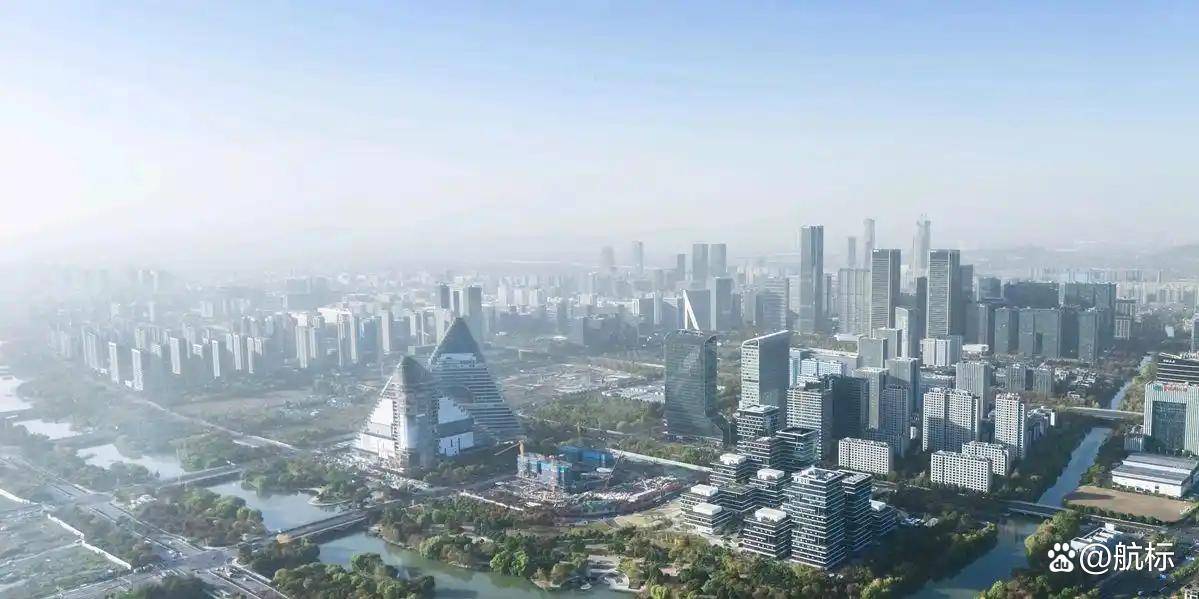
去年规上工业企业利润同比增长0.6%
Zhong Guo Zheng Quan Bao· 2026-01-27 20:57
Core Insights - In 2025, the total profit of industrial enterprises above designated size in China reached 73,982 billion yuan, marking a 0.6% increase from the previous year, reversing a three-year decline trend [1] Group 1: Profit Growth by Sector - Manufacturing sector profits increased by 5.0%, a significant rebound of 8.9 percentage points compared to 2024 [1] - The electricity, heat, gas, and water production and supply sector saw a profit growth of 9.4% [1] - The mining sector experienced a decline of 26.2% in profits [1] Group 2: Improvement in Various Business Entities - In 2025, profits for small and medium-sized enterprises, as well as foreign and Hong Kong, Macao, and Taiwan-invested enterprises, turned positive, growing by 1.4% and 4.2% respectively, compared to declines of 1.9% and 1.7% in 2024 [2] - Profits for joint-stock enterprises and state-controlled enterprises showed significant improvement, with the decline narrowing by 3.5 and 0.7 percentage points respectively compared to the previous year [2] Group 3: Inventory and Demand Indicators - By the end of December 2025, the inventory of finished goods reached 6.73 trillion yuan, an increase of 3.9%, but down 0.7 percentage points from November 2025 [2] - The reduction in inventory growth indicates alleviated inventory pressure due to improved sales, suggesting signs of marginal demand recovery [2] Group 4: Structural Optimization of Industrial Profits - The profit structure of industrial enterprises is further optimized, with the equipment manufacturing sector's profits growing by 7.7%, contributing 2.8 percentage points to the overall profit growth of industrial enterprises [3] - The share of equipment manufacturing profits in total industrial profits reached 39.8%, an increase of 2.6 percentage points from the previous year [3] Group 5: High-Tech Manufacturing Sector Growth - Profits in the high-tech manufacturing sector increased by 13.3%, surpassing the overall industrial profit growth by 12.7 percentage points [3] - The smart electronics sector, particularly in smart consumer devices, saw profits grow by 48.0%, with specific industries like smart drones and smart vehicle equipment experiencing profit increases of 102.0% and 88.8% respectively [3] Group 6: Traditional Industries Upgrading - Traditional industries are showing significant improvements, with profits in the biochemical pesticide and information chemical manufacturing sectors growing by 20.7% and 15.2%, respectively, exceeding the average profit growth in the chemical industry by 28.0 and 22.5 percentage points [4]
以赛赋能育工匠 以技聚力兴产业
Xin Lang Cai Jing· 2026-01-27 18:56
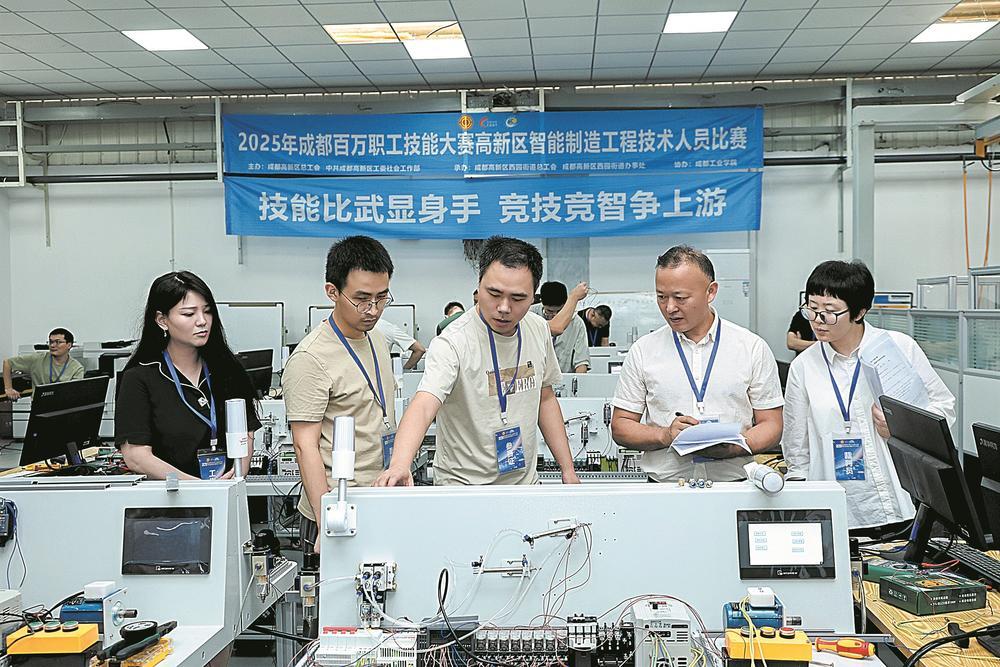
Core Viewpoint - The 2025 Chengdu Million Workers Skills Competition aims to enhance industrial innovation and workforce skills through a comprehensive skills training and competition framework, engaging over 1.21 million workers across various sectors [3][8]. Group 1: Skills Competition Overview - The competition will cover all industries in Chengdu, creating a platform for workers to showcase their skills and improve their capabilities, ultimately driving industrial upgrades [3]. - The competition includes various categories, such as practical skills contests in key industrial parks, directly linking the competition to industry needs [4][5]. - The event is designed to foster innovation and practical application of skills, with many participants applying their competition experiences directly to their jobs [4][5]. Group 2: Innovation and Industry Impact - The competition has led to the emergence of over 450 innovative projects from frontline workers, with significant participation from various enterprises and teams [6][8]. - Notable innovations include advancements in electronic component packaging and drone technology for power line maintenance, demonstrating the competition's role in driving technological progress [6][7]. - The competition has facilitated partnerships between innovative teams and businesses, ensuring that successful projects transition from concept to market application [6][7]. Group 3: Talent Development and Ecosystem - Chengdu's labor union has established a systematic talent cultivation framework, integrating competitions into the entire industrial development process [9]. - The competitions are designed to align closely with market demands, ensuring that skill development is relevant and beneficial to the industry [9][10]. - Supportive policies, such as financial assistance for innovative projects and direct links between competition results and career advancement, encourage more workers to enhance their skills [10]. Group 4: Future Directions - The skills competitions are positioned as a vital component in Chengdu's strategy for high-quality urban development, contributing to the city's goals of becoming a major economic and technological hub [11]. - Future initiatives will continue to promote innovation and skill development, fostering a culture where every worker can contribute to industrial advancement [11].
河北省培育形成万亿级高端装备产业
Xin Hua She· 2026-01-27 17:55
(文章来源:新华社) 记者从正在召开的河北省两会获悉,"十四五"时期,河北省创新动能加速释放,转型升级步伐加快,高 端装备成长为万亿级产业。 记者了解到,过去5年河北经济实力跃上新台阶,全省生产总值从2020年的3.68万亿元增长到2025年的 4.93万亿元,实现万亿级跃升,规上工业增加值年均增长6.5%。在此进程中,河北培育形成高端装备、 先进钢铁2个万亿级产业和一批千亿级产业。2025年,高端装备产业拉动规上工业增加值增长2.2个百分 点,装备制造业增加值占规上工业比重为21.2%,较上年提高1.4个百分点。 ...
险资加速布局私募股权基金
Zheng Quan Ri Bao Zhi Sheng· 2026-01-27 16:42
Core Insights - China Life Insurance has announced plans to invest in a pension industry equity investment fund and a private equity fund in the Yangtze River Delta, with a total commitment of nearly 12.5 billion yuan [1][2] Group 1: Investment Announcements - The pension industry equity investment fund will be established in partnership with Guoshou Qiyuan (Beijing) Pension Industry Investment Management Co., with a total commitment of 8.5 billion yuan, where China Life will contribute approximately 8.4915 billion yuan [2] - The Yangtze River Delta private equity fund aims to focus on AI-driven technology innovation and industrial upgrades, with a total commitment of 5.0515 billion yuan, where China Life will contribute 4 billion yuan [2] Group 2: Factors Driving Investment - Two main factors are driving the increase in private equity investments by large state-owned insurance companies: the need for long-term capital investment and the flexibility of private fund management companies in talent acquisition and governance [3] - The macroeconomic environment of declining interest rates has led to lower yields on fixed-income assets, prompting insurance companies to increase equity allocations for higher returns [5] Group 3: Market Trends - Since 2025, insurance institutions have significantly increased their contributions to private equity funds, with a total of 109.756 billion yuan, marking a 55.85% increase compared to the previous year [4] - Life insurance companies have been the largest contributors, with investments reaching 88.529 billion yuan, a year-on-year increase of 57.05% [4] Group 4: Future Outlook - The trend of increasing equity asset allocation by insurance capital is expected to continue, with diversification in investment sectors and asset classes [6] - The investment strategy will likely evolve to include a mix of public and private markets, with a growing emphasis on non-standard equity assets such as private equity and infrastructure REITs [6]
