
绿色低碳发展

Search documents
霍尔果斯兵团首个大型电化学储能电站投运!
中关村储能产业技术联盟· 2025-12-02 08:31
文 | 央广网 近日, 霍尔果斯经济开发区兵团分区300兆瓦/ 6 0 0兆瓦时浸没式储能电站正式并网运营, 这是兵团首个大型电化学储能电站。 据了解,该电站是四师可克达拉市重点共享储能项目,总投资6 . 2 8亿元,配套新建220千 伏升压站及专用线路,可提供电网调峰、调频、备用容量"三位一体"服务,充分消纳周边 光伏等新能源,预计年上网电量1.2亿千瓦时。 "十四五"以来,四师可克达拉市积极落实"双碳"目标,加快推动发展方式向绿色低碳转 型,大力培育清洁能源与新型储能产业,为构建现代化能源体系、推进绿色低碳发展奠定 坚实基础。 截至目前,该师市电网总装机容量147.5万千瓦,其中新能源装机容量90万千 瓦。 第十四届储能国际峰会暨展览会 ESIE 2026 时间: 202 6年4月1 - 3日 地点: 北京·首都国际会展中心 相关阅读 国家发改委:储能设施项目可申报基础设施REITs! 2GWh!国内单体容量最大独立新型储能电站建成投运 远景储能冠名B4未来生态馆!解锁储能多场景应用商机 联盟官微 关注政策、项目、企业、市场活动 联盟官方小秘书 入会、入群、产业交流、活动对接 ...


对话加拿大前总理:加拿大正减少对美国依赖,中国是理想合作伙伴
2 1 Shi Ji Jing Ji Bao Dao· 2025-12-02 06:25
Group 1 - The core viewpoint emphasizes the importance of deepening economic and cultural cooperation between Canada and China, building on their historical trade ties that began in the 1970s with the first wheat exports [1] - Canada is actively seeking to diversify its trade and reduce reliance on the U.S. market, with China being a significant partner in this strategy [1] - Canada aims to learn from China's advancements in rare earth processing and electric vehicle technology, indicating potential areas for collaboration [1] Group 2 - The "2025 Chengdu International Forum" held in Guangzhou gathered over 200 participants, including former heads of state, experts, and business leaders, to discuss global development issues [2] - The forum's theme was "Working Together for a Win-Win Future," covering topics such as global security challenges, governance reforms, and sustainable development [2] - Key discussions included the balance of innovation, safety, and governance in artificial intelligence, as well as the impact of trade and tariff conflicts on global economic trends [2]
聊城|聊城推动“无废城市”建设
Da Zhong Ri Bao· 2025-12-02 01:20
Core Viewpoint - Liaocheng is actively promoting the construction of a "waste-free city" as a pilot city, focusing on solid waste management and green development through systematic approaches in regulation, market, technology, and supervision [2][3]. Group 1: Solid Waste Management - The city has collected approximately 36,000 tons of livestock manure and 24,000 tons of agricultural waste, producing over 30,000 tons of biological organic fertilizer [2]. - Liaocheng has implemented mandatory clean production audits in high-energy-consuming industries, achieving a comprehensive utilization rate of over 75% for industrial solid waste [3]. - The city’s industrial solid waste utilization model has been recognized as a typical case by the Basel Convention Asia-Pacific Regional Center [3]. Group 2: Agricultural Waste Reduction - The city promotes the use of biodegradable films and advanced agricultural techniques to reduce pesticide usage and enhance fertilizer efficiency, with a stable resource utilization rate of over 90% for livestock manure [4]. - Initiatives include the establishment of a comprehensive network for the collection and utilization of agricultural waste, including dead livestock [4]. Group 3: Municipal Solid Waste Management - A "source reduction, front-end sorting, and end-use recycling" model has been adopted, achieving a resource utilization rate of 87% for municipal solid waste [5]. - The city has established a robust recycling network with 260 recycling enterprises and has successfully recovered 333,000 old appliances since the launch of the "old-for-new" program [5]. - The construction and management of construction waste have been significantly improved, addressing long-standing challenges in this area [5].
新思想引领新征程·非凡“十四五”丨推动绿色低碳发展 助力中国式现代化
Yang Shi Xin Wen Ke Hu Duan· 2025-12-02 00:56
Core Viewpoint - The Chinese government emphasizes the importance of green and low-carbon development as a key aspect of achieving high-quality economic growth, guided by Xi Jinping's ecological civilization thought [2][4]. Group 1: Green Development Initiatives - Since the 14th Five-Year Plan, China has focused on a comprehensive green transformation of economic and social development, promoting carbon reduction, pollution control, and green growth [2]. - The country has achieved significant milestones in non-fossil energy development, doubling its installed capacity for non-fossil energy generation, with wind and solar power reaching the 2030 national contribution targets ahead of schedule [6][8]. Group 2: Climate Change Commitments - This year marks the 10th anniversary of the Paris Agreement, with China announcing its 2035 national contribution targets, which encompass all greenhouse gases, showcasing its commitment to global green development [4]. - China has actively participated in international climate governance, signing 55 South-South cooperation memorandums with 43 developing countries and implementing over 300 capacity-building projects [8]. Group 3: Market Mechanisms and Economic Impact - The establishment of the world's largest carbon market has been a significant step, with over 8 billion tons of carbon traded and a transaction value exceeding 54 billion yuan [8]. - The manufacturing sector is increasingly adopting green practices, with 6,430 national-level green factories contributing approximately 20% to the overall output [8]. Group 4: Future Directions - The 15th Five-Year Plan emphasizes accelerating the comprehensive green transformation of economic and social development, enhancing green development momentum, and promoting the construction of a beautiful China [10].
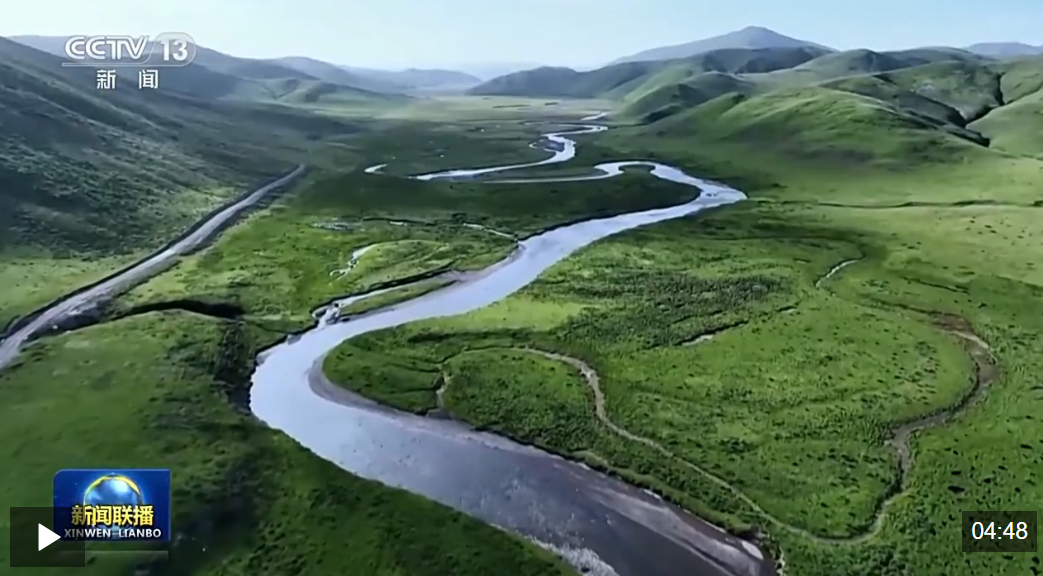
焕新能源“心脏”赋能绿色油田
Qi Lu Wan Bao· 2025-12-02 00:10
此次改造并非推倒重建,而是在保障区域持续供电的前提下,进行的一场高难度的"心脏不停跳搭桥手 术"。电力分公司明确了"安全可靠、清洁高效、智能可控"三大目标,推动变电站实现系统性跨越。 改造中,户外敞开式开关场升级为全室内200千伏GIS设备,结构更紧凑,抗恶劣环境能力全面提升; 倒闸操作实现计算机远程一键执行,大幅降低人为风险。同时,变电站增强了系统调度灵活性,为"火 电+绿电+储能"多元协同运行提供关键支撑,初步建成区域清洁电力汇集与调节枢纽。此外,通过部署 在线监测设备,构建起实时感知与诊断体系,运维模式由"被动检修"转向"主动防控"。 胜利油田滨海区域蕴藏着丰富的陆海油气资源,这里年产原油达807万吨,占油田总产量的34%,接近 全国年产量的4%。区域内电网结构完善、风光热资源富集,用能场景多元,已成为传统能源与清洁能 源融合创新、高效利用的"决胜主战场"。 肩负为滨海区域输送不竭动力重任的,正是220千伏新孤变电站——这座油田电压等级最高、规模最大 的枢纽变电站,堪称区域电网的"心脏"。 据了解,新孤变电站已持续运行超过30年,承担着海洋、孤东等六家开发单位的供电任务,年转供电量 达16亿千瓦时,占全 ...
12月1日晚间央视新闻联播要闻集锦
Yang Shi Xin Wen Ke Hu Duan· 2025-12-01 14:09
今日摘要 《求是》杂志发表习近平总书记重要文章《推进党的自我革命要做到"五个进一步到位"》。 应习近平邀请,法国总统将访华。 系列报道《新思想引领新征程·非凡"十四五"》今天播出:推动绿色低碳发展,助力中国式现代化。 系列报道《学习贯彻四中全会精神在基层》今天来看:北京、江西深化数据资源开发利用,推动高质量 发展。 今年以来,一系列政策举措加力实施,持续激发民间投资活力。 今年我国快递业务量已突破1800亿件,创历史新高。 五部门联合开展医养结合促进行动。 多国人士表示,高市早苗的错误言论凸显日本政治右倾化加剧的趋势,国际社会须对此高度警惕。 内容速览 《求是》杂志发表习近平总书记重要文章《推进党的自我革命要做到"五个进一步到位"》 12月1日出版的第23期《求是》杂志发表中共中央总书记、国家主席、中央军委主席习近平的重要文章 《推进党的自我革命要做到"五个进一步到位"》。 应习近平邀请 法国总统将访华 应国家主席习近平邀请,法国总统马克龙将于12月3日至5日对中国进行国事访问。 【新思想引领新征程·非凡"十四五"】推动绿色低碳发展 助力中国式现代化 2025年"读懂中国"国际会议在广州举办 11月30日至1 ...
瑞达期货热轧卷板产业链日报-20251201
Rui Da Qi Huo· 2025-12-01 10:44
Report Summary 1) Report Industry Investment Rating No investment rating is provided in the report. 2) Core Viewpoint On Monday, the HC2601 contract increased in price with reduced positions. Macroscopically, the National Development and Reform Commission encourages private enterprises to seize investment opportunities and broaden market access. In terms of supply and demand, the weekly output of hot-rolled coils continued to increase, with the capacity utilization rate rising to 81.49%, while the apparent demand and inventory changed little. Overall, the downstream demand for hot-rolled coils is resilient, and the positive macro - expectations support steel prices. Technically, the 1 - hour MACD indicator of the HC2601 contract shows that DIFF and DEA are above the 0 - axis. The reference view is that the market is oscillating with a bullish bias, and risk control should be noted. [2] 3) Summary by Relevant Catalogs Futures Market - The closing price of the HC main contract was 3,327 yuan/ton, up 25 yuan; the trading volume was 704,586 lots, down 80,806 lots. - The net position of the top 20 in the HC contract was - 81,595 lots, down 18,417 lots; the HC1 - 5 contract spread was 7 yuan/ton, down 7 yuan. - The HC Shanghai Futures Exchange warehouse receipt was 141,932 tons, unchanged; the HC2601 - RB2601 contract spread was 193 yuan/ton, up 1 yuan. [2] Spot Market - The price of 4.75 hot - rolled coils in Hangzhou was 3,340 yuan/ton, up 20 yuan; in Guangzhou, it was 3,350 yuan/ton, up 40 yuan; in Wuhan, it was 3,330 yuan/ton, unchanged; in Tianjin, it was 3,240 yuan/ton, up 10 yuan. - The basis of the HC main contract was 13 yuan/ton, down 5 yuan; the Hangzhou hot - rolled coil - rebar spread was 10 yuan/ton, down 40 yuan. [2] Upstream Situation - The price of 61.5% PB powder ore at Qingdao Port was 793 yuan/wet ton, unchanged; the price of Hebei quasi - first - grade metallurgical coke was 1,690 yuan/ton, unchanged. - The price of 6 - 8mm scrap steel in Tangshan was 2,150 yuan/ton, unchanged; the price of Hebei Q235 billet was 2,990 yuan/ton, up 30 yuan. - The inventory of iron ore at 45 ports was 15,206.07 million tons, up 155.19 million tons; the coke inventory of sample coking plants was 44.95 million tons, up 1.62 million tons. - The coke inventory of sample steel mills was 625.53 million tons, up 3.13 million tons; the Hebei billet inventory was 114.76 million tons, down 1.34 million tons. [2] Industry Situation - The blast furnace operating rate of 247 steel mills was 81.07%, down 1.10 percentage points; the blast furnace capacity utilization rate was 87.96%, down 0.60 percentage points. - The hot - rolled coil output of sample steel mills was 319.01 million tons, up 3 million tons; the capacity utilization rate of sample steel mills was 81.49%, up 0.76 percentage points. - The hot - rolled coil inventory of sample steel mills was 78.02 million tons, unchanged; the social inventory of hot - rolled coils in 33 cities was 322.88 million tons, down 1.21 million tons. - The domestic crude steel output was 7,200 million tons, down 149 million tons; the net steel export volume was 928 million tons, down 64 million tons. [2] Downstream Situation - The monthly automobile production was 3.3587 million vehicles, up 0.0829 million vehicles; the monthly automobile sales were 3.3221 million vehicles, up 0.0957 million vehicles. - The monthly output of air conditioners was 14.204 million units, down 3.8908 million units; the monthly output of household refrigerators was 8.788 million units, down 1.3396 million units. - The monthly output of household washing machines was 11.035 million units, down 0.7499 million units. [2] Industry News - Shanxi officially released the new "Regulations on Ecological and Environmental Protection in Shanxi Province", which for the first time established a special chapter on "Green and Low - Carbon Development", aiming to promote the green and low - carbon transformation of energy, emission reduction in key areas, and establish a coal consumption control system. - The founding conferences of the Hebei Steel Structure Building Industry Alliance and the Hebei Steel Structure Building Innovation Alliance were held in Tangshan on November 28. The establishment of the two alliances aims to build a full - chain and integrated steel structure building industry system and promote the industry's transformation towards industrialization, digitalization, and greening. [2]
深耕“头号工程”!济宁这五年工业和信息化发展破局起势
Qi Lu Wan Bao· 2025-12-01 07:19
齐鲁晚报·齐鲁壹点 孔茜 11月28日,市政府新闻办召开"实干绘就'十四五'答卷 凝心续写发展新篇"主题系列新闻发布(第11 场),专题介绍济宁市"十四五"期间加力推进新型工业化,着力塑造发展新优势有关情况。 会上获悉,"十四五"以来,全市工信系统坚定不移实施工业经济"头号工程",加快推进新型工业化,积 极培育新质生产力,全市工业和信息化发展取得一系列新成就。 这五年,济宁坚持科技赋能激活产业创新引擎,融合发展新动能进一步激发。推动科技创新与产业创新 深度融合,加强创新主体培育,累计建成省级工业企业"一企一技术"研发中心206家、省级质量标杆39 家,山东省煤基新材料绿色制造业创新中心通过省级认定,实现了济宁省级制造业创新中心零的突破。 推动先进制造业与现代服务业深度融合,积极引导产业链"链主"企业建设国家、省级工业设计中心,充 分发挥工业设计中心的带动作用和溢出效应,累计培育省级以上工业设计中心52家、服务型制造示范企 业(平台)40家,获评国家服务型制造示范城市。突出赛事引领驱动,高标准举办"市长杯"工业设计大 赛,评选奖励作品170件,展示出济宁工业设计创新成果。加强企业家队伍建设和技能人才培养,五年 ...
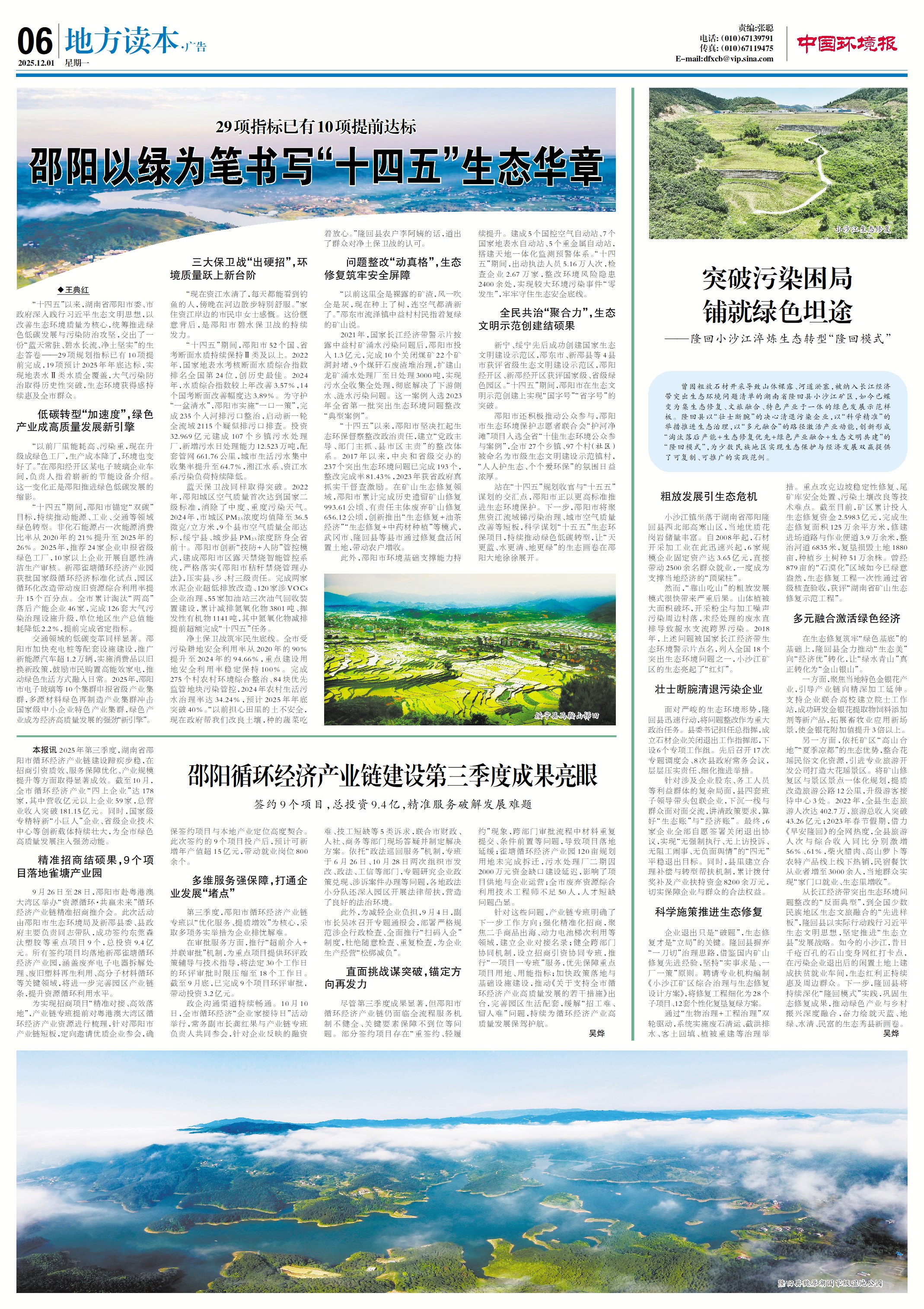
邵阳以绿为笔书写“十四五”生态华章
Zhong Guo Huan Jing Bao· 2025-12-01 02:15
Core Viewpoint - Since the "14th Five-Year Plan," Shaoyang City in Hunan Province has focused on improving ecological environment quality, achieving significant progress in green low-carbon development and pollution prevention, with 10 out of 29 planning indicators completed ahead of schedule and 19 expected to meet targets by the end of 2025 [3][14]. Green Low-Carbon Development - Shaoyang has set a "dual carbon" goal, increasing the proportion of non-fossil energy in primary energy consumption from 21% in 2020 to 26% by 2025 [4][16]. - The city plans to recommend 24 enterprises for provincial-level green factory certification and over 10 enterprises for voluntary clean production audits by 2025 [4][16]. - The New Shao Que Tang Circular Economy Industrial Park has been approved as a national-level circular economy standardization pilot, enhancing resource utilization rates by 15 percentage points [4][16]. - A total of 46 high-energy-consuming enterprises have been eliminated, and 126 sets of air pollution control facilities have been upgraded, achieving a 2.2% reduction in energy consumption per unit of GDP ahead of provincial targets [4][16]. Water Quality Improvement - During the "14th Five-Year Plan," 52 national and provincial monitoring points in Shaoyang maintained water quality at Class II or above [5][17]. - In 2022, the city ranked 24th nationally for surface water quality assessment, achieving a historical best [5][17]. - Investments of 32.969 billion yuan have led to the construction of 107 sewage treatment plants, increasing daily sewage treatment capacity by 12.523 million tons and improving urban sewage collection rates to 64.7% [5][17]. Air Quality Enhancement - In 2022, Shaoyang's urban air quality reached national secondary standards for the first time, eliminating moderate and severe pollution days [6][18]. - By 2024, the average PM2.5 concentration in urban areas is expected to drop to 36.5 micrograms per cubic meter, with all nine counties meeting air quality standards [6][18]. - The city has implemented a smart control system for open burning and completed upgrades for two cement plants and 120 VOCs-related enterprises, achieving significant reductions in nitrogen oxides and volatile organic compounds emissions [6][18]. Soil Quality Protection - The safe utilization rate of contaminated arable land has increased from 90% in 2020 to 94.66% in 2024, with key construction land utilization rates maintained at 100% [7][18]. - The city has completed comprehensive environmental remediation in 275 villages and prioritized pollution control in 84 key sites, with rural sewage treatment rates expected to exceed 40% by the end of 2025 [7][18]. Ecological Restoration Efforts - Shaoyang has invested 1.3 billion yuan to address historical mining pollution issues, successfully closing 10 coal mines and treating 3,000 tons of mining wastewater daily [8][19]. - Since 2017, 81.43% of 237 prominent ecological environment issues assigned by central and provincial authorities have been rectified [8][19]. - The city has completed ecological restoration of 993.61 hectares of historical mining sites, promoting economic activities such as oil tea and traditional Chinese medicine cultivation [8][19]. Public Participation and Future Plans - Shaoyang has achieved national and provincial-level ecological civilization demonstration zone designations, fostering a strong public participation atmosphere in environmental protection [21]. - The city aims to address remaining challenges in pollution control and continue promoting green low-carbon transformation as it plans for the "15th Five-Year Plan" [21].
山西“十四五”生态环境质量实现历史性突破
Zhong Guo Xin Wen Wang· 2025-12-01 01:16
Core Viewpoint - The news highlights the significant achievements in ecological and environmental protection in Shanxi Province during the "14th Five-Year Plan" period, emphasizing improvements in air and water quality, as well as advancements in green and low-carbon development [1][2]. Group 1: Ecological Environment Quality Improvement - The comprehensive air quality index in Shanxi is projected to decrease to 4.30 by 2024, a 17.0% reduction from 2020 levels [1] - PM2.5 concentration is expected to drop to 36 micrograms per cubic meter, marking a 21.7% decrease [1] - The proportion of days with good air quality is anticipated to reach 74.2% [1] - The proportion of good water bodies in national monitoring sections has increased to 94.7%, with the water quality of the Yellow River in Shanxi stabilizing at Class II [1] Group 2: Green and Low-Carbon Development - Shanxi has accelerated the transformation and upgrading of traditional industries, eliminating 3.321 million kilowatts of outdated coal power capacity and reducing crude steel production capacity by 306,000 tons [2] - The promotion of new energy vehicles has been significant, with 96.3% of public buses and 71.7% of taxis being new energy vehicles [2] - A total of 7.253 million households have completed clean heating renovations, and the province has achieved a 100% compliance rate in the national carbon market [2] Group 3: Strengthening Ecological Protection and Restoration - Regulatory oversight of important ecological spaces has been enhanced, with key ecological issues in national nature reserves being addressed dynamically [2] - Biodiversity protection has seen success, with populations of the North China leopard and brown-eared pheasant leading nationally [2] - Several counties in Shanxi have been recognized as national ecological civilization demonstration zones or "Green Mountains and Clear Waters are Golden Mountains and Silver Mountains" innovation practice bases [2] Group 4: Improvement of Environmental Governance System - A regulatory framework centered on environmental protection regulations has been established, with 37 local standards implemented [2] - The province has developed nearly 1,600 control units and over 12,000 access lists for ecological environment management [2] - Environmental impact assessment efficiency has improved, and monitoring and regulatory capabilities have been enhanced, effectively managing environmental risks [2]