汽车智能化

Search documents
东吴证券晨会纪要-20251030
Soochow Securities· 2025-10-29 23:34
Macro Strategy - The Federal Reserve's interest rate decisions are influenced by historical missions, evolving from a stabilizer to a highly independent central bank focused on maximizing employment and price stability [1] - The Taylor rule suggests only one rate cut in 2026, while traders are pricing in 2.7 cuts, with expectations of at least three cuts in 2026, potentially lowering the policy rate to 2.75-3.0% [1] - A more accommodative monetary policy could lead the U.S. economy from a soft landing to expansion, impacting market dynamics such as lower short-term Treasury yields and higher long-term yield premiums [1] Tourism Investment - The emotional need for happiness drives mainland Chinese tourists to seek cultural experiences abroad, with 39.8% prioritizing happiness through travel, 13.6 percentage points higher than the global average [2] - High cultural value is essential for tourism activities favored by Chinese tourists, with significant demand for pop culture events and related merchandise [2] - Classic cultural IPs significantly enhance long-term tourism spending, as seen with Disney and iconic film locations like New Zealand's "The Lord of the Rings" [2] Fixed Income - Credit expansion across industries remains moderate, with structural differentiation evident, as overall leverage has not returned to pre-pandemic levels [4] - Industries currently experiencing credit expansion include light manufacturing, electronics, and public utilities, characterized by stable cash flows and predictable capital expenditure returns [4] - Sectors facing credit contraction include real estate and consumer goods, which require broader economic recovery to boost demand [4] Non-Banking Financial Sector - The wealth management industry is transitioning from a seller-driven model to a buyer advisory model, influenced by rapid fintech development and increasing national wealth [5] Automotive Industry - 2025 marks a pivotal year for automotive smart technology, with significant advancements in urban NOA (Navigation on Autopilot) capabilities among leading manufacturers [6] - A comparative evaluation of six smart driving suppliers indicates that Huawei and XPeng lead in overall performance, while other manufacturers are closing the gap [6] Non-Banking Financial Sector Insights - The non-banking sector is experiencing an upward trend in market conditions, with public fund holdings in this sector remaining relatively low, indicating potential for growth [8] Company-Specific Reports - Shoulu Hotel's RevPAR decline is narrowing, with ongoing optimization in store openings and structural upgrades, leading to adjusted profit forecasts for 2025-2027 [9] - Xingrong Environment's Q3 performance exceeded expectations, driven by stable pricing mechanisms and growing operational capacity in wastewater treatment [10] - The semiconductor and display sectors are expected to see continued growth, with significant orders and product deliveries enhancing revenue prospects for companies like Jingce Electronics [11] Energy and Environment - Nanfang Storage's Q3 results reflect a strong revenue increase, supported by new project launches and stable pricing in the energy sector [13] - The company is well-positioned for future growth with a focus on energy storage solutions and expanding its market presence [13] Miscellaneous Company Reports - Companies like China Ping An and Huazhong Technology are adjusting profit forecasts upward due to improved operational performance and market conditions [38][39] - The food industry is seeing mixed results, with companies like Anji Food adjusting profit expectations due to fluctuating demand and cost pressures [30][34]
科博达 | 2025Q3:业绩符合预期 新产品、新客户持续突破【民生汽车 崔琰团队】
汽车琰究· 2025-10-29 15:34
Core Viewpoint - The company reported a revenue of 5.0 billion yuan for the first three quarters of 2025, representing a year-on-year increase of 16.5%, and a net profit attributable to shareholders of 650 million yuan, up 12.1% year-on-year [2] Financial Performance - In Q3 2025, the company achieved a revenue of 1.73 billion yuan, an increase of 11.8% year-on-year and 3.6% quarter-on-quarter; however, the net profit attributable to shareholders was 220 million yuan, a slight decrease of 0.1% year-on-year and a decline of 11.1% quarter-on-quarter [3] - The company's gross profit margin in Q3 2025 was 23.5%, down 7.1 percentage points year-on-year and 3.7 percentage points quarter-on-quarter, primarily due to the impact of the consolidation of Kobotar Intelligent [3] - The company reported a non-recurring net profit of 210 million yuan in Q3 2025, a decrease of 11.3% year-on-year and 13.8% quarter-on-quarter [3] Business Transformation - The company is transitioning to a platform-based automotive electronics supplier, with strong capabilities in both software and hardware, particularly in electronic control systems and ECUs [4] - The company has made strategic moves in domain controller business, having completed the acquisition of 60% of Kobotar Intelligent, positioning itself as a comprehensive electronic supplier capable of integrating central controllers with end sensors and actuators [4] Global Strategy - The company has established a strong customer base, expanding from partnerships with Volkswagen to various new energy vehicle manufacturers, covering major clients like BYD, Tesla, and NIO [5] - The acquisition of 100% of Czech IMI in 2025 marks the company's entry into global production, enhancing its international operational experience [5] Future Outlook - The company is expected to benefit from the long-term trends of smart electrification and globalization, with revised revenue forecasts of 7.47 billion yuan for 2025, 9.86 billion yuan for 2026, and 12.20 billion yuan for 2027 [6] - The projected net profit attributable to shareholders is expected to be 900 million yuan in 2025, 1.25 billion yuan in 2026, and 1.66 billion yuan in 2027, with corresponding EPS estimates of 2.23 yuan, 3.10 yuan, and 4.12 yuan [6][7]


【重磅深度】2025年主流车企城市NOA试驾报告—10月北京篇
东吴汽车黄细里团队· 2025-10-29 14:25
Core Insights - 2025 is identified as a pivotal year for automotive intelligence, initiating a three-year cycle that will elevate domestic electrification penetration rates to 50%-80%+, leading to a restructuring of the automotive landscape [4][10] - Leading intelligent driving manufacturers have successfully implemented complex urban scenarios such as roundabouts and U-turns, enhancing high-level functionalities like parking and scene understanding, thereby improving the driving experience for passengers and safety personnel [4][10] Investment Highlights - A comprehensive evaluation of six intelligent driving manufacturers, including ZunJie, Xiaopeng, Zhiji, Ideal, Xiaomi, and NIO, was conducted through large sample concentrated road tests and small sample in-depth road tests, focusing on scene implementation, takeover frequency, and comfort [5][10] - The keyword for the Beijing intelligent driving assessment is "stronger gets stronger," with Huawei and Xiaopeng leading in overall takeover counts and performance across various scenarios, particularly excelling in challenging situations [5][10] - Compared to Q1, the gap in intelligent driving capabilities among manufacturers has been narrowing by Q3, with second-tier manufacturers improving their performance in complex urban scenarios and reducing takeover frequencies [6][10] Road Test Overview - The large sample concentrated road test involved a standardized route in Beijing, assessing various performance metrics such as overall evaluation, takeover counts, stability, and efficiency [41][40] - The small sample in-depth road tests were conducted under varying traffic conditions, focusing on specific scenarios like roundabouts and complex intersections to evaluate the vehicles' decision-making and interaction capabilities [61][72] Manufacturer Performance - ZunJie achieved the highest overall evaluation score with an average takeover count of 1.16, demonstrating strong performance in challenging scenarios [44] - Xiaopeng's XOS model exhibited the lowest average takeover count at 0.94, showcasing balanced performance across various scenarios [48] - Zhiji's IM AD 3.0 received a score of 3.55 with an average takeover count of 1.44, indicating good handling of complex situations [49] - Ideal's OTA 8.0 scored 3.20 with a lower average takeover count of 1.06, reflecting a conservative driving style [52] - Xiaomi's V1.9.7 had an average takeover count of 3.86, indicating variability in performance across different scenarios [55] - NIO's cedar model recorded an average takeover count of 4.14, effectively covering most urban intelligent driving scenarios [58]



领益智造拟24.04亿元收购浙江向隆96.15%股权,深化汽车产业布局
Zheng Quan Shi Bao Wang· 2025-10-29 13:27
Core Viewpoint - The acquisition of Zhejiang Xianglong by Lingyi Zhizao aims to accelerate the company's expansion in the automotive industry, enhancing its position in the electric vehicle and advanced technology markets [1][3]. Group 1: Acquisition Details - Lingyi Zhizao and its wholly-owned subsidiary Lingyi Technology signed an equity acquisition agreement to purchase 96.15% of Zhejiang Xianglong for 2.404 billion yuan in cash [1]. - The transaction will not be classified as a related party transaction or a major asset restructuring [1]. - The acquisition will be executed in two phases, with 67% of the payment made upfront and the remaining linked to performance commitments from 2025 to 2027 [2]. Group 2: Financial Performance of Zhejiang Xianglong - Zhejiang Xianglong, established in 2006, specializes in the research, manufacturing, and sales of automotive drive shafts and transmission shafts, with projected revenues of 1.994 billion yuan and a net profit of 127 million yuan for 2024 [2]. - For the first half of 2025, Zhejiang Xianglong expects revenues of 969 million yuan and a net profit of 92 million yuan [2]. - The performance commitments include a minimum net profit of 175 million yuan, 200 million yuan, and 225 million yuan for the years 2025, 2026, and 2027, respectively, totaling at least 600 million yuan over three years [2]. Group 3: Strategic Implications - The acquisition will facilitate Lingyi Zhizao's transition from Tier 2 to Tier 1 in the automotive supply chain, aligning with trends in electric and intelligent vehicle development [3]. - The integration of automotive and robotics components will leverage shared technology, supply chains, and manufacturing capabilities, enhancing the company's product offerings in both sectors [3]. - This acquisition lays the groundwork for future expansions into AI terminals and humanoid robotics hardware applications [3].

均胜电子营收净利双增长 前三季度新获订单约714亿元
Zhong Zheng Wang· 2025-10-29 13:04
Core Insights - Junsheng Electronics reported significant growth in revenue and profit for Q3 2025, driven by emerging business areas such as automotive intelligence, creating new growth engines [1][2] Financial Performance - For the first three quarters of 2025, Junsheng Electronics achieved revenue of approximately 45.8 billion yuan, a year-on-year increase of about 11.45% [1] - The net profit attributable to shareholders and the net profit after deducting non-recurring gains and losses both saw substantial year-on-year growth of 35.40% and 37.53%, respectively, in Q3 [1] - The gross profit margin reached a near three-year high of 18.6% in Q3, with an overall gross profit margin of 18.3% for the first three quarters, reflecting an increase of approximately 2.7 percentage points year-on-year [2] New Business Development - Junsheng Electronics experienced a rapid increase in new business orders, with a total lifecycle value of new orders amounting to approximately 71.4 billion yuan for the first three quarters and 40.2 billion yuan in Q3 alone, marking a historical high [2][3] - The company is focusing on enhancing its core competitiveness in new business areas, particularly in intelligent assisted driving and smart cockpit multi-screen systems, which are expected to further expand revenue and profit growth [2] R&D and Innovation - The company invested approximately 2.56 billion yuan in R&D during the first three quarters, aimed at strengthening its core competitive advantages and ensuring long-term technological and market leadership [2] - Junsheng Electronics has launched a series of innovative products based on various chip platforms, enhancing capabilities in intelligent driving and vehicle-road-cloud collaboration [3] Strategic Partnerships - The company has established collaborations with domestic and international robotics firms, expanding its expertise in automotive components to the robotics sector, with key component solutions already in place [3]

华阳集团(002906) - 002906华阳集团投资者关系管理信息20251029
2025-10-29 12:17
Financial Performance - In the first three quarters of 2025, the company achieved a revenue of 8.791 billion yuan, representing a year-on-year growth of 28.50% [6] - The net profit attributable to shareholders for the same period was 561 million yuan, an increase of 20.80% compared to the previous year [6] - In Q3 2025, revenue reached 3.480 billion yuan, marking a year-on-year increase of 31.43% and a quarter-on-quarter growth of 23.34% [6] - The net profit for Q3 2025 was 220 million yuan, showing a year-on-year growth of 23.74% and a quarter-on-quarter increase of 18.32% [6] Business Growth and Product Development - The automotive electronics segment, including HUD, wireless charging, and cockpit domain control, saw significant growth [6] - The company is expanding its production capacity to meet increasing customer demand due to a notable rise in orders [6] - The company has successfully developed a diverse range of intelligent cockpit and advanced driver-assistance products, enhancing its market competitiveness [7] International Market Expansion - The company has made substantial progress in acquiring international clients, including Stellantis, Ford, and several major automotive brands [7] - Multiple automotive electronic products have been designated for projects with international clients, indicating a strong market presence [7] Product Innovation and Market Trends - The HUD product's market penetration is expected to increase as it becomes more recognized for its display capabilities and user interaction [7] - The VPD product, which integrates advanced display technology, has been adopted by Xiaomi for mass production, showcasing the company's innovation [7] - The zinc alloy precision die-casting business has experienced over 80% growth year-on-year in the first three quarters of 2025, driven by demand in telecommunications and automotive sectors [8] Strategic Initiatives - The company is focusing on enhancing its cost control capabilities while expanding its product lines to address industry competition [6] - There is an ongoing effort to integrate robotics technology into the automotive parts sector, leveraging the company's extensive technical expertise [8]
均胜电子前三季度营收利润双增长,新获订单约714亿元
Ge Long Hui· 2025-10-29 10:32
Core Insights - Company reports significant revenue growth and profitability in Q3 2025, driven by emerging business areas and new orders [1][2] Financial Performance - For the first three quarters of 2025, the company's revenue reached approximately 45.8 billion yuan, a year-on-year increase of about 11.45% [1] - The net profit attributable to shareholders and the net profit after deducting non-recurring gains and losses both saw substantial year-on-year growth of 35.40% and 37.53%, respectively [1][2] - The gross profit margin for Q3 reached a three-year high of 18.6%, with an overall gross profit margin for the first three quarters increasing by approximately 2.7 percentage points to 18.3% [2] New Business Development - The company experienced a rapid increase in new business orders, with a total new order value of approximately 40.2 billion yuan in Q3 alone, and a cumulative total of about 71.4 billion yuan for the first three quarters [1][3] - The core competitiveness in new business areas is expected to enhance future revenue and profit growth, with R&D expenses for the first three quarters amounting to approximately 2.56 billion yuan [3] Market Position and Innovations - The company has made breakthroughs in smart assisted driving and intelligent cockpit multi-screen areas, with significant orders from leading domestic brands and new car manufacturers [3] - Recent innovations include products based on various chip platforms, enhancing capabilities for smart driving and vehicle-road-cloud collaboration [4] - The company is expanding its expertise in automotive components to the robotics sector, collaborating with domestic and international robotics companies [4]
世运电路(603920):25年三季报业绩点评:25Q3业绩增长稳健,大客户产业链带动成长预期
Guoyuan Securities· 2025-10-29 10:20
Investment Rating - The report maintains a "Buy" rating for the company [5][23] Core Insights - The company reported a revenue of 4.078 billion yuan for the first three quarters of 2025, representing a year-over-year increase of 10.96%, and a net profit attributable to shareholders of 625 million yuan, up 29.46% year-over-year [1] - The third quarter of 2025 saw a revenue of 1.499 billion yuan, a year-over-year increase of 17.16% and a quarter-over-quarter increase of 10.13%, with a net profit of 241 million yuan, reflecting a year-over-year increase of 33.77% [1] - The company is expected to achieve a revenue of 5.724 billion yuan in 2025, a 14% increase year-over-year [2] Financial Performance - The gross margin and net margin for Q3 2025 were 22.92% and 15.66%, respectively [1] - The company has seen continuous improvement in gross margin since Q1 2025, attributed to the introduction of high-value-added products [3] - The net profit margin for Q3 2025 increased by 1.04 percentage points compared to the previous quarter, primarily due to a fair value change net income of 57 million yuan [3] Revenue and Profit Forecast - The forecast for revenue in 2025 and 2026 is 5.724 billion yuan and 7.224 billion yuan, respectively, with net profits of 859 million yuan and 1.148 billion yuan [4] - The expected price-to-earnings (P/E) ratios for 2025 and 2026 are 37x and 27x, respectively [3][4]

在汽车圈,人人都想平替库里南,多少中产会买单?
Xin Lang Cai Jing· 2025-10-29 07:58
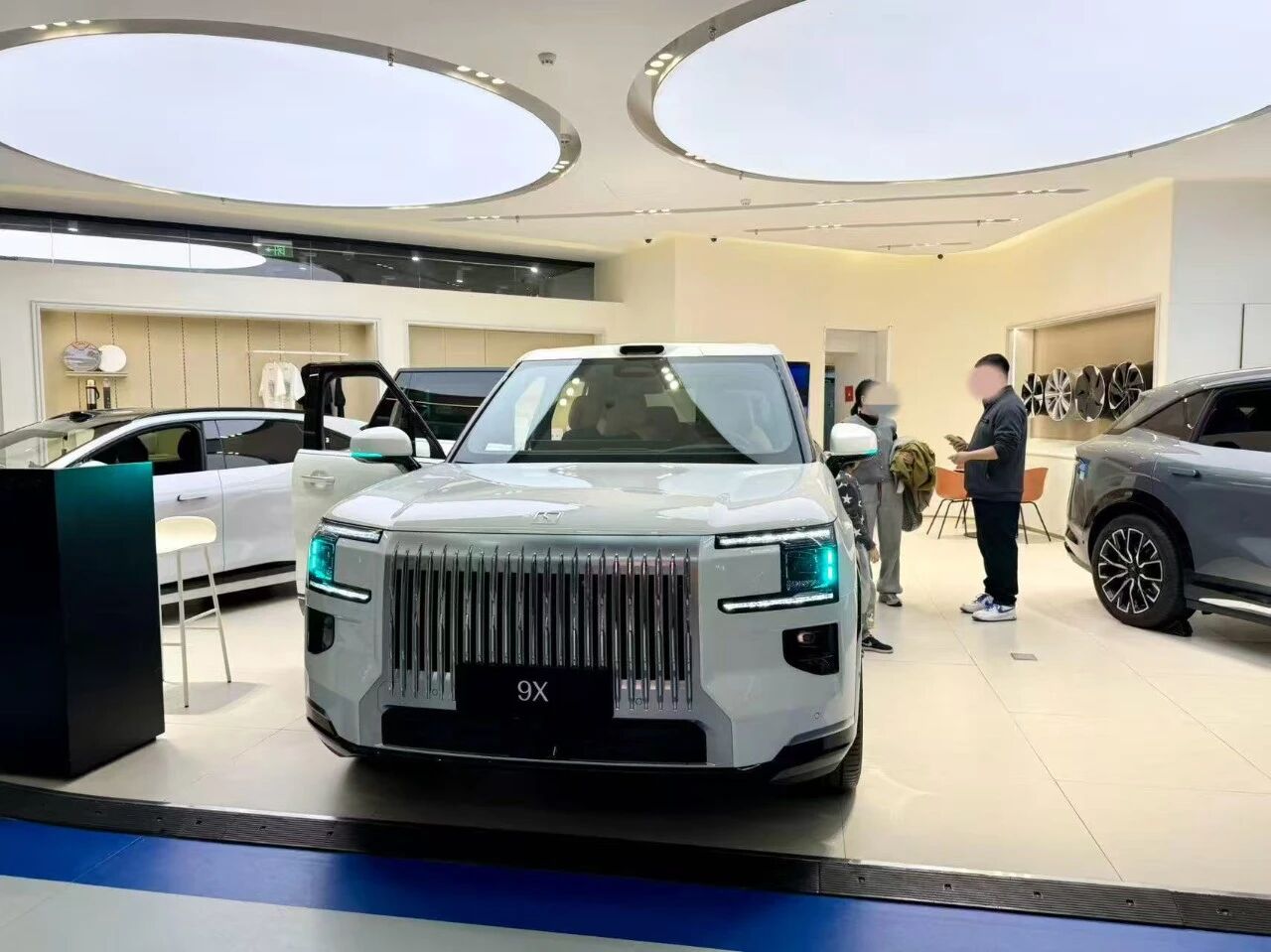
Core Viewpoint - The rise of domestic large SUVs, particularly the Zeekr 9X, is reshaping consumer preferences, as buyers seek more affordable alternatives to luxury models like the Rolls-Royce Cullinan, leading to increased sales and interest in the segment [1][3][5]. Market Trends - The domestic large SUV market is becoming increasingly competitive, with multiple brands launching models over 5.2 meters in length, indicating a shift from niche to mainstream [3][5]. - In the first seven months of 2025, China's SUV market saw retail sales of 6.294 million units, a year-on-year increase of 13.1%, with mid-to-large SUVs growing by 8.6% [5]. Consumer Behavior - There is a noticeable trend of consumers shifting from high-end imported vehicles to domestic full-size SUVs, driven by the appeal of larger space and practical features at lower prices [5][9]. - Many consumers, previously inclined towards luxury brands, are now considering domestic options due to their competitive pricing and features [7][9]. Product Features - The Zeekr 9X is priced between 465,900 and 599,900 yuan, offering advanced technologies typically found in luxury vehicles, such as a closed dual-chamber air suspension system [6][9]. - Other models like the Leap D19 and Haval H5 are pushing the boundaries of affordability, with prices as low as 150,000 yuan while offering substantial features [6][9]. Marketing Strategies - Domestic brands are positioning their vehicles as "alternatives" to luxury models, leveraging design similarities to attract attention and enhance brand image [10][19]. - The strategy of mimicking successful luxury designs while incorporating unique brand elements is seen as a way to reduce market acceptance risks [10][11]. Challenges Ahead - Despite the growing interest, the market for these "alternatives" remains limited, and brands are primarily focused on capturing high-end users to elevate their market presence [9][19]. - The perception of luxury and social status associated with traditional high-end brands poses a challenge for domestic manufacturers to overcome [18][19].


豪威集团第三季度营收与扣非归母净利润再创单季度历史新高
Zheng Quan Ri Bao· 2025-10-29 07:41
Core Insights - The significant revenue and profit growth of the company is attributed to seizing market opportunities, particularly in the rapidly increasing penetration of intelligent driving in the automotive sector and the expansion in the smart imaging terminal application market [1][3] - The company has achieved a 32.9% share of the global automotive CIS market in 2024, ranking first globally, supported by its comprehensive automotive CIS solution development experience [1][3] Financial Performance - For the first three quarters of 2025, the company reported a revenue of 21.783 billion yuan, a year-on-year increase of 15.20%, and a net profit attributable to shareholders of 3.210 billion yuan, up 35.15% from the previous year [3] - In the third quarter alone, the company achieved a revenue of 7.827 billion yuan, representing a year-on-year growth of 14.81%, and a net profit attributable to shareholders of 1.182 billion yuan, which is a 17.26% increase compared to the same period last year [3] - The non-recurring net profit attributable to shareholders for the third quarter was 1.109 billion yuan, marking a year-on-year growth of 20.40%, setting a record high for both quarterly revenue and non-recurring net profit [3] Market Trends - The demand for in-vehicle camera systems has significantly increased due to the ongoing advancement of automotive intelligence and electrification [1] - The company has expanded its product offerings to include comprehensive in-vehicle solutions such as SerDes, PMIC, MCU, and SBC, leveraging its expertise in automotive CIS [1]