物理AI

Search documents
直击CES丨NVIDIA开源Alpamayo系列AI模型及工具,黄仁勋:物理AI的ChatGPT时刻已然到来
Xin Lang Cai Jing· 2026-01-06 01:28
Core Insights - NVIDIA has launched the Alpamayo series of open-source AI models, simulation tools, and datasets at CES 2026, aimed at advancing the development of safe and reliable reasoning-based autonomous driving vehicles [1][2][3] Group 1: Challenges in Autonomous Driving - Autonomous vehicles must operate safely under complex and variable driving conditions, with "long-tail" rare and complex scenarios being a significant challenge for driver assistance systems [1][3] - Traditional driver assistance architectures separate perception from planning, which limits system scalability in unexpected or abnormal situations [3] Group 2: Technological Innovations - The Alpamayo series introduces a VLA reasoning model based on chain-of-thought reasoning, designed to tackle the challenges posed by long-tail scenarios in autonomous driving [1][3] - These systems can progressively simulate rare or novel scenarios, enhancing driving capabilities and interpretability, which is crucial for building a safety trust framework for smart vehicles [3] Group 3: Supporting Tools and Collaborations - The Alpamayo series includes simulation tools and datasets such as Alpamayo 1, AlpaSim, and the Physical AI open dataset, which support the development of vehicles with perception, reasoning, and human-like decision-making capabilities [2][3] - Leading companies in the mobility sector, including Jaguar Land Rover, Lucid, and Uber, along with the autonomous driving research community like Berkeley DeepDrive, will leverage Alpamayo to accelerate the deployment of safe reasoning-based Level 4 systems [4] Group 4: Industry Impact - NVIDIA's CEO Jensen Huang stated that the era of physical AI akin to ChatGPT has arrived, enabling machines to understand the real world, reason, and take action, with autonomous taxis being one of the earliest beneficiaries [4]

老黄All in物理AI!最新GPU性能5倍提升,还砸掉了智驾门槛
量子位· 2026-01-06 01:01
Core Viewpoint - NVIDIA is shifting its focus entirely towards AI, as evidenced by its absence of gaming graphics cards at CES 2026 and the introduction of new AI products and architectures [2][10]. Group 1: AI Product Launches - NVIDIA unveiled the next-generation Rubin architecture GPU, which boasts inference and training performance that are 5 times and 3.5 times better than the Blackwell GB200, respectively [4][17]. - The company introduced five new product families targeting various AI applications, including the NVIDIA Nemotron for Agentic AI, NVIDIA Cosmos for physical AI, and NVIDIA Alpamayo for autonomous driving [6][8][39]. - The Vera Rubin NVL72 architecture was officially launched, featuring six core components designed to enhance AI data center capabilities [14][15]. Group 2: Performance Metrics - The Rubin GPU achieves an inference performance of 50 PFLOPS and a training performance of 35 PFLOPS under the NVFP4 data type, significantly surpassing its predecessor [17]. - Each Rubin GPU is equipped with 288GB of HBM4 memory and offers a bandwidth of 22 TB/s, supporting the high computational demands of modern AI models [18]. - The overall architecture of the Vera Rubin NVL72 can deliver 3.6 exaFLOPS of NVFP4 inference performance and 2.5 exaFLOPS of training performance [37]. Group 3: Networking and Connectivity - The introduction of NVLink 6 enhances interconnect bandwidth to 3.6 TB/s per GPU, with a total bandwidth of 260 TB/s across the entire NVL72 rack [20][21]. - The Vera CPU integrates 88 custom Arm cores and features a bandwidth of 1.8 TB/s for NVLink C2C interconnect, facilitating efficient communication between CPU and GPU [22]. Group 4: AI Model Developments - The Alpamayo model, a large-scale open-source visual-language-action model for autonomous driving, was launched with 10 billion parameters [41]. - The Nemotron series expanded to include specialized models for speech recognition, visual-language processing, and safety, enhancing AI applications across various sectors [49][51]. - The Cosmos model for robotics was upgraded to generate synthetic data that adheres to real-world physical laws, aiding in the development of AI agents [54][58]. Group 5: Industry Impact and Future Outlook - NVIDIA's comprehensive approach to AI, integrating models, data, and tools, is expected to strengthen its competitive edge and ecosystem lock-in [10]. - The company plans to begin mass production of the Vera Rubin NVL72 in the second half of 2026, indicating a strong commitment to advancing AI infrastructure [38].


黄仁勋CES最新演讲:Rubin 今年上市,计算能力是 Blackwell 5 倍、Cursor 彻底改变了英伟达的软件开发方式、开源模型落后先进模型约6个月
AI前线· 2026-01-06 00:48
Core Insights - The article highlights a significant shift in AI technology, moving from understanding language to transforming the physical world, as announced by NVIDIA CEO Jensen Huang at CES 2026 [2] - NVIDIA has unveiled its latest technology roadmap for "Physical AI," aiming to create a comprehensive stack of computing and software systems to enable AI to understand, reason, and act in the real world [2] Group 1: AI Development and Breakthroughs - Huang emphasized the "dual platform migration," where computing shifts from traditional CPUs to GPU-centric accelerated computing, and application development transitions from predefined code to AI-based training [4] - In 2025, open-source models achieved key breakthroughs but still lagged behind advanced models by about six months, with explosive growth in model downloads as various sectors engage in the AI revolution [3][9] - The emergence of autonomous thinking agent systems in 2024 marks a pivotal development, with models capable of reasoning, information retrieval, and future planning [8] Group 2: Physical AI and New Models - NVIDIA's Physical AI models are categorized into three series: Cosmos World models for world generation and understanding, GROOT for general robotics, and the newly released AlphaMayo for autonomous driving [12] - AlphaMayo, an open-source AI model, enables autonomous vehicles to think like humans, addressing complex driving scenarios by breaking down problems and reasoning through possibilities [16][18] - GROOT 1.6, the latest open-source reasoning model for humanoid robots, enhances reasoning capabilities and coordination for executing complex tasks [22][24] Group 3: AI Supercomputing and Vera Rubin - NVIDIA introduced the Vera Rubin supercomputer, designed to meet the escalating computational demands of AI, with the first products expected to launch in late 2026 [32] - The Vera Rubin architecture features a collaborative design of six chips, providing 100 Petaflops of AI computing power, significantly enhancing performance and efficiency [40][42] - The system incorporates advanced cooling and security features, ensuring data protection and energy efficiency, which is crucial for modern AI workloads [47][49] Group 4: Ecosystem and Collaboration - NVIDIA's collaboration with Hugging Face connects a vast community of AI developers, facilitating the integration of NVIDIA's tools into existing workflows [30] - The launch of the Isaac Lab Arena provides a framework for safely testing robot skills in simulation, addressing the challenges of verifying robotic capabilities in real-world scenarios [27] - The open-source approach to AI and robotics is driving rapid advancements across various industries, with numerous companies leveraging NVIDIA's platforms for their next-generation AI systems [29]

AI竞赛转向推理,英伟达宣布Rubin芯片平台全面投产
2 1 Shi Ji Jing Ji Bao Dao· 2026-01-06 00:40
Core Insights - NVIDIA has accelerated its AI chip platform release schedule by unveiling the next-generation AI chip platform "Rubin" earlier than usual at CES on January 5, 2026, breaking its traditional March GTC announcement pattern [1][2] Group 1: Rubin Platform Overview - The Rubin platform, which includes six new chips, is designed for extreme collaboration and aims to meet the increasing computational demands of AI for both training and inference [4] - Compared to the previous Blackwell architecture, Rubin accelerators improve AI training performance by 3.5 times and operational performance by 5 times, featuring a new CPU with 88 cores [4] - Rubin can reduce inference token costs by up to 90% and decrease the number of GPUs required for training mixture of experts (MoE) models by 75% compared to the Blackwell platform [4] Group 2: Ecosystem and Market Response - The NVL72 system, which includes 72 GPU packaging units, was also announced, with each unit containing two Rubin dies, totaling 144 Rubin dies in the system [5] - Major cloud providers and model companies, including AWS, Microsoft, Google, OpenAI, and Meta, have responded positively to Rubin, indicating strong market interest [5] - NVIDIA aims to provide engineering samples to ecosystem partners early to prepare for subsequent deployment and scaling applications [5] Group 3: AI Strategy and Product Launches - NVIDIA's focus is shifting from "training scale" to "inference systems," as demonstrated by the introduction of the Inference Context Memory Storage Platform, designed specifically for inference scenarios [6] - The company is also advancing its long-term strategy in physical AI, releasing open-source models and frameworks that extend AI capabilities to robotics, autonomous driving, and industrial edge scenarios [6] - The launch of the Cosmos and GR00T series models aims to enhance robotic learning, reasoning, and action planning, marking a significant step in the evolution of physical AI [7] Group 4: Autonomous Driving Developments - NVIDIA introduced the Alpamayo open-source model family for autonomous driving, targeting "long-tail scenarios," along with a high-fidelity simulation framework and an open dataset for training [9] - The first autonomous vehicle from NVIDIA is set to launch in the U.S. in the first quarter, with plans for expansion to other regions [9] - The overall strategy emphasizes that the competition in AI infrastructure is moving towards "system engineering capabilities," where the complete delivery from architecture to ecosystem is crucial [9]
早报|胖东来就“茶叶有苍蝇”致歉;马杜罗在美首次出庭拒认罪;豆包否认AI眼镜将出货传闻;官方通报新生儿被剪断手指
虎嗅APP· 2026-01-05 23:57
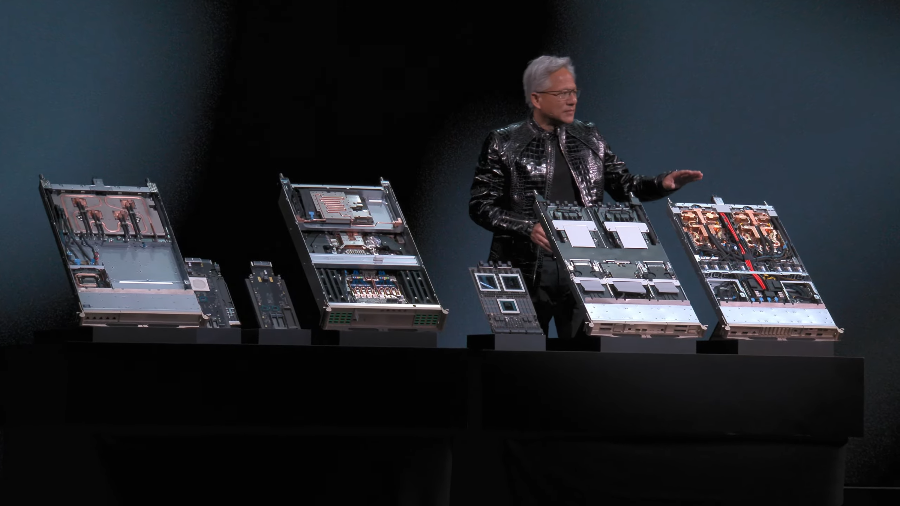
Group 1 - Doubao AI glasses are not set to be released as previously rumored, according to a company representative [1] - Maduro of Venezuela denies charges from the US during a court appearance, asserting his position as president [2] - The UN Security Council held an emergency meeting regarding the situation in Venezuela, expressing concerns over US military actions [5] Group 2 - Nanjing aims to attract over 300,000 young talents annually through new talent policies, including financial incentives for graduates [13][14] - The Zhengzhou Porsche Center has ceased operations due to the termination of its authorization agreement, affecting vehicle registration for some customers [16] - Tencent addressed an incident where its AI model produced inappropriate responses, confirming it was an output error and not human intervention [17][18] Group 3 - Gree Electric stated it will not raise prices for household air conditioners and has no plans to switch to aluminum instead of copper [21] - Romaishi announced a restructuring plan while continuing to operate customer service during a prolonged shutdown [22] - Xiaomi's CEO discussed the safety design of their vehicles, specifically the "wheel detachment" safety feature [23][24] Group 4 - Gold prices surged due to geopolitical events, prompting a price increase for certain gold jewelry by Chow Sang Sang [27][28] - The 2025 Hydrogen and Fuel Cell Industry Conference is set to take place, impacting the fuel cell sector [29] - Nvidia's CEO highlighted the upcoming significance of "Physical AI" in driving industrial advancements [30][31][32]

物理AI的ChatGPT时刻!英伟达“内驱”无人驾驶汽车将至,发布首个链式思维推理VLA模型
美股IPO· 2026-01-05 23:38
Core Viewpoint - Nvidia has announced the open-source release of its first inference VLA (Vision-Language-Action) model, Alpamayo 1, aimed at enhancing autonomous vehicle capabilities to "think" and solve problems in unexpected situations, utilizing a 10 billion parameter architecture [1][3][4]. Group 1: Model and Technology Overview - The Alpamayo model is designed to process complex driving scenarios using human-like reasoning, providing new pathways to address long-tail issues in autonomous driving [1][3]. - The model integrates three foundational pillars: open-source models, simulation frameworks, and datasets, creating a comprehensive open ecosystem for automotive developers and research teams [4]. - The model is now available on the Hugging Face platform and allows developers to adapt it for smaller runtime models or as a foundational tool for autonomous driving development [4][10]. Group 2: Industry Support and Collaboration - Major companies in the mobility sector, including Jaguar Land Rover, Lucid, and Uber, have expressed strong interest in utilizing the Alpamayo model to develop inference-based autonomous driving technology stacks [3][11]. - Nvidia's CEO highlighted the importance of the Alpamayo model in enabling autonomous vehicles to navigate rare scenarios safely and explain their driving decisions, which is crucial for scalable autonomous driving [6][11]. Group 3: Simulation and Data Resources - Alongside the Alpamayo model, Nvidia has released AlpaSim, a fully open-source end-to-end simulation framework for high-fidelity autonomous driving development, available on GitHub [9][10]. - Nvidia provides a large-scale open dataset containing over 1,700 hours of driving data, covering a wide range of geographical locations and conditions, essential for advancing inference architectures [9][10]. Group 4: Broader AI Model Releases - Nvidia has also launched several new open-source models, data, and tools across various industries, including the Nemotron family for agent AI, the Cosmos platform for physical AI, and the Isaac GR00T for robotics [12][14]. - These models include extensive datasets, such as 100 trillion language training tokens and 100TB of vehicle sensor data, aimed at accelerating AI development across sectors [14][15].
“物理AI的ChatGPT时刻”!英伟达最新发布 黄仁勋发声
Mei Ri Jing Ji Xin Wen· 2026-01-05 23:20
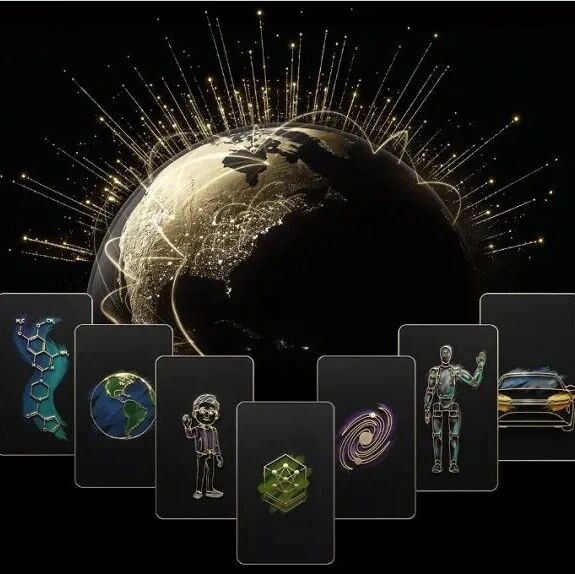
Core Insights - Nvidia has taken a significant step in the autonomous driving sector by open-sourcing its first inference VLA (Vision-Language-Action) model, Alpamayo, aimed at accelerating the development of safe autonomous driving technology [2][4] - The Alpamayo model processes complex driving scenarios using human-like reasoning, providing new pathways to address the long-tail problem in autonomous driving [2][4] Group 1: Model Features and Capabilities - The Alpamayo model is designed to enable vehicles to "think" in unexpected situations, such as traffic light failures, by analyzing inputs from cameras and sensors to propose solutions [4][5] - It integrates three foundational pillars: an open-source model, a simulation framework, and datasets, creating a comprehensive open ecosystem for automotive developers and research teams [4][5] - Alpamayo 1 features a 10 billion parameter architecture that generates trajectories and reasoning paths from video inputs, showcasing the logic behind each decision [4][6] Group 2: Future Developments and Applications - Nvidia emphasizes that the Alpamayo model will not run directly in vehicles but will serve as a large-scale teacher model for developers to fine-tune and integrate into their complete autonomous driving technology stack [5][6] - Future models in the Alpamayo family are expected to have larger parameter sizes, enhanced reasoning capabilities, and more flexible input-output options for commercial use [5][6] - The reasoning VLA model can break down complex tasks into manageable sub-problems, providing a more accurate problem-solving approach and a degree of introspection on its operations [6][7] Group 3: Strategic Initiatives and Market Position - Nvidia plans to test a self-driving taxi service by 2027, indicating its commitment to advancing autonomous vehicle technology [7] - The company is also set to release new Rubin data center products that will significantly enhance AI training and inference performance, with improvements of 3.5 times and 5 times, respectively, compared to the previous Blackwell architecture [8] - Major cloud service providers, including Microsoft, are expected to be among the first to deploy the new hardware based on the Rubin architecture [8]
物理AI的ChatGPT时刻!英伟达“内驱”无人驾驶汽车将至,发布首个链式思维推理VLA模型
Xin Lang Cai Jing· 2026-01-05 23:14
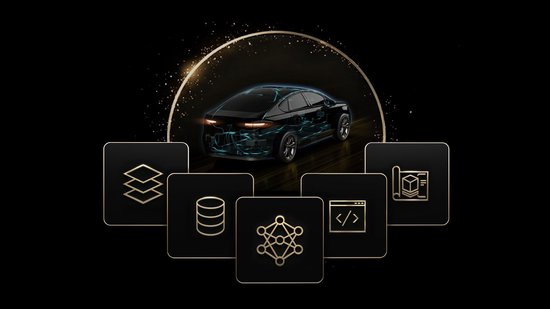
Core Insights - Nvidia has made a significant advancement in the autonomous driving sector by open-sourcing its first reasoning VLA (Vision-Language-Action) model, Alpamayo, aimed at accelerating the development of safe autonomous driving technology [1][16][13] - The model processes complex driving scenarios using human-like reasoning, providing a new pathway to address the long-tail problem in autonomous driving [1][14] Model Release and Features - The Alpamayo platform was unveiled by Nvidia CEO Jensen Huang at CES, with the first vehicles equipped with Nvidia technology expected to hit the roads in the U.S. in Q1 [3][16] - The Alpamayo model is free for potential users to retrain, designed to enable vehicles to "think" and propose solutions in unexpected situations, such as traffic signal failures [3][16] - The model features a 10 billion parameter architecture, utilizing video input to generate trajectories and reasoning paths, showcasing the logic behind each decision [4][17] Ecosystem and Support - Nvidia has created a comprehensive open ecosystem that includes the Alpamayo model, simulation frameworks, and datasets for any automotive developer or research team [3][16] - The open-source initiative has garnered widespread support from industry leaders, including Jaguar Land Rover, Lucid, Uber, and the University of California, Berkeley's DeepDrive, who plan to utilize Alpamayo for developing reasoning-based autonomous driving technology stacks [3][8][21] Technical Principles - The reasoning VLA model integrates visual perception, language understanding, and action generation with step-by-step reasoning capabilities, distinguishing it from standard VLA models [5][19] - It breaks down complex tasks into manageable sub-problems and provides interpretable reasoning processes, enhancing accuracy in problem-solving and task execution [5][19] Simulation Tools and Datasets - Alongside the Alpamayo model, Nvidia released AlpaSim, an open-source end-to-end simulation framework for high-fidelity autonomous driving development, available on GitHub [20] - The company also offers a large-scale open dataset with over 1,700 hours of driving data, covering diverse geographical locations and conditions, crucial for advancing the reasoning architecture [20] Industry Reactions - Industry leaders have expressed strong interest in Alpamayo, highlighting the growing need for AI systems to reason about real-world behaviors rather than merely processing data [21] - The open-source nature of Alpamayo is seen as a catalyst for innovation in the autonomous driving ecosystem, providing developers and researchers with new tools to safely navigate complex real-world scenarios [21][8]
高通发布机器人芯片架构 押注“物理AI”|直击CES
Xin Lang Ke Ji· 2026-01-05 19:58
Group 1 - Qualcomm has launched a new robotics technology architecture and the Dragonwing IQ10 series processors at CES 2026, marking its entry into the industrial and humanoid robotics market [3] - The Dragonwing IQ10 processor is designed for autonomous mobile robots (AMR) and full-sized humanoid robots, integrating edge computing, edge AI, hybrid critical systems, and machine learning operations for high-efficiency "robot brain" capabilities [3] - Qualcomm aims to compete with Nvidia in the next-generation robotics market, leveraging its 40 years of experience in mobile chip technology to establish advantages in power efficiency and scalability [3] Group 2 - Qualcomm is building a comprehensive robotics ecosystem and has partnered with several robotics manufacturers, including Figure AI, Booster, VinMotion, and Kuka Robotics [3] - The architecture supports end-to-end AI models such as visual-language-action models (VLA) and visual-language models (VLM), enabling advanced perception, motion planning, and human-robot interaction [3] - Qualcomm's Snapdragon Cockpit Elite platform has become the de facto standard for high-end electric vehicles, with a revenue pipeline exceeding $45 billion from its automotive business [4]



阿里巴巴物理AI继续迈大步,高德布局世界模型和具身智能
Sou Hu Cai Jing· 2026-01-05 13:35
Core Insights - Alibaba's Gaode has officially entered the world model technology space and plans to launch a new product application based on this model [1] - The model has achieved top scores in multiple metrics on the WorldScore benchmark, which is the first open-source evaluation for multi-modal world generation models [1] Group 1: Company Developments - Gaode has established an embodied business unit and is actively recruiting for various positions, including product experts and algorithm engineers [2] - The new department is exploring the development of product forms such as robots and robotic dogs [2] Group 2: Strategic Alignment - Gaode's shift towards spatial intelligence aligns with Alibaba Group's strategic direction towards "physical AI," emphasizing the transformative potential of generative AI in the physical world [3] - Alibaba's CEO has highlighted that the greatest value of generative AI lies in its ability to change the physical world, suggesting that all movable objects could become intelligent robots in the future [3] - Gaode's world model capabilities are expected to integrate deeply with other Alibaba units, such as Quark's terminal perception and DingTalk's collaborative scheduling, to serve a broader range of physical intelligent scenarios [3]