
绿色低碳发展

Search documents
加快落实绿色低碳行动 2025天府碳中和论坛在蓉举办
Mei Ri Jing Ji Xin Wen· 2025-11-30 17:31
中国工程院院士、中国环境科学学会理事长、天府永兴实验室学术委员会委员王金南以《加快建立绿色 设计制度,全面推动绿色低碳转型》为题作主旨报告,提出绿色与可持续发展是人类应对工业化以来环 境危机、资源枯竭与社会失衡的核心解决方案,而"人类愿景"则是这一发展路径所指向的终极目标,即 构建一个生态安全、经济繁荣、社会公平、代际和谐的共同未来。 11月30日,"2025天府碳中和论坛"在成都天府国际会议中心举行。论坛以"加快落实绿色低碳行动,开 启应对气候变化新征程"为主题,汇聚政府领导、院士专家与产业代表,共商绿色低碳发展路径、共绘 双碳目标实现蓝图。 本届论坛采用"主论坛+平行分论坛"相结合的形式,设1个主论坛、8场专题分论坛,聚焦碳中和科技前 沿、政策机制与产业实践,旨在推动绿色低碳产业高质量发展。 除主论坛外,8场平行分论坛同步举行,议题涵盖西南新能源大开发增量机遇、资源碳中和暨气候变 化、减污降碳与生态固碳、零碳建筑与城乡能源转型、高效碳捕集与利用技术、碳中和集成耦合与零碳 园区、成果转化供需对接与绿色产业生态构建等多个前沿领域。与会嘉宾从政策、技术、产业等多维度 展开研讨,为推动传统产业绿色转型与科技创新促 ...
海南印发低碳岛建设方案
Zhong Guo Zi Ran Zi Yuan Bao· 2025-11-30 11:38
Core Viewpoint - The Hainan Provincial Government has officially issued the "Hainan Low Carbon Island Construction Plan," which outlines three major timeline goals and aims to systematically promote low carbon island construction to support the green and high-quality development of the free trade port [1][3]. Group 1: Timeline Goals - By 2030, the province aims to achieve carbon peak emissions [1]. - By 2045, Hainan plans to fully establish a low carbon island, reducing annual carbon dioxide emissions by 70% compared to peak levels [1]. - By 2060, the province targets achieving carbon neutrality [1]. Group 2: Key Tasks - The plan includes seven key tasks focusing on energy, industry, urban and rural areas, transportation, ecology, smart management, and long-term carbon governance [1][2][3]. Group 3: Energy Sector Initiatives - The plan emphasizes the development of offshore wind power and enhancing the capacity for green electricity consumption [1]. - It promotes localized green electricity supply models to improve the low-carbon competitiveness of export products [1]. Group 4: Industry Decarbonization - The plan aims to foster innovation through application and establish a multi-level low-carbon technology innovation and application platform [1]. - It encourages the integration of smart manufacturing with green low-carbon development [1]. Group 5: Urban and Rural Decarbonization - The initiative promotes low-carbon and livable transformations in urban spaces, including optimizing ecological cooling sources and planning green community spaces [2]. Group 6: Transportation Decarbonization - The plan advocates for the clean energy transition in transportation, including upgrading railway equipment and promoting alternative energy in shipping [2]. Group 7: Ecological Carbon Sequestration - The plan focuses on enhancing forest carbon storage and exploring geological carbon storage capabilities [2]. - It aims to establish a land ecological space pattern and conduct research on carbon mineralization potential [2]. Group 8: Smart Carbon Management - The plan proposes establishing a multi-level smart management system for energy and carbon emissions, including the creation of foundational databases [2]. Group 9: Long-term Carbon Governance - The plan aims to create an international low-carbon exchange platform and strengthen cooperation with countries along the Belt and Road Initiative [3]. - It includes the establishment of the Hainan International Blue Carbon Research Center and the Carbon Emission Trading Center [3].
山东经济结构优化升级蕴含重大机遇
Da Zhong Ri Bao· 2025-11-30 00:38
Core Insights - Shandong's economic structure optimization during the "14th Five-Year Plan" period presents significant investment opportunities for various stakeholders [2][6] Strategic Advantages - Shandong benefits from multiple national strategic layouts, with strong policy dividends and resource aggregation enhancing its economic position [2][3] - The province has been recognized by national leadership, with six visits from President Xi Jinping since the 18th National Congress, providing direction for high-quality development [2] Policy Collaboration - Systematic thinking and policy collaboration are driving economic growth, with a focus on expanding and upgrading consumption, particularly in new consumption scenarios [3] - Government investments are being strategically directed towards manufacturing, green energy, and new infrastructure, laying a foundation for future industrial upgrades [3] Industrial Structure - Shandong's comprehensive industrial system is increasingly advantageous in a rapidly changing external environment, providing a "passport" for investors to access a complete industrial ecosystem [3][4] - The province is committed to optimizing its industrial structure, promoting intelligent, green, and integrated development to foster new technologies and business models [3][4] Technological Innovation - Shandong is investing 259.7 billion yuan in research and development in 2024, reflecting an 8.9% increase, and is home to a significant number of high-level talents [4] - The province is seeing improved patent conversion efficiency and breakthroughs in key technologies, which are essential for elevating industrial capabilities [4] Dual-Driving Economy - As of October, Shandong's state-owned enterprises have total assets of 5.7 trillion yuan and revenues exceeding 2.1 trillion yuan, providing a stable economic environment [4] - Private enterprises account for 98.9% of the market, driving high-quality development and enhancing competitive vitality [4] Open Economy - Shandong is accelerating its development as a high-level open economy, leveraging its strategic location in the "Belt and Road" initiative and Northeast Asia [5] - The province is establishing a logistics corridor to reduce logistics costs and attract industry clusters, facilitating global market access for local businesses [5] Green Transformation - Shandong is embedding the concept of "green development" into its growth strategy, with non-fossil energy generation capacity reaching 134 million kilowatts, accounting for 53.4% of total capacity [5] - This shift towards renewable energy signifies a new era for the province, enhancing the international competitiveness of "Shandong manufacturing" [5]
中国绿色低碳发展释红利 机遇共享通世界
Zhong Guo Xin Wen Wang· 2025-11-29 10:00
中新社南昌11月29日电 (记者吴鹏泉)移动储能机器人、光伏汽车天窗、氢燃料电池电站……2025世界绿 色发展投资贸易博览会暨中国绿色食品博览会处处"绿意盎然"。透过这一国际化平台可发现,中国绿色 低碳发展正持续释放红利,为世界带来多重发展机遇。 11月27日至30日,本届博览会在江西南昌举行,中外2500余家企业参展觅商机,各类绿色低碳创新技术 和产品集中亮相。 11月27日,2025世界绿色发展投资贸易博览会暨中国绿色食品博览会现场,具身智能机器人的表演吸引 参观者观看。刘力鑫摄 江西省委书记尹弘表示,本次大会以"数智赋能绿色发展,开放江西链接全球"为主题,就是要践行生态 文明理念,顺应数智化发展潮流,交流绿色发展经验,共享时代机遇,共创美好未来,为高质量发展注 入强劲绿色动能。 博览会现场,一家新能源企业展示的光伏汽车天窗引人注目。"天窗采用高效光伏组件,单日发电量2度 左右,可提升续航里程约20公里,后续我们还会研发集成于玻璃间的太阳能板产品。"该企业产品总监 蔡伟认为,随着中国力推绿色发展,车辆零部件会更注重绿色低碳设计。 加快全面绿色转型是中国的发展方向。《中共中央关于制定国民经济和社会发展第十五 ...

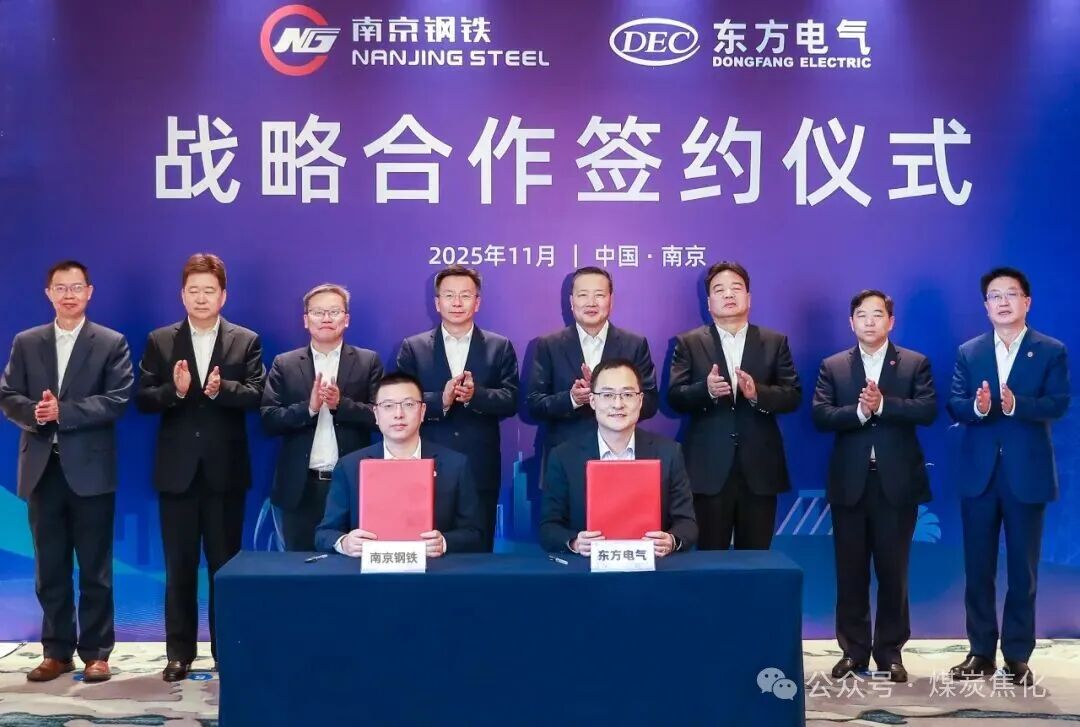
南钢,再签约!
Xin Lang Cai Jing· 2025-11-29 03:45
11月27日,南京钢铁股份有限公司与东方电气股份有限公司战略合作签约仪式在南京举行。根据协议,双方将通过"南钢材料+东电装备"的强强联合,共 同推进相关技术跃迁、突破,打造具有国际竞争力的现代产业体系,实现高端材料自主可控。 南京市委副书记、代市长李忠军,中信集团党委副书记、副董事长、总经理张文武,东方电气集团党组成员、副总经理王军,南京市委常委、江北新区党 工委书记、浦口区委书记陆卫东,江苏省工业和信息化厅党组成员、副厅长石晓鹏,中信泰富党委副书记、总裁、中信泰富特钢党委书记、董事长钱刚, 东方电气集团总经理助理、股份公司副总裁胡修奎,南钢党委书记、董事长黄一新等见证签约。 南京市政府秘书长洪礼来,江北新区党工委委员、管委会副主任陶磊,南京市工业和信息化局副局长娄伟,东方自控党委副书记、总经理张黎,东方电气 集团产业发展部副部长李元,东方氢能党委副书记、总经理巩李明,中信集团业务协同部总经理任霞、科技与数字化部总经理赵磊、办公厅副主任崔玉开 等参加。南钢党委副书记王芳主持签约仪式,副总裁谯明亮代表南钢签署协议。 南钢作为中信集团的一员,与东方电气有着良好的合作基础。南钢与东方电气均创建于1958年,长期保持 ...

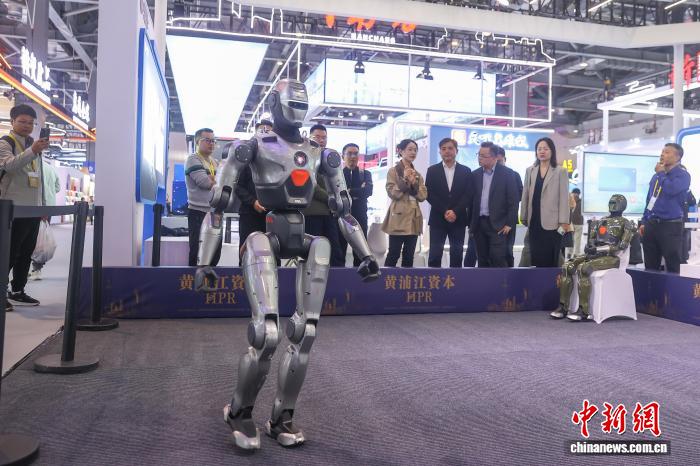
山东统筹能源供应保障、绿色转型和改革创新,能源高质量发展取得突破性进展
Da Zhong Ri Bao· 2025-11-29 01:19
Core Insights - Shandong has made significant progress in high-quality energy development, balancing energy supply security, green transformation, and reform innovation [6] - The province has established a robust offshore wind power industry cluster, with 235 giant wind turbines generating 4.35 billion kWh of green electricity annually, equivalent to the carbon absorption of 14 million trees [2][6] - The integration of AI and 5G technology in offshore wind farm operations enhances efficiency and safety, addressing challenges such as maintenance costs and communication issues [3][4][5] Group 1: Offshore Wind Power Development - Shandong's offshore wind power capacity reached 5.92 million kW by the end of October, making it a key driver for green, low-carbon development in the province [2][6] - The operational maintenance costs for offshore wind power typically account for 20%-30% of project construction costs, significantly higher than onshore wind [2] Group 2: Technological Innovations - The implementation of a smart operation and maintenance system, including AI for real-time monitoring and 5G communication, has improved operational efficiency and safety in offshore wind farms [3][4][5] - The deployment of 5G technology has extended communication coverage up to 77 kilometers, enhancing response times for maintenance and safety [4] Group 3: Energy Transition Goals - By the end of October 2025, Shandong aims to exceed 250 million kW in total installed power capacity, with clean energy accounting for one-third of electricity consumption [6] - The province has invested over 200 billion yuan annually in energy projects, focusing on diverse clean energy sources such as nuclear, wind, solar, and geothermal [6]
全省石油天然气产业链工作推进会召开
Shan Xi Ri Bao· 2025-11-28 23:56
Core Viewpoint - The meeting emphasized the importance of the oil and gas industry in achieving the province's economic and social development goals, aligning with national energy security strategies and the directives from the 20th National Congress of the Communist Party of China [1][2]. Group 1: Production and Investment Focus - The focus is on increasing reserves and production, with a commitment to complete production tasks and enhance oil and gas output to counteract price declines and support industrial growth [2]. - There is a strong emphasis on project completion and investment, including technological upgrades and exploration in new areas, as well as the construction of major projects related to oil and gas infrastructure [2]. Group 2: Efficiency and Sustainability - The strategy includes cost reduction and efficiency improvements, aiming to enhance profitability through increased oil recovery rates and the digital transformation of the industry [2]. - The commitment to achieving "dual carbon" goals involves accelerating the application of low-carbon technologies like CCUS, ensuring green and low-carbon development while maintaining safety and environmental protections [2]. Group 3: Future Planning and Development - The oil and gas industry is directed to focus on high-end, diversified, and low-carbon development, with a strategic plan for the next five years to establish clear goals and major projects [2]. - There is an initiative to expedite the review and assessment of chemical parks to facilitate the implementation of oil and gas chemical projects and support industry development [2].
广西高位推进涉重金属环境安全隐患排查 2947个问题完成整改
Zhong Guo Xin Wen Wang· 2025-11-28 13:28
Core Viewpoint - Guangxi Zhuang Autonomous Region is actively addressing heavy metal environmental safety hazards, with significant progress in rectifying identified issues and promoting ecological civilization through legislative measures [1][2][3] Group 1: Legislative and Regulatory Framework - The "Regulations on Promoting Ecological Civilization Construction in Guangxi" is the first comprehensive local legislation in the ecological field, providing a solid legal foundation for ecological civilization development [1] - The implementation of the regulations has enhanced pollution prevention efforts and promoted high-quality development in Guangxi [1] Group 2: Environmental Safety Inspection and Remediation - A leadership group was established to oversee the inspection and remediation of heavy metal environmental safety hazards, resulting in the rectification of 2,947 out of 3,438 identified issues by October 29 [2] - The report from the State Council highlighted 24 issues, with 9 immediate rectifications completed and ongoing progress on long-term issues [2] Group 3: Industry Development and Environmental Protection - The focus is on making heavy metal pollution prevention a major political task, with plans to develop a high-quality comprehensive trial zone for critical metals in Nandan [3] - The region aims to integrate mining rights and address small, scattered enterprises while promoting green mining and low-carbon development initiatives [3] - Legislative efforts will be strengthened to enhance ecological protection, particularly concerning heavy metal pollution [3]
这个千亩产业用地面向全球“招亲”
Sou Hu Cai Jing· 2025-11-28 10:46
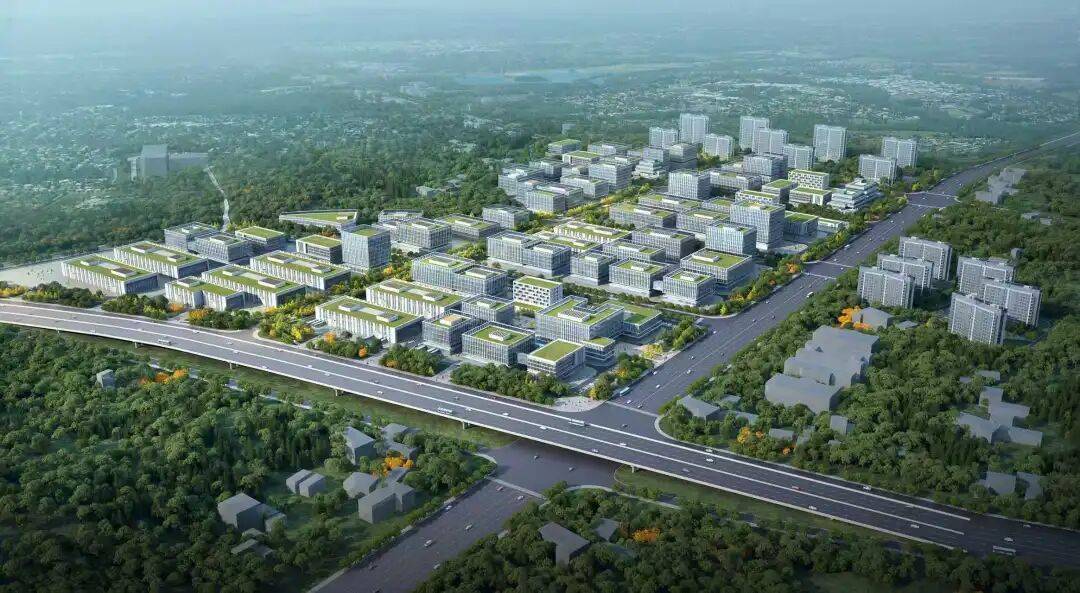
效果图。 莲花片区规划总面积约1013亩,其中净用地面积约760亩,包括658亩一类工业用地和102亩住宅用地,可满足企业从百亩至千亩不等的用地需求。 作为湘江新区战略门户,该片区地处长株潭都市圈核心区域,交通便捷,区位优势显著。片区周边已形成"三横三纵"骨干路网体系,半小时可达长株潭核 心商圈,3小时辐射武汉、南昌,10小时通达京沪广深等主要城市,为企业布局供应链、拓展市场提供了有力支撑。 11月27日,湖南湘江新区莲花片区千亩产业用地正式启动招商。该片区位于长沙城区西南门户,由长沙麓山投资控股集团有限公司统筹开发,是当前城区 内极为罕见的连片产业用地,被视为推动区域产业升级、培育新质生产力的重要载体。 据悉,片区位于黄桥大道先进制造产业带核心枢纽,可串联望城经开区与湘江科学城、对接九华新能源汽车产业城,可与这些片区形成资源联动。 此外,作为湘江科学城成果转化与产业链布局的核心区域之一,莲花片区将重点承接高端制造、新一代信息技术、人工智能、智能网联汽车等战略性新兴 产业,可与湘江实验室、岳麓山实验室等科研平台紧密联动,并依托中南大学、湖南大学的科研人才优势,推动"研发—生产—市场"全链条创新生态构 建。目前 ...
全版日程+参会指南发布 | 2025中国储能CEO峰会倒计时5天
中关村储能产业技术联盟· 2025-11-28 10:10
Core Viewpoint - The 2025 China Energy Storage CEO Summit will be held from December 3-5, 2025, in Xiamen, Fujian, focusing on the globalization of the energy storage industry and gathering leaders and experts to discuss international hotspots and emerging markets in energy storage [2]. Event Details - The summit will feature a series of keynote speeches and discussions on topics such as green low-carbon development opportunities and challenges, planning for green power systems in overseas scenarios, and innovative strategies for reshaping the global energy storage landscape [8][10]. - The event will include a CEO roundtable discussion aimed at aligning China's energy storage industry with global industrial ecosystems by 2030 [8]. Organizing Institutions - The summit is organized by the Zhongguancun Energy Storage Industry Technology Alliance, in collaboration with Xiamen University and Xiamen Kehua Data Co., Ltd., among others [17]. Registration and Accommodation - Pre-registration is required for attendance, and various hotels in Xiamen are offering special rates for participants [25][18][20]. Transportation - The main conference hotel is located approximately 7.2 km from Xiamen Gaoqi Airport, with convenient access to local transportation [18].


