卫星互联网

Search documents
晚报 | 1月12日主题前瞻
Xuan Gu Bao· 2026-01-11 14:39
Group 1: Drone Industry - The "Tianma-1000" unmanned transport aircraft developed by China Weapon Industry Group successfully completed its first flight test, showcasing good performance across various flight data [1] - The aircraft is designed for logistics transport, emergency rescue, and material delivery, with a maximum altitude of 8,000 meters, a takeoff distance of less than 200 meters, a maximum range of 1,800 kilometers, and a payload capacity of 1 ton [1] - The Chinese civil drone market is expected to reach approximately 146.8 billion yuan in 2024, with a projected compound annual growth rate of 18.3% from 2024 to 2030, indicating strong growth potential [1] Group 2: Rare Earth Industry - The Baotou Rare Earth Products Exchange has launched a rare earth price index, which will serve as a price "barometer" and "weather vane" for the rare earth product circulation sector in China [2] - Analysts predict that rare earth prices will continue to rise due to ongoing supply-demand improvements, with upstream processing enterprises likely to dominate profit distribution in the industry [2] Group 3: Fertility Support Policies - The National Health and Wellness Conference emphasized the implementation of fertility support policies, including the issuance of childcare subsidies and the optimization of maternal and child services to stabilize the birth rate [3] Group 4: Satellite Internet - The FCC has approved SpaceX's request to deploy an additional 7,500 second-generation Starlink satellites, increasing its total operational satellites to 15,000 [4] - China's application for over 200,000 satellite constellation plans indicates a strategic national-level initiative to enhance its capabilities in low Earth orbit and compete with Western countries [4] Group 5: Solid State Drives - SanDisk has introduced a new contract requiring full cash prepayment from customers to secure supply quotas for the next 1 to 3 years, driven by strong demand for storage devices in AI infrastructure [5] - The price of enterprise-grade SSDs is expected to increase by over 100% in March, reflecting aggressive price hikes in the NAND market [5] Group 6: Controlled Nuclear Fusion - New Hope has successfully tested its second-generation high-temperature superconducting model TF coil, a critical component for commercial fusion reactors [6] - The hydrogen-boron fusion technology is included in China's national fusion energy strategy, highlighting its potential for clean energy and commercialization [6] Group 7: Lithium Extraction from Salt Lakes - A research team from the Qinghai Salt Lake Research Institute has achieved a significant breakthrough in lithium extraction technology, enhancing lithium recovery rates by 15% to 20% and reducing costs by 30% [7] - The development of a large-scale lithium extraction demonstration line is expected to generate over 600 million yuan in new value, positioning China as a key player in the global lithium supply chain [7] Group 8: Macro and Industry News - The State Council has called for enhanced coordination between fiscal and monetary policies to encourage social capital participation in consumption and investment [8] - The National Business Work Conference aims to accelerate the cultivation of new growth points in service consumption and optimize the implementation of old-for-new consumption policies [10]

全体上刺刀——A股一周走势研判及事件提醒
Datayes· 2026-01-11 14:14
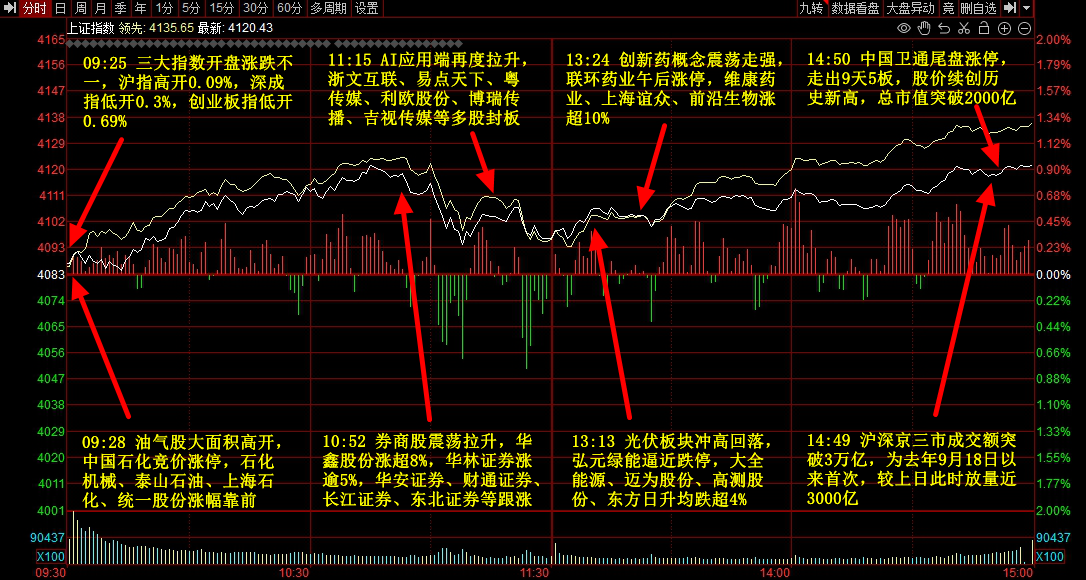
Group 1: Aerospace Industry - China plans to apply for frequency resources for over 200,000 satellites by December 2025, indicating a strategic national focus on satellite technology [1] - The U.S. FCC has approved SpaceX to deploy an additional 7,500 Starlink satellites, increasing the total to approximately 15,000, enhancing global broadband coverage and competitive edge in satellite communications [1] Group 2: Renewable Energy and Battery Industry - From April 1, 2026, China will cancel VAT export rebates for photovoltaic products and reduce the rebate rate for battery products from 9% to 6%, leading to a potential surge in exports before the policy takes effect [4][5] - The solar energy sector accounts for about 10% of China's aluminum demand, and the upcoming policy changes are expected to positively impact aluminum demand in Q1 [4] Group 3: Market Trends and Investment Strategies - Analysts suggest that the current market sentiment is driven by emotions and liquidity, with expectations of continued upward movement in A-shares, particularly in technology and robotics sectors [12] - The spring market rally is anticipated to continue, with a focus on sectors that show strong performance and potential for growth, despite short-term volatility [12][13] Group 4: Robotics Industry - Hangzhou Xinjian Electromechanical Transmission Co., Ltd. has initiated listing guidance, recognized as a primary supplier for humanoid robots [17] - At CES 2026, AAC Technologies showcased a comprehensive humanoid robot solution, indicating advancements in robotics technology [18] Group 5: AI and Computing - DeepSeek is set to launch a new AI model with enhanced code generation capabilities, reflecting ongoing advancements in AI technology [20] - Tencent's new chief scientist highlighted that the productivity gains from current AI models are just beginning to be realized, with significant commercial opportunities ahead [20] Group 6: Rare Earth Industry - Chinese state-owned enterprises have notified some Japanese companies of the termination of new sales contracts for rare earths, marking a significant shift in trade relations [23] - The price index for rare earths has been launched, with recent data showing a slight increase in prices for praseodymium and neodymium [25]

商业航天事件点评:卫星星座扩容,打开商业航天市场天花板
CMS· 2026-01-11 13:19
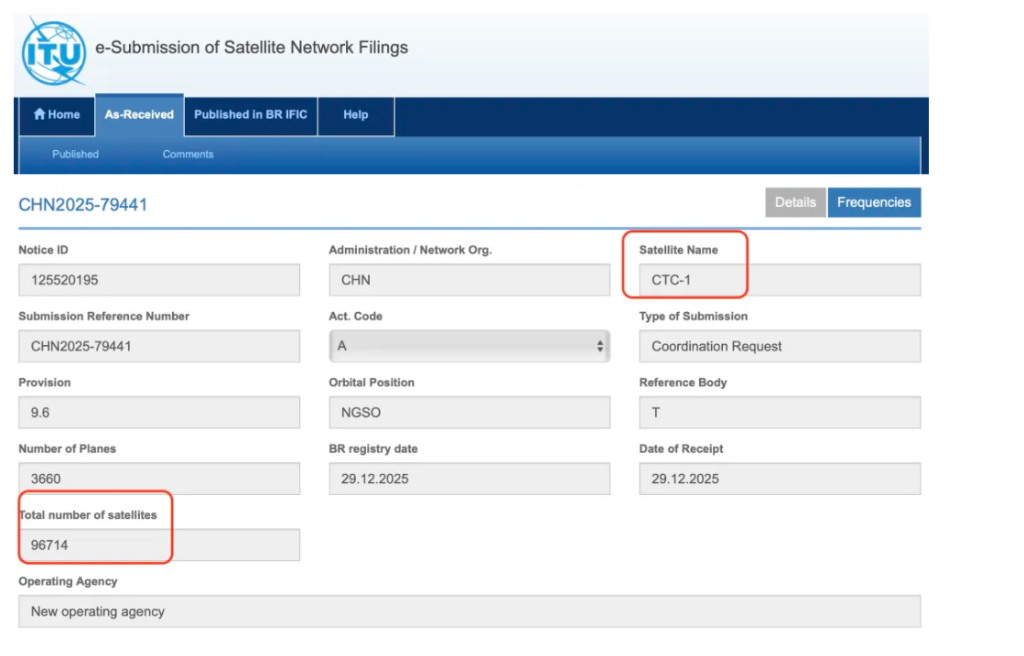
证券研究报告 | 行业简评报告 2026 年 01 月 11 日 卫星星座扩容,打开商业航天市场天花板 商业航天事件点评 中游制造/军工 事件: 近日,国际电信联盟(ITU)官网显示,中国提交了新增 20.3 万颗的卫星申请, 此次申报涵盖 14 个卫星星座,其中 CTC-1 和 CTC-2 两个星座各自申请 96,714 颗。 评论: 相对于"GW"星座与千帆星座,本次卫星申请大幅度提升了星座的数量及卫星 的总量,或将有效的提升商业航天整体的市场空间。 商业航天加速了航天产业链的发展。商业航天,是指以市场为主导、具有商业 盈利模式的航天活动。近年来,中国商业航天力量如雨后春笋般涌现,展现出 令人瞩目的实力,为加快发展新质生产力不断注入新的动能,或将可以有效的 带动国内通信、能源、新材料等产业的发展。 海南国际商业航天发射中心发射工位持续增加。根据海南国际商业航天发射中 心党委副书记郭强介绍,一期按照 2 个中型液体工位和 2 个固体小型工位来进 行规划的。中型液体工位每年打 16 发火箭,固体工位一个打几十发火箭。为了 适应现在市场的需要,后面有二期、三期和更大的计划。目前,海南商业航天 发射场二期在文昌开 ...
20万颗!下周A股核心主线来了!
Xin Lang Cai Jing· 2026-01-11 11:01
Group 1 - The core message of the news highlights a significant development in the commercial space sector, with China submitting an application for 203,000 new satellites, marking a record in domestic frequency orbit applications [2][3] - The application involves 14 satellite constellations, with the CTC-1 and CTC-2 constellations leading the submission, accounting for 95.3% of the total application [2][3] - The competition for satellite frequency and orbit resources is intensifying globally, as evidenced by simultaneous approvals from both China and the U.S. for large-scale satellite deployments [2][3] Group 2 - The application includes a diverse range of operators, such as China Star Network, Shanghai Yuanxin, China Mobile, and China Telecom, indicating a collaborative effort across the industry [3][4] - The establishment of the Radio Innovation Institute, which aims to support satellite internet development and spectrum resource utilization, underscores the urgency of securing frequency and orbit resources [3][4] - The strategic intent behind China's large-scale application is to "lock in" resources and secure positions for future network expansions over the next decade [4] Group 3 - China's commercial space sector is entering a golden development period, with a record 92 space launches in 2025, including 69 by state-owned enterprises and 23 by private companies [6][7] - The anticipated advancements in rocket technology and infrastructure improvements are expected to significantly reduce launch costs, enhancing the economic feasibility of satellite internet [6][7] - The increasing focus on "space computing" and the development of satellite computing clusters indicate a shift in the industry towards more advanced applications [7][8] Group 4 - The commercial space sector is expected to see substantial growth in 2026, with a projected increase in low Earth orbit satellite launches by over 150% [10][9] - The breakthroughs in reusable rocket technology are anticipated to drive down costs and improve efficiency across the industry [10][9] - The overall outlook for 2026 suggests a critical transition for China's commercial space sector from accumulation of scale to enhancement of systemic capabilities [11]

申请超20万颗!下周商业航天还是A股核心主线?
Ge Long Hui· 2026-01-11 10:30
周末,一则关于卫星申报的重磅消息,在投资圈炸开了锅! 01、全球卫星竞赛升级,频轨资源争夺白热化 资料显示,此次申报的运营主体阵容堪称史上罕见,全面扩容至中国星网、上海垣信、中国移动、中国电信、无线电创新院、国电高科、航天驭星、银河 航天等多家知名企业与机构,涵盖国家队、地方国企、民营龙头及科研转化平台,形成全产业链协同申报格局。 1月10日,商业航天赛道传来标志性利好:国际电信联盟(ITU)官网公示显示,中国正式提交新增20.3万颗卫星的频谱轨位申请,覆盖14个卫星星座,申 报规模创下国内单次申报纪录。 其中,无线电创新院牵头的CTC-1和CTC-2两大星座表现尤为突出,各自申报96714颗卫星,合计达193428颗,占本次总申报量的95.3%,成为绝对主力。 无独有偶,周五,美国联邦通信委员会(FCC)同步批准SpaceX新增部署7500颗第二代星链卫星,使其获准运营的第二代卫星总数达到15000颗。此次授 权还包括卫星技术升级与多频段运营许可,并豁免了此前部分覆盖区域与容量方面的限制,为其全球互联网服务扩容扫清障碍。 分析指出,中美两国在短短48小时内密集出台卫星部署重磅政策,标志着全球太空战略资源竞争 ...
20万颗!下周A股核心主线来了!
格隆汇APP· 2026-01-11 09:43
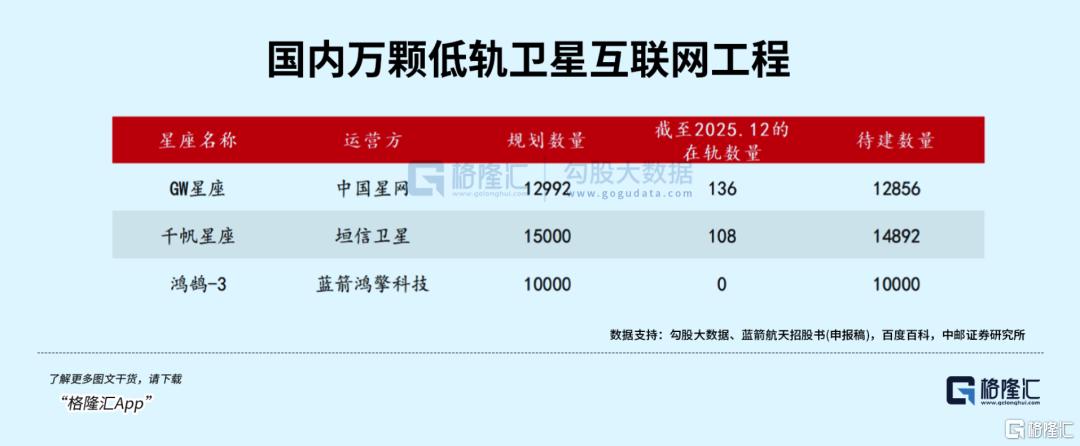
Core Viewpoint - The article highlights a significant development in the commercial space sector, with China submitting a record application for 203,000 satellite frequency orbits, indicating an intensifying global competition for space resources [2][4]. Group 1: Satellite Deployment and Strategic Intent - China has submitted an application for 203,000 satellites, covering 14 satellite constellations, marking the largest single application in the country’s history [2]. - The CTC-1 and CTC-2 constellations, led by the Radio Innovation Institute, account for 193,428 satellites, representing 95.3% of the total application [2][4]. - The strategic intent behind this large-scale application is to secure satellite frequency and orbit resources, which are limited and follow a "first come, first served" principle [5]. Group 2: Competitive Landscape - The competitive landscape is highlighted by the simultaneous approval of SpaceX's deployment of 7,500 second-generation Starlink satellites by the FCC, bringing the total to 15,000 [2]. - The article notes that the U.S. currently has about 75% of the global satellite count, while China holds approximately 9%, indicating a significant gap and the urgency for China to enhance its satellite capabilities [5]. Group 3: Industry Growth and Future Projections - The commercial space sector in China is expected to see a rapid increase in satellite launches, with an estimated annual launch requirement rising from hundreds to over a thousand to meet existing applications [8]. - By 2025, China is projected to complete 92 space launches, surpassing 300 satellites and spacecraft, indicating a shift towards a dual-driven model of state and private sector collaboration [10]. - The year 2026 is anticipated to be pivotal for the commercial space industry, with advancements in rocket technology and increased launch capacity expected to drive significant growth [16][18]. Group 4: Investment Opportunities - The article suggests that sectors such as satellite manufacturing, rocket launch services, and ground equipment are likely to attract investment as the industry matures [13][14]. - Companies with technological or production advantages in critical areas like phased array antennas and satellite computing are expected to have greater growth potential [15].
大利好!周末彻底沸腾!中国新增20万颗卫星申请
天天基金网· 2026-01-11 07:30
其中大部分来自一个新机构:无线电创新院(全称"无线电频谱开发利用和技术创新研究 院")。它申报的CTC-1、CTC-2两个星座,各96,714颗,两者合计超过19万颗。 资料显示,2025年12月30日,无线电创新院在雄安新区登记注册,这是我国无线电管理技术 领域首家以技术创新和成果转化为目标的新型研发机构。 上天天基金APP搜索777注册即可领500元券包,优选基金10元起投!限量发放!先到先得! 周末一条关于卫星的消息,炸锅了! 中国新增20万颗卫星申请 1月10日,商业航天赛道传出重磅利好消息。 据最新消息,国际电信联盟(ITU)官网显示,中国提交了新增20.3万颗的卫星申请,此次申 报涵盖14个卫星星座。 无线电创新院由国家无线电监测中心、河北雄安新区管理委员会、河北省工业和信息化厅、 中国卫星网络集团有限公司、南京航空航天大学、北京交通大学、中国电子科技集团有限公 司7家单位联合共建。无线电创新院将以服务卫星互联网产业、研究电磁空间技术、挖掘频谱 资源价值潜力为愿景,聚焦频谱开发利用与技术创新深度融合,着力搭建无线电领域集关键 技术研发、成果孵化与产业赋能于一体的政产学研用联合创新平台,推动无线电频 ...

重磅利好!20万颗卫星点燃市场!马斯克也获批第二代星链7500颗卫星!商业航天还能持续多久?
雪球· 2026-01-11 06:47
Group 1: Commercial Aerospace Developments - Chinese companies have submitted an application for 203,000 satellites to the International Telecommunication Union (ITU), focusing on 14 satellite constellations, with CTC-1 and CTC-2 being the main contributors, each applying for 96,714 satellites [4] - The application aims to support the satellite internet industry and enhance the utilization of spectrum resources, with a vision to create an innovation platform for radio frequency technology [4][5] - The ITU mandates that newly submitted satellite applications must launch their first satellite within seven years and complete deployment of the total number of satellites within 14 years, making satellite manufacturing and launching a critical focus for the industry [5] Group 2: SpaceX Developments - The U.S. Federal Communications Commission (FCC) has approved SpaceX's application to deploy an additional 7,500 second-generation Starlink satellites, bringing the total approved to 15,000 [7] - The approval allows for technical upgrades and operation across five frequency bands, removing previous restrictions on signal overlap and network capacity [7] - SpaceX is required to launch 50% of the authorized satellites by December 1, 2028, and complete the deployment of the remaining satellites by December 2031 [7] Group 3: AI Developments - DeepSeek is reportedly planning to release its V4 version around the Chinese New Year in 2025, which is expected to surpass current leading models in programming capabilities [9] - The previous release of DeepSeek's large model R1 generated significant attention in both the AI industry and capital markets, indicating high expectations for the upcoming V4 release [9] Group 4: App Development - The "Is It Dead?" app, designed for solitary individuals, has gained popularity, reaching the top of the paid app charts, and requires a subscription fee of 8 yuan [13][14] - The app was developed quickly with a minimal initial investment of around 1,000 yuan and has already achieved profitability [16] - The app's founders estimate its valuation at 10 million yuan based on a proposed sale of 10% equity for 1 million yuan [16]

——金融工程市场跟踪周报20260111:春季躁动仍可期-20260111
EBSCN· 2026-01-11 04:48
- The report discusses a volume-timing model that has issued buy signals for major broad-based indices, indicating a positive market sentiment[1][2][22] - The volume-timing model is constructed by analyzing the volume indicators of major broad-based indices and their ETFs, which have shown an increase in trading volume, suggesting a bullish market outlook[1][2][22] - The specific construction process of the volume-timing model involves tracking the trading volume of major indices and ETFs, and when the volume increases significantly, the model issues a buy signal[1][2][22] - The evaluation of the volume-timing model indicates that it is effective in capturing market sentiment and providing timely buy signals[1][2][22] - The report also introduces a sentiment indicator based on the proportion of rising stocks within the CSI 300 index, which helps gauge market sentiment by tracking the number of stocks with positive returns over a specified period[23][24] - The construction process of this sentiment indicator involves calculating the proportion of CSI 300 index constituent stocks with positive returns over a given period, and using this proportion to assess market sentiment[23][24] - The evaluation of this sentiment indicator suggests that it is useful for quickly capturing market upturns, although it may miss out on gains during prolonged bullish phases and has limitations in predicting market downturns[23][24] - Another sentiment indicator discussed in the report is the moving average sentiment indicator, which uses the eight moving averages of the CSI 300 index to determine market trends[30][31] - The construction process of the moving average sentiment indicator involves calculating the eight moving averages (8, 13, 21, 34, 55, 89, 144, 233) of the CSI 300 index closing prices, and assigning values based on the number of moving averages the current price exceeds[30][31] - The evaluation of the moving average sentiment indicator indicates that it provides a clearer understanding of the market trends and is effective in identifying bullish phases[30][31] - The report includes backtesting results for the volume-timing model, showing that the model has consistently issued buy signals for major indices such as the Shanghai Composite Index, SSE 50, CSI 300, CSI 500, CSI 1000, and the ChiNext Index[23] - The sentiment indicator based on the proportion of rising stocks within the CSI 300 index has shown that the proportion of rising stocks is around 74%, indicating a positive market sentiment[24] - The moving average sentiment indicator shows that the CSI 300 index is currently in a bullish phase, as the short-term moving average is above the long-term moving average[30][31]




中国新增20万颗卫星申请,专家:卫星频轨资源申请已上升至国家战略层面
Xuan Gu Bao· 2026-01-11 04:18
Core Viewpoint - China's application for over 200,000 satellite frequency resources to the ITU marks a strategic move in the satellite internet sector, indicating a national-level commitment to compete with global players like SpaceX [1][4]. Group 1: Satellite Resource Application - The application includes over 190,000 satellites from the newly established Radio Innovation Institute, with significant contributions from various satellite constellations [1][2]. - The largest constellations in the application are CTC-1 and CTC-2, each comprising 96,714 satellites [2][3]. - Other notable constellations include CHINAMOBILE-L1 with 2,520 satellites, SAILSPACE-1 with 1,296 satellites, and TIANQI-3G with 1,132 satellites [2]. Group 2: Establishment of Radio Innovation Institute - The Radio Innovation Institute was registered on December 30, 2025, in Xiong'an New Area, Hebei, as the first R&D institution in China's radio management technology field focused on innovation and results transformation [4]. - The institute is a collaborative effort involving seven entities, including the National Radio Monitoring Center and China Satellite Network Group, aiming to enhance satellite internet services and explore spectrum resource potential [4]. Group 3: Strategic Implications and Industry Impact - The application reflects China's determination to establish a large-scale, systematic presence in low Earth orbit and compete directly with Western nations, particularly the U.S., which currently dominates satellite resources [4][5]. - The "first come, first served" rule by the ITU necessitates timely applications and satellite launches to secure frequency rights, emphasizing the importance of this strategic reserve [5]. - Experts suggest that the application increases expectations for satellite launches, potentially influencing frequency allocation methods within the industry [7].