
长期投资

Search documents
A股重磅!科创指数调样!
Zheng Quan Shi Bao· 2025-08-31 06:39
Group 1: Trade Relations - The Chinese Ministry of Commerce's representative, Li Chenggang, held discussions with U.S. officials regarding U.S.-China trade relations, emphasizing mutual respect and cooperation for sustainable development [1] - The discussions aimed to implement the consensus reached during the recent talks between the leaders of both countries [1] Group 2: Economic Indicators - In August, China's Manufacturing Purchasing Managers' Index (PMI) was reported at 49.4%, while the Non-Manufacturing Business Activity Index and Composite PMI Output Index were at 50.3% and 50.5%, respectively, indicating a slight recovery in economic activity [2] - Analysts expect continued release of domestic demand potential in September and the fourth quarter, although the manufacturing PMI remains below the critical 50% threshold, indicating ongoing pressures on production [2] Group 3: Capital Market Developments - The China Securities Regulatory Commission (CSRC) plans to enhance the stability of the capital market and accelerate reforms, focusing on deepening investment and financing reforms [3] - The CSRC aims to promote long-term, value, and rational investment principles to increase market attractiveness and inclusivity [3] Group 4: Index Adjustments - The Shanghai Stock Exchange and China Securities Index Company announced adjustments to the Sci-Tech Innovation 50 Index, effective September 12, 2025, with Shengyi Electronics being added to the index [4] - The Sci-Tech Innovation 50 Index has shown a significant increase of 27.78% over the past 14 trading days [5] Group 5: Corporate Actions - Semiconductor company SMIC announced plans to acquire minority stakes in its subsidiary, leading to a temporary suspension of its stock trading starting September 1, 2025 [9] - The company has signed a purchase intention agreement with the main shareholders of the subsidiary, although the specific transaction details are still under discussion [9] Group 6: Financial Performance - Alibaba reported a 10% year-on-year revenue growth and a 76% increase in net profit for the first quarter of the 2026 fiscal year, with capital expenditures in AI and cloud reaching a record high of 38.6 billion yuan [10] - The revenue from Alibaba Cloud grew by 26%, marking a three-year high, while AI-related product revenue has seen triple-digit year-on-year growth for eight consecutive quarters [10] Group 7: Shareholder Actions - Ping An Life increased its stake in Agricultural Bank of China, reaching 15% of the bank's H-shares, triggering a disclosure requirement under Hong Kong regulations [11] - This marks the third time in six months that Ping An Life has increased its holdings in Agricultural Bank of China [11] Group 8: Corporate Restructuring - Jia Bi You announced the termination of its major asset restructuring plans, including the withdrawal of applications for share issuance and cash payment for asset purchases [12][13]


如何克服恐高症、增厚长期投资收益?
雪球· 2025-08-31 05:04
Group 1 - The article discusses how to enhance investment returns during a bull market, emphasizing the importance of investment risk tolerance, profit systems, and long-term thinking [3][4]. - Investment returns are derived from three main factors: capital, annualized return rate, and investment duration [6][8]. - Among these factors, investment duration is highlighted as the most significant influence on total investment returns, surpassing both capital and annualized return rate [10][14]. Group 2 - To remain in the market for the long term, investors should adopt an entrepreneurial mindset rather than a worker's mindset [16][22]. - A long-term viable profit system is essential, which should be proven over at least one complete bull-bear cycle [23][25]. - Investors should maintain a balanced asset allocation strategy to ensure they can withstand different market conditions [32][36]. Group 3 - Timing the market should be avoided unless absolutely necessary, as it can lead to emotional decision-making [38][43]. - The article suggests that investors should only consider timing their exits in specific situations, such as when market valuations are exceptionally high or when switching to better investment options [40][42]. - Overall, the key to enhancing long-term investment returns lies in maintaining a stable mindset, a proven profit system, balanced allocation, and minimizing market timing [45].


这只近千亿级别基金投资细节曝光!
Jin Rong Shi Bao· 2025-08-31 04:01
Core Insights - The Honghu Fund, a benchmark product for insurance capital entering the market, has reached a scale of 92.5 billion yuan, nearing its target of 100 billion yuan [1] - The fund has demonstrated strong performance, with risk control indicators surpassing performance benchmarks, achieving a balance between policy functionality and financial independence [1] - The investment strategy focuses on large listed companies that meet specific criteria, including good governance, stable operations, consistent dividends, and high liquidity [1] Summary by Sections - **Fund Expansion Path** - The Honghu Fund's growth has been characterized by a "step-by-step approach" with continuous increases in scale, starting with an initial size of 50 billion yuan approved in October 2023 [2] - In May 2025, a second phase was established with a scale of 20 billion yuan, further expanding investment capacity [2] - A third fund was launched in July 2025, with a combined contribution of 22.5 billion yuan from both companies [3] - **Investment Strategy and Future Direction** - The cumulative scale of the fund has reached 92.5 billion yuan, steadily progressing towards the 100 billion yuan target [4] - The investment team has significantly improved in strategy allocation, portfolio management, and stock selection, enhancing the research and investment system [4] - The fund will continue to adhere to its policy positioning, focusing on long-term and value investment principles, while optimizing asset allocation and managing holding periods and trading strategies [4] - Xinhua Insurance has actively participated in the long-term capital market reform, contributing a total of 46.25 billion yuan, focusing on high-quality listed companies in the secondary market [4] - The company has increased its stakes in several quality firms, reinforcing its long-term return foundation [4]
又见基金经理道歉,“有些难熬”
Zhong Guo Ji Jin Bao· 2025-08-30 14:49
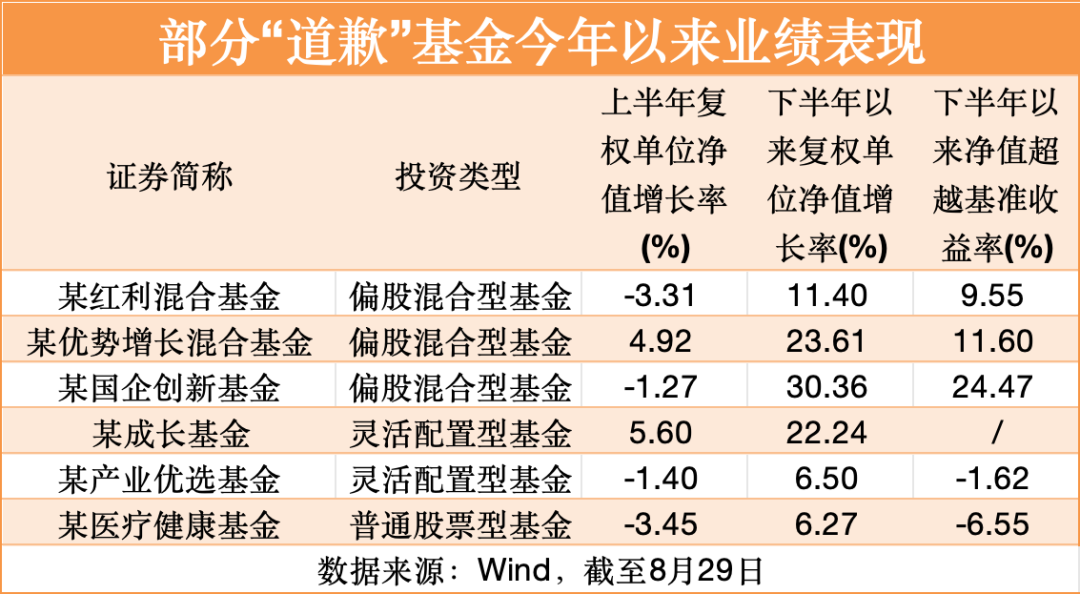
Core Viewpoint - The A-share market has shown signs of recovery this year, leading to improved performance for many actively managed equity funds, although some funds have lagged due to structural market conditions, prompting fund managers to express apologies in their semi-annual reports [1][2]. Fund Performance and Apologies - Fund types expressing apologies include underperforming pharmaceutical funds, dividend funds, and growth funds, indicating a need for fund managers to reassess their investment frameworks and for investors to discern between short-term market style mismatches and long-term managerial capabilities [2][5]. - A pharmaceutical fund manager acknowledged underperformance relative to industry indices and expressed regret for not achieving absolute returns, attributing the poor performance to premature shifts in investment strategy and missed opportunities in the "new drug + new consumption" sector [4][5]. - A dividend fund manager reported negative returns in the first half of 2025, citing both objective market conditions and subjective misjudgments as reasons for underperformance, particularly in avoiding high-recognition sectors while focusing on low-recognition ones [7][8]. Market Trends and Future Outlook - The pharmaceutical sector has seen significant activity, particularly in innovative drug companies, with some funds achieving substantial gains, while others have struggled due to conservative positioning [4][5]. - Fund managers are optimistic about future performance, highlighting potential in low-positioned sectors within the pharmaceutical industry, such as AI healthcare and medical devices, and committing to a more proactive investment approach [5][10]. - Some fund managers reflected on missed opportunities due to early profit-taking and emphasized the importance of maintaining a long-term investment perspective despite short-term challenges [10][11]. Performance Data - Data from Wind indicates that several funds that apologized for their performance have rebounded in the second half of the year, with some achieving net value growth rates of 20% to 30%, significantly outperforming their benchmarks [14][15]. - Specific fund performance metrics show that a dividend mixed fund had a net value growth rate of -3.31% in the first half but rebounded to 11.40% in the second half, while other funds also demonstrated similar recovery trends [14].
险资二季度加仓超270股
财联社· 2025-08-30 04:16
Core Viewpoint - Insurance funds have significantly increased their holdings in A-shares, focusing on long-term investments and high-dividend stocks to enhance portfolio returns and support the real economy [1][5][7]. Group 1: Investment Trends - As of the end of Q2, insurance funds appeared in the top ten shareholders of over 1,000 A-share companies, with a total holding of 926.7 billion shares valued at 1.57 trillion yuan [2][3]. - More than 270 stocks were increased in holdings by insurance funds during Q2, with notable increases in companies like CITIC Bank and China Telecom [2][4]. - Insurance companies are actively entering new positions, with 288 new entries in the top ten shareholders list of various A-share companies [2]. Group 2: Sector Focus - The sectors where insurance funds are increasing their investments include hardware equipment, electrical equipment, software services, pharmaceutical biology, and banking [3][6]. - High-dividend stocks are particularly favored due to their stable returns, especially in a declining interest rate environment [5][6]. Group 3: Strategic Insights - Insurance companies emphasize a strategy of long-term, stable, and value-oriented investments, dynamically adjusting their holdings based on risk and return profiles [5][7]. - The total investment in stocks by insurance funds reached 3.07 trillion yuan by the end of Q2, reflecting a net purchase of approximately 640 billion yuan in the first half of the year [5][6]. - Companies like China Life and PICC have significantly increased their equity investment allocations, with China Life's stock allocation rising from 12.18% to 13.60% [6][7].




《医疗卫生强基工程实施方案》审议通过;阿里业绩超预期|南财早新闻
2 1 Shi Ji Jing Ji Bao Dao· 2025-08-30 00:08
Company Developments - Several banks released their semi-annual financial reports: - Industrial and Commercial Bank of China reported revenue of 409.1 billion yuan, a year-on-year increase of 1.8%, and a net profit of 168.1 billion yuan, a decrease of 1.4% [6] - China Construction Bank reported revenue of 385.9 billion yuan, a year-on-year increase of 2.95%, and a net profit of 162.6 billion yuan, a decrease of 1.45% [7] - Agricultural Bank of China reported revenue of 369.8 billion yuan and a net profit of 139.5 billion yuan, with year-on-year increases of 0.7% and 2.7% respectively [8] - Bank of China reported a net profit of 117.6 billion yuan, a year-on-year decrease of 0.9%, and revenue of 329.4 billion yuan [8] - Bank of Communications reported revenue of 133.5 billion yuan, a year-on-year increase of 0.72%, and a net profit of 46.0 billion yuan, an increase of 1.61% [9] - Semiconductor company SMIC is planning to issue A-shares to acquire minority stakes in its subsidiary, with trading suspended from September 1 [9] - Kweichow Moutai completed its share repurchase plan, buying back 3.93 million shares, accounting for 0.3127% of total shares, with a total repurchase amount of 6 billion yuan [9] - Alibaba reported first-quarter revenue of 247.7 billion yuan, a year-on-year increase from 243.2 billion yuan, with a net profit of 42.4 billion yuan, a year-on-year increase of 76% [9] - Huawei reported revenue of 427 billion yuan, a year-on-year increase of 3.94%, and a net profit of 37.1 billion yuan, a decrease of 32% [10] - Shanshan Holdings reported revenue of 9.86 billion yuan, a year-on-year increase of 11.78%, and a net profit of 207 million yuan, a year-on-year increase of 1079.59% [11] - China Rare Earth reported revenue of 1.88 billion yuan, a year-on-year increase of 62.38%, and a net profit of 162 million yuan, recovering from a loss of 244 million yuan in the previous year [11] Market Performance - On Friday, the three major A-share indices rose collectively, with the ChiNext Index briefly surpassing 2900 points. The lithium battery, rare earth, and CRO sectors led the gains, while the optical chip, server, and Huawei HarmonyOS concepts experienced pullbacks [4] - The A-share market closed with the Shanghai Composite Index up 0.37% at 3857.93 points, the Shenzhen Component Index up 0.99%, and the ChiNext Index up 2.23%. The total trading volume for the day was 2.83 trillion yuan, down from 3 trillion yuan the previous day [4] - In August, the Shanghai Composite Index rose 7.97%, surpassing 3800 points, while the Shenzhen Component Index increased by 15.32%, and the ChiNext Index surged by 24.13% [4]

证监会召开座谈会 科学谋划“十五五”资本市场重点任务举措
Zhong Guo Jing Ying Bao· 2025-08-29 15:34
Core Viewpoint - The meeting held by the China Securities Regulatory Commission (CSRC) focused on planning the key tasks for the capital market during the 14th Five-Year Plan period, emphasizing the implementation of various policies that have positively impacted the market [1][2]. Group 1: Capital Market Development - The implementation of the "New National Nine Articles," "Science and Technology Innovation Board Eight Articles," and "Mergers and Acquisitions Six Articles" has led to a continuous improvement in the capital market's foundational systems, enhancing market expectations and confidence [1][2]. - A-shares have stabilized and rebounded, with trading becoming increasingly active this year [1]. Group 2: Suggestions for the 15th Five-Year Plan - Participants suggested enhancing the multi-tiered capital market system, deepening institutional reforms, and increasing market functionality [2]. - There is a call to improve the quality and investment value of listed companies, fostering long-term, patient, and strategic capital to encourage more medium- and long-term funds to enter the market [2]. - Recommendations include strengthening legal systems in key areas such as stocks, bonds, derivatives, and cross-border regulation, as well as establishing a comprehensive accountability system to combat financial fraud, market manipulation, and insider trading [2]. - The meeting emphasized the need to steadily expand the high-level institutional opening of the capital market and optimize the Qualified Foreign Institutional Investor (QFII) system to support high-quality foreign enterprises returning to A-shares [2]. Group 3: Future Directions - The CSRC will focus on high-quality planning for the implementation of the 15th Five-Year Plan, aiming to consolidate the positive momentum of the capital market [2]. - The emphasis will be on deepening comprehensive reforms in investment and financing, accelerating the new round of capital market reform and opening up, and enhancing the market's attractiveness and inclusiveness [2]. - The promotion of long-term, value, and rational investment concepts will be a priority [2].
吴清:持续巩固资本市场回稳向好势头,加快推进新一轮资本市场改革开放|快讯
Sou Hu Cai Jing· 2025-08-29 14:51
Group 1 - The core viewpoint of the article emphasizes the importance of high-quality planning for the capital market in implementing the "14th Five-Year Plan" and the upcoming "15th Five-Year Plan" [2] - The China Securities Regulatory Commission (CSRC) aims to consolidate the positive momentum of the capital market and deepen comprehensive reforms in investment and financing [2] - The "15th Five-Year Plan" period is identified as a critical phase for achieving socialist modernization and high-quality development in the capital market [2] Group 2 - Recent years have seen continuous deepening of capital market reforms and a solid foundation laid for risk prevention, strong regulation, and high-quality development [2] - The CSRC is advocating for long-term, value, and rational investment philosophies to enhance market attractiveness and inclusiveness [2]
中国证监会:持续巩固资本市场回稳向好势头
Zhong Guo Xin Wen Wang· 2025-08-29 14:12
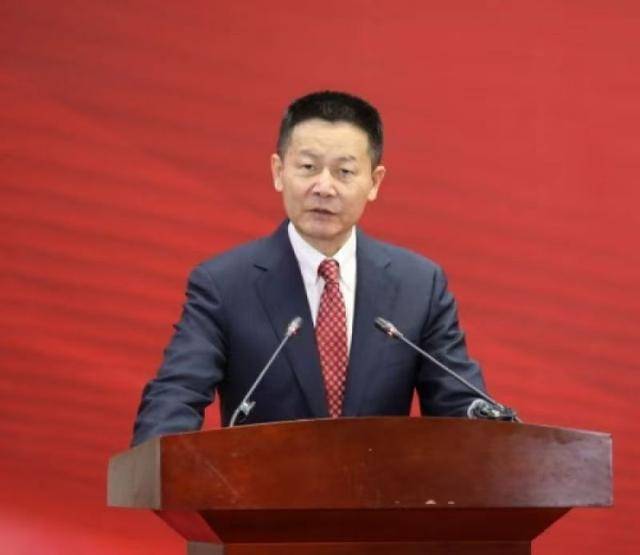
Core Viewpoint - The China Securities Regulatory Commission (CSRC) emphasizes the importance of consolidating the positive momentum in the capital market during the "15th Five-Year Plan" period, which is seen as a critical phase for high-quality development in China's capital market [1] Group 1 - The CSRC held a seminar on the "15th Five-Year Plan" for capital market planning, indicating ongoing efforts to enhance market stability and growth [1] - CSRC Chairman Wu Qing highlighted that recent reforms and regulatory measures have laid a solid foundation for the transition from the "14th Five-Year Plan" to the "15th Five-Year Plan" [1] - The CSRC plans to promote comprehensive reforms in investment and financing, aiming to enhance market attractiveness and inclusivity while advocating for long-term, value, and rational investment strategies [1]
重磅!吴清最新发声!
Zheng Quan Ri Bao Wang· 2025-08-29 13:08
Core Viewpoint - The China Securities Regulatory Commission (CSRC) is actively engaging with experts to formulate the "14th Five-Year" capital market plan, emphasizing the importance of enhancing market functions and promoting long-term investment strategies [1][2][3]. Group 1: Capital Market Development - The meeting highlighted the effectiveness of recent policies such as the "New National Nine Articles" and "Science and Technology Innovation Board Eight Articles," which have improved market fundamentals and boosted investor confidence, leading to a recovery in A-shares and increased trading activity [1][2]. - Suggestions were made to enhance the multi-tiered capital market system, deepen institutional reforms, and improve the quality and investment value of listed companies [2]. Group 2: Regulatory and Legal Framework - There is a call for the establishment of comprehensive legal frameworks in key areas such as stocks, bonds, derivatives, and cross-border regulation, alongside a robust accountability system to combat financial fraud and market manipulation [2]. - The CSRC aims to expand high-level institutional openness in the capital market and support the return of high-quality overseas companies to A-shares [2]. Group 3: Strategic Planning and Implementation - The CSRC emphasizes the importance of scientifically formulating and implementing the five-year plan as a key experience in governance, marking the "15th Five-Year" period as crucial for achieving high-quality development in the capital market [3]. - The commission plans to consolidate the positive momentum in the capital market and promote comprehensive reforms to enhance market attractiveness and inclusivity, advocating for long-term, value, and rational investment [3].