
国产替代

Search documents
从“研磨粒子”向下扎根:鼎龙股份如何捅破抛光液国产化天花板?
半导体行业观察· 2026-02-25 01:14
Core Viewpoint - The article emphasizes the critical role of CMP (Chemical Mechanical Polishing) materials in semiconductor manufacturing, particularly as the industry approaches advanced process nodes like 3nm and 2nm. It highlights the shift from single-point replacement to system assurance in the domestic supply chain, with a focus on the key category of polishing liquids, where the company Dinglong is making significant advancements [1][6]. Group 1: Importance of CMP Materials - CMP materials account for approximately 7% of the integrated circuit manufacturing material costs, with polishing pads, polishing liquids, and cleaning liquids together making up over 85% of the CMP system [2]. - Polishing liquids are described as the "engine" of the CMP process, essential for achieving a flat wafer surface through controlled chemical processes and precise material removal [4][6]. Group 2: Dinglong's Strategic Moves - Dinglong has transitioned from producing polishing pads to entering the polishing liquid market, aiming to become a platform player in CMP materials. This move is seen as a natural extension of its existing business and a key component of its semiconductor materials ecosystem [7][19]. - The company has established a three-stage strategy for entering the polishing liquid market, starting with the successful production of polishing pads, followed by cleaning liquids, and now advancing into polishing liquids [6][19]. Group 3: Competitive Landscape and Challenges - The global CMP polishing liquid market is projected to reach nearly $2 billion, with major international players holding significant market power, creating challenges for domestic suppliers like Dinglong [6][19]. - Dinglong aims to avoid low-level competition and instead focus on high-barrier segments of the polishing liquid market, which are currently dominated by foreign giants [7][19]. Group 4: Technical Innovations and Capabilities - Dinglong's approach to polishing liquids involves self-research and production of core raw materials, such as nano abrasive particles, which are critical for performance and cost structure [9][10]. - The company has developed seven technical platforms to support its R&D efforts, enabling it to transition from trial-and-error to engineering-focused development [10][21]. Group 5: Key Battles and Market Penetration - Dinglong has engaged in three significant battles to secure its position in the market, including the development of polishing liquids for 28nm HKMG, FinFET tungsten gate, and polysilicon/silicon nitride processes, each requiring extensive validation and collaboration with clients [12][19]. - The successful introduction of these products has led to increased orders and established stable supply relationships with major domestic clients [19][20]. Group 6: Future Outlook and Strategic Direction - The company is positioned to benefit from trends such as AI and HBM driving wafer demand, alongside the acceleration of domestic substitution in high-end polishing liquids [29]. - Dinglong's investment in its manufacturing base in Xiantao, which includes advanced production facilities for abrasive particles and polishing liquids, is expected to support its growth and scalability in the semiconductor materials market [20][21].


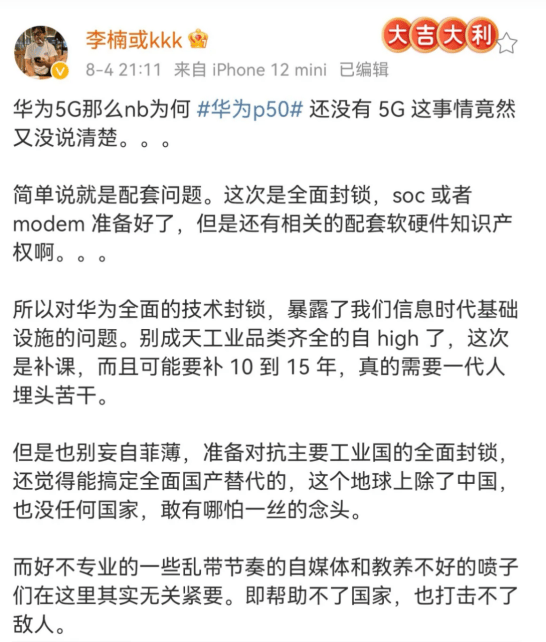
中国这几十年来走得的确不容易,我们需要补课
Sou Hu Cai Jing· 2026-02-24 17:16
Group 1 - The core issue highlighted is the need for China to address its technological weaknesses, particularly in core technologies that have been reliant on foreign sources, indicating a potential 10-15 year gap in development [1][4] - Companies like Alibaba and Tencent are significantly increasing their R&D investments, with Alibaba investing 32.8 billion and Tencent 17.9 billion in the first two quarters of 2020 [1] - Collaboration among companies and academic institutions is emphasized as essential for overcoming technological challenges, with Alibaba's Damo Academy leading initiatives to form "innovation alliances" for joint research [1] Group 2 - Internet companies are playing a crucial role in tackling "bottleneck" technology issues in China's tech sector, suggesting that pooling top talent, resources, and funding can lead to breakthroughs in critical core technologies [2] - The comprehensive technology blockade against Huawei has exposed vulnerabilities in China's information infrastructure, necessitating a focused effort to develop domestic alternatives [4]
日本是否会反制断供光刻胶?从产业格局与中日博弈看隐形限制的真相
材料汇· 2026-02-24 15:36
Core Viewpoint - The article discusses Japan's monopoly in the semiconductor materials sector, particularly in photoresists, and the implications of recent export control measures by China on Japanese suppliers and the broader semiconductor industry [3][4][5]. Group 1: Japan's Monopoly in Semiconductor Materials - Japan holds a dominant position in the global semiconductor materials market, especially in photoresists, with 14 out of 19 key semiconductor manufacturing materials having over 50% global market share [3][10]. - The global semiconductor photoresist market is highly concentrated, with Japanese companies like JSR, Shin-Etsu Chemical, and Tokyo Ohka Kogyo controlling 95% of the supply [7][9]. - High-end photoresists, such as EUV photoresists, are completely monopolized by three Japanese companies, while ArF and KrF photoresists also have over 85% market share held by Japanese firms [3][9]. Group 2: Potential Supply Restrictions - The article raises concerns about whether Japan will tighten its supply of critical semiconductor materials, such as photoresists, to China in response to China's export controls [4][11]. - Japan's ability to impose supply restrictions is complicated by its significant reliance on the Chinese market, which accounted for 38.8% of Japan's semiconductor equipment exports in 2021 [13]. - The interdependence between Japan and China in the semiconductor sector suggests that a complete supply halt would be detrimental to both parties, as it would harm Japanese companies' revenues and market positions [13][14]. Group 3: Emerging Trends in Supply Chain Dynamics - The article highlights the emergence of "de facto supply restrictions," where Japanese companies may delay approvals for exports to China, creating invisible barriers to trade [16][17]. - Approval rates for exports of photoresists to China have decreased from 89% to 76%, with longer approval times indicating a tightening of supply [17]. - Japanese firms may prioritize supply to international clients over Chinese companies, leading to reduced quantities and increased prices for Chinese semiconductor manufacturers [18][19]. Group 4: China's Response and Opportunities - The pressures from Japan's supply restrictions are prompting Chinese semiconductor manufacturers to accelerate the development and validation of domestic photoresist products [20][22]. - Chinese companies have made significant progress in developing mid-to-high-end photoresists, with several firms achieving stable sales and customer validation for their products [22]. - The article suggests that the current situation presents a unique opportunity for China to enhance its semiconductor supply chain resilience and reduce reliance on Japanese imports [20][24].

1300+份新材料报告下载:做新材料领域的「攻坚者」
材料汇· 2026-02-24 15:36
Core Viewpoint - The article discusses the rapid growth and investment opportunities in the advanced packaging materials sector, highlighting the potential for domestic companies to replace foreign imports in critical areas of technology [7][8]. Market Overview - The global market for advanced packaging materials is projected to reach $2.032 billion by 2028, with the Chinese market expected to grow to 9.67 billion yuan by 2025 [8]. - Specific materials such as PSPI and Al-X photoresist are identified as key growth areas, with PSPI's market size in China estimated at 7.12 billion yuan in 2023 [8]. Investment Opportunities - The article outlines various advanced packaging materials and their projected market sizes, indicating significant growth potential in sectors like conductive adhesives, chip bonding materials, and epoxy encapsulants [8]. - For instance, the conductive adhesive market is expected to reach 3 billion yuan by 2026, while the epoxy encapsulant market is projected to grow to 99 million USD by 2027 [8]. Competitive Landscape - The article lists both domestic and international players in the advanced packaging materials market, emphasizing the competitive nature of the industry [8]. - Companies such as Fujifilm, Toray, and domestic firms like Dinglong Co. and Guofeng New Materials are highlighted as key competitors [8]. Investment Strategies - Different investment stages in the new materials industry are discussed, with strategies tailored to each phase, from seed rounds to pre-IPO stages [10]. - The article emphasizes the importance of team assessment, industry analysis, and market share evaluation as critical factors for investment decisions [10].


国泰海通 · 晨报260225|宏观、策略
国泰海通证券研究· 2026-02-24 14:27
Macro - The article discusses the significant amount of "excess savings" in the market, estimated at 16 trillion yuan, which will face lower interest rates of 1.2%-1.5% by 2026, potentially triggering a shift of deposits to other assets [2] - The total amount of maturing deposits in 2026 is projected to be around 76-77 trillion yuan, with a notable seasonal peak in the first quarter, where approximately 32-34 trillion yuan will mature [2][4] - The year-on-year increase in maturing deposits from 2025 to 2026 is expected to be 9.6-10.8 trillion yuan, with a growth rate of 14.4%-16.3%, which is lower than the 17.7% growth rate in 2025 [2] Pressure Analysis - Approximately 25 trillion yuan of high-interest deposits are set to mature, representing about 32% of the total maturing deposits, which is a key factor for renewal pressure [3] - The renewal rate for deposits maturing in 2025 is expected to remain resilient, with around 90% of deposits likely to be renewed despite lower interest rates [3] Core Contradiction - The focus for 2026 shifts from "whether to move" to "where to move," indicating a gradual and dispersed migration of deposits to other assets rather than a rapid shift [4] - Even with a hypothetical 10% outflow rate from the 77 trillion yuan in maturing deposits, this could significantly impact the pricing in equity and bond markets [4]

工业气体-有望筑底回升-电子特气景气持续
2026-02-24 14:16
Summary of Industrial Gas Industry and Key Company Insights Industry Overview - The Chinese industrial gas market is projected to reach 200 billion RMB, driven by macroeconomic growth, increased outsourcing of gas supply, and demand expansion in new fields [1][2] - The global industrial gas market is expected to grow to 1.3 trillion RMB, with a compound annual growth rate (CAGR) of nearly 7% over the next four years [2] - The competitive landscape is increasingly concentrated, with the top six domestic companies holding a market share of 72% [2] Key Insights on Electronic Specialty Gases - The semiconductor industry is experiencing a significant boom, with global sales increasing by 30% year-on-year as of November 2025 [1][3] - Domestic integrated circuit production is expected to grow rapidly during the 14th Five-Year Plan, enhancing the demand for electronic specialty gases [3][8] - The domestic market for electronic specialty gases is anticipated to benefit from the shift from import reliance to global competitiveness [3] Performance of Key Companies - Hangyang Co., as a leading player in the industrial gas sector, is expected to see its market share increase from approximately 6.3% [2] - The company is projected to achieve net profits of 10.7 billion RMB, 13 billion RMB, and 15.1 billion RMB for the years 2025-2027, with year-on-year growth rates of 16%, 22%, and 17% respectively [14] - Kai Mei Te Gas has shown significant stock price growth, outperforming international giants like Linde and Air Liquide [4] Price Trends of Industrial Gases - Prices for liquid oxygen, nitrogen, and argon are at their lowest levels in nearly seven years, with average prices at the 3rd, 2nd, and 41st percentiles historically [5] - Liquid oxygen prices fell by 7% year-on-year, while liquid nitrogen prices continued to decline [5] Demand Structure and Market Dynamics - The demand for industrial gases is evolving with changes in industrial structure, with applications in metallurgy, new energy, semiconductors, and food medical sectors [6] - The outsourcing ratio in China's industrial gas market is about 68%, lower than the 80% seen overseas, but is steadily increasing [9] Future Trends and Investment Opportunities - The industrial gas sector is expected to see a rise in outsourcing gas supply, which offers lower operational costs and higher stability [9] - The market for air separation equipment is projected to grow from approximately 340 billion RMB to 400-500 billion RMB, with a high concentration of major players [10] - Investment opportunities are particularly promising in the electronic specialty gas sector, with expectations of continued growth in downstream demand [11] Competitive Landscape - Major global players include Linde, Air Liquide, and Air Products, while domestic leaders include Hangyang, Shaanxi鼓动力, and Qiaoyuan [12][13] - Companies focusing on electronic specialty gases include China Shipbuilding Industry Corporation and Guang Steel Group [12] This comprehensive overview highlights the growth potential and competitive dynamics within the industrial gas sector, particularly focusing on electronic specialty gases and the performance of key players like Hangyang Co.

ETF日报:AI资本开支持续超预期,热点催化不断,应用端落地兑现有望加速,关注通信ETF、半导体设备ETF
Xin Lang Cai Jing· 2026-02-24 11:40
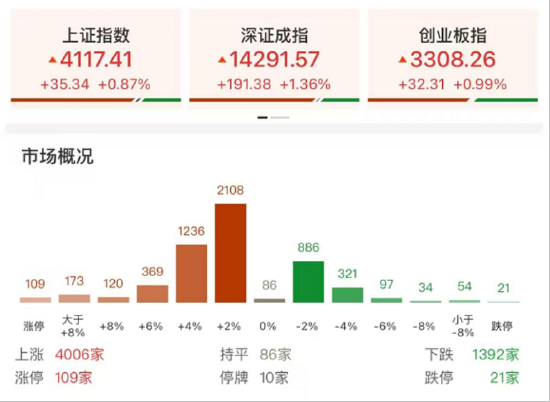
Market Performance - The market experienced a high opening followed by a pullback, with the ChiNext index rising over 2% at one point. The total trading volume in the Shanghai and Shenzhen markets reached 2.2 trillion, an increase of 219.4 billion compared to the last trading day before the holiday [1] - By the end of the trading day, the Shanghai Composite Index rose by 0.87%, the Shenzhen Component Index by 1.36%, the ChiNext Index by 0.99%, and the CSI A500 Index by 1.20% [1] Consumer Trends - During the recent Spring Festival holiday, consumer activity and travel saw a steady increase, supported by consumption promotion policies. The average daily sales of key retail and catering enterprises increased by 8.6% compared to the same period in 2025 [3][19] - Foot traffic and sales in monitored pedestrian streets increased by 4.5% and 4.8% respectively during the first three days of the holiday compared to last year [3][19] - The focus of economic work for 2026 includes "maintaining domestic demand as the main driver" and "coordinating consumption promotion and investment expansion" [3][19] AI Sector Developments - The AI sector continues to see significant capital expenditure and frequent updates to large models, indicating a sustained high level of activity. Companies like Zhiyuan, ByteDance, Alibaba, and MiniMax have released new AI models, with a focus on application and performance improvements [6][22][23] - The global AI model landscape is evolving, with notable releases such as Anthropic's Claude Sonnet 4.6 and Google's Gemini 3.1 Pro, which enhance capabilities in various tasks [7][23] - Domestic companies are also advancing, with Zhiyuan AI launching its GLM-5 model, which ranks first among open-source models in multiple tests [7][23][24] Infrastructure Investment - The North American AI sector is facing electricity shortages, prompting increased investment in grid infrastructure. The PJM, responsible for the largest regional electricity market in the U.S., plans to enhance its grid to support data centers [10][27] - China's State Grid Corporation is expected to invest 4 trillion yuan during the 14th Five-Year Plan, a 40% increase from the previous plan, focusing on main grid construction and improving cross-province transmission capacity [10][28] - The global energy transition is driving demand for grid construction to accommodate renewable energy, with significant potential in underdeveloped regions [10][28] Robotics Sector Insights - The robotics sector saw high expectations during the Spring Festival, but recent performance has been mixed, with the robotics ETF down by 0.71% [14][30] - Companies showcased advanced capabilities during the Spring Festival, with performances highlighting improvements in motion control and stability [31][32] - Future developments, particularly Tesla's V3 release, are anticipated to impact the robotics market significantly, with varying expectations for its success [32]
【IPO一线】刚刚!盛合晶微科创板IPO成功过会
Ju Chao Zi Xun· 2026-02-24 09:32
Core Viewpoint - Shenghe Jingwei Semiconductor Co., Ltd. has received approval for its initial public offering (IPO) on the Sci-Tech Innovation Board, aiming to raise 4.8 billion RMB for its multi-chip integration packaging projects, marking its entry into the capital market [1] Financial Performance - Shenghe Jingwei has experienced rapid revenue growth, with projected revenues of 1.63 billion RMB, 3.04 billion RMB, and 4.71 billion RMB for 2022, 2023, and 2024 respectively, reflecting a compound annual growth rate (CAGR) of 69.77% [2] - The company turned a profit in 2023 with a net profit of 34.13 million RMB, expected to grow to 213.65 million RMB in 2024 [2] - For the first half of 2025, the company reported revenues of 3.18 billion RMB and a net profit of 434.89 million RMB, with a gross margin of approximately 31.8% and a net margin of about 13.69% [2] - The operating cash flow for the first half of 2025 reached 1.70 billion RMB, providing solid financial support for business expansion and R&D investments [2] Market Position and Technology - Shenghe Jingwei specializes in multi-chip integration packaging and is one of the few companies in mainland China capable of mass-producing advanced packaging technologies such as FOCoS, SoIC, and CoWoS [3] - The company holds 591 authorized patents, including 229 invention patents, with R&D personnel constituting 24.5% of its workforce [3] - In 2024, the multi-chip integration packaging business accounted for 88.33% of the company's revenue, highlighting its significance as the primary revenue source [3] - According to Yole data, the global packaging market is projected to reach approximately 101.47 billion USD in 2024, with mainland China's market size estimated at around 331.9 billion RMB [3] Investment Projects - The total investment for the fundraising projects is 11.4 billion RMB, with 4.8 billion RMB allocated for the "3D Multi-Chip Integration Packaging Project" and "Ultra-High-Density Interconnect 3D Multi-Chip Integration Packaging Project" [4] - The 3D Multi-Chip Integration Packaging Project has a total investment of 8.4 billion RMB, with 4 billion RMB from the raised funds, aimed at establishing large-scale production capabilities for multiple advanced packaging technology platforms [4] - The Ultra-High-Density Interconnect 3D Multi-Chip Integration Packaging Project has a total investment of 3 billion RMB, with 800 million RMB from the raised funds, intended to create large-scale production capabilities for 2.5D/3D multi-chip integration packaging technology [4] Industry Outlook - The demand for multi-chip integration packaging is expected to surge due to the rapid development of the digital economy and artificial intelligence [5] - The global multi-chip market is projected to reach approximately 4.19 billion USD in 2024, with expectations to exceed 17 billion USD by 2029, reflecting a CAGR of 32.2% [5] - The mainland China's multi-chip market is estimated to be around 10.51 billion RMB in 2024, with projections to reach 50 billion RMB by 2029, indicating a CAGR of 36.7% [5] - Shenghe Jingwei is well-positioned to benefit from the growing market demand and the trend of domestic substitution, indicating a promising future for the company [5]
盘后播报(2.24)
Mei Ri Jing Ji Xin Wen· 2026-02-24 09:07
Market Overview - The market experienced a high and then a pullback today, with the ChiNext Index rising over 2% at one point. The total trading volume in the Shanghai and Shenzhen markets reached 2.2 trillion, an increase from 219.4 billion on the last trading day before the holiday [1] - By the market close, the Shanghai Composite Index rose by 0.87%, the Shenzhen Component Index by 1.36%, the ChiNext Index by 0.99%, and the CSI A500 Index by 1.20% [1] Consumer Activity - During the recent Spring Festival holiday, travel and consumer sentiment showed a robust increase, supported by consumption-promoting policies. The average daily sales of key retail and catering enterprises increased by 8.6% compared to the same period in 2025 [1] - In the first three days of the holiday, foot traffic and sales in 78 monitored pedestrian streets increased by 4.5% and 4.8% respectively compared to the same period last year [1] AI Sector - The AI sector continues to attract attention, with multiple companies such as Zhiyun, ByteDance, Alibaba, and Minimax releasing new AI models. The performance of robots during the Spring Festival Gala has also garnered widespread interest [1] - Capital expenditure in AI is expected to exceed expectations, with ongoing hot catalysts and accelerated application deployment. Investors are encouraged to consider ETFs focused on communication, semiconductor equipment, and AI technology [2] Power Grid Equipment - Strong domestic and international demand for power grid equipment is anticipated, driven by policy support and significant investment plans from the State Grid during the 14th Five-Year Plan. The expansion of renewable energy installations necessitates enhanced grid capabilities [3] - Internationally, the need for power grid upgrades in Europe and the U.S., along with investments in emerging markets and global AI data center construction, is expected to create opportunities for domestic companies to increase exports [3]
新锐股份(688257):拟收购慧联电子,切入PCB钻针领域:新锐股份(688257):重大事项点评
Huachuang Securities· 2026-02-24 08:34
Investment Rating - The report maintains a "Strong Buy" rating for the company, expecting it to outperform the benchmark index by over 20% in the next six months [2][17]. Core Views - The company plans to acquire 70% of Huilian Electronics for no more than 700 million yuan, and 70% of WINWIN HITECH (THAILAND) CO., LTD. for no more than 28 million yuan, marking its entry into the PCB drill needle sector [2]. - The acquisition is seen as a strategic move to enhance the company's product line in PCB specialized tools and to capitalize on high-growth areas driven by AI and advanced communication technologies [4][8]. - The report projects significant revenue growth, with total revenue expected to reach 2.612 billion yuan in 2025, 3.798 billion yuan in 2026, and 5.216 billion yuan in 2027, reflecting year-on-year growth rates of 40.3%, 45.4%, and 37.3% respectively [4][9]. - Net profit is forecasted to grow to 235 million yuan in 2025, 386 million yuan in 2026, and 515 million yuan in 2027, with corresponding growth rates of 30.3%, 63.8%, and 33.6% [4][9]. - The target price for the stock is set at 73.44 yuan, based on a projected PE ratio of 48 times for 2026 [4][8]. Financial Projections - Total revenue projections for 2024, 2025, 2026, and 2027 are 1.862 billion yuan, 2.612 billion yuan, 3.798 billion yuan, and 5.216 billion yuan respectively, with year-on-year growth rates of 20.2%, 40.3%, 45.4%, and 37.3% [4][9]. - The expected net profit for the same years is 180 million yuan, 235 million yuan, 386 million yuan, and 515 million yuan, with growth rates of 10.9%, 30.3%, 63.8%, and 33.6% [4][9]. - Earnings per share (EPS) are projected to be 0.72 yuan, 0.93 yuan, 1.53 yuan, and 2.04 yuan for the years 2024, 2025, 2026, and 2027 respectively [4][9].
