
生成式AI

Search documents
CPU需求远超预期,芯片库存全面告急
Xuan Gu Bao· 2026-01-21 14:41
据上证报报道,英特尔首席财务官表示,由于数据中心与客户端CPU需求远超预期,公司芯片库存正快 速消耗,预计2026年第一季度将面临最大供应挑战,届时库存可能耗尽。 芯原股份:公司为芯片定制和半导体IP授权服务企业,已拥有自主可控的图形处理器IP(GPUIP),神经 网络处理器IP(NPUIP)等。 此外,根据KeyBanc的数据,Intel与AMD为应对供需失衡并确保后续供应稳定,计划将服务器CPU价格 上调10%-15%。 *免责声明:文章内容仅供参考,不构成投资建议 上证报援引研究机构观点称,数据中心服务器CPU需求增加,导致供需关系出现不平衡,从而推动价格 上升。生成式AI浪潮持续演进,AI服务器采购额不断上升,部分挤占了通用服务器的采购预算。同 时,云厂商前期采购的通用服务器,目前已大面积进入更新周期。此外,云厂商正在其数据中心中推进 架构升级,计划淘汰老旧架构的CPU将新一代服务器CPU整合至现有机架体系,因此在数据中心领域出 现了补偿性投资,驱动服务器CPU价格上涨。 *风险提示:股市有风险,入市需谨慎 公司方面,据上证报表示, 国芯科技:公司聚焦于国产自主可控嵌入式CPU技术研发和产业化应用的芯 ...
“DRAM风暴”正在卷向汽车业?
Hua Er Jie Jian Wen· 2026-01-21 13:22
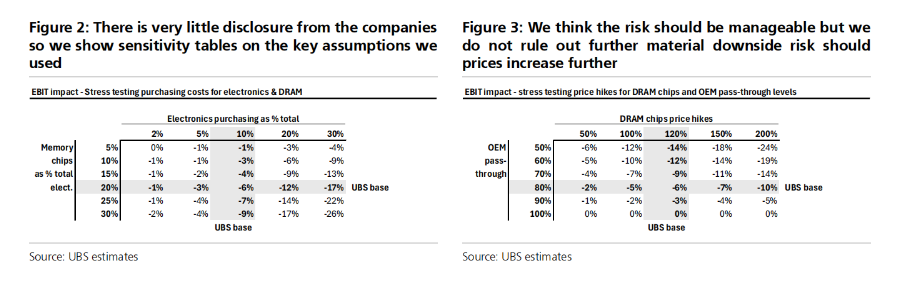
Core Insights - A supply chain disruption in the automotive industry is imminent due to a shift in DRAM chip production towards high-performance chips for AI, leading to a significant price increase and supply shortage for automotive-grade memory chips, with negative impacts expected to begin in Q2 2026 [1][4] - Major DRAM suppliers, including Samsung, SK Hynix, and Micron, are reallocating their production capacity to focus on high-bandwidth memory (HBM) for AI servers, which directly reduces the supply of automotive-grade DDR memory [1][4] - The automotive industry is transitioning from older DDR4 and LPDDR4 technologies to DDR5, but the testing and procurement process for new chips typically takes over two years, creating a "technology gap" between 2026 and 2027 [4] Impact on Component Suppliers - Under a baseline scenario where DRAM prices increase by 120% and OEMs can recover 80% of the cost, automotive component suppliers' EBIT is projected to decline by 5%-6%, equating to a profit reduction of approximately €1-1.2 billion [5] - In a more pessimistic scenario with a 200% price increase and a 50% cost recovery rate, EBIT could drop by 24%, resulting in a profit reduction of up to €480 million, nearly half of the original EBIT [5] - Companies with a higher exposure to electronic and ADAS (Advanced Driver Assistance Systems) businesses, such as Visteon and Aumovio, are particularly vulnerable to these DRAM price fluctuations [5] Risks for OEMs - Although there are currently no signs of supply disruptions, the stability of the supply chain for OEMs is concerning over the next 12-24 months, especially for high-end brands and new entrants that utilize centralized computing architectures, which have higher DRAM content per vehicle [2][6] - The cost of DRAM, while a small percentage of the overall vehicle price, has increased significantly, with high-end models requiring between $25 to $150 in DRAM, making them more susceptible to cost volatility [6] Long-term Outlook - The global DRAM industry is expected to see a revenue increase of 148.4% in 2026, reaching $36.6 billion, with a persistent supply-demand gap [7] - The average price per Gb of DDR memory is projected to reach $0.92, indicating ongoing cost pressures for the automotive sector [7]

CPU芯片巨头,拉响产能警报
3 6 Ke· 2026-01-21 12:18
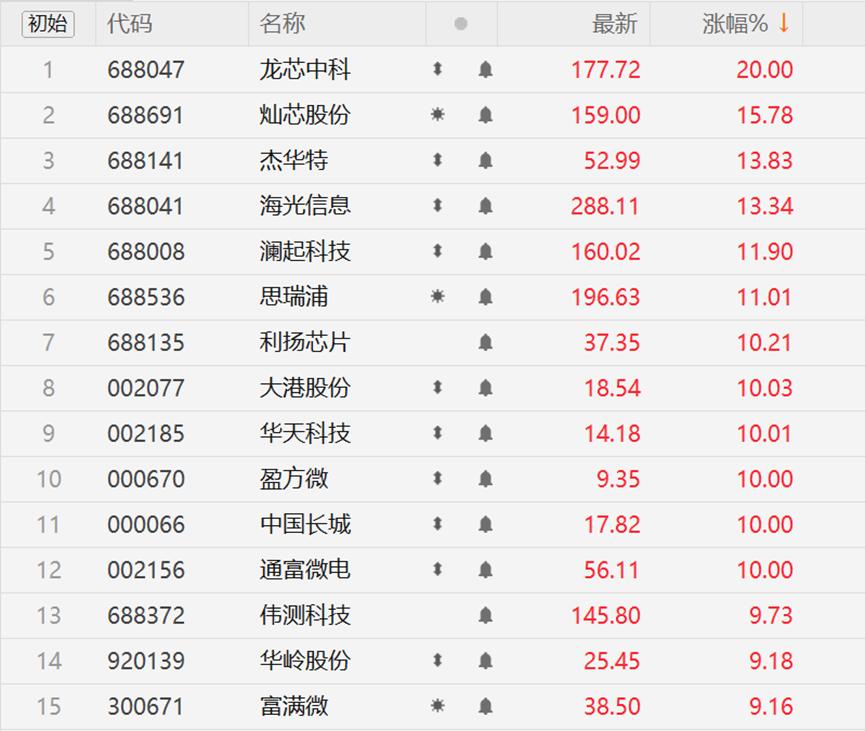
Core Viewpoint - The semiconductor sector in A-shares has seen a significant surge, particularly in computing chips, with several stocks reaching new highs, driven by strong demand for CPUs and upcoming earnings reports from Intel and AMD [1][3]. Group 1: Market Performance - The semiconductor sector experienced a broad increase, with notable gains in CPU-related stocks such as Longxin Zhongke, which hit a 20% limit up, and Haiguang Information, which rose over 13% to a historical high [1]. - Key stocks and their respective gains include: - Longxin Zhongke: +20.00% - Zhizhi Co.: +15.78% - Haiguang Information: +13.34% - China Great Wall: +10.00% [2]. Group 2: Supply and Demand Dynamics - Intel and AMD have sold out their server CPU capacity for 2026 due to high demand from large cloud service providers, leading both companies to plan a price increase of 10-15% for server CPUs [2]. - The demand for server chips is expected to grow at an annual rate of 30% to 40% by 2026, significantly higher than Wall Street's current forecast of 4% to 6% [3][6]. Group 3: Technological Advancements - Intel has introduced its third-generation Intel® Core™ Ultra processor, which is based on the advanced Intel 18A process technology, aimed at supporting various sectors including smart cities and healthcare [3]. - AMD is also launching its fifth-generation EPYC "Turin" and Intel Xeon "Granite Rapids" CPUs, which feature significant improvements in core count and memory bandwidth [4]. Group 4: Industry Insights - The importance of CPUs is highlighted as they are essential for coordinating hardware and ensuring system stability in high-end AI servers, which typically use a configuration of 8 GPUs paired with 2 high-end CPUs [5]. - The ongoing evolution of generative AI is driving an increase in AI server procurement, which is expected to push the demand for server CPUs higher [6].


智微智能:推出‘智擎’机器人大脑域控制器系列,覆盖100TOPS至2070 FP4TFLOPS多档AI算力
2 1 Shi Ji Jing Ji Bao Dao· 2026-01-21 11:51
Core Viewpoint - The company, Zhimi Intelligent, has launched the "Zhiying" product line for robotic brain domain controllers, utilizing NVIDIA Jetson chips to offer a range of AI computing power options from 100 TOPS to 2070 FP4 TFLOPS [1] Group 1: Product Features - The product line includes models such as Orin NX, AGX Orin, and AGX Thor, providing various AI computing capabilities [1] - The products are developed under the automotive quality system IATF 16949, ensuring compliance with customer requirements in terms of heat dissipation, size, weight, signal integrity, and shock resistance [1] - The architecture employs heterogeneous computing, integrating multi-modal perception, deep learning, and generative AI capabilities to support processing of multi-source information including images, language, and tactile data [1]
光环新网:GEO尚未对公司业绩产生实质影响
Zheng Quan Ri Bao· 2026-01-21 10:06
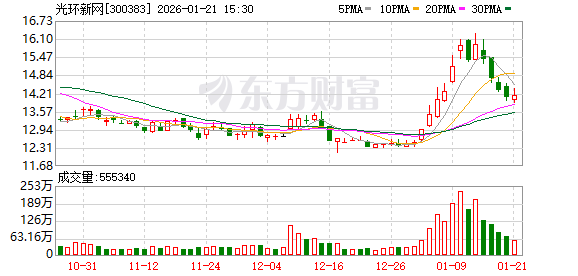
Core Viewpoint - The company, Guanghuan Xinwang, is actively enhancing its digital marketing services through its subsidiary, Wushuang Technology, by leveraging generative AI to improve efficiency and reduce costs in advertising campaigns [2]. Group 1: Company Services - Wushuang Technology provides SaaS services focused on data monitoring, effect evaluation, and intelligent delivery, specializing in digital marketing systems [2]. - The company offers comprehensive marketing services centered around SEM, information flow, short videos, and mobile distribution, catering to the needs of internet media [2]. Group 2: AI Integration and Future Plans - The company is exploring the application of generative AI across the entire marketing chain, aiming to optimize advertising creative production efficiency, responsiveness, differentiation, and scalability [2]. - By 2025, Wushuang Technology plans to focus on GEO applications in AI marketing, analyzing various AI platforms and models to prepare for future developments in this area [2]. - Currently, GEO has not had a substantial impact on the company's performance [2].

17.6亿种子轮!OpenAI 押注脑机接口
思宇MedTech· 2026-01-21 09:00
Core Viewpoint - OpenAI has confirmed its investment in brain-computer interface (BCI) startup Merge Labs, marking its entry into a cutting-edge technology sector with a significant seed funding of $252 million (approximately 1.76 billion RMB) [2][4]. Group 1: Investment Context - The investment was anticipated in mid-2025 and is notable for its size in the BCI field, indicating OpenAI's strategic interest in the evolution of human-AI interaction [2][4]. - OpenAI's involvement is seen as a long-term bet on the development of higher bandwidth human-AI interfaces, addressing the limitations of current interaction methods [5][14]. Group 2: Merge Labs' Approach - Merge Labs, co-founded by OpenAI's CEO Sam Altman and other tech entrepreneurs, is pursuing a distinct technological path in BCI development [6][9]. - The core direction of Merge Labs includes creating a BCI system that integrates biological, device, and AI attributes, aiming for a user-friendly technology that people are willing to adopt [9][10]. Group 3: Comparison with Neuralink - Merge Labs' philosophy contrasts with Neuralink, which focuses on invasive, high-density electrode systems for clinical applications [10][12]. - Merge Labs aims to explore non-invasive or low-invasiveness methods for long-term interfaces, potentially reducing tissue damage and enhancing user acceptance [13][14]. Group 4: Industry Implications - Merge Labs is currently positioned as a research lab rather than a product-focused medical device company, aligning with OpenAI's long-term vision [14]. - The investment signals a shift in how AI companies view the integration of human neural systems into their technological narratives, suggesting a broader exploration of human-AI connections [16]. Group 5: Market Potential - Analysts have estimated the potential market size for brain-computer interfaces to reach $400 billion, highlighting the significance of this technology in future human-AI interactions [15][16].

两大龙头爆发!688041,创历史新高
证券时报· 2026-01-21 08:55
Core Viewpoint - The semiconductor sector is experiencing strong performance, with significant gains in various stocks, particularly in CPU and AI-related companies [2][5][11]. Semiconductor Sector Performance - The A-share market saw nearly 3,100 stocks in the green, with the semiconductor sector leading the charge. Notable stocks include Longxin Zhongke, which hit a 20% limit up, and Haiguang Information, which rose over 13% [2][5]. - The overall market capitalization for the semiconductor sector is bolstered by rising prices for server CPUs, with AMD and Intel increasing prices by 10%-15% [6][7]. Glass Substrate Concept Surge - The glass substrate concept has gained traction, with stocks like Woge Optoelectronics, Jinrui Mining, and Maigemi Tech hitting their daily limit up. The glass substrate industry is transitioning from technology validation to early-stage mass production, with expectations for commercial shipments to begin in 2026 [8][10]. AI Industry Chain Stocks Rally - AI-related stocks, particularly in the CPO concept, have seen significant increases, with Zhishang Technology reaching a 20% limit up and Robotech rising nearly 15% [12][14]. - The demand for AI servers is increasing, driven by the need for upgraded architectures in data centers, which is expected to sustain growth in the server CPU market [7][14].



发生了什么?沪指午后一度翻绿 这只ETF成交额超169亿元 创10年以来天量
Mei Ri Jing Ji Xin Wen· 2026-01-21 07:50
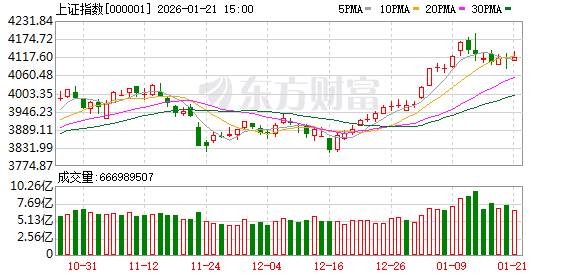
Market Overview - The market experienced fluctuations with the Shanghai Composite Index closing up 0.08%, the Shenzhen Component Index up 0.7%, and the ChiNext Index up 0.54% [2] - Over 3,000 stocks in the market rose, with a total trading volume of 2.6 trillion yuan, a decrease of 177.1 billion yuan from the previous trading day [2] - The A-share market has shown a retreat since last Wednesday, with large funds redeeming from broad-based ETFs, leading to a pause in significant upward movement while maintaining levels above 4,100 points for the Shanghai Composite Index [2] Sector Performance - Active sectors included precious metals, semiconductor industry chain, lithium mining, and oil and gas, while the consumer sector, particularly liquor, saw declines [2] - Precious metals have shown significant growth, with a rise of over 23% in the last five trading days, indicating a new leading sector [11] ETF Trading Activity - The trading volume of major ETFs has fluctuated, with the total trading volume for four large-scale CSI 300 ETFs recorded at 435 billion yuan, 674 billion yuan, 390 billion yuan, 363 billion yuan, and 693 billion yuan over recent days [5] - The trading volume of the SSE 50 ETF exceeded 16.9 billion yuan, marking the highest volume since July 2015 [7] Investment Trends - Investors are advised to focus on performance-driven sectors as the earnings season approaches, shifting from previous popular themes to those with solid fundamentals [13][18] - The semiconductor sector is experiencing growth due to rising demand for storage chips and AI server procurement, with significant price increases noted in DDR5 memory chips [19] Future Outlook - Analysts suggest that the market may continue to favor technology and non-ferrous metal sectors, especially with the upcoming Chinese New Year in mid-February, which may limit rapid shifts in market focus [18] - The potential for gold prices to reach 5,000 USD per ounce in the first half of the year is highlighted, driven by concerns over the independence of the Federal Reserve [13]
AI明星“光环”褪色,900亿商汤,该如何破局?
3 6 Ke· 2026-01-21 06:46
Core Viewpoint - SenseTime, once a leading AI company, has seen its stock price decline significantly despite the ongoing AI boom, primarily due to its unsustainable business model and continuous losses [3][6][11] Group 1: Company Background - SenseTime was founded in 2014 by a team from top academic institutions and tech giants, focusing on computer vision technology [4] - The company initially built a business model centered around customized AI solutions for various sectors, including finance, security, and healthcare [5] - SenseTime achieved rapid revenue growth from 2018 to 2020, with a compound annual growth rate of 36.4% [5] Group 2: Financial Performance - From 2018 to mid-2025, SenseTime accumulated losses of 56.3 billion yuan, with a net profit of -1.478 billion yuan in the first half of 2025, despite a year-on-year growth of 39.84% [3][6] - The company's stock price has dropped over 70% from its peak of 9.7 HKD per share in 2022 to 2.38 HKD per share, resulting in a market capitalization of 96.2 billion HKD [3][6] Group 3: Business Model Challenges - SenseTime's reliance on a project-based business model has led to high marginal costs and limited scalability, resulting in a lack of recurring revenue [5][6] - The company has faced challenges in maintaining profitability due to the high costs associated with customized project delivery and long payment cycles [5][6] Group 4: Recent Developments - In response to industry changes, SenseTime launched the "Riri Xin" multimodal model in 2023, achieving notable performance in evaluations [7] - The company restructured its business into three main segments: generative AI, traditional AI, and smart vehicles, with generative AI showing significant revenue growth [8][9] - Despite the growth in generative AI, SenseTime's market share in the domestic large model market has declined from 16% to 13.8% [9][10] Group 5: Future Outlook - SenseTime is facing intense competition and financial challenges, leading to a series of stock placements to raise capital, totaling approximately 3.15 billion HKD [10] - The company acknowledges the need for substantial investment in computing power but lacks the financial strength to compete with larger players like Alibaba and Tencent [10][11]
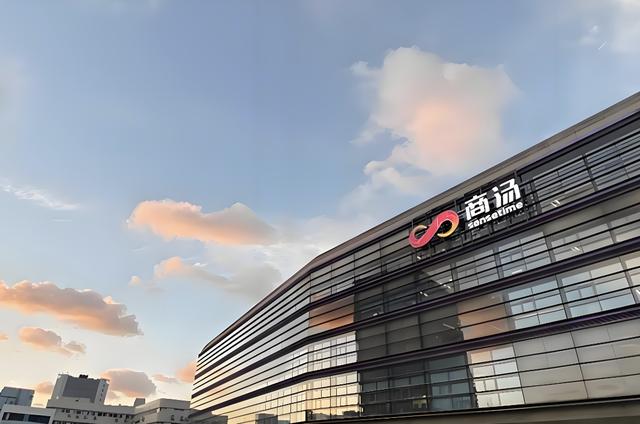
高盛:料商汤生成式AI收入持续增长 予“买入”评级目标价3.53港元
Zhi Tong Cai Jing· 2026-01-21 06:36
Core Viewpoint - Goldman Sachs reports that SenseTime-W (00020) management is optimistic about the company's expansion into multimodal foundational models, which will enhance cost-effectiveness and capture more end-application opportunities [1] Group 1: Company Growth Potential - Goldman Sachs maintains a "Buy" rating for SenseTime with a target price of HKD 3.53 [1] - As a leading local generative AI software company, SenseTime has its proprietary AI foundational model, SenseNova, and AI infrastructure, providing a solid foundation for growth [1] - The company’s generative AI revenue is expected to continue growing, driven by its extensive product coverage and customized solutions for specific industries, allowing it to seize monetization opportunities in AI [1]