智能体

Search documents
一夜刷屏,27岁姚顺雨离职OpenAI,清华姚班天才转型做产品经理?
3 6 Ke· 2025-09-12 04:04
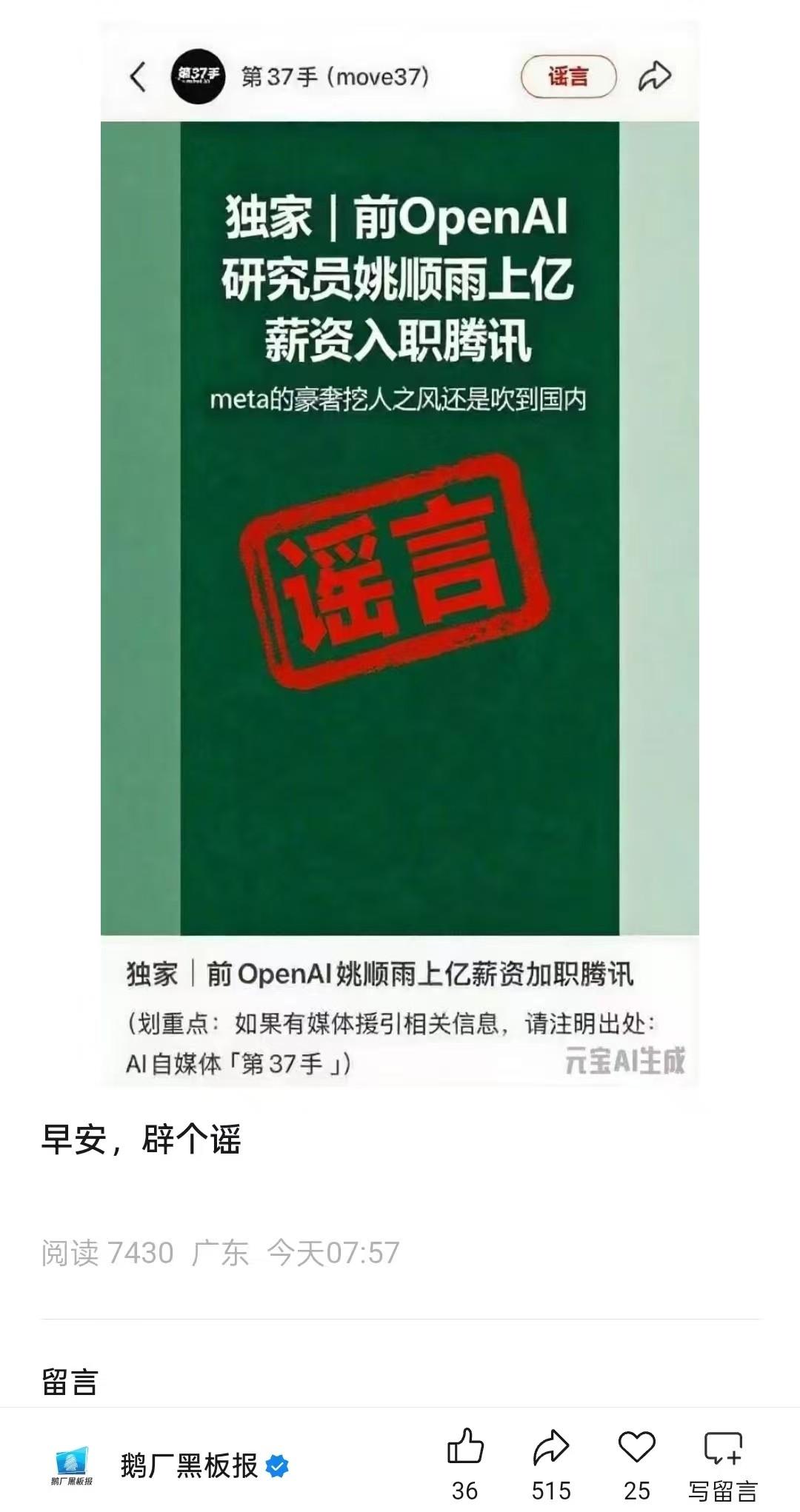
Core Insights - The news highlights the significant attention surrounding Shunyu Yao, a prominent AI talent, and the implications of his potential recruitment by Tencent, which has been officially denied [1][6] - Yao's expertise and contributions to OpenAI's Deep Research make him a highly sought-after figure in the AI industry, with rumors of a salary of 100 million RMB circulating, reflecting the competitive landscape for top AI talent [3][4] Group 1: Shunyu Yao's Background and Achievements - Shunyu Yao, aged 27, is a graduate of Tsinghua University and Princeton University, recognized for his exceptional academic performance and contributions to AI research [7][11] - He has been a core contributor to OpenAI's projects, including the development of intelligent agents and digital automation tools, which are pivotal for advancing AI capabilities [5][11] - His research has garnered significant recognition, with over 15,000 citations, indicating his influence in the field of AI [11][12] Group 2: Industry Implications - The recruitment of top AI talent like Yao signifies a deeper shift in the global AI talent ecosystem, as companies vie for expertise to drive innovation [6][19] - Yao's perspective on the importance of evaluation over training in AI development suggests a potential paradigm shift in how AI models are assessed and improved, emphasizing the need for practical applications [18][20] - The competitive salary offers from companies like Meta, which reportedly reached 100 million USD for core researchers, highlight the escalating financial stakes in attracting leading AI professionals [3][4]

曾鸣:下一个10年,人才比拼的是这个能力
3 6 Ke· 2025-09-12 02:11
Core Insights - The emergence of AI technologies, particularly with the rise of companies like OpenAI and DeepSeek, is transforming the business landscape and redefining organizational structures [2][3][4]. Group 1: Development of Intelligent Agents - In the next 5 to 8 years, intelligent agents will evolve from simple task executors to collaborative partners for humans, reflecting advancements in AI capabilities [7][8]. - The development of intelligent agents can be categorized into three stages: reliable agents, capable assistants, and intelligent partners, each representing increasing levels of autonomy and cognitive ability [4][6][7]. - The competitive advantage of intelligent agents will stem from the "black hole effect," where improved AI systems attract more data, enhancing their intelligence and capabilities [9][10][11]. Group 2: Economic Drivers and Organizational Changes - Technological progress is the fundamental driver of economic development, with intelligent agents becoming the core economic unit in the AI era, replacing traditional human roles [16][17]. - The competition in the AI era will shift from traditional knowledge-based barriers to efficiency and adaptability, as intelligent agents redefine industry boundaries [16][17]. - Organizations will need to adapt by fostering a culture of collaboration and innovation, focusing on the collective intelligence of teams rather than hierarchical management structures [46][48]. Group 3: Talent and Workforce Transformation - AI teams are increasingly seeking individuals with strong metacognitive abilities, who can abstract and model complex problems, as well as those who can effectively utilize AI tools [19][23][24]. - The rise of AI tools allows individuals to perform multiple roles, leading to the emergence of one-person companies and a shift in workforce dynamics [27][31]. - Knowledge workers are being replaced by "creative intelligence" talents who can leverage AI for innovative problem-solving, emphasizing the need for organizations to cultivate such skills [33][34][41]. Group 4: Future Organizational Structures - Future organizations will be characterized as "co-creative intelligent organizations," where teams of like-minded individuals collaborate to achieve common goals, driven by shared missions and values [46][50]. - The role of intelligent agents will evolve from mere tools to partners in the creative process, necessitating a new organizational framework that prioritizes collaboration and knowledge sharing [42][45]. - Organizations must focus on enhancing talent density and establishing a culture that promotes collective intelligence to thrive in the AI era [50].

2025年服贸会“数智”风起!AI+金融,场景应用焕新颜
Huan Qiu Wang Zi Xun· 2025-09-11 12:24
Core Viewpoint - The 2025 China International Service Trade Fair (CIFTIS) has commenced in Beijing, focusing on the theme "Digital Intelligence Leading, Service Trade Renewed," with a specific emphasis on financial services and the integration of AI technologies in the sector [1]. Group 1: Financial Services and AI Integration - The financial services section of the fair showcases the significant impact of AI on enhancing service efficiency and driving business model innovation [6][8]. - Financial institutions are increasingly focusing their AI investments on practical applications rather than just foundational capabilities, shifting from basic functions to core business transformations [7][9]. - The use of AI in financial services is evolving, with institutions like Ruizhong Insurance and China Life demonstrating advanced AI applications for customer service and claims processing [6][7]. Group 2: Technology and Compliance - The integration of AI in finance presents unprecedented opportunities, but it also necessitates a focus on compliance, security, and practical value in application [10]. - The discussion around AI's role in finance is vibrant, with insights shared at the China Financial Technology Forum regarding the core technologies driving AI applications in banking [8][9]. - The trend of AI, particularly large models, is gaining traction, with significant efficiency improvements reported in financial processes, such as a tenfold increase in efficiency with reduced personnel [9].

外滩大会观察:中国“小虎队”勾勒科技新图景
Huan Qiu Wang· 2025-09-11 10:23
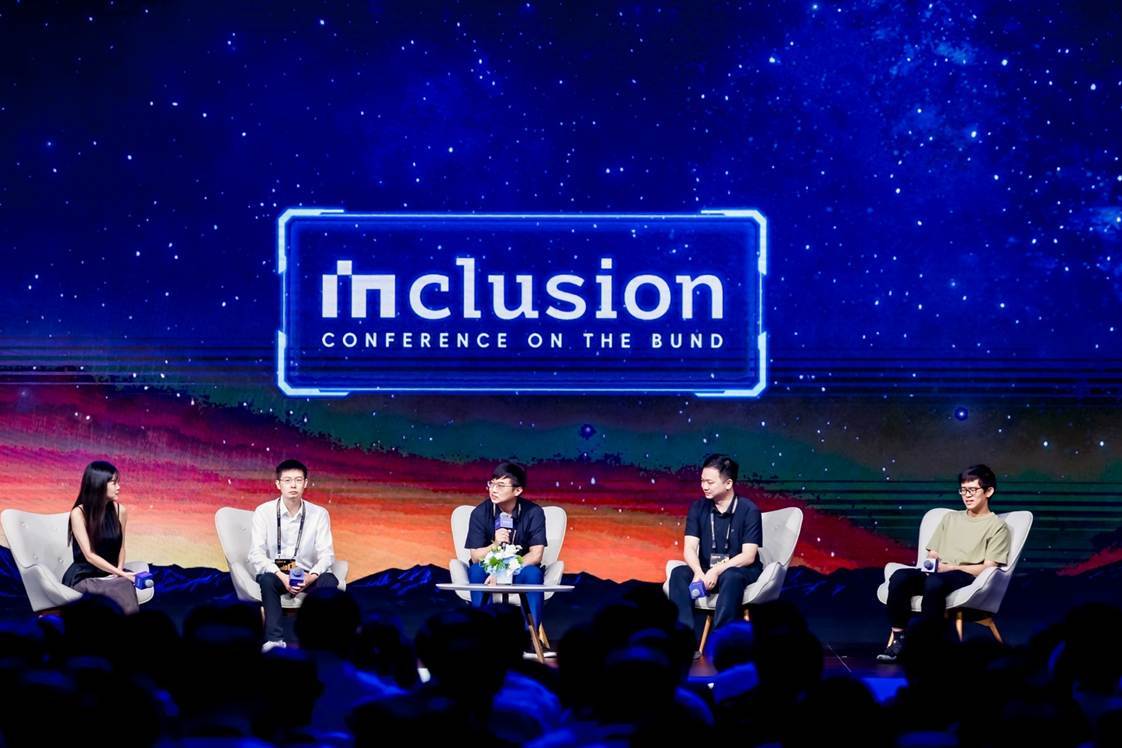
Group 1 - The article highlights the emergence of a new generation of young innovators in China, referred to as the "Tech Tigers," who are reshaping the technology landscape with an average age of under 30 [1][11] - The 2025 Inclusion Bund Conference in Shanghai serves as a platform for these young researchers, developers, and entrepreneurs, featuring various events such as the AI Innovation Competition and technology exhibitions [1][11] - The AI Innovation Competition attracted nearly 20,000 participants, with over half being post-2000 generation, showcasing the significant involvement of youth in technological advancements [1][11] Group 2 - Young researchers like Lian Hui from the Hefei Institute of Physical Science are making strides in clean energy through controlled nuclear fusion technology, which has implications for AI computing and industrial applications [2] - Zhang Fan, a professor at the University of Electronic Science and Technology, is recognized for his work in digital medicine, significantly reducing MRI imaging time, which can save critical time for patients [2] - Cheng Haonan, a post-95 researcher, developed a platform to combat deepfake technology, demonstrating the innovative spirit of young researchers in addressing contemporary challenges [3] Group 3 - Young entrepreneurs like Wu Chenglin and Zhu Zheqing are leading AI startups that focus on innovative applications of AI technology, emphasizing a shift from traditional business models to more dynamic, technology-driven solutions [9][10] - The article emphasizes the importance of open-source communities in fostering collaboration and innovation among young engineers, as seen in the contributions of figures like Fan Wendong and Xiang Jinyu [6][9] - The narrative illustrates a broader cultural shift among young innovators who are not only focused on technological advancements but also on redefining the creative process and democratizing art through AI [10][11]
央企怎么做超级智能体?对谈中电信天翼AI:自研模型为底座,自主规划是必须,能适应千行百业才行
量子位· 2025-09-11 10:19
Core Viewpoint - The article discusses the launch of China Telecom's Tianyi AI "Star Super Intelligent Agent," which ranks first among state-owned enterprises in the DBC Deben Consulting 2025 Enterprise-level AI Agent list, highlighting its capabilities and market potential [1][4]. Group 1: Overview of Star Super Intelligent Agent - The Star Super Intelligent Agent is based on China Telecom's self-developed "Star Big Model" technology, designed for industrial intelligent upgrades [2][8]. - It supports multimodal understanding, including voice, vision, and text, and can generate images and videos from text, showcasing its rich capabilities [11][12]. - The agent emphasizes enhanced complex reasoning and memory capabilities, making it suitable for various real-world applications such as customer service and financial operations [13][14]. Group 2: Market Trends and Development - The article notes a surge in interest in intelligent agents, driven by government initiatives promoting AI integration across industries [4][43]. - There are ongoing discussions about the practical applications and effectiveness of intelligent agents in real-world scenarios, with a focus on their ability to automate complex tasks [5][6]. Group 3: Technical Insights - The Star Super Intelligent Agent framework is designed to be highly customizable, allowing businesses to integrate it into their existing systems effectively [16][17]. - It operates through a four-module architecture: perception and understanding, cognition and decision-making, memory and knowledge, and action and execution, enabling it to perform tasks similarly to humans [27][29]. Group 4: Industry Applications and Case Studies - Successful implementation examples include the development of an intelligent customer service system that automates complaint processing, demonstrating the agent's ability to integrate with existing business systems [36][54]. - The article emphasizes that sectors with high IT integration, such as customer service and marketing, are prime candidates for the rapid deployment of intelligent agents [52]. Group 5: Competitive Landscape - The market is characterized by various players, including large model manufacturers, tech giants, startups, and state-owned enterprises, each focusing on different aspects of intelligent agent development [53][54]. - China Telecom's unique advantage lies in its extensive local service teams and existing digital infrastructure, allowing for scalable and effective deployment of intelligent agents across industries [54][56].


新加坡媒体:越来越多中国企业拥抱人工智能
Huan Qiu Wang Zi Xun· 2025-09-10 23:34
Group 1 - The article highlights the rapid adoption of artificial intelligence (AI) in Chinese companies, driven by government initiatives to enhance AI integration across various sectors [1][2] - A software development company in Guangdong has significantly increased its productivity, developing approximately 50 software systems in three months, compared to one or two annually before AI implementation [1] - The application of AI has allowed this company to reduce product prices by about 70%, showcasing a competitive advantage over rivals [1] Group 2 - A survey by Accenture indicates that 53% of 226 Chinese companies are integrating AI into multiple workflows, surpassing the global average by 11 percentage points [1] - The Chinese government has set ambitious goals for AI, aiming for over 70% penetration in six key sectors by 2027 and over 90% by 2030 [1] - The market for intelligent agents in China is projected to reach 10.9 billion yuan by 2025, with demand for AI products expected to grow by 30% to 40% this year [2]
AI低质代码泛滥、API经济盛行,老牌科技厂商 F5 如何应对大模型应用“后遗症”?
AI前线· 2025-09-10 13:01
Core Insights - The article discusses the significant impact of AI programming tools on development efficiency while highlighting new challenges such as security vulnerabilities, low-quality code, and the complexity of debugging AI-generated code [2][4]. Group 1: AI Tools and Challenges - AI programming tools have been reported to significantly enhance development efficiency, but they also introduce new security vulnerabilities and low-quality code issues [2]. - The increase in API numbers due to AI tools has led to a heavier operational burden for enterprises [2]. - The "black box" issue complicates the understanding of AI-generated code, making debugging and security checks more time-consuming [2]. Group 2: Security and Performance - Performance is crucial for user experience, and balancing security with user-friendly authentication processes is a pressing challenge [4]. - Over 91% of users have implemented WAAP (Web Application and API Protection) to secure AI and machine learning models [5]. Group 3: AI in Operations - A significant percentage of operational staff are utilizing AI to streamline processes: 57% use AI for script generation, 56% for custom policy creation, and 55% for executing scripts [7]. - Observability is key for AI-driven automation, with 65% of respondents leveraging it for this purpose [7]. Group 4: Application Trends - The proportion of modern applications is expected to surpass traditional applications by 2025, with modern applications rising from 29% in 2020 to 53% [7]. - By 2025, 54% of application and API performance analysis will be based on large models [7]. Group 5: AI Implementation Challenges - Complex IT architectures, unique security needs, and cost control are identified as major challenges for enterprises adopting AI applications [9]. - By 2028, 80% of enterprises are expected to embed AI capabilities, with 94% of AI applications deployed in hybrid cloud environments [12]. Group 6: F5's Response - F5 has transitioned to an Application Delivery and Security Platform (ADSP) to meet the growing demand for integrated performance and security solutions [11]. - The ADSP platform aims to provide seamless operation across various environments, addressing the complexities of modern application security [14]. Group 7: AI Gateway and Security - F5 has introduced the AI Gateway, which offers capabilities for routing based on large language models and provides protection against prompt injection and PII data leakage [16]. - The AI Gateway enhances GPU utilization rates by 30-60% while improving service success rates by at least 8% in specific applications [16]. Group 8: Comprehensive Services - F5 offers comprehensive application delivery and security services, including load balancing, DNS, CDN, and API gateways, adaptable to various deployment environments [17]. - The platform integrates capabilities across NetOps, SecOps, and DevOps, providing unified policy management and deep security analysis [17]. Group 9: AI Assistant - F5 has launched an AI assistant that enhances the platform's intelligence, capable of explanation, generation, and optimization across all F5 products [19].

AI+乳业新范式:联想与伊利共创全球智链生态圈
Zheng Quan Shi Bao Wang· 2025-09-10 12:36
Core Insights - Yili's modern smart health valley showcases a fully automated production line capable of processing over 7,000 tons of fresh milk daily and packaging 40,000 bags of milk per hour, making it the fastest milk production line globally [1] - The integration of AI and automation in Yili's supply chain significantly reduces risks related to raw material expiration, excess inventory, and stockouts [1][2] - Yili has developed a comprehensive consumer digital platform that enhances product quality and service diversity, leveraging data-driven insights to improve customer satisfaction [2] Group 1: Smart Factory and Supply Chain - Yili's smart factory utilizes advanced technologies such as AI and robotics to achieve efficient automated production [2] - The supply chain control tower system, developed in collaboration with Lenovo, integrates over 80 supply indicators and 140 promotional product indicators, optimizing production planning and procurement processes [1] Group 2: Consumer Engagement and Digitalization - Yili's consumer digital platform supports over 20 mini-programs on WeChat, providing integrated services for purchasing, after-sales, new product co-creation, and health consultations [1] - The introduction of a unified VOC intelligent mining management platform enhances the ability to understand consumer trends and implement business improvements, thereby increasing NPS and customer satisfaction [1] Group 3: AI and Industry Transformation - Lenovo emphasizes that AI is transitioning from a standalone technology to a critical productivity driver for businesses, necessitating its internal application and promotion [3] - The collaboration between Lenovo and Yili reflects a broader trend of AI integration across various industries, aiming to create new possibilities and drive industry transformation [2][3]

联想与伊利共创全球智链生态圈 “AI+”加速产业变革
Zheng Quan Ri Bao Wang· 2025-09-10 08:16
Core Insights - Lenovo and Yili have formed a strategic partnership to create a global intelligent supply chain ecosystem, enhancing Yili's digital transformation from production to consumer services [1][3] Group 1: Supply Chain and Production - Yili's smart factory utilizes automated production lines capable of processing over 7,000 tons of fresh milk daily and filling 40,000 packages per hour, making it the fastest milk production line globally [1] - The supply chain control tower system developed by Lenovo and Yili integrates over 80 supply indicators and 140 promotional product indicators, significantly reducing risks related to raw material expiration, excess inventory, and stockouts [2] - The introduction of a unified VOC (Voice of Customer) intelligent mining management platform allows Yili to close the loop on problem discovery and business improvement, enhancing consumer satisfaction [2] Group 2: Digital Transformation and AI Integration - Yili's digital transformation includes a comprehensive consumer digital platform that supports over 20 mini-programs for purchasing, after-sales, product co-creation, and health consultations [3] - The partnership emphasizes that digitalization is not a solitary endeavor; the integration of AI is expected to accelerate industry transformation and connect various sectors [3][5] - Lenovo's full-stack AI strategy aims to enhance productivity and innovation across personal, enterprise, and urban applications, with a focus on smart decision-making in cities [4] Group 3: Industry Impact and Future Outlook - The collaboration between Lenovo and Yili is seen as a benchmark for AI transformation in China's manufacturing sector, with expectations for continued advancements as the national "Artificial Intelligence +" initiative progresses [5] - Lenovo's intelligent agent matrix provides long-term services for government and enterprise clients, while also catering to small and medium-sized enterprises and individual customers [4] - The Chinese government's policy aims for AI applications to achieve over 70% penetration in key sectors by 2027 and over 90% by 2030, positioning intelligent economy as a crucial growth driver [4]

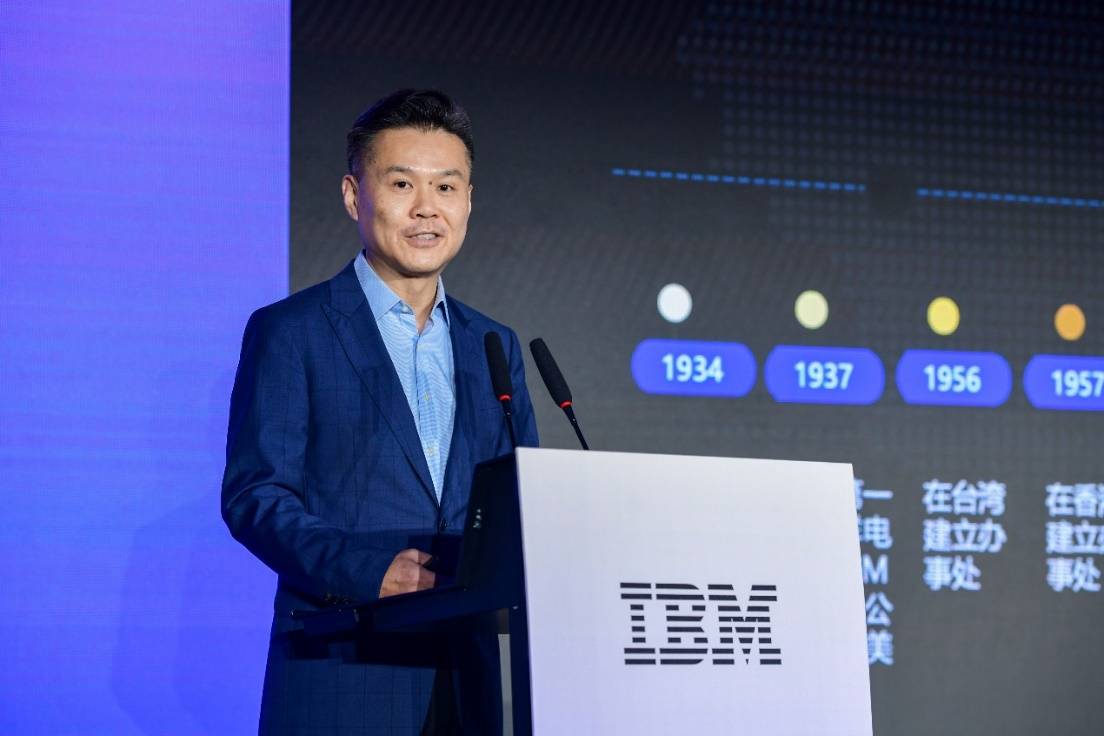
对话陈旭东:IBM 在中国市场的战略重心,已经转向民营企业
Sou Hu Cai Jing· 2025-09-06 03:08
Group 1 - IBM announced its "AI Deep Cultivation" plan in China, focusing on digital transformation for private enterprises and global operations through a mixed cloud and AI strategy [2][4] - The company aims to build platforms that leverage AI to drive enterprise digital transformation, distinguishing itself from competitors like Microsoft and Google [2][4] - IBM's AI technology solutions include the Watsonx platform, AI agents, and hybrid cloud, with software business revenue projected to account for 45% of total revenue in 2024 [7] Group 2 - Many enterprises are eager to adopt AI but often have misconceptions about its capabilities, equating AI solely with generative AI [5][6] - The application of generative AI in enterprises is currently limited, with traditional AI still playing a crucial role in enhancing efficiency [6][7] - IBM identifies a significant challenge for many companies in establishing a solid digital foundation before effectively utilizing AI [7] Group 3 - China is rapidly advancing in the fields of robotics and AIGC, but there is still room for improvement in data storage and management [8] - The Chinese market is expected to see a high adoption rate of new intelligent terminals and AI agents, with projections of over 70% by 2027 and 90% by 2030 [10] - IBM's focus on AI agents includes developing integrated solutions centered around Watsonx Orchestrate, with various pre-built and customizable agents for different business functions [10][11] Group 4 - The competitive landscape for AI agents globally is intensifying, with companies like IBM and Alibaba actively pursuing this area [9][11] - China's robust agricultural foundation, complete industrial system, and active consumer ecosystem create a conducive environment for AI application and innovation [11] - IBM predicts that by 2028, 15% of daily business decisions will be generated automatically by AI agents [10]