
AI医疗

Search documents
软件ETF(515230)大涨超8%,春季躁动进行时,AI应用迎来高潮
Mei Ri Jing Ji Xin Wen· 2026-01-12 05:55
Group 1 - The software ETF (515230) surged over 8% on January 12, indicating a strong market response to AI applications and the ongoing spring rally [1] - The GEO concept is gaining traction, potentially transforming the business models of advertising agencies, with AI and marketing expected to reshape the core of the advertising industry [1] - ChatGPT has launched health services that provide real-time and accurate health assistance, highlighting the growing role of AI in healthcare [1] Group 2 - AI is anticipated to remain a key technological theme, with a shift from hardware to software being inevitable, though the timing remains uncertain [1] - Significant investments in AI infrastructure must resonate on the software side to ensure the sustainability of long-term investments [1] - There is a performance gap between North American AI models and domestic AI models, but alleviation of domestic computing power supply bottlenecks may lead to rapid performance improvements for domestic model providers [1] Group 3 - The software ETF (515230) tracks the software index (H30202), which selects securities from companies involved in software development, sales, and related services, characterized by technological leadership and strong innovation capabilities [1] - As a representative index of the information technology sector, it reflects the overall performance and development trends of the software industry [1]
600118,千亿龙头创新高,商业航天多股爆发
Zheng Quan Shi Bao· 2026-01-12 04:19
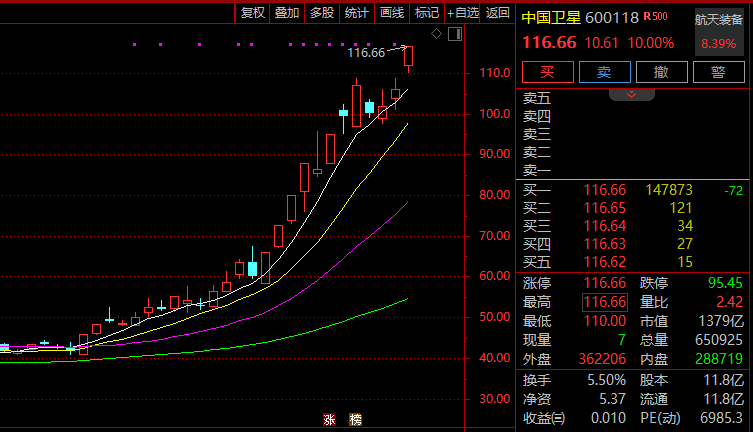
Group 1: Commercial Aerospace Sector - The commercial aerospace concept is experiencing renewed activity, with stocks like Tongyu Communication achieving a three-day consecutive rise, and China Satellite hitting a historical high with a market cap of 137.9 billion yuan and a trading volume exceeding 7 billion yuan [3]. - On January 10, the International Telecommunication Union (ITU) reported that China submitted an application for an additional 203,000 satellites, covering 14 satellite constellations, indicating significant growth potential in the sector [5]. Group 2: Photovoltaic Sector - The photovoltaic sector is active, particularly in perovskite batteries and space photovoltaic applications, with companies like Dongfang Risheng and Maiwei Shares showing notable gains. Recent focus on space photovoltaic technology has been highlighted by several listed companies [5]. - Institutional research indicates that space computing has gained consensus, with overseas giants planning to establish space data centers, suggesting a potential explosive growth phase for commercial aerospace in the coming years [5]. Group 3: AI Medical Sector - The AI medical and pharmaceutical sectors are strengthening, with stocks like Dean Diagnostics and Meian Health achieving consecutive gains. The development of an AI-driven high-throughput drug virtual screening platform by Tsinghua University has been a significant milestone [6][9]. - The GEO (Generative AI Optimization) concept continues to show strength, with companies like Liou Shares and Inertia Media hitting the limit up. Many domestic listed companies are entering the GEO field through investments and product line expansions [9]. Group 4: AI Programming Sector - The AI programming concept saw fluctuations but ultimately rose, with stocks like Zhuoyi Information hitting the limit up. The announcement by Elon Musk regarding the upcoming upgrade of xAI's Grok Code, which will support complex programming tasks, has generated market interest [11].


港股午评|恒生指数早盘涨0.86% 智谱+MiniMax领涨AI概念
智通财经网· 2026-01-12 04:09
Group 1: Market Performance - The Hang Seng Index rose by 0.86%, gaining 224 points to close at 26,456 points, while the Hang Seng Tech Index increased by 2.08% [1] - The early trading volume in the Hong Kong stock market reached HKD 168.4 billion [1] Group 2: AI and Technology Sector - Leading AI model companies saw significant gains, with MINIMAX-WP (00100) up over 31% and Zhiyun (02513) rising by 30% due to a strategic partnership with Didi [1] - Other AI-related stocks also performed well, including Mifengshi (02556) which rose by 18%, and AI pharmaceutical companies like Yingshi Intelligent (03696) up 12% and Yidu Tech (02158) up over 8% [1] - Kuaishou-W (01024) increased by 5.62%, with expectations of significant revenue growth in FY2026 due to its AI initiatives [1] - Kingdee International (00268) rose by 10.71%, benefiting from accelerated AI model integration in industrial processes [1] Group 3: Lithium Industry - Tianqi Lithium (09696) and Ganfeng Lithium (01772) saw increases of over 5% and 6% respectively, driven by export tax adjustments that may stimulate demand [1] Group 4: New Listings and Stock Movements - The new stock Hao Wei Group (00501) debuted with a 15% increase, recognized as a leading Fabless semiconductor design company [2] - LFG Investment Holdings (03938) resumed trading and surged over 120% following a cash offer from Chen Shaoyang at a significant discount [2] Group 5: Regulatory Impact on Companies - Contemporary Amperex Technology Co., Ltd. (Ningde Times) fell by 2.94% due to new battery export tax policies and rising lithium carbonate prices [3] - Smoore International (06969) declined by 1.87% as the export tax rebate for electronic cigarettes is set to be canceled, potentially impacting profits [4]

英矽智能盘中大涨17%,股价创上市新高,市值超300亿港元
Ge Long Hui· 2026-01-12 03:50
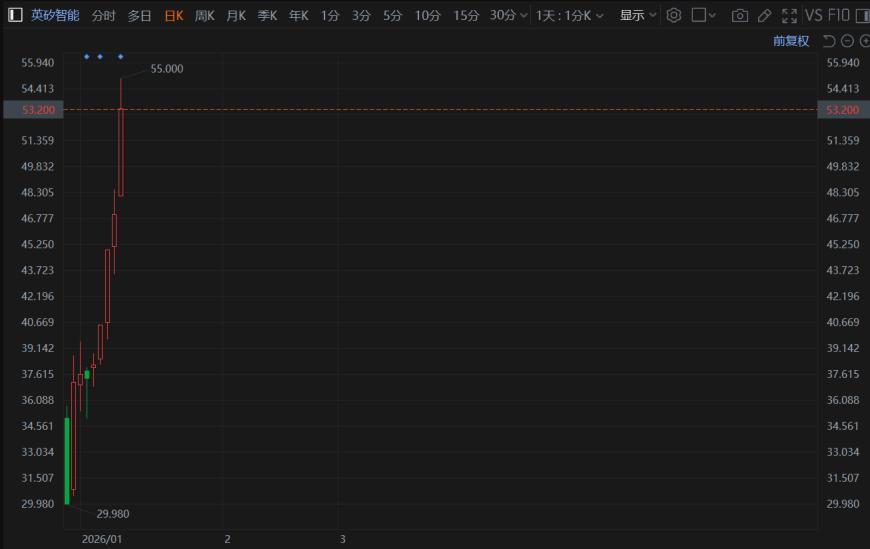
Core Viewpoint - The stock of Insilico Medicine (3696.HK) surged by 17% to a new high of HKD 55, marking a cumulative increase of over 52% since its listing, with a market capitalization exceeding HKD 30 billion, following a significant R&D collaboration announcement with Servier worth USD 888 million focused on oncology drug development [1] Group 1: Company Developments - Insilico Medicine announced a research collaboration with Servier totaling USD 888 million, aimed at identifying and developing new therapeutic drugs for challenging oncology targets [1] - The company has established numerous AI-driven drug development collaborations and pipeline licensing agreements in recent years [1] Group 2: Market Context - The rise in Insilico Medicine's stock price is attributed to multiple factors, including recent advancements in the AI healthcare sector and collaborations by other AI pharmaceutical companies, such as CrystalGenomics [1] - The AI medical industry is experiencing significant progress, with new catalysts emerging in areas like brain-computer interfaces and innovative drug development [1]
ETF盘中资讯|脑机接口、AI医疗引爆,港股通医疗主题指数开年7连涨!T+0投资利器来袭,159137上市交易,实时成交逾亿元
Sou Hu Cai Jing· 2026-01-12 03:36
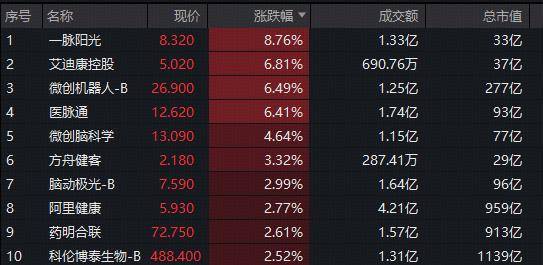
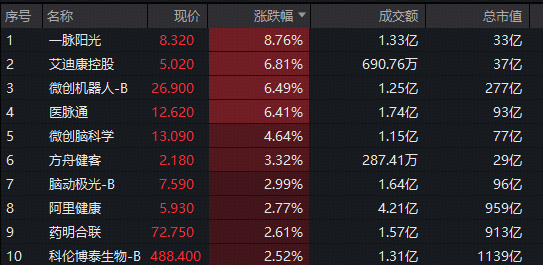
Core Viewpoint - The Hong Kong stock market's healthcare sector is experiencing significant activity, particularly in brain-computer interfaces and AI healthcare, with notable gains in various stocks and the launch of a new healthcare ETF [1][3]. Group 1: Market Performance - The Hong Kong Stock Connect healthcare sector index has risen for seven consecutive days since the beginning of 2026, with a peak increase of over 1% on January 12 [1]. - Notable stock performances include: - Yimray Sunshine: +8.76% with a market cap of 3.3 billion - Aidi Kang Holdings: +6.81% with a market cap of 3.7 billion - MicroPort Scientific: +6.49% with a market cap of 27.7 billion - Alibaba Health: +2.77% with a market cap of 959 billion [1]. Group 2: ETF Launch and Characteristics - The newly launched Hong Kong Stock Connect Healthcare ETF (159137) aims to track the healthcare innovation index, covering key sectors such as CXO, AI healthcare, medical devices, and innovative drugs [3]. - The healthcare theme index has shown high elasticity and volatility, with a maximum increase of over 148% during the last healthcare bull market, significantly outperforming comparable indices [3][4]. Group 3: Recent Developments and Innovations - Recent advancements in brain-computer interfaces and AI healthcare have led to increased attention in the healthcare sector, with OpenAI launching ChatGPTHealth and Neuralink planning large-scale production of brain-computer interface devices by 2026 [4][5]. - Tsinghua University announced the development of an AI-driven high-throughput drug virtual screening platform, highlighting the growing intersection of AI and healthcare [5]. - The National Medical Products Administration in China is working on standards for medical devices using brain-computer interface technology, indicating a supportive regulatory environment [5]. Group 4: Investment Opportunities - The A-share market offers investment tools such as the largest healthcare ETF (512170), which includes 12 AI healthcare and brain-computer interface concept stocks, with a combined weight of over 36% [6]. - The current price-to-earnings ratio of the CSI Healthcare Index is 35.46, indicating a favorable valuation compared to historical averages [6].
“脑机接口+AI医疗+创新药”多重催化!恒生生物科技2026年涨幅超13%
Sou Hu Cai Jing· 2026-01-12 03:36
Group 1 - The Hong Kong stock market's pharmaceutical sector is experiencing multiple catalysts in early 2026, including significant BD transactions in AI healthcare, positive news regarding brain-computer interfaces overseas, and the implementation of commercial insurance for innovative drugs [1] - The Hang Seng Biotechnology Index has seen a strong increase, with a year-to-date rise exceeding 13%, leading the key indices in the Hong Kong stock market [1] - The Hong Kong Stock Exchange launched Hang Seng Biotechnology Index futures in November 2025, enhancing its expanding ecosystem of derivative products and providing investors with precise risk management tools [1] Group 2 - The Hang Seng Biotechnology Index is the only index in the Hong Kong stock market with index futures for the pharmaceutical and healthcare sectors [1] - Among the ETFs tracking the Hang Seng Biotechnology Index, the Hang Seng Healthcare ETF (159892) ranks first in scale, exceeding 7 billion, and offers good liquidity for investors looking to invest in the biotechnology sector [1]
ETF盘中资讯 脑机接口、AI医疗引爆,港股通医疗主题指数开年7连涨!T+0投资利器来袭,159137上市交易,实时成交逾亿元
Jin Rong Jie· 2026-01-12 03:34
Core Viewpoint - The Hong Kong stock market's healthcare sector is experiencing significant activity, particularly in brain-computer interfaces and AI healthcare, with notable gains in various stocks and the launch of a new healthcare ETF [1][3]. Group 1: Market Performance - The Hong Kong Stock Connect healthcare sector index has seen a continuous rise, gaining over 1% and marking seven consecutive days of increases since the beginning of 2026 [1]. - Notable stock performances include: - Yimray Sunshine: 8.76% increase, current price at 8.320, market cap of 3.3 billion - Aidi Kang Holdings: 6.81% increase, current price at 5.020, market cap of 3.7 billion - MicroPort Robotics-B: 6.49% increase, current price at 26.900, market cap of 27.7 billion [1]. Group 2: ETF Launch and Characteristics - The newly launched Hong Kong Stock Connect Healthcare ETF (159137) is designed to passively track the healthcare theme index, which includes key sectors such as CXO, AI healthcare, medical devices, and innovative drugs [3]. - The healthcare theme index has demonstrated high elasticity and volatility, with a maximum increase of over 148% during the last healthcare bull market, significantly outperforming comparable indices [3]. Group 3: Recent Developments and Innovations - Recent advancements in brain-computer interfaces and AI healthcare have led to increased attention in the healthcare sector, with OpenAI launching ChatGPTHealth and Neuralink planning large-scale production of brain-computer interface devices by 2026 [4][5]. - Tsinghua University has developed an AI-driven high-throughput drug virtual screening platform, showcasing significant research progress in the field [5]. - The National Medical Products Administration in China is working on standards for medical devices utilizing brain-computer interface technology, indicating a supportive regulatory environment for innovation [5]. Group 4: Investment Opportunities - The A-share market offers investment tools such as the largest healthcare ETF (512170), which includes 12 AI healthcare and brain-computer interface concept stocks, with a combined weight of over 36% [6]. - The current price-to-earnings ratio of the CSI Healthcare Index is 35.46, indicating a favorable valuation compared to historical averages, suggesting potential investment opportunities [6].
脑机接口、AI医疗引爆,港股通医疗主题指数开年7连涨!T+0投资利器来袭,159137上市交易,实时成交逾亿元
Xin Lang Cai Jing· 2026-01-12 03:09
Group 1 - The Hong Kong stock market's medical sector remains active, with brain-computer interface and AI medical concepts leading the gains, as evidenced by significant stock price increases for companies like MicroPort Robotics and Alibaba Health [1][8] - The Hong Kong Stock Connect Medical Theme Index has seen a continuous rise for seven days since the beginning of 2026, indicating strong investor interest in the sector [1][8] - The newly launched Hong Kong Stock Connect Medical ETF (Huabao, 159137) is actively trading and aims to passively track the medical theme index, reflecting the growing interest in medical investment tools [1][8] Group 2 - The Hong Kong Stock Connect Medical ETF is anchored on medical innovation, covering key sectors such as CXO, AI medical, medical devices, and innovative drugs, including popular themes like brain-computer interfaces and AI medical [3][11] - The medical theme index has shown high elasticity and volatility, with a maximum increase of over 148% during the last medical bull market, significantly outperforming comparable indices [3][11] Group 3 - Recent developments in the brain-computer interface and AI medical fields have led to increased attention in the medical sector, with notable advancements from companies like Neuralink and research achievements from Tsinghua University [5][13] - Policy initiatives, such as the National Medical Products Administration's plans for standards related to brain-computer interface medical devices, and Beijing's action plan for AI in healthcare, are expected to further stimulate the sector [5][13] Group 4 - Institutional analysis indicates that major overseas pharmaceutical companies are increasing their focus on innovative medical devices in China, suggesting a favorable market environment similar to the previous year's innovative drug sector [6][13] - The A-share medical investment tools, particularly the largest medical ETF (512170), cover a significant portion of AI medical and brain-computer interface stocks, indicating a strong investment opportunity [6][14]
医渡科技早盘大涨超9%
Zhi Tong Cai Jing· 2026-01-12 02:49
Core Viewpoint - The stock price of Yidu Tech (02158) surged over 9% after the approval of a key laboratory focused on intelligent diagnosis and treatment systems, marking a significant milestone in the company's specialization in intelligent diagnosis [1] Company Summary - Yidu Tech's stock rose by 7.45% to HKD 6.35, with a trading volume of HKD 149 million [1] - The company is a core partner in the newly approved "Multimodal Intelligent Diagnosis and Treatment System Research and Application Key Laboratory" led by Peking University First Hospital, focusing on intelligent diagnosis for metabolic syndrome [1] - Yidu Tech will integrate its large model technology capabilities into the laboratory's research chain, providing a solid foundation for the implementation of intelligent diagnosis [1] Industry Summary - The global AI healthcare market is entering a trillion-dollar growth phase, with an estimated market size of USD 26.65 billion (approximately RMB 186.1 billion) in 2024, projected to soar to USD 505.59 billion (approximately RMB 3.5 trillion) by 2033, reflecting a compound annual growth rate of 38.8% [1] - Dongguan Securities indicates that the active involvement of domestic tech giants in the AI healthcare sector is expected to accelerate the informatization and accessibility of healthcare in China, making healthcare a significant breakthrough area for AI applications [1]
港股异动 | 医渡科技(02158)早盘大涨超9%
智通财经网· 2026-01-12 02:44
Group 1 - The core viewpoint of the article highlights the strong stock performance of Yidu Tech (02158), which saw a price increase of over 9% after the opening, closing at 6.35 HKD with a trading volume of 149 million HKD [1] - Yidu Tech participated in the establishment of a key laboratory focused on the development and application of a multimodal intelligent diagnosis and treatment system, led by Peking University First Hospital, marking a significant milestone in the company's commitment to specialized intelligent diagnosis [1] - The laboratory will concentrate on intelligent diagnosis for metabolic syndrome related to heart and kidney diseases, integrating Yidu Tech's large model technology capabilities into the research chain [1] Group 2 - The global AI healthcare market is entering a trillion-dollar growth phase, with a projected market size of approximately 26.65 billion USD (about 186.1 billion RMB) in 2024, expected to surge to around 505.59 billion USD (about 3.5 trillion RMB) by 2033, reflecting a compound annual growth rate of 38.8% [1] - Dongguan Securities indicates that the active involvement of domestic tech giants in the AI healthcare sector is likely to accelerate the informatization and accessibility of healthcare in China, positioning healthcare as a crucial breakthrough area for AI applications [1]