新型能源体系

Search documents
“为‘泰中一家亲’谱写新篇章”——访泰国副总理波汶萨
Ren Min Ri Bao· 2025-11-13 22:04
Core Viewpoint - The visit of Thailand's King Vajiralongkorn to China marks a significant milestone in the diplomatic relations between the two countries, emphasizing their long-standing friendship and cooperation [1]. Group 1: Thailand-China Relations - The Thai royal family has played a crucial role in fostering Thailand-China relations, with Princess Sirindhorn having visited China over 50 times and actively engaging in cultural exchanges [1]. - The relationship between Thailand and China has been characterized by mutual respect and cooperation over the past 50 years, serving as a model for collaboration between countries with different social systems [1]. Group 2: Economic Cooperation - Thailand's Deputy Prime Minister, Prawit Wongsuwan, highlighted the alignment between China's "14th Five-Year Plan" and Thailand's "Thailand 4.0" strategy, particularly in areas such as renewable energy and digital economy [2]. - There is an expectation for deepened cooperation in emerging fields like renewable energy, digital infrastructure, and artificial intelligence to promote high-quality economic development [2]. Group 3: Cultural and Educational Exchange - The number of Thai students studying in China exceeds 20,000, while around 30,000 Chinese students are studying in Thailand, showcasing the fruitful educational cooperation between the two nations [3]. - The cultural exchange is further enriched by the interest of Thai officials in Chinese literature and media, indicating a strong cultural connection [3].
电力、算力双网融合,电网设备ETF(159326)实时成交破3亿元,保变电气领涨
Mei Ri Jing Ji Xin Wen· 2025-11-13 06:18
Core Viewpoint - The A-share market saw a collective rise in the three major indices, with a notable surge in the stock of Baobian Electric, a leader in grid equipment, which increased nearly 8% as of 14:02. This movement was influenced by the National Energy Administration's guidance on promoting the integration of new energy and emerging industries [1]. Group 1: Market Performance - The only grid equipment ETF (159326) experienced a 1% increase, with a trading volume of 303 million yuan. Other related stocks such as Ping An Electric, Teruid, Zhongneng Electric, Huaton Cable, and Shuangjie Electric also saw gains [1]. - The surge in Baobian Electric's stock reflects a broader positive sentiment in the market regarding grid equipment and renewable energy sectors [1]. Group 2: Policy and Industry Outlook - The National Energy Administration's guidance emphasizes the promotion of new energy integration with emerging industries, aligning with the "East Data West Calculation" project to enhance the synergy between computing power facilities and green electricity demand [1]. - The "14th Five-Year Plan" suggests accelerating the construction of a new energy system, increasing the proportion of renewable energy supply, and ensuring a reliable transition from fossil fuels [1]. - The plan aims to enhance the resilience and complementarity of the power system, promote the development of new energy storage, and accelerate the construction of smart grids and microgrids [1]. Group 3: ETF Information - The grid equipment ETF (159326) tracks the CSI Grid Equipment Theme Index, with a strong representation in sectors such as transmission and transformation equipment, grid automation, and cable components. The index has a high weight of 64% in ultra-high voltage stocks, the highest in the market [2]. - The top ten holdings include industry leaders like Guodian NARI, TBEA, and Siyuan Electric, indicating a robust representation of key players in the grid equipment sector [2]. - The Green Power ETF (562550) tracks the CSI Green Power Index, which includes clean energy companies as well as transitional samples from thermal and nuclear power [2].

中金 | 深度布局“十五五”:电力设备新能源篇
中金点睛· 2025-11-12 23:26
Core Viewpoint - The article emphasizes the acceleration of building a new energy system, highlighting the critical roles of the power grid and energy storage in facilitating the high-quality development of renewable energy [2][3]. Group 1: New Energy System Development - The "14th Five-Year Plan" aims to increase the proportion of renewable energy supply, with cumulative installed capacity for wind and solar expected to reach 575 GW and 1110 GW respectively by July 2025, making renewable energy the largest installed capacity source [2]. - By 2035, the target is to achieve over 360 million kW of wind and solar installed capacity, necessitating the construction of a new power system to manage the increasing pressure on power system stability and consumption [2]. Group 2: Power Grid Investment - The "14th Five-Year Plan" anticipates a nationwide investment of approximately 2.8 trillion yuan in power grid projects, with projections for the "15th Five-Year Plan" suggesting investments could exceed 4.1 trillion yuan, reflecting a compound annual growth rate of 5-6% [3][4]. - The focus will be on enhancing the main grid framework and upgrading the distribution network to support the growing demand from large wind and solar bases [4]. Group 3: Energy Storage Growth - The demand for energy storage is expected to grow rapidly, with total commercial configuration demand projected to reach 1.5-1.7 TWh during the "15th Five-Year Plan," reflecting a compound annual growth rate of over 20% [8]. - Energy storage is increasingly recognized as a vital component of the new energy system, with the "15th Five-Year Plan" emphasizing the need for scientific planning of pumped storage and the development of new energy storage technologies [8]. Group 4: Electric Vehicle Market Expansion - The penetration rate of new energy vehicles is expected to rise significantly during the "15th Five-Year Plan," with electric heavy trucks and other electric transportation sectors anticipated to see accelerated demand [15][16]. - The market for electric ships is also projected to grow, driven by the need for decarbonization in the shipping industry, which is a significant contributor to carbon emissions [17].

新能源板块震荡调整,储能电池ETF(159566)获资金持续布局
Sou Hu Cai Jing· 2025-11-12 11:02
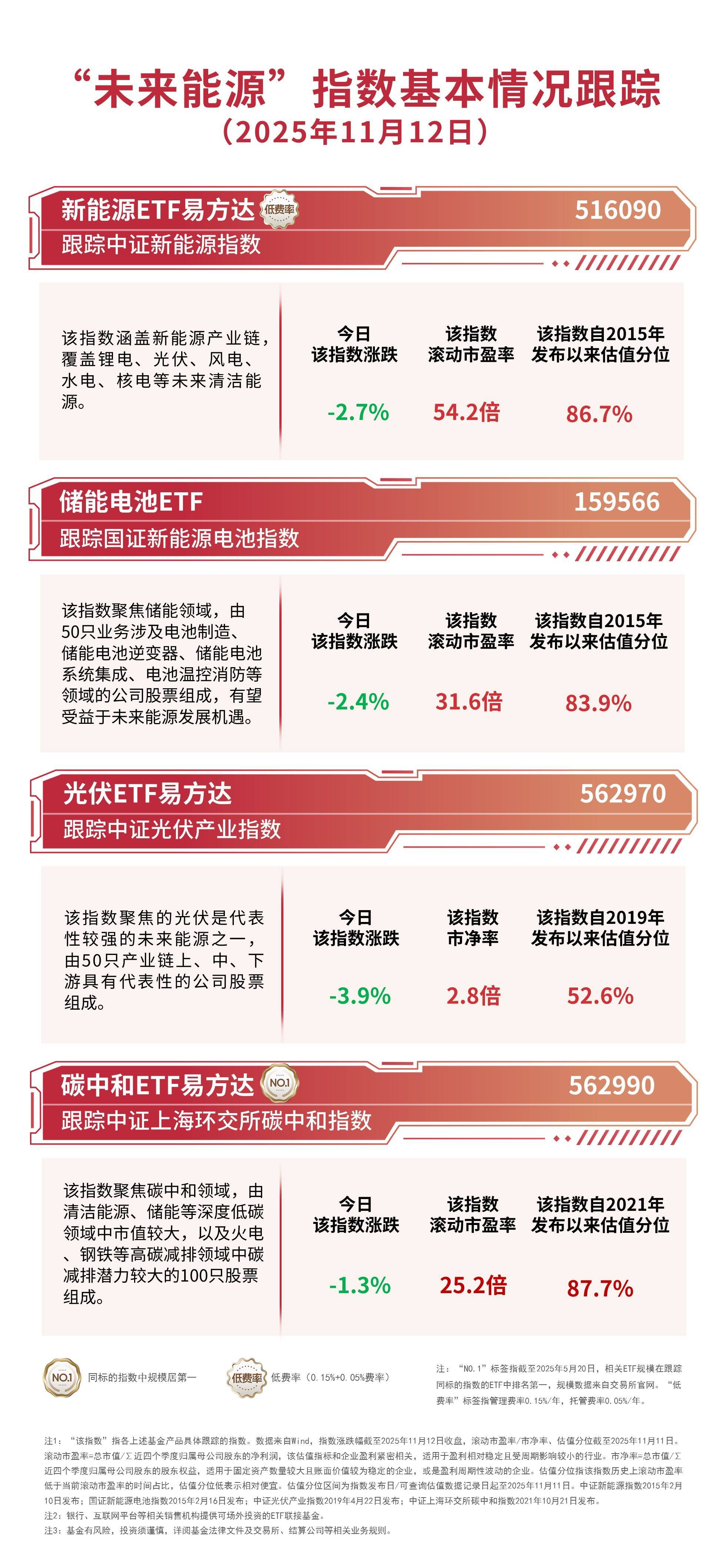
Core Insights - The carbon neutrality index and various renewable energy indices experienced declines, with the carbon neutrality index down by 1.3%, the new energy battery index down by 2.4%, the new energy index down by 2.7%, and the photovoltaic industry index down by 3.9% [1] - Despite the overall market downturn, the energy storage battery ETF (159566) saw a net subscription of 45 million units, marking a total net inflow of nearly 1 billion yuan over the past nine trading days [1] - Huatai Securities emphasizes the importance of accelerating the construction of a new energy system, focusing on the development of new energy storage and smart grid construction, indicating a positive outlook for the renewable energy sector and electrification [1] Industry Analysis - The energy storage index comprises 50 companies involved in battery manufacturing, energy storage battery inverters, energy storage system integration, and battery temperature control and fire protection, positioning them to benefit from future energy development opportunities [4] - The photovoltaic ETF tracks the photovoltaic industry index, which includes 50 representative companies across the upstream, midstream, and downstream sectors of the photovoltaic supply chain, highlighting its significance as a future energy source [6] - The carbon neutrality ETF tracks the carbon neutrality index, which reflects the broader trends in the carbon neutrality market [8]
绿电将从“配角”变“主角”?
Ren Min Ri Bao Hai Wai Ban· 2025-11-12 08:11
Core Insights - In the next five years, China's new electricity demand will primarily be met by renewable energy sources such as wind and solar power, transitioning green energy from a "supporting role" to a "leading role" in the energy structure [1][5] Group 1: Current State of Green Energy in China - As of July 2023, one-third of China's electricity consumption is derived from green energy, marking a significant advancement in the country's energy development [2] - By the end of July 2023, China's installed capacity for wind and solar power reached 1.68 billion kilowatts, nearly doubling from 530 million kilowatts in 2020, with an annual growth rate of 28% [2] - China has established the world's largest and fastest-growing renewable energy system, contributing 60% of the global increase in renewable energy generation capacity in 2024 [2] Group 2: Factors Driving Rapid Development of Green Energy - The cost of green energy, particularly solar power, has become more affordable, with the average cost of solar electricity decreasing by 80% over the past decade due to increased installed capacity [3] - As of September 2023, China's new energy storage capacity exceeded 100 million kilowatts, growing over 30 times since the end of the 13th Five-Year Plan, accounting for over 40% of the global total [3] - Policy initiatives, including the optimization of renewable energy consumption responsibilities and the establishment of a green certificate system, have further stimulated the development of green energy [3] Group 3: Impact of Green Energy on Consumption and Environment - The rapid growth of new energy vehicles (NEVs) has significantly boosted the green energy market, with NEV sales exceeding 11 million units in the first three quarters of 2023, representing 46.1% of total new car sales [4] - Green energy has enhanced China's energy security, with non-fossil energy consumption increasing by 1 percentage point annually during the 14th Five-Year Plan, while coal consumption has decreased correspondingly [5] - The widespread application of green energy has led to a significant reduction in greenhouse gas emissions, with China's wind and solar product exports helping to reduce carbon emissions by approximately 4.1 billion tons globally [5]
微观高质量发展丨一条“动脉”里的“能源安全”
Xin Hua Wang· 2025-11-12 07:58
Core Points - The article highlights the successful construction of the world's highest ±800 kV converter station at Bangguo, Sichuan, which is part of the Jinshang-Hubei UHV project aimed at transmitting clean energy from the Tibetan Plateau to central China [1][3] - The project is a key component of China's "West-to-East Power Transmission" strategy, enhancing the green electricity supply to the central region [1][8] - The construction of the Aba 1000 kV converter station is also underway, expected to be operational by the end of 2026, further supporting the Chengdu-Chongqing economic circle [2][3] Group 1 - The Bangguo converter station faces significant challenges, including remote construction areas and the need for technological innovation [1] - The clean energy transmission capacity has increased from 30.6 million kW at the end of the 13th Five-Year Plan to 62.6 million kW during the 14th Five-Year Plan [3][8] - The construction of over 100 key projects in the Sichuan power grid during the 14th Five-Year Plan has established a main channel for "West-to-East Power Transmission" [3] Group 2 - UHV technology is described as a "highway" for the cross-regional flow of clean energy, addressing the mismatch between energy distribution and demand [5][8] - The National Energy Administration reports that the State Grid has completed 41 UHV projects, enhancing cross-province transmission capacity by 30% compared to the end of the 13th Five-Year Plan [8] - Future plans include the establishment of a new energy system as outlined in the 15th Five-Year Plan, focusing on increasing the share of renewable energy and ensuring energy security [10]
胡森林:锚定能源强国目标聚力发力
Jing Ji Ri Bao· 2025-11-12 00:00
Core Viewpoint - The construction of a strong energy nation is essential for high-quality economic development and is a response to the changing international energy landscape, as well as a requirement for the green transformation of the economy and society [2][3][4]. Group 1: Importance of Energy - Energy is the lifeblood of the national economy, and a robust modern energy industry is a crucial foundation for building a strong socialist modern nation [2]. - Historical energy transitions have led to significant advancements in productivity and shifts in international dynamics, indicating the necessity of adapting to the current global energy transformation [2][3]. Group 2: Energy Transition and Economic Development - The energy industry plays a vital role in fixed asset investment, GDP contribution, and employment, making it a key component of the national economy [3]. - The new energy industries, represented by solar, wind, storage, hydrogen, and smart grids, have become strategic emerging industries and important growth drivers for the economy [3]. Group 3: Achieving Carbon Neutrality - Achieving carbon peak and carbon neutrality is a major strategic decision by the central government, with energy activities being the primary source of carbon emissions [4]. - Transitioning from a traditional high-carbon energy system to a clean and low-carbon energy system is the most effective path for carbon reduction [4]. Group 4: Current Energy Landscape - By 2024, China's energy production is expected to reach approximately 5 billion tons of standard coal, with non-fossil energy consumption accounting for 19.8% [5]. - China has become the world's largest energy producer and consumer, with a more complete energy supply system and improved energy consumption structure [5]. Group 5: Challenges in Energy Development - Building a strong energy nation is a complex system project that requires a multi-dimensional approach, including supply security, technological strength, energy structure, and governance capabilities [6][7]. - There are still significant shortcomings in various aspects of energy development, indicating that the journey to becoming a strong energy nation is challenging [7]. Group 6: New Energy System Construction - The current energy development is at a critical juncture, necessitating the acceleration of the construction of a new energy system to achieve quality and efficiency improvements [8]. Group 7: Energy Supply Security - Ensuring energy security and stable supply is crucial, especially given the high dependence on foreign oil and gas resources and rising uncertainties in the international landscape [9]. - A comprehensive energy supply, safety, and emergency system must be established to enhance energy security [9]. Group 8: Technological Innovation in Energy - The new energy system's construction relies on advancements in energy technology, necessitating a complete innovation ecosystem from basic research to industrial application [10]. - Collaboration between national strategic technological forces and enterprises is essential to drive innovation in key energy sectors [10]. Group 9: Green and Low-Carbon Transition - Promoting a green and low-carbon transition is vital for breaking environmental resource constraints and achieving high-quality energy development [11]. - The focus should be on optimizing energy structure and increasing the share of clean energy supply [11]. Group 10: Energy Governance Mechanisms - A robust energy governance system is necessary for the construction of a new energy system, requiring legal and institutional frameworks to support energy strategies and decisions [12]. - Enhancing energy market regulation and promoting green finance are critical for fostering energy technology innovation [12].
锚定能源强国目标聚力发力
Jing Ji Ri Bao· 2025-11-11 22:21
Core Viewpoint - The construction of a strong energy nation is essential for high-quality economic development and is a response to the changing international energy landscape, as well as a requirement for the green transformation of the economy and society [2][3][4]. Group 1: Importance of Energy - Energy is the lifeblood of the national economy, and a robust modern energy industry is a crucial foundation for building a strong socialist modern nation [2]. - The energy industry plays a significant role in fixed asset investment, GDP contribution, and employment absorption, making it a vital part of the national economy [3]. - The new energy industries, represented by solar, wind, storage, hydrogen, and smart grids, have become strategic emerging industries and important growth drivers for the economy [3]. Group 2: Energy Transition and Carbon Goals - Achieving carbon peak and carbon neutrality is a major strategic decision by the central government, with energy activities being the primary source of carbon emissions [4]. - Transitioning from a traditional high-carbon energy system to a clean and low-carbon new energy system is the most effective path for carbon reduction [4]. - The energy sector's reduction process directly impacts the overall progress towards carbon peak and carbon neutrality [4]. Group 3: Current Energy Landscape - By 2024, China's energy production is expected to reach approximately 5 billion tons of standard coal, with non-fossil energy consumption accounting for 19.8% [5]. - China has become the world's largest energy producer and consumer, with a more complete energy supply system and an optimized energy consumption structure [5]. Group 4: Challenges and Systematic Approach - Building a strong energy nation is a systematic project that encompasses supply security, technological strength, energy structure, and governance capabilities [6][7]. - There are still significant shortcomings in various aspects of energy development, indicating that the journey to becoming a strong energy nation is long and challenging [7]. Group 5: New Energy System Construction - The current energy development is at a critical juncture of transformation, requiring a focus on building a new energy system to achieve quality and efficiency improvements [8]. - Strengthening energy supply security is essential, especially given the high dependence on foreign oil and gas resources and rising uncertainties in the international landscape [9]. Group 6: Technological Innovation and Green Transition - The new energy system's construction relies on advancements in energy technology, necessitating a complete innovation ecosystem from basic research to industrial application [10]. - Promoting green and low-carbon transitions is crucial for breaking environmental resource constraints and achieving high-quality energy development [11]. Group 7: Governance and Regulatory Framework - Establishing a robust governance framework is vital for the new energy system, requiring the legal and institutionalization of national energy strategies and major decisions [12]. - Enhancing the energy market's regulatory effectiveness and promoting green finance tools are necessary to guide social capital into energy technology innovation [12].
《关于促进新能源消纳和调控的指导意见》解读︱扛牢责任担当 推进转型发展 奋力谱写新能源高质量运行新篇章
国家能源局· 2025-11-11 10:12
Core Viewpoint - The article emphasizes the importance of the newly issued "Guiding Opinions on Promoting the Consumption and Regulation of New Energy" in advancing the development and consumption of new energy, which is crucial for achieving the "dual carbon" goals and constructing a new energy system [3][5]. Group 1: Background of the Guiding Opinions - The Guiding Opinions were introduced in the context of China's commitment to significantly increase its wind and solar power capacity by 2035, aiming for a total installed capacity of over 3.6 billion kilowatts, which is six times that of 2020 [4]. - As of now, China's renewable energy system is the largest and fastest-growing globally, with wind and solar power capacity exceeding 1.7 billion kilowatts, accounting for 46% of total installed capacity, and renewable energy contributing over 20% of total electricity generation [4]. - The increasing share of new energy in the power system presents challenges in terms of grid regulation and consumption, necessitating the timely issuance of the Guiding Opinions to ensure sustainable development [5]. Group 2: Key Requirements of the Guiding Opinions - The Guiding Opinions propose measures across various dimensions, including planning, infrastructure, market mechanisms, and technological innovation, to address systemic issues in new energy development [6]. - It emphasizes the need for coordinated planning to ensure the collaborative development of new energy and the grid, advocating for a mechanism that aligns the development of renewable energy projects with grid capacity [6]. - Infrastructure improvements are highlighted, including the construction of a new grid platform that enhances the grid's capacity to accommodate distributed energy sources and the development of flexible regulation resources [6][8]. - The establishment of a unified national electricity market is crucial for optimizing resource allocation, with a focus on expanding market mechanisms for new energy consumption [7]. Group 3: Implementation of the Guiding Opinions - The National Power Dispatch Control Center is tasked with implementing the Guiding Opinions, focusing on building a collaborative and efficient multi-level new energy consumption regulation system [9]. - Safety in the operation of new energy systems is prioritized, with ongoing research into the stability and balance of supply and demand in the context of high penetration of new energy [9][10]. - The article stresses the importance of market-driven approaches to enhance the consumption of new energy, including the development of electricity spot markets and auxiliary service markets [11].
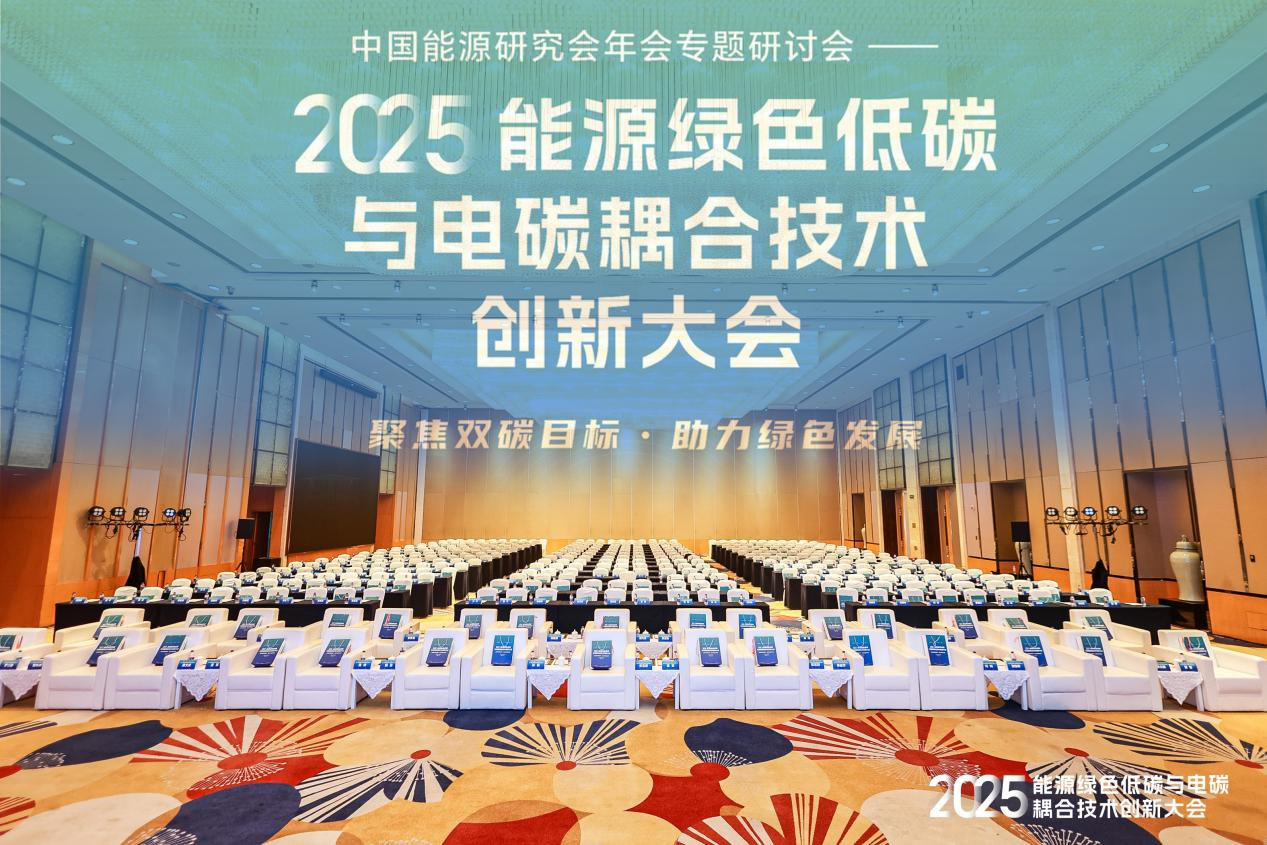
2025能源绿色低碳与电碳耦合技术创新大会在广州召开
Zhong Guo Neng Yuan Wang· 2025-11-11 08:51
Core Viewpoint - The conference focused on the theme "Focusing on Carbon Neutrality Goals, Supporting Green Development," highlighting the importance of innovation and collaboration in achieving a low-carbon energy transition in China [27]. Group 1: Conference Overview - The 2025 Energy Green Low Carbon and Electric Carbon Coupling Technology Innovation Conference was successfully held in Guangzhou, co-hosted by various organizations including the China Energy Research Society and the Southern Power Grid Energy Development Research Institute [1]. - The conference featured a main venue and three sub-venues, with key leaders from the energy sector delivering opening remarks [7]. Group 2: Keynote Speeches - Shi Yuping, President of the China Energy Research Society, emphasized the global shift towards green low-carbon development and the need for China to accelerate the construction of a new energy system [9]. - Sun He, Director of the Electric Power Department of the National Energy Administration, shared insights on enhancing the clean energy acceptance capacity of the power system [11]. - Lai Yong, a senior researcher from the Guangdong Provincial Energy Bureau, highlighted Guangdong's achievements in renewable energy installations, surpassing 120 million kilowatts of non-fossil energy capacity [13]. Group 3: Technical Discussions - The conference included discussions on various topics such as the development and challenges of new power systems, hydrogen energy technology, and energy storage innovations [17][20][22]. - Experts discussed the importance of establishing a safety assurance system for electrochemical energy storage to address fire hazards and enhance industry quality [24]. Group 4: Industry Collaboration - The conference served as a high-end communication platform, integrating government, industry, academia, and research sectors to promote collaboration and share cutting-edge technology and practical experiences [27]. - The event also featured the launch of carbon management solutions and monitoring equipment aimed at supporting the green transformation of the energy sector [26].