
智能驾驶

Search documents
疯了!马斯克放大招了
Sou Hu Cai Jing· 2026-01-23 07:01
Core Insights - The article emphasizes the significant influence of Elon Musk on the capital market, particularly through his various ventures, which are seen as investment opportunities. Group 1: Investment Themes - The article identifies five main concepts associated with Elon Musk: electric vehicles (primarily Tesla), robotics (Optimus humanoid robot), commercial space (SpaceX), brain-machine interfaces (Neuralink), and artificial intelligence (xAI) [1][2]. - Tesla's Full Self-Driving (FSD) version 14.2 has achieved "zero takeover" capability across the U.S., and the Austin Robotaxi is currently in testing [1]. - SpaceX is preparing for an IPO with Starlink, which has over 10 million global users and a target valuation of $1.5 trillion [2]. Group 2: Commercial Space Developments - SpaceX plans to launch a second-generation Starlink satellite communication system in 2027, which will enhance capacity by over 100 times and increase data throughput by more than 20 times [3]. - Competitor Blue Origin, led by Jeff Bezos, announced plans to deploy over 5,400 satellites to create a new communication network [3]. - In China, Blue Arrow Aerospace is preparing for an IPO and aims to develop a fully reusable commercial crewed spacecraft, with plans to reduce ticket prices significantly [4]. Group 3: Market Sentiment and Volatility - The commercial space and robotics sectors are characterized as non-profitable and highly volatile, where market movements are driven more by news and developments than by financial performance [4]. - Recent announcements in the commercial space sector have led to a strong rebound in the market, indicating the importance of positive news flow in these industries [4].

智能驾驶概念走强,小马智行涨超6%,文远知行涨超5%
Ge Long Hui· 2026-01-23 06:58
Core Viewpoint - The Hong Kong stock market saw a significant rise in smart driving concept stocks, driven by Elon Musk's announcement regarding Tesla's Full Self-Driving (FSD) approval in Europe and China [1]. Group 1: Stock Performance - Zhejiang Shibao experienced a rise of over 11%, reaching a price of 6.430 with a market capitalization of 5.29 billion and a year-to-date increase of 30.96% [2]. - TuDatong increased by over 8.46%, with a latest price of 10.900 and a total market value of 14.157 billion, reflecting a year-to-date rise of 7.07% [2]. - Xiaoma Zhixing-W saw a growth of over 6.58%, priced at 131.200 and a market cap of 56.881 billion, with a year-to-date increase of 11.85% [2]. - Wenyan Zhixing-W rose by over 5.53%, with a current price of 24.040 and a market value of 24.697 billion, showing a year-to-date increase of 4.52% [2]. - Youjia Innovation increased by over 4.39%, priced at 16.880 and a market cap of 7.052 billion, with a year-to-date rise of 19.97% [2]. - Sailis saw a rise of over 3.51%, with a latest price of 106.100 and a market capitalization of 184.825 billion, but a year-to-date decrease of 0.93% [2]. - Horizon Robotics-W increased by over 2.14%, priced at 9.080 and a market cap of 13.303 billion, with a year-to-date increase of 4.85% [2].

NOA将不再是BEV专属?
Zhong Guo Qi Che Bao Wang· 2026-01-23 06:53
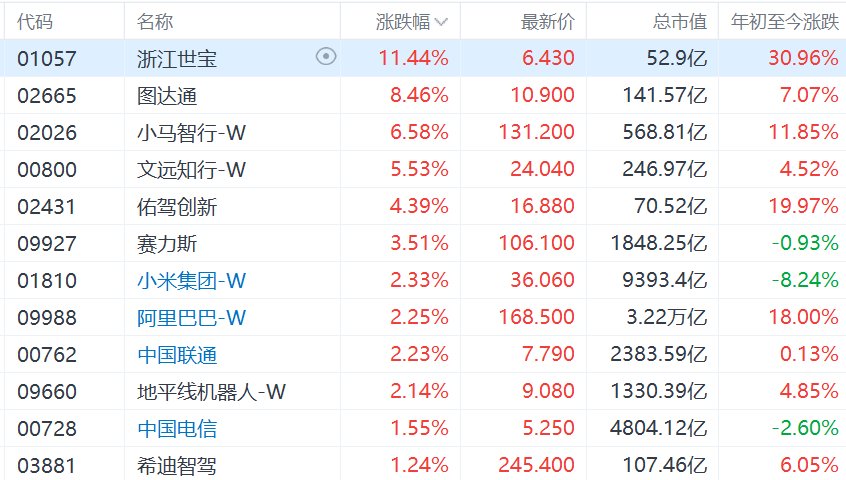
Core Insights - Goldman Sachs' report titled "2026 Outlook: Navigating Divergence" highlights 2026 as a pivotal year for the adoption of Battery Electric Vehicles (BEVs) and Navigation on Autopilot (NOA), suggesting that these technologies may develop into separate standards [1] - The report indicates a slowdown in BEV sales in Europe and the U.S., with consumers showing interest in advanced NOA but being cautious about purchasing BEVs [1][7] - In China, the integration of NOA in vehicles has led to a significant increase in sales, showcasing the advantages of BEVs in utilizing NOA, while traditional fuel vehicles are losing market share [1][5] Group 1: Market Trends - The market share of domestic brands in China has risen from 43.9% in 2017 to 51.9% in 2023, with the penetration rate of new energy vehicles increasing from 2.7% to 31.6% during the same period [3] - The report notes that the global electricity consumption of BEVs is expected to grow from 0.7% in 2024 to 2.5% by 2030, despite a stabilization in new BEV sales [7] - The competition landscape is shifting as NOA enhances the recognition and purchase intent for domestic brands, narrowing the gap with joint venture brands [5][6] Group 2: Technological Developments - Many automotive companies are focusing on applying NOA in hybrid models, although Goldman Sachs expresses skepticism about the medium-term effectiveness of this strategy [13] - The report lists various global automakers' progress in developing electronic and electrical architectures and end-to-end autonomous driving technologies, with companies like Tesla and BYD having completed their developments [14] - Traditional fuel vehicle manufacturers are exploring NOA applications in hybrid vehicles, but face challenges due to the inherent complexities of integrating NOA into their existing systems [15][16] Group 3: Future Outlook - The report suggests that by 2026, NOA may not solely rely on BEVs for growth, as traditional vehicles could also play a role in developing their own systems [19] - Concerns are raised about whether hybrid vehicles will be able to catch up with BEVs in terms of NOA capabilities, especially as BEVs are already testing Level 3 autonomous driving [19] - The future of NOA in traditional vehicles will depend on their ability to attract consumers and demonstrate value, as the market for traditional fuel vehicles remains substantial [19]
港股异动丨智能驾驶概念走强,小马智行涨超6%,文远知行涨超5%
Ge Long Hui· 2026-01-23 06:17
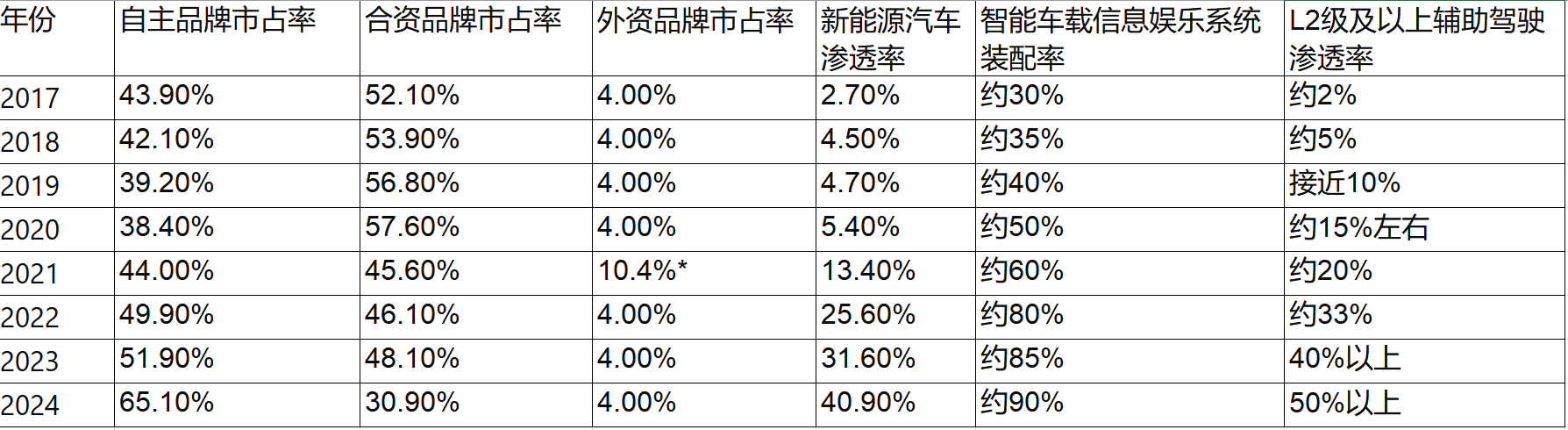
Group 1 - The Hong Kong stock market saw a strong performance in smart driving concept stocks, with Zhejiang Shibao rising over 11%, Tudatong increasing by over 8%, and Pony.ai-W up by over 6% [1] - Elon Musk stated at the World Economic Forum in Davos that Tesla's Full Self-Driving (FSD), which requires driver supervision, may receive regulatory approval from Europe and China as early as next month [1] Group 2 - Zhejiang Shibao (code: 01057) increased by 11.44% to a latest price of 6.430, with a total market value of 5.29 billion and a year-to-date increase of 30.96% [2] - Tudatong (code: 02665) rose by 8.46% to a price of 10.900, with a market capitalization of 14.157 billion and a year-to-date increase of 7.07% [2] - Pony.ai-W (code: 02026) saw a rise of 6.58% to 131.200, with a market value of 56.881 billion and a year-to-date increase of 11.85% [2] - Other notable stocks include Wenyan Zhixing-W (up 5.53%), Youjia Innovation (up 4.39%), and Celis (up 3.51%) [2]
港股智能驾驶概念走强,小马智行涨超6%,文远知行涨超5%
Jin Rong Jie· 2026-01-23 06:17
Group 1 - The Hong Kong stock market saw a strong performance in the smart driving concept stocks, with Zhejiang Shibao rising over 11% [1] - Tudatong increased by more than 8%, while Pony.ai-W rose over 6% [1] - WeRide-W experienced a gain of over 5%, and Youjia Innovation rose by over 4% [1] - Seres gained over 3%, and Horizon Robotics-W increased by over 2% [1]

智驾概念股午后涨幅扩大 浙江世宝涨超12% 马斯克称特斯拉FSD最早2月在华获批
Zhi Tong Cai Jing· 2026-01-23 06:17
Group 1 - The concept stocks related to intelligent driving have seen significant gains, with Zhejiang Shibao rising by 12.13% to HKD 6.47, and other companies like TuDatong and Xiaoma Zhixing also experiencing notable increases [1] - Elon Musk announced at the World Economic Forum that Tesla's Full Self-Driving (FSD) system is expected to be approved in China as early as next month, aligning closely with its approval timeline in Europe [1] - Tesla's representative in China stated that there are no new updates regarding the FSD system's progress in the Chinese market, despite ongoing efforts [1] Group 2 - Musk indicated that Tesla's Robotaxi service is expected to be widely deployed in the U.S. by the end of this year, with initial services already operating in Austin, Texas, without in-car safety supervisors [2] - According to Dongfang Securities, Level 3 autonomous driving is anticipated to commercialize starting in 2026, with further acceleration in the commercialization of Level 4 Robo-X services, presenting growth opportunities for companies involved in intelligent driving and related components [2]

港股异动 | 智驾概念股午后涨幅扩大 浙江世宝(01057)涨超12% 马斯克称特斯拉FSD最早2月在华获批
智通财经网· 2026-01-23 06:12
Group 1 - The smart driving concept stocks saw significant gains, with Zhejiang Shibao rising by 12.13% to HKD 6.47, Tuya Technology up by 7.46% to HKD 10.8, Pony.ai increasing by 6.5% to HKD 131.6, and others also showing positive movement [1] - Elon Musk announced at the World Economic Forum that Tesla's Full Self-Driving (FSD) system is expected to be approved in China as early as next month, potentially aligning with its approval timeline in Europe [1] - Tesla's representative in China stated that there are no new updates regarding the FSD system's progress in the Chinese market [1] Group 2 - Musk indicated that Tesla's Robotaxi service is expected to be widely deployed in the U.S. this year, with initial services already operating in Austin, Texas without in-car safety supervisors [2] - According to Dongfang Securities, Level 3 autonomous driving is anticipated to commercialize starting in 2026, with further acceleration in the commercialization of Level 4 Robo-X services such as Robotaxi, Robovan, and Robotruck [2] - The smart driving sector, including related vehicle and component companies, is expected to experience growth opportunities as these technologies advance [2]
四维图新2026年1月23日涨停分析:AI战略投资+技术研发突破+订单量增长
Xin Lang Cai Jing· 2026-01-23 06:04
Core Insights - The stock of Siwei Tuxin (SZ002405) reached its daily limit with a price of 11.24 yuan, marking a 9.98% increase and a total market capitalization of 26.646 billion yuan [1] Group 1: Company Developments - Siwei Tuxin is undergoing a strategic transformation and governance structure optimization, which includes the cancellation of the supervisory board and the revision of 28 management systems to enhance decision-making efficiency and standardization [2] - The company has made a significant investment in Jianzhihui Robotics, becoming its largest shareholder, to expand into the smart driving sector [2] - From 2024 to date, Siwei Tuxin has secured 6.8 million sets of smart driving solutions, covering over 20 mainstream automakers and more than 100 designated models, which is expected to improve performance in the medium to long term [2] Group 2: Technological Advancements - The company has achieved breakthroughs in technology, obtaining 7 invention patents, and its automotive-grade chip technology has reached ASIL-D safety level [2] - AI applications in the smart driving sector focus on model compression and AI engineering capabilities, which may help the company gain more smart driving orders due to cost advantages [2] - The company plans to globally launch a large-scale delivery of an assisted driving solution based on the Horizon J6B chip, having already received mass production orders from several leading domestic and international automakers [2] Group 3: Market Trends - The smart driving and vehicle networking sectors are currently market hotspots, with related stocks showing active performance and creating a certain level of sector linkage effect [2] - In Q3 2025, the company's revenue grew by 5.2% year-on-year, indicating relative stability in its main business amid industry development trends, which has led to an increased market expectation for its future growth [2] - Technical analysis suggests that there may have been a significant inflow of capital into Siwei Tuxin on January 23, 2026, driving the stock price to its limit, reflecting renewed investor interest in the company's strategic layout and technological breakthroughs [2]

研报掘金丨方正证券:首予高德红外“推荐”评级,军民品业务有望共振迎来爆发
Ge Long Hui A P P· 2026-01-23 05:18
Core Viewpoint - The report from Founder Securities highlights that Gaode Infrared has been deeply engaged in the infrared field for over 20 years, establishing a complete industrial chain for research and production, and is poised for explosive growth driven by both domestic demand and foreign trade, as well as the resonance of military and civilian businesses [1] Company Overview - Gaode Infrared's main business includes four major segments: infrared focal plane detector chips, infrared thermal imaging systems, comprehensive optoelectronic systems, and traditional non-lethal ammunition along with informationized ammunition [1] - The company has become one of the most competitive enterprises in the domestic equipment manufacturing and optoelectronic systems sector [1] Market Dynamics - The company's performance is expected to experience a significant turnaround as the factors causing delays in procurement plans are eliminated and the demand for civilian products expands [1] - In the smart driving sector, the company is actively promoting technical exchanges with joint venture car brands and mainstream new force brands, aiming to secure pilot projects and establish benchmark cases [1] Growth Potential - With the continuous industrialization of previous innovative achievements, the business space in emerging markets is expected to keep expanding [1] - As a leading enterprise in the infrared and equipment system sectors, the company is likely to benefit from the dual drive of domestic demand and foreign trade, leading to a potential explosive growth in military and civilian product businesses [1] Investment Rating - The report initiates coverage with a "recommend" rating for the company [1]


部分智驾概念股走高 小马智行-W、文远知行-W均涨近6%
Zhi Tong Cai Jing· 2026-01-23 04:00
Core Viewpoint - The news highlights a significant rise in shares of autonomous driving concept stocks following Elon Musk's announcement regarding the large-scale deployment of Tesla's Robotaxi service in the U.S. by the end of the year [1] Group 1: Stock Performance - Xiaoma Zhixing-W (02026) increased by 5.77%, reaching 130.2 HKD [1] - Wenyuan Zhixing-W (00800) rose by 5.71%, reaching 24.08 HKD [1] - Zhejiang Shibao (002703) saw a 5.55% increase, reaching 6.09 HKD [1] - Caocao Chuxing (02643) grew by 3.67%, reaching 34.5 HKD [1] Group 2: Industry Insights - Elon Musk's appearance at the Davos Forum emphasized the anticipated widespread deployment of Tesla's Robotaxi service in the U.S. by the end of the year, with initial operations already underway in Austin, Texas [1] - Dongwu Securities predicts a turning point in the global commercialization of Robotaxi, expressing optimism for domestic Level 4 (L4) companies expanding internationally [1] - Ping An Securities notes that while Level 3 (L3) vehicle operational conditions still face limitations, the approval for L3 models indicates progress in technology and policy, laying the groundwork for future commercialization of autonomous driving [1] - The commercial closure of intelligent driving is expected to further develop by 2026 [1]