
城市NOA

Search documents
高阶智驾中场战事:规模门槛与战略分化
Mei Ri Jing Ji Xin Wen· 2026-02-06 04:27
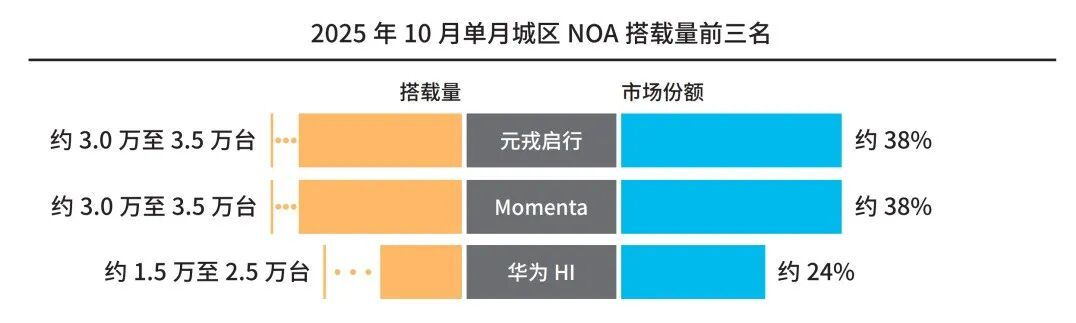
Core Insights - The year 2025 marks a critical turning point for the urban NOA market in China, with a significant increase in cumulative installation and market penetration, leading to a silent industry cleansing where some players exit while others like Huawei, Yuanrong Qixing, and Momenta emerge as leaders [1][3] Group 1: Market Dynamics - As of January to November 2025, mainstream models priced below 300,000 yuan contributed over 68.9% of urban NOA sales, indicating a shift from high-end to mainstream market demand [2] - The competition has evolved into a "scale is king" phase, where delivery volume, market share, and sales of cooperative models are the key metrics for evaluating player value [2][3] - The ability to establish deep partnerships with mainstream automakers and successfully integrate solutions into popular models is crucial for gaining market share [2][3] Group 2: Industry Consolidation - The industry is undergoing a silent "elimination round," with investment in autonomous driving cooling down and capital concentrating on a few proven players [3] - The scale of installations has become a new technical threshold, with leading players recognizing that scale is not only a market position symbol but also essential for advancing to next-generation technologies [3] Group 3: Company Performance - Yuanrong Qixing has achieved explosive growth, delivering 200,000 urban NOA units in just over a year, with a monthly delivery increase from approximately 3,000 units in early 2025 to over 30,000 units by September [4] - By October 2025, Yuanrong Qixing's market share reached about 23%, with a monthly installation volume soaring to approximately 30,000 to 35,000 units, capturing about 38% of the monthly market share [4][5] Group 4: Strategic Approaches - Yuanrong Qixing's strategy focuses on deep partnerships with a few core strategic partners to create market "blockbuster" models, contrasting with the broader approach of many competitors [5][7] - The success of models equipped with Yuanrong Qixing's systems, such as the Weipai Gaoshan, which became the monthly MPV sales champion, highlights the effectiveness of their "blockbuster formula" [7] Group 5: Future Outlook - The penetration rate of new passenger cars with L2-level driving assistance functions reached 64% in the first three quarters of 2025, indicating a large and rapidly expanding market [8] - The year 2026 is anticipated to be a decisive turning point, with the competition for delivery scales from 100,000 to 1 million units becoming a key metric for defining the industry's final tier and market influence [8]

单芯片城市NOA方案量产,轻舟智航公布L4无人物流战略
Xin Lang Cai Jing· 2026-01-25 04:52
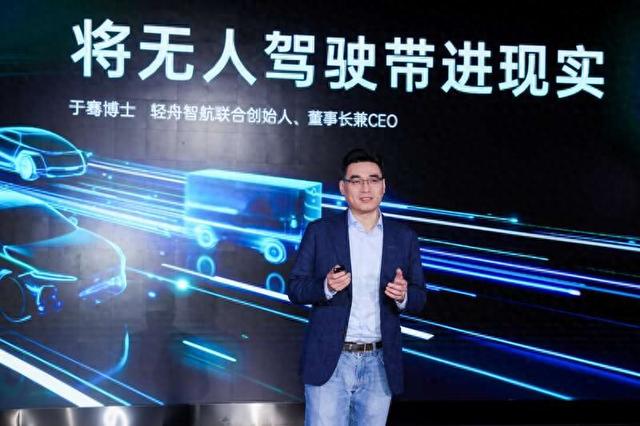
Core Insights - Lightyear Zhihang announced that as of January, over 1 million passenger cars equipped with its assisted driving system have been produced [2] - The company introduced its NOA (Navigation Assisted Driving) solution based on the Horizon Journey 6M chip, which has a computing power of 128 TOPS, marking it as the first city NOA solution to be mass-produced using this chip [2] - The CEO predicts that 2026 will mark the beginning of a "golden decade" for autonomous driving, with city NOA features expected to become standard in mainstream vehicles within five years [2] Technology Strategy - Lightyear Zhihang emphasizes a dual strategy of L2 and L4 driving, asserting that both levels share foundational technology [2] - The company introduced its "VLA + World Model" unified technical architecture, aimed at enhancing the understanding of complex environments and human behavior logic, which is essential for advancing to higher levels of autonomous driving [2] Business Expansion - Lightyear Zhihang has officially entered the L4-level unmanned logistics sector and formed a strategic partnership with Chery Commercial Vehicles [3] - The company plans to leverage its technical and engineering experience from passenger vehicle production to develop unmanned logistics products for mass production, with pilot operations already underway in Zhejiang and Anhui [3] - Industry analysts note that Lightyear Zhihang's trajectory reflects current market competition, highlighting the rapid adoption of advanced driving features and the exploration of new commercial avenues such as Robotaxi and unmanned logistics [3]
德赛西威港股IPO大股东密集减持 毛利率下滑、智驾竞争格局生变
Xin Lang Cai Jing· 2026-01-14 08:56
Core Viewpoint - Desay SV's announcement of planning to issue H-shares and list on the Hong Kong Stock Exchange aims to enhance its international strategy, brand influence, and accelerate overseas business expansion [1] Group 1: Company Developments - Desay SV's largest shareholder, Desay Group, plans to reduce its stake by up to 7.1063 million shares within three months from January 8, 2025 [1] - In the previous months, two major shareholders announced a plan to reduce their holdings by a total of up to 4.45% of the company's total share capital [1] - For the first three quarters of 2025, Desay SV reported revenue of 22.337 billion, a year-on-year increase of 17.72%, and a net profit attributable to shareholders of 1.788 billion, up 27.08% year-on-year [1] Group 2: Industry Challenges - The overall gross margin for Desay SV in the first three quarters of 2025 was 19.70%, reflecting a year-on-year decline of 0.85 percentage points [1] - The company faces pressure from competitors like Huawei, which has introduced its Qian Kun intelligent driving system, impacting traditional automotive electronics suppliers [1] - The competitive landscape in the intelligent driving chip market is evolving, with domestic players gaining ground in the 150,000 yuan vehicle segment due to high cost-performance advantages [2] - The trend of automakers developing their own chips poses a significant challenge, with companies like Tesla, BYD, NIO, and XPeng entering the chip development space [2] - The emergence of urban NOA (Navigation Assisted Driving) as a new focus in intelligent driving introduces uncertainties in technology paths, requiring a longer period for refinement [2] - Balancing technological innovation and cost control will be critical for all industry participants, including Desay SV, as it navigates growth sustainability, gross margin pressures, and competition from comprehensive solution providers like Huawei [2]
反“内卷”、闯关L3,十大热词看行业进化轨迹
Xin Jing Bao· 2026-01-14 00:14
Core Viewpoint - In 2025, the focus of competition in China's automotive industry shifts fundamentally from domestic market share battles to comprehensive competition on the global stage, centered around technology, systems, and regulations [1] Group 1: Order Restoration - A "revolution of order" is underway in the Chinese automotive industry, as a corrective governance action is launched to address the detrimental effects of endless price wars [2] - The average profit margin in the industry has dropped to around 4%, prompting the Ministry of Industry and Information Technology to take measures against "involution" competition [3] Group 2: Supply Chain Stability - A collective commitment by 17 automakers to limit payment terms to suppliers to 60 days aims to stabilize the supply chain and improve the financial health of component manufacturers [4] - This initiative is expected to create a fair and sustainable ecosystem, although the execution and supervision of this commitment pose significant challenges [4] Group 3: Export Regulation - The phenomenon of "zero-kilometer used cars" is being regulated, as some automakers have been exporting unsold new cars as used vehicles, disrupting local markets [5][6] - New regulations require that vehicles exported as "used cars" must provide after-sales service commitments and parts supply guarantees, closing loopholes for low-quality exports [6] Group 4: Intelligent Driving - The Chinese automotive industry is entering a new phase of intelligent driving, transitioning from demonstration to large-scale application and regulatory commercialization [7] - The penetration rate of L2-level advanced driver assistance systems in new cars reached approximately 64% by Q3 2025, enhancing consumer experience and data accumulation for algorithm improvement [8] Group 5: Advanced Driving Levels - The first batch of L3-level conditional autonomous driving vehicles has been approved for trial operation in designated areas, marking a significant legal milestone [9] - L3-level driving allows the system to take full control under specific conditions, establishing a clear responsibility framework for automakers [9] Group 6: Urban Navigation - The competition in intelligent driving is shifting focus from highways to complex urban environments, with "City NOA" becoming a key measure of technological capability [10] - Companies are investing heavily in R&D and data capabilities to enhance urban driving experiences, although challenges related to data compliance and privacy remain [10] Group 7: Battery Technology - Innovations in battery and charging technologies are addressing core concerns of electric vehicle range and charging anxiety [11] - Solid-state batteries are on a clear industrialization path, with major automakers announcing production timelines and breakthroughs in technology [12] Group 8: Fast Charging - The introduction of megawatt-level ultra-fast charging technology has transformed the charging experience, with significant advancements in charging power and infrastructure development [14] - National policies are encouraging the establishment of high-power charging facilities, aiming for over 100,000 units by the end of 2027 [14] Group 9: Globalization and Investment - The Chinese automotive industry is transitioning from being a global manufacturing hub to becoming an innovator and investor on the world stage [15] - Localized production bases are being established in international markets, such as BYD's plant in Brazil and NIO's energy factory in Hungary, enhancing responsiveness to regional demands [16] Group 10: Capital Market Engagement - A wave of listings focused on globalization is occurring, with companies like Chery and Seres raising significant capital through IPOs, indicating strong investor confidence [17] - These listings not only provide funding but also validate the companies' brand value and global strategies in the eyes of international investors [17]
车市2025|反“内卷”、闯关L3,十大热词看行业进化轨迹
Bei Ke Cai Jing· 2026-01-14 00:07
Core Insights - In 2025, the focus of competition in China's automotive industry shifts from domestic market share battles to global competition centered on technology, systems, and regulations [1] - The industry is moving towards sustainable value creation, with a significant emphasis on technological innovation and user experience [4] - Key developments include advancements in solid-state batteries and megawatt fast charging technology, aimed at addressing electric vehicle range and charging anxiety [1][16][20] - The trend of "going global" deepens into full value chain localization, while listings attract international capital to reshape the global industry landscape [1][22][24] Group 1: Order Restoration - A "revolution of order" is underway in the automotive industry, countering the detrimental effects of endless price wars that have driven profits to historical lows [2][3] - The government has initiated corrective actions against "involution" competition, with measures including price monitoring and cost investigations [3][4] Group 2: Anti-Involution Measures - The average profit margin in the industry fell to around 4% due to aggressive price wars, prompting a government response to restore healthy competition [3] - A collective commitment from 17 automakers to enforce a 60-day payment term for suppliers was established to stabilize the supply chain and improve cash flow for smaller enterprises [5][6] Group 3: Second-Hand Vehicle Regulations - The "zero-kilometer used car" issue has been addressed, with regulations requiring that exported vehicles labeled as "used" must provide after-sales service commitments and parts supply guarantees [7][8] Group 4: Intelligent Driving Advancements - The automotive industry in China is transitioning from the demonstration phase of intelligent driving to large-scale application and regulatory commercialization [9] - The penetration rate of L2-level assisted driving features in new vehicles reached approximately 64% by Q3 2025, with major automakers standardizing high-level assisted driving in key models [11][12] - The first L3-level automated driving models received conditional approval for road testing, marking a significant legal milestone in the industry [13][14] Group 5: Technological Innovations - The path to solid-state battery commercialization has become clearer, with major automakers announcing production timelines and breakthroughs in technology [17][18] - Megawatt-level ultra-fast charging technology has advanced significantly, with BYD achieving a charging power of 1 megawatt, enabling rapid charging capabilities [20] Group 6: Global Market Dynamics - Chinese automakers are entering a new phase of globalization, focusing on local production and high-end branding to navigate trade barriers [22][23] - A wave of listings in international capital markets is providing substantial funding for Chinese automakers, enhancing their global competitiveness [24][25]

【重磅深度】2025年主流车企城市NOA试驾报告—11月深圳篇
东吴汽车黄细里团队· 2025-12-17 14:11
Core Insights - 2025 is identified as a pivotal year for automotive intelligence, initiating a three-year cycle that will elevate domestic electrification penetration rates to over 50%-80%, leading to a restructuring of the automotive landscape [4][11] - Leading intelligent driving manufacturers have successfully implemented complex urban scenarios such as roundabouts and U-turns, enhancing high-level functionalities like parking from space to space and scene understanding, thereby improving the driving experience for passengers and safety personnel [4][11] Group 1: Intelligent Driving Experience Evaluation - A comprehensive evaluation was conducted on seven intelligent driving manufacturers, including AITO, Blue Mountain, Xiaopeng, Ideal, Tengshi, Xiaomi, and NIO, using both large sample concentrated road tests and small sample in-depth road tests, focusing on scene realization, takeover frequency, and comfort [5][11] - The report does not rank the intelligent capabilities of specific manufacturers due to subjective factors and real-world conditions affecting the evaluation [5][11] Group 2: Performance Trends - Compared to Q1, the performance gap among manufacturers in Q4 is narrowing, with the second-tier manufacturers improving their capabilities in urban scenarios like roundabouts and U-turns, and showing a significant reduction in takeover frequency [7][11] - The first-tier manufacturers are currently undergoing a foundational architecture transition, with tangible results expected to be validated through iterative improvements [7][11] Group 3: Specific Manufacturer Insights - In Shenzhen, the intelligent driving systems must handle complex scenarios such as roadside parking and narrow road navigation, with proactive understanding being more suitable [6][11] - Huawei and Xiaopeng lead in overall takeover frequency and performance across various scenarios, particularly excelling in challenging situations [6][11] - Wei brand Blue Mountain demonstrated strong capabilities in handling complex scenarios during large sample concentrated road tests [6][11] Group 4: Road Test Methodology - The concentrated road test involved nearly 50 participants testing various models along a standardized route, while the small sample in-depth tests were conducted by the same evaluators under similar conditions to ensure consistency [12][15] - The concentrated road test aimed to assess the overall performance, reliability, and efficiency of the intelligent driving systems under real-world conditions [41][12] Group 5: Technical Developments - The report highlights advancements in intelligent driving technologies, including the latest iterations of systems from manufacturers like Huawei, Xiaopeng, and NIO, showcasing improvements in perception and decision-making capabilities [19][20][27] - Each manufacturer has adopted different hardware and software solutions, with most having developed their own intelligent driving chips [36][36]

11月深圳篇:2025年主流车企城市NOA试驾报告
Soochow Securities· 2025-12-17 09:00
Investment Rating - The report does not provide specific investment recommendations for individual companies or suppliers in the smart driving sector [2][5][7]. Core Insights - 2025 marks a pivotal year for automotive intelligence, initiating a three-year cycle that will elevate the domestic electrification penetration rate to 50%-80%+ [2]. - Leading smart driving manufacturers have successfully implemented urban NOA (Navigation on Autopilot) experiences, enhancing complex scenario handling and passenger experience [2]. - The report evaluates the smart driving experiences of seven manufacturers through both large sample and small sample road tests, focusing on various dimensions such as scenario implementation and comfort [2][4]. - The performance gap among manufacturers is narrowing, with second-tier manufacturers improving their capabilities significantly compared to Q1 [2]. Summary by Sections Road Test Overview - The report includes both large sample concentrated road tests and small sample in-depth road tests to assess the smart driving capabilities of various models [4][28]. - The concentrated road test was conducted on a fixed route in Shenzhen, covering complex scenarios such as narrow passages and busy intersections [31][67]. Performance Evaluation - The average takeover frequency across the tests was noted, with specific scores assigned to each vehicle based on their performance in various driving scenarios [36][37]. - The report highlights that the Wanjie M7 achieved the highest overall evaluation score, with an average takeover frequency of 0.47, indicating excellent smart driving performance [36][37]. - The performance of the Wei brand Lanshan and Xiaopeng models was also noted, with average takeover frequencies of 1.83 and 2.40, respectively, showcasing their capabilities in complex scenarios [40][42]. Model-Specific Insights - The report details the specific smart driving versions tested, including Huawei ADS 4.0, Xiaopeng XOS 5.7.8, and others, along with their respective performance metrics [12][14][18][19]. - Each model's strengths and weaknesses in handling various driving scenarios were analyzed, with particular attention to their ability to manage complex urban environments [2][67]. Future Outlook - The report anticipates that the advancements in smart driving technology will continue to evolve, with manufacturers focusing on enhancing their systems to better handle complex driving conditions [2][22].





福瑞泰克500万件ADAS量产落地 张林拆解“中算力技术+软硬一体”突围密码
Huan Qiu Wang Zi Xun· 2025-12-04 02:57
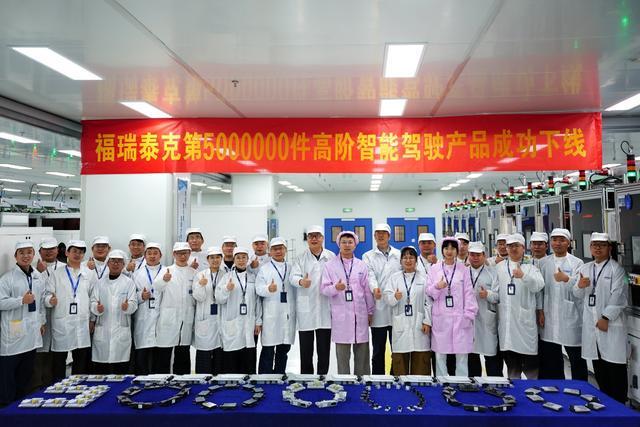
Core Insights - The Chinese intelligent driving industry is transitioning from reliance on imports to domestic production and scaling, marked by the milestone of 5 million high-level intelligent driving products produced by Fureitech [1][3] - Fureitech's rapid growth reflects a significant shift in the market, breaking the international Tier 1 monopoly and achieving commercial viability for domestic intelligent driving solutions [1][3] Technology Breakthroughs - Fureitech's ADC25 product, developed on the ODIN3.0 platform, integrates multiple sensors and achieves L2.9 level driving assistance without relying on high-definition maps, utilizing a mid-computing power platform [3][4] - The dual perception solution combining vision and millimeter-wave radar ensures performance in adverse weather conditions, enhancing safety and facilitating the widespread adoption of intelligent driving features [3][4] Production Efficiency - The company has significantly reduced its production cycle from 1 million to 5 million units through a unique software-hardware integration and platform-based approach, exemplified by the rapid production timeline of the ADC25 controller [4][6] - The highly automated production lines at the Wuzhen manufacturing base enable efficient output, with advanced digital management contributing to rapid capacity expansion and cost optimization [6][4] Industry Positioning - Fureitech has established partnerships with 51 automotive companies, with over 380 projects initiated and more than 290 projects in mass production, positioning itself as a leading domestic supplier in the L2 driving assistance market [7][9] - The company is simultaneously advancing its global strategy, focusing on localized teams and tailored product strategies to meet diverse market needs [9][7] Future Outlook - Fureitech aims to reach a production target of 10 million units and is focused on advancing from L2+ to L3 level intelligent driving technology, leveraging extensive pre-production data for algorithm iteration [9][7] - The company plans to expand its focus beyond intelligent driving to broader mobility and robotics sectors, capitalizing on China's leading position in AI and electrification technologies [9][7]
毫末智行突曝停工,智驾自研走不通,“地大华魔”四巨头要赢麻?
3 6 Ke· 2025-11-24 23:30
Core Insights - The news highlights the operational halt of the autonomous driving company, Haomo Zhixing, effective November 24, with no clear explanation from the leadership, indicating severe internal issues and a lack of communication [1] - Haomo Zhixing's struggles have been attributed to both internal challenges and external pressures, particularly the rapid evolution of technology in the autonomous driving sector [3][5] - The company, which was once seen as a promising player in the industry, has faced significant setbacks, including high-profile executive departures and a failure to keep pace with technological advancements [7][10] Internal Challenges - Haomo Zhixing's technology foundation was based on outdated models, which became a liability as the industry shifted towards new paradigms driven by large models and data-centric approaches [5][8] - The company struggled to adapt to the new technological landscape, facing obstacles in data acquisition, computational power, talent retention, and organizational agility [5][8] - A significant portion of Haomo's orders came from its parent company, Great Wall Motors, and a reduction in these orders led to a critical loss of data necessary for algorithm development [7][10] External Pressures - The competitive landscape has evolved, with rivals like Momenta, Huawei, and Horizon Robotics establishing strong positions through early investments in data ecosystems and technological innovations [5][14] - Great Wall Motors has shifted its strategy, moving away from self-reliance in autonomous driving technology and opting to collaborate with established third-party suppliers [8][11] - The market is rapidly changing, with expectations that by the end of 2025, advanced driver-assistance systems will become standard in vehicles, putting pressure on companies like Haomo to adapt quickly or risk obsolescence [13][19] Industry Trends - The autonomous driving sector is consolidating around a few key players, referred to as "地大华魔" (Horizon, DJI, Huawei, and Momenta), who have demonstrated the ability to deliver scalable and effective solutions [14][19] - Traditional automakers are increasingly recognizing the limitations of in-house development and are turning to partnerships with specialized technology firms to remain competitive [19][20] - The urgency for automakers to establish reliable partnerships and integrate advanced technologies is underscored by the impending market shifts expected by 2026, where failure to adapt could lead to exclusion from the mainstream market [19][20]
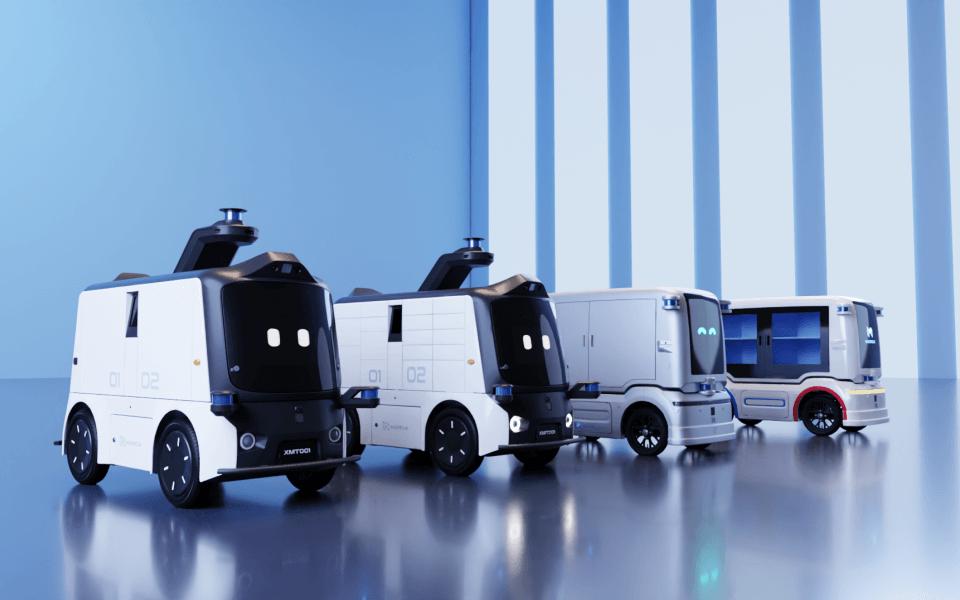
长城控股的独角兽公司,全员停工
3 6 Ke· 2025-11-24 10:58
Core Viewpoint - The sudden announcement of a company-wide holiday by Haomo Zhixing, a subsidiary of Great Wall Motors, indicates severe operational challenges, potentially leading to a complete shutdown or temporary suspension of operations [1][3][5]. Company Overview - Haomo Zhixing, established in 2019, was once valued at 7.8 billion yuan and recognized as a leading player in China's autonomous driving sector [5]. - The company has over 200 employees and was previously backed by significant investments from firms like Meituan and Hillhouse [5]. - The company has faced a series of executive departures, including its CEO and other key positions, which has contributed to its current instability [5]. Operational Challenges - The company has been unable to deliver on its promises regarding the City NOA (Navigation on Autopilot) feature, which has been repeatedly delayed since its initial announcement in 2022 [6]. - The reliance on Qualcomm's Snapdragon Ride platform has posed significant technical challenges, hindering timely product launches [6]. - Competitors like Huawei and Xiaopeng have successfully launched their own advanced driving systems, further intensifying market competition [6][12]. Market Position and Competition - Great Wall Motors has begun to shift resources towards external suppliers like Yuanrong Qixing, marginalizing Haomo Zhixing within its own ecosystem [7][12]. - The introduction of new models with advanced driving features from competitors has led to a significant increase in sales, highlighting Haomo Zhixing's declining market relevance [8][12]. - The global autonomous driving market is projected to reach 446.1 billion yuan by 2025, with China accounting for nearly half of this market [14]. Industry Trends - The autonomous driving industry is experiencing a significant divide, with major players like Huawei and Momenta dominating the market, while smaller companies struggle to survive [15][18]. - Recent events in the industry, such as the bankruptcy of other small players, underscore the intense pressure faced by companies like Haomo Zhixing [17][18].
