
芯片

Search documents
中芯国际测试国产DUV光刻机,A股谁受益?| 0917 张博划重点
Hu Xiu· 2025-09-17 15:26
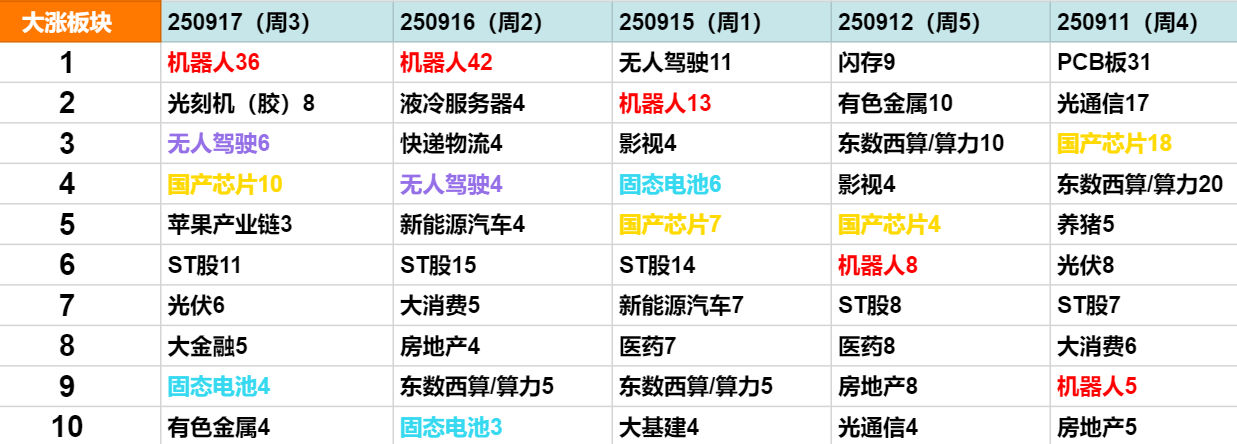
Market Performance - On September 17, the market showed a strong rebound throughout the day, with the three major indices recovering from earlier lows [1] - The total trading volume in the Shanghai and Shenzhen markets reached 2.38 trillion yuan, an increase of 35.3 billion yuan compared to the previous trading day [1] - By the end of the trading session, the Shanghai Composite Index rose by 0.37%, the Shenzhen Component Index increased by 1.16%, and the ChiNext Index gained 1.95% [1] Sector Performance - The robotics sector saw a significant increase, with a rise of 36 units compared to the previous week [2] - The photolithography machine (gel) sector also experienced growth, with an increase of 8 units [2] - The autonomous driving sector showed a rise of 6 units, indicating continued interest and investment in this area [2] - The solid-state battery sector increased by 6 units, reflecting ongoing advancements in battery technology [2] - The photovoltaic sector saw a rise of 6 units, highlighting the growing focus on renewable energy sources [2]


今晚,市场屏息以待,期权升波,明天怎么看?
Sou Hu Cai Jing· 2025-09-17 12:24
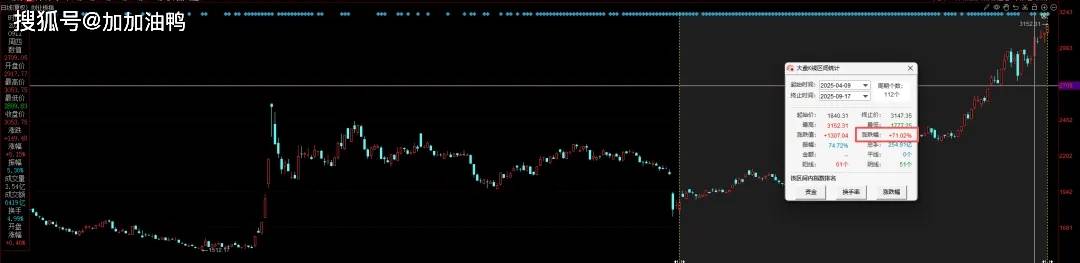
Core Viewpoint - The A-share market is reaching new highs ahead of the Federal Reserve's interest rate decision, with the ChiNext Index showing a significant increase of over 70% since April 7, outperforming global markets [1]. Market Performance - The ChiNext Index continues to hit new highs, driven by strong performances from individual stocks, particularly from "Ning Wang," which saw an intraday increase of 8% with trading volume exceeding 20 billion [3]. - The semiconductor sector is gaining attention, led by SMIC reaching new highs, as news of testing domestic lithography machines ignites investor interest [3]. - The overall market volume remains robust at 2.4 trillion, with a slight increase of 359 billion compared to the previous day, despite some fluctuations during the trading session [3]. Federal Reserve Interest Rate Decision - A 25 basis point rate cut is highly anticipated, while the likelihood of a 50 basis point cut is low. The market is closely watching the dot plot for insights into the Fed's internal stance [5][6]. - The recent appointment of three Fed governors nominated by Trump may influence the voting dynamics within the Fed, making a 50 basis point cut less likely [5]. - The market's reaction to the Fed's decision and Chairman Powell's press conference will be crucial, as he aims to communicate effectively to avoid excessive market volatility [5][6]. Impact on A-shares - The ChiNext Index rose by 2%, with the MACD diff value reaching 152.2, indicating a breakout from previous stagnation levels [12]. - The performance of the Shanghai Composite Index will be critical in determining the sustainability of the current upward trend in the market [12]. - The technology sector remains the focal point of market activity, with strong liquidity supporting a localized bull market as long as trading volume stays above 2 trillion [13].
产业链超预期!拒绝内卷,上岸!9月16日直播回顾
鑫椤锂电· 2025-09-17 07:51
Core Viewpoint - The article emphasizes the robust development momentum of the battery industry chain and the significant potential for growth driven by favorable policies and market demand [3][4][9]. Group 1: Industry Transformation - The "anti-involution" policy has led to profound changes in multiple key industrial sectors, including new energy vehicles, photovoltaics, and steel [3]. - Despite self-regulatory proposals from industry associations, achieving capacity elimination requires top-level design and continuous policy implementation [3]. Group 2: Market Opportunities - The new energy vehicle and energy storage markets are experiencing unprecedented growth opportunities due to supportive policies [4]. - The "Automobile Industry Stabilization Growth Work Plan (2025-2026)" aims for new energy vehicle sales to reach 15.5 million units in 2025, a year-on-year increase of approximately 20% [4]. Group 3: Market Data - From January to August 2025, the cumulative production of passenger vehicles exceeded 8.85 million units, a year-on-year increase of 33.5% [5]. - The penetration rate of new energy vehicles surged from 5.4% in 2020 to 55.3% in August 2025 [5]. Group 4: Global Battery Market - The global battery market is showing strong growth, with August 2025 battery production reaching 198.42 GWh, of which lithium iron phosphate accounted for 72.34% [7]. - The global lithium battery production from January to August 2025 increased by 48.86% year-on-year, with an estimated annual growth of 39% [7]. Group 5: Key Materials - Production of key materials in the battery industry, such as cathode materials, anode materials, electrolytes, and separators, has significantly increased [8]. - The production of lithium iron phosphate and iron phosphate has seen notable year-on-year growth, indicating strong market demand for cost-effective battery materials [8]. Group 6: Future Technologies - Solid-state batteries are gaining attention as the core technology for the next generation of batteries, supported by significant policy backing [9]. - The Ministry of Industry and Information Technology has highlighted solid-state batteries alongside artificial intelligence and chips in its growth action plan, underscoring their importance in China's new energy strategy [9].
阿里市值重回3万亿,马云再度现身
Di Yi Cai Jing· 2025-09-17 03:32
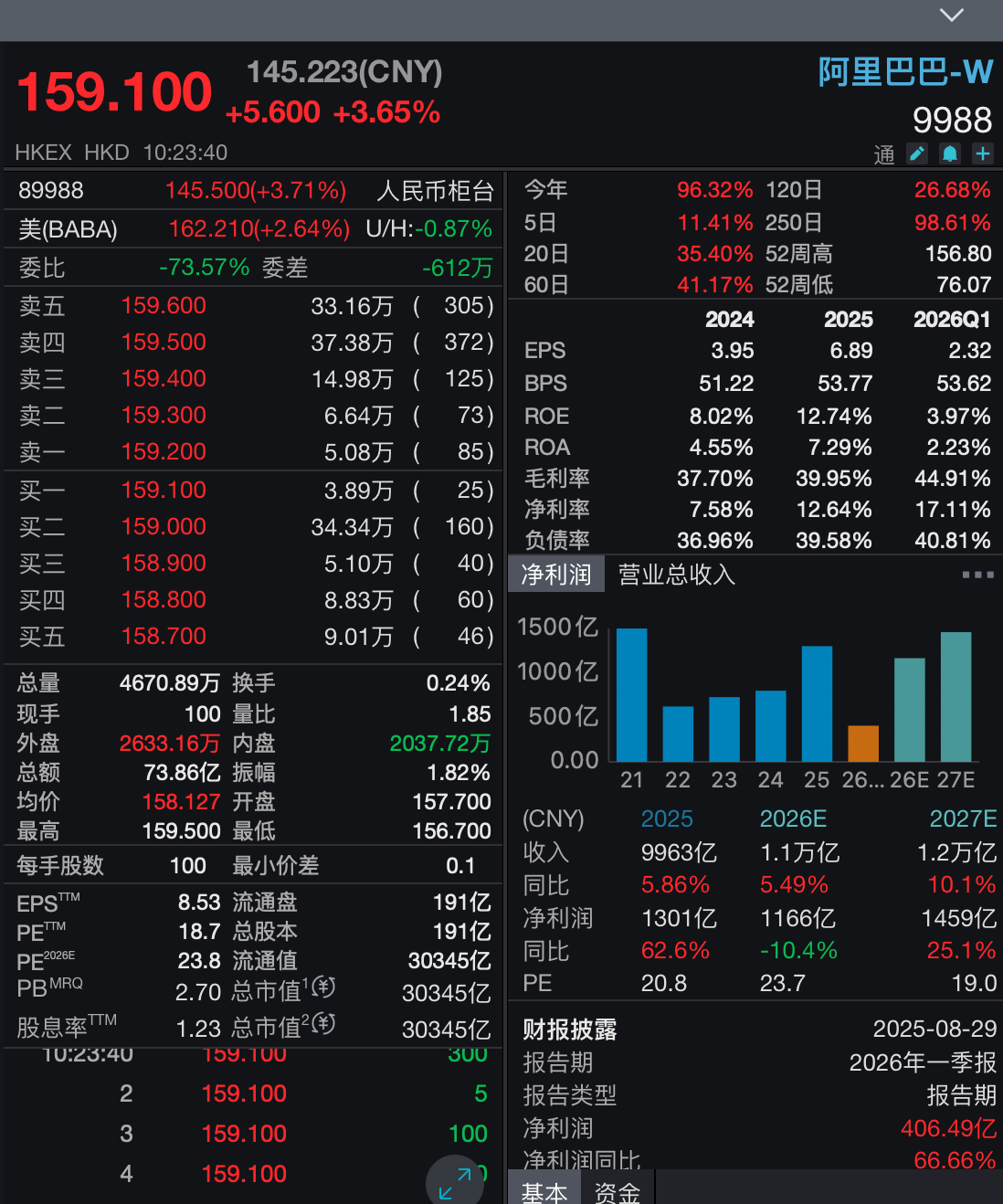
Core Viewpoint - Alibaba is emphasizing a "re-entrepreneurship" approach following the return of founder Jack Ma, which has positively impacted its stock performance and market valuation [1][4]. Stock Performance - As of September 17, Alibaba's Hong Kong stock opened with a 3.84% increase, bringing its market capitalization back above 3 trillion CNY [1]. - Over the past 250 days, Alibaba's stock has risen by 98.99%, reaching a three-year high [1]. Strategic Developments - The return of Jack Ma has coincided with significant restructuring within Alibaba, including the integration of various business units such as Ele.me and Fliggy into the Alibaba e-commerce group [4]. - Alibaba has committed to investing 380 billion CNY over three years in AI and cloud infrastructure, which exceeds the total investment of the past decade [4]. Business Focus - Jack Ma has shown increased interest in specific business areas, including AI, during his recent public appearances, indicating a shift towards innovation and strategic direction [3][4]. - Alibaba is focusing on its AI strategy and has launched the next-generation open-source Qwen3-Next model, which emphasizes high training and inference cost-effectiveness [4]. Market Sentiment - The market is optimistic about Alibaba's "second growth curve," driven by advancements in AI, chips, and other high-tech areas [4]. - There are rumors about Alibaba developing an AI chip, which would be produced by a domestic company rather than TSMC, although the company has not confirmed this [4].

“超量”减持8.84亿元,被特斯拉带飞的拓普集团炸板了!
2 1 Shi Ji Jing Ji Bao Dao· 2025-09-16 22:29
励精图治的A股老板也会"高位"减持——近日,A股知名"特斯拉产业链"龙头企业拓普集团 (601689.SH)便上演了这一夸张戏码。 公开资料显示,8月29日至9月10日期间,拓普集团董事长邬建树,其子、副董事长邬好年以及父子的一 致行动人宁波筑悦投资管理有限公司(以下简称"筑悦投资")、宁波派舍置业有限公司(以下简称"派 舍置业")公告以集中竞价交易方式减持了拓普集团股票。 据统计,在数个交易日期间,以上主体合计减持拓普集团股票1343万股,约占上市总股本比例的 0.7728%,合计套现约8.84亿元人民币。 值得注意的是,作为拓普集团实控人邬建树、邬好年此轮减持早在6月16日已然进行预披露——但是两 方法人主体的减持,却出乎了市场的意料。 与此同时,包括此轮减持的时机,甚至实控人减持的动机,都让这轮原属正常的操作,招来了不小的非 议。 9月15日,拓普集团股价盘中一度触及涨停板,但涨停板没能守住,全天涨幅仅剩下6.75%。这一炸板 走势也让投资者自然不自然地联想到拓普集团邬氏父子及其一致行动人高位减持对后市的不利影响。不 过,9月16日,禾赛股份继续大涨7.67%,收盘报77.18元/股。 "超披露"的减持 ...

17家车企回应落实中汽协倡议;英伟达被进一步调查|南财早新闻
2 1 Shi Ji Jing Ji Bao Dao· 2025-09-15 23:48
Group 1 - The core point of the article discusses the recent economic talks between China and the US, highlighting a framework consensus on issues like TikTok, investment barriers, and economic cooperation [2] - The China Automobile Industry Association released a payment guideline for automotive suppliers, aiming to create a win-win ecosystem and ensuring payment terms do not exceed 60 days [2] - The State Administration of Foreign Exchange in China has deepened reforms in cross-border investment and financing, removing restrictions on foreign investment enterprises for reinvestment and capital project income usage [2] Group 2 - China's economic data for August shows a year-on-year industrial value-added growth of 5.2% and a retail sales growth of 3.4% [3] - The 2025 list of China's top 500 enterprises reveals total revenue of 110.15 trillion yuan, with manufacturing and service sectors contributing 40.48% and 40.29% respectively [3] - The National Railway's transportation plan for the upcoming holiday period anticipates 219 million passenger trips, with October 1 expected to be the peak travel day [3] Group 3 - The A-share market showed mixed performance with the Shanghai Composite Index down 0.26% while the Shenzhen Component Index rose 0.63% [4] - The Hong Kong Hang Seng Index closed up 0.22%, with significant inflows from southbound funds, particularly into Alibaba [4] - Over 8,000 new private equity securities investment funds have been registered this year, with stock strategies dominating the market [4] Group 4 - Nvidia is under investigation by China's market regulator for potential violations of antitrust laws related to its acquisition of Mellanox Technologies [5] - The controversy surrounding the pre-made dishes of the restaurant chain Xibei continues, with the company announcing adjustments to its processing methods [5] - Xiaomi is set to launch its new Xiaomi 17 series, skipping the 16 series, with a focus on competing directly with the iPhone [5] Group 5 - A subsidiary of Junsheng Electronics has secured a global automotive intelligence project worth approximately 150 billion yuan, with production planned to start in 2027 [6] - Shanghai Construction Group has reported an increase in gold reserves at its subsidiary's Koka mine, valued at approximately 4.27 billion yuan [6] - The US stock market saw all three major indices rise, with the S&P 500 and Nasdaq reaching new historical highs [6] Group 6 - The Trump administration announced a reduction in import tariffs on Japanese automobiles to 15%, effective from September 16 [6]



宁波汽配大佬,高位套现8.8亿!接班人是00后
2 1 Shi Ji Jing Ji Bao Dao· 2025-09-15 15:32
Core Viewpoint - Tesla's influence has significantly impacted the A-share market, particularly benefiting Top Group, which saw its stock price rise before the major shareholders executed a high-level cash-out totaling 880 million yuan [2][4][11]. Group 1: Stock Performance and Market Reaction - On September 15, Top Group's stock price reached 71.68 yuan, with a market capitalization exceeding 120 billion yuan [4]. - The stock experienced a peak increase of 6.75% during trading, although it could not maintain a limit-up [2][4]. - Following the announcement of the major shareholders' cash-out, the stock's performance raised concerns among investors about potential negative impacts on future market trends [2][11]. Group 2: Shareholder Actions and Market Implications - From August 29 to September 10, Top Group's chairman and his son, along with associated entities, reduced their holdings by 13.43 million shares, representing approximately 0.7728% of the total shares, resulting in a cash-out of about 884 million yuan [4][6]. - The reduction in holdings was unexpected, as the initial disclosure indicated a much smaller planned reduction of around 0.2% [6][11]. - The timing and scale of the cash-out have drawn criticism from the market, especially as it coincided with a peak in stock price [11][12]. Group 3: Financial Performance and Future Outlook - Top Group's financial results for the first half of 2025 showed a revenue of 12.935 billion yuan, reflecting a growth rate of only 5.83%, with a net profit decline of 13.84% year-on-year [12][13]. - This marked the first decline in half-year performance in six years, contrasting with previous years of consistent growth [13]. - The company attributed the slowdown to increased R&D expenses and the impact of price reductions in the automotive sector [12][13]. Group 4: Strategic Moves and Future Plans - The cash-out by the controlling shareholders was officially stated to be for "personal funding needs," but there are indications it may also support external investments, including a new chip company aimed at enhancing Top Group's robotics business [15][16]. - The next generation, represented by the chairman's son, is actively involved in the company's strategic direction, including overseeing new ventures in robotics and renewable energy [16][18].
宁波汽配大佬,高位套现8.8亿!接班人是00后
21世纪经济报道· 2025-09-15 15:11
Core Viewpoint - The article discusses the significant stock reduction by the controlling shareholders of Top Group, which has raised concerns among investors regarding the potential negative impact on the company's future performance [5][10]. Group 1: Stock Performance and Reduction - On September 15, Top Group's stock price reached 71.68 yuan, with a market capitalization exceeding 120 billion yuan [4]. - From August 29 to September 10, the controlling shareholders, including Chairman Wu Jian Shu and his son, reduced their holdings by 13.43 million shares, accounting for approximately 0.7728% of the total shares, resulting in a cash-out of about 884 million yuan [5][6]. - The initial disclosure on June 16 indicated a much smaller planned reduction of only 0.2%, leading to market surprise when the actual reduction exceeded expectations [7][11]. Group 2: Financial Performance - For the first half of 2025, Top Group reported revenue of 12.935 billion yuan, reflecting a growth rate of only 5.83%, while net profit decreased by 13.84% year-on-year [11][12]. - The company's performance decline is attributed to increased R&D expenses and the impact of vehicle price reductions on the supply chain, marking the first decline in revenue and profit in six years [12]. Group 3: Future Plans and Investments - The official reason for the share reduction was stated as "personal funding needs," but it is speculated that the funds may be used for external investments or liquidity for other ventures [14]. - Wu Jian Shu has indicated plans to establish a chip company through his son, aiming to supply components for humanoid robots, which suggests a strategic shift towards new business areas [14][16].

创业板指突破3100点
Jin Rong Shi Bao· 2025-09-15 09:50
Market Overview - A-shares experienced a mixed performance on September 15, with the Shanghai Composite Index closing at 3860.50 points, down 0.26%, while the Shenzhen Component Index rose 0.63% to 13005.77 points, and the ChiNext Index increased by 1.51% to 3066.18 points [1] - The Shanghai Composite Index reached a nearly ten-year high of 3892.74 points on September 12, and the ChiNext Index surpassed 3000 points on September 11, hitting a peak of 3106.88 points on September 15, marking a three-and-a-half-year high [1] Sector Performance - The technology sector, particularly in AI, domestic computing power, chips, photovoltaic storage, and innovative pharmaceuticals, has become a focal point for institutional discussions [1] - The ChiNext Index has seen a 50% increase over the past three months, significantly outperforming other A-share indices [2] - The growth in the ChiNext Index is attributed to favorable policies and funding conditions for technology innovation and new productivity-related sectors [2] Investment Trends - Analysts suggest that the current market favors growth sectors over value sectors, with a preference for small and mid-cap stocks due to liquidity easing [2] - The AI industry is experiencing robust growth driven by domestic substitution policies, continuous technological iteration, and diverse downstream demand [2][3] Battery and Energy Storage Sector - Battery and energy storage stocks have surged, with companies like CATL seeing significant stock price increases, reaching a high of 371.52 yuan, up over 14% [4] - The energy storage industry is in a rapid growth phase, supported by new policies aiming for a storage capacity of 180 million kilowatts by 2027, with an expected direct investment of approximately 250 billion yuan [4][5] - The global demand for energy storage has exploded, with a 97% year-on-year increase in global energy storage cell shipments in the first half of 2025, predominantly from Chinese companies [5] Future Market Outlook - Despite recent highs in A-share indices, there are concerns about declining trading volumes, with daily turnover dropping from 3.2 trillion yuan to 2 trillion yuan [6] - Recent trends indicate a net inflow of over 50 billion yuan into the A-share market, with strong interest from retail investors through various funds [6] - Analysts predict that A-shares are likely to continue a trend of oscillating upward, but short-term volatility risks should be monitored [6]


ETF收评 | A股冲高回落,游戏板块全天强势,游戏ETF、游戏ETF华泰柏瑞涨4%
Ge Long Hui· 2025-09-15 08:30
Market Overview - The three major A-share indices showed mixed results, with the Shanghai Composite Index down 0.26%, the Shenzhen Component Index up 0.63%, and the ChiNext Index up 1.52% [1] - The total trading volume in the Shanghai, Shenzhen, and Beijing markets was 23,031 billion yuan, a decrease of 2,452 billion yuan compared to the previous day [1] - Over 3,300 stocks in the market experienced declines [1] Sector Performance - The gaming, pork, film and television, automotive parts, and CRO sectors saw the largest gains [1] - The semiconductor and new energy industry chains experienced a pullback, while precious metals, satellite internet, and copper cable high-speed connection sectors faced the largest declines [1] ETF Highlights - The AI application sector performed strongly, with gaming ETFs leading the gains: Huaxia Fund's gaming ETF rose by 4.38%, Huatai-PB's gaming ETF increased by 4.02%, and Guotai Junan's gaming ETF went up by 3.88% [1] - The film and television sector saw afternoon gains, with Yinhua Fund's film ETF rising by 3.09% and Guotai Fund's film ETF increasing by 2.85% [1] - The new energy sector experienced a pullback, with ICBC Credit Suisse's lithium battery ETF rising by 2.92% and Invesco Great Wall's battery 30 ETF increasing by 2.82% [1] Declines in Specific Sectors - The AI hardware sector faced a correction, with communication ETFs, 5G50 ETF, and communication equipment ETF declining by 1.75%, 1.72%, and 1.68% respectively [1] - The telecommunications sector weakened, with telecom ETFs and telecom 50 ETF both down by 1.5% [1] - Hong Kong financial stocks were in the red, with non-bank ETFs and Hong Kong securities ETF both declining by 1.3% [1]