反垄断

Search documents
苹果首次调整内地“苹果税”抽成,微信随即跟进:欢迎共建繁荣生态
Feng Huang Wang· 2025-11-14 07:41
Core Viewpoint - Apple's "App Store Mini App Partner Program" introduces a 15% revenue share reduction for developers selling eligible in-app purchases, marking a significant shift in its revenue-sharing policy in the Chinese market [1][2]. Group 1: Policy Changes - The new program is seen as Apple's first proactive adjustment to its revenue sharing in the Chinese market, although it does not fundamentally change the commission rates for other applications outside of mini programs [1]. - Developers must meet specific technical requirements, including support for Declared Age Range API and Advanced Commerce API, to qualify for the reduced commission [1]. Group 2: Market Implications - The adjustment in commission rates may encourage more paid applications to transition to mini program platforms, enhancing their market power and bargaining capabilities [2]. - There is a trend towards users favoring a few high-frequency "commercial complex" apps, which may solidify the gatekeeping role of platform companies and strengthen their market dominance [2]. Group 3: Industry Reactions - WeChat announced support for virtual payments in mini programs on iOS, expressing a positive outlook on Apple's initiative and indicating a collaborative effort to build a healthy ecosystem [2]. - Recent reports suggest that Apple and Tencent have reached an agreement on a 15% commission for in-game purchases, highlighting ongoing cooperation between the two companies [2]. Group 4: Background Context - The "Apple Tax" has faced criticism for its perceived abuse of market dominance, particularly in China, where the commission rates are higher than in other major markets [3]. - Apple's previous claims indicated that the ecosystem has significantly benefited Chinese developers, with their revenues nearly doubling since 2018, although this has not alleviated concerns regarding the commission structure [3].


马斯克先下一城 美法官拒绝苹果和OpenAI要求、不会驳回X的诉讼
Feng Huang Wang· 2025-11-14 00:00
凤凰网科技讯 北京时间11月14日,据路透社报道,当地时间周四,苹果公司和OpenAI未能说服美国联 邦法官驳回埃隆·马斯克(Elon Musk)旗下X公司提起的诉讼。该诉讼指控这两家公司共谋垄断智能手机 和生成式AI聊天机器人市场。 苹果在申请驳回诉讼时表示,其与OpenAI的合作并非排他性协议,且诉状未能证明存在禁止苹果与其 他聊天机器人合作的协议。"优先选择一家合作伙伴并不构成违法。"苹果对法庭表示。 苹果否认存在任何反竞争行为,并告知法庭用户仍可通过浏览器和应用程序使用其他聊天机器人,而且 X的聊天机器人Grok在App Store排行榜中位居前列。 OpenAI则在回应诉讼时指控马斯克对OpenAI和ChatGPT发起了"法律战"。马斯克则在加州联邦法院对 OpenAI及其领导人另行提起诉讼。OpenAI的ChatGPT在2022年底推出后的几个月里,成为史上增长最 快的消费类应用。 截至发稿,苹果、OpenAI以及X均尚未就此置评。(作者/箫雨) 美国得州沃斯堡地方法官马克·皮特曼(Mark Pittman)在裁决中表示,马斯克旗下X及其AI创业公司xAI目 前可以继续推进诉讼。在这场关于AI主导 ...
美股资深评论员:通胀或接近顶点 宝洁(PG.US)、金佰利(KMB.US)等包装消费品类股迎来买入良机
智通财经网· 2025-11-12 03:47
Group 1 - Recent underperformance in the packaged consumer goods sector presents investment opportunities, with Procter & Gamble (PG.US) and Kimberly-Clark (KMB.US) identified as undervalued quality companies [1] - Wall Street's pessimism towards the packaged consumer goods industry is attributed to high inflation and insufficient growth, but inflation may be nearing its peak, potentially lowering costs for consumer giants [1] - The Trump administration's lenient antitrust enforcement may facilitate mergers, allowing companies to gain market dominance [1] Group 2 - Clorox (CLX.US) is highlighted as one of the worst performers in the S&P 500, with its cleaning products and brands like Burt's Bees, Hidden Valley, and Brita being favored [2] - General Mills (GIS.US) is suggested for risk-tolerant investors, contingent on a potential acquisition, as weight-loss drugs are impacting food stocks [2] - A shift in focus from traditional consumer goods to the pharmaceutical sector is recommended, with Johnson & Johnson (JNJ.US) and Amgen (AMGN.US) seen as promising due to anticipated large-scale mergers [2]


弃车保帅:上诉最高院一周后戏剧性和解,Epic与谷歌的五年反垄断战火骤熄
3 6 Ke· 2025-11-11 10:22
Core Viewpoint - Epic Games and Google have reached a "comprehensive settlement" that may conclude a five-year legal battle regarding Google's Play Store, following a recent Supreme Court filing by Google seeking review of an antitrust ruling against it [1][2]. Group 1: Legal Context - Google submitted a petition to the Supreme Court questioning the applicability of the "rule of reason" in antitrust cases, specifically whether plaintiffs must prove the existence of "less restrictive alternatives" to demonstrate anticompetitive harm [2][3]. - The Ninth Circuit Court allowed a jury to balance interests without the plaintiff fulfilling their burden of proof, which Google argues contradicts established legal standards [3][4]. Group 2: Settlement Analysis - The settlement terms remain confidential but suggest that Epic achieved some significant victories while Google’s concessions may reinforce its core advantages [6][10]. - Google agreed to lower its service fees for in-app purchases, with rates set at 20% for those providing "greater than minimal game advantages" and 9% otherwise, but the complexity of these terms may allow Google to maintain its billing system's attractiveness [6][7]. - The agreement includes modifications to the Android system to simplify the sideloading process, yet Google retains control over the registration of third-party app stores, maintaining its influence over the ecosystem [8][9]. Group 3: Implications for the Industry - The settlement could significantly impact Epic's ongoing litigation against Apple, allowing it to focus resources on that case after resolving its issues with Google [11][12]. - The changes in Google's app store policies may weaken Apple's competitive arguments regarding its own app store, as the market signal suggests that even Google prefers commercial concessions over legal battles [12][13]. - Overall, the settlement represents a commercial compromise rather than a fundamental shift in the system, with terms seemingly tailored for large developers like Epic while potentially consolidating Google's control over the app distribution process [12][13].

特朗普又盯上了美国肉价,“铁拳”挥向四巨头
Hua Er Jie Jian Wen· 2025-11-08 02:18
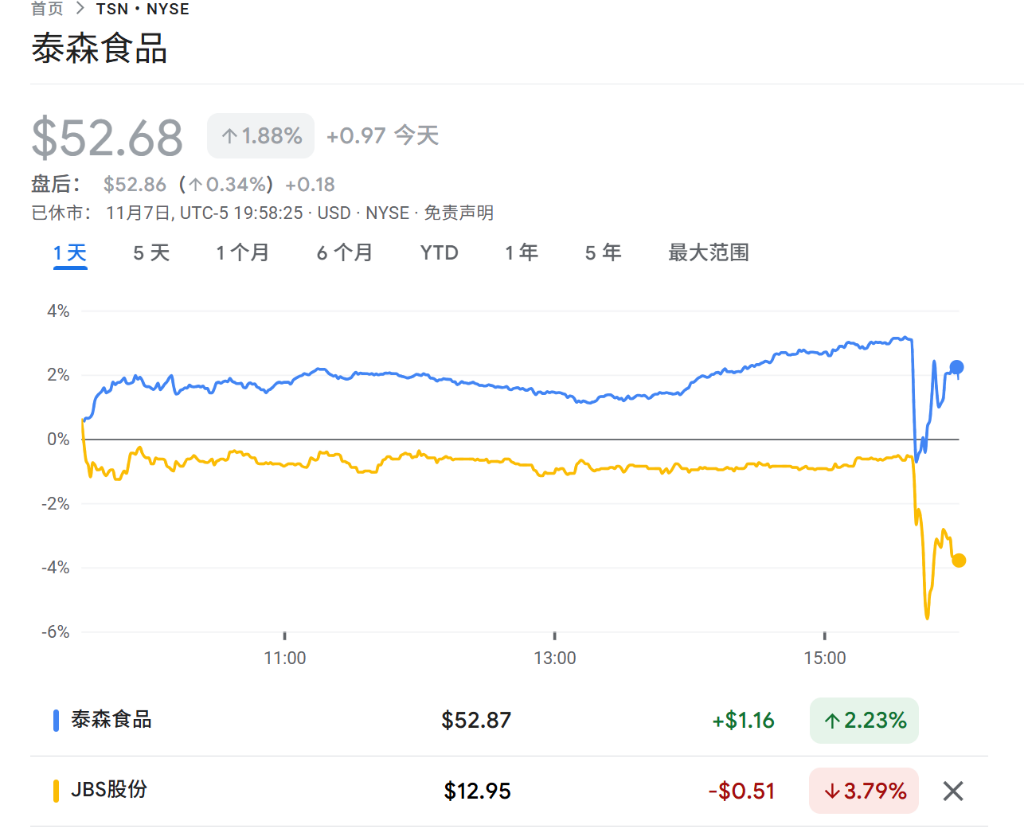
Core Viewpoint - The Trump administration has initiated an investigation into major meat processors in the U.S. for allegedly colluding to manipulate prices, impacting ranchers and consumers amid rising political pressure and concerns over living costs [1][3][4]. Group 1: Investigation Details - The investigation targets four major companies: JBS, Cargill, Tyson Foods, and National Beef, which collectively control 85% of the U.S. beef processing market [4]. - The White House aims to eliminate any illegal collusion, restore fair competition, and protect food safety through this investigation [4]. - Trump emphasized the need for immediate action to protect consumers and combat illegal monopolies that harm American interests [4]. Group 2: Market Reaction - Following the announcement, stock prices for Tyson Foods and JBS experienced significant volatility, with Tyson's stock eventually rising by 1.9% while JBS closed down by 3.6% [1][6]. - The market's reaction reflects investor concerns over potential fines, lawsuits, and adjustments to business models due to the antitrust investigation [6]. Group 3: Political Context - The investigation is part of the Trump administration's broader strategy to address inflation and living costs, which have become critical political issues [3][5]. - Recent elections highlighted voters' concerns about affordability, prompting the administration to take proactive measures to demonstrate its commitment to addressing these issues [5][6]. - The administration has also considered increasing beef imports from Argentina and has pressured the Federal Reserve to lower interest rates to alleviate mortgage burdens [6].


Epic Games CEO称赞谷歌和解方案“非常棒” 并借此抨击苹果封闭生态
Sou Hu Cai Jing· 2025-11-05 08:57
Core Points - Google and Epic Games have submitted proposals aimed at providing developers with greater choice and flexibility, reducing fees, and encouraging competition while ensuring user safety [1] - If approved, this proposal could mark the end of a significant antitrust case in the industry [1] Group 1: Proposals and Changes - The proposals include simplifying the app store installation process globally, reducing service fees for the Play Store, and supporting third-party in-app and web payment options [1] - Epic Games CEO Tim Sweeney praised Google's proposals as "great" and "comprehensive," reinforcing the original vision of Android as an open platform [1] Group 2: Industry Context - Sweeney criticized Apple, highlighting the contrast between Google's proposed changes and Apple's more closed ecosystem [1] - The hearing for the proposals is scheduled for Thursday, indicating a potential resolution to ongoing legal disputes [1]

谷歌与Epic达成拟议和解:五年反垄断大战或将落幕
Feng Huang Wang· 2025-11-05 06:51
Core Points - Google and Epic Games have submitted a proposed settlement to the U.S. court, which could significantly impact the Android ecosystem and the operation of the Google Play Store [1][2] - The proposal aims to expand developer choices, reduce service fees, promote competition, and maintain platform security [1] - Epic's CEO Tim Sweeney praised the proposal as a "comprehensive and meaningful resolution" that could help return Android to its open platform roots [1][2] Summary by Sections - **Settlement Proposal** - Google and Epic Games have jointly submitted a reform proposal for Android and Google Play, pending court approval [1] - The proposal includes allowing third-party app stores to be installed more easily globally and supporting developers to use their own payment systems [1][2] - **Background of the Lawsuit** - The lawsuit began in 2020 when Epic's game Fortnite was removed from the Android platform for using an independent payment system, bypassing Google's fees [2] - Epic accused Google of abusing its market dominance [2] - **Implications of the Settlement** - If approved, the settlement could mark the end of one of the most significant antitrust battles in mobile app distribution and reshape the commercial rules of the global Android ecosystem [2]
24小时环球政经要闻全览 | 11月4日
Ge Long Hui· 2025-11-04 00:35
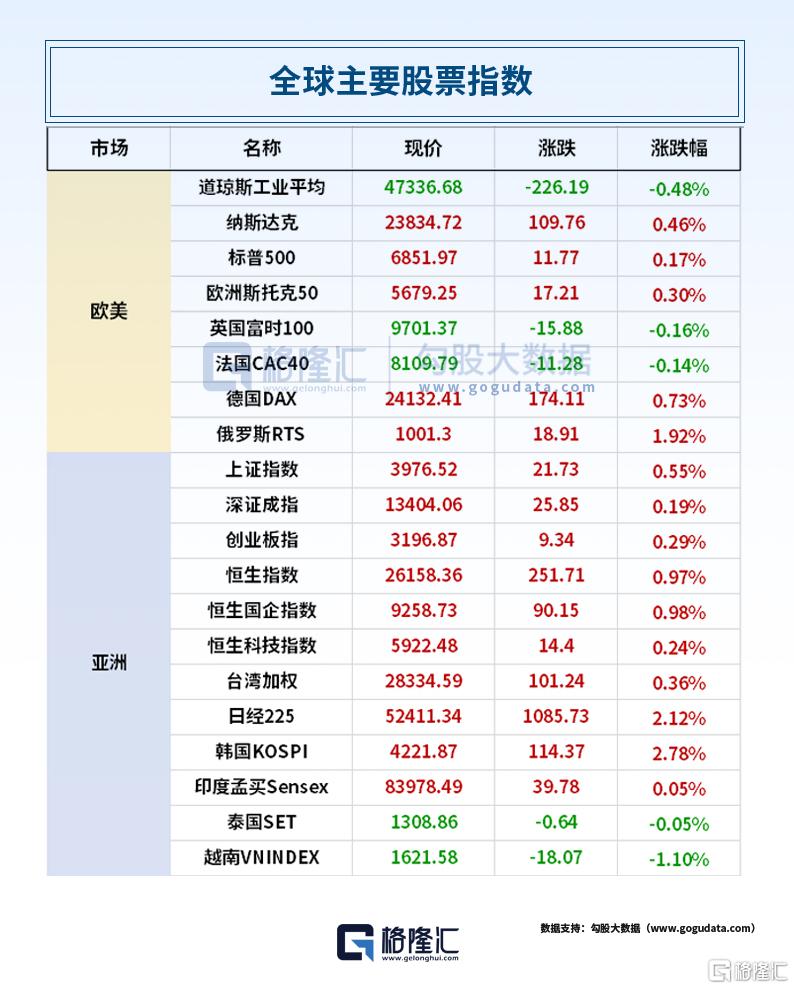
Market Overview - Major global stock indices showed mixed performance, with the Dow Jones Industrial Average down by 226.19 points (-0.48%) at 47,336.68, while the Nasdaq rose by 109.76 points (0.46%) to 23,834.72 [1] - The S&P 500 increased by 11.77 points (0.17%) to 6,851.97, and the European Stoxx 50 gained 17.21 points (0.30%) to 5,679.25 [1] - Asian markets also displayed positive trends, with the Nikkei 225 up by 1,085.73 points (2.12%) at 52,411.34 and the Hang Seng Index rising by 251.71 points (0.97%) to 26,158.36 [1] Federal Reserve Policy Statements - Federal Reserve officials expressed differing views on monetary policy, with Milan advocating for a 50 basis point rate cut, citing that current neutral rates are significantly lower than present levels and warning of increased economic risks due to prolonged tightening [2] - Cook indicated that a rate cut could be possible in December, emphasizing that employment risks outweigh inflation concerns as the labor market shows signs of cooling [2] U.S.-China Trade Relations - U.S. Treasury Secretary stated that additional tariffs on China may be considered if China continues to block rare earth exports, while China’s Foreign Ministry emphasized dialogue and cooperation as the solution to trade issues [3] - The U.S. Treasury Department projected a borrowing estimate of $569 billion for Q4, a decrease of $21 billion from previous estimates, primarily due to higher-than-expected cash balances [3] Corporate Developments - Amazon Web Services (AWS) signed a $38 billion computing power agreement with OpenAI, which will utilize NVIDIA GPU resources for a seven-year period [4] - Alphabet plans to raise approximately $15 billion through a dollar bond issuance, with proceeds aimed at general corporate purposes, including debt repayment [4] - Microsoft announced a $15.2 billion investment in the UAE, focusing on expanding data centers and cloud facilities in collaboration with local AI firms [5] - Pfizer filed an antitrust lawsuit against Novo Nordisk to block its $9 billion acquisition, alleging that the deal would stifle competition in the weight loss drug market [6] - Australian company Iren signed a $9.7 billion GPU cloud service contract with Microsoft, becoming its largest customer [7] - Starbucks reached an agreement with Boyu Capital to form a joint venture, with Starbucks retaining 40% equity in its China operations, which are valued at over $13 billion [8]




大国五年丨中国市场,铸就公平竞争大舞台
Sou Hu Cai Jing· 2025-11-03 07:40
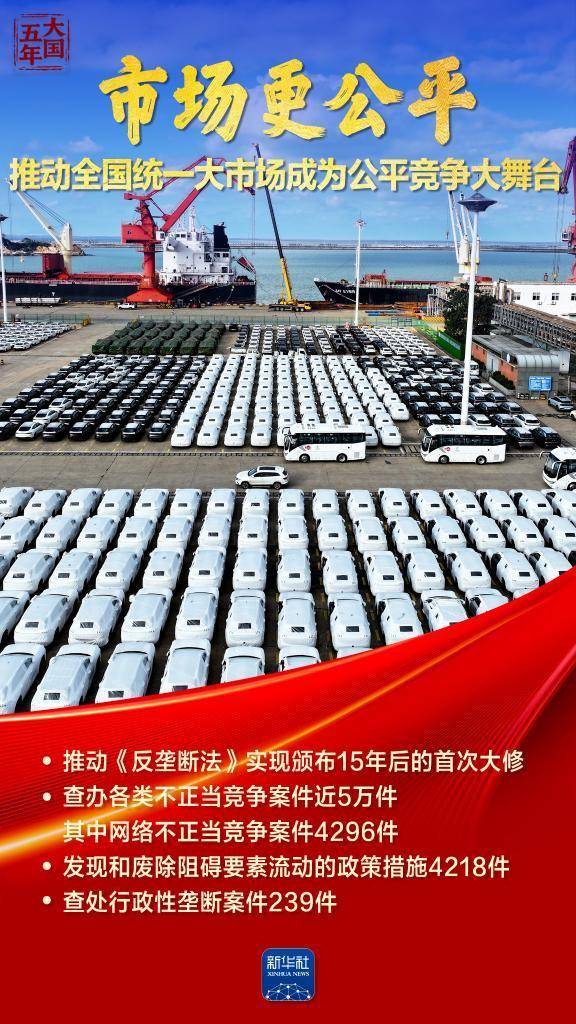
Core Viewpoint - The article emphasizes the transformation of China's market system, highlighting the establishment of a unified national market that enhances efficiency, openness, and innovation, ultimately benefiting consumers and businesses alike [1]. Group 1: Market Reforms - The revision of the Anti-Monopoly Law marks the first major update in 15 years, with nearly 50,000 cases of unfair competition investigated, including 4,296 cases related to online competition [2]. - A total of 4,218 policies that hinder the flow of production factors have been identified and abolished [2]. - Administrative monopoly cases have been addressed, with 239 cases reported [3]. Group 2: Business Environment - The revision of the Company Law allows for an extended capital contribution period of up to 5 years [5]. - The "one certificate, one license" separation reform has been fully implemented, enabling a streamlined online business registration process [5]. - The electronic business license has been downloaded 370 million times, with over 600 million uses recorded [5]. - The net increase in registered enterprises reached 19.999 million, while individual businesses saw a net increase of 33.946 million [5]. Group 3: Standards and Compliance - Over 13,000 national standards have been newly released, bringing the total to over 47,000, with the average development cycle reduced from 36 months to 16 months [7]. - More than 2,400 national standards in key areas such as artificial intelligence and smart manufacturing have been published [7]. - 15 product categories, including lithium batteries for electric bicycles, have been included in CCC certification management [9]. Group 4: Consumer Protection - A total of 454.1 million illegal product listings were removed from platforms, and 58,000 online stores were ordered to cease operations [11]. - Significant cases in the live-streaming e-commerce sector have been addressed, including major cases like "Three Sheep" and "Northeast Rain Sister" [11]. - Food safety cases numbered 2.2604 million, with high compliance rates for grain, meat, and dairy products maintained over the years [13]. - The drug inspection pass rate remains stable at over 99.4%, with over 200 innovative drugs and 265 innovative medical devices approved [15].
亚马逊和谷歌的广告战争,开始打到云上了
3 6 Ke· 2025-10-31 12:32
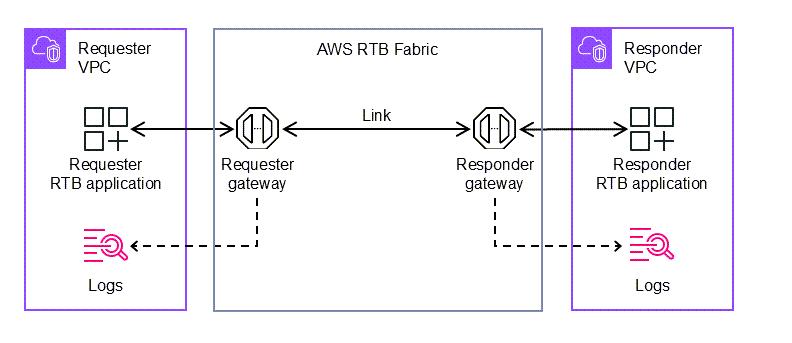
Core Viewpoint - Amazon's Q3 earnings report reveals that its cloud computing division, AWS, has achieved its fastest revenue growth in nearly three years, leading to higher sales expectations for the next quarter, resulting in a 14% increase in stock price after hours [1] Group 1: AWS and RTB Fabric - AWS launched a new service called RTB Fabric aimed at real-time bidding (RTB) advertising, designed to alleviate performance bottlenecks commonly faced by ad tech companies [1][2] - RTB Fabric offers low-latency cloud services for ad tech companies, allowing them to connect without complex point-to-point setups, thus enhancing ad request transmission and bidding efficiency [3][5] - The service promises single-digit millisecond latency and up to 80% network cost optimization, integrating resources from partners like Amazon Ads and others [3] Group 2: Competitive Landscape - The advertising competition can be viewed in two layers: the visible platform competition and the underlying cloud infrastructure competition [6][7] - Google dominates the RTB protocol landscape, making it challenging for competitors to establish alternative pathways without incurring significant costs [10][12] - AWS's RTB Fabric provides a viable alternative for ad tech companies looking to avoid Google's ecosystem, potentially reducing Google's control over the advertising system [13][14] Group 3: Market Dynamics - AWS holds a 30% market share in the global cloud infrastructure services sector, while Google has 13%, indicating AWS's strong position [14] - The advertising technology sector has historically been a significant customer for AWS, but recent years have seen a shift as Google Cloud Platform (GCP) gains traction with aggressive pricing strategies [17][18] - The introduction of RTB Fabric is seen as a countermeasure to Google's increasing influence in the advertising technology space [18][19] Group 4: Industry Implications - The launch of RTB Fabric signifies a shift in the advertising ecosystem, where control over cloud services is becoming as crucial as control over advertising platforms [38] - The success of RTB Fabric hinges on whether ad tech companies are willing to trust AWS with their bidding requests, raising concerns about potential conflicts of interest given Amazon's dual role as a cloud provider and an advertiser [40][42] - The outcome of this initiative could reshape the advertising landscape, depending on industry willingness to adopt a new infrastructure [44][45]