算力

Search documents
基金2025年四季报揭秘,“翻倍基”风格趋于谨慎,“易中天”遭集中减持
Xin Lang Cai Jing· 2026-01-22 08:11
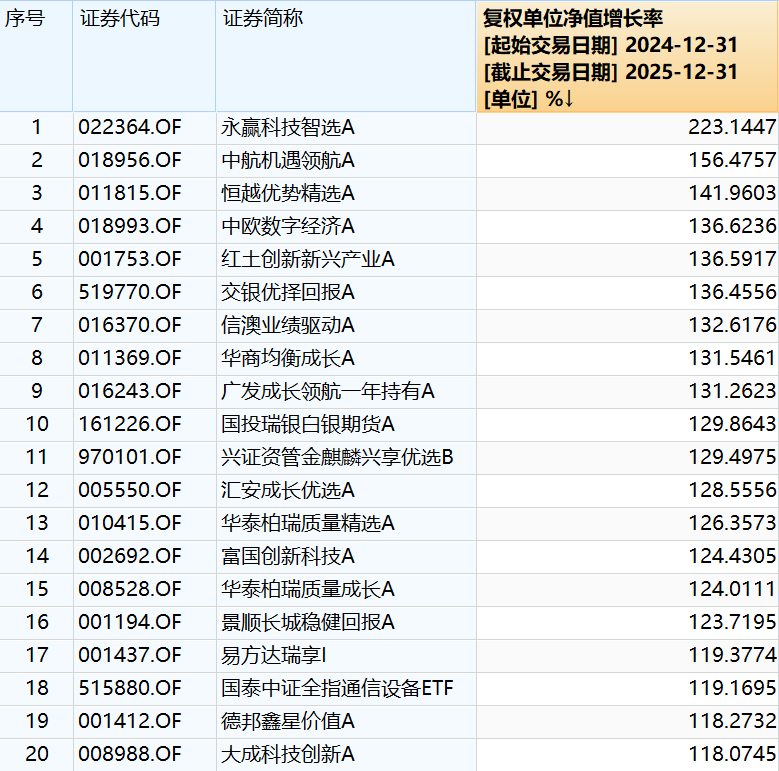
Core Insights - The report highlights a significant expansion in the scale and positioning of equity funds as the 2025 quarterly reports are disclosed, with over 3,300 funds having completed their disclosures by January 21 [1] - More than 40% of actively managed equity funds reported positive returns for the quarter, outperforming benchmarks, driven by a structural market rally influenced by debt reduction policies, expectations of preventive interest rate cuts by the Federal Reserve, and marginal improvements in corporate earnings [1] - The technology and non-ferrous metals sectors led the market, contributing to substantial excess returns for funds heavily invested in these areas [1] Fund Performance and Trends - The fund managed by Ren Jie, Yongying Technology Smart Selection A, achieved a cumulative return of 233.29% for the year, with a total scale reaching 15.468 billion yuan, a quarter-on-quarter increase of 34.26% [2] - A total of 45 funds doubled their scale in a single quarter, with some "mini funds" experiencing scale increases exceeding 40 times, showcasing a typical characteristic of smaller funds being more agile [3] - The rapid scale increase of these funds is attributed to three common factors: small initial scale allowing for performance elasticity, concentrated industry allocation focusing on AI computing power, semiconductor equipment, and copper-aluminum sectors, and decisive actions by fund managers to quickly build positions at the onset of market rallies [3] Challenges and Adjustments - The significant scale growth poses management challenges, leading some funds to limit purchases to control rapid growth and avoid strategy capacity exceeding limits, which could dilute returns [4] - In terms of industry allocation, the technology sector remains the most consensus-driven core line among fund managers, with some funds reducing positions in previously high-performing stocks that have reached reasonable valuation levels, while increasing allocations to second-tier stocks and upstream equipment materials [5] Specific Fund Adjustments - For instance, Yongying Technology Smart Selection A reduced its stock position from 94.41% to 80.34%, a decrease of over 14 percentage points, showing caution towards the core stock "Yizhongtian" [5] - The fund manager Feng Ludan's China Europe Digital Economy also exhibited similar adjustments, slightly reducing stock positions while increasing holdings in Dongshan Precision and Shennan Circuit, and significantly reducing positions in Zhongji Xuchuang and Xinyi Sheng [6] Investment Strategy Insights - The report emphasizes the importance of analyzing "invisible heavy stocks" in quarterly reports, as the real insights may lie in the 11th to 20th largest holdings, which can indicate a shift in fund manager strategies [8] - Tracking changes in "institutional investor share ratios" can serve as a barometer for smart money, with significant increases indicating recognition from long-term funds, which can stabilize future fund redemptions and enhance net value stability [8] - The operational analysis section of the reports is crucial for understanding fund managers' strategies, with key phrases indicating recognition of misjudgments, warnings about current valuations, and adjustments in holdings [9]



马斯克预警!留给旧世界的时间只剩2000天,中国握着唯一“王牌”
Sou Hu Cai Jing· 2026-01-22 08:05
Group 1 - Musk predicts that the existing social model has about 2000 days left, with AI expected to fundamentally change everything by 2031 [1] - AGI (Artificial General Intelligence) may be realized by 2026, and by 2030, AI's total intelligence could surpass that of all humans combined [1] - The rapid advancement of AI is likened to a snowball effect, with significant implications for various job sectors, particularly for white-collar workers [3] Group 2 - The transition from 3nm to 2nm chips shows diminishing returns, indicating that the limits of Moore's Law are approaching [3] - High-profile job sectors such as law and accounting are at risk, with a Goldman Sachs report stating that 300 million jobs globally could be at risk of replacement [3] - AI's efficiency in tasks like contract review and coding is leading to a shift in job roles, with many workers becoming mere facilitators [3] Group 3 - Musk emphasizes that electricity supply is a critical bottleneck for AI development, with predictions that global AI data centers will consume more electricity than Japan by 2026 [5] - China is projected to have three times the electricity output of the U.S. by 2026, with a significant capacity for data center demands [5] - China's solar power capacity is substantial, with 1500 GW of production annually, contributing to its competitive edge in AI computing [5] Group 4 - China's computing power is ranked second globally, with a market size projected to reach 835.1 billion yuan by 2025, growing over 30% annually [7] - The country is establishing eight major computing hubs and has the highest number of supercomputers globally, accounting for 45% of the total [7] - Policies are being implemented to regulate AI-generated content and ensure data security, fostering a controlled yet vibrant AI development environment [7] Group 5 - Musk expresses optimism about the technological benefits of AI, emphasizing the need for collaboration to avoid resource wastage [9] - China is expected to lead in computing capabilities, with projections of reaching over 450 EFLOPS by 2030 [9] - The shift towards AI in various sectors, including e-commerce and healthcare, is anticipated to create new opportunities, despite the challenges of transitioning from traditional models [9]

A股收评 | 创业板指收涨1% 商业航天概念热度再起
智通财经网· 2026-01-22 07:16
1月22日,A股延续反弹,截至收盘,沪指涨0.14%,深成指涨0.50%,创业板指上涨1.01%。 值得关注的是,商业航天、AI应用两大人气主线反弹。消息面上,最近市场再度传出美国太空探索技 术公司SpaceX首次公开募股(IPO)计划的消息,情绪面上直接催化了商业航天板块的反弹。此外,近 期有星河动力、星际荣耀、天兵航天科技三家商业航天企业更新了IPO辅导进展。东方证券认为,股指 短期仍没有反弹动力,沪综指围绕4100点震荡,股指出现显著反弹预计在春节之后。 盘面上,商业航天、AI应用两大人气主线反弹,前者表现更强,带动军工、光伏设备等板块走强,西 部材料等超10股涨停;周期资源强势,油气板块领涨,洲际油气2连板;煤炭板块异动拉升,大有能源 涨停;此外,可控核聚变、算力、机器人等板块盘中均有所表现。下跌方面,有色金属、贵金属、半导 体等前一日强势板块回调,保险、美容护理等板块跌幅居前。 焦点个股方面,锋龙股份再度涨停,走出17连板,而超20亿元还在涨停板上等待买入。1月22日早间, 锋龙股份在投资者互动平台回复提问表示,未来36个月内,深圳市优必选科技股份有限公司不存在通过 上市公司重组上市的计划或安排;未 ...

A股午评 | 三大指数半日小幅收跌 锋龙股份17连板紧急发声 商业航天概念热度再起
智通财经网· 2026-01-22 03:52
Core Viewpoint - The A-share market is experiencing a "slow bull" trend supported by macro policies, with overall valuations remaining reasonable and investor risk appetite high, which is expected to sustain the bull market [2][5]. Market Performance - On January 22, A-shares opened high but fell, with the Shanghai Composite Index down 0.15%, the Shenzhen Component down 0.17%, and the ChiNext down 0.4%. The half-day trading volume reached 1.77 trillion yuan, an increase of 142.6 billion yuan compared to the previous trading day [1]. Sector Highlights 1. **Commercial Aerospace Concept** - The commercial aerospace sector is gaining momentum, with stocks like Jidong New Materials and Juyi Rigging seeing consecutive gains. Recent updates from companies in this sector indicate a push towards becoming the "first commercial aerospace stock" in China [3]. 2. **Oil and Gas Sector** - The oil and gas sector remains strong, with stocks like Intercontinental Oil and Blue Flame Holdings experiencing significant gains. The Brent crude oil price increased to $64.92 per barrel, up 5.85% from earlier in the month [4]. Institutional Insights 1. **Huaxi Securities** - Huaxi Securities suggests that the market is evolving towards a healthy slow bull, with macro policies and moderate corporate earnings recovery supporting this trend. They recommend focusing on sectors like technology, chemicals, and those with high earnings growth forecasts [5]. 2. **Zhaoshang Securities** - Zhaoshang Securities anticipates a shift to a volatile market as earnings disclosures approach, emphasizing the importance of performance expectations in stock movements [6]. 3. **Dongfang Securities** - Dongfang Securities believes that significant rebounds in stock indices are unlikely until after the Spring Festival, with a focus on technology sectors maintaining high growth due to strong demand and technological advancements [7].

英伟达的汽车“生意经”
3 6 Ke· 2026-01-22 02:42
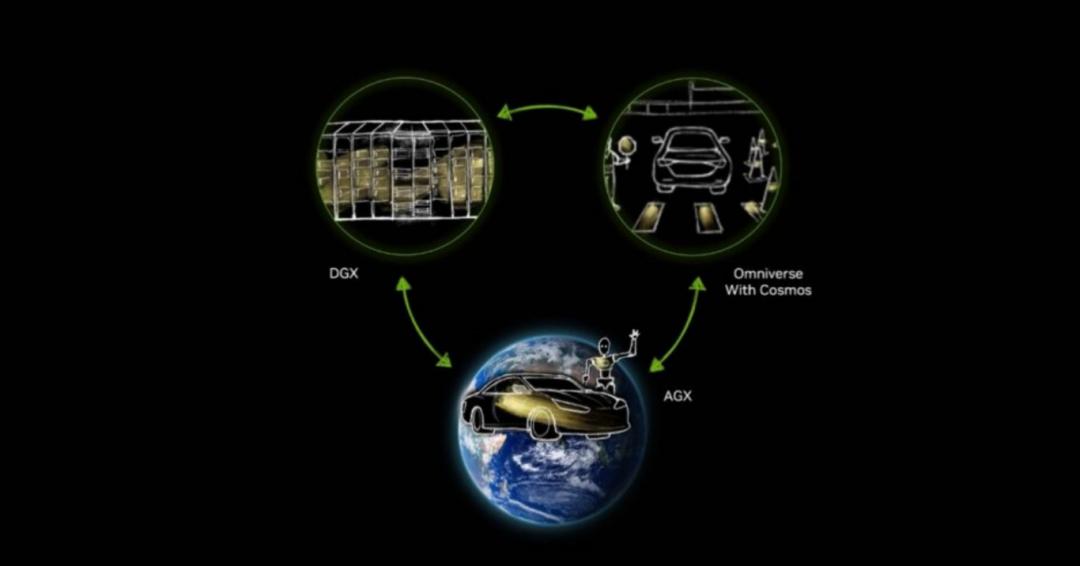
Core Insights - NVIDIA is redefining the next decade of smart automotive technology through a comprehensive approach that integrates cloud simulation and in-vehicle inference [1][2] Group 1: NVIDIA's Transformation - NVIDIA has evolved from a chip supplier to a comprehensive provider of autonomous driving solutions, offering not just vehicle chips (AGX) but also cloud training (DGX) and simulation (OVX) capabilities [2][3] - The company has opened its core AI models and datasets to lower industry barriers and expand its ecosystem, driving demand for computational power and reshaping industry standards [2][3] Group 2: Three Pillars of NVIDIA's Strategy - NVIDIA's automotive strategy is built on three key components: DGX for AI model training, OVX for simulation, and AGX for in-vehicle inference [3][8] - DGX serves as a training factory, utilizing a supercomputing cluster of thousands of GPUs to process vast amounts of driving data, including real-world videos and virtual simulations [4][9] - OVX creates a digital twin of the real world, allowing for extensive testing of autonomous driving algorithms in a risk-free environment [5][6][7] - AGX represents NVIDIA's well-known in-vehicle computing chips, with performance increasing from tens of TOPS to over a thousand TOPS, becoming standard in flagship models from various automakers [8][11] Group 3: Business Model Evolution - NVIDIA's revenue model has shifted from solely selling hardware to providing engineering services, where they assist automakers in optimizing algorithms on NVIDIA's platform [12][13] - This service model fosters a mutually beneficial relationship, allowing automakers to enhance their development capabilities while providing NVIDIA with valuable feedback for product improvement [13] Group 4: Open Source Strategy - In early 2025, NVIDIA announced the open-sourcing of its Alpamayo series, which includes a 100 billion parameter model and a comprehensive simulation framework, aimed at accelerating the development of autonomous driving technologies [16][17] - This strategic move lowers industry barriers, addresses the scarcity of high-quality data, and positions NVIDIA as a leader in defining the next generation of technology frameworks [18] Group 5: Market Dynamics and Competitive Edge - The demand from the Chinese market significantly drives NVIDIA's accelerated pace in the automotive sector, with local automakers pushing for rapid development and deployment of advanced features [21] - NVIDIA's confidence in its competitive position stems from its comprehensive engineering capabilities and the extensive ecosystem it has built over years, which is difficult for competitors to replicate [24] - The company's strategy is to become an architect and enabler of the AI-driven mobility era, moving beyond being just a supplier to defining new rules in the automotive industry [24]

通信ETF华夏(515050)跳空高开站上5日均线,苹果计划2026年推出聊天机器人“CAMPOS”
Mei Ri Jing Ji Xin Wen· 2026-01-22 02:00
Group 1 - The domestic stock market opened high on January 22, with strong performances from the Sci-Tech Innovation Board and the ChiNext, particularly in computing hardware, focusing on the computing power and Apple supply chain [1] - The communication ETF Huaxia (515050) opened with a gap up, rising 1.24% and surpassing the 5-day moving average, with major holdings like Shengyi Technology increasing over 5% [1] - Apple plans to launch a new AI chatbot, codenamed "Campos," at the global developer conference in June, which will replace the existing Siri interface and feature capabilities similar to ChatGPT and Google Gemini [1] Group 2 - The new chatbot will utilize a user interface designed by Apple but will rely on a custom AI model developed by Google's Gemini team, hosted on Google TPU chip servers, with Apple paying approximately $1 billion annually for the usage rights [2] - The communication ETF Huaxia (515050) tracks the CSI 5G Communication Theme Index, focusing on electronics and communication computing hardware, with a combined weight of over 76% in CPO and CPB concept stocks, ranking first in the market [3] - The AI-focused ETF Huaxia (159381) has a balanced weight in AI hardware computing and AI software applications, offering high elasticity and representativeness, with a low comprehensive fee rate of only 0.20% [3]



美股“七雄”五家掉队背后,资本计较“回报率”
阿尔法工场研究院· 2026-01-22 00:08
Core Viewpoint - The article discusses the emergence of the "Magnificent Seven" in the U.S. stock market, referring to seven major tech companies that have significantly influenced market performance during the AI boom, likening them to heroes in a classic Western film [4][5]. Group 1: The Magnificent Seven - The seven companies, namely Alphabet, Nvidia, Microsoft, Meta, Apple, Amazon, and Tesla, have shown "monopolistic power" and contributed significantly to the S&P 500's gains, accounting for nearly 70-80% of the index's performance at certain times [5][6]. - These companies have experienced substantial market capitalization growth, collectively contributing over half of the S&P 500's increase, with their total market value nearing one-third of the U.S. GDP at peak [6]. Group 2: Investment Logic - The investment rationale for these companies can be summarized as AI = computing power = the Magnificent Seven, with a consensus that AI will reshape all industries, positioning these companies at the forefront [8]. - The cash flow of these companies supports high levels of investment, with all but Tesla having strong free cash flow and financing capabilities [8]. Group 3: Market Performance and Divergence - By 2025, only Alphabet and Nvidia outperformed the S&P 500, while the other five companies lagged behind, indicating a shift in market narrative [9][10]. - The underperformance of the "Five" is attributed not to a lack of AI but to structural issues within each company, such as slowing cloud growth for Microsoft and innovation challenges for Apple [12][14]. Group 4: Changing Market Focus - The divergence among the Magnificent Seven signifies a shift in market focus from imaginative potential to actual returns, with capital becoming more discerning in a high-interest environment [14]. - The article suggests that while these tech companies remain crucial, they are no longer uniformly favored, as the market's patience for long-term commitments diminishes [14][15].




资产配置日报:暗流涌动-20260121
HUAXI Securities· 2026-01-21 15:28
Group 1 - The report highlights a calm surface in the stock and bond markets, while underlying capital flows are active, with the A-share index rising by 0.57% and trading volume decreasing by 180.5 billion yuan compared to the previous day [1] - The report notes a significant increase in trading volume for broad-based ETFs, with the Shanghai Composite 50 ETF reaching its highest trading volume since 2016, indicating a potential shift towards a "slow bull" market [2] - The semiconductor sector saw a notable rebound, with the Wind Semiconductor Index increasing by 3.46%, driven by CPU price increases and demand from AI applications [3] Group 2 - In the bond market, the 10-year government bond yield stabilized at 1.83%, with a cautious sentiment prevailing in the morning session, but later improved as demand for 7-year bonds exceeded expectations [4] - The report discusses two key themes: unexpected tax period easing and a sudden activation of trading in long-term bonds, with the 30-year government bond yield dropping by 4.5 basis points over two days [5][6] - The report indicates that the supply of government bonds in January was lower than expected, leading to a temporary improvement in the supply-demand relationship in the bond market [6] Group 3 - The commodity market continues to show a mixed pattern, with precious metals and lithium carbonate leading gains, while industrial metals have rebounded [7][8] - The report notes a significant inflow of funds into gold, with over 11.6 billion yuan entering the market, reflecting heightened risk aversion among investors [8][9] - The report warns of potential volatility in lithium carbonate prices due to reliance on market sentiment and the possibility of regulatory changes affecting trading dynamics [10]
第一太平戴维斯:数据中心从“房地产资产”转向战略基础设施
Zhong Guo Jing Ying Bao· 2026-01-21 14:20
Core Insights - The report by Savills China highlights that modern data centers are evolving from mere "server warehouses" to integrated operating systems that combine energy, cooling, network resilience, and physical security, increasingly incorporating AI-driven operational capabilities [1] Group 1: Data Center Value Proposition - The core value of data centers is no longer determined by floor area but by their ability to continuously, densely, and stably provide computing power [1] - Unlike traditional commercial real estate, the competitiveness of data centers is influenced by factors such as power supply and redundancy, cooling efficiency, network connectivity, operational reliability, and access to low-carbon electricity [1] Group 2: Regional Specialization in Data Centers - The report indicates a clear regional specialization in China's data center operations based on workload characteristics and application scenarios [1] - The eastern region is most suitable for deploying latency-sensitive, high-density workloads, while the central and western regions leverage lower land and electricity costs to handle high-energy tasks like AI training and cold data [1] - Actual utilization rates in these regions depend on the matching of network latency, connectivity, and downstream demand [1]

AI产业链系列报告一:26年算力景气度持续上行,关注互联、液冷、供电板块
Guoxin Securities· 2026-01-21 05:24
Investment Rating - The report maintains an "Outperform" rating for the AI industry [1] Core Insights - The capital expenditure (Capex) guidance from major overseas companies is optimistic, with a continuous upward trend in computing power expected through 2026. The total Capex for Microsoft, Google, Amazon, and Meta is projected to reach $406.5 billion in 2025 and $596.4 billion in 2026, representing year-on-year growth of 46% and 47% respectively [3][5][22] - The demand for AI-related infrastructure is driving significant upgrades in interconnects, cooling, and power supply sectors, indicating a long-term growth cycle distinct from previous technology cycles [3][4] Summary by Sections 1. Overseas Major Companies' Capex Guidance - Major companies like Microsoft, Google, Amazon, and Meta are expected to increase their Capex significantly, with projections of $186.4 billion, $139.5 billion, $162.5 billion, and $108 billion respectively for 2026 [6][7][14][18][21] - The overall Capex for these four companies is expected to account for 62% of the global AI-related Capex, which is projected to reach $960 billion by 2026 [22][23] 2. Interconnect Sector: Optical Modules and PCBs - The interconnect sector is experiencing a fundamental shift in demand due to AI server cluster construction, leading to simultaneous upgrades in computing boards, switches, and optical modules, which will increase both demand and pricing [3][4] - The deployment of 800G technology is expected to accelerate, with 1.6T technology entering the introduction phase [3] 3. Cooling Sector: Liquid Cooling Demand - The power density of AI GPU racks is projected to rise from 130 kW in 2024 to over 1 MW by 2029, making liquid cooling technology essential [3][4] 4. Power Supply Sector: AIDC Power Distribution Evolution - The evolution of AIDC power distribution methods is crucial, with a focus on HVDC and SST technologies to enhance system efficiency and reduce energy losses [3][4] 5. Investment Recommendations - The report suggests focusing on specific companies within various sectors: - Computing power: Haiguang Information - Interconnects - Optical modules: LightSpeed Technology, Huagong Technology - Interconnects - PCBs: Shenghong Technology, Shennan Circuits, and others - Cooling: Invec - Power supply: Magpow [3][4]