
制造业PMI

Search documents
今日重点关注的财经数据与事件:2025年6月23日 周一
news flash· 2025-06-22 20:05
Group 1 - The U.S. is set to impose tariffs on various steel appliances, which may impact the manufacturing sector and related supply chains [1] - Iran's Foreign Minister is scheduled to meet with President Putin, potentially affecting geopolitical dynamics and energy markets [1] - Key economic indicators such as manufacturing PMIs from France, Germany, the Eurozone, and the UK will be released, providing insights into the health of the manufacturing sector in these regions [1] Group 2 - The European Central Bank President Lagarde will deliver an introductory speech, which may influence market expectations regarding monetary policy [1] - The U.S. will release its May existing home sales data, which is crucial for understanding the housing market trends [1] - Several Federal Reserve officials, including Daly, Bowman, and Goolsbee, are scheduled to speak, which could provide insights into future monetary policy directions [1]
【广发宏观王丹】制造业淡季和出口回调下6月EPMI有所放缓
郭磊宏观茶座· 2025-06-20 13:56
Core Viewpoint - The Strategic Emerging Industries Purchasing Managers Index (EPMI) fell by 3.1 points to 47.9 in June, marking the lowest level for the same period since 2014, indicating a weakening economic environment in the traditional manufacturing off-season [1][5][6]. Group 1: EPMI and Economic Indicators - The EPMI's decline is slightly greater than the seasonal average decline of 1.1 points observed from 2014 to 2024 [1][7]. - The absolute value of 47.9 is 1.4 points lower than the same period last year, reflecting a significant downturn in emerging industries [8][9]. - Among seven sub-sectors of strategic emerging industries, only two are in the expansion zone, a decrease of one from May [9]. Group 2: Supply and Demand Indicators - Production and product order indices fell by 5.5 and 6.0 points respectively in June [2][11]. - The production-to-order ratio increased to 2.0, indicating that demand is declining faster than supply, although it remains below the three-year average [2][12]. - Export orders decreased by 6.6 points, which is a larger drop than overall orders, suggesting a potential downward adjustment in export growth [2][11]. - Purchasing and selling prices fell by 2.4 and 1.2 points respectively, continuing a three-month trend of decline [2][13]. - Research and development activities increased by 2.1 points, ending a three-month decline, but new product launches have decreased for four consecutive months [2][15]. Group 3: Sector Performance - New materials and next-generation information technology are the only two sectors in the expansion zone, with new materials leading for two months and next-generation information technology for four months [3][16]. - The biotechnology sector showed a recovery after two months of decline, while other sectors experienced a slowdown in June [3][16]. - The electric vehicle sector saw a significant drop in production metrics, which was greater than the change in demand, possibly linked to strict accounting periods [3][15][17]. Group 4: Traditional vs. New Industries - The economy can be simplified into "traditional industries + new industries," with traditional industrial operating rates showing divergence [3][18]. - The steel and coking sectors have lower operating rates compared to May, while the chemical industry has seen some recovery [3][18]. - The EPMI data suggests that the manufacturing PMI may also see a slight decline in June [3][18]. Group 5: Future Outlook - The trends in EPMI, PMI, and BCI since the beginning of the year show a gradual increase until March, followed by a pullback in April and stabilization in May [4][18]. - The real estate market's performance and the potential for construction industry counter-cyclical support will be critical moving forward [4][18].


李晓杰:国内锑矿供应难有增量 预计锑价将高位运行
Jing Ji Guan Cha Wang· 2025-06-19 06:19
Core Viewpoint - The domestic antimony price has experienced a significant increase, with the average price of antimony concentrate reaching 172,800 yuan per ton by the end of May 2025, marking a year-on-year increase of 113.3% [2][6]. Price Trends - Antimony prices have been on a rapid upward trend since mid-February 2025, with continuous increases in March and sustained high levels in May [2]. - As of the end of May, the average price of antimony ingots was 194,500 yuan per ton, up 100.7% year-on-year, with a peak price of 240,000 yuan per ton [7]. - The average price of antimony oxide reached 174,800 yuan per ton, reflecting a year-on-year increase of 103.6% [8]. Supply and Demand Dynamics - The antimony market has been characterized by tight supply since early 2025, with a notable rebound in prices from mid-February to mid-April [6][12]. - Exports of antimony products have significantly declined, with no exports of antimony ore and a 59.3% decrease in antimony oxide exports from January to April [13]. - Imports of antimony concentrate also fell by 28.26% during the same period, indicating a tightening supply situation domestically [15]. Future Outlook - The domestic antimony market is expected to continue experiencing high prices due to ongoing supply constraints and reduced imports [16][18]. - The demand for antimony is supported by growth in key downstream applications, particularly in synthetic rubber, solar cells, and electric vehicles, which have all seen double-digit growth [16]. - The overall economic environment, including the impact of protectionist trade policies, is anticipated to influence the antimony market, but China's manufacturing sector has shown resilience with a recovery in the PMI [19].
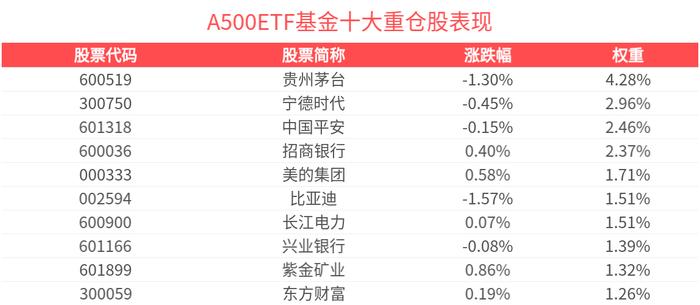
A500ETF基金(512050)成交额超8亿元,机构:A股预计仍有支撑
Xin Lang Cai Jing· 2025-06-12 02:39
Group 1 - The A500 index (000510) experienced a slight decline of 0.16% as of June 12, 2025, with mixed performance among constituent stocks [1] - Tianfu Communication (300394) led the gains with an increase of 11.15%, while Chuangfeng Power (603129) was the biggest loser, down 3.27% [1] - The A500 ETF fund (512050) showed a tight trading range with a latest price of 0.95 yuan and a turnover rate of 5.45%, with a total transaction volume of 8.65 billion yuan [1] Group 2 - According to Citic Securities, the A-share market is expected to stabilize due to improved risk appetite following negotiations between China and the U.S. leadership [2] - The manufacturing PMI showed recovery in May after a decline due to trade conflicts in April, while the non-manufacturing PMI is approaching 50, indicating weak verification of recovery [2] - The A500 ETF closely tracks the A500 index, which selects 500 securities with larger market capitalization and better liquidity from various industries [2] Group 3 - As of May 30, 2025, the top ten weighted stocks in the A500 index accounted for 21.21% of the index, including Kweichow Moutai (600519) and CATL (300750) [2] - The top ten stocks by weight include Kweichow Moutai (4.28%), CATL (2.96%), and Ping An Insurance (2.46%) [3] Group 4 - The A500 ETF fund has several related funds, including the 华夏中证A500ETF联接A (022430) and 华夏中证A500指数增强A (023619) [4]
专题报告关税战风险暂缓,抢出口成色如何
Bao Cheng Qi Huo· 2025-06-09 12:07
1. Report Industry Investment Rating - No relevant content provided. 2. Core Viewpoints of the Report - In May 2025, the China-US tariff war eased, but there are still significant uncertainties. Trump's tariff policy is influenced by the "Great and Beautiful" Act. If it passes the Senate, the tariff policy may ease; otherwise, it may intensify [1][33]. - The suspension of the tariff war promoted panic exports, leading to a month-on-month increase in the manufacturing PMI in May. The improvement in demand was mainly supported by external demand, but enterprises were worried about future demand, as indicated by the continuous decline in the finished - product inventory index [1][34]. - Despite the easing of the tariff war, its negative impact has formed, squeezing enterprises' willingness to produce and invest. Enterprises prefer to maintain the original re - export trade rather than direct exports due to the expiration of the tariff suspension period in early July [2][34]. 3. Summary According to the Table of Contents 3.1 Tariff War Risk Temporarily Eased, but Uncertainty Remains 3.1.1 Tariff War News Since May - In the China - US high - level economic and trade talks from May 10 - 11, significant progress was made, including a substantial reduction in bilateral tariffs and the establishment of a bilateral consultation mechanism. However, there is a risk of tariff war escalation after the 90 - day suspension period ends on July 9 [7][8]. - There were legal disputes over Trump's tariff policy in May. On May 28, a federal court blocked Trump's tariff policy, but on May 29, the federal appeals court temporarily suspended the lower - court's ruling. On June 3, Trump increased steel and aluminum tariffs from 25% to 50% [8]. - There are internal differences in the US on tariff policy, but Trump adheres to a tough stance, making the future of the tariff war uncertain [9]. 3.1.2 Assessment of Trump's Future Tariff Policy - Trump's tariff policy is stubborn. His purposes include creating political legacies and expanding family assets, as well as generating fiscal revenue for tax cuts. The "Great and Beautiful" Act's passage in the Senate will affect the intensity of his tariff policy [10][11]. 3.2 Tariff War Suspension Promoted Panic Exports, and the Manufacturing PMI Rose Month - on - Month in May - In May, the manufacturing PMI rebounded by 0.5 points to 49.5 but remained in the contraction range. The panic - export effect drove the recovery of most sub - indicators except price - related and finished - product inventory indicators [12]. - In terms of production, the PMI production index rose by 0.9 points to 50.7, higher than the rebound of the demand index and the seasonal average. Enterprises accelerated production during the 90 - day buffer period to ship goods [12][13]. - In terms of demand, the new order index rose by 0.6 points, and the new export order index rose by 2.8 points, indicating that external demand supported the improvement. However, the finished - product inventory index continued to decline by 0.8 points, reflecting enterprises' concerns about future demand [13]. 3.3 Enterprises Remain Cautious about Direct Trade with the US and Prefer Re - export Trade - In May, the weekly average throughput of monitored ports increased slightly month - on - month, and the import container data of the Port of Los Angeles showed a recovery but did not reach previous highs. Enterprises prefer re - export trade due to the cumulative effect of tariffs and the short suspension period [18]. - Different industries are affected differently by tariff policies. Strategic emerging industries are less affected, while traditional labor - intensive foreign - trade enterprises are more cautious. Forward - looking indicators show that the actual production and operation recovery of enterprises is slower than expected [24]. - In April, more than half of the 13 export - dependent industries saw profit improvements, but there was a deviation between price - volume changes and profit recovery. Profit improvement driven by cost reduction is not sustainable, so enterprises choose to reduce inventory [29]. 3.4 Summary - The China - US tariff war eased in May, but Trump's tariff policy remains uncertain, depending on the "Great and Beautiful" Act's passage in the Senate [1][33]. - The suspension of the tariff war promoted panic exports and a month - on - month increase in the manufacturing PMI in May. External demand supported the improvement in demand, but enterprises were worried about future demand [1][34]. - The negative impact of the tariff war has formed, squeezing enterprises' willingness to produce and invest. Enterprises prefer re - export trade due to the expiration of the tariff suspension period in early July [2][34].
铜周报:基本面支撑,铜价仍存韧性-20250609
Chang Jiang Qi Huo· 2025-06-09 06:11
铜周报:基本面支撑,铜价仍存韧性 2025-6-9 长江期货股份有限公司交易咨询业务资格:鄂证监期货字[2014]1号 汪国栋 执业编号:F03101701 投资咨询号: Z0021167 张 桓 执业编号:F03138663 咨询电话:027-65777106 01 主要观点策略 02 宏观及产业资讯 03 期现市场及持仓情况 目 录 04 基本面数据 供给端:当前铜矿加工费处于历史低位,铜矿供应持续偏紧。截至6月6日,铜精矿进口粗炼费为-43美元/吨,4月底以来进口铜精 矿粗炼费(TC)持续位于持稳于-43美元/吨左右。5月电解铜产量113.83万吨,环比增加1.12%,同比增加12.86%,国内精炼铜产量 稳定增加。 需求端:旺季过后下游需求转淡,截至6月5日,SMM电解铜制杆周度开工率环比下滑至74.87%,环比下滑1.03个百分点,铜价运 行依然坚挺,压制下游备货欲望。淡季来临市场预期悲观,下游铜管、铜板带开工率下滑,铜箔企业开工率小幅增长。 库存:截至6月6日,上海期货交易所铜库存10.74万吨,周环比1.52%。截止6月5日,国内铜社会库存14.88万吨,较节前5月29日 累库1.01万吨,环比 ...
钢材:基差收敛,市场情绪反复
Yin He Qi Huo· 2025-06-06 09:28
1. Report Industry Investment Rating No relevant information provided. 2. Core Viewpoints of the Report - Steel prices rebounded this week, but the loss of off - peak electricity remains large. Short - process steel production resumed, and long - process steel still maintained high molten iron output. Overall steel supply is high. - Steel apparent demand continued to decline seasonally. Domestic downstream demand lacks bright spots, and overseas steel exports have declined from their peak. The pressure on sheet metal is expected to increase. - Steel is still destocking, but the destocking speed has slowed down significantly, and rebar has started to accumulate inventory. - Although the Sino - US tariff situation has eased, steel export orders may decline after July. - The blast furnace output has reached its peak, but the profit is high, and steel mills have insufficient motivation to reduce production. The steel price trend is downward [4][7]. 3. Summary by Directory Chapter 1: Steel Market Summary and Outlook Summary - **Supply**: This week, the small - sample production of rebar decreased by 7.05 tons to 218.46 tons, while that of hot - rolled coil increased by 9.20 tons to 328.75 tons. The daily average molten iron output of 247 blast furnaces was 241.8 tons (- 0.11), and the capacity utilization rate of 49 independent electric arc furnace steel mills was 33.9% (+ 1.2). - **Demand**: The small - sample apparent demand for rebar was 229.03 tons (- 19.65), and that for hot - rolled coil was 320.92 tons (- 6.01). Domestic demand in various fields was mixed, and overseas steel exports declined from their peak. - **Inventory**: Rebar inventory decreased by 10.57 tons, hot - rolled coil inventory increased by 7.83 tons, and the total inventory decreased by 1.79 tons. - **Outlook**: Entering the off - season, the apparent demand is expected to continue to decline seasonally. The supply is high, and the steel price trend is downward [4]. Chapter 2: Price and Profit Review Summary - **Spot Prices**: On Friday, the rebar summary price in Shanghai was 3120 yuan (unchanged), and in Beijing was 3160 yuan (+ 10). The hot - rolled coil price in Shanghai was 3210 yuan (+ 10), and in Tianjin was 3130 yuan (- 20). - **Profit**: The cash - in - hand profit of long - process rebar in North China was - 24.10 yuan/ton, and the cost was 3164.10 yuan/ton. The flat - rate electricity cost of electric arc furnaces in East China was about 3371 yuan (converted to the futures market), with a profit of - 288.63 yuan/ton; the off - peak electricity cost was about 3206 yuan, with a profit of - 124 yuan/ton [13][4]. Chapter 3: Important Domestic and Overseas Macroeconomic Data Summary - **Domestic**: In May, China's official manufacturing PMI was 49.5%, up 0.5 percentage points from the previous month; the Caixin manufacturing PMI was 48.3. From January to April 2025, China's fixed - asset investment growth rate declined month - on - month. In April, new social financing was 1.16 trillion yuan, and new RMB loans were 280 billion yuan. - **Overseas**: In May, the US Markit manufacturing PMI was 52.3, and the eurozone manufacturing PMI was 49.4. The OECD lowered the US GDP growth forecast for 2025 to 1.6% and for 2026 to 1.5%. The US ADP employment increase in May was lower than expected [35][46]. Chapter 4: Steel Supply, Demand, and Inventory Situation Summary - **Supply**: The daily average molten iron output of 247 blast furnaces was 241.8 tons (- 0.11), and the capacity utilization rate of 49 independent electric arc furnace steel mills was 33.9% (+ 1.2). - **Demand**: The small - sample apparent demand for rebar and hot - rolled coil decreased. The construction material demand was lackluster, and the export of steel products declined. - **Inventory**: Rebar inventory decreased, while hot - rolled coil inventory increased [4][66][74].