绿色低碳转型

Search documents
西藏自治区涉税经营主体超39万户
Zhong Guo Xin Wen Wang· 2025-12-24 11:04
Group 1 - The number of tax-related business entities in Tibet Autonomous Region has exceeded 390,000, showing a year-on-year growth of 20% from January to November, with over 70,000 new entities added, reflecting a 77.1% increase [1] - Tax revenue collected by the tax authorities in Tibet reached over 80.6 billion yuan, marking an 11.1% year-on-year increase, with tax revenue (excluding export tax rebates) exceeding 42.9 billion yuan [1] - The industrial economy in Tibet saw a sales revenue growth of 17.8% year-on-year, driven by traditional and emerging industries, with significant contributions from the non-ferrous metal mining and pharmaceutical manufacturing sectors [2] Group 2 - The non-ferrous metal mining sector reported a sales revenue increase of 31.4%, while the pharmaceutical manufacturing sector saw a 14.5% rise, highlighting them as key growth drivers [2] - The textile and apparel industry, along with the food manufacturing sector, experienced a remarkable sales revenue growth of 52.3%, indicating enhanced market recognition and brand competitiveness [2] - The tax authorities in Tibet have implemented a "first violation not punished" policy for certain tax violations, benefiting over 5,900 taxpayers from January to November [2] Group 3 - The tax authorities maintained a strict stance against tax fraud, identifying 50 cases of fraudulent tax invoicing and recovering 81.94 million yuan in tax payments [3] - High-risk gas stations were also targeted, with 84 cases identified and 19.86 million yuan in tax payments recovered [3] - One individual classified as high-risk was found guilty, resulting in a recovery of 1.34 million yuan [3]
国家级盛会启幕,2026中国国际石油化工展再绘行业发展新蓝图
Sou Hu Cai Jing· 2025-12-24 05:07
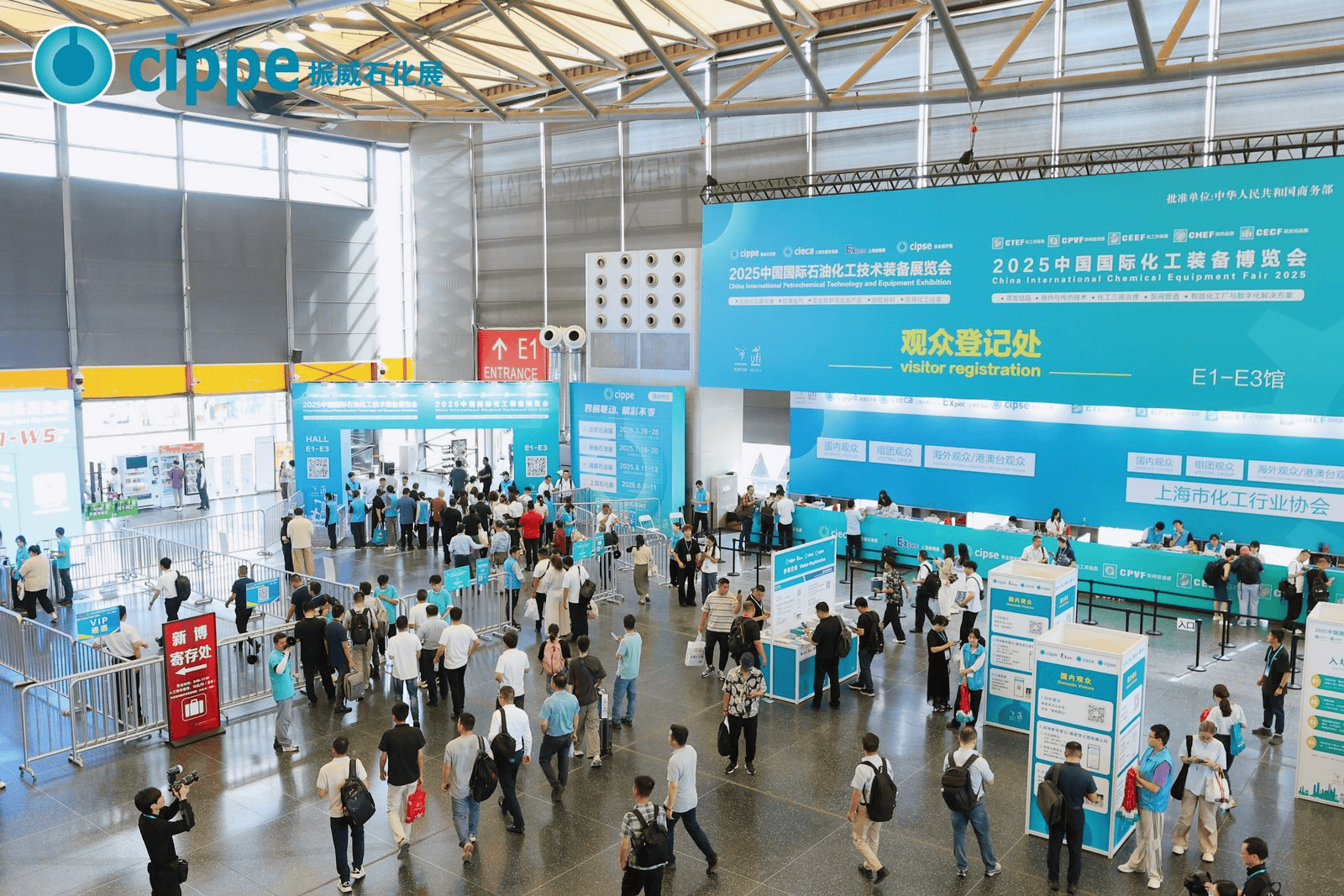
Core Insights - The 2026 China International Petrochemical Technology and Equipment Exhibition will take place from June 9-11 in Shanghai, focusing on green and low-carbon industry transformation and technological innovation in the petrochemical sector [1] - The exhibition has evolved into a national-level event, becoming a benchmark for the industry and a platform for international technical exchange and trade cooperation [3] Group 1: Exhibition Overview - The exhibition has grown significantly over 17 years, with a record of 70,000 square meters of exhibition space and participation from 1,081 companies in 2025, including over 100 purchasing groups from more than 34 countries and regions [3] - The international exhibitor ratio exceeded 10%, highlighting the exhibition's value as an international platform [3] - The exhibition covers the entire petrochemical industry chain, expanding from core areas like refining equipment to 10 specialized exhibition zones, including automation instruments, environmental protection equipment, and smart robotics [3] Group 2: Event Activities - The exhibition will continue its tradition of hosting a high-level industry forum alongside the main event, featuring discussions on refining transformation, green chemistry, low-carbon technology, and smart manufacturing [5] - A series of high-profile events, including the 2026 China International Petrochemical Technology Industry Summit Forum, will provide forward-looking insights and promote deep integration of industry, academia, and research [5] - The exhibition aims to enhance its role as an "industry resource hub," offering tailored matchmaking services for exhibitors and inviting purchasing groups from Southeast Asia, the Middle East, and major state-owned enterprises in China [5] Group 3: Future Prospects - The exhibition is set to continue its growth trajectory, showcasing a comprehensive industry chain and global resources, reflecting the high-quality development of China's petrochemical industry [7] - The event is positioned as a significant opportunity for industry partners to capture new opportunities and foster collaboration in the context of green and low-carbon transformation [7]

第十七届电石行业健康发展大会指出:电石产业链“十五五”需深化绿色协同
Zhong Guo Hua Gong Bao· 2025-12-24 02:55
Core Viewpoint - The 17th Calcium Carbide Industry Healthy Development Conference emphasized the need for high-quality development in the calcium carbide industry during the 14th Five-Year Plan period, focusing on technological innovation, green transformation, and intelligent upgrades [1][2] Group 1: Industry Challenges and Opportunities - The calcium carbide industry faces historical opportunities and severe challenges due to profound changes in the global energy landscape and China's dual carbon strategy [1] - The industry must recognize external environmental fluctuations, slowing downstream demand growth, and difficulties in green low-carbon transformation while seizing domestic market stability and rapid technological iteration opportunities [1][2] Group 2: Technological Innovation and Green Development - The industry should prioritize technological innovation as a fundamental driver, promoting circular economy and energy-saving technologies to enhance energy efficiency and market risk response capabilities [1] - There is a call for the development of new production processes and gas utilization technologies, fostering innovative enterprises, and accelerating the application of intelligent and automated technologies [2] Group 3: Industry Self-Regulation and Competitive Environment - The industry is undergoing a period of adjustment, with accelerated elimination of underperforming enterprises and increasing industry concentration, which is beneficial for sustainable development [2] - The industry should engage in self-regulation to create a fair and orderly competitive environment, continuously improving overall profitability [2] Group 4: Technical Exchange and Collaboration - Experts shared insights on innovations in calcium carbide production processes, intelligent control of production processes, and upgrades of energy-saving and environmental protection equipment during the technical report session [2]
“十四五”时期,交通固定资产投资达十八点八万亿元 国家综合立体交通网主骨架基本贯通(权威发布)
Ren Min Ri Bao· 2025-12-23 22:23
Core Insights - The transportation sector in China has shown stable economic performance in the past year, achieving key targets and demonstrating growth in various indicators [2][3] Group 1: Economic Performance - Total fixed asset investment in transportation is expected to exceed 3.6 trillion yuan, maintaining a high level of operation [2] - The volume of commercial freight is projected to surpass 580 billion tons, reflecting a year-on-year growth of approximately 3.5% [2] - Port foreign trade container throughput has increased by about 9.6%, while international air freight has grown by 20% [2] - The total cross-regional personnel flow is expected to exceed 66 billion person-times [2] Group 2: Infrastructure Development - Over the past five years, the national comprehensive three-dimensional transportation network has been largely completed, connecting over 80% of county-level administrative regions [3] - Key urban agglomerations have achieved two-hour connectivity between major cities, enhancing transportation service strategies [3] - Significant infrastructure projects completed during the 14th Five-Year Plan include the Shenzhen-Zhongshan Corridor and the Beijing-Harbin Expressway [7] Group 3: Safety and Efficiency - The number of railway traffic accidents has decreased by 18.4% year-on-year, while accidents in the road and waterway sectors have dropped by 25.8% [2] - The transportation sector is focusing on enhancing monitoring, early warning, and emergency response capabilities to prevent major accidents [3] Group 4: Consumer Services and Demand Expansion - The cruise passenger transport volume reached 1.265 million person-times from January to November, marking a year-on-year increase of 27.8% [4] - The small and micro car rental market is expected to grow at an annual rate of around 15% during the 14th Five-Year Plan period [4] - The development of self-driving tourism routes is being promoted to enhance consumer experiences and drive spending [5] Group 5: Equipment Modernization - The transportation sector is undergoing a significant update of equipment, with over 450 old railway diesel locomotives replaced by new models [8] - The sector has also seen the retirement and replacement of over 114,000 old urban buses and more than 250,000 diesel trucks [8] - The implementation of large-scale equipment updates aims to enhance service quality and support domestic demand [8]
扩容、提质、增效 期货价格已融入千行百业
Shang Hai Zheng Quan Bao· 2025-12-23 19:06
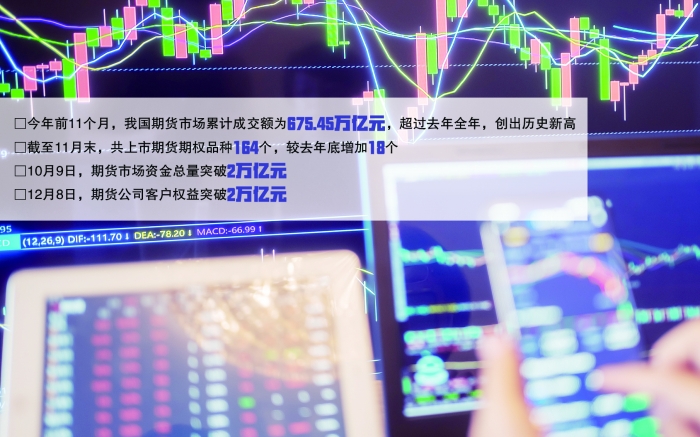
Core Viewpoint - The global commodity market is undergoing significant restructuring in 2025, influenced by trade dynamics and geopolitical competition, leading to a reshaping of the global industrial chain. The year has seen volatile commodity prices, with metals like gold, silver, and copper reaching new highs, while energy and agricultural products remain weak [2]. Market Participation and Trading Volume - In the face of market uncertainties, more entities are engaging in the futures market, with China's cumulative trading volume reaching 67.545 trillion yuan in the first 11 months of the year, surpassing the total for the previous year and setting a historical record. As of October 9, total funds in the futures market exceeded 2 trillion yuan, and by December 8, client equity of futures companies also surpassed 2 trillion yuan [2]. Product Innovation and Expansion - The expansion of product variety is a key focus for the development of China's futures market, with 164 futures and options products listed by the end of November, an increase of 18 from the previous year [3]. - New products are categorized into three types: 1. Filling gaps in existing product lines to enhance risk management across the supply chain, such as the introduction of pure benzene and propylene futures [3]. 2. Innovating contract models to align with trading habits, exemplified by the launch of monthly average price futures for certain chemical products [4]. 3. Accelerating the establishment of a green product system, including the listing of futures for recycled aluminum alloys and precious metals like platinum and palladium [4]. Options Market Development - The acceleration of options coverage is a notable trend, with all new futures products introduced alongside options. Existing products have also seen corresponding options launched, enhancing the risk management tools available to entities [5]. Service Enhancement for the Real Economy - The futures market aims to serve the real economy effectively, with various service models optimized to meet industry needs. For instance, a steel delivery warehouse was established in Northwest China, addressing long-standing delivery challenges for local steel enterprises [6]. - The "insurance + futures" model has evolved over ten years, now involving multiple stakeholders to provide comprehensive risk management for agricultural products [6][7]. Regulatory Improvements and Market Integrity - Since the implementation of the Futures and Derivatives Law in 2022, the regulatory framework for China's futures market has been continuously improved, aligning with the central economic work conference's emphasis on effective regulation [8]. - Recent regulations have focused on enhancing the management of algorithmic trading, internet marketing, and overall industry standards, aiming to create a transparent and efficient futures market [9].
兔宝宝(002043.SZ)拟参与投资广东易高格维创业投资合伙企业
智通财经网· 2025-12-23 13:51
合伙企业是聚焦矿山智能化与绿色低碳转型赛道的战略投资工具,以无人矿卡领域后期项目为核心投资 标的,通过资本注入与资源协同,助力标的企业完成技术规模化落地与全球化布局,同时捕捉矿山智能 化升级浪潮中的确定性投资收益,本基金定向投资于上海伯镭智能科技有限公司。 智通财经APP讯,兔宝宝(002043.SZ)发布公告,公司全资子公司德华兔宝宝投资管理有限公司(以下简 称"兔宝宝投资公司")近日与广东易高智汇股权投资基金管理有限公司(以下简称"易高投资")签署《广东 易高格维创业投资合伙企业(有限合伙)合伙协议》(以下简称"《合伙协议》"),兔宝宝投资公司作为有 限合伙人,认缴出资人民币1,000万元,占认缴出资总额的17.4338%。 ...

电力行业2026年度信用风险展望(2025年12月)
Lian He Zi Xin· 2025-12-23 11:17
Investment Rating - The report indicates that the overall credit risk in the power industry is controllable, with a positive outlook for 2026 [11][56]. Core Insights - The power industry is characterized by a stable head, differentiated transformation, and emerging breakthroughs, with a significant increase in installed capacity and a growing share of renewable energy [11][22]. - Financial performance has shown a gradual increase in total revenue and operating profit since 2022, with thermal power companies benefiting from falling coal prices and supportive electricity pricing policies [11][24]. - The bond market for the power industry has seen a growth in issuance, primarily from central and local state-owned enterprises, with no defaults reported during the period [11][41]. Industry Fundamentals - The macroeconomic environment is expected to support growth, with policies aimed at boosting domestic demand and stabilizing growth [12][13]. - In the first three quarters of 2025, total electricity consumption reached 77,675 billion kWh, a year-on-year increase of 4.6%, with significant contributions from various industrial sectors [17][19]. Industry Policy and Regulatory Environment - The power industry is transitioning towards high-quality development, with a focus on market mechanisms and a robust credit system [14][15]. - Key policies include the establishment of a comprehensive electricity spot market and the promotion of renewable energy through various regulatory frameworks [14][15]. Industry Operating Conditions - The overall power supply and demand remained balanced in 2025, with a notable increase in installed capacity and a significant contribution from renewable energy sources [17][19]. - The average utilization hours for various power generation types showed a decline, except for nuclear power, which saw an increase [20]. Industry Competitive Landscape - The market is dominated by five major state-owned enterprises, which hold approximately 40% of the total installed capacity, while the competition is evolving with the growth of renewable energy [22][25]. Industry Financial Status - The power industry has shown stable growth, with a slight increase in revenue and profit margins, particularly in thermal power due to favorable coal prices [24][26]. - The leverage levels in the industry are moderate, with a stable debt burden and good financing conditions for state-owned enterprises [33][36]. Bond Market Performance - The bond issuance in the power sector reached 909.63 billion yuan in 2025, with a year-on-year growth of 27.91%, primarily from state-owned enterprises [47][48]. - The majority of bonds issued were medium-term notes and short-term financing bonds, reflecting a trend towards longer issuance periods [49].
刘宁王凯会见生态环境部部长黄润秋
He Nan Ri Bao· 2025-12-23 10:53
省领导陈星、刘玉江、孙运锋,生态环境部有关司局负责同志等参加。(记者 刘婵 张笑闻) 责任编辑: 路娇 12月23日,省委书记刘宁、省长王凯在郑州会见生态环境部部长黄润秋一行。 黄润秋感谢河南省委、省政府对生态环境工作的大力支持。他表示,近年来,河南深入践行绿水青山就 是金山银山的理念,坚决扛牢生态环境保护的政治责任,深入开展污染防治攻坚,加快推进绿色低碳转 型,全面加强生态保护治理,生态环境质量持续改善,美丽河南建设取得扎实成效。生态环境部将深入 贯彻习近平生态文明思想,全面落实党的二十届四中全会和中央经济工作会议精神,在加强黄河流域生 态保护、持续深入推进污染防治攻坚和生态系统优化、加快能源产业结构调整等领域给予更多支持,与 河南同题共答、协同发力,深入打好蓝天、碧水、净土保卫战,推动经济社会发展全面绿色转型,助力 河南生态文明建设取得新进展。 刘宁、王凯代表省委、省政府对黄润秋一行表示欢迎,感谢生态环境部对河南工作的关心支持。刘宁 说,河南是全国唯一地跨长江、黄河、淮河、海河四大流域的省份,有太行山、伏牛山、大别山等重要 山脉,在全国生态格局中具有重要地位。我们深学细悟习近平生态文明思想,贯彻落实习近平 ...
京东方“焕新2026”媒体智享会圆满收官 以科技创新引领产业绿色转型
Zhong Guo Jin Rong Xin Xi Wang· 2025-12-23 08:40
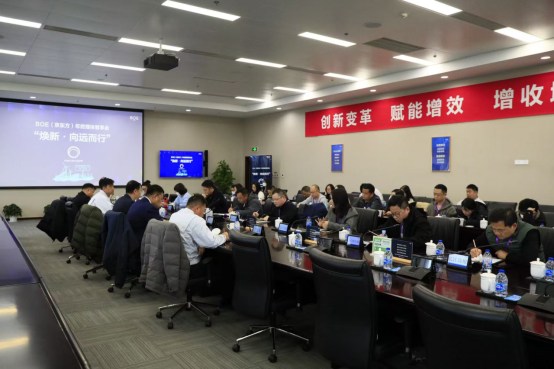
Core Insights - BOE Technology Group held its "Renew 2026" year-end media event in Wuhan, focusing on sustainable development in the display industry and showcasing advancements in green technology, low-carbon operations, and social responsibility [1][3] Group 1: Strategic Vision - The event outlined a comprehensive blueprint for "Renew 2026" across four dimensions: AI renewal, technology renewal, ecological renewal, and sustainable renewal [3] - The "AI renewal" strategy aims to inject core intelligence into the "screen and IoT" ecosystem [3] - "Technology renewal" focuses on three core technology brands: ADS Pro, f-OLED, and α-MLED, driving technological upgrades and reinforcing competitive advantages [3] - "Ecological renewal" emphasizes open collaboration with global partners to explore new technologies and applications, transitioning from single technology empowerment to ecosystem co-prosperity [3] - The "sustainable renewal" initiative positions sustainable development as a core aspect of corporate growth, introducing China's first sustainable development brand "ONE" along with six strategic pillars [3][4] Group 2: Sustainable Development Practices - BOE integrates green development principles throughout its R&D, manufacturing, and operations, establishing a sustainable development system that combines organization, strategy, and branding [4] - The Wuhan BOE 10.5-generation TFT-LCD production line is highlighted as a chlorine-free and smart factory model, focusing on green manufacturing, energy conservation, and supply chain collaboration [4] - The company extends its social responsibility initiatives into education, culture, and international cooperation, promoting educational equity through projects like "Lighting the Growth Path" and collaborating with UNESCO on STEM education in Africa [4] Group 3: Emerging Business Areas - BOE is proactively expanding into emerging business areas, particularly in energy technology, as part of its "screen and IoT" strategy [5] - In the perovskite photovoltaic sector, BOE has achieved rapid breakthroughs from laboratory to pilot production, setting multiple world records, including a certified steady-state efficiency of 27.37% for small battery devices [5] - The company has successfully launched the world's first integrated perovskite building photovoltaic (BIPV) project, demonstrating applications in various settings [5] Group 4: Smart Energy Solutions - In the smart energy sector, BOE focuses on zero-carbon comprehensive services, providing a one-stop solution for factories and parks [6] - The company has developed the BES smart energy management system, integrating AI and IoT technologies for intelligent coordination of energy, information, and value flows [6] - BOE's self-owned renewable energy stations have a total capacity of 770 megawatts, with an annual green electricity supply capability of approximately 1 billion kilowatt-hours [6] - The company has introduced the "New Generation Charging" multimedia charging pile, enhancing urban green service nodes and enriching the smart energy ecosystem [6]

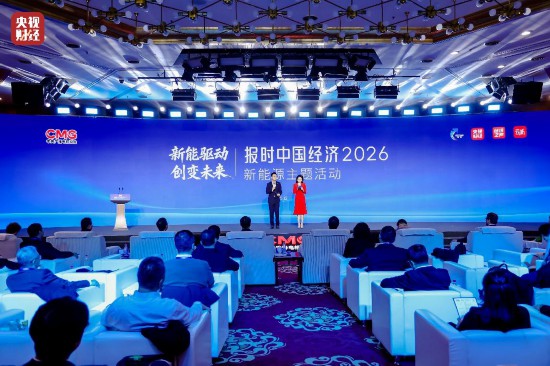
中央广播电视总台“报时中国经济2026”新能源主题活动成功举办
Yang Guang Wang· 2025-12-23 03:02
Core Insights - The "Reporting China Economy 2026" event focused on the theme of "New Energy Driving Future Change," aiming to accelerate the construction of a new energy system and promote high-quality industry development under the context of "dual carbon" goals and comprehensive green transformation [1] Group 1: Key Presentations - Academician Ouyang Minggao emphasized the need for a triad energy storage system comprising battery storage, green hydrogen, and smart energy to overcome bottlenecks in green electricity consumption [2] - Zhang Lei from Horizon Robotics highlighted the synergy between AI and energy, stating that the marginal cost of AI is energy cost, and China's renewable energy technology has achieved large-scale industrialization and cost reduction [2] - Zhong Baoshan from LONGi Green Energy shared the company's commitment to building an open collaborative innovation ecosystem and promoting the "photovoltaic-storage-hydrogen" collaborative system from demonstration to large-scale promotion [3] Group 2: Industry Dialogue - The "New Energy, New Scenarios, New Opportunities" dialogue discussed how to explore international market opportunities and support the leapfrog development of China's new energy industry, in line with the "Energy Power Construction Planning Outline" proposed at the Central Economic Work Conference [3] - The "Dual Carbon Leading, Green Transformation New Ecology" dialogue focused on accelerating the construction of a new energy system, discussing energy structure, technological economic paradigms, and governance systems [3][6] Group 3: Strategic Initiatives - The "Energy China 2026 Project" was officially launched, with multiple partners completing strategic agreements, indicating a collaborative effort to advance the new energy sector [5] - Li Gao, a member of the Ministry of Ecology and Environment, noted that China's renewable energy sector has significantly reduced costs for renewable sources, particularly wind and solar, contributing to global energy transition [5]