贸易保护主义

Search documents
中美关税迎来缓和挪威基本达成全面电动化目标
Dong Zheng Qi Huo· 2025-11-02 13:18
1. Report Industry Investment Rating No information provided in the given text. 2. Core Views of the Report - The penetration rate of the Chinese new energy vehicle market exceeded 30% in 2023 and 50% in 2024. In 2025, high - competitiveness new car products are continuously launched, and the price war is gradually ending [3][117]. - Overseas markets are affected by severe trade protectionism in Europe and the United States, which brings volatility risks to exports. New growth points such as the Belt and Road countries and the Middle East should be focused on [3][117]. - In the competitive landscape, the market share of domestic brands continues to expand. Companies with strong product strength, smooth overseas expansion, and stable supply should be focused on [3][117]. 3. Summary by Relevant Catalogs 3.1 Financial Market Tracking - The one - week price changes of related sectors and listed companies are presented. For example, among listed companies, BYD's closing price on October 31st was 103.61 yuan with a one - week decline of 0.14%, while SAIC Motor's closing price was 16.75 yuan with a one - week increase of 0.42% [14]. 3.2产业链 Data Tracking 3.2.1 China New Energy Vehicle Market Tracking - **Sales and Exports**: From January to August globally, new energy vehicle sales reached 13.257 million, a year - on - year increase of 30.6%. In China, from October 1 - 26, the retail sales of the new energy passenger vehicle market were 901,000, with a year - on - year growth of 0% and a month - on - month decline of 8%. The cumulative retail sales this year were 9.771 million, a year - on - year increase of 22% [1][106][115]. - **Inventory Changes**: Information on the monthly new inventory of new energy passenger vehicle channels and manufacturers is presented through relevant charts [25]. - **Delivery Volume of Chinese New Energy Vehicle Enterprises**: The monthly delivery volumes of companies such as Leapmotor, Li Auto, XPeng, and NIO are presented through charts [28][33]. 3.2.2 Global and Overseas New Energy Vehicle Market Tracking - **Global Market**: From January to August, new energy vehicle sales reached 13.257 million, a year - on - year increase of 30.6% [1][115]. - **European Market**: The cumulative sales in Europe were 2.442 million, with a year - on - year growth rate of 30.8% [1][115]. - **North American Market**: The cumulative sales from January to August were 1.205 million, with a year - on - year growth rate of 4.8% (cumulative sales from January to September were 1.399 million, a year - on - year increase of 8.3%). The sales and penetration rate in the United States reached record highs in August and September, mainly due to the expiration of the federal electric vehicle tax credit ($7,500) on September 30th [1][115]. - **Other Regions**: The cumulative sales in other regions were 665,000, with a year - on - year growth rate of 50.6% [1][115]. 3.2.3 Power Battery Industry Chain - Information on power battery loading volume (by material), export volume (by material), weekly average price of battery cells, and material costs is presented through relevant charts [76][80]. 3.2.4 Other Upstream Raw Materials - The daily prices of rubber, glass, steel, and aluminum are presented through relevant charts [99][100]. 3.3 Hot News Summaries 3.3.1 China: Policy Dynamics - On October 30th, China and the United States reached a consensus. The US will cancel the 10% so - called "fentanyl tariff" on Chinese goods, and the 24% reciprocal tariff will be suspended for another year. China will suspend relevant export control measures announced on October 9th for one year [103][104]. - On October 31st, the Ministry of Industry and Information Technology stated that it will promote green products and vigorously develop green industries such as new energy vehicles [105]. 3.3.2 China: Industry Dynamics - From October 1 - 26, the retail sales of the new energy passenger vehicle market were 901,000, with a year - on - year growth of 0% and a month - on - month decline of 8%. The cumulative retail sales this year were 9.771 million, a year - on - year increase of 22% [1][106][115]. - In the first three quarters of 2025, Anhui's automobile production was 2.4044 million, ranking first in China, mainly due to the significant increase in new energy vehicle production [107]. - As of the end of September 2025, the cumulative export of domestic cars from Shanghai Waigang Haitong Wharf exceeded 5.32 million, with an average annual growth rate of 10.6%, and the proportion of new energy vehicles increased from 34% to 59% [108]. 3.3.3 China: Enterprise Dynamics - BYD sold 441,706 vehicles in October, a record high this year. In Q3, its total revenue was 194.985 billion yuan, a year - on - year decrease of 3.05% [109]. - Leapmotor delivered 70,289 vehicles in October, a year - on - year increase of over 84% [111]. - XPeng delivered 42,013 vehicles in October, a year - on - year increase of 76% [111]. - NIO delivered 40,397 vehicles in October, a year - on - year increase of 92.6% [111]. - Li Auto delivered 31,767 vehicles in October, and the orders for the Li i6 exceeded 70,000 after its launch [111]. 3.3.4 Overseas: Policy Dynamics - The US Senate voted to reject Trump's global tariff policy, but the vote may only be symbolic before the House of Representatives conducts a similar vote [111][112]. - Norway has basically achieved the 100% electrification goal and plans to gradually cancel electric vehicle subsidies within two years [2][113][116].

商务部部长王文涛会见新西兰贸易部长麦克莱
Zheng Quan Shi Bao Wang· 2025-11-02 12:49
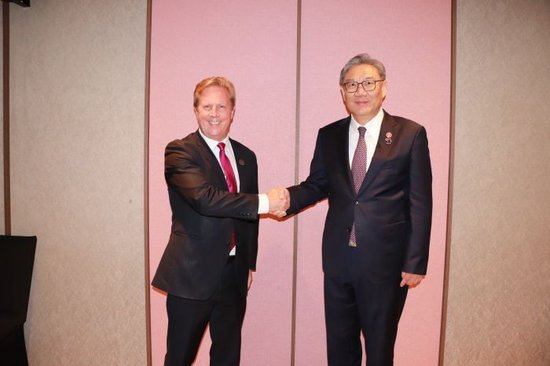
麦克莱表示,新西兰重视发展对华关系,两国在区域和多边领域始终保持密切沟通和合作。今年6月, 拉克森总理成功访华,新中两国发表了领导人会晤联合成果声明,一致同意进一步深化经贸等领域合 作。新方愿与中方深化区域经贸合作,维护以世贸组织为核心的多边贸易体制,推进世贸组织进行必要 改革。 王文涛指出,中方始终坚定支持和维护以世贸组织为核心的多边贸易体制。在当前国际经贸形势下,中 新双方应加强在世贸组织、亚太经合组织和相关区域贸易安排等框架下的沟通协作,共同反对贸易保护 主义,推动全球贸易在世贸组织框架下顺畅运行,为世界经济注入更多稳定性与确定性。 人民财讯11月2日电,10月31日,商务部部长王文涛在韩国庆州会见新西兰贸易部长麦克莱。双方就中 新经贸关系、区域经贸合作、多边贸易体制等议题进行交流。 ...
王文涛部长会见新西兰贸易部长麦克莱
Shang Wu Bu Wang Zhan· 2025-11-02 12:44
Core Points - The meeting between Chinese Commerce Minister Wang Wentao and New Zealand Trade Minister McClay emphasized the importance of enhancing bilateral economic cooperation and deepening practical collaboration across various fields [2][3] - Both parties agreed to expedite negotiations on the negative list for the free trade agreement to create better conditions for bilateral service trade development [2] - China remains committed to supporting the multilateral trade system centered around the World Trade Organization (WTO) and opposes trade protectionism [2] Summary by Categories Bilateral Relations - The leaders of China and New Zealand have agreed to place cooperation in a more prominent position within their bilateral relationship, highlighting the complementary nature of their economies and the deep integration of interests [2] - The successful visit of New Zealand Prime Minister Luxon to China in June resulted in a joint statement to further deepen cooperation in economic and other fields [2] Trade Cooperation - Both countries expressed a desire to enhance regional economic cooperation and maintain the multilateral trade system led by the WTO, with a focus on necessary reforms within the organization [3] - The emphasis was placed on strengthening communication and collaboration within frameworks such as the WTO and APEC to ensure smooth global trade operations [2][3]

特朗普谁的面子都不给!加拿大总理亲自道歉,美:道歉接受谈判免谈
Sou Hu Cai Jing· 2025-11-02 06:09
Core Viewpoint - Canadian Prime Minister Carney has apologized to U.S. President Trump for an advertisement commissioned by the Ontario government that criticized U.S. trade tariff policies using footage of former President Reagan [1][2] Group 1: Advertisement Controversy - The advertisement, which aired earlier this month, used clips from Reagan's 1987 speech on trade policy and his stance on tariffs against Japan, suggesting that he opposed trade protectionism [2] - The Reagan Presidential Foundation criticized the Ontario government for unauthorized use of the footage and for distorting Reagan's historical record [2] Group 2: Trade Relations Impact - Trump reacted strongly, labeling the Canadian actions as "out of line" and announced a suspension of ongoing trade negotiations with Canada, along with additional tariffs on Canadian imports [4] - Carney emphasized the importance of U.S.-Canada trade relations and noted that prior negotiations in steel, aluminum, and energy had made progress before the advertisement controversy [4][5] Group 3: Future Negotiations - Despite Carney's apology, Trump has indicated that he does not plan to resume negotiations, maintaining that the advertisement misrepresented facts [5] - The ongoing high tariffs on Canadian steel and aluminum exports to the U.S. and the pressures on the automotive sector highlight the strained trade relationship, with international observers closely monitoring the situation for potential diplomatic resolutions [5]

中美贸易战按下暂停键:釜山会晤给世界经济吃下“定心丸”,24%“反制关税”暂停一年
Sou Hu Cai Jing· 2025-10-31 09:40
Group 1 - The meeting between Chinese President Xi Jinping and U.S. President Donald Trump on October 30 marks a significant historical moment, being their first meeting in six years and the first during Trump's new term [2] - The discussions focused on U.S.-China economic and trade relations, with both sides agreeing to enhance cooperation in these areas [2] - Following the meeting, the Chinese Ministry of Commerce announced the outcomes of negotiations in Kuala Lumpur, including the U.S. decision to cancel the 10% "Fentanyl tariff" on Chinese goods and to suspend the 24% "reciprocal tariff" for one year [2][4] Group 2 - The trade negotiations between the U.S. and China have been ongoing since May 2025, with five rounds of talks held, leading to significant tariff reductions and suspensions [3][4] - The recent agreements signify a new phase in U.S.-China economic relations, moving from a period of tension to a more strategic interaction [4] - Analysts suggest that the one-year suspension of tariffs aligns with the upcoming U.S. midterm elections, indicating a desire for a stable economic environment prior to the elections [4] Group 3 - The trade negotiations have highlighted vulnerabilities in the U.S. strategy, particularly in agriculture and rare earths, which are critical to the U.S. market's reliance on China [5] - China's import and export figures remain robust, with a total trade volume of 33.6 trillion yuan in the first three quarters of 2025, reflecting a 4% year-on-year increase [5][6] - Despite external challenges, China's economy has shown resilience, achieving a 5.2% growth rate in the same period, supported by strong export performance to non-U.S. markets [6]

中钢协:前三季度我国钢材出口同比增长 但压力和风险增加
Xin Hua Cai Jing· 2025-10-31 05:39
Core Insights - China's steel industry is experiencing increased export pressure and risks due to tightening global trade conditions [1][2] Group 1: Export and Import Data - In the first three quarters, China's steel exports reached 87.96 million tons, a year-on-year increase of 9.2% [1] - The average export price was $697 per ton, reflecting a year-on-year decrease of 9.5% [1] - The total export value amounted to $61.3 billion, a year-on-year decline of 1.2% [1] - Steel imports totaled 4.53 million tons, a year-on-year decrease of 12.6% [1] - The average import price was $1,692 per ton, showing a year-on-year increase of 1.1% [1] - The net steel export volume was 96.76 million tons, a year-on-year increase of 21.0% [1] Group 2: Export Characteristics and Challenges - Since the beginning of the year, China's steel exports have shown diversification in flow and variety [1] - Exports of hot-rolled and cold-rolled steel products have significantly decreased due to anti-dumping investigations [1] - The export volume of steel billets has tripled compared to the same period last year, although the export price has decreased [1] - Following the removal of additional tariffs in 2021, steel billet exports have consistently increased in volume but decreased in price [1] Group 3: Trade Barriers - The steel industry is facing heightened trade friction as international trade protectionism rises [2] - In 2024, China encountered 33 cases of trade remedy investigations against its steel products, with 25 cases occurring this year [2] - Various technical and non-tariff measures are contributing to increased trade barriers, amplifying export pressures and risks [2]
马来西亚学者展望APEC:中国方案助推深化亚太地区合作
Nan Fang Du Shi Bao· 2025-10-31 05:26
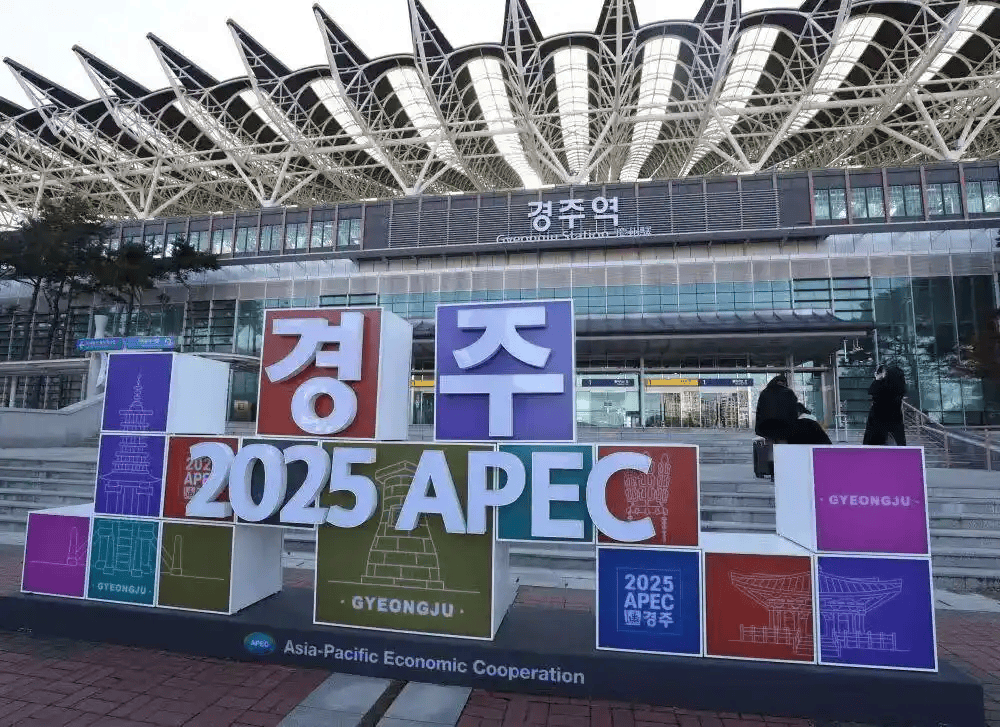
Core Insights - The APEC 32nd Informal Leaders' Meeting will be held in Gyeongju, South Korea from October 31 to November 1, focusing on multilateral cooperation amidst rising unilateralism and trade protectionism [1][2] - The theme "Building a Sustainable Tomorrow - Connectivity, Innovation, Prosperity" reflects APEC members' consensus on promoting sustainable, innovative, and cooperative development in the new era [1] Group 1 - APEC serves as an inclusive and influential economic cooperation mechanism, providing a non-confrontational platform for multilateral cooperation among its members [2] - Strengthening regional cooperation and connectivity is essential for maintaining open and stable economic growth in a turbulent world [1][2] - Technological innovation is identified as the main driver of economic growth for Asia-Pacific economies in the 21st century, with APEC members sharing common goals in digital economy, green technology, artificial intelligence, and renewable energy [1] Group 2 - Malaysia, as a core member of ASEAN, can leverage APEC to enhance supply chain resilience and trade facilitation, attracting high-end manufacturing and green investments [2] - China's proposals, such as the "Digital Silk Road" and "Smart Connectivity," aim to promote digital trade, cross-border e-commerce, and AI cooperation, sharing technological benefits with other Asia-Pacific countries [2] - China's open and win-win philosophy, green transformation practices, and digital cooperation ideas provide a reference for APEC's future agenda, promoting more inclusive, sustainable, and high-quality regional cooperation [2]
这是对保护主义的集体反击
Sou Hu Cai Jing· 2025-10-30 22:44
Core Points - The APEC 32nd Leaders' Informal Meeting was held in Gyeongju, South Korea, from October 31 to November 1, focusing on the theme "Building a Sustainable Tomorrow" [1] - APEC is a significant cooperation platform encompassing 21 economies along the Pacific Rim, promoting economic integration in the Asia-Pacific region through a unique operational model [3] - The meeting emphasized three priority areas: enhancing connectivity, promoting innovation, and achieving inclusive growth and prosperity [3][4] Group 1 - APEC's commitment to "open regionalism" has facilitated trade and investment liberalization, benefiting both member economies and external economies, thus enhancing the global multilateral trading system [3] - The meeting serves as a collective response to protectionist sentiments, reinforcing support for a rules-based multilateral trading system and providing a platform for major economies like China, the U.S., Japan, and South Korea to coordinate and manage disputes [4] - The "2040 APEC Putrajaya Vision" outlines a grand blueprint for the Asia-Pacific region, emphasizing openness, vitality, resilience, and peace, aligning with future development needs [4] Group 2 - The Asia-Pacific region accounts for one-third of the world's population, over 60% of the global economy, and nearly half of global trade, highlighting the importance of cooperation over confrontation [5] - The themes and discussions of the APEC meeting reflect the desire for connection and collaboration among economies in response to the challenges of decoupling and supply chain disruptions [5]
千万吨大豆烂在仓库,美国农民苦劝特朗普,别再和中国对着干了
Sou Hu Cai Jing· 2025-10-29 11:13
眼看千万吨大豆要烂在仓库,忍不了的美国农民苦劝特朗普,别再和中国对着干了。 美国大豆收获季结束,全美大豆丰收,可在中美贸易战冲击下,大豆滞销已不可避免,越来越多的豆农开始催促特朗普政府,尽快与中国达成一份可持续的 新大豆协议。 谁都清楚,中国曾是美国大豆最粗的 "大腿"。前些年中国每年买走的美国大豆能占其出口总量的一半以上,2024 年光大豆一项就给美国农民带来近 128 亿 美元的收入,相当于每两亩大豆地里就有一亩的收成是靠中国市场消化的。那会儿伊利诺伊州的农场主约翰・巴特曼还常跟人说,中国是最靠谱的农业合作 伙伴,订单稳、付款快,比跟其他国家打交道省心多了。可自从特朗普政府对华加征关税,这一切全变了。 中方不得不采取反制措施,对美国大豆加征了 23% 的关税,一下子就让美国大豆失去了价格优势。要知道巴西、阿根廷的大豆进入中国只需要交 3% 的关 税,这么一对比,美国大豆在市场上根本站不住脚。更要命的是,中国早就开始布局多元化采购,不再把鸡蛋放一个篮子里。2016 年的时候美国大豆还占 中国进口量的 40%,到 2024 年就跌到了 22.8%,2025 年更是惨,9 月份中国从美国进口的大豆直接归零,这是 ...

特朗普又出奇招!欧美共同给中国加500%关税,钱送给乌克兰买武器
Sou Hu Cai Jing· 2025-10-29 03:45
Core Viewpoint - The proposed "Ukraine Victory Fund" by Trump aims to provide military aid to Ukraine through a significant tariff increase on certain Chinese goods, specifically targeting non-essential industrial products, with an estimated annual revenue of approximately $48 billion for this fund [3][9][19]. Group 1: Tariff Plan - Trump plans to impose tariffs as high as 500% on specific Chinese goods, including electric vehicles and electronic components, which could generate around $48 billion annually for military support to Ukraine [3][9]. - The tariff plan is not aimed at all Chinese products but focuses on non-essential industrial goods, which raises concerns about its feasibility and potential economic impact [9][11]. - The proposed tariff rate of 500% far exceeds typical international trade norms, which usually range from 5% to 15%, raising questions about its practicality [14]. Group 2: Economic Implications - If implemented, the 500% tariff could significantly increase the prices of imported goods, potentially leading to a rise in domestic prices and affecting consumer demand [14][16]. - The U.S. has a high dependency on Chinese imports in sectors like electric vehicles, with 38% and 29% reliance on China for electric vehicles and electronic components, respectively [14]. - The U.S. International Trade Commission (ITC) has indicated that such high tariffs could lead to a 1.8% increase in the domestic price index and may not reduce the trade deficit as intended [17]. Group 3: Aid to Ukraine - The "Ukraine Victory Fund" is expected to raise $48 billion annually, which would only cover about 61.5% of Ukraine's monthly military needs, highlighting a significant gap between projected funding and actual requirements [19][21]. - The fund's reliance on tariffs means that any decrease in imports could lead to reduced funding for Ukraine, complicating the aid process [21]. - The implementation of the tariff policy could take 6 to 8 months, which does not align with Ukraine's immediate military needs [21]. Group 4: International Reactions - The EU has reacted coolly to the proposed tariffs, emphasizing its independent trade policy and the potential negative impact on its economy [22]. - Key EU countries like Germany and France have expressed concerns about the economic burden that high tariffs would impose on their industries, particularly in the automotive and agricultural sectors [22][24]. - The proposed tariffs could provoke retaliatory measures from China, further escalating trade tensions and potentially harming U.S. agricultural and energy exports [24]. Group 5: Conclusion - The "500% tariff plan" appears more as a political gesture rather than a feasible policy, aimed at demonstrating U.S. support for Ukraine ahead of Trump's meeting with Zelensky [26]. - The plan faces significant economic, legal, and political hurdles that make its immediate implementation unlikely [26].