中美经贸博弈

Search documents
谈完之后各自出手!中方约谈英伟达,美财长罕见承认:没有筹码对中方提要求,美国斗不赢的
Sou Hu Cai Jing· 2025-08-02 16:58
Group 1 - The core viewpoint of the article highlights the ongoing strategic competition between the US and China, particularly in the context of recent trade talks and subsequent actions taken by both nations [1][3][8] - The US is employing tariffs against countries like India and Brazil as a means to exert pressure and compensate for unmet goals in negotiations with China, indicating a strategy to isolate China internationally [3][8] - The US Secretary of the Treasury's admission that the US lacks leverage in certain key areas against China signifies a shift in power dynamics, suggesting that the US is struggling to maintain its influence [1][8] Group 2 - China's response to US provocations includes direct engagement with Nvidia regarding security concerns over its chips, reflecting China's commitment to safeguarding its technological sovereignty [5][8] - The article emphasizes that China's negotiation team demonstrated strong capabilities and a willingness to engage in dialogue while firmly protecting national interests, showcasing China's growing influence in trade discussions [8] - The US's strategy of applying pressure through tariffs and political provocations is seen as ineffective, leading to a situation where the US is unable to concentrate its resources effectively against China [8]


2025年上半年人民币汇率走势回顾及下半年展望
Sou Hu Cai Jing· 2025-07-16 02:49
Core Viewpoint - The article discusses the resilience of the Chinese yuan (RMB) against the backdrop of a complex international environment, highlighting the positive trends in China's economy and the implementation of proactive macroeconomic policies to maintain stability in the RMB exchange rate [1][5]. Group 1: RMB Exchange Rate Trends - In the first half of 2025, the RMB appreciated nearly 2% against the USD compared to the end of the previous year, while the USD index fell over 10%, marking its worst performance since 1973 [2]. - The RMB exchange rate showed strong resilience, with a 0.65% appreciation in the first quarter, supported by effective policy measures and a stable domestic economy [2][4]. - The second quarter saw the RMB experience fluctuations due to US-China trade tensions, with the exchange rate initially depreciating before recovering to below 7.2 [3][4]. Group 2: Economic Indicators - In the first five months of the year, fixed asset investment grew by 3.7%, retail sales increased by 5%, and exports rose by 7.2%, indicating a positive economic performance that supports the RMB [5]. - The international balance of payments remained stable, with a surplus of $101.9 billion in foreign exchange payments, reflecting foreign investors' confidence in RMB assets [9]. Group 3: Future Outlook - The RMB is expected to experience fluctuations in the second half of the year, influenced by ongoing US-China trade negotiations and the potential for US economic weakening [5][6]. - The US economic slowdown and the Federal Reserve's potential interest rate cuts are anticipated to exert downward pressure on the USD, contributing to a dual-directional fluctuation of the RMB [7][8]. - Geopolitical risks and uncertainties in international trade negotiations may lead to temporary shocks in the RMB exchange rate, necessitating close monitoring of the situation [9].
兔主席:中美经贸博弈的底层逻辑已经转变,中国如何“点穴”美国?
Guan Cha Zhe Wang· 2025-07-06 01:39
Group 1: US-China Trade Relations - The core point of the recent US-China trade talks is the establishment of a "framework of measures" aimed at conditional cooperation, moving from sanctions to collaboration [1][2] - The trade discussions in London signify a shift in the underlying logic of US-China economic competition from traditional tariff wars to more complex issues involving supply chain and technology battles [1][2] - Trump's tariff war against China does not represent a broad consensus in the US, as it lacks political support and economic conditions [2][5] Group 2: Tariff Policies and Market Reactions - Trump's tariffs have faced significant opposition from various sectors, including consumers and financial elites, leading to a decline in market confidence [5][9] - The average tariff rate in the US has reached 18.8%, the highest since the 1930s, but the market currently believes it can absorb these costs without significant inflation [7][8] - The capital market's reaction to Trump's tariffs has been a major constraint on his policies, with the S&P 500 index experiencing a 19% drop from its peak [5][9] Group 3: Technology Export Controls - The true consensus in US policy towards China lies in technology export controls, which have become the main focus of US-China competition [11][12] - The Biden administration has maintained Trump's tariffs while shifting the focus to technology export restrictions, indicating a strategic decoupling in sensitive areas [11][12] - The US aims to limit China's development in strategic industries through various measures, including cutting off resources and technology [12][13] Group 4: China's Strategic Responses - In response to US technology export controls, China has implemented targeted measures, particularly in the rare earth sector, significantly reducing exports to the US [16][17] - China's dominance in the rare earth market, accounting for 70% of global production, gives it a strategic advantage in the ongoing trade conflict [16][17] - The recent framework agreement reflects a temporary arrangement where both countries are engaging in a supply chain balancing act, indicating a new era of economic competition [21][23] Group 5: Future Implications and Strategic Opportunities - The current geopolitical landscape presents China with a strategic opportunity to enhance its technological capabilities and self-sufficiency in critical areas [25][26] - The unpredictability of Trump's policies may create openings for China to negotiate and adjust its strategies effectively [24][25] - China's focus on technological innovation and resource management will be crucial in navigating the ongoing US-China competition [26]
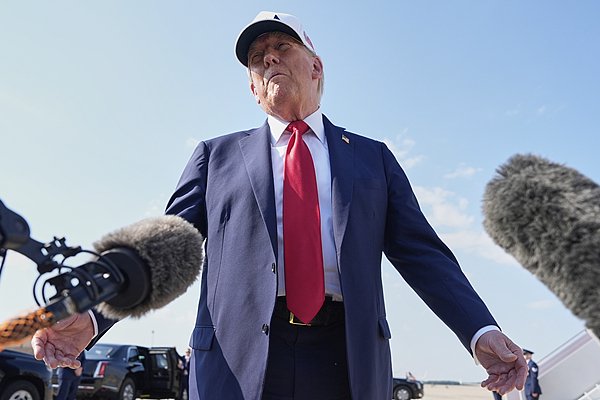
美国想要的,中方终于松口!特朗普突然公布喜讯,稀土有着落了
Sou Hu Cai Jing· 2025-06-29 14:41
Group 1 - The recent trade agreement between the US and China focuses on rare earth elements, which are crucial for various industries, including military and high-tech sectors [3][4][5] - The US has become increasingly dependent on China's rare earth supplies, especially for military equipment and advanced technology production [3][4] - The agreement includes provisions for China to approve export applications for controlled items, likely including rare earths, while the US will lift certain trade restrictions [4][5] Group 2 - The political context surrounding the agreement is significant, as President Trump aims to announce a deal before the July 4th Independence Day to bolster his domestic standing [5] - Despite the agreement, uncertainties remain regarding the stability of rare earth imports from China, as the approval process for export licenses is subject to China's discretion [5][7] - The trade agreement is seen as a step towards easing tensions in US-China relations, benefiting both countries' economies and potentially impacting global economic dynamics [7]
博时市场点评6月11日:沪深两市修复,创业板涨超1%
Xin Lang Ji Jin· 2025-06-11 08:13
Group 1 - The first meeting of the China-US economic and trade consultation mechanism took place on June 10, with both sides reaching a framework to implement the consensus from the June 5 call between the two heads of state and the Geneva talks [2] - The meeting is expected to enhance trust between China and the US, promoting a stable and healthy development of economic relations, which injects positive energy into global economic growth [2] - The Chinese government has issued opinions to deepen reforms and expand openness in the Shenzhen pilot area, aiming to promote high-quality development through institutional innovation [2] Group 2 - The World Bank has lowered its global economic growth forecast for 2025 from 2.7% to 2.3%, marking the second-lowest level since the 2009 financial crisis, with nearly 70% of countries seeing downward adjustments [3] - The economic growth forecast for the US has been reduced by 0.9 percentage points to 1.4%, while the Eurozone and Japan's growth expectations have been adjusted to 0.7% [3] - The current global economic landscape is facing complex challenges, with weakened economic vitality in major developed countries and uncertainties in trade and tariff policies affecting market confidence [3] Group 3 - On June 11, the A-share market saw an increase, with the Shanghai Composite Index rising by 0.52% to 3402.32 points, and the ChiNext Index increasing by 1.21% to 2061.87 points [4] - Among the sectors, non-ferrous metals, agriculture, forestry, animal husbandry, and fishery showed strong performance, with increases of 2.21%, 2.02%, and 1.90% respectively [4] - A total of 3280 stocks rose while 1678 stocks fell, indicating a generally positive market sentiment [4] Group 4 - The market turnover was reported at 12,868.70 billion, showing a decline compared to the previous trading day, while the margin financing balance increased to 18,169.95 billion [5] - The formation of a MACD golden cross signal suggests a positive trend for certain stocks [6]

中美“休战”之后,谈判局面让美国很失望,中国对特朗普留了一手
Sou Hu Cai Jing· 2025-06-09 05:12
Group 1 - The core point of the article highlights the complexities and underlying tensions in the recent US-China trade negotiations, despite the temporary tariff reductions agreed upon [1][3][6] - The US has agreed to suspend 24% tariffs on Chinese goods for 90 days while maintaining a 10% tariff, and China has reciprocated by modifying tariffs on US goods [1][3] - Following the announcement, there was a significant surge in shipping orders from China to the US, with container transport orders increasing by nearly 300% [1] Group 2 - The US Treasury Secretary indicated that the trade negotiations are currently "somewhat stagnant," suggesting underlying issues remain unresolved [3] - The Trump administration has continued to impose restrictions on Chinese technology, including a global ban on Chinese chips and proposed new tariffs on cranes [3][5] - China's response to US tariffs has been to implement equivalent countermeasures, emphasizing a principle of reciprocity in negotiations [3][5] Group 3 - The US faces increasing legal challenges regarding its tariff policies, with courts ruling that some tariffs may be overreaching, complicating the administration's position [5] - The US is experiencing high inflation and supply chain disruptions, which are pressuring the government to soften its stance on tariffs [5] - China holds a dominant position in rare earth elements, controlling 90% of the separation technology and significantly impacting the US military supply chain [5][6] Group 4 - The recent trade talks are seen as a foundation for future economic cooperation, but the effectiveness of ongoing communication will determine global economic stability [6][8] - The 90-day truce may only serve as a pause in the ongoing US-China economic rivalry, with rare earths likely to be a focal point in future conflicts [6][8] - The article suggests that the outcome of the negotiations will depend on the US's ability to adopt a cooperative approach rather than a zero-sum mindset [8]
早就不对美国抱有幻想了!中国给特朗普定了性,一切都在准备当中
Sou Hu Cai Jing· 2025-05-26 04:12
Group 1 - The core viewpoint is that China has recognized the unpredictable nature of the Trump administration, oscillating between extreme pressure and hasty compromises in trade negotiations [1][3] - China does not hold any illusions about the U.S. and is prepared for various scenarios, reflecting a clear understanding shaped by historical lessons [1][3] - Recent high-level economic contacts between China and the U.S. have led to significant progress, including the establishment of a consultation mechanism and mutual tariff reductions [3][5] Group 2 - The U.S. cannot truly decouple from China, as both economies are interdependent, with significant trade ties that cannot be easily severed [5][8] - The ongoing tariff battle serves as a lesson in international relations, demonstrating that strength and preparedness are crucial in dealing with aggressive tactics [5][8] - The situation highlights that engaging in dialogue with a bully is less effective than demonstrating strength, emphasizing that respect must be earned through assertiveness [8]
中美局势大反转,中国最先超过美国的不止经济?引全世界关注
Sou Hu Cai Jing· 2025-05-24 09:23
Group 1 - Senator Rand Paul argues that the Trump administration exaggerated the trade deficit with China, suggesting that trade deficits do not have significant economic implications, as both countries have prospered despite the deficit [1] - The current economic dynamics between China and the U.S. can be simplified as a game between a seller with monopoly power (China) and a buyer with monopoly power (the U.S.), with U.S. businesses struggling to find alternatives to Chinese suppliers in the short term [3] - China dominates the rare earth market, accounting for over 60% of global production and 92% of processing, which poses risks to U.S. industries reliant on these materials, particularly in military and high-tech sectors [3] Group 2 - Rare earth elements are critical for various industries, including electronics and defense, as they enhance the capabilities of materials used in military equipment [6] - The U.S. faces increasing internal economic and political challenges, with agricultural states urging improved relations with China, while the military-industrial complex pushes for a tougher stance, complicating the political landscape for future administrations [6] - The U.S. unilateral tariff policies have led to backlash from traditional allies, damaging its international reputation and complicating trade relations [6]
特朗普关税豪赌输了?一切全在中方预判中,巴西成最大赢家
Sou Hu Cai Jing· 2025-05-07 16:21
Trade Impact - The increase in tariffs by the Trump administration is expected to significantly impact China's exports to the U.S., leading to reduced order volumes and declining profits for Chinese companies that export electronics, textiles, and automotive products [4][6] - The average tariff rate imposed by the U.S. on Chinese goods has surged to 30.9% following the latest rounds of tariff increases [3] Industry Response - Industries heavily reliant on exports and global supply chains, such as electronics, textiles, and automotive manufacturing, are facing notable challenges due to increased tariffs [6] - The automotive sector is particularly affected, with tariffs on imported vehicles and parts disrupting production and sales across related enterprises [6] - In response, Chinese companies are accelerating their transformation and upgrading processes, focusing on enhancing product innovation and localizing supply chains to reduce dependency on foreign sources [6] Agricultural Sector - The U.S. agricultural sector has suffered significant losses due to tariffs, with soybean exports to China plummeting by 50% in 2018, resulting in an economic loss of $2 billion [7] - China's diversification strategy in agricultural imports has successfully reduced reliance on U.S. products, with the share of U.S. soybeans in China's imports dropping from 40% in 2016 to 18% in 2024 [7] Economic Resilience - Despite the challenges posed by U.S. tariffs, China's economy demonstrates strong resilience, with efforts to expand markets, upgrade industries, and optimize the investment environment mitigating the impact of tariff-related disruptions [7] - The U.S. economy, on the other hand, faces rising inflation pressures, increased consumer burdens, and heightened risks of recession as a consequence of its tariff policies [7]
福耀玻璃董事长曹德旺:不管美国加多少税,反正不赚钱我是不卖!
Sou Hu Cai Jing· 2025-04-15 06:33
【开篇:中国"玻璃大王"硬刚美国关税】 "关税加到100%我也不怕,不赚钱的生意我绝对不做!" 2024年5月,76岁的福耀玻璃董事长曹德旺在美国俄亥俄州工厂撂下这句狠话时,现场的美方代表脸都绿了。 这个被美国人称为"中国玻璃暴君"的老头,正用最朴素的生意经给白宫上一课——你们想用关税逼我低头?我曹德旺宁可把机器砸了也不当冤大头! 这一幕发生在中美贸易战升级的关键时刻。 美国刚刚宣布对中国汽车玻璃加征35%关税,而福耀作为全球第二大汽车玻璃制造商,首当其冲。 但让华盛顿没想到的是,这个中国老板不仅没跪,反而反手就关闭了两条生产线,裁掉300名美国工人,直接放话:"要么让我赚钱,要么我撤资走人!" 曹德旺的"美国噩梦"与绝地反击 墨西哥工厂紧急扩产,专门承接原属美国的订单。因为美墨自贸协定,从墨西哥出口玻璃到美国关税为零。" 从中国运玻璃要交35%税,但从墨西哥运过去免税,你说我把厂建在哪?"曹德旺笑得像个老狐狸。 时间拨回2014年,曹德旺投资5亿美元在美国建厂时,曾被捧为"中美经贸合作典范"。 俄亥俄州政府给他送上1.8亿美元补贴,时任副总统拜登亲自剪彩,媒体欢呼"中国制造在美国重生"。 但蜜月期没过多久就 ...