
人工智能大模型

Search documents
上海警方在全国首创“交通治堵大模型” 目前试点路口平均车速提升12.9%
Xin Lang Cai Jing· 2026-01-15 12:12
Core Insights - Shanghai police have launched a pioneering "Traffic Congestion Control Model" that can quickly detect traffic congestion, accurately analyze its causes, and generate comprehensive strategies for alleviating congestion [1][2] - The model has been deployed at 360 intersections in Shanghai, resulting in an average speed increase of 12.9% at these locations [1][2] Group 1: Model Development and Features - The "Traffic Congestion Control Model" builds on the existing "Easy PASS" system, which addresses four key congestion issues: where congestion occurs, why it happens, how to alleviate it, and the effectiveness of measures taken [1] - The model has undergone five rounds of optimization, achieving an accuracy rate of 96.7% in congestion alerts [1] - It has learned from over 950,000 pieces of traffic management knowledge, enabling it to generate traffic signal control plans after 48 rounds of tuning [1] Group 2: Implementation and Results - By the end of December 2025, the model will be applied at 360 intersections, with initial results showing an increase in average speed from 21.87 km/h to 24.53 km/h, a 12.9% improvement [2] - At the Chang Hai Road and Heng Ren Road intersection, the model identified congestion caused by a saturated parking lot, leading to a 51.2% increase in average speed from 17.5 km/h to 26.4 km/h despite a 19.1% increase in traffic flow [2] Group 3: Future Plans - Shanghai police aim to deploy the model at over 1,800 intersections by the end of October 2026 [3]
守护大美生态的“天眼”将更清晰更智慧
Xin Hua She· 2026-01-13 13:38
Core Viewpoint - The implementation of the "Ecological Environment Monitoring Regulations" aims to establish a comprehensive ecological environment monitoring network that integrates land and sea, space and ground, and promotes information sharing, utilizing advanced remote sensing technologies like satellites and drones to enhance ecological protection efforts [1][2]. Group 1: Remote Sensing Technologies - Remote sensing technologies, including satellites and drones, are essential for ecological monitoring and protection due to their high precision, short cycle, and comprehensive capabilities [1]. - The Ministry of Ecology and Environment has significantly improved its satellite remote sensing capabilities since the 14th Five-Year Plan, currently operating seven ecological environment satellites to form a multi-satellite monitoring system [1][2]. Group 2: Habitat Monitoring - High-frequency satellite data serves as a powerful tool for low-cost detection of habitat destruction, enabling timely monitoring of human activities within critical habitats [2]. - The remote sensing monitoring system established by the Ministry includes regular monitoring of ecological protection red lines and natural reserves, providing robust support for habitat management [2]. Group 3: Drone Applications - Drones are widely used in ecological monitoring due to their flexibility, high resolution, and cost-effectiveness, bridging the gap between ground surveys and satellite data [2][3]. - In Inner Mongolia, drones can automatically collect grassland species data and transmit high-definition images in real-time, achieving an identification accuracy of 88.6% for various plant species [3]. Group 4: Future Developments - New technologies, such as medium fixed-wing drones and multifunctional ecological patrol vehicles, are being developed to enhance habitat information collection and wildlife monitoring [3][4]. - Experts suggest that further integration of remote sensing technology with artificial intelligence will lead to more advanced ecological monitoring systems, contributing significantly to the construction of a beautiful China [4].
北京丰台:创新推出全市首个质量融资增信产品“丰质贷” 助企获得超5亿元融资支持
Bei Jing Shang Bao· 2026-01-13 13:37
Core Viewpoint - Fengtai District is focusing on enhancing market quality and optimizing the business environment by launching innovative financing products and promoting quality recognition for enterprises [1] Group 1: Financing and Support - Fengtai District has introduced the "Fengzhidai," the first quality financing credit enhancement product in the city, which has helped 58 enterprises secure a total of 510 million yuan in financing support, with 55 of these being private enterprises [1] - The district emphasizes the cultivation of quality-driven enterprises, with new quality honors being awarded, including the Beijing Government Quality Management Award to Yiwens Clothing and the China Quality Award to the Beijing Microelectronics Technology Research Institute [1] Group 2: Service and Environment Improvement - The "Fengyi Service" brand has been deepened, leading to the application of AI large models in government services, resulting in the establishment of 105 "efficient completion of one matter" scenarios [1] - The implementation of the "Twelve Measures for Business Environment" has expanded the enterprise service package to 4,250 companies, creating a proactive service ecosystem with precise policy delivery [1] Group 3: Future Development Goals - During the 14th Five-Year Plan period, Fengtai District has accumulated strong momentum for economic development, with clear goals for the 15th Five-Year Plan focusing on integrated rural urbanization, urban modernization, and comprehensive scenario development [1] - The district will continue to concentrate on the "4+5+X" modern industrial system, strengthening key functional areas and promoting the deep integration of technological innovation and industry [1]
政策资本双轮驱动 脑机接口技术落地与商业化提速并进
Zhong Guo Zheng Quan Bao· 2026-01-12 20:49
Core Insights - The brain-computer interface (BCI) industry in China is experiencing significant advancements, with clinical results emerging for high-level paraplegics and substantial funding rounds, including a recent 2 billion yuan investment in a non-invasive unicorn company, Strong Brain Technology, marking the second-largest funding record globally in this field [1][2] - The industry is poised for rapid commercialization, driven by technological breakthroughs, capital influx, and supportive policies, as it transitions from cutting-edge technology to practical applications in daily life [1][5] Technological Breakthroughs - Recent advancements in BCI technology include successful clinical trials for invasive systems, enabling high-level paraplegics to control smart wheelchairs and robotic dogs [2][3] - Companies like JieTi Medical and Chip Intelligence have made significant progress, with JieTi completing trials for its invasive BCI system and Chip Intelligence's semi-invasive product achieving human implantation [2][3] - The first clinical trial of a fully implanted, wireless BCI product by Brain Tiger Technology has shown promising results, allowing an 8-year paraplegic patient to achieve thought control just five days post-surgery [2][3] Policy and Capital Support - The BCI sector benefits from comprehensive policy support, including its designation as one of the six future industries in the 14th Five-Year Plan, which elevates it to a national strategic priority [5][6] - Recent initiatives by the Sichuan provincial medical insurance bureau have established pricing for 82 neuro-related medical services, including BCI applications, facilitating clinical adoption [5][6] - The establishment of industry standards by the National Medical Products Administration is expected to lower costs and risks associated with technology development and clinical application [6] Industry Collaboration and Investment - Companies like Baiyang Pharmaceutical are actively collaborating with academic institutions to explore the integration of BCI with artificial intelligence, aiming for innovative clinical solutions [7] - Other listed companies are also engaging in the BCI space through material supply and equipment development, indicating a strong interest from institutional investors [7] Future Development and Challenges - The BCI industry is anticipated to move towards standardization and scalability, with initial industry standards expected to be established by 2027-2028 [8] - Potential constraints include the pace of chip design and production, as well as the need for ethical regulations regarding personal brain data [8] - Despite these challenges, the domestic BCI industry holds significant advantages, including strong policy support, a vast clinical resource base, and a comprehensive supply chain [8] Investment Opportunities - The BCI sector presents a dual investment opportunity in both medical and technological domains, with short-term focus on disease treatment and long-term potential for enhancing human capabilities through integration with AI and robotics [9] - The industry is positioned to cultivate leading global BCI companies, fostering a capital-innovation synergy between primary and secondary markets [9]



智谱与MiniMax上市:从“讲故事”到“交报表” | AI系列
Sou Hu Cai Jing· 2026-01-12 12:41
Core Insights - The article discusses the transition of the AI large model industry from a phase of intense competition to a period focused on commercial validation, marked by the recent IPOs of two major players, Zhiyu and MiniMax [2][17]. Group 1: Business Models and Strategies - Zhiyu adopts a "MaaS" (Model as a Service) approach, focusing on becoming a foundational infrastructure for various industries, emphasizing stability and long-term value [3][5]. - MiniMax, on the other hand, pursues a global C-end strategy, leveraging its innovative product offerings and aiming for rapid market penetration [3][5]. - Both companies' paths reflect their foundational philosophies and strategic judgments regarding the commercialization of AI [4]. Group 2: Financial Performance - Zhiyu's revenue is projected to grow from 57.4 million yuan in 2022 to 312.4 million yuan in 2024, with a compound annual growth rate of 130% [7]. - MiniMax's revenue is expected to surge from 3.5 million USD in 2023 to 30.5 million USD in 2024, reflecting a staggering growth rate of 782.2% [8]. - Despite high revenue growth, both companies face significant losses, with Zhiyu accumulating over 6.2 billion yuan in losses from 2022 to mid-2025, and MiniMax around 9.3 billion yuan during the same period [9][10]. Group 3: Industry Dynamics - The successful IPOs of Zhiyu and MiniMax signify a shift in the AI large model industry, moving away from the "parameter competition" era towards a more structured commercial phase [17][22]. - The competitive landscape is evolving, with major internet companies like ByteDance, Alibaba, and Tencent entering the market, leveraging their resources and ecosystems [23][25]. - The article highlights a growing recognition among investors regarding the importance of clear business models and growth potential in the AI sector [21][22]. Group 4: Future Outlook - The article concludes that the paths taken by Zhiyu and MiniMax illustrate the diverse possibilities within the AI industry, with both companies facing similar challenges of high operational costs and the need for sustainable profitability [26][27]. - The successful listings of these companies mark a new beginning in the competition for AI development, emphasizing the importance of continuous iteration and adaptation in the industry [27].


AI大模型迈向价值兑现
Xin Lang Cai Jing· 2026-01-11 22:25
Group 1 - The core viewpoint of the article is that the listing of Zhipu AI on the Hong Kong Stock Exchange marks a significant milestone in the commercialization of AI large models, transitioning from a phase of technical competition to one focused on delivering real value [2] - Zhipu AI, founded in 2019 from Tsinghua University, has developed its own GLM (General Language Model) technology, which is considered one of the few domestic architectures that can compete directly with the GPT system [3] - The company has achieved significant commercial success through its MaaS (Model as a Service) model, serving over 12,000 enterprise clients and more than 80 million end-user devices by September 2025, with revenue doubling for three consecutive years from 2022 to 2024 [3] Group 2 - The competitive landscape for AI large models is intense, with both international and domestic players like Anthropic and MiniMax entering the market, indicating a "dual-hero competition" scenario [4] - Despite Zhipu AI's successful listing, both it and MiniMax are still operating at a significant loss, highlighting the ongoing "burn rate" competition in the industry due to high R&D costs [4] - The next phase of competition will focus on creating actual value rather than just technical prowess, shifting the emphasis from model performance to real-world application depth, economic value, and ecosystem building [4][5] Group 3 - The market is expected to evolve from a fragmented state to a more concentrated one, with leading companies focusing on differentiated competition and ecosystem construction [5] - The application of AI is transitioning from pilot testing to large-scale value creation, with specialized AI solutions emerging for specific industries and tasks [6] - Zhipu AI's listing signifies a shift in how the market values AI companies, emphasizing the need for a robust ecosystem that can establish the rules of the game in the AI era [6]
MiniMax上市大涨109%,29岁“商汤系”跑赢清华精英
Sou Hu Cai Jing· 2026-01-09 18:03
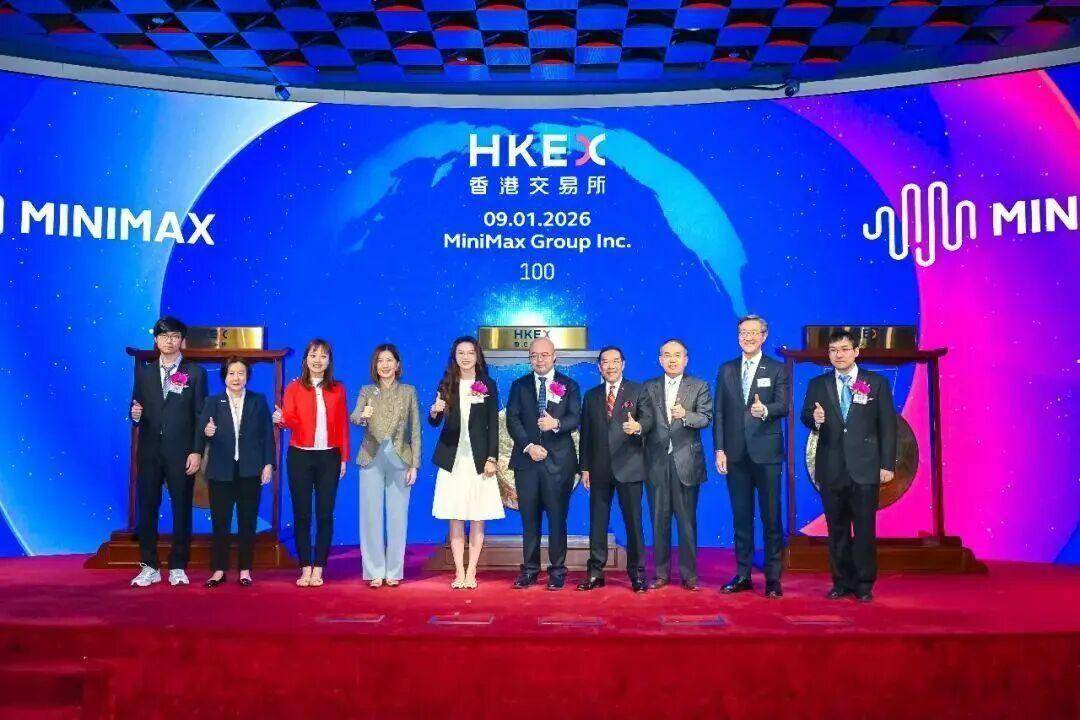
Group 1 - MiniMax, established only four years ago, had a remarkable debut on January 9, with a closing price increase of 109.09%, reaching a market capitalization of 105.4 billion HKD, surpassing the previous day's listing of Zhipu [1][3] - The contrasting market reactions to MiniMax and Zhipu highlight their different business models and growth narratives, with MiniMax focusing on C-end AI applications and over 70% of its revenue coming from overseas, while Zhipu targets the B-end enterprise market [3][4] - Financial data shows MiniMax's cash reserves at 2.57 billion RMB, more than double Zhipu's, with revenue growth from 3.46 million USD in 2023 to 30.52 million USD in 2024, a 782% increase [3][4] Group 2 - Zhipu, founded in 2019, has a strong academic background with a team primarily composed of Tsinghua University professors and PhDs, while MiniMax, founded in December 2021, is led by a younger team from SenseTime, with an average age of 29 [4][5] - MiniMax's product strategy focuses on "model as a product," directly targeting global C-end users with a diverse product matrix, while Zhipu emphasizes deep foundational models and MaaS services for enterprises [6][7] - MiniMax's impressive performance post-listing symbolizes a new entrepreneurial paradigm in the AI large model sector, showcasing its ability to rapidly iterate products and capture global user demand [7][9] Group 3 - MiniMax's global revenue distribution shows significant international reach, with 73.1% of its income coming from overseas markets, including China, Singapore, and the US [7][8] - Despite high growth, MiniMax reported cumulative losses of approximately 1.32 billion USD from 2022 to September 30, 2025, with R&D expenses reaching 180 million USD in the first three quarters of 2025, accounting for 337.4% of total revenue [8] - The differing paths of MiniMax and Zhipu reflect the diverse possibilities in AI commercialization, with Zhipu focusing on industry digitalization and MiniMax pursuing a global consumer approach [8][9]
强金融属性叠加下游补库预期,铁矿石期货大涨4%创近半年新高
Xuan Gu Bao· 2026-01-07 23:33
Group 1: Industry Overview - Iron ore futures rose over 4% on January 7, with a nearly 10% increase over the past two weeks, despite a market characterized by "high supply, weak demand, and high inventory" [1] - The strong financial attributes of iron ore and clear expectations for inventory replenishment are driving price stability, supported by low holding costs and a "near high, far low" contract structure [1] - The steel industry is experiencing a significant recovery in profitability, with total profits in the black metal smelting and rolling industry reaching 111.5 billion yuan from January to November 2025, a year-on-year increase of 1752.2% [1] Group 2: Company Insights - Jinchuan Company believes that the steel industry's anti-involution in 2026 is promising, with supply clearing expected to accelerate [2] - The company highlights that stricter capacity replacement policies in the ordinary steel sector and the acceleration of domestic substitution in the special steel industry will benefit from manufacturing upgrades and technological innovation [2] - Companies like Jinling Mining are noted for their unique iron ore resources and successful application of AI in developing blending models [3]
MiniMax超额认购1209倍
Cai Jing Wang· 2026-01-06 08:09
1月6日,大模型初创公司MiniMax(0100.HK)港股IPO申购正式收官。根据富途证券数据,MiniMax此 次IPO孖展金额录得超2533亿港元,公开发售部分超额认购1209倍。港交所公告显示,MiniMax预计在1 月9日正式登陆港股,拟在香港发售2540万股股票,发售价区间为每股151至165港元,预计募资金额约 为38.34-41.89亿港元。(第一财经) ...
中国脑机接口临床成果加速落地
2 1 Shi Ji Jing Ji Bao Dao· 2026-01-06 04:43
南方财经1月6日电,Neuralink宣布将于2026年开始对脑机接口设备进行"大规模生产"。该动向被视为脑 机接口技术迈入商业化量产阶段的重要信号,引发资本市场高度关注,并驱动相关板块热度升温。在这 一全球产业化进程加速背景下,中国脑机接口产业依托"临床引领、产学研协同"的发展路径,已取得一 系列具有国际影响力的成果。记者获悉,国内多家顶尖医疗机构,如宣武医院、天坛医院、华山医院等 机构在临床试验、电极材料、无线系统等方面取得多项突破。其中,宣武医院赵国光教授团队与清华大 学合作的硬膜外脑机接口临床试验,成功帮助四肢瘫痪患者恢复运动功能,成为全球领先的临床应用案 例。同时,该团队积极推动产学研融合,与百洋医药共建神经网络疾病联合实验室,依托脑机接口与人 工智能大模型探索诊疗新方案,持续深化临床与产业化的对接。(21世纪经济报道) ...