人民币升值

Search documents
人民币,会升破6.8吗?
Hua Er Jie Jian Wen· 2026-02-25 11:28
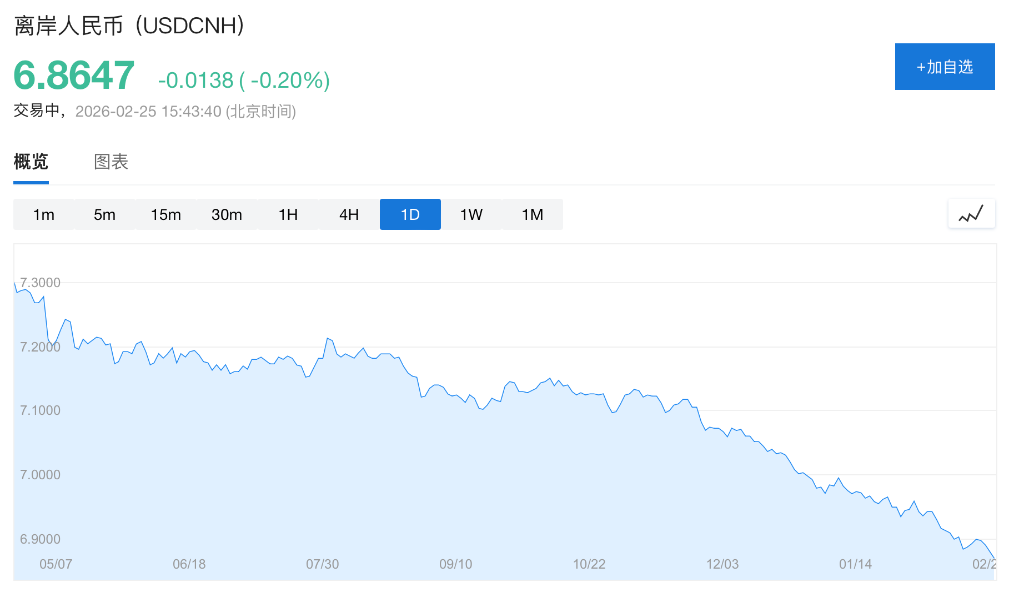
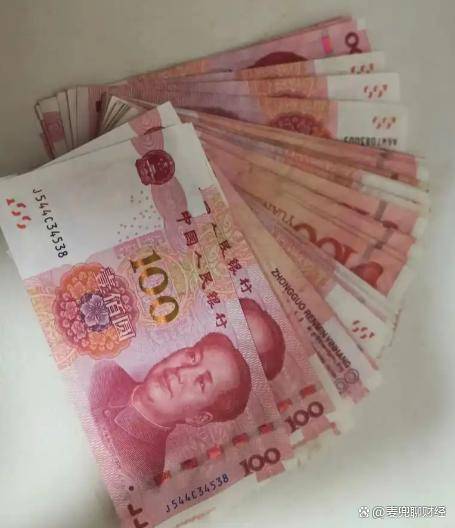
人民币汇率在马年伊始连续两日延续强势,在岸及离岸汇率双双为2023年4月以来最高水平。多家机构判断,本轮升值由美元弱势主导,但人民币 基本面同样构成支撑。只要美元信用尚未修复,叠加自身韧性加持,升值趋势有望延续。 2月25日,在岸人民币兑美元升破6.87关口,报6.8658,离岸人民币报6.8628,日内涨幅均超150点。东方金诚首席宏观分析师王青将本轮升值归结 为三重动力:中美经贸关系自2025年11月回稳,外部环境改善;美元持续走弱带动非美货币集体走强;以及出口企业结汇需求集中释放放大了升 值节奏。 高盛在2月20日的报告中维持人民币12个月目标6.70,认为人民币仍有约22%的低估空间;汇丰在2月16日的报告中将一季度末预测调至6.85,年底 目标降至6.75;财通证券2月15日研报表示,在极端假设下,人民币兑美元汇率存在逼近6.8的可能。若结售汇意愿持续高涨,甚至可能进一步升 值。上述共同指向信用驱动,美元持续恶化是核心动力。 谨慎观点同步浮现。王青提示,2026年美元指数有望企稳,沃什政策的实际影响值得高度关注,今年人民币基准升值的动能或将减弱。中信证券 首席经济学家明明亦指出,随着近期效应消退,企 ...


在岸、离岸人民币对美元汇率均升破6.87,创34个月新高
Sou Hu Cai Jing· 2026-02-25 08:22
Core Viewpoint - The Chinese Yuan (CNY) has been appreciating against the US Dollar (USD) following the Spring Festival holiday, reaching new highs not seen since April 2023 [1][4]. Group 1: Exchange Rate Movements - On February 25, the CNY/USD spot exchange rate broke through the 6.88 and 6.87 levels, peaking at 6.8622, which is an appreciation of over 200 points from the previous trading day [1]. - The offshore CNY also surpassed the 6.87 mark, reaching a high of 6.86179, reflecting an appreciation of over 0.25% from the previous day [2]. - The central parity rate for CNY against USD on February 25 was reported at 6.9321, an increase of 93 basis points [4]. Group 2: Factors Influencing Appreciation - The rapid appreciation of the CNY post-holiday is attributed to the stabilization of China-US trade relations since November 2025, improving the overall external environment for China [4]. - Recent legal investigations into Federal Reserve Chairman Jerome Powell have put pressure on the USD, contributing to its weakness and allowing non-USD currencies, including the CNY, to appreciate [4]. - High demand for currency settlement from previous export growth has accelerated, with bank customer settlement surpluses reaching $99.93 billion and $88.76 billion in December 2025 and January 2026, respectively, marking historical highs [4].
在岸、离岸人民币续创2023年4月以来升值高点
Sou Hu Cai Jing· 2026-02-24 13:52
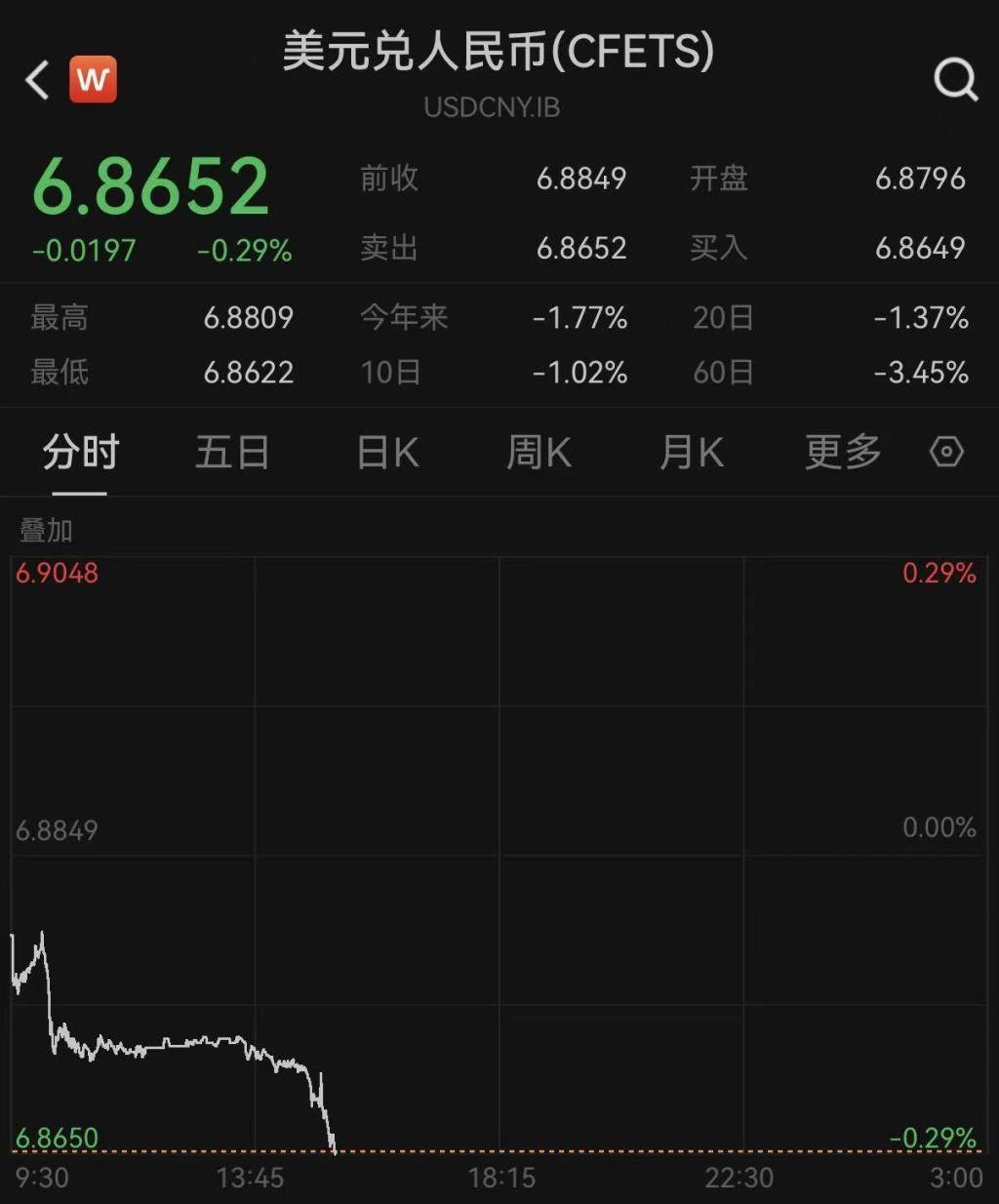
节后首个交易日,在岸人民币对美元再创阶段性新高。24日,在岸人民币对美元汇率小幅高开,午后强 势拉升,带动离岸人民币对美元汇率走势由贬值转为升值。 24日,在岸人民币对美元汇率盘中最高升值至6.8804,离岸人民币对美元汇率盘中最高升值至6.8760, 双双续创2023年4月28日以来升值高点。 东方金诚首席宏观分析师王青分析认为,首先,外部环境改善是人民币走强的重要背景。2025年11月以 来,中美经贸关系回稳,我国整体外部环境趋于缓和。 其次,美元弱势为非美货币打开升值空间。"近期美国司法部对美联储主席鲍威尔发起刑事调查,美联 储独立性受到更大冲击,美元承压;美联储新主席人选的'降息+缩表'主张尚未扭转美元颓势。"王青表 示。 第三,企业结汇需求集中释放形成季节性支撑。王青认为,随着人民币持续走强,此前出口高增累积的 结汇需求正加速释放,叠加年底年初传统结汇旺季,共同推升汇价。 此外,王青还表示,以离岸人民币领涨为标志,这段时间汇市情绪偏高,也在成为助推人民币走势偏强 的一个重要因素。 华泰期货研报指出,近期人民币表现相对稳健,并非单纯受美元波动牵引,内生定价因素占据主导。从 供需结构看,外汇供给端保持平 ...
明天是A股节后首个交易日,机构解读春节四大变量影响
2 1 Shi Ji Jing Ji Bao Dao· 2026-02-23 11:27
Group 1: Tariff Policy Changes - The U.S. Supreme Court ruled against certain tariffs under the IEEPA, affecting approximately half of the tariffs and potentially requiring the government to refund over $175 billion in taxes [3] - The Trump administration quickly shifted to impose a temporary 10% import tariff under the Trade Act of 1974, which was later raised to 15% [3] - Analysts suggest that the new tariffs could raise the average tariff level in the U.S. to between 11% and 18%, indicating ongoing trade tensions [3][4] Group 2: AI and Robotics Industry Growth - The Spring Festival Gala showcased humanoid robots, leading to a significant increase in search and order volumes on platforms like JD.com, indicating strong market interest [5][6] - The humanoid robot index surged after the Spring Festival Gala in 2025, with domestic orders exceeding 4.6 billion yuan, highlighting the industry's nearing commercialization [6] - Major companies like ByteDance and Alibaba have made significant advancements in AI technology, with applications gaining widespread user engagement [7] Group 3: Currency Strength and Market Impact - The Chinese yuan appreciated significantly, reaching the 6.89 range against the U.S. dollar, with a cumulative increase of nearly 1.3% since February [8][9] - Analysts predict that the yuan's strength will enhance the attractiveness of yuan-denominated assets, leading to a trend of foreign capital inflow into Chinese markets [8][9] - The appreciation of the yuan is expected to positively impact the stock, bond, and currency markets, with a notable focus on A-shares and government bonds [8][9] Group 4: Geopolitical Uncertainty - Ongoing geopolitical tensions, particularly between Russia and Ukraine and the U.S. and Iran, are contributing to market volatility [10][11] - The lack of substantial progress in negotiations between Russia and Ukraine, along with escalating tensions in the U.S.-Iran relationship, are key factors influencing global market sentiment [10][11] - Analysts highlight that geopolitical events often lead to price fluctuations in commodities, with gold and oil being critical hedging tools in uncertain times [10][11]
春节人民币强势升值至6.89区间 股债汇三市迎来正面支撑 大类资产如何配置?
Hua Xia Shi Bao· 2026-02-23 02:08
春节期间,人民币汇率走出强势拉升行情。2月21日,人民币汇率稳守6.89区间;2月19日,离岸人民币 最低触及6.88,在岸人民币同步升至6.885,双双刷新2023年4月以来高点。进入2月以来,人民币汇率升 值幅度接近1.3%。 尽管春节长假期间国内股市、债市、汇市三大市场均不开市,但是人民币汇率大涨仍是利好。 "人民币汇率大涨,直白说就是人民币国际购买力变强。假期内换外汇、出境游、留学缴费、海淘代购 金额能省一笔;进口奶粉、化妆品、汽车、燃油成本下降,物价更稳。而从更宏观的层面来说,人民币 这波走强,源于经济预期向好、外资持续流入、贸易支撑有力,市场对人民币资产信心大增。汇率稳、 资产稳,对股市、债市都是正面支撑。"嘉盛集团外汇市场专家陈恪对《华夏时报》记者表示。 利好股债汇三市 人民币在春节期间升值背后主要受美元指数走弱、美联储降息预期升温、国内经济稳步恢复以及外贸顺 差保持高位四因素推动。 从数据上看,截至今年1月末,我国外汇储备规模达到33991亿美元,环比增加412亿美元,连续六个月 稳定在3.3万亿元以上;1月银行结汇规模达到2.04万亿元,同样也创下历史新高。 "人民币为什么会在春节前后突然涨 ...
新春特辑:开年问大势(申万宏观·赵伟团队)
申万宏源宏观· 2026-02-20 16:03
Core Viewpoint - The article emphasizes that 2026 will be a pivotal year for China's economic reform and development, with a focus on domestic demand and a shift towards a "non-typical" recovery process [3][4]. Domestic Macro Situation and Policy Mainline - The "15th Five-Year Plan" is expected to mark a year of comprehensive reform and development, with domestic demand changes anticipated to be more significant than external demand [3]. - Key highlights of the domestic economy include: 1. "Anti-involution" leading to a reduction in price indices and recovery in corporate profits 2. Service sector opening up, contributing to a rebound in consumption 3. Government-led initiatives in "new" infrastructure and increased private investment in consumption-related infrastructure [4]. Policy Perspective - The main line of the "15th Five-Year Plan" reflects a reconstruction of economic growth logic, with a shift in industrial policy towards "extraordinary" technological breakthroughs and a focus on quality [6]. - The emphasis on expanding domestic demand through service consumption and enhancing vitality through service sector openness is highlighted [6]. Overseas Economic and Policy Trends - Traditional "cyclical" sectors like manufacturing continue to recover, while AI capital expenditure remains a new growth point. Overall, the economies of the US, Europe, and Japan are expected to perform better in 2026 compared to 2025, with resilient external demand [9]. - The Federal Reserve's interest rate cut cycle is nearing its end, and the dollar is still in the first half of a long-term depreciation cycle [10]. Major Asset Allocation - With the recovery of nominal GDP, the process of "funds rebalancing" is expected to continue. The demand for market entry from Chinese residents moving their deposits may be underestimated, and international funds rebalancing could strengthen the renminbi [12]. - The recognition of the renminbi's appreciation trend is likely to gradually form a consensus, potentially driving the revaluation of Chinese assets and catalyzing structural trends in A-shares and Hong Kong stocks [13]. Observations from Local "Two Sessions" - The emphasis on expanding domestic demand has significantly increased in local government meetings, with accelerated transitions towards digitalization and green transformation in industries [7].

春节前最后一刻,人民币送了个大红包——你接到了吗?
Sou Hu Cai Jing· 2026-02-19 10:58
Group 1 - The core viewpoint of the article highlights the significant appreciation of the Chinese yuan, which has surpassed the 6.9 mark against the US dollar, marking a new high since April 2023, and indicating a potential shift in global investment dynamics [1][10][13] - The yuan's rise is attributed to a strong trade surplus, with China's goods trade surplus reaching a historical high of 1.19 trillion USD in 2025, leading to a substantial influx of foreign exchange back into the country [5][11] - The depreciation of the US dollar's credibility is noted, particularly due to ongoing investigations into the Federal Reserve and the impact of US economic policies, which have diminished the attractiveness of dollar-denominated assets [7][10] Group 2 - The decline in gold and silver prices, with gold dropping over 3% and silver over 11%, is linked to geopolitical developments, particularly Iran's recent statements that have reduced perceived risks in the Middle East, prompting a shift in investment from precious metals to yuan assets [3][8] - The article discusses the implications of the yuan's appreciation for export-oriented companies, indicating that while it may reduce competitiveness for those relying on low-end manufacturing, it reflects the overall strengthening of China's manufacturing capabilities [10][11] - The breakthrough of the yuan above 6.9 is seen as a potential starting point for further appreciation, with market dynamics suggesting a target of 6.5 in the future, supported by strong trade surpluses and a controlled monetary policy approach by the People's Bank of China [11][13]
春节以来人民币汇率延续升值 大类资产怎么配?
Xin Lang Cai Jing· 2026-02-19 07:37
Core Viewpoint - The recent appreciation of the Renminbi (RMB) against the US dollar is driven by factors such as a weakening dollar index, expectations of interest rate cuts by the Federal Reserve, steady recovery of the domestic economy, and sustained high trade surpluses [1] Group 1: RMB Appreciation and Market Impact - The RMB has appreciated approximately 1.3% since early February, breaking the 6.89 mark and reaching a three-year high [1] - Analysts from Huatai Securities and Galaxy Securities predict a prolonged appreciation cycle for the RMB, with the current phase marking the beginning of this trend [1][2] - The appreciation of the RMB is expected to enhance the attractiveness of RMB-denominated assets, particularly benefiting the A-share and H-share markets [2] Group 2: Equity Market Insights - The equity market is anticipated to perform well during the RMB appreciation cycle, with Hong Kong stocks being the primary beneficiaries due to higher foreign capital participation [2][4] - A-share market performance is expected to be more differentiated, with growth-oriented sectors likely to outperform [2][3] - Key sectors benefiting from RMB appreciation include real estate, advanced manufacturing, and non-bank financials, which are expected to see improved market risk preferences [2][3] Group 3: Sector-Specific Opportunities - Industries with high foreign debt exposure, such as motorcycles, automotive parts, and photovoltaic equipment, will benefit from reduced debt pressure and exchange rate gains [2][3] - Sectors with high import dependency, like electronic chemicals and steel raw materials, will see improved profit margins due to lower costs from RMB appreciation [2][3] - The technology sector, particularly in Hong Kong, is expected to experience a rebound as foreign capital flows increase [4] Group 4: Bond Market Dynamics - The bond market is experiencing mixed influences from RMB appreciation, with downward pressure on short-term yields and upward pressure on long-term yields due to increased risk appetite in the equity market [5] - Analysts predict that the 10-year government bond yield will fluctuate within a narrow range of 1.7% to 2.1% [5] Group 5: Commodity Market Trends - The commodity market is showing significant differentiation, with industrial metals like copper being highlighted as having strong upward potential [6] - Other commodities lack clear trends, and their future performance will depend on the recovery of domestic demand [6] Group 6: Strategic Asset Allocation - Analysts recommend focusing on high-probability sectors during the current weak appreciation phase of the RMB, emphasizing growth-oriented industries such as technology and communication [7][9] - Key investment themes include sectors benefiting from foreign capital inflows, cost improvements, and holding quality RMB-denominated assets like A-shares and government bonds [9]
人民币暴走!6.88关口告破,外贸老板们春节睡得着吗?
Sou Hu Cai Jing· 2026-02-19 04:05
Core Viewpoint - The offshore RMB has surged past the 6.89 mark against the USD, reaching a low of 6.8825, marking a three-year high, driven primarily by corporate foreign exchange settlements rather than central bank intervention [1][3] Group 1: Market Dynamics - The RMB appreciated approximately 1.3% from the beginning of 2026 to February 11, while the USD index fell nearly 4%, indicating that the RMB's strength is partly due to the USD's weakness [5] - China's merchandise trade surplus reached a record high of $1.076 trillion in 2025, leading to a significant accumulation of USD by Chinese enterprises [5][7] - An estimated $1.1 trillion in pending foreign exchange settlements has built up over the past three years, with the Chinese New Year acting as a catalyst for a surge in corporate settlements [7] Group 2: Corporate Impact - The surge in RMB value has pressured profit margins for exporters, particularly in labor-intensive sectors like textiles, toys, and furniture, where even slight fluctuations in exchange rates can turn profits into losses [11][13] - Some companies are forced to lower prices to maintain orders, as the strong RMB diminishes their competitive pricing advantage in the global market [13] Group 3: Central Bank Response - The People's Bank of China (PBOC) has signaled that it will not allow excessive appreciation of the RMB while also preventing competitive devaluation, aiming for stability at a reasonable equilibrium [13][15] - The PBOC has a range of tools at its disposal to manage currency fluctuations, including adjusting foreign exchange reserve requirements and utilizing macro-prudential parameters for cross-border financing [15]
新年汇率狂飙!离岸人民币创近三年新高,这波升值风暴谁在发力
Sou Hu Cai Jing· 2026-02-19 03:23
Core Viewpoint - The offshore RMB against the USD has surged, breaking the key level of 6.89 and reaching a nearly three-year high, marking a strong start to the year with over 1% appreciation since the beginning of 2026, reflecting robust economic fundamentals and market dynamics [1][7]. External Factors - The primary external driver for the RMB's appreciation is the weakening of the USD, influenced by rising expectations of interest rate cuts by the Federal Reserve, which has led to a decline in the USD index and created upward pressure on non-USD currencies like the RMB [3]. - The US economic data has underperformed, prompting market expectations for a shift to a rate-cutting cycle, thereby diminishing the USD's strength and allowing for greater appreciation potential for the RMB [3]. Internal Support - China's strong economic resilience and impressive foreign trade performance have provided solid support for the RMB's appreciation, with the country's goods trade surplus surpassing $1 trillion in 2025, driven by exports in sectors like new energy vehicles and lithium batteries [3]. - The peak period for foreign trade enterprises to settle accounts before the Spring Festival has led to increased demand for RMB, as companies convert USD for year-end bonuses and wages, further boosting the RMB's value [3]. Foreign Investment - Continuous inflow of foreign capital into China has also contributed to the RMB's rise, as the attractiveness of RMB-denominated assets increases with the steady recovery of the Chinese economy [4]. - Improved Sino-US trade relations and a favorable external environment have bolstered market confidence in the Chinese economy, encouraging international investors to hold RMB assets [4]. Central Bank Policy - The People's Bank of China's prudent regulation has been crucial in maintaining a stable RMB exchange rate, allowing for a reasonable appreciation without excessive intervention, thus ensuring a healthy market-driven rise [6]. - The current appreciation of the RMB is seen as a rational increase supported by economic fundamentals and market supply-demand dynamics [6]. Impact on Consumers and Businesses - The appreciation of the RMB benefits consumers by making overseas purchases cheaper, thus enhancing the purchasing power for travel, education, and imported goods [6]. - While export-oriented businesses may face challenges due to a stronger RMB, the government is expected to implement policies to support these firms in maintaining their market positions [7]. - Overall, the RMB's rise is viewed as a positive signal for both the economy and consumer confidence, indicating a robust outlook for the future [9].