
去风险化

Search documents
幕后细节披露!涉半导体企业,美国被爆曾施压荷兰更换中国CEO
Huan Qiu Shi Bao· 2025-10-15 22:53
Core Viewpoint - The article highlights the increasing pressure from the United States on the Netherlands to take control of the Chinese company Anshi Semiconductor, reflecting the broader impact of US-China tensions on the technology sector [1][2]. Group 1: Company Actions - The Dutch government has taken control of Anshi Semiconductor from its Chinese parent company, Wentai Technology, in response to US pressure [1][2]. - A Dutch court approved an emergency application to suspend the CEO position of Zhang Xuezheng from Wentai Technology at Anshi Semiconductor [2]. - The Dutch government is attempting to ensure Anshi Semiconductor operates independently from its Chinese ownership to avoid being blacklisted by the US [2][3]. Group 2: Industry Implications - The intervention in Anshi Semiconductor is seen as a significant industry reaction to the expanded US sanctions, marking the first use of the Dutch Supply Chain Act in the semiconductor sector [2]. - The situation illustrates the EU's attempts to practice "de-risking" and "technological sovereignty" in high-tech fields, signaling a willingness to cooperate with the US on key technology security issues [3]. - The Dutch government's actions reflect a strategic shift in controlling semiconductor enterprises under the guise of national security [3].

美国新兴稀土公司USAR,会在管制下崛起吗?
Hu Xiu· 2025-10-15 07:10
Core Insights - USAR is a pure-play company in the U.S. rare earth sector, focusing on establishing a vertically integrated supply chain from mining to the manufacturing of NdFeB magnets [3][5] - The company's primary asset is the Round Top deposit in Texas, with an estimated heavy rare earth resource value exceeding $80 billion [4] - USAR's stock price has surged over 100% in just two weeks, highlighting its strategic value amid geopolitical supply chain restructuring [5] Company Overview - USAR aims to provide a self-sufficient supply chain for critical sectors such as energy, technology, and national security [3] - The company was formed through a merger with Inflection Point Acquisition Corp. II (IPXX) and went public on NASDAQ under the ticker "USAR" in March 2025 [10] - USAR completed a $75 million PIPE financing to support its strategic initiatives, including the construction of a NdFeB magnet factory in Oklahoma and the development of the Round Top project [11] Recent Developments - USAR has acquired Less Common Metals (LCM), enhancing its midstream capabilities and achieving a full supply chain integration from mining to magnet production [12][14] - The company has established significant partnerships with over 70 cross-industry clients, securing approximately 2,000 tons of high-confidence annual demand [29] Product and Capacity Planning - USAR's core product is high-performance NdFeB magnets, essential for electric vehicles, defense, and medical equipment [15][16][17] - The initial production capacity at the Stillwater facility is planned to be 1,200 metric tons per year, with a long-term goal of reaching 5,000 metric tons annually [21][22] Competitive Landscape - USAR is positioned as a key player in the U.S. rare earth supply chain, differentiating itself from competitors like MP Materials and Lynas by focusing on heavy rare earths [41][45] - The company is expected to benefit from U.S. government support aimed at reducing reliance on foreign supply chains, particularly in light of recent geopolitical tensions [31][56] Financial Performance - As of Q2 2025, USAR reported a net loss of $142.5 million, primarily due to a non-cash financial instrument adjustment [34] - The company holds $121.8 million in cash and equivalents, sufficient to support its ongoing projects [36] Strategic Importance - Recent regulatory changes in China have heightened the strategic value of USAR as a domestic supplier, potentially leading to favorable policy support and financing opportunities [54][56] - The market perception of USAR has shifted from a commercial entity to a strategic asset crucial for national supply chain security [55]


又打起来了!中美贸易战下的医疗器械行业
思宇MedTech· 2025-10-13 04:15
Core Viewpoint - The escalation of the US-China trade war has transitioned from tariff disputes to a more systemic and long-term confrontation, impacting various industries, particularly the medical device sector [2][6]. Group 1: Policy Signals - The US government has initiated a "medical device import safety investigation," which is expected to create new systemic risks for the medical device industry [4][8]. - The focus has shifted from tariffs to national security and supply chain stability, with medical devices now being viewed as tools in economic policy and diplomatic negotiations [9][16]. - The introduction of non-tariff barriers is increasing regulatory pressure on manufacturers, affecting product pricing and procurement processes [9][14]. Group 2: Industry Performance - The US medical health sector, including medical devices, has underperformed the broader market, with a year-on-year decline of approximately 5% as of September 2025 [10]. - The industry's structural anxieties are reflected in stock volatility, driven by long investment cycles and high R&D costs, leading to short-term capital outflows [10][13]. - The expectation of policy-driven valuation fluctuations is becoming a new norm, where companies' competitiveness will depend on their ability to navigate global policy frameworks [10][13]. Group 3: Supply Chain Risks - The medical device industry's core challenge is not just manufacturing capability but the stability of manufacturing processes [11]. - A decline in the US manufacturing PMI to 49.1 in September 2025 indicates a contraction, which will impact upstream suppliers and increase hidden costs for medical device manufacturers [11][12]. - The shift from low-cost manufacturing to a model prioritizing stability and control is reshaping the global supply chain dynamics [11][12]. Group 4: Structural Reassessment - The high regulatory nature of the medical device industry has led to a reassessment of its stability and defensive characteristics [12]. - The trend of "de-risking" is replacing "decoupling," indicating a move towards diversified supply chains to mitigate single risk exposure [12][17]. - The global production model is transitioning from cost optimization to risk minimization, marking a significant structural change driven by the trade war [12][17]. Group 5: Future Outlook - The potential for further US import restrictions on medical devices could disrupt extensive US-China material and OEM collaborations [15]. - The medical device industry is becoming a strategic focal point in the economic and security landscape, with implications for both domestic and international market dynamics [16][17]. - The long-term competition will increasingly hinge on technology and standards, with countries and companies that master certification systems and supply stability redefining competitive boundaries [17].

关税战摊牌时刻,中美各走一条道路,美国在等待中国的决定!
Sou Hu Cai Jing· 2025-10-07 18:55
Group 1 - The core viewpoint of the articles revolves around the strategic competition and economic implications of the US-China trade war, highlighting the significant impact on global supply chains and economic structures [1][4][10] - The US is attempting to reshape its economic landscape by reducing dependence on China through various agreements and frameworks, such as the USMCA and IPEF, which aim to create alternative supply chains [4][8] - China's response to the trade war has been characterized by a focus on domestic innovation and development in key sectors like renewable energy and AI, rather than aggressive retaliation [4][6][8] Group 2 - The trade war has led to a sharp decline in trade volumes, with China's exports to the US dropping by 33.1% in August, marking the steepest decline in a decade [1] - The International Monetary Fund (IMF) reported that if the current tariffs remain, global trade volume could decrease by 1.5%, indicating a broader impact on the global economy [7] - The US manufacturing sector is struggling, with the PMI remaining below the growth line, while China is experiencing growth in sectors like electric vehicles and energy storage [7][8] Group 3 - The APEC summit is viewed as a critical moment, but it is expected to yield only symbolic outcomes rather than substantial changes in trade relations [6][10] - The ongoing trade tensions are reshaping the global economic order, with both countries vying for strategic advantages and attempting to outlast each other in this prolonged conflict [6][10][12] - The narrative surrounding the trade war is evolving, with the US facing challenges in maintaining its influence in the Asia-Pacific region as countries seek to balance their relations with both the US and China [10]
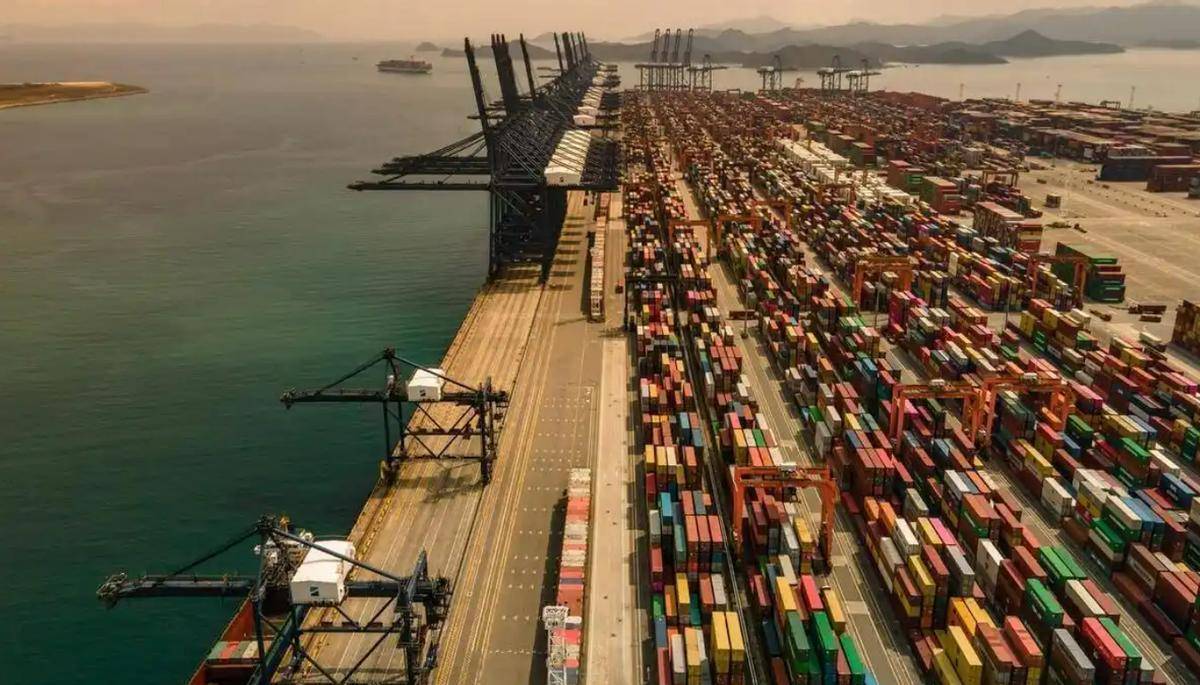
美媒:全世界都在关注谁先撑不住,有货卖不出,有钱买不到,两大经济体矛盾能否调和?
Sou Hu Cai Jing· 2025-09-29 04:32
Group 1 - The current international economic landscape is undergoing profound adjustments, with a subtle stage of industrial confrontation between two major economies [1] - The manufacturing powerhouse is facing significant export obstacles due to increasing trade barriers, while the consumer market is experiencing supply shortages [3] - The capacity advantage of manufacturing countries has become more pronounced, but trade barriers have severely hindered export channels, leading to a sharp decline in traditional export markets [3] Group 2 - The over-reliance on monetary expansion to sustain demand in the consumer market is showing signs of fatigue, with potential long-term consequences for financial stability [6] - The essence of this industrial competition is a deep contest between manufacturing capabilities and market capacity, with imbalances likely to lead to significant changes [6] - The U.S. government's push for "de-risking" is causing inflationary pressures, and the reliance on credit to maintain economic stability is unsustainable [6]

币圈全线暴跌,近29万人爆仓
Zheng Quan Shi Bao· 2025-09-26 23:39
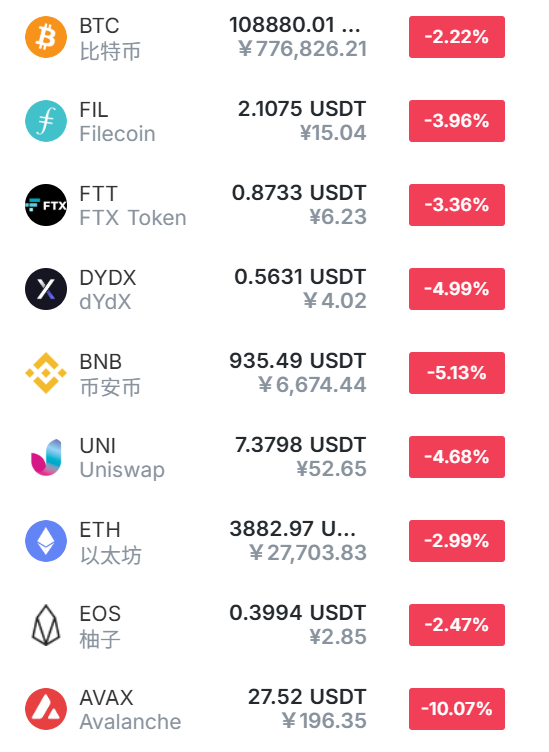
Market Overview - The cryptocurrency market has experienced a significant decline, with over $140 billion in market value evaporating [1] - Major cryptocurrencies such as Bitcoin and Ethereum have seen substantial drops, with Bitcoin falling below $110,000 and Ethereum dropping below $3,900, marking a seven-week low [1] Liquidation Events - In the past 24 hours, approximately 290,000 traders have been liquidated, with total liquidation amounts exceeding $882 million [2] - Ethereum investors have replaced Bitcoin investors as the largest group facing liquidation, with Ethereum, Solana, and XPL leading in liquidation amounts [2][3] Impact on Public Companies - Several publicly traded companies holding cryptocurrencies have seen their stock prices drop significantly, with MicroStrategy (MSTR.O) and Marathon Digital Holdings (MARA.O) falling approximately 7% and 9% respectively [3] - Despite a brief recovery in stock prices after the market opened, both companies' stocks turned negative again, with declines remaining under 1% [3] Market Sentiment and Economic Indicators - Investors have withdrawn nearly $300 million from U.S.-listed Ethereum ETFs since the beginning of the week, coinciding with a market downturn that forced $1.7 billion in long positions to be liquidated [4] - Strong economic indicators, such as better-than-expected U.S. GDP growth and lower-than-expected jobless claims, have dampened market expectations for future interest rate cuts, contributing to negative sentiment [4] Technical Analysis - The overall market decline is accompanied by increased trading volume, indicating a lack of strength in potential rebounds, suggesting that the adjustment phase is not yet over [4] - Analysts believe that the current market conditions do not support a bullish trend, and the ongoing deleveraging period is likely to continue [4] Ethereum Specifics - Ethereum has drawn more investor attention recently, with a notable price increase from $1,613 to $4,886 since April, but has seen a 15% decline in September [5] - Analysts warn that if Ethereum falls below $3,800, it could trigger further liquidation [5] - The supply of Ethereum on exchanges has dropped to a nine-year low, indicating that long-term holders are accumulating, but selling pressure from holders is counteracting new inflows [5] Derivatives Market - Over $17 billion in Bitcoin and approximately $5.3 billion in Ethereum open contracts are set to expire on Friday [6]
历史性转折!中国突然抛售美债1829亿,全球掀起“黄金储备潮”的背后
Sou Hu Cai Jing· 2025-09-22 00:11
Core Viewpoint - The article discusses the significant shift in global financial dynamics, particularly focusing on China's reduction of U.S. Treasury holdings and increased gold reserves, signaling a broader trend of risk diversification among nations [1][4][8]. Group 1: China's Actions - In March, the U.S. Treasury reported that China reduced its holdings of U.S. Treasuries by $182.9 billion, bringing its total holdings down to $730.7 billion, the lowest since 2009 [1]. - China has been increasing its gold reserves for ten consecutive months, indicating a strategic shift towards hard currency [1][8]. - This move is part of a broader strategy to reduce reliance on a single asset and enhance financial resilience against geopolitical risks [8][14]. Group 2: Global Trends - Many countries, including France, Saudi Arabia, Brazil, and Thailand, are increasing their gold reserves and exploring alternative payment systems, indicating a fracture in the dollar-centric financial system [4][11]. - The International Monetary Fund (IMF) reported that global central banks added over 1,000 tons of gold in 2023, with emerging markets being particularly proactive in this shift [11]. - The perception of gold is changing; it is no longer seen as an outdated asset but as a cornerstone of financial autonomy and security [11]. Group 3: Financial Strategy - The article emphasizes that the reduction of U.S. debt holdings by China is not a rejection of the dollar but a strategic move towards risk management and diversification [8][14]. - The shift towards gold is viewed as a long-term strategy to gain more financial autonomy and control over national assets [9][14]. - The evolving landscape suggests that businesses and individuals may soon have more options for cross-border transactions and asset allocation beyond the dollar [12].

iPhone17,印度制造?
Hu Xiu· 2025-09-10 23:24
Group 1 - The core focus of the 2025 Apple event is not the iPhone 17's updates but the shift in production location from China to India, as indicated by the packaging labels [1][3][4] - The transition from "Made in China" to "Made in India" reflects a complex global manufacturing landscape and signifies a strategic shift in Apple's supply chain [5][6] - Apple's move is part of a broader "de-risking" strategy, reshaping the roles of "Chinese manufacturing" and "Indian manufacturing" in the global value chain [6][7] Group 2 - Over the past two decades, Apple's success has relied on the model of "Designed in California, Made in China," with Chinese factories like Foxconn being crucial to its production [7][8][9] - The shift began around 2017 when Apple started producing iPhone SE models in India to avoid high import tariffs, marking the start of a localization strategy [12][13] - The turning point came around 2019, driven by U.S.-China trade tensions and rising labor costs in China, prompting Apple to diversify its supply chain [14][15][16] Group 3 - Apple's "China +1" strategy accelerated, with India emerging as the primary alternative for manufacturing [17][18] - The production process has evolved from older models to the latest flagship models being produced in India, achieving near-simultaneous production with China [19][20] - The establishment of Tata Group as the first local iPhone manufacturer in India signifies a shift towards nurturing local champions in the manufacturing sector [21][22] Group 4 - Predictions suggest that by 2025, iPhones produced in India could account for 25% of global production, potentially rising to 50% by 2027 [22][23] - India's appeal as a manufacturing hub is bolstered by its demographic advantages, including a young workforce and lower labor costs compared to China [26][30] - The Indian government's "Make in India" initiative and production-linked incentive programs are designed to attract foreign investment and stimulate local manufacturing [35][36][38] Group 5 - Despite its advantages, India's manufacturing sector faces challenges such as inadequate infrastructure, regulatory inefficiencies, and a lack of skilled labor [41][43] - The competition between Chinese and Indian manufacturing is creating a complex landscape, with both countries playing crucial roles in the global supply chain [44][52] - The future may see a dual-center model in the global electronics supply chain, with China focusing on high-end manufacturing and India on large-scale assembly [53][54] Group 6 - The production location label will evolve to reflect a new phase of globalization, indicating a reallocation of resources based on efficiency, cost, safety, and market access [56][57] - The competition and collaboration between China and India will shape the global manufacturing landscape for the next decade [58][59] - The true challenge for China lies in maintaining its irreplaceability in the face of these changes [59][60]


被挖空了?特朗普称台积电将在美追加3000亿投资,台媒:跪久了
Sou Hu Cai Jing· 2025-08-07 06:37
Group 1 - TSMC's investment in the U.S. has reportedly increased to $300 billion, nearly doubling the previously announced $165 billion investment plan [1] - The company has made a strategic decision to exit the Chinese market and focus on U.S. investments amid the ongoing U.S.-China chip war [1][2] - TSMC's initial investment in Arizona was $12 billion, which has since escalated to a total of $165 billion, including plans for additional facilities [1] Group 2 - The U.S. has offered $52 billion in subsidies to attract TSMC and Samsung to build factories in America, with conditions that restrict investments in mainland China for the next decade [3] - Challenges in U.S. chip manufacturing include high costs, talent shortages, and cultural conflicts, with manufacturing costs in the U.S. being at least 50% higher than in Taiwan [5][7] - TSMC's investment progress in the U.S. has faced delays, raising concerns about the feasibility of the U.S. manufacturing revival plan [5][9] Group 3 - The relationship between TSMC and the U.S. is characterized by mutual testing of limits, with TSMC seeking market access and security while the U.S. aims for chip autonomy [11] - There are concerns that TSMC may be underestimating U.S. ambitions and overestimating its own capabilities, leading to potential long-term consequences for the company [11]

德国发布风电“去风险”路线图,又炒降低对“特定国家”依赖
Huan Qiu Shi Bao· 2025-08-06 22:51
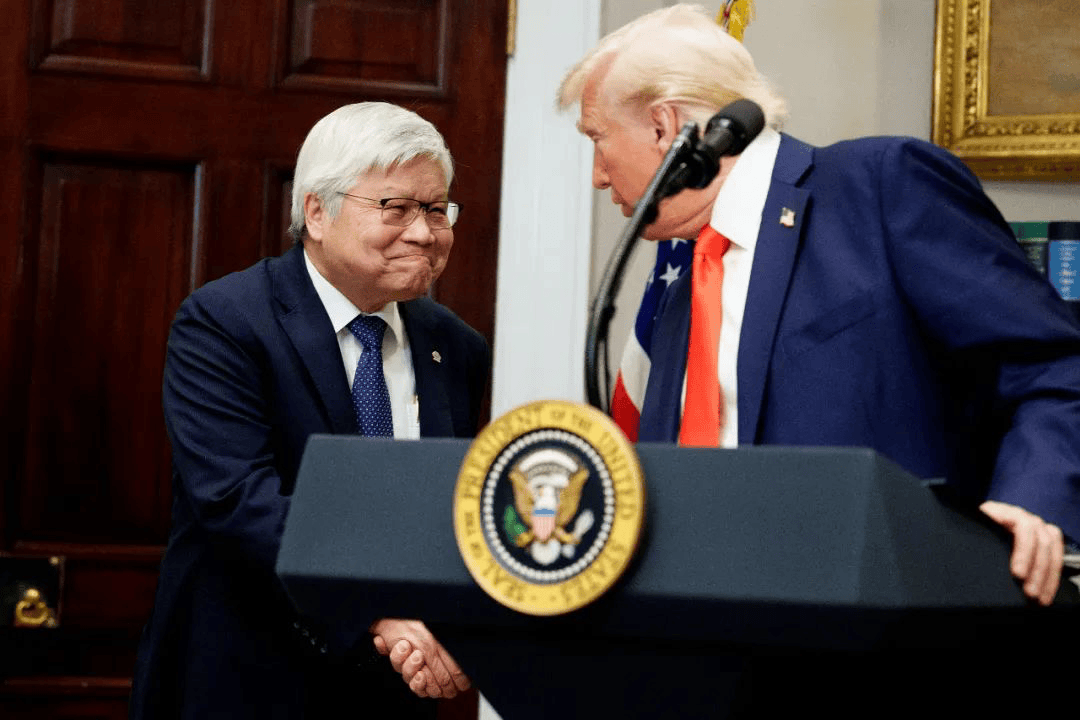
Group 1 - The German Federal Ministry of Economic Affairs and Energy announced a plan to diversify the procurement of key components for offshore wind turbines, specifically permanent magnets, by 2035 to reduce dependence on "specific countries" [1] - The current supply of permanent magnets for wind turbines in Germany is almost entirely sourced from China, which also supplies most of the rare earth elements used in their production [1][2] - Germany aims to double its offshore wind power capacity to 30 GW by 2030, which currently meets only 5% of the country's electricity demand [1] Group 2 - A roadmap has been released that targets sourcing 30% of permanent magnets from countries other than China by 2030, increasing to 50% by 2035 [2] - The plan includes measures such as promoting foreign investment, establishing raw material funds, conducting energy research, and strengthening partnerships with friendly countries like Australia and Japan [2] - Challenges in implementing the plan include negotiating with potential partner countries on costs and incentives, as well as balancing government intervention with market dynamics [2]