
总部经济

Search documents
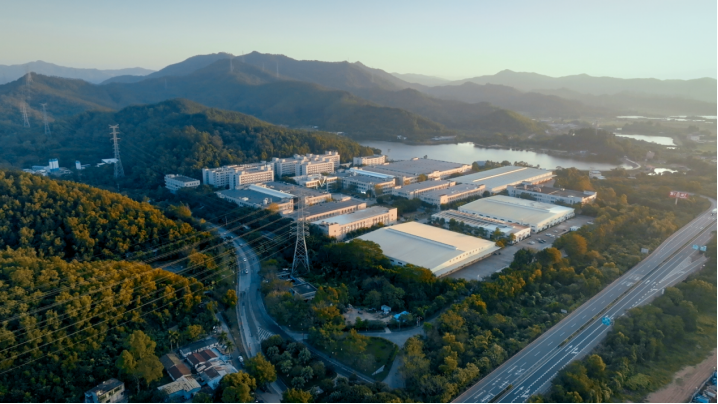
一束光的初心 一座城的回响 | 雷士照明以“总部力量”为惠州高质量发展增光添彩
Zhong Guo Zhi Liang Xin Wen Wang· 2025-12-29 03:51
Core Insights - The article highlights the strategic investment and operational advancements of Leishi Lighting in Huizhou, emphasizing its commitment to technological innovation and local economic development [1][3][5]. Group 1: Investment and Economic Impact - Leishi Lighting has made a significant investment of 1.25 billion RMB, increasing its registered capital to nearly 1.5 billion RMB, which reflects its recognition of Huizhou's business environment [3][4]. - The company’s investment has strengthened its headquarters in Huizhou, enhancing its operational capabilities and contributing to local tax revenue, with an annual contribution of nearly 10 million RMB from profit distributions [4][5]. Group 2: Technological Innovation - The company has established a smart production environment, replacing manual operations with automated systems, which has significantly improved efficiency and quality control [7][8]. - Leishi Lighting collaborates with prestigious institutions like the Chinese Academy of Sciences and Fudan University to advance key technologies in the lighting industry [7]. Group 3: Community and Social Responsibility - The company actively participates in community development through its "Light Plan," which aims to improve rural education by upgrading lighting in classrooms across multiple provinces [12][13]. - Leishi Lighting's commitment to ESG principles is evident in its initiatives focused on climate action, health lighting, and social responsibility [12][13]. Group 4: Future Development Strategy - Looking ahead to 2025, Leishi Lighting plans to focus on three strategic directions: aggregation, radiation, and ecological development, to enhance its influence in the lighting industry [15][16]. - The company aims to create a robust ecosystem in Huizhou, fostering closer ties within the supply chain and manufacturing systems to support sustainable growth [15].

准2万亿城市,终于“破零”了
首席商业评论· 2025-12-28 04:12
Core Viewpoint - Nanjing is on the verge of becoming the first city in Jiangsu province to achieve a trillion-yuan software industry, which is crucial for its economic growth and competitiveness as it aims to surpass a GDP of 2 trillion yuan by 2025 [5][8][24]. Group 1: Economic Pressure - Nanjing's GDP reached 18,500.81 billion yuan last year, making it a strong contender for the 2 trillion yuan mark, but it faces significant competition from cities like Ningbo, Qingdao, and others that have also set similar targets [5][9]. - The pressure to advance economically is evident, as Nanjing has no trillion-yuan industry yet, unlike other major cities in the Yangtze River Delta region [6][12]. - The city has acknowledged the need for a "breakthrough battle" in its industry to enhance its competitiveness [6][8]. Group 2: Industry Development Challenges - Nanjing's software industry has not kept pace with national growth rates, with several other cities showing faster growth in software business revenue [8][14]. - The city has historically lagged in developing new industries, with traditional sectors like chemical and steel seeing significant migration, leading to a lack of new industry growth [14][18]. - The private economy in Nanjing is weaker compared to cities like Suzhou and Hangzhou, which affects its overall industrial development [17][18]. Group 3: Strategic Opportunities - Nanjing possesses strong research and development capabilities and is positioned to leverage its geographical advantages to expand its influence beyond its immediate region [17][20]. - The city is actively implementing policies to support the growth of its headquarters economy, attracting major companies like Huawei and Xiaomi to establish regional offices [18][20]. - Nanjing aims to enhance its role as a strategic hub within the Yangtze River Delta, focusing on high-level collaboration and innovation to drive economic growth [22][24].

发展总部经济,上海做对了什么?
Xin Lang Cai Jing· 2025-12-26 14:57
转自:北京日报客户端 总部经济是经济全球化和城市化发展到一定阶段的必然产物,已成为城市竞争力和现代化水平的重要标 志。上海是我国内地跨国公司地区总部最集中的城市,总部经济对于上海的经济发展、技术创新、高端 要素集聚等方面发挥着举足轻重的作用。总部经济何以在上海蓬勃发展?带着问题,记者走进上海陆家 嘴、虹桥品汇、张江科学城、洋山港等地一探究竟。 上海的总部企业高度集聚,形成了以跨国公司地区总部为主体,民营企业总部、贸易型总部、外资研发 中心、创新型企业总部等多元化总部形态共同发展的格局。截至2025年9月,上海累计认定跨国公司地 区总部1060家、外资研发中心631家,稳居我国内地首位。从区域分布看,上海总部经济呈现"多中 心"集聚态势:浦东新区集聚了498家跨国公司地区总部,占全市近一半;静安区拥有148家跨国公司地 区总部;虹桥商务区累计引进培育各类市级认定总部机构283家,各区域差异化发展、优势互补。比 如,浦东新区陆家嘴金融城单区域就聚集150家跨国公司地区总部、970家持牌金融机构,金融总部规模 领跑全国,金融服务全面便捷高效。"陆家嘴以全市0.5%的面积贡献了14%的GDP,并集聚了全国70% 的外 ...
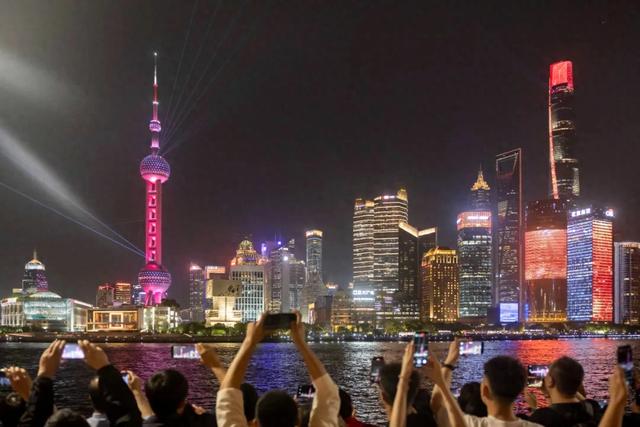
深圳AB面:我的工位与“王者峡谷”相距200米
2 1 Shi Ji Jing Ji Bao Dao· 2025-12-26 03:33
Core Insights - The article highlights the successful integration of the gaming IP "Honor of Kings" into urban culture and tourism in Shenzhen, showcasing its impact on local engagement and economic activity [1][3][10]. Group 1: Event Overview - The "Honor of Kings" Super IP Carnival in Shenzhen runs from December 19, 2025, to January 4, 2026, featuring various attractions including the world's largest "Li Bai" inflatable and multiple themed installations [4][5]. - The event attracted over 580,000 visitors in its first weekend, setting a record for foot traffic in the area [1][13]. Group 2: Economic Impact - The carnival significantly boosted local commerce, with key shopping districts experiencing a 16% increase in visitor numbers during the event [13]. - The "Dream Bus" initiative connected major commercial centers, drawing over 200,000 visitors and resulting in a nearly 70% increase in average foot traffic in key areas [13]. Group 3: Cultural Integration - The event merges gaming culture with local identity, transforming Shenzhen's urban landscape into an immersive "King's Canyon" experience, thereby enhancing emotional connections between the youth and the city [1][5][11]. - The use of technology, such as humanoid robots and low-altitude helicopter tours, exemplifies Shenzhen's innovative approach to cultural events, reinforcing its image as a tech-forward city [7][10]. Group 4: Future Implications - The success of the carnival indicates a shift in urban competitiveness, emphasizing the importance of cultural and emotional engagement over traditional economic metrics [13][14]. - Shenzhen's youthful demographic and its embrace of diverse cultural expressions position it favorably for future urban development and talent attraction [11][14].

国内外专家学者热议海南自贸港全岛封关
Hai Nan Ri Bao· 2025-12-26 02:26
Core Viewpoint - The official launch of the full island closure of Hainan Free Trade Port marks a significant milestone in China's commitment to expanding its openness to the world, providing new opportunities for global cooperation [2][3]. Group 1: Institutional Opening Pathways - The full island closure of Hainan Free Trade Port sends a clear signal of China's ongoing commitment to expanding openness amid rising unilateralism and protectionism globally [3]. - The deeper significance of Hainan's development lies in its comprehensive exploration of institutional opening, which goes beyond "zero tariffs" to include the integration of trade, investment, capital, personnel, and data flows with international standards [3][4]. - Hainan's strategic location allows it to implement liberalization policies characterized by "one line open, two lines controlled, and free within the island," positioning it as a key gateway for China's new era of openness [3][4]. Group 2: Reshaping Industrial Ecology - The "policy dividend" effect from the full island closure is expected to profoundly reshape the industrial landscape of Hainan Free Trade Port, particularly benefiting industries that can leverage "zero tariff" imports and tax-exempt domestic sales [5][6]. - Hainan aims to develop a modern industrial system with unique characteristics, focusing on optimizing four leading industries and nurturing new productive forces in sectors like biomanufacturing and hydrogen energy [6]. - Attracting regional headquarters of global Fortune 500 companies is crucial for measuring the level of openness, as these companies seek to connect with China's vast domestic market [6]. Group 3: Talent Acquisition and Development - There is an urgent need to gather high-quality talent in Hainan Free Trade Port post-closure, with a significant increase in demand for international high-end talent and domestic leading figures expected in the next 1 to 3 years [8]. - Recommendations include policy innovations to ease entry barriers for international talent, enhancing awareness of talent policies, and creating a conducive environment for talent retention and utilization [8]. - Building a highly internationalized and professional talent pool is essential for the high-standard construction of the free trade port, with suggestions to engage in international cooperation in higher and vocational education [8].
钱江新城“聚力”铸核,锻造的是什么?
Hang Zhou Ri Bao· 2025-12-26 02:23
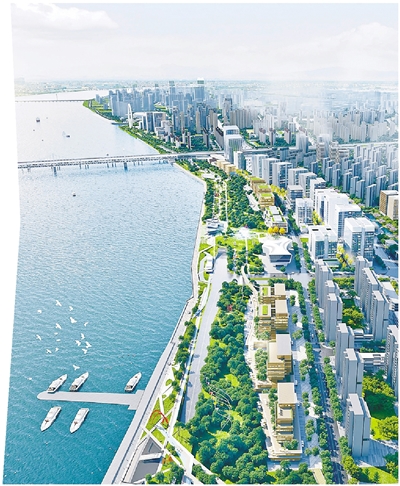
Core Insights - Qianjiang New City has successfully auctioned two significant plots of land for a total price of 1.89 billion yuan, marking a strong finish for commercial land sales in the area for 2025 [1] - The second phase of Qianjiang New City is evolving rapidly into a "core future city," emphasizing the integration of industry and urban development [2][4] Land Auction and Financial Highlights - The total number of commercial land sales in the Shangcheng District reached 11, with a total transaction amount exceeding 6.9 billion yuan, making it the top district in Zhejiang Province in terms of both total sales and floor price [1] - Qianjiang New City has become a focal point for land supply in Hangzhou, with significant attention on each new auction [1] Development Strategy and Industry Focus - The second phase of Qianjiang New City aims to create an international high-end business district and a hub for top talent, focusing on deep integration of industry and urban development [4] - The area has seen the establishment of several major companies, including New and Cheng, Beijing Zhipu Huazhang Technology, and Runze Group, indicating a strong industrial atmosphere [4] Competitive Advantages and Ecosystem - The strategic location of Qianjiang New City serves as a key hub connecting the West Lake era with the Qiantang River era, enhancing its appeal for talent and businesses [5] - The financial infrastructure in Shangcheng District, with major banks and financial institutions, provides a robust environment for businesses, particularly in cross-border payments and AI [5] AI and Innovation Focus - Qianjiang New City is positioning itself as an "AI highland," aiming to leverage artificial intelligence as a core engine for urban competitiveness [6][8] - The establishment of AI companies like Zhejiang Zhipu and Runze Group is aligned with the district's goal of creating a vibrant AI industry ecosystem [6] Policy Support and Service Mechanisms - The "one land, one special class" service mechanism implemented by Shangcheng District is crucial for attracting and retaining businesses, providing comprehensive support from planning to execution [7] - Efficient services have accelerated project launches, enhancing the attractiveness of the area for new enterprises [7]

准2万亿城市 终于“破零”了
Mei Ri Jing Ji Xin Wen· 2025-12-25 15:12
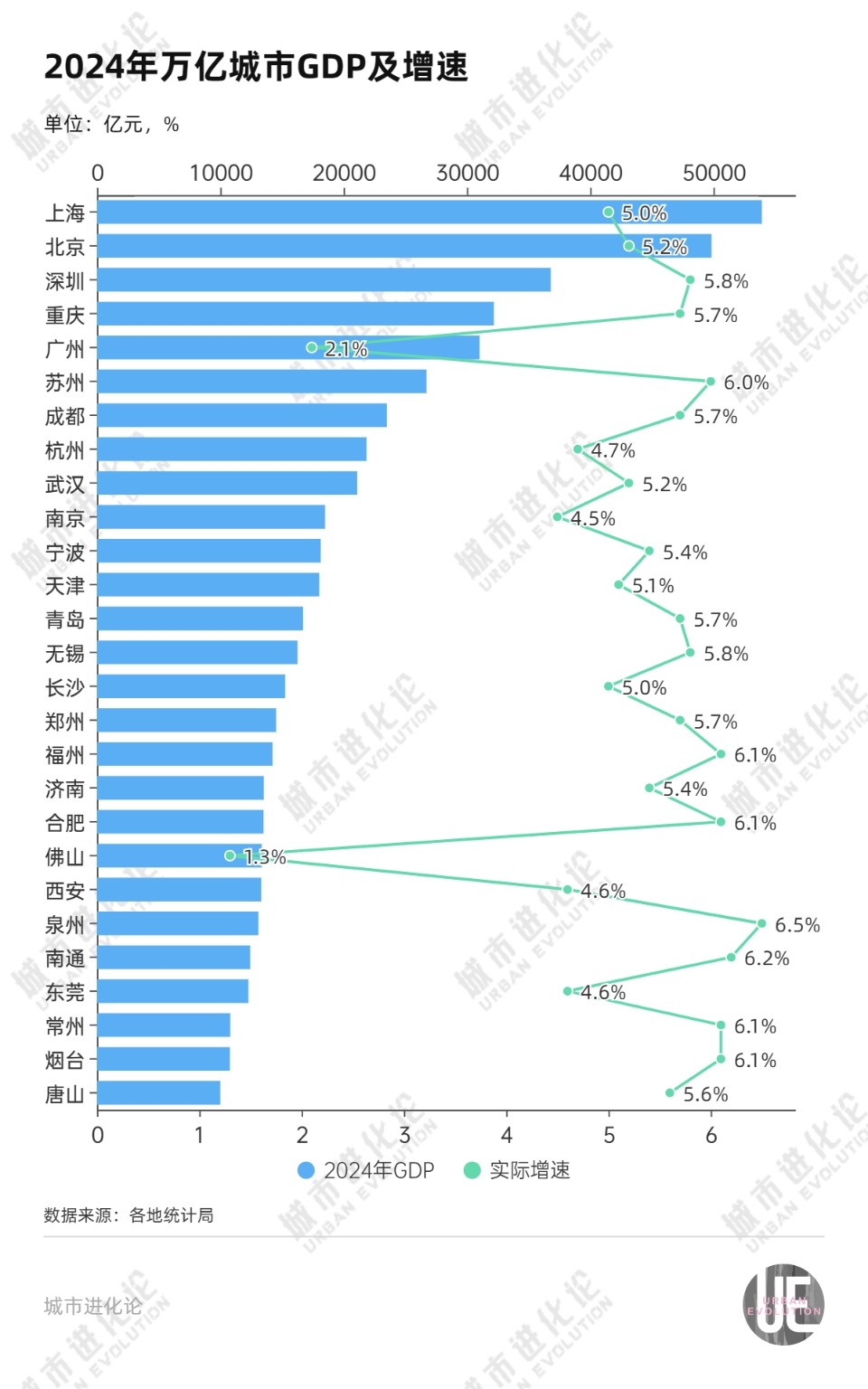
冲刺两万亿关键时刻,南京迎来首个万亿产业。 近日,南京市代市长李忠军接受媒体专访时表示:"今年,全市软件产业规模总量有望突破万亿元,成为南京首个万亿级产业地标。" 产业集群能级是衡量城市产业实力的关键指标,也是支撑城市经济发展的重要依托。 当GDP万亿城市名单不断增加,"两万亿"成为城市能级的又一分水岭。截至2024年,我国已有9个2万亿城市。"后备选手"中,南京去年GDP达到18500.81亿 元,距2万亿门槛最近,因而备受关注。 按南京此前定下的目标,2025年是突破2万亿元的时间节点,意味着今年经济增量要达到1500亿元左右。不过参照南京过去几年的增量,今年能否如期过线 还有较大悬念。 更为紧迫的是,放眼全国,宁波、青岛、无锡、长沙、郑州均先后提出冲刺2万亿的目标,朝南京步步逼近。 随着首个万亿级产业到来,南京能否更进一步,重构城市竞争力? 争先压力 放眼长三角,万亿产业几乎是头部产业强市的标配。 上海生物医药产业今年预计将突破万亿元,成为电子信息、汽车、高端装备、软件和信息服务之外,上海第五个万亿级产业集群; 杭州视觉智能产业营收距离突破万亿级仅差临门一脚,将成为其继软件和信息服务业之后的又一个万亿级 ...
准2万亿城市,终于“破零”了
Mei Ri Jing Ji Xin Wen· 2025-12-25 15:07
Core Viewpoint - Nanjing is on track to become the first city in the region to achieve a trillion-yuan software industry, marking a significant milestone in its economic development as it aims to reach a GDP of 2 trillion yuan by 2025 [2][6]. Group 1: Economic Milestones - Nanjing's software industry is expected to exceed 1 trillion yuan this year, positioning it as the city's first trillion-yuan industry [2]. - The city aims to achieve a GDP of 2 trillion yuan by 2025, requiring an economic increment of approximately 150 billion yuan this year [2][5]. - As of 2024, Nanjing's GDP reached 1,850.08 billion yuan, making it one of the closest cities to the 2 trillion yuan threshold [2]. Group 2: Competitive Landscape - Nanjing faces increasing competition from cities like Ningbo, Qingdao, and Wuxi, all of which have set their sights on achieving 2 trillion yuan GDP targets [2][12]. - In 2024, Ningbo's GDP was 1,814.77 billion yuan, closely trailing Nanjing, while Qingdao's GDP was 1,671.95 billion yuan [8]. - The pressure to advance economically is evident, as Nanjing's lack of a trillion-yuan industry contrasts with other cities in the Yangtze River Delta region [3][12]. Group 3: Industry Development Challenges - Nanjing's software industry growth has been slower compared to other major cities, with several cities showing higher growth rates in software business revenue [8]. - The city has historically relied on traditional industries, which have seen a decline, while new industries have not developed at a comparable pace [13]. - The lack of a strong private sector is a significant barrier to Nanjing's industrial growth, with fewer private enterprises compared to cities like Suzhou and Hangzhou [16]. Group 4: Strategic Initiatives - Nanjing has launched several measures to support the development of its headquarters economy, aiming to attract major companies and enhance its industrial landscape [17]. - The city is focusing on innovative strategies to overcome bureaucratic hurdles and enhance its software industry [17]. - Plans are in place to improve transportation and logistics infrastructure, including the expansion of Nanjing Lukou Airport and other key projects, to strengthen its position as a regional hub [26]. Group 5: Regional Integration and Future Directions - Nanjing's development is aligned with the broader strategy of the Yangtze River Delta, emphasizing its role as a strategic hub for economic integration [19][20]. - The city aims to leverage its strengths in research and development to attract international technology and industry projects [23]. - Nanjing's growth strategy includes enhancing its service industry capabilities and becoming a center for innovation and supply chain management [26].
进击的2025:阿里京东们的“买楼造楼运动”
3 6 Ke· 2025-12-24 06:49
Core Viewpoint - In 2025, Chinese internet companies have become significant players in the real estate market, actively investing in properties and land despite a generally sluggish market, driven by both business needs and broader aspirations [2][3][14]. Group 1: Major Transactions - Alibaba and Ant Group invested 7.2 billion HKD (approximately 925 million USD) in a commercial office building in Hong Kong, marking the largest office transaction in the region since 2021 [3]. - JD.com announced an investment of approximately 3.473 billion HKD in part of the China Construction Bank Tower in Hong Kong, covering an area of about 11,202 square meters [3]. - These two transactions together account for about 30% of the total large transactions in Hong Kong's Grade A office market for the year [3]. Group 2: Domestic Investments - JD.com commenced construction on its Nanjing R&D center project with a total investment of 3.5 billion CNY and a building area of approximately 274,000 square meters [4]. - Douyin Group acquired a plot in Guangzhou for 1.214 billion CNY, planning to develop a new headquarters focused on a "technology town" [6][7]. Group 3: Expansion of Internet Companies - Internet companies, including smaller firms like Hometown Interactive and Yanju Network, are also investing in real estate, with Hometown Interactive purchasing property in Shenzhen for 107 million CNY [7]. - Yanju Network has made two real estate purchases this year, totaling over 3.1 billion CNY, to establish its global headquarters [7]. Group 4: New Landmarks and Headquarters - JD.com is developing significant projects in multiple cities, including a 10 billion CNY investment in a comprehensive center in Shanghai, expected to be completed by 2027 [10]. - ByteDance is establishing new headquarters in Shenzhen and Hangzhou, with investments of over 2 billion CNY and 2.7 billion CNY respectively, contributing to the digital economy in these regions [11]. Group 5: Economic Impact and Trends - The trend of internet companies investing in real estate is part of a broader "headquarters economy" strategy, which aims to drive local economic growth and attract talent [14][19]. - Cities are actively promoting the establishment of internet company headquarters to stimulate economic transformation and growth, with a significant increase in the market size of the headquarters economy projected [19][20].



起势强劲,南京迈入“高质量跃升”新周期
Xin Hua Ri Bao· 2025-12-24 00:12
编者按 "十四五"圆满收官,"十五五"新程再启。不久前召开的省委十四届十次全会,深入学习贯彻党的二十届 四中全会精神和习近平总书记对江苏工作重要讲话精神,对未来五年江苏经济社会发展作出系统谋划和 战略部署。坚定在推进中国式现代化中走在前、做示范,奋力谱写"强富美高"新江苏现代化建设新篇 章,8500万江苏儿女正以饱满的热情、实干的姿态,踏上新的征程。新华日报·交汇点新闻今起推出"奋 进'十五五' 同心创伟业"全媒体行动,对话13个设区市主要负责同志,见证并记录各地勇挑大梁、勇开 新局的担当与奋斗。 □ 本报记者 徐晋 季铖 颜芳 冬日暖阳照进南京江北新区生物医药公共服务平台的实验室,科研人员正埋头研发。在这里,千万元级 的精密设备向园区内上百家中小团队敞开共享。工程师轻触屏幕,蛋白质序列数据渐次浮现,仿佛在探 寻生命密码。不远处,驯鹿生物的洁净车间里,全人源CAR-T细胞正在培养箱中悄然生长。窗外楼宇连 绵,1300余家生物医药企业在此扎根、抽枝、结果。 南京,承载着深厚的历史底蕴,更涌动着面向未来的创新活力。站在"十四五"收官与"十五五"启航的交 汇点,如何在传承与创新中书写高质量发展新答卷?本报记者专访南 ...