政治极化

Search documents
秩序重构下的新旧资产系列2:黄金:如何定价,走向何方?
Changjiang Securities· 2025-09-11 03:13
Group 1: Gold Pricing Dynamics - Gold exhibits three attributes: commodity, currency, and financial asset, with prices positively correlated to inflation and negatively correlated to the US dollar and real interest rates[3] - Since 2022, the negative correlation between gold prices and real interest rates has weakened due to central banks increasing gold reserves, reflecting declining trust in the US dollar[3] - The supply of gold is relatively stable due to resource scarcity and long exploration and extraction cycles, while demand has shifted from investment to strategic allocation, changing the pricing anchor from "real interest rates" to "central bank purchases"[7] Group 2: Central Bank Gold Purchases - The trend of central banks increasing gold reserves reflects a loss of confidence in the US dollar as the world’s reserve currency, particularly after the freezing of Russian assets due to the Ukraine conflict[8] - As of 2024, the US federal government debt-to-GDP ratio is projected to reach 124.3%, indicating a growing risk to the dollar's credibility and prompting countries to reduce dollar assets in favor of gold[8] - A survey by the World Gold Council indicates that 81% of central banks expect to increase their gold reserves in the next 12 months, suggesting a strong and growing demand for gold[10] Group 3: Future Gold Price Outlook - Geopolitical risks and political polarization are expected to continue, enhancing gold's appeal as a safe-haven asset and increasing central bank demand for gold[9] - The military expenditure of major countries is at historical lows as a percentage of GDP, providing a safety net against potential declines in gold prices[9] - The average annual net gold purchases by central banks from 2022 to 2024 reached 1,059 tons, accounting for 23% of global gold demand, indicating a structural shift in demand dynamics[34]
全球财政:共振预期与长期困境 - 从海外政治风波说起
2025-09-10 14:35
Summary of Key Points from the Conference Call Industry or Company Involved - The discussion primarily revolves around the global fiscal landscape, particularly focusing on developed economies such as the United States, Japan, Germany, and the European Union. Core Insights and Arguments - Political turbulence in multiple countries is closely linked to fiscal policies, with governments facing pressure to adjust their fiscal strategies due to declining public support [1][3] - The long-term and ultra-long-term interest rates in developed economies have risen significantly, indicating market pricing for potential fiscal expansion [1][4] - A collective fiscal expansion across multiple economies is anticipated in 2026, with significant stimulus measures expected from the US, Japan, Germany, and the EU [1][6] - The trend of de-globalization is increasing inflationary pressures and limiting monetary easing, making large-scale fiscal expansion a necessary response to economic downturns [1][7] - Political polarization poses challenges to timely implementation of fiscal policies, potentially destabilizing the bond market and reducing the effectiveness of fiscal expansion [1][8][9] - Structural issues in developed economies, such as Japan's aging population and Europe's investment shortfalls, limit the effectiveness of fiscal policies [1][10] Other Important but Possibly Overlooked Content - The US faces rapidly rising interest expenditures, which could strain fiscal sustainability, while Europe and Japan are constrained by mandatory social security expenditures [2][11] - The effectiveness of fiscal stimulus may be compromised by political polarization and the inability to convert fiscal measures into effective economic growth [1][8] - Gold is highlighted as a reliable safe-haven asset amid rising inflation concerns and fiscal expansion, with industrial metals also presenting potential investment opportunities in the near future [1][12]
【环球财经】波兰换总统恐难解政治僵局
Xin Hua She· 2025-09-10 12:18
Core Viewpoint - The election of independent candidate Karol Nawrocki as Poland's new president marks a significant political shift, with expectations of continued political polarization and competition in the country [1][4]. Group 1: Election and Political Context - Karol Nawrocki won the presidential election in early June with a narrow margin, officially taking office on August 6 [1]. - His victory was supported by the Law and Justice Party (PiS), which previously held power from 2015 to 2023 and is now the largest opposition party [4]. - The voter turnout for the election reached a record high of 71.63%, indicating a politically polarized society [4]. Group 2: Political Ideology and Background - Nawrocki, a 42-year-old historian from Gdańsk, is seen as a defender of nationalist conservative values, emphasizing national and cultural identity [2][4]. - His political platform includes strengthening national sovereignty, opposing excessive EU intervention, and advocating for judicial reforms while maintaining traditional Catholic values [4]. Group 3: Political Stalemate - Nawrocki faces a political stalemate as the Law and Justice Party holds the most seats but lacks a majority, while the Civic Coalition led by Donald Tusk governs with a majority [5]. - The ongoing conflict between the presidency and the government is expected to continue, particularly regarding judicial reforms and relations with the EU [5][8]. Group 4: Foreign Policy Implications - Nawrocki's presidency may lead to a shift in Poland's foreign policy, with closer ties to the U.S. and a more skeptical stance towards the EU [10]. - He has maintained strong connections with the U.S. Republican Party and has received commitments for continued U.S. military presence in Poland [10]. - Nawrocki supports Ukraine against Russian aggression but is cautious about unconditional geopolitical commitments regarding NATO membership for Ukraine [11].


专栏丨美国“选区重划”闹剧愈演愈烈的背后
Xin Hua Wang· 2025-08-22 09:11
Core Points - The article discusses the escalating political drama in the U.S. surrounding gerrymandering, particularly in Texas, where Republicans are redrawing congressional districts while Democrats resist through various means [1] - The historical context of gerrymandering is highlighted, tracing back to the early 19th century with the term "Gerrymander" originating from Massachusetts [1] - The article emphasizes the detrimental effects of gerrymandering on democracy, leading to a situation where elected officials manipulate voter demographics to secure their positions, undermining true public representation [2] Group 1 - Gerrymandering has become a common tactic for both major political parties in the U.S., with recent actions in Texas and California illustrating this trend [1][2] - The judicial system, particularly the U.S. Supreme Court, has largely avoided substantive rulings on gerrymandering cases, effectively legitimizing the practice [2] - The manipulation of electoral rules has resulted in a disconnect between popular votes and actual representation, leading to increased public disillusionment with the political system [2] Group 2 - The zero-sum game mentality between the two parties has extended beyond elections, causing dysfunction within the U.S. governance system [2] - Legislative gridlock has become common, with significant issues like budgetary disputes and immigration reform being stalled due to partisan conflicts [2] - The article notes that extreme political polarization has led to increased violence and threats against politicians, contrasting sharply with the U.S.'s self-image as a democratic leader [3]
超七成美国民众认为“政治动机的暴力活动”是美国当前的一个主要问题,美国媒体指出—— 美国政治暴力事件进入高发期(深度观察)
Ren Min Ri Bao· 2025-07-23 21:56
Core Viewpoint - The recent surge in political violence in the United States, highlighted by a shooting incident involving Minnesota lawmakers, has raised significant public concern, with over 70% of Americans identifying politically motivated violence as a major issue [1][3]. Group 1: Incidents of Political Violence - A recent shooting in Minnesota resulted in the deaths of former House Speaker Melissa Hortman and injuries to Senator John Hoffman, described as a targeted political violence incident [1]. - The frequency of similar attacks is increasing, with notable incidents including an arson attack on Pennsylvania's governor's residence and a kidnapping attempt on Memphis's mayor [2]. - Data indicates a dramatic rise in attacks against elected officials and public servants, with incidents increasing from 2 in the previous 20 years to 25 between 2016 and 2025 [2]. Group 2: Public Perception and Polling Data - A poll conducted by NPR and Marist found that 73% of respondents view political violence as a primary issue in the U.S., with 23% considering it a secondary issue [3]. - The perception of political violence as a normalized aspect of American culture is growing, akin to the prevalence of school shootings [3]. Group 3: Underlying Causes - The proliferation of firearms is a significant factor, with gun violence resulting in over 16,000 deaths in 2024 alone, and 8,334 deaths reported by July 23, 2025 [3]. - Political polarization is identified as a root cause, with experts noting that political divisions have reached levels not seen since the 1930s, contributing to the rise in violence [2][4]. - Social media is amplifying misinformation and hate speech, creating an environment where extreme political rhetoric can incite violence [4].
暴力事件频出 美国政治极化撕裂民主外衣
Zhong Guo Qing Nian Bao· 2025-07-16 00:02
Group 1 - The article highlights the increasing political violence in the U.S., with recent incidents raising concerns about a disturbing "new normal" [1][2] - Political polarization between the Democratic and Republican parties is intensifying, eroding the foundations of American democracy [1][2] - Key areas of contention include immigration policy, energy policy, and social welfare, with significant differences in approaches between the two parties [1][2][3] Group 2 - The article discusses the impact of Trump's policies, which have exacerbated class divisions and led to a decline in social mobility and trust in government [2][3] - A significant increase in threats against members of Congress has been reported, with over 9,400 threats in 2024, more than double the number from a decade ago [2][3] - The federal government has increased the budget for the Capitol Police to $833 million in response to rising violence, nearly double the $464 million budget from 2020 [2][3] Group 3 - The rise of generative artificial intelligence is noted as a factor that could further polarize society and influence election outcomes [3][4] - The spread of misinformation and the creation of "information silos" are contributing to the escalation of violence and political extremism [3][4] - A survey of political scientists indicates a belief that the U.S. is moving towards a form of authoritarianism, with concerns about the erosion of democratic norms [4][5] Group 4 - The article emphasizes the need for bipartisan cooperation to address economic inequality and political violence, which are seen as root causes of societal division [5][6] - Restoring public trust in institutions and bridging social divides are identified as critical challenges for the U.S. government [6]
深度解读|“大而美”法案的赢家与输家
Xin Hua She· 2025-07-02 16:13
Core Points - The "Big and Beautiful" bill, pushed by President Trump, passed the Senate with a narrow vote of 51 to 50, requiring Vice President Pence to cast the tie-breaking vote [1] - The bill aims to reduce taxes by $4 trillion and cut spending by at least $1.5 trillion over the next decade, continuing the tax measures from the 2017 Tax Cuts and Jobs Act [2] - The bill is expected to return to the House of Representatives for approval before being sent to Trump for signing [1][2] Group 1: Winners - Corporations will benefit from the permanent implementation of tax cuts from Trump's first term, reducing the corporate tax rate from 35% to 21% [4] - The traditional energy sector will gain as the bill repeals several measures aimed at reducing energy consumption, benefiting fossil fuel industries and traditional automakers [5] - High-income households will see an increase in the state and local tax deduction limit from $10,000 to $40,000, particularly benefiting families earning between $200,000 and $500,000 [6] - Workers relying on tips and overtime will be exempt from federal income tax on these earnings, although this group represents only 2.5% of the workforce [7] Group 2: Losers - Low-income families will be adversely affected due to significant cuts to federal Medicaid, potentially resulting in nearly 12 million losing health insurance over the next decade [9] - Healthcare workers may face job losses, with an estimated reduction of 500,000 positions in the healthcare sector over the next ten years due to decreased patient volume and services [11] - The national debt is projected to increase by approximately $3 trillion over the next decade due to tax cuts, leading to an additional $600 billion to $700 billion in interest payments [12][13]
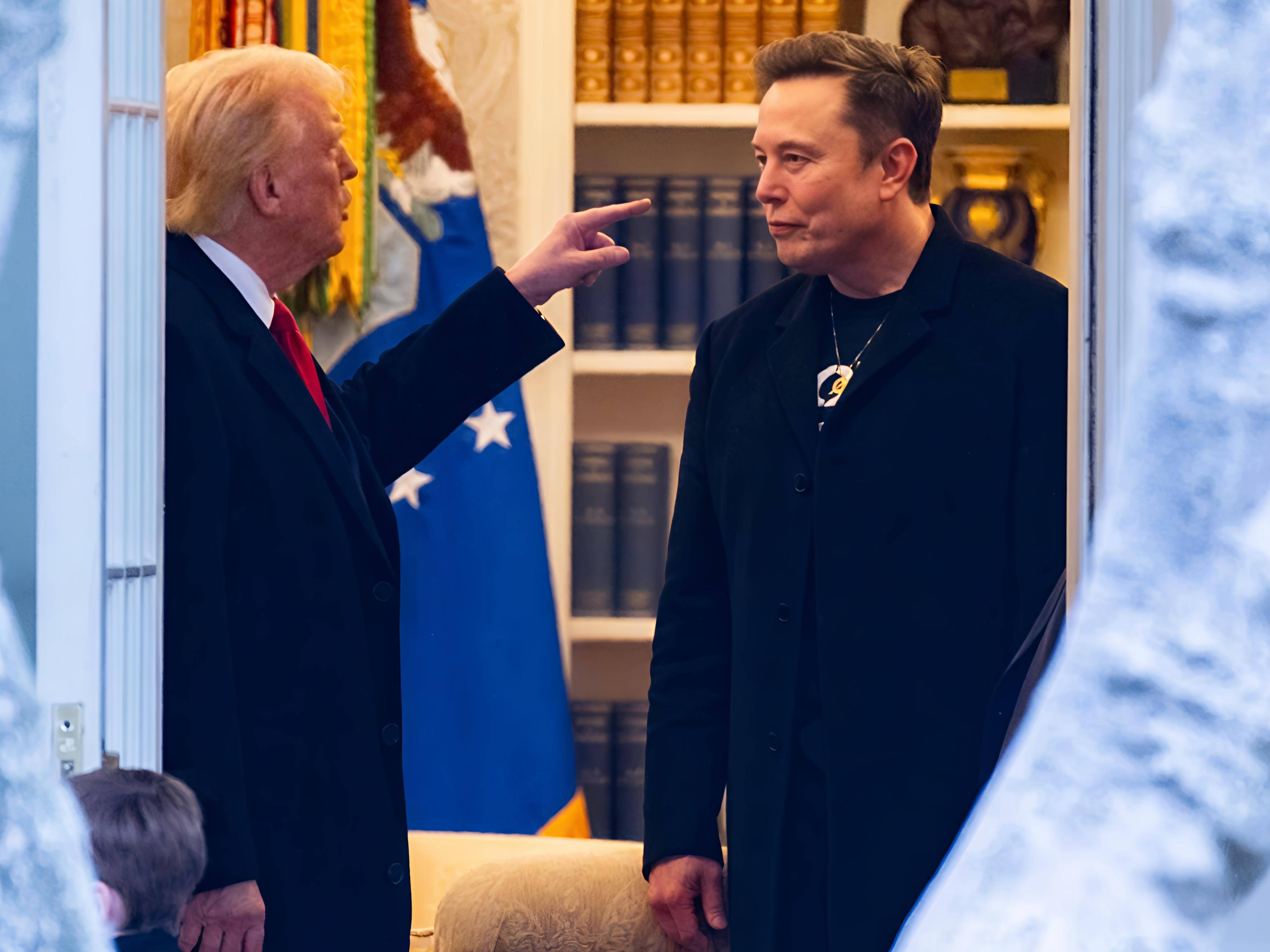
特朗普与马斯克关系恶化的对美国政局发展的影响
Sou Hu Cai Jing· 2025-06-08 04:18
Group 1 - The evolution of the relationship between Trump and Musk reflects the conflict between U.S. internal politics and business interests, providing insights into the dynamics of U.S. political developments [1] - During the cooperation period (2024 to early 2025), Musk supported Trump's campaign with significant funding, gaining substantial influence within the Trump administration [4][5] - The conflict period (April to May 2025) saw Musk publicly oppose Trump's policies, particularly the "reciprocal tariff" policy, leading to heightened tensions and disagreements within the administration [6] Group 2 - The rupture period (end of May 2025) marked a significant breakdown in the relationship, with Musk's net worth declining sharply due to Tesla's stock price drop, symbolizing the ultimate fracture in the power and capital dynamics of U.S. political-business relations [7] - The evolution of Musk and Trump's relationship has led to increased uncertainty in policy-making, highlighting the complexities of conflicts of interest within U.S. political-business relations [9] - The internal conflicts hindered the reforms led by Musk in the "Department of Government Efficiency," reflecting significant resistance to structural reforms within the U.S. government [10] Group 3 - The split between Musk and Trump indicates a new paradigm in the power-capital dynamics of U.S. political-business relations, suggesting a need for a reevaluation of these relationships for more balanced and sustainable development [11] - The evolution of their relationship also illustrates the intensification of political polarization in the U.S., with stark policy disagreements leading to further entrenchment of political positions [12] - Overall, the relationship's evolution serves as a microcosm of the broader struggles within U.S. political-business relations, emphasizing the need for reform in both political relationships and policy mechanisms for sustainable development [14]
(国际观察)多重挑战考验李在明执政智慧
Zhong Guo Xin Wen Wang· 2025-06-05 08:55
Group 1 - The core viewpoint of the article highlights the challenges faced by the newly inaugurated South Korean President Lee Jae-myung, including economic slowdown, social division, and increasing diplomatic pressures, emphasizing the need for reform and rebuilding government trust [1][2] - Lee Jae-myung's commitment to becoming an inclusive president and restoring livelihoods and the economy is a central theme in his inaugural speech, alongside a focus on practical diplomacy based on national interests [1][2] - The new cabinet appointments, including key figures from the Democratic Party, signal Lee's intention to bridge social divides and address urgent economic issues [2][3] Group 2 - The political landscape remains polarized, with ongoing tensions between progressive and conservative factions, which may complicate Lee's efforts to implement his judicial and economic accountability measures [2] - The South Korean economy is facing significant challenges, with the central bank revising GDP growth forecasts down from 1.5% to 0.8% for the current year and from 1.8% to 1.6% for 2026, indicating a clear economic struggle [2] - Lee's campaign platform included three major visions: "Restoration," "Growth," and "Happiness," along with 15 policy topics and 247 specific commitments, which will need to be realized amid the current challenges [2][3]
欧公子,择日而死
Hu Xiu· 2025-05-21 02:22
Group 1: Election Outcomes - Portugal's election results align with expert predictions, with the far-right Chega party increasing its seats by 12, becoming the third-largest party in parliament, while the current center-right government maintains a minority status [1][2] - In Romania, the pro-European centrist candidate, Nicușor Dan, won decisively with 54% of the vote amidst a 65% voter turnout, thwarting far-right aspirations [2] - Poland's election saw the incumbent government's candidate narrowly winning with 31.4%, while right-wing and far-right candidates collectively secured over 50% of the votes, indicating strong public dissatisfaction with the current government [2] Group 2: Political Landscape and Trends - The three elections reflect a growing political instability in Europe, characterized by the exhaustion of neoliberal globalization benefits, high inflation, low growth, and rising immigration issues [3] - Political polarization is accelerating, driven by social media's "echo chamber effect," leading to a vicious cycle of frequent elections and political deadlock in Europe [3][10] - Trust in mainstream parties is declining, with radical forces increasingly occupying the political stage, resulting in fragmented parliamentary structures that hinder effective governance [3][12] Group 3: Theoretical Perspectives on Political Polarization - Political polarization is defined as the increasing alignment of the public towards the extremes of the political spectrum, exacerbated by the 2008 economic crisis and the shortcomings of democratic institutions [4][10] - The neoliberal economic model, which prioritizes market efficiency, is identified as a significant catalyst for political polarization, leading to the alienation of various social groups [5][6] - The rise of social media has transformed political engagement into a data-driven process, further entrenching polarization through algorithmic reinforcement of group identities [7][8] Group 4: Implications for European Integration - The fragmentation of political power in Europe undermines the legitimacy of traditional parties and complicates the formation of stable governments, leading to frequent elections and political instability [13][14] - The decline of consensus politics and the rise of populism indicate a shift away from established political norms, with both left and right populist movements gaining traction [15][16] - The future of European integration appears bleak, as member states increasingly prioritize national interests over collective European goals, diminishing the EU's influence on the global stage [17][18]