新国九条

Search documents
侃股:高股息股票是长期热点
Bei Jing Shang Bao· 2025-08-06 11:08
Core Viewpoint - High dividend stocks are emerging as a stable investment choice amidst the rapid rotation of market themes, providing a safe haven for funds when other hotspots are absent [1][2][3] Group 1: Market Characteristics - The A-share market is currently exhibiting a dual-style characteristic, with thematic investments leading to rapid intra-day sector rotations while high dividend sectors like banks and utilities attract long-term capital [1][2] - High dividend stocks have shown their substitute value during market volatility, as funds quickly flow into blue-chip stocks with dividend yields exceeding 5% when thematic investments face collective pullbacks [1][2] Group 2: Economic and Regulatory Context - In the context of macroeconomic transformation, high dividend companies often operate in monopolistic industries or possess stable consumer attributes, leading to strong cash flow predictability [2] - The implementation of the registration system is shifting the A-share market from growth premium to value discovery, aligning high dividend strategies with ESG investment principles, which are favored by international capital [2] Group 3: Future Trends - The development of high dividend stocks is expected to follow three major trends: expansion from traditional sectors to stable cash flow industries like consumer goods and pharmaceuticals; the integration of dividend yield with other evaluation metrics such as price-to-earnings ratio and cash flow quality; and the growth of financial derivatives that enhance the efficiency of capital utilization through high dividend hedging strategies [2]
茅台,“抄底”
Zhong Guo Ji Jin Bao· 2025-08-05 03:41
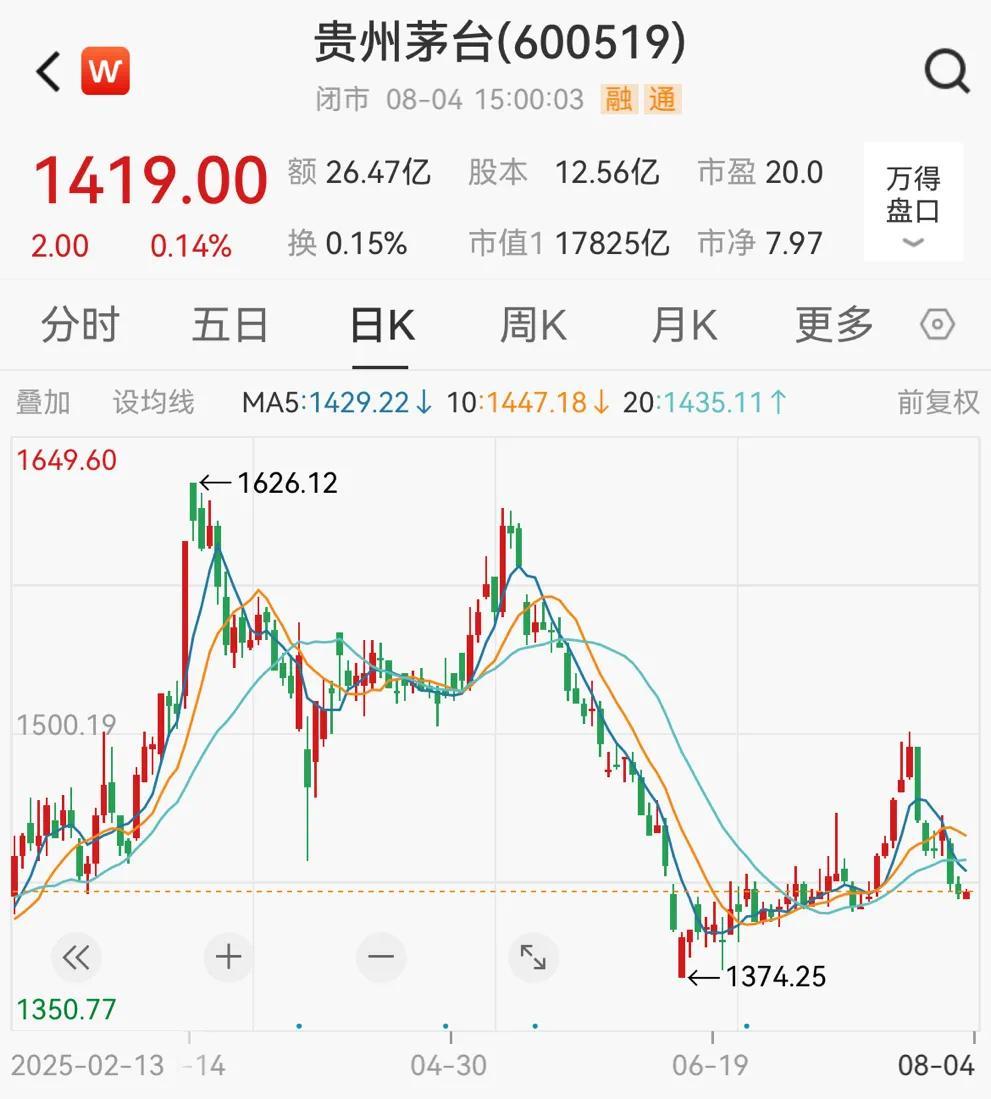
Group 1: Company Actions - Guizhou Moutai has repurchased shares totaling over 5.3 billion yuan as of July 2025, signaling confidence to the market and stabilizing stock price expectations [1][3] - As of July 2025, Guizhou Moutai has repurchased 345,170 shares, accounting for 0.2748% of total share capital, with a total payment of 5.301 billion yuan [3] Group 2: Market Conditions - The stock price of Guizhou Moutai has decreased by 5.06% this year, reaching a low of 1,373.1 yuan per share, currently trading at 1,419 yuan [1] - The wholesale reference price for Moutai's Snake Year liquor has returned to 2,000 yuan per bottle, reflecting a 5 yuan increase from the previous day [4] Group 3: Industry Outlook - The white liquor industry is currently in an adjustment phase, facing challenges such as overcapacity, high inventory, and price inversions [3] - The valuation of the food and beverage sector is at a ten-year low, with the white liquor sector's valuation at 11.98 times, also at a ten-year low [6] - The industry is undergoing a destocking cycle, with multiple pressures from pricing, demand, and policy affecting liquor companies [6]


股权债券双轮驱动 国金投行差异化赋能实体经济
Zheng Quan Ri Bao· 2025-07-21 09:10
Group 1 - The core viewpoint of the articles highlights the comprehensive reforms in China's capital market in 2025, including the deepening of the registration system, the implementation of the new "National Nine Articles," and the enhancement of green finance policies, which collectively create a favorable environment for investment banking [1] - The regulatory authorities emphasize improving the quality of listed companies and supporting technological innovation and green transformation, prompting investment banks to shift from a "channel-type" to a "value-creation type" of business model [1] - The surge in cross-border financing needs and the accelerated capitalization of emerging industries demand higher industry expertise, resource integration capabilities, and comprehensive service capabilities from investment banks [1] Group 2 - As of June 2025, Guojin Investment Bank has 13 IPO projects under review, ranking seventh in the industry, maintaining a stable market share amid stringent regulations [2] - Guojin Investment Bank has established a differentiated service model focused on small and medium-sized private enterprises and technology companies, providing comprehensive services from early financing stages, with some projects lasting over 5 to 10 years [2] - The company has a market share of 8.89% in the automotive industry IPO projects from 2020 to 2024, ranking first in the industry, and 4.10% in the healthcare sector, ranking seventh [2] Group 3 - Under the "One Guojin" concept, the investment banking, research, and wealth management divisions collaborate deeply to provide "one-stop" comprehensive financial services [3] - For example, Guojin Investment Bank assisted Haohanshen in its 2022 Sci-Tech Innovation Board listing and helped with convertible bond issuance in 2025, showcasing the integration of various financial services [3] - The company continues to promote collaboration among its various business lines, including research, wealth management, and asset management, to meet enterprise needs [3] Group 4 - In the first half of 2025, Guojin Securities' bond underwriting amount reached 54.144 billion yuan, ranking tenth in the industry, with 183 bonds underwritten, ranking eleventh [4] - The company focuses on innovative products such as green bonds and technology innovation bonds, establishing a professional and systematic full-chain service capability [4] - From 2024 to the first half of 2025, Guojin Securities issued 22 special bond varieties with a total issuance amount of 19.95 billion yuan, including notable projects like the first technology innovation bond in Hebei Province [4] Group 5 - Guojin Investment Bank has been building a professional team focused on innovative products like green bonds and technology innovation bonds, cultivating composite talents in "industry + capital" [5] - The company provides pre-issuance services, including policy interpretation and feasibility analysis, to help "hard technology" and "specialized and innovative" enterprises clarify financing paths [5] - Guojin Securities aims to deepen its equity and debt collaboration strategy, focusing on capital strategic consulting services covering the entire lifecycle of enterprises [5][6]

2025.07月中旬市场点评:当下行情依然属于“慢牛”范畴
Xiangcai Securities· 2025-07-17 09:36
Group 1 - The current market is characterized as a "slow bull" phase, with the Shanghai Composite Index fluctuating around 3500 points, indicating a lack of potential for a "crazy bull" market [1][2][8] - The market is in the sixth cycle since 2005, showing a disconnection between the Shanghai Composite Index and macroeconomic short cycles, reflecting a weak macroeconomic backdrop [10][20] - The management is actively working to prevent a repeat of the brief "crazy bull" markets seen in 2006-2007 and 2014-2015, which could lead to prolonged bear markets [10][20] Group 2 - The outlook for 2025 suggests a prolonged "slow bull" market, with a focus on time over height, influenced by long-term capital inflows, particularly in dividend-related sectors like banking and insurance [4][20] - The investment logic for upstream industries is challenging due to weak PPI, while downstream industries are expected to perform better, aligning with domestic consumption policies [4][20] - The consumer sector may face significant differentiation, with new consumption segments likely to attract more capital, depending on the strength of policy support [20][21] Group 3 - The 2025 market is expected to operate under a combination of the new "National Nine Articles" and a "four trillion" investment trend, with a high probability of a "slow bull" market [21] - Key areas of focus for 2025 include technology, green initiatives, consumption, and infrastructure, as highlighted in the government work report [21] - The market is anticipated to experience slight upward fluctuations in July, supported by long-term capital inflows, particularly in dividend sectors [21]
资金加速入市!券商板块迎来高光时刻?
Xin Lang Ji Jin· 2025-07-11 06:17
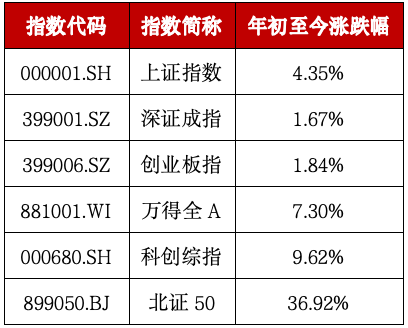
Core Viewpoint - The A-share market is experiencing structural opportunities, leading to an accelerated influx of various funds, including individual investors, public funds, and insurance capital, which is positively impacting the brokerage sector [1][2][3] Individual Investors - In the first half of 2025, the number of new individual investor accounts reached 12.6 million, representing a year-on-year increase of over 32% [1] Public Funds - The issuance quantity and scale of equity funds in the first half of 2025 increased by 67.5% and 180.2% year-on-year, respectively [1] Insurance Capital - Insurance companies have established or increased capital in private securities investment funds, with a total scale expected to reach 222 billion yuan in 2025 [1] Market Performance - As of July 8, 2025, major A-share indices have shown positive performance, with the Wande All A index up 7.30% and the Shanghai Composite Index up 4.35% year-to-date [1] Policy Environment - The new "National Nine Articles" in 2024 encourages dividends, reflecting a commitment from listed companies to shareholder returns and an improved capital market environment [1][2] - The China Securities Regulatory Commission (CSRC) has introduced a plan to promote the high-quality development of public funds, aiming to optimize fee structures and enhance investor services [2] Macro Environment - With the domestic economic growth transitioning, the country has entered an era of deposit rates at "1.0%", prompting some savings to flow into the equity market [2] - The "deposit migration" phenomenon has been observed, with funds shifting from savings to investment products and the stock market since last year [2] Impact on Brokerage Sector - The influx of funds and increased trading activity are expected to benefit brokerage businesses, particularly in the growth of brokerage services [3] - The brokerage sector's core businesses, including proprietary trading, investment banking, asset management, and credit services, are likely to see synergistic growth due to market activity [3] - Overall, the revenue of the brokerage sector is closely tied to the performance of the A-share market, with anticipated growth in brokerage earnings as market conditions improve [3]
超八成公司披露行动方案 政策东风助力科创板提质增效再升级
Zheng Quan Shi Bao Wang· 2025-06-10 13:36
Group 1: Core Insights - The China Securities Regulatory Commission (CSRC) has implemented measures to enhance the quality and efficiency of companies listed on the Sci-Tech Innovation Board (STAR Market), with over 470 companies expected to disclose their annual improvement plans for 2024 and 479 for 2025, representing over 80% of the board [1] - Companies are focusing on innovation-driven strategies, increasing R&D investments, and pushing for the practical application of patented technologies, with leading firms like Shengmei Shanghai committing to maintain R&D spending at around 15% of revenue by 2025 [1] - More than 60% of STAR Market companies have announced cash dividend plans for 2024, totaling over 38.6 billion yuan, with over 290 companies planning dividends exceeding 30% of their profits [2] Group 2: Mergers and Acquisitions - Mergers and acquisitions are becoming a key strategy for STAR Market companies to rapidly acquire technological capabilities and enhance competitiveness, with companies like Huahai Chengke planning significant acquisitions to break through overseas technology monopolies [3] - Completed acquisitions are transitioning into deeper business cooperation and technological collaboration, as seen with Zhongchuan Special Gas's acquisition of Huai'an Pairui Gas and Sanyou Medical's acquisition of French orthopedic firm Implanet [4] Group 3: Investor Relations and Engagement - Companies are enhancing communication with investors, with Haiguang Information planning multiple investor relations activities, including at least three performance briefings and six investor research activities in 2025 [5] - Jinpan Technology aims to host open days for investors to visit its digital factory, while China Resources Microelectronics is focusing on international investor engagement through online and offline roadshows [5]
华西证券: 2024年度股东大会会议材料
Zheng Quan Zhi Xing· 2025-06-09 13:44
Core Viewpoint - The company has demonstrated resilience and adaptability in a challenging market environment, achieving significant growth in revenue and profit while focusing on compliance, governance, and strategic transformation initiatives [1][6][31]. Group 1: Governance and Compliance - The company has held 2 shareholder meetings and 6 board meetings, ensuring rigorous decision-making processes and compliance with legal regulations [2][3]. - A comprehensive compliance management system has been established, enhancing risk management and internal controls, which has led to successful audits and regulatory checks [3][4][19]. - The board has emphasized the importance of independent directors in decision-making and oversight, improving the overall governance structure [2][5]. Group 2: Financial Performance - The company reported a significant increase in operating revenue, reaching 39.20 billion yuan, a 23.22% increase from the previous year [24][31]. - Net profit surged to 7.27 billion yuan, reflecting a 72.93% year-on-year growth, driven by strategic adjustments in investment and wealth management [24][31]. - Total assets increased to 1,003.46 billion yuan, marking a 12.89% rise, while total liabilities also grew, indicating robust operational expansion [25][32]. Group 3: Strategic Initiatives - The company is focusing on business transformation, particularly in wealth management and fixed income, to adapt to changing market conditions and regulatory environments [8][12]. - A commitment to ESG principles has been integrated into the business model, with active participation in green finance initiatives and community support programs [6][12]. - The board plans to enhance digital transformation efforts, leveraging technology to improve operational efficiency and customer engagement [12][31]. Group 4: Future Directions - The company aims to strengthen its governance framework in line with new regulatory requirements, ensuring compliance and operational effectiveness [10][11]. - There is a focus on enhancing investor relations and communication strategies to better engage with shareholders and address their concerns [5][10]. - The board will prioritize risk management and compliance as foundational elements for sustainable growth and high-quality development [11][12].

1.65万亿“红包雨”即将来临,这些ETF月月评估分红
Mei Ri Jing Ji Xin Wen· 2025-06-06 01:49
Group 1 - The core viewpoint of the articles highlights the upcoming cash dividends from A-share listed companies, with an expected total scale of 1.65 trillion yuan, as 3,645 out of 5,402 companies plan to distribute dividends, representing approximately 67.48% [1] - The high dividend environment is expected to provide investors with a better risk-return ratio due to the low volatility and low drawdown characteristics of dividend assets, which are increasingly recognized for their investment value [1] - The introduction of monthly evaluation dividend mechanisms in ETF funds, such as the Dividend State-Owned Enterprise ETF (510720) and the Dividend Hong Kong Stock ETF (159331), showcases a trend towards more frequent and stable dividend distributions [1][2] Group 2 - The Cash Flow ETF (159399), focusing on free cash flow strategies, is also implementing a monthly evaluation dividend mechanism, having conducted three distributions since its launch in February 2025, making it unique in the market [2] - Analysts suggest that cash dividends from fund products can enhance the clarity of returns for investors, while monthly dividend assessments can increase the frequency of returns, providing a more stable and direct investment experience [2]
重组新规明确预期 并购市场呈现六大发展趋势
Shang Hai Zheng Quan Bao· 2025-05-22 18:56
Core Viewpoint - The introduction of the "Six Guidelines for Restructuring" will inject certainty into the merger and acquisition market, further releasing market vitality and guiding the stable and long-term development of listed companies' mergers and acquisitions [1][4]. Group 1: Development Trends of Mergers and Acquisitions - The legal degree of mergers and acquisitions by listed companies will further improve [5]. - Mergers and acquisitions will become more market-oriented [6]. - Mergers and acquisitions will trend towards normalization [7]. - The internationalization level of mergers and acquisitions will gradually increase [9][10]. - The professionalism and complexity of mergers and acquisitions will increase [11][12]. - The effectiveness of merger integration will become a key indicator for measuring the success or failure of mergers and acquisitions [13][14]. Group 2: Historical Context and Previous Reforms - The "Six Guidelines for Mergers" and the "Six Guidelines for Restructuring" have stimulated and released market vitality for listed companies' mergers and acquisitions [2][3]. - Previous reforms aimed at regulating the merger and acquisition market were implemented due to the chaotic environment created by high-leverage acquisitions and excessive valuations in 2015 [2]. Group 3: Strategies for Listed Companies - Companies should integrate mergers and acquisitions into their development strategies to seize opportunities [15]. - Establishing specialized merger and acquisition teams is essential to enhance professionalism [15]. - Companies must strengthen compliance training and management for merger and acquisition activities [16]. - Emphasizing and effectively managing merger integration is crucial for success [17].
三和管桩: 中国银河证券股份有限公司关于广东三和管桩股份有限公司2024年年度保荐工作报告
Zheng Quan Zhi Xing· 2025-05-13 09:26
| 中国银河证券股份有限公司 | | | | --- | --- | --- | | 关于广东三和管桩股份有限公司 2024 年年度保荐工作报告 | | | | 保荐人名称:中国银河证券股份有限公司 | 被保荐公司简称:三和管桩 | | | 保荐代表人姓名:付月芳 | | | | 项目 工作内容 | | | | (1)是否及时审阅公司信息披露文件 | | 是 | | (1)是否督导公司建立健全规章制度(包括但不限于防 | | | | 止关联方占用公司资源的制度、募集资金管理制度、内控 | | 是 | | 制度、内部审计制度、关联交易制度) | | | | (2)公司是否有效执行相关规章制度 | | 是 | | (1)查询公司募集资金专户次数 每月 | | 1 次 | | (2)公司募集资金项目进展是否与信息披露文件一致 | | 是 | | 其决议 | | | | 未现场出席,审阅 | | | | (2)列席公司董事会次数 了历次会议通知及 | | | | 其决议 | | | | 未现场出席,审阅 | | | | (3)列席公司监事会次数 了历次会议通知及 | | | | 其决议 | | | | (1)现场检查 ...