
新能源汽车产业

Search documents
10月新能源新车销量占比超50%
Ren Min Ri Bao· 2025-11-11 20:26
Core Insights - In October, China's automotive production and sales reached 3.359 million and 3.322 million units, respectively, with month-on-month increases of 2.5% and 3% and year-on-year increases of 12.1% and 8.8% [1] - From January to October, automotive production and sales totaled 27.692 million and 27.687 million units, showing year-on-year growth of 13.2% and 12.4%, although the growth rates slightly narrowed compared to the first nine months of the year [1] - In October, the production and sales of new energy vehicles (NEVs) were 1.772 million and 1.715 million units, marking year-on-year increases of 21.1% and 20%, with NEVs accounting for 51.6% of total new car sales [1] - Cumulatively, from January to October, NEV production and sales reached 13.015 million and 12.943 million units, reflecting year-on-year growth of 33.1% and 32.7%, with NEVs making up 46.7% of total new car sales [1] - NEV exports in October reached 256,000 units, a year-on-year increase of 99.9%, and total NEV exports from January to October surpassed 2 million units, reaching 2.014 million, up 90.4% year-on-year [1] - The China Association of Automobile Manufacturers indicated that the automotive industry's growth rate has exceeded expectations, driven significantly by the "two new" policies, with an annual production and sales forecast of 34 million units [1]
豫见•郑州 | 解码郑州汽车产业:黄河之滨,千亿“引擎”正轰鸣
Zheng Zhou Ri Bao· 2025-11-06 07:25
Core Insights - Zhengzhou's automotive industry is experiencing significant growth, particularly in the new energy vehicle (NEV) sector, with production expected to exceed 1.1 million vehicles in 2024, marking a historic milestone [1][3]. Industry Growth - In 2023, Zhengzhou's automotive production reached 830,000 units, a year-on-year increase of 61.7%, with NEV production at 316,000 units, up 350% [1]. - By 2025, the city aims to achieve a production capacity of over 3 million vehicles, reflecting a substantial increase from 700,000 units in 2012 [11]. Strategic Development - The shift towards NEVs began in 2014 when Zhengzhou identified the sector as a strategic priority, leading to the establishment of a trillion-yuan industry cluster [3]. - A series of supportive policies have been implemented, including action plans and implementation opinions to enhance the automotive manufacturing industry [4]. Project Efficiency - The efficiency of project execution is highlighted by the rapid development of the BYD project, which began construction just 37 days after signing in 2021 and produced over 1 million NEVs within 17 months [6]. Supply Chain and Ecosystem - Zhengzhou has developed a comprehensive supply chain, with over 150 core automotive parts manufacturers located in the city, ensuring that more than 60% of a vehicle's components can be sourced locally [6]. - The city has established a "4+N" development pattern for NEV parts, enhancing the local industrial ecosystem [6]. Logistics and Infrastructure - The logistics sector is also advancing, with the establishment of a multi-modal transport and logistics base for automotive exports, alongside the development of charging infrastructure, including 32 hydrogen stations and 200,000 charging piles [8]. Innovation and Long-term Vision - Continuous innovation is emphasized as a key theme, with significant investments in research and development, resulting in the establishment of 16 national-level technology platforms and 39 provincial-level R&D platforms [11]. - Zhengzhou's leadership is actively involved in fostering innovation, recognizing its importance for the city's future in the automotive sector [11].

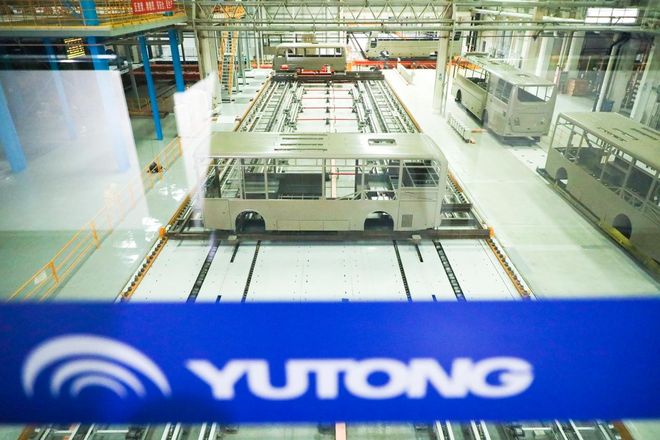
锂电行业周刊:锂电出口管制措施暂停一年实施,企业加快海外布局
Chan Ye Xin Xi Wang· 2025-11-05 05:50
Key Policies - The Chinese Ministry of Commerce announced a one-year suspension of export control measures on lithium batteries and related materials, originally set to take effect on November 8 [5][6] - The U.S. will also suspend the implementation of its export control measures for a year, including the 50% penetration rule announced on September 29 [3][4] Key Events - Samsung SDI has partnered with BMW Group and Solid Power to develop a solid-state battery validation project, aiming to enhance energy density and safety [7][8] - A solid-state battery project in Xinjiang, with an investment of 1.8 billion yuan, is nearing completion, expected to produce over 100 million battery cells annually [9] - The first batch of sodium-ion automotive batteries from Tianjing Star has been exported to Nigeria, marking a significant milestone for sodium-ion technology in the northern region of China [20][21] Key Companies - Envision AESC has commenced construction of a smart lithium battery production base in Yichang, with a total investment of 242 billion yuan, aiming for an annual capacity of 40 GWh [22][26] - A joint venture between Sanyou Chemical and Beijing Zhongke Haina aims to develop a sodium-ion battery industry chain in Tangshan, with an initial investment of 2.7 billion yuan [12][14] - CATL has acquired a 12.95% stake in Tianhua New Energy for 2.635 billion yuan, enhancing its supply chain capabilities in lithium salt production [40][41]

浙江这家上市公司青岛再落子!
Sou Hu Cai Jing· 2025-11-04 01:54
Core Insights - Zhejiang Dahua Technology Co., Ltd. has established a new subsidiary, Qingdao Dahua Ruihai New Energy Operation Co., Ltd., with a registered capital of 5 million yuan, marking its continued investment in Qingdao after the establishment of its Qingdao branch [1][3] - The strategic move into the new energy sector indicates Dahua's intent to diversify and strengthen its position in the rapidly growing market of new energy vehicles, particularly in battery swapping technology [5][10] Company Background - Founded in 2001, Dahua has evolved from a telecommunications equipment manufacturer to a leading provider of video-centric smart IoT solutions, with a significant presence in smart city and transportation sectors [3] - Dahua holds a market share of approximately 12%-15% in the domestic security industry, positioning it as a key player behind Hikvision [3] Strategic Moves - In 2023, Dahua divested its shares in Zhejiang Leapmotor Technology Co., Ltd. to enhance net profits attributable to the parent company, reflecting a strategic focus on strengthening its core security technology amid challenges in the electric vehicle sector [5] - The sale of its smart home brand, Huacheng Network, was also aimed at reallocating resources to core security technology, indicating a strategic shift towards optimizing its business portfolio [5] New Energy Focus - The establishment of Dahua Ruihai marks a significant entry into the new energy vehicle battery swapping market, aligning with Qingdao's strategic initiatives to develop its new energy sector [5][10] - Qingdao's "10+1" innovative industrial system includes smart connected new energy vehicles as a key area for development, with ambitious targets set for production and component restructuring by 2025 [8][10] - The existing industrial ecosystem in Qingdao, including major players like CATL and Guoxuan High-Tech, provides a conducive environment for Dahua's market expansion in the new energy sector [8][10]

六氟磷酸锂价格突破10万/吨印证行业景气,新能车ETF(515700)近1周新增规模居可比基金首位,今日回调蓄势
Xin Lang Cai Jing· 2025-11-03 02:49
Core Insights - The price of lithium hexafluorophosphate has surged past 100,000 yuan per ton, indicating a market opportunity for industry players [1] - As of October 31, the price reached 107,500 yuan per ton, a 76.23% increase from 61,000 yuan per ton on September 30, reflecting a recovery in industry sentiment [1] Industry Summary - The rise in lithium hexafluorophosphate prices is closely linked to increased market demand and reduced inventory, benefiting production companies directly [1] - The New Energy Vehicle (NEV) ETF closely tracks the CSI New Energy Vehicle Industry Index, which is positively impacted by the recovery in lithium battery demand and advancements in solid-state batteries and robotics [1] - The CSI New Energy Vehicle Industry Index includes 50 listed companies involved in various sectors of the NEV industry, reflecting the overall performance of leading companies in this space [1] Company Summary - The top ten weighted stocks in the CSI New Energy Vehicle Industry Index as of October 31, 2025, include major players such as CATL, BYD, and Ganfeng Lithium, collectively accounting for 53.56% of the index [2] - The NEV ETF and its associated funds are designed to capitalize on the performance of these leading companies within the new energy vehicle sector [2]
购置税新规将近,新势力们抢占窗口期
Xin Lang Cai Jing· 2025-11-01 12:16
Core Viewpoint - The new policy regarding the purchase tax for electric vehicles (EVs) in China marks a significant shift, transitioning from full exemption to a 50% reduction starting in 2026, which indicates a gradual reduction in government support for the EV sector after a decade of incentives [1][4]. Policy Changes - The Ministry of Industry and Information Technology, the Ministry of Finance, and the State Taxation Administration announced that from 2026, the purchase tax for EVs will be halved, with a maximum tax reduction of 15,000 yuan per vehicle [1]. - This change signifies the end of the full exemption policy that has been in place since 2014, reflecting a broader trend of decreasing government support for the EV industry [1][4]. Market Performance - In the first nine months of this year, China's retail sales of new energy vehicles grew by 24.4%, with a retail penetration rate reaching 57.8% in September [2]. - The data indicates that the EV industry has crossed the critical threshold of market cultivation and is entering a period of mainstream consumer adoption [4]. Company Strategies - In anticipation of the new tax policy, over ten car manufacturers, including Xiaomi, NIO, and Li Auto, have announced plans to cover the tax difference for customers to retain users during this transition period [4][6]. - Xiaomi has committed to fully covering the tax difference for orders placed by November 30, 2025, if delivery is delayed due to the company’s reasons, with a maximum subsidy of 15,000 yuan [6][7]. Competitive Landscape - The competition among new energy vehicle manufacturers remains intense, with companies like Li Auto and NIO also introducing tax subsidy policies for their new models launched in September [7][8]. - The introduction of tax subsidies for new models is seen as a strategy to maintain competitiveness and build market presence ahead of the upcoming sales season [8][9]. Production and Delivery Challenges - Many manufacturers are facing production ramp-up challenges, particularly for new models launched recently, which necessitates the implementation of tax subsidies to secure customer orders [9][10]. - Companies like Xiaomi are experiencing long delivery times, with some customers needing to wait until 2026 for their vehicles, prompting the need for subsidies to alleviate customer concerns about increased costs [9][10]. Future Outlook - As the policy support diminishes, new energy vehicle manufacturers will need to enhance their competitiveness through core technology, product excellence, and efficient cost control to thrive in the evolving market landscape [13][14]. - The industry is expected to shift from being policy-driven to market-driven, with a focus on technological innovation and service quality becoming critical for long-term success [13][16].




头部电池厂相继更新固态电池进展,新能源车ETF(159806)盘中涨超1.2%
Mei Ri Jing Ji Xin Wen· 2025-10-31 06:03
Group 1 - The core viewpoint of the article highlights advancements in the battery industry, particularly the introduction of solid-state batteries by leading manufacturers, such as the new polymer all-solid-state battery "Xin·Bixiao" by XINWANDA, which achieves an energy density of 400Wh/kg [1] - New applications for power batteries are emerging, including electric ships and unmanned mining vehicles, with CATL's pure electric transport ship being selected as a national benchmark, capable of traveling 230km on a full charge, significantly reducing energy costs compared to traditional fuel ships [1] - The New Energy Vehicle ETF (159806) tracks the CS New Energy Vehicle Index (399976), which selects listed companies involved in the lithium battery, charging pile, and new energy vehicle sectors from the Shanghai and Shenzhen markets, reflecting the overall performance of the industry [1] Group 2 - The index constituents primarily focus on batteries, passenger vehicles, and energy metals, showcasing the technological advancements and growth potential of the new energy vehicle industry [1]
省份工业三季报 轮到中部“上分”了?
Mei Ri Jing Ji Xin Wen· 2025-10-28 17:35
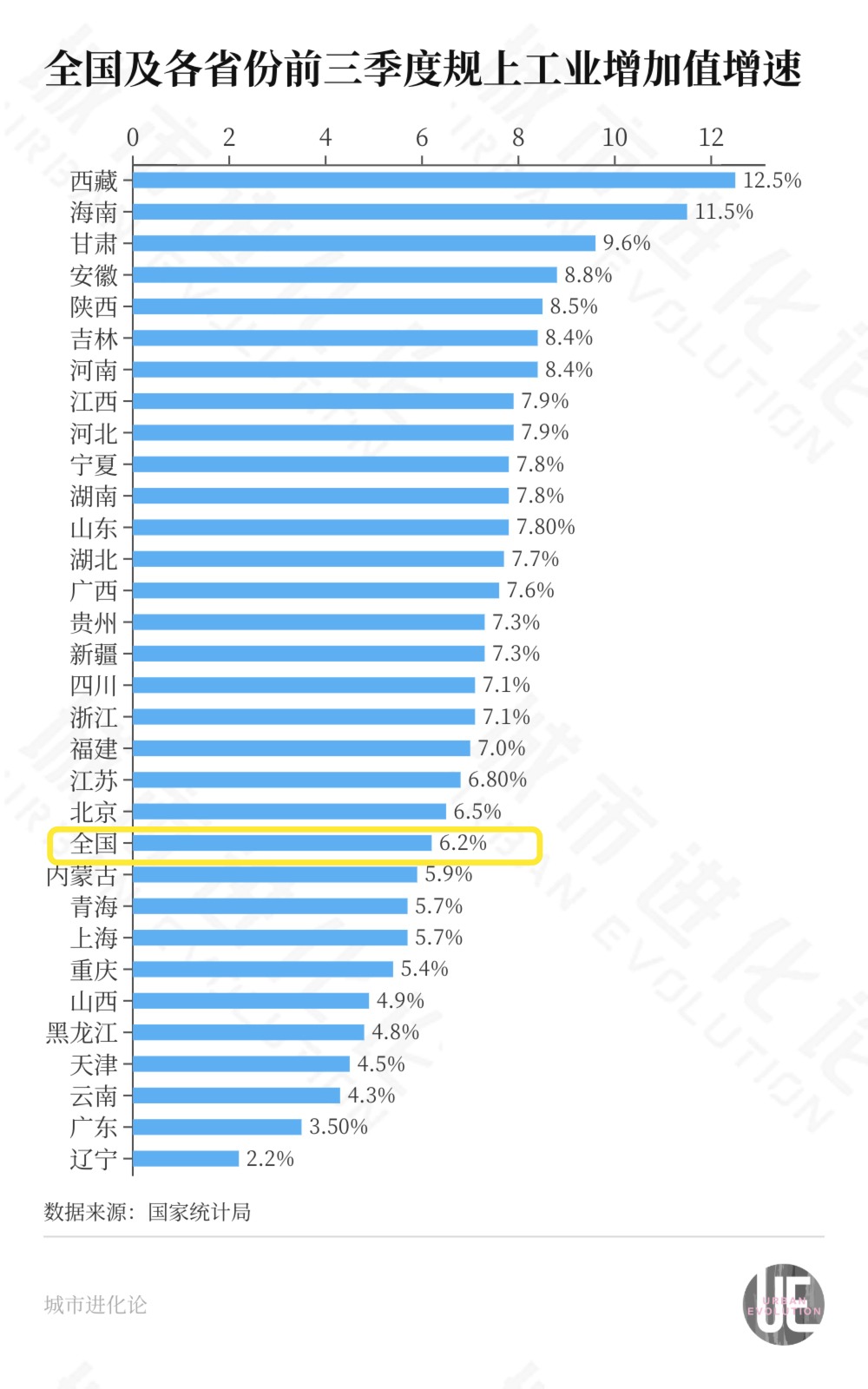
Core Insights - The article highlights the significant changes in China's industrial landscape as the country approaches the end of the "14th Five-Year Plan," with 21 provinces surpassing the national average industrial value-added growth rate of 6.2% [1][3] - Among the top ten economic provinces, Henan leads with an 8.4% growth rate in industrial value-added, driven primarily by the automotive industry, particularly in the new energy vehicle sector [3][4] Economic Performance - In the first three quarters, Anhui's industrial value-added grew by 8.8%, positioning it as a strong contender to break into the top ten economic provinces [3][5] - Jilin's industrial value-added increased by 8.4%, contrasting sharply with Liaoning's 2.2% growth, which is the lowest in the country [3][13] Industry Dynamics - The automotive and new energy vehicle sectors are pivotal in driving industrial growth in provinces like Henan and Anhui, with Henan's automotive industry growing by 20.0% and new energy vehicles by 19.3% [4][5] - In contrast, Liaoning's traditional fuel vehicle industry is under pressure, with a 10.1% decline in production, highlighting the need for industrial transformation [15] Strategic Initiatives - The national "15th Five-Year Plan" emphasizes building a modern industrial system and strengthening the manufacturing sector, which will influence provincial industrial strategies [3][10] - Shandong and Hunan are focusing on digital transformation and upgrading traditional industries to find new growth points, with Shandong implementing numerous technology upgrade projects [11][12] Future Outlook - Jilin's industrial investment is on the rise, with a 2.7% increase in the first three quarters, indicating a positive trajectory for future growth [14] - Liaoning aims for a 4.5% growth target in industrial value-added by 2025, despite current challenges [16]

深圳:这项补贴停止实施
Di Yi Cai Jing· 2025-10-28 15:24
Core Insights - The Chinese new energy vehicle (NEV) industry is transitioning from a "policy nurturing period" to a market-driven phase as government subsidies begin to phase out [3] Group 1: Policy Changes - Shenzhen's automotive replacement subsidy policy will cease on October 28, 2025, after reaching its budget limit [1] - The subsidy program aims to promote the replacement of approximately 160,000 vehicles by the end of 2025, alongside significant sales in home appliances and digital products [2] Group 2: Market Response - The subsidy program has seen a strong market response, with over 1 million applications submitted nationwide by October 22, 2023, indicating high consumer interest [2] - The rapid depletion of subsidy qualifications has led to additional funding being allocated by Shenzhen authorities [2] Group 3: Regional Variations - Several provinces have suspended their long-term special bond subsidy policies, while some local governments are introducing supplementary measures to stimulate automotive consumption [3] - Starting January 1, 2026, the full exemption from vehicle purchase tax for NEVs will shift to a 50% reduction, increasing the cost of purchasing these vehicles [3]
瑞达期货碳酸锂产业日报-20251027
Rui Da Qi Huo· 2025-10-27 08:40
1. Report Industry Investment Rating - No relevant content provided 2. Core Viewpoints of the Report - The fundamentals of lithium carbonate may be in a stage of increasing supply and demand and inventory reduction. The upstream raw material prices are rising, the supply of domestic lithium carbonate is growing steadily, the demand is strong, and the industrial inventory is gradually decreasing. The option market sentiment is bullish, and the implied volatility has slightly decreased. Technically, the 60 - minute MACD shows that the double - line is above the 0 - axis and the red column is slightly converging. The operation suggestion is to conduct light - position trading with a slightly strong oscillation and pay attention to controlling risks [2] 3. Summary by Relevant Catalogs 3.1 Futures Market - The closing price of the main contract is 81,900 yuan/ton, up 2,380 yuan. The net position of the top 20 is - 188,469 hands, down 4,674 hands. The trading volume of the main contract is 483,478 hands, up 52,304 hands. The spread between near and far - month contracts is - 380 yuan/ton, down 200 yuan. The warehouse receipt of GZEE is 27,739 hands/ton, down 960 hands [2] 3.2 Spot Market - The average price of battery - grade lithium carbonate is 76,550 yuan/ton, up 1,150 yuan. The average price of industrial - grade lithium carbonate is 74,300 yuan/ton, up 1,150 yuan. The basis of the Li₂CO₃ main contract is - 5,350 yuan/ton, down 1,230 yuan [2] 3.3 Upstream Situation - The average price of spodumene concentrate (6% CIF China) is 941 US dollars/ton, up 44 US dollars. The average price of amblygonite is 8,600 yuan/ton, up 350 yuan. The price of lepidolite (2 - 2.5%) remains unchanged at 2,835 yuan/ton [2] 3.4 Industry Situation - The monthly output of lithium carbonate is 47,140 tons, up 1,260 tons. The monthly import volume is 19,596.9 tons, down 2,250.01 tons. The monthly export volume is 150.82 tons, down 218.09 tons. The monthly operating rate of lithium carbonate enterprises is 47%, up 1%. The monthly output of power batteries is 151,200 MWh, up 11,600 MWh. The price of lithium manganate remains unchanged at 32,000 yuan/ton. The price of lithium hexafluorophosphate is 99,000 yuan/ton, up 4,000 yuan. The price of ternary material (811 type) in China remains unchanged at 162,000 yuan/ton. The price of lithium cobaltate remains unchanged at 343,500 yuan/ton. The price of ternary material (622 power type) in China remains unchanged at 141,500 yuan/ton [2] 3.5 Downstream and Application Situation - The price of ternary material (523 single - crystal type) in China remains unchanged at 152,500 yuan/ton. The monthly operating rate of ternary cathode materials is 53%, down 2%. The price of lithium iron phosphate is 34,800 yuan/ton, unchanged. The monthly operating rate of lithium iron phosphate cathode is 59%, up 2%. The monthly output of new energy vehicles is 1,617,000 vehicles, up 226,000 vehicles. The monthly sales volume is 1,604,000 vehicles, up 209,000 vehicles. The cumulative sales penetration rate of new energy vehicles is 46.09%, up 0.55%. The cumulative sales volume of new energy vehicles is 11,228,000 vehicles, up 2,908,000 vehicles. The monthly export volume of new energy vehicles is 222,000 vehicles, down 2,000 vehicles. The cumulative export volume of new energy vehicles is 1.758 million vehicles, up 830,000 vehicles. The 20 - day average volatility of the underlying is 23.64%, up 1.49%. The 40 - day average volatility of the underlying is 25.69%, down 1.63% [2] 3.6 Option Situation - The total subscription position is 137,942 contracts, up 7,152 contracts. The total put position is 57,430 contracts, up 3,173 contracts. The put - call ratio of the total position is 41.63%, up 0.1494%. The implied volatility of at - the - money IV is 0.35%, down 0.0087% [2] 3.7 Industry News - From October 22 - 25, 2025, the "2025 Automotive Industry Statistical Annual Report Work Conference" was held in Changsha. The overall automobile production and sales are growing, but the industry still faces multiple challenges. Suggestions include promoting the implementation of stable - growth policies, gradually phasing out the vehicle purchase tax reduction policy, and strengthening comprehensive management of the "involution" [2] - In September 2025, China imported 19,597 tons of lithium carbonate, a 10% month - on - month decrease and a 20% year - on - year increase. It exported 151 tons of lithium carbonate, a 59% month - on - month decrease and a 9% year - on - year decrease [2] - In September 2025, China's export volume of lithium iron phosphate was 3,091.99 tons, a 54.6% month - on - month increase and a 599% year - on - year increase [2] - In September 2025, China's cumulative export volume of lithium hexafluorophosphate was about 1,351 tons, a 7.1% month - on - month increase, and the cumulative import volume was 10.365 tons [2]