
服务贸易

Search documents
扩大优质消费品和服务供给 推动贸易创新发展——访商务部党组书记、部长王文涛
Jing Ji Ri Bao· 2026-01-15 21:30
Core Insights - The article emphasizes the importance of boosting consumption and expanding the supply of quality consumer goods and services as part of China's 14th Five-Year Plan and the 2026 economic work priorities [1][2]. Group 1: Consumption Boosting Strategies - The Ministry of Commerce aims to maintain steady growth in the consumer market, with a projected retail sales total exceeding 50 trillion yuan for the year, reflecting a 4.0% increase in the first 11 months [1][2]. - The focus will be on three key areas: fostering new growth points in service consumption, optimizing the implementation of the old-for-new policy for consumer goods, and stimulating consumption in lower-tier markets [2][3]. Group 2: Service Consumption Growth - The Ministry identifies several fast-growing service consumption sectors, including transportation, housekeeping, and online entertainment, and plans to support these areas through policy improvements and promotional activities [2]. - Events like "Service Consumption Season" and "Chinese Food Festival" will be organized to enhance local service consumption brands [2]. Group 3: Trade Innovation and Development - The Ministry plans to enhance trade through three pillars: goods trade, service trade, and digital trade, while addressing challenges posed by global economic uncertainties [3][4]. - A focus on diversifying markets and promoting balanced trade development will be prioritized, including initiatives to expand imports and support cross-border e-commerce [4][5]. Group 4: High-Level Opening Up - The Ministry will actively expand autonomous opening in various service sectors and promote the implementation of zero-tariff measures for all trading partners in Africa [6]. - Efforts will be made to enhance the global supply chain's efficiency and promote international cooperation in emerging sectors like green development and digital economy [6][7]. Group 5: Global Economic Governance Participation - The Ministry will participate actively in significant upcoming events, including the APEC "China Year" and the 14th WTO Ministerial Conference, to advocate for multilateralism and free trade [7].
释放消费潜力活力 以高水平开放赢得战略主动
Xin Lang Cai Jing· 2026-01-15 18:26
Group 1: Core Insights - The "14th Five-Year Plan" emphasizes the importance of building a strong domestic market and expanding high-level opening-up, with specific measures to boost consumption and promote trade innovation [1][2] - The Ministry of Commerce aims to achieve a steady growth in the consumption market, projecting a retail sales total of over 50 trillion yuan for the year, with a 4.0% increase in the first eleven months [2][3] Group 2: Consumption Strategies - Focus on cultivating service consumption and optimizing the old-for-new policy for consumer goods, with an emphasis on green and smart products [3][4] - The strategy includes enhancing service consumption in key areas such as transportation, home services, and entertainment, while also promoting local consumption through events like "Service Consumption Season" [3][4] Group 3: Trade Innovation - The Ministry of Commerce identifies three pillars for trade development: goods trade, service trade, and digital trade, aiming to stabilize foreign trade amidst global economic challenges [5][6] - Emphasis on diversifying trade markets and balancing trade development, with initiatives to enhance import trade and support cross-border e-commerce [6][7] Group 4: High-Level Opening-Up - The Ministry plans to expand autonomous opening-up in various service sectors and implement zero-tariff measures for all trading partners in Africa [8][9] - Focus on enhancing the global supply chain and participating in global economic governance through significant events like APEC and WTO meetings [9][10]
商务部部署2026年重点工作,提振消费排在首位
Xin Lang Cai Jing· 2026-01-11 06:51
Group 1 - The core focus of the national business work conference is to boost consumption, which is prioritized as the top task for 2026, alongside attracting foreign investment [1][2] - The conference emphasizes the implementation of special actions to stimulate consumption, including the creation of the "Buy in China" brand and the promotion of service consumption growth points [1][3] - The government plans to optimize policies for replacing old consumer goods and enhance the international consumption environment, while also developing digital, green, and health consumption [1][3] Group 2 - The central economic work conference highlighted the importance of expanding domestic demand, with specific measures to implement a plan for increasing urban and rural residents' income and improving the supply of quality goods and services [2][3] - The Ministry of Commerce aims to guide local governments in formulating detailed measures to implement the consumption upgrade policies effectively [3] - Analysts suggest that future service consumption policies may include expanding the scope of replacement programs and providing targeted subsidies for the service sector [3][7] Group 3 - The Ministry of Commerce also aims to promote trade innovation and enhance the "Export China" brand, focusing on optimizing goods trade and developing service trade [3][5] - The government plans to replicate and promote cross-border trade facilitation measures, including improving cross-border logistics and supporting new business models like green trade and cross-border e-commerce [4][5] - There is a renewed focus on attracting foreign investment, with recent data showing a 26.1% year-on-year increase in actual foreign investment in November 2025 [5][6]
中企出海进入新时期,服务贸易发展空间巨大
Di Yi Cai Jing· 2026-01-07 14:25
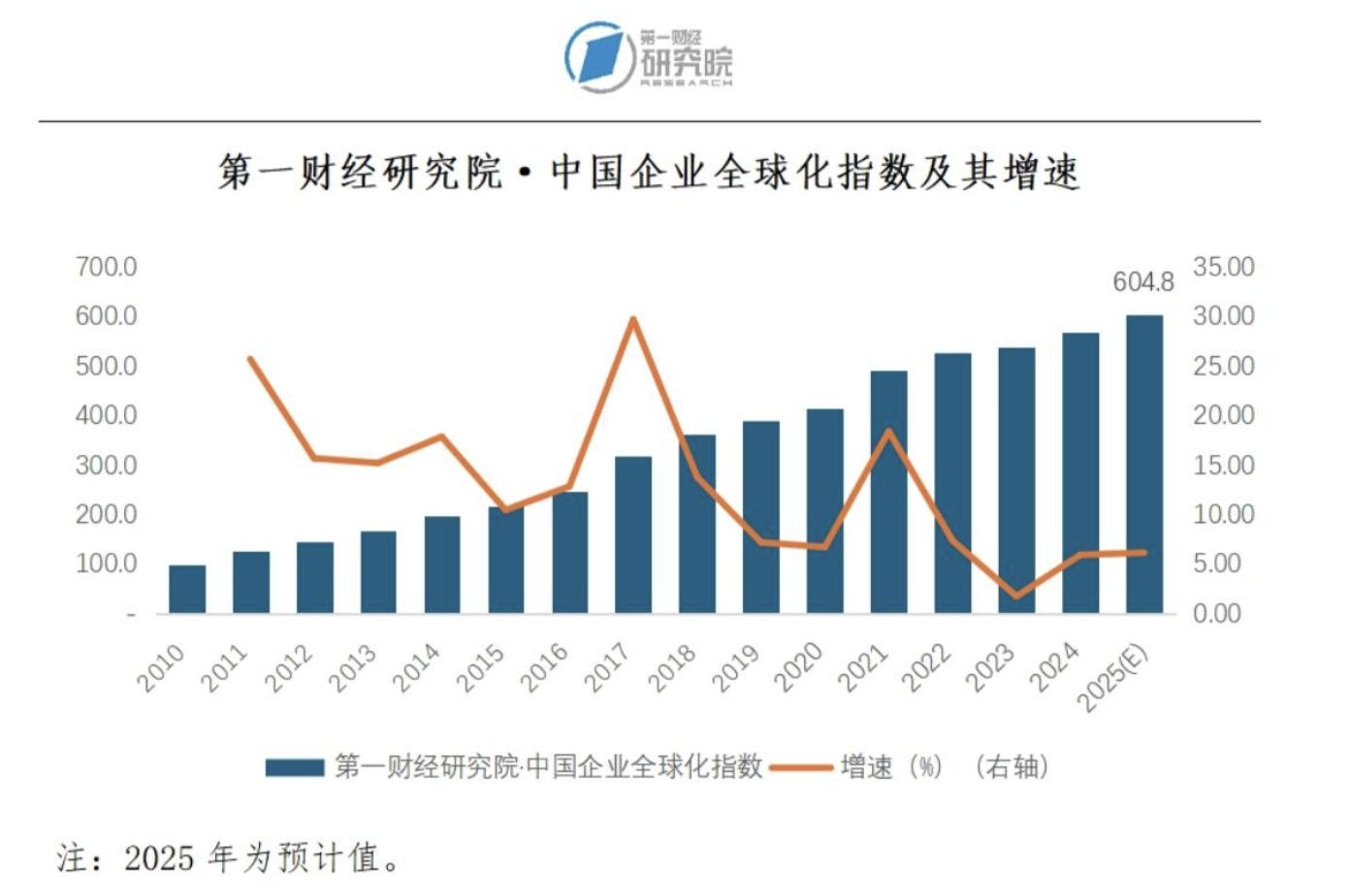
Core Viewpoint - The globalization process of Chinese enterprises is entering a new stage, characterized by increased resilience and global competitiveness, as highlighted by the launch of the "Wenhai: New Observations on Chinese Enterprises Going Global" column by Yicai [2] Group 1: Globalization Trends - Chinese enterprises are showing high activity in overseas markets, with exports increasing by 6.2% to 24.46 trillion RMB and foreign direct investment rising by 7.5% to 1.13145 trillion RMB in the first 11 months of 2025 [2] - Direct investment in countries along the Belt and Road Initiative saw a significant increase of 19% to 255.53 billion RMB, while new contracts for overseas engineering projects grew by 20.4% to 1.44269 trillion RMB [3] - The current wave of globalization for Chinese enterprises began in 2023, transitioning from individual efforts to a more collaborative approach supported by government initiatives [3] Group 2: Challenges and Adaptations - The globalization landscape is facing new challenges due to rising trade protectionism and geopolitical tensions, leading to a more complex and uncertain environment for global operations [4] - The UNCTAD reports that by the end of 2024, 46 countries will have established foreign direct investment review mechanisms, more than double the number from a decade ago, indicating a tightening of investment scrutiny [4] - The Chinese enterprise globalization index is projected to grow by 6.1% in 2025, reaching 604.8, reflecting the continued expansion of Chinese enterprises in global markets [5] Group 3: Sectoral Insights - Emerging industries such as renewable energy and industrial robotics are experiencing sustained export growth, while digital technology is accelerating its integration with local services [8] - The report identifies 50 leading Chinese enterprises in globalization based on their overseas impact, global layout, and social responsibility, highlighting the diverse nature of current Chinese global enterprises [8] Group 4: State-Owned Enterprises (SOEs) - SOEs play a unique and critical role in globalization, characterized by a focus on cooperation and responsibility, with significant overseas investments since 2001 [11] - Compared to private enterprises, listed SOEs show higher levels of overseas revenue, particularly in heavy asset industries like construction and oil [12] - SOEs face dual challenges in globalization, including regulatory scrutiny and the need for effective cross-cultural management [16] Group 5: Service Trade Opportunities - The global service trade is projected to reach 8.69 trillion USD by 2024, with China’s service trade expanding and optimizing its structure, although it still faces a trade deficit in high-value services [19][22] - The overseas revenue of listed service enterprises in China is expected to grow from 1.4 trillion RMB in 2020 to 1.7 trillion RMB in 2024, marking a 21.4% increase [22] - Recommendations for enhancing the quality of China's service trade include optimizing service structures, promoting digital transformation, and supporting the development of emerging service sectors [22]

广东出台18条实施意见 推动贸易高质量发展
Zhong Guo Jing Ying Bao· 2026-01-06 09:09
Group 1: Core Views - The Guangdong Provincial Government has released implementation opinions to promote high-level openness in digital trade and service trade, outlining 18 specific measures to drive development in these areas [1][2]. Group 2: Development of Digital Trade - The opinions emphasize the promotion of high-quality service imports in sectors such as healthcare and cultural entertainment, including hosting international film exhibitions and cultural exchange activities [1]. - Support is provided for the establishment of digital trade empowerment centers and comprehensive service platforms in cities like Guangzhou and Nansha, as well as the creation of national service trade innovation development demonstration zones [1]. - Initiatives include the construction of a digital trade port in Dongguan and the implementation of cross-border management trials for research data in Hengqin [1]. Group 3: Innovation in Service Trade - The opinions encourage the establishment of foreign-invested hospitals in cities like Guangzhou and Shenzhen, and the development of legal service clusters [2]. - There is a focus on expanding the import of urgently needed productive services and promoting the development of digital creative and cultural industries in designated cultural export bases [2]. Group 4: International Market Expansion - The "Global Service Trade" plan aims to organize enterprises to participate in domestic and international digital trade and service trade exhibitions to expand their international market presence [2]. - Support is also provided for the establishment of a service outsourcing distribution center in Zhuhai [2]. Group 5: Strengthening Support Systems - The opinions propose the use of diversified financial tools, such as trade finance and equity investment, to support enterprises in exploring international service trade markets [3]. - The implementation of the "Youyue Card" policy aims to facilitate entry and exit for qualified foreign high-level talents [3]. - There is a call for the establishment of a digital trade certification system and the promotion of patent "open licensing" to enhance support for small and micro enterprises [3].
海南自贸港吸引全球资本 封关破局 红利涌流
Zhong Guo Qing Nian Bao· 2026-01-06 07:32
Core Insights - Hainan Free Trade Port (Hainan FTP) has experienced significant growth in tourism and investment since its closure operation began, with a 25.2% increase in tourist arrivals and a 28.9% rise in total tourism expenditure during the New Year holiday [1] - The implementation of liberalization policies, characterized by "one line open, two lines controlled, and free movement within the island," is expected to attract global capital and enhance competitiveness [2] - The zero-tariff list has expanded from over 1,900 items to approximately 6,600, providing substantial benefits for businesses operating in the Hainan FTP [2] Tourism and Consumer Spending - During the New Year holiday, Hainan's duty-free shopping reached 712 million yuan, marking a 128.9% year-on-year increase [1] - The influx of tourists is not solely for leisure but also for investment opportunities, indicating a shift in the perception of Hainan as a destination for business development [1] Investment and Business Environment - The number of new business entities in Hainan has approached 12,000 since the FTP's closure operation began, reflecting a surge in market vitality [1] - Major corporations, such as Siemens, have established significant operations in Hainan, indicating the region's growing appeal as a manufacturing and investment hub [5] Policy and Economic Development - Hainan FTP's policies are designed to facilitate trade and investment, with a focus on integrating into international economic rules and enhancing the open economy [2][3] - The processing and value-added tax exemption policy allows companies to benefit from significant tax reductions, further incentivizing investment in the region [3] Service Trade Growth - The service trade sector in Hainan is experiencing rapid growth, with service exports increasing by 18.2% in 2024 and 14.4% in the first three quarters of 2025 [7] - Travel service exports have surged by 54.4%, driven by high-level unilateral open policies and visa exemptions for numerous countries [7][8] Long-term Challenges and Opportunities - The long-term success of Hainan FTP will depend on establishing a stable and predictable business environment, with a focus on institutional efficiency and transparency [9][12] - Hainan has the potential to become a "bridgehead" for China's opening-up strategy, with a focus on attracting foreign investment while maintaining compliance with international standards [11][12]
郑栅洁:大力发展服务贸易,支持跨境电商等新业态新模式发展
Ren Min Ri Bao· 2026-01-06 00:59
Core Viewpoint - The article emphasizes the importance of expanding high-level opening-up policies in China, focusing on aligning with international trade rules and enhancing foreign investment opportunities [1] Group 1: High-Level Opening-Up - The National Development and Reform Commission aims to steadily expand institutional opening-up and align with international high-standard economic and trade rules [1] - There is a plan to expand the network of high-standard free trade zones and to construct the Hainan Free Trade Port with high standards [1] Group 2: Market Diversification and Trade Development - The initiative promotes market diversification and the integration of domestic and foreign trade, with a strong emphasis on developing service trade [1] - Support is provided for the growth of new business models such as cross-border e-commerce [1] Group 3: Investment Cooperation and Supply Chain Management - The strategy includes expanding bilateral investment cooperation and reducing the negative list for foreign investment access [1] - There is a focus on promoting reinvestment by foreign capital within China and guiding the rational and orderly cross-border layout of industrial and supply chains [1] Group 4: Belt and Road Initiative - The article highlights the commitment to high-quality construction of the Belt and Road Initiative, enhancing cooperative planning and management [1] - There is an emphasis on improving the connectivity network and elevating the development level of China-Europe (Asia) freight trains [1]
广东为何强调发展这两大贸易支柱?
Sou Hu Cai Jing· 2026-01-05 14:53
Core Viewpoint - The implementation opinions released by the Guangdong Provincial Government aim to promote high-level openness and drive the high-quality development of digital trade and service trade, establishing Guangdong as a key player in these sectors [1][10]. Group 1: Digital Trade and Service Trade Development - Service trade is a crucial component of international trade and economic cooperation, and enhancing its quality is essential for navigating complex external situations and fostering new competitive advantages [2]. - Digital trade and service trade are projected to become the three pillars of trade power construction in China, alongside goods trade, with service trade expected to reach approximately 7.5 trillion yuan in 2024, and digital trade showing particularly strong performance with a projected total of 2.9 trillion yuan in digital service imports and exports [6][7]. - Guangdong's service trade is anticipated to exceed 1.3 trillion yuan and digital trade to surpass 680 billion yuan in 2024, contributing over one-fifth of the national total [7]. Group 2: Policy Implementation and Support Measures - The new regulations propose 18 measures focused on developing digital trade, promoting service trade innovation, expanding international market layouts, and strengthening support systems, all centered around high-level openness [10][13]. - Specific initiatives include supporting pilot projects in Hengqin, Nansha, and Qianhai for cross-border data management, implementing a negative list management system for cross-border service trade, and enhancing international cooperation in service trade [13]. - The policies also emphasize facilitating the cross-border flow of professional talent, optimizing cross-border capital flow management, and strengthening intellectual property protection, which are critical for addressing development bottlenecks and enhancing Guangdong's role in global trade [13].
聚焦高水平开放!广东18条激活数字与服务贸易新动能
Nan Fang Du Shi Bao· 2026-01-05 04:57
Group 1: Core Insights - The Guangdong Provincial Government has officially released the "Implementation Opinions on Promoting High-Quality Development of Digital Trade and Service Trade through High-Level Opening" which includes 18 significant measures to boost the province's trade strength [2] Group 2: Digital Trade Development - Guangdong has identified four key areas for digital trade development: promoting digital product trade, enhancing the quality of digital content production, facilitating the import of high-quality life services in sectors like healthcare and cultural entertainment, and organizing international film exhibitions and cultural exchange activities [3] - The province aims to optimize digital service trade by developing digital manufacturing outsourcing and supporting the establishment of trade digitalization empowerment centers in the Greater Bay Area [3] - There is a focus on accelerating foreign trade in digital technologies such as IoT and AI, with plans to establish international advanced technology application promotion centers [3] - Support for cross-border data flow includes the creation of one-stop service portals for data export declaration and the establishment of data service pilot zones in regions like Nansha [3] Group 3: Service Trade Innovation - The Opinions emphasize institutional openness in service trade, with plans to implement negative lists for cross-border service trade and expand market access in sectors like healthcare, tourism, and telecommunications [4] - There will be efforts to enhance international transport services by improving port facilities and promoting the development of international hub ports in Guangzhou and Shenzhen [4] - The initiative includes fostering international arbitration institutions and law firms, and enhancing the competitiveness of service trade in cultural and intellectual property sectors [4] Group 4: International Market Expansion - The strategy aims to diversify international market layouts by establishing outbound service platforms and supporting the formation of outbound alliances [5] - There will be a focus on collaboration with countries involved in the Belt and Road Initiative and the establishment of international cooperation parks for service trade [5] - The plan includes promoting the "going out" strategy for lawyers and law firms, leveraging Guangdong's overseas offices to enhance service trade [5]
广东:深化广州市服务业扩大开放综合试点、深圳市增值电信业务扩大对外开放试点
Zheng Quan Shi Bao Wang· 2026-01-05 03:23
Core Viewpoint - The Guangdong Provincial Government has issued implementation opinions to promote high-quality development of digital trade and service trade through high-level openness, focusing on relaxing market access in the service trade sector [1] Group 1: Market Access and Open Policies - The implementation opinions propose to relax market access in the service trade sector [1] - The plan includes deepening the comprehensive pilot for expanding service industry openness in Guangzhou and expanding foreign investment access in Shenzhen's value-added telecommunications services [1] - Support is provided for Shenzhen to conduct a new round of comprehensive pilot projects for expanding service industry openness [1] Group 2: Foreign Investment and Sectoral Focus - The policy aims to accelerate the implementation of foreign investment access and operational policies in sectors such as healthcare, elderly care, tourism, telecommunications, and culture [1] - There is encouragement for foreign investors to establish both profit-making and non-profit elderly care institutions in Guangdong [1] - The plan supports the expansion of pilot projects in biotechnology within the Nansha, Qianhai, and Hengqin free trade zones [1] Group 3: Educational and Collaborative Initiatives - The implementation opinions emphasize strengthening cooperation between domestic and foreign universities, as well as the establishment of schools for foreign personnel's children and schools for Hong Kong and Macau students [1]