粉丝经济

Search documents
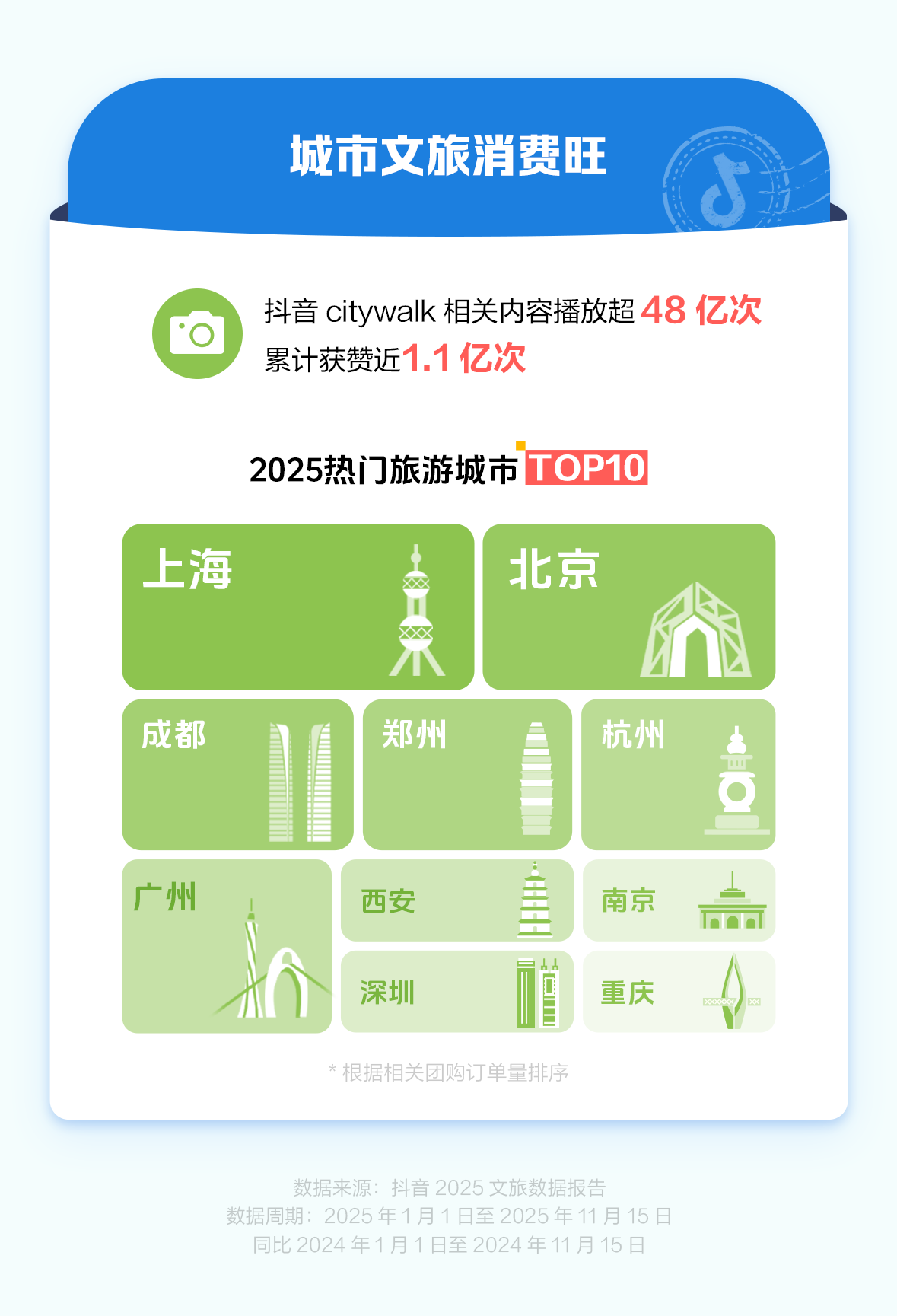
抖音生活服务:2025年演唱会团购订单量同比增长78%,上海、北京、成都、南京、大连成五大热门演唱会城市
Jin Rong Jie· 2025-12-25 07:24
Core Insights - The report indicates a significant increase in cultural and tourism consumption, with Douyin's hotel group purchase orders rising by 42% year-on-year [1][24] - Immersive travel experiences have become mainstream, with diverse user interests and demands, including event tourism, ice and snow tourism, concert tourism, intangible cultural heritage tourism, and small town tourism [1][24] Group 1: Tourism Trends - Douyin's hotel and homestay group purchase orders increased by 63%, with the "Heartfelt Hotel List" seeing a 152% rise in orders [1][24] - Popular tourism cities include Shanghai, Beijing, Chengdu, Zhengzhou, and Hangzhou, while hidden gem cities include Luoyang, Huzhou, Qinhuangdao, Kaifeng, and Xuzhou [4][26] - Scenic area group purchase orders grew by 32%, with top attractions including Shanghai Disneyland and Beijing Universal Resort [4][30] Group 2: Emerging Travel Categories - Rural tourism saw a remarkable 102% increase in group purchase orders, with top destinations including Wuyuan and Taierzhuang Ancient Town [4][30] - Intangible cultural heritage tourism is gaining traction, with related group purchase orders up by 45%, focusing on heritage sites, food, and performances [4][41] - Concert tourism orders surged by 78%, with major cities for concerts being Beijing, Chengdu, and Shanghai [17][44] Group 3: Economic Impact of Events - Sports events have generated over 626 billion exposures on Douyin, significantly boosting local consumption in participating cities [17][50] - The "Follow the Su Super League" campaign has driven a 68% increase in group purchase sales in Jiangsu during the event period [17][56] - The 2025 National Games in Guangdong, Hong Kong, and Macau are expected to stimulate local economies, with a projected 125% increase in consumption [51] Group 4: Marketing and Consumer Engagement - Douyin has launched various marketing campaigns, including "Discover Hidden Gems" and seasonal promotions, to enhance user engagement and drive local consumption [21][57] - The platform's "Smoke and Fire Economy" initiative has seen a 30% increase in related content, with significant engagement from local personalities like "Chicken Brother" [52][53] - Seasonal activities, such as the "Ice and Snow Season," have generated over 250 billion in GMV, showcasing the effectiveness of targeted marketing strategies [62]

“准社交”是指啥?
Ren Min Ri Bao Hai Wai Ban· 2025-12-21 22:41
Core Concept - The article discusses the concept of "parasocial relationships," which refers to the one-sided emotional connections individuals feel towards celebrities or fictional characters, highlighting its relevance in the context of social media and AI advancements [4][5][6]. Group 1: Definition and Origin - "Parasocial" relationships are defined as one-sided emotional connections where individuals feel close to someone they do not know personally, such as celebrities or characters from media [5]. - The term gained prominence due to the rise of mass media, particularly television, in the 1950s, where viewers developed feelings of familiarity with on-screen personalities [5][6]. - The emergence of AI technologies, particularly chatbots, has further popularized the concept, as they can provide emotional support and simulate interactions [6][10]. Group 2: Impact of Social Media and AI - Social media has transformed the dynamics between fans and celebrities, allowing for more direct interaction and creating a sense of closeness that enhances the parasocial experience [7][8]. - The rise of "fan economy" and "influencer economy" is attributed to the parasocial relationships formed through social media, where fans engage deeply with their idols [6][8]. - A significant portion of young people (13.5%) prefer confiding in AI over family members, indicating a shift in emotional support sources [10]. Group 3: Positive and Negative Aspects - Parasocial relationships can provide joy and emotional fulfillment, especially for individuals facing social pressures, as they offer a sense of connection without the burdens of real-life interactions [7][8]. - However, there are concerns that excessive engagement in parasocial relationships may lead to loneliness and a diminished capacity for real-life emotional connections [8][11]. - The influence of AI and social media can create "trust illusions," potentially leading to harmful behaviors among vulnerable populations, particularly teenagers [11][12]. Group 4: Regulatory and Societal Considerations - There is a growing need for regulation of AI interactions, especially concerning minors, to prevent over-reliance on virtual relationships [11][12]. - Countries are beginning to implement measures to protect young users from the potential negative impacts of parasocial relationships facilitated by AI and social media [11][12]. - The article suggests that while parasocial relationships can be beneficial, they should not replace genuine social interactions, and individuals should be encouraged to engage in real-life relationships [12].

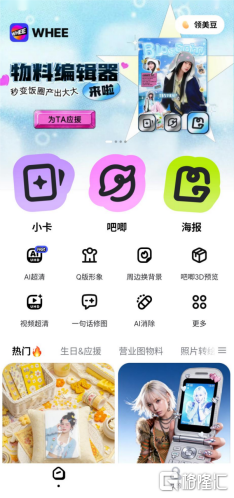
天彻底塌了!邹市明亏光2亿后,冉莹颖还亲手撕碎他最后的体面!
Xin Lang Cai Jing· 2025-12-19 03:37
Core Insights - The article discusses the entrepreneurial failure of Zou Shiming, a former Olympic champion and boxing star, highlighting the contrast between his success in sports and his struggles in business [3][19] - It emphasizes the disconnect between public admiration and actual market demand, illustrating that popularity does not guarantee commercial success [4][6] Group 1: Entrepreneurial Journey - Zou Shiming transitioned from a celebrated athlete to a struggling entrepreneur within seven years, facing challenges in adapting his competitive mindset to the business world [3][19] - Despite his achievements, including two Olympic gold medals and a world championship title, his boxing gym in Shanghai failed to attract sufficient clientele, indicating a lack of market understanding [4][6] Group 2: Business Challenges - The article points out that boxing is a niche sport in China, lacking a solid educational foundation and market support, which hindered Zou's ability to build a sustainable business model [6][9] - Zou's belief that personal effort alone could lead to success in business proved misguided, as he underestimated the importance of systems, teams, and financial management [8][11] Group 3: Personal Impact - The financial strain from his business failure affected not only Zou but also his family, leading to significant lifestyle changes and emotional stress [12][14] - His wife, Ran Yingying, played a crucial role in supporting the family during this difficult time, highlighting the personal sacrifices often associated with entrepreneurial ventures [14][19] Group 4: Resilience and Future Outlook - Zou Shiming's willingness to acknowledge his failures and attempt a comeback through live streaming and potential return to boxing reflects a resilient attitude towards adversity [15][19] - The narrative concludes that true champions are defined not by their victories but by their ability to confront challenges and maintain dignity in the face of setbacks [19]
WHEE上线"物料编辑器"功能,为追星人群打造专属物料
Ge Long Hui· 2025-12-16 06:16
Core Viewpoint - The launch of WHEE's "Material Editor" feature aims to provide a comprehensive solution for young fans to create personalized and high-quality support materials, addressing the growing demand in the star-chasing culture [1][3] Group 1: Product Features - The "Material Editor" covers various material forms such as small cards, badges, and posters, allowing fans to easily create support works [1] - The feature offers rich customizable templates and simple operation instructions, making it accessible for fans who previously faced challenges with existing graphic design tools [1] - The design and production process is characterized by a one-stop, professional, and high-freedom experience [1] Group 2: User Experience - Users like Youki express high satisfaction with the "Material Editor," noting the ease of transforming idol photos into unique badges and posters, leading to a sense of accomplishment [3] Group 3: Future Developments - WHEE plans to introduce template sharing and work display features to build a fan co-creation community, enhancing the entire process from design to dissemination [3] - The company is also collaborating with stars, such as Zhang Hanyun for the 2025 "Return to Rhythm" concert, to inject new vitality into the fan economy [3]
腾讯音乐(TME):SVIP渗透率驱动收入增长,未来围绕粉丝经济打造新业态
Guoyuan Securities2· 2025-12-12 10:52
Investment Rating - The report maintains a "Buy" rating for Tencent Music (TME.N) with a target price of $21.84, indicating a potential upside of 20.0% from the current price of $18.20 [1][5]. Core Insights - Tencent Music's revenue for Q3 2025 reached 84.6 billion RMB, driven by strong performance in online music services, which saw a year-on-year growth of 27.2%, accounting for 82.4% of total revenue [3][8]. - The company is focusing on building new business models around fan economy, with non-subscription revenue showing accelerated growth, primarily from advertising services, offline performances, and artist-related merchandise sales [3][5]. - The penetration rate of the SVIP membership program has increased, leading to a 17.2% year-on-year growth in subscription revenue, reaching 45.0 billion RMB [4][9]. - The company is leveraging AI technology to enhance its content creation, distribution, and commercialization processes, aiming to solidify its leadership in the online music market [10][12]. Financial Summary - Total revenue is projected to grow from 27,752 million RMB in 2023 to 40,215 million RMB by 2027, with a compound annual growth rate (CAGR) of approximately 9.8% [6][15]. - Net profit is expected to increase significantly from 4,920 million RMB in 2023 to 11,198 million RMB in 2027, reflecting a strong growth trajectory [6][15]. - The adjusted net profit margin is forecasted to improve from 18.81% in 2023 to 29.79% in 2027, indicating enhanced profitability [6][15]. Market Position and Valuation - The report highlights Tencent Music's strategic shift from user scale expansion to deepening user value extraction, supported by technological innovations and product iterations [10][12]. - The valuation is based on an 8x price-to-sales (PS) ratio for online music business and a 5x price-to-earnings (PE) ratio for social entertainment business, justifying the target price of $21.84 [5][12].

江南布衣(03306.HK):成长积极分红可观
Ge Long Hui· 2025-12-12 03:04
Group 1 - The company reported FY25 revenue of 5.5 billion, a year-on-year increase of 4.6%, and a net profit of 900 million, up 6.0% year-on-year, with a gross margin of 65.6%, down 0.3 percentage points [1] - The company is enhancing brand strength by adhering to a dual-driven strategy of design and brand power, multi-brand scalable development, and fan economy, celebrating its 30th anniversary with a theme of "born unique, standing diverse" [1] - The company has enriched its brand matrix by acquiring the contemporary art and lifestyle brand "B1OCK," providing customers with a broader selection and unique shopping experience [1] Group 2 - The total number of independent retail stores operated globally increased from 2,025 after restructuring on June 30, 2024, to 2,117 by June 30, 2025, with 961 stores under the JNBY brand [2] - The retail network covers all provinces, autonomous regions, and municipalities in mainland China, as well as 10 other countries and regions globally [2] - The contribution of group members to retail sales exceeded 80% of total retail sales, with active member accounts reaching 560,000, and the number of accounts with annual purchases over 5,000 RMB exceeding 330,000, contributing over 60% of offline retail sales [2] Group 3 - Based on FY25 performance and brand resilience, the company adjusted its profit forecasts for FY26-28, expecting net profits of 935 million, 1.024 billion, and 1.086 billion RMB respectively, with corresponding P/E ratios of 10, 9, and 9 [2]
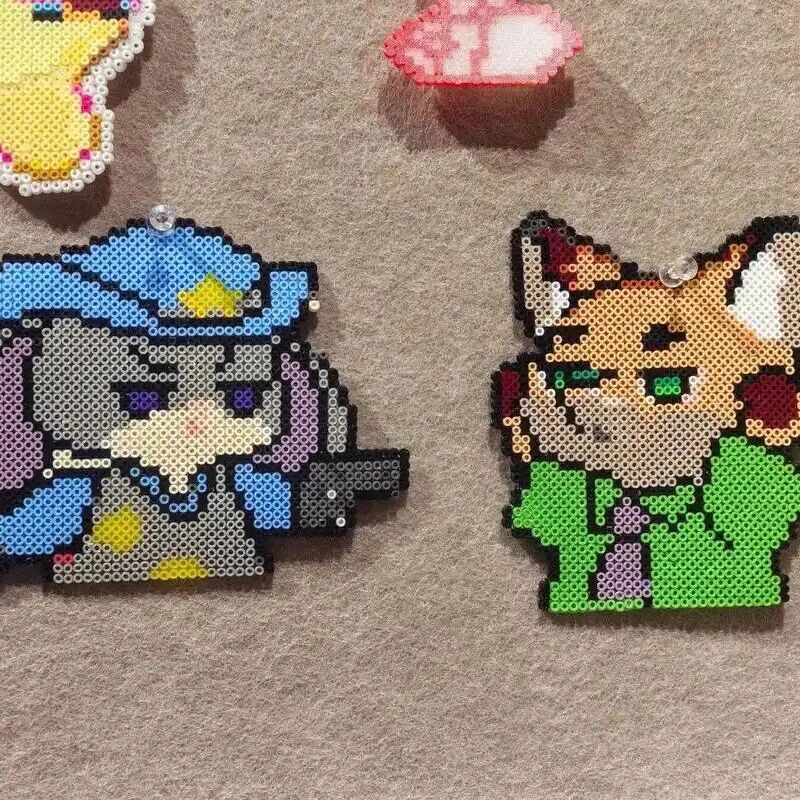
爱潮玩更爱拼豆,“狐兔CP”背后的新情绪经济
创业邦· 2025-12-11 04:50
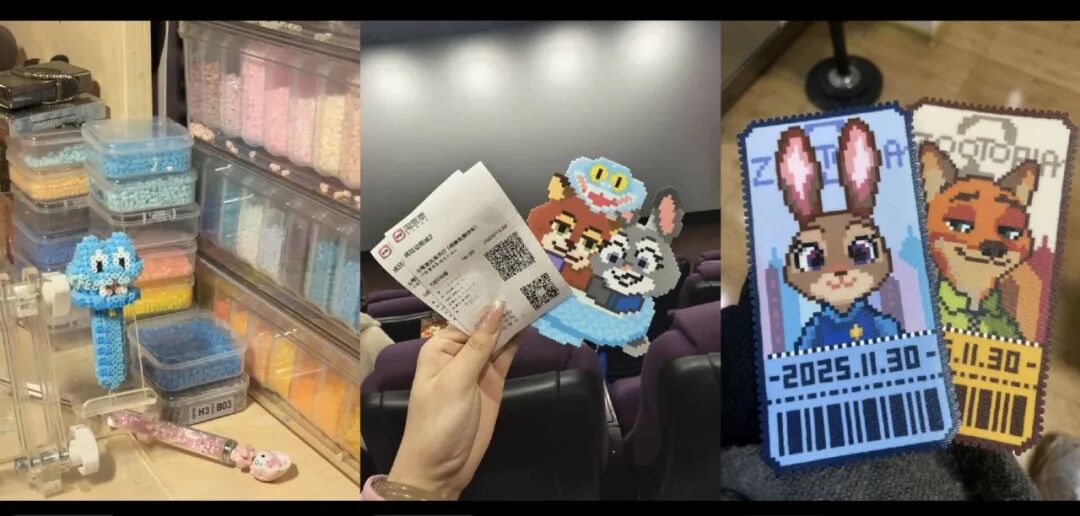
Core Viewpoint - The article discusses the rising popularity and economic potential of pixel art beads (拼豆) as a creative and therapeutic hobby, particularly among young people, driven by the success of IPs like "Zootopia 2" and the influence of social media and celebrity endorsements [5][7][22]. Group 1: Market Dynamics - "Zootopia 2" has generated significant box office revenue of 31 billion in China, contributing to a broader trend in IP-related merchandise, including pixel art beads [5][7]. - The pixel art bead market is projected to reach nearly 1 billion by 2026, with a current average price of 50 yuan per hour for DIY experiences, benefiting around 18,000 DIY craft stores nationwide [7][12]. - The online market for pixel art beads is thriving, with platforms like Taobao and Pinduoduo seeing monthly sales exceeding 10,000 units for popular stores, especially those linked to "Zootopia" [7][28]. Group 2: Consumer Behavior - Pixel art beads have evolved from a children's toy to a form of emotional therapy for adults, becoming a popular stress-relief activity [13][21]. - The trend has gained traction on social media, with over 520 million discussions on Xiaohongshu and 5.9 billion views on Douyin related to pixel art beads [15][28]. - The low barrier to entry and high satisfaction from creating pixel art make it an appealing hobby for many, with users reporting significant emotional benefits [20][21]. Group 3: Celebrity Influence - The popularity of pixel art beads surged after a mention by celebrities during a live stream, leading to increased interest and participation from new fans [22][25]. - The commercial viability of pixel art beads has expanded from individual hobbies to a structured business model, with high profit margins reported by craft stores [25][26]. Group 4: Economic Model - The pixel art bead economy operates on a clear profit model, attracting users with low-cost experiences while maintaining engagement through continuous IP-related designs and materials [32]. - Craft stores report that pixel art projects can account for up to 60% of total revenue, with some generating over 2 million in sales [26][32]. - The market's growth is supported by a strong repeat purchase rate for materials, as enthusiasts frequently buy supplies to create new designs [28][32]. Group 5: Challenges and Future Outlook - Despite the market's growth, the pixel art bead industry faces significant challenges related to IP rights and copyright issues, which could hinder its scalability [36][39]. - The lack of legal authorization for many designs limits the potential for brand development and large-scale investment, keeping the industry in a precarious position [42][47]. - There is a call for more structured copyright solutions and a focus on original content to ensure sustainable growth in the pixel art bead market [47].
100亿身家“足坛首富”,投了最火AI独角兽
3 6 Ke· 2025-12-10 03:25
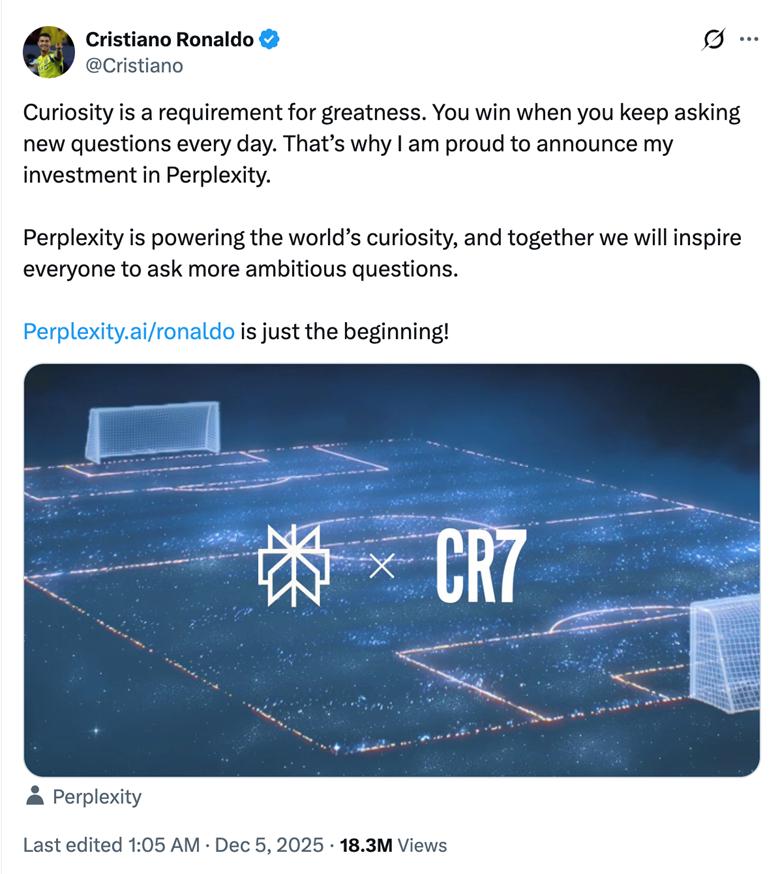
Core Insights - Cristiano Ronaldo is transitioning from a football player to a capital investor, leveraging his brand and influence in various sectors, particularly technology and sports [1][3][21] - His investment in the AI startup Perplexity highlights a strategic move towards high-growth technology sectors, aiming to capitalize on the increasing relevance of AI in daily life [2][12][16] Group 1: Financial Achievements - Ronaldo's total annual income reached $260 million in 2024, with a projected personal wealth of $1.4 billion by 2025, making him the first billionaire in football history [1][5] - His brand "CR7" has expanded into various consumer products, contributing significantly to his wealth through partnerships and endorsements [4][5] Group 2: Investment Strategy - Ronaldo's investment strategy is characterized by a preference for high-growth sectors like AI and NFTs, contrasting with more conservative approaches taken by other athletes [9][20] - He has made significant investments in various companies, including a $40 million stake in the free football game "UFL" and a strategic investment in Perplexity AI [8][12] Group 3: Brand Expansion - The "CR7" brand encompasses a wide range of products, including clothing, hotels, and fitness centers, leveraging Ronaldo's global influence and social media presence [4][5] - His partnership with Perplexity AI includes the launch of an interactive section that allows fans to engage with his career, enhancing brand visibility and user engagement [15] Group 4: Market Trends - The AI sector is experiencing rapid growth, with Perplexity achieving a valuation of $20 billion within three years, indicating strong investor confidence and market potential [14] - Ronaldo's involvement in AI reflects a broader trend among celebrities investing in technology, aiming to diversify their portfolios and maintain relevance in a changing market landscape [17][20]
爱潮玩更爱拼豆,“狐兔CP”背后的新情绪经济
3 6 Ke· 2025-12-10 00:45
Core Insights - The release of "Zootopia 2" has generated significant revenue of 3.1 billion in the Chinese market within 14 days, also boosting the popularity of related IP merchandise, particularly pixel art beads known as "pin beads" [1][2] - The pin bead trend has evolved from a niche hobby to a mainstream emotional outlet for young adults, with a projected market size nearing 1 billion by 2026 [2][10] Group 1: Market Dynamics - The average price for pin bead DIY experiences is around 50 yuan per hour, revitalizing approximately 18,000 DIY craft studios across the country [2][11] - Online platforms like Taobao and Pinduoduo report monthly sales exceeding 10,000 for pin bead kits, with some stores linked to "Zootopia" IP selling up to 500,000 units [2][11] - The popularity of pin beads has led to a surge in social media engagement, with over 520 million discussions on Xiaohongshu and 5.9 billion views on Douyin [17][19] Group 2: Consumer Behavior - Pin beads serve as a therapeutic activity for many, allowing individuals to express creativity and relieve stress in a fast-paced urban environment [20][24] - The low entry barrier and high satisfaction from creating pin bead art make it an appealing hobby for adults, akin to a simplified version of cross-stitching [25][24] Group 3: Economic Potential - The pin bead market has shown a clear path to profitability, with high margins on experience services and a strong demand for materials and custom designs [29][36] - The integration of celebrity endorsements has significantly expanded the market, transitioning pin beads from a niche interest to a viable business opportunity [26][29] Group 4: Challenges and Future Outlook - The pin bead industry faces challenges related to IP rights, as many designs infringe on copyright, limiting the potential for large-scale commercialization [39][41] - Without proper licensing, the industry may struggle to evolve beyond small-scale operations, relying on fleeting trends rather than sustainable growth [43]
「中国羽绒服鼻祖」,拯救中产钱包
36氪· 2025-12-05 10:28
以下文章来源于盐财经 ,作者任早羽 盐财经 . 洞察趋势,睿智人生。《南风窗》旗下专业财经媒体。 一边是,代言人。 一边是,性价比。 文 | 任早羽 编辑 | 江江 来源| 盐财经(ID:nfc-yancaijing) 封面来源 | 顾芗·AI制图 冬季,羽绒服的主场。在冷空气的催动下,无数消费开始挑选服装品牌。为了在销售的黄金时段抓住消费者的心,羽绒服品牌们各出奇招。 其中,被称为"县城羽绒服之王""中国羽绒服鼻祖"的鸭鸭,它的招数是,在进入冬季的两个月时间里,接连官宣五位代言人,并在地铁广告位大量铺设代 言人图。 鸭鸭在地铁站的广告位 五名代言人分别是,王一博、梓渝、欧豪、孙颖莎和鞠婧祎。他们的title略有不同,合作时间也有长有短,但是从带动的消费结果上看是类似的。 代言人的粉丝发挥了预期中的购买力,比如,在相关产品的评价区里,为了支持某某而购买产品的评论屡见不鲜; 同时,社交平台上海掀起了对鸭鸭羽绒服的好评讨论,它们的数量庞大,甚至覆盖掉了过去有关产品质量的恶评。 不过,对于想购买一件薄款羽绒的陈衢来说,吸引他最终购买鸭鸭的原因,却不是代言人们。 在快手渠道,鸭鸭的销量也同样可观。同样是2025年双十 ...