自动化技术

Search documents
壹快评|不要错过人口变局中的改革之机
Di Yi Cai Jing· 2025-08-23 12:34
Group 1: Education Sector Impact - The decline in school-age population and the surplus of teachers are becoming increasingly prominent issues, leading to discussions on the direct impact on the education system [1][2] - The Ministry of Education has highlighted the need to recognize the challenges posed by fluctuations in school-age population and urbanization on the equitable distribution of teaching resources [1][2] - The education system can leverage this challenge to accelerate the transition from scale expansion to quality improvement and structural optimization [2] Group 2: Labor Market and Economic Transition - The shrinking labor force and increasing aging population are weakening the traditional growth model, necessitating a shift from "demographic dividend" to "talent dividend" [2] - There is a consensus on increasing investment in human capital throughout its lifecycle to enhance overall labor quality and productivity [2] - The development of the "silver economy" and the promotion of knowledge-intensive and technology-intensive industries are essential to address labor shortages [2] Group 3: Social Security System Challenges - The aging population presents unprecedented challenges to the social security system, requiring improvements in medical insurance funding and efficiency [3] - Reforms such as provincial-level coordination of basic medical insurance and the establishment of long-term care insurance systems are critical as demographic changes deepen [3] Group 4: Regional Development and Spatial Planning - Population changes exhibit significant disparities between urban and rural areas, necessitating optimized land use planning [3] - The "multi-planning integration" system for land use has been established, and further regional spatial planning is needed to promote coordinated urban-rural development [3] - Strategies for areas facing population decline include land consolidation and the development of specialized industries for sustainable growth [3]
电话外呼系统的市场现状与发展趋势
Sou Hu Cai Jing· 2025-08-09 07:14
Market Overview - The outbound call system platform market is experiencing significant growth, driven by advancements in AI, NLP, ML, and automation technologies. The global smart call service platform market is projected to grow from $2.1 billion in 2022 to $3.22 billion in 2024, with a compound annual growth rate (CAGR) of 23.8% [2] - In China, the market for AI-based smart call service platforms is expected to increase from 1.83 billion yuan in 2022 to 3.03 billion yuan in 2024, accounting for approximately 24% of the global market. By 2025, the domestic smart outbound system market is anticipated to reach 18 billion yuan, with a CAGR of about 20% [2] Industry Applications - The outbound call system platform is widely applied across various sectors, including finance, e-commerce, healthcare, logistics, education, and more. In finance, it is used for customer loan follow-ups and product recommendations, while in e-commerce, it aids in order confirmations and customer satisfaction surveys [3] Development Trends - AI voice interaction has evolved significantly, moving beyond basic voice broadcasting to advanced AI voice engines capable of recognizing dialects and adjusting strategies based on customer emotions. For instance, a voice outbound system developed by Heliyijie achieved a conversation naturalness score of 98.7% at the 2024 International AI Summit, enhancing conversion rates by over 45% [5] - Big data is driving precise outbound calling, allowing systems to create comprehensive customer profiles and predict optimal contact times. For example, a bank's targeted outbound call strategy increased success rates by 3.2 times compared to random dialing [6] - Real-time decision-making and adaptive optimization are becoming integral to outbound call systems, enabling them to dynamically adjust strategies based on customer interactions. A retail client of Heliyijie saw a 37% reduction in hang-up rates within three months due to continuous optimization of call scripts [8] Compliance and Privacy Protection - With the enhancement of regulations like the Personal Information Protection Law, outbound call systems are embedding compliance and privacy protection into their technology. AI can automatically verify customer consent and anonymize sensitive information, making compliance a core competitive advantage for businesses [9]


机器人产业ETF(159551)涨超1.5%,智能化升级或推动行业盈利改善
Mei Ri Jing Ji Xin Wen· 2025-07-21 02:48
Group 1 - The core viewpoint is that the intelligent upgrade in the forklift industry is driving significant sales growth, with June sales data showing promising results [1] - The forklift industry is experiencing a shift towards automation and intelligence, with higher-priced unmanned forklifts expected to enhance profitability as their penetration rate increases [1] - The overall valuation of the industry is currently low, indicating a safety margin for potential investors [1] Group 2 - The Robot Industry ETF (159551) has risen over 1.5%, reflecting positive market sentiment towards the robotics sector [1] - The ETF tracks the robotics index (H30590), which includes publicly listed companies involved in robotics manufacturing, system integration, and application [1] - Investors without stock accounts can consider the Guotai Zhongzheng Robot ETF Initiated Link A (020289) and Link C (020290) for exposure to the robotics sector [1]

机器人产业ETF(159551)涨超1.3%,叉车数据亮眼叠加智能化升级提振板块
Mei Ri Jing Ji Xin Wen· 2025-07-17 06:05
Group 1 - The forklift industry experienced strong sales in June, with total sales of 137,570 units, representing a year-on-year increase of 23.1%. Domestic sales reached 83,892 units, up 27.3%, while exports totaled 53,678 units, increasing by 17.2% [1] - Cumulative sales from January to June amounted to 739,334 units, reflecting a year-on-year growth of 11.7%. Domestic sales grew by 9.79%, and exports increased by 15.2% [1] - The industry is undergoing a transformation towards automation and intelligence, with the rise of unmanned forklifts that, despite their higher price, offer greater economic benefits. This trend is expected to enhance industry profitability as penetration rates increase [1] Group 2 - The robotics industry ETF tracks a robotics index compiled by China Securities Index Co., which selects listed companies involved in robot manufacturing, component supply, and system integration to reflect the overall performance of the Chinese robotics sector [1] - Investors without stock accounts can consider the Guotai CSI Robotics ETF Initiated Link A (020289) and Guotai CSI Robotics ETF Initiated Link C (020290) [1]
叉车销量数据点评报告:6月内外销高增长,关注叉车投资机会
CHINA DRAGON SECURITIES· 2025-07-16 09:14
Investment Rating - The investment rating for the forklift industry is "Recommended (Maintain)" [5] Core Viewpoints - Forklift sales in June 2025 showed significant growth, with total sales reaching 137,570 units, a year-on-year increase of 23.1%. Domestic sales were 83,892 units, up 27.3%, while exports were 53,678 units, increasing by 17.2% [7] - Cumulative forklift sales from January to June 2025 totaled 739,334 units, reflecting an 11.7% year-on-year growth. Domestic sales accounted for 476,382 units, a 9.79% increase, and exports reached 262,952 units, up 15.2% [7] - The forklift industry is expected to benefit from a low base effect in the second half of 2024, leading to a sustained increase in domestic sales growth, which will positively impact valuations [7] - The advancement of artificial intelligence and automation technologies is driving the forklift industry towards smart and unmanned upgrades, with higher-priced unmanned forklifts expected to enhance industry profitability as penetration rates increase [7] - The overall valuation of the industry is currently low, providing a safety margin for investors [7] Summary by Relevant Sections - **Sales Data**: In June 2025, excluding electric walk-behind warehouse vehicles, 53,266 forklifts were sold, marking a 14.5% year-on-year increase. Domestic sales were 34,899 units, up 15.3%, and exports were 18,367 units, increasing by 13% [7] - **Investment Recommendations**: Companies to focus on include Anhui Heli, Hangcha Group, and Noli Forklift, which are expected to perform well in the current market environment [7][8]
走近大国工程 | “智造”大桥 飞虹越江
Zhong Yang Ji Wei Guo Jia Jian Wei Wang Zhan· 2025-07-14 00:38
Core Viewpoint - The article highlights the completion and significance of the Fujian Xunjiang Bridge, which is the world's first single-tower spatial cable-stayed and suspension bridge, showcasing innovative engineering and ecological construction practices [10][12][25]. Group 1: Bridge Design and Engineering - The Fujian Xunjiang Bridge spans 1,604 meters with a main span of 2*638 meters and a main tower height of 238 meters, making it the tallest bridge tower in Guangxi [10]. - The bridge combines the advantages of cable-stayed and suspension bridge designs, achieving significant breakthroughs in structural engineering [11][12]. - The construction faced challenges due to complex structural transitions and the unique design, requiring precise management of stress and deformation during the building process [12][14]. Group 2: Technological Innovations - The project team implemented advanced technologies, including an intelligent monitoring system and customized lifting solutions, to enhance construction efficiency and safety [16][17]. - The bridge features the first domestic application of a spatial cable efficient spinning system and adaptive catwalk technology, significantly improving construction speed and precision [16][17]. - The use of a 7mm diameter steel wire for the main cable, through the AS method, represents a major advancement in construction technology, allowing for faster and more accurate installation [16][17]. Group 3: Environmental Considerations - The construction process integrated ecological protection measures, ensuring minimal impact on the local environment, particularly in a drinking water protection area [20][21]. - Innovative construction methods, such as using a mud separation device, were employed to manage waste and reduce environmental pollution during the building process [24]. - The project team prioritized green construction practices, including dust suppression and air purification systems, to maintain ecological integrity throughout the construction phase [25]. Group 4: Economic and Social Impact - The completion of the Fujian Xunjiang Bridge significantly reduces travel time across the Xunjiang River from one hour to five minutes, facilitating economic development and rural revitalization in the region [10][25]. - The bridge serves as a new landmark for innovative bridge engineering, enhancing the region's infrastructure and connectivity [10][25].

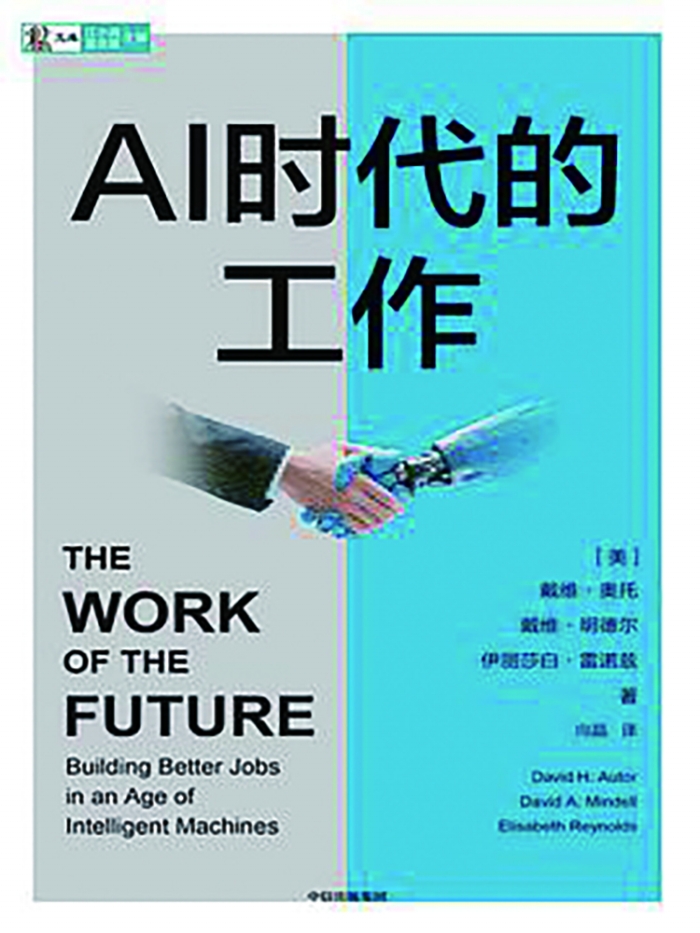
AI技术红利如何惠及劳动者——读《AI时代的工作》
Shang Hai Zheng Quan Bao· 2025-07-13 19:46
Core Insights - The book "The Work of AI Era" by David Autor and others challenges the common belief that automation and AI will lead to massive job losses, suggesting that policy factors play a larger role in determining the distribution of technological benefits [3][4] - The authors argue that while automation can displace certain jobs, it also has the potential to create new job opportunities and enhance productivity in existing roles [4][5] Group 1: Impact of Automation and AI - Automation and AI technologies are reshaping job skill requirements, leading to a concentration of job growth in high-wage and low-wage occupations, while middle-wage jobs are declining due to their susceptibility to automation [6][7] - The transition from technology development to widespread adoption can take decades, allowing time for governments to implement policies that mitigate the impact of job displacement [4][5] Group 2: Policy Recommendations - The authors emphasize the need for fair policies that ensure the benefits of technological advancements are distributed equitably among shareholders, capital returns, and labor returns [7][8] - Recommendations include adjusting labor laws to link wage growth and minimum wage standards to economic growth, and providing protections for gig economy workers [8]
AI赋能机器人产业,推动自动化技术加速发展
Ke Ji Ri Bao· 2025-07-07 01:32
Group 1: Automation Technology Advancements - Automation technology is increasingly intelligent due to the integration of AI, driving changes in industrial production and management [1] - Companies are introducing next-generation humanoid robots, but significant work remains in terms of technology and practical applications [1] - AI is being applied to CNC machine tools, enabling automated processes for part handling without the need for custom fixtures or programming [1] Group 2: Machine Vision and AI Integration - Over 130 exhibitors showcased machine vision and image processing technologies, highlighting the importance of 2D, 3D, and scanning camera technologies [2] - AI and digitalization are expanding the boundaries of traditional automation, leading to resource savings and emission reductions [2] - Intelligent systems for flexible process control and real-time energy optimization are becoming a reality [2] Group 3: User-Friendly Robotics - AI has simplified the use of robotics, with many manufacturers integrating generative AI for intuitive programming through voice control [3] - KUKA introduced a scalable and flexible robot operating system, iiQKA.OS, combining AI with vision systems for easier robot control [3] - Yaskawa Electric showcased a "dynamic safety zone" concept, allowing robots to operate without protective barriers while ensuring safety [3] Group 4: Humanoid Robots and Learning Capabilities - NEURA Robotics launched its humanoid robot 4NE1Gen3, designed for safe collaboration with humans and capable of lifting up to 100 kg [4] - An open software platform was introduced to connect robots and enable them to share learning experiences, fostering a collaborative ecosystem [4] - The appeal of humanoid robots for manufacturing automation is expected to grow as technology advances [4] Group 5: Chinese Companies in the Robotics Market - Chinese manufacturers like Estun and KUKA showcased their products, with Estun's robots already in use for battery assembly in Germany [5] - China has been the largest global robot market since 2014, with half of the world's robots installed in the country [5] - Despite their advancements, Chinese manufacturers face challenges in entering the German and European markets, including understanding local standards and addressing data security concerns [5]
里士满联储主席:经济前景不明 美联储应谨慎对待利率政策
智通财经网· 2025-06-26 22:11
Group 1 - The Federal Reserve should adopt a more cautious interest rate policy amid uncertain economic outlook, according to Richmond Fed President Barkin [1] - Barkin's views contrast with other Fed officials who suggest that the July policy meeting could be significant, potentially considering rate cuts if inflation continues to cool or the job market shows signs of weakness [1] - The Fed decided to maintain interest rates unchanged in the recent policy meeting, with median expectations indicating two rate cuts by year-end, although more officials believe only one cut may be necessary, or possibly none [1] Group 2 - Barkin expressed cautious optimism regarding current inflation data but highlighted new risks in the coming months, including rising tariffs and geopolitical tensions that could increase oil prices and impact business investment and hiring [1] - Concerns about potential "stagflation" pressures were raised, indicating a scenario where economic growth slows while inflation remains high, with businesses beginning to cut back on hiring and investment due to uncertainties [1] - Long-term structural changes in the labor market, such as reduced immigration and increased reliance on AI and automation, may complicate the Fed's efforts to manage the economy [2]
与西湖大学郭天南教授一起,探讨 AI 及自动化技术赋能科研,颠覆传统实验
生物世界· 2025-05-23 03:16
Core Viewpoint - The article discusses the transformative impact of artificial intelligence (AI) on biotechnology, emphasizing the shift from experience-driven approaches to intelligent innovations in research and development [2]. Group 1: Event Overview - A cloud summit titled "AI-Driven: Decoding the Acceleration Code of Biotechnology Enterprises" will be held on May 27, 2025, featuring cross-disciplinary experts from AI and biotechnology [2]. - The summit aims to explore how to construct a closed-loop empowerment system between AI and experimental science, and how automation can serve as a research accelerator [2]. Group 2: Key Speakers and Topics - Guo Tiannan, a professor at Westlake University, will discuss building AI virtual cells using perturbation proteomics and active learning [6]. - Feng Xiaoping, from Zhizhu Huazhang Technology Co., will present industry exploration and outlook on AI for science [6]. - The session by Opentrons will focus on natural language-driven experimental design and the accessibility of automation [6]. - Li Xiangrong from DeepMind Technology will cover AI for science in the context of drug development [6]. Group 3: Technological Insights - The development of AI virtual cells (AIVC) relies on three key data pillars: prior knowledge, static architecture, and dynamic states, which are integrated through AI algorithms to simulate cellular behavior [18][20]. - AIVC aims to predict drug effects and analyze disease mechanisms by simulating real cellular processes, marking a significant advancement in biotechnology [20].