虚拟货币监管

Search documents
稳定币纳入虚拟币监管范畴 涵盖三大核心考量
2 1 Shi Ji Jing Ji Bao Dao· 2025-12-01 10:27
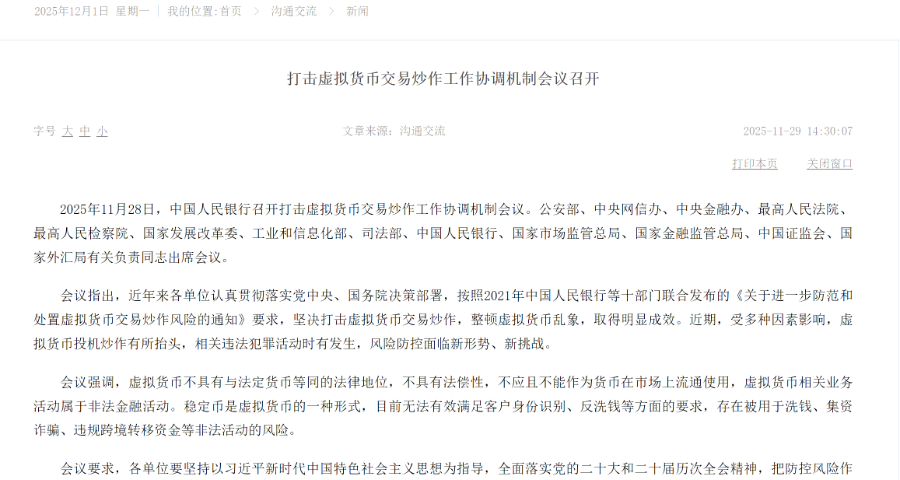
Core Viewpoint - The People's Bank of China (PBOC) has reinforced its stance on the regulation of stablecoins, categorizing them as a form of virtual currency that does not possess legal tender status and is associated with illegal financial activities [1][2][10]. Regulatory Framework - The recent meeting aligns with previous regulations, particularly the 2021 notice that classified virtual currencies like Bitcoin and Tether (USDT) as lacking legal status, thereby reinforcing a stringent regulatory framework against virtual currencies [2][3]. - The regulatory approach has evolved gradually, with significant milestones dating back to 2013, establishing a dynamic governance system that adapts to market developments [3]. Recent Developments - The introduction of the Hong Kong Stablecoin Regulation in August 2025 has drawn attention, while the volatility in cryptocurrency prices has led to increased speculative activities and illegal financial operations [4][5]. - The PBOC has expressed concerns regarding the risks associated with stablecoins, particularly in relation to money laundering and cross-border financial crimes [5][9]. Risk Management and Legal Considerations - The classification of stablecoins as virtual currencies is aimed at preventing financial risks and protecting monetary sovereignty, ensuring that they do not challenge the status of the digital yuan [7][11]. - Experts have highlighted the lack of transparency and potential risks associated with stablecoin reserves, which could lead to issues such as "de-pegging" and liquidity shortages [8]. Future Implications - The regulatory environment is expected to tighten, with stablecoin-related activities being classified as illegal financial activities, thereby limiting their operational space within China [12][13]. - The anticipated regulatory measures will likely focus on enhancing collaboration among regulatory bodies and improving technological capabilities to monitor and combat illegal activities associated with stablecoins [14].

深度 | 稳定币纳入虚拟币监管范畴 涵盖三大核心考量
2 1 Shi Ji Jing Ji Bao Dao· 2025-12-01 10:23
Core Viewpoint - The People's Bank of China (PBOC) has reinforced its regulatory stance on stablecoins, categorizing them as a form of virtual currency and emphasizing their lack of legal status equivalent to fiat currency, thereby prohibiting their circulation and related activities in the market [1][5][9]. Regulatory History - The regulatory framework for virtual currencies in China has evolved since 2013, with multiple government bodies consistently asserting that virtual currencies do not hold the same legal status as fiat currencies and prohibiting their use in financial activities [2][4]. - Key regulatory milestones include the 2021 notice that intensified scrutiny on virtual currency activities, leading to the closure of domestic trading platforms [2][4]. Recent Developments - The emergence of new regulations, such as Hong Kong's Stablecoin Regulation, has prompted further scrutiny of stablecoins, especially in light of rising speculative activities and associated risks [3][4]. - The PBOC has highlighted the challenges posed by new technologies like blockchain, which have facilitated the growth of stablecoins while also complicating financial regulation [4][5]. Risk and Compliance Concerns - Stablecoins are viewed as high-risk due to their potential use in illegal activities such as money laundering and fraud, primarily because of their anonymous or semi-anonymous nature [8][12]. - The lack of effective customer identification and transaction traceability in stablecoin transactions raises significant compliance issues [8][12]. Regulatory Strategy - The PBOC's recent classification of stablecoins as virtual currencies aims to unify enforcement actions across various regulatory bodies, facilitating coordinated governance and legal clarity [9][10]. - Future regulatory measures are expected to focus on tightening compliance requirements for stablecoin-related activities, including issuance, trading, and payment processing [10][11]. Market Impact - The stringent regulatory environment is likely to restrict the operational space for stablecoins within China, pushing related activities towards offshore financial centers [10][11]. - The total market capitalization of stablecoins has reached approximately $300 billion, with USDT maintaining a market share of around 60%, indicating the significant scale of these assets despite regulatory challenges [11].
港股异动丨加密货币概念股下挫 中国央行首次重磅定调稳定币
Ge Long Hui· 2025-12-01 02:38
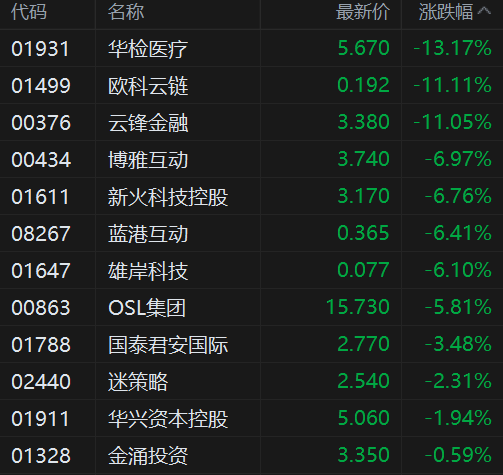
Core Viewpoint - The cryptocurrency concept stocks in Hong Kong experienced a collective decline following the People's Bank of China's recent statement on virtual currencies and stablecoins, which highlighted regulatory concerns and risks associated with these financial instruments [1]. Group 1: Market Reaction - Hong Kong cryptocurrency stocks saw significant drops, with Huajian Medical falling over 13%, OK Blockchain and Yunfeng Financial both declining over 11%, and several others like Boya Interactive and New Fire Technology Holdings dropping nearly 7% [2]. - The declines reflect market sentiment in response to regulatory developments regarding virtual currencies and stablecoins [1]. Group 2: Regulatory Developments - The People's Bank of China published an article discussing the coordination mechanism for combating virtual currency trading speculation, marking a significant regulatory stance on stablecoins [1]. - The article defined stablecoins as a form of virtual currency that currently fails to meet requirements for customer identity verification and anti-money laundering, posing risks of illegal activities such as money laundering and fundraising fraud [1]. - A prominent WEB 3 industry lawyer noted that this is the first official definition of stablecoins in a formal document, effectively categorizing them under the regulatory framework for illegal financial activities in mainland China [1]. Group 3: Implications for the Market - The regulatory stance is expected to indirectly affect the stablecoin market in Hong Kong, as mainland institutions may adopt a more cautious and low-profile approach to entering the Hong Kong stablecoin market [1].
多个指数样本股将调整……盘前重要消息还有这些
证券时报· 2025-12-01 00:00
Group 1 - The State Council's Safety Committee has issued a notice to conduct a comprehensive inspection and rectification of major fire risks in high-rise buildings, focusing on residential and public buildings undergoing renovations [2] - The National Bureau of Statistics reported that the manufacturing PMI for November is 49.2%, a slight increase of 0.2 percentage points from the previous month, indicating a slight improvement in economic conditions [2] - From January to October, state-owned enterprises reported total operating revenue of 6,835.293 billion yuan, a year-on-year increase of 0.9%, while total profits decreased by 3.0% to 342.144 billion yuan [2] Group 2 - The People's Bank of China held a meeting to coordinate efforts against virtual currency trading, emphasizing the continuation of prohibitive policies and the need to combat illegal financial activities related to virtual currencies [3] - The Ministry of Industry and Information Technology held a meeting to discuss the regulation of the power and energy storage battery industry, aiming to promote high-quality development and address irrational competition [4] - A new regulation was released by three departments regarding customer due diligence and transaction record management, removing the requirement for banks to register the source of funds for cash withdrawals exceeding 50,000 yuan [4] Group 3 - The China Securities Index Company announced adjustments to several indices, including the CSI 300 and CSI 500, which will take effect after market close on December 12 [5] - Tianfeng Securities is under investigation by the China Securities Regulatory Commission for suspected violations of information disclosure and illegal financing [7] - ST Cube has been warned of potential delisting due to false records in annual reports from 2021 to 2023, effective December 2 [8]
【首席观察】首提稳定币非法风险 13部门为何此时升级虚拟货币监管
Sou Hu Cai Jing· 2025-11-30 07:54
Core Viewpoint - The recent joint meeting of 13 departments in China marks a significant escalation in the regulation of virtual currencies, particularly focusing on stablecoins as a form of illegal financial activity, indicating a shift from risk prevention to criminalization of such activities [2][3][8]. Regulatory Focus - The meeting signals a shift in regulatory focus from "mining and speculation risks" in 2021 to "cross-border capital flows and shadow dollars" in 2025 [5][6]. - Stablecoins, particularly USDT, are identified as a major gray channel for capital outflow, with USDT accounting for approximately 90% of OTC transactions in China [6][8]. Systemic Risks - S&P downgraded USDT's stability rating to "weak," citing an increase in high-risk assets from 17% to 24%, with Bitcoin comprising 5.6% of its reserves [9][10]. - USDT's circulation has approached $184 billion, creating a "shadow dollar pool" with systemic risks due to its high volatility and low collateralization [9][10]. Shadow Banking Concerns - Tether, the issuer of USDT, is becoming akin to a "shadow central bank," with significant holdings in gold and other commodities, raising concerns about its influence on global price chains [10][11]. - The increase in Tether's gold reserves, which reached approximately 116 tons, poses structural risks for countries pursuing "de-dollarization" [10][12]. Regulatory Evolution - The regulatory approach has evolved from defining virtual currencies as illegal to explicitly categorizing stablecoins as illegal financial activities, aiming to protect capital account management and monetary sovereignty [13][14]. - The regulatory logic remains consistent: virtual currencies are illegal, stablecoins fall under this category, and their cross-border and gray uses must be curtailed to pave the way for the digital yuan (e-CNY) [14][19]. Enforcement Mechanisms - The regulatory framework will involve enhanced collaboration among various government agencies to monitor and control information and capital flows, aiming to block illegal activities [20][21]. - Criminalization of stablecoin transactions may extend to charges related to money laundering and aiding cybercrime, increasing the legal risks for individuals and institutions involved [21][22]. Global Implications - The tightening of regulations in China is expected to raise compliance pressures for institutions and increase the risks associated with gray channels for individuals [22][23]. - The global landscape for stablecoins is entering a "second phase," with heightened awareness and regulatory responses to the risks posed by these financial instruments [22][23].

金融街论坛|创造良好的货币金融环境——中国人民银行行长潘功胜谈经济金融热点问题
Xin Hua Wang· 2025-10-28 00:58
Core Viewpoint - The People's Bank of China (PBOC) emphasizes the continuation of a supportive monetary policy stance to foster economic recovery and maintain financial market stability amid complex domestic and international challenges [2][3]. Group 1: Monetary Policy - As of the end of September, the total social financing stock grew by 8.7% year-on-year, broad money (M2) increased by 8.4%, and the RMB loan balance rose by 6.6%, indicating a state of moderately loose monetary policy [2]. - The PBOC has utilized various monetary policy tools to ensure ample liquidity, creating a favorable monetary environment for economic recovery and stable financial market operations [2][3]. - The PBOC plans to continue implementing a moderately loose monetary policy and will resume operations in the secondary market for government bonds to enhance the monetary policy toolkit [3]. Group 2: Credit System and Personal Financing - The PBOC is developing a one-time personal credit relief policy to help individuals who have defaulted on loans due to the pandemic but have since repaid them, aiming to improve their credit records [4]. - This policy will prevent certain default information from being displayed in the credit system, facilitating personal financing and economic participation [4]. Group 3: Digital Currency Management - The PBOC is committed to optimizing the management system for digital currency, having established operational centers in Shanghai and Beijing for international cooperation and system maintenance [5]. - The central bank will continue to monitor and regulate virtual currency activities while promoting the development of the digital RMB ecosystem [5]. Group 4: Macro-Prudential Management - The PBOC is advancing the construction of a comprehensive macro-prudential management system, focusing on systemic financial risk monitoring, risk prevention measures for key institutions, and enhancing the macro-prudential management toolkit [6]. - The central bank aims to create a dynamic and collaborative process for building this system, which is essential for maintaining overall financial stability and supporting high-quality economic development [6].

2025金融街论坛|重启国债买卖、打击虚拟货币炒作,潘功胜最新发声信息量巨大
Bei Jing Shang Bao· 2025-10-27 14:44
Core Viewpoint - The People's Bank of China (PBOC) is set to resume open market operations for government bonds, which is seen as a significant step to enhance monetary policy tools and stabilize the bond market, while also addressing various recent market concerns [1][5][6]. Monetary Policy and Financial Stability - The PBOC has maintained a supportive monetary policy stance, with key macro-financial indicators reflecting a moderately loose monetary environment, including an 8.7% year-on-year increase in social financing scale and an 8.4% increase in M2 as of September [3][4]. - The resumption of government bond trading is expected to alleviate supply-demand imbalances in the bond market and lower financing costs for the real economy [4][6]. Credit Repair Policies - The PBOC is researching policies to support personal credit repair, particularly for individuals who have defaulted due to the pandemic but have since repaid their debts [7][8]. - This initiative aims to improve the credit ecosystem, reduce friction costs between consumers and financial institutions, and promote economic recovery by restoring credit eligibility for affected individuals [9]. Virtual Currency Regulation - The PBOC reiterated its commitment to combat the operation and speculation of virtual currencies, emphasizing the need for strict regulation to maintain financial order and mitigate risks associated with stablecoins and other digital currencies [10][11]. - The central bank's stance reflects a long-standing high-pressure regulatory environment against virtual currencies, aiming to prevent potential financial risks and maintain monetary sovereignty [12]. Macro-Prudential Management Framework - The PBOC outlined its focus on building a comprehensive macro-prudential management system, which includes monitoring systemic financial risks and enhancing the regulatory framework for key financial institutions [13][14]. - Future efforts will involve improving the assessment of macro-prudential policies and ensuring better coordination between monetary policy and fiscal measures to strengthen financial stability [15][16].
潘功胜:继续打击境内虚拟货币炒作 动态评估境外稳定币发展
Zhong Guo Xin Wen Wang· 2025-10-27 14:23
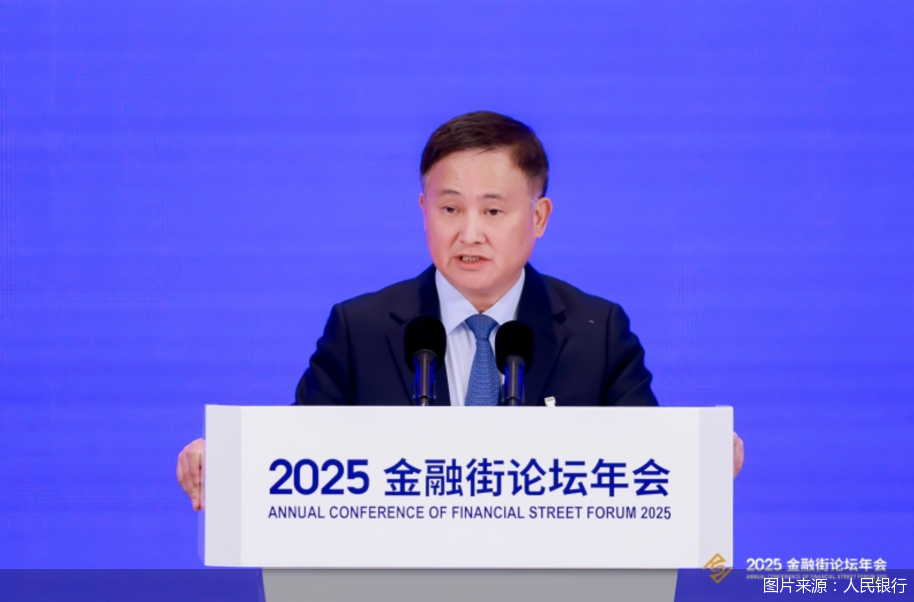
Group 1 - The People's Bank of China (PBOC) has implemented multiple policy documents since 2017 to prevent and manage risks associated with domestic virtual currency trading and speculation, which remain effective [1] - The PBOC will continue to collaborate with law enforcement to combat domestic virtual currency operations and speculation, while closely monitoring the development of overseas stablecoins [1] - The emergence of stablecoins has raised concerns among international financial organizations and central banks, which view their development with caution due to issues related to customer identification and anti-money laundering [1] Group 2 - The PBOC plans to optimize the management system for the digital yuan and support more commercial banks to become operational entities for digital yuan services [2] - A digital yuan international operation center has been established in Shanghai to facilitate cross-border cooperation and usage, while a management center in Beijing will oversee the system's construction, operation, and maintenance [2]
潘功胜最新发声
华尔街见闻· 2025-10-27 10:41
Core Viewpoint - The 2025 Financial Street Forum focuses on monetary policy, liquidity mechanisms for non-bank institutions, and the importance of maintaining financial stability while addressing credit issues for individuals affected by the pandemic [1][2][3][4]. Group 1: Monetary Policy and Liquidity - The People's Bank of China (PBOC) is exploring mechanisms to provide liquidity to non-bank institutions under specific circumstances to maintain market stability and prevent moral hazards [2]. - PBOC will continue to implement a supportive monetary policy stance, utilizing various tools to ensure short-term, medium-term, and long-term liquidity arrangements, thereby keeping social financing conditions relatively loose [3]. - The PBOC plans to resume open market operations for government bonds, which is seen as a crucial step to enhance the financial functions of government bonds and improve market stability [5]. Group 2: Credit Repair and Individual Support - PBOC is researching policies to support individuals in repairing their credit records, particularly for those who have defaulted due to uncontrollable circumstances like the pandemic but have since repaid their debts [4]. - A proposed one-time personal credit relief policy aims to prevent the display of certain default information in credit systems for individuals who meet specific criteria, with implementation expected early next year [4]. Group 3: Virtual Currency and Financial Regulation - PBOC will continue to combat domestic virtual currency operations and speculation while closely monitoring the development of foreign stablecoins, which pose potential financial risks [6][7]. - The central bank emphasizes the need for a comprehensive macro-prudential management system to better cover systemic financial institutions and assess risks from international economic and financial markets [8].

虚拟货币监管迎重大转机,XBIT平台释放市场潜力
Sou Hu Cai Jing· 2025-07-14 09:41
Core Insights - The U.S. is undergoing significant changes in cryptocurrency regulation, with the House of Representatives set to vote on three key bills: the GENIUS Act, the CLARITY Act, and the Anti-CBDC Surveillance Act, marking a comprehensive upgrade of the regulatory framework for digital assets [1][3] Legislative Developments - The GENIUS Act aims to provide a legal framework for cryptocurrency innovation [3] - The CLARITY Act focuses on clarifying the regulatory boundaries for digital assets [3] - The Anti-CBDC Surveillance Act emphasizes privacy protection concerning central bank digital currencies [3] - These legislative initiatives reflect a fundamental shift in the U.S. government's attitude towards the cryptocurrency industry, indicating a move towards collaboration rather than mere restriction [3] Market Reactions - Bitcoin has surpassed $121,000, with a 24-hour increase of 2.93%, indicating strong market confidence in the long-term value of cryptocurrencies [3] - The recent legislative changes are seen as a positive influence on digital asset prices [3] Institutional Investment Trends - Bitcoin spot ETFs saw a net inflow of $2.72 billion last week, maintaining a streak of five consecutive weeks of net inflows [4] - BlackRock's Bitcoin ETF IBIT recorded a single-week net inflow of $1.76 billion, with total historical net inflows reaching $54.4 billion, showcasing sustained institutional interest in cryptocurrency investments [4] Inflation and Cryptocurrency Demand - Adjustments in inflation expectations by the Bank of Japan may reflect ongoing global inflation pressures, which could enhance the demand for cryptocurrencies as a hedge against inflation [6] - The changing U.S. policy environment and upcoming inflation data are expected to influence the dollar's performance, further highlighting the hedging attributes of cryptocurrencies [6] Technological Advantages of XBIT Platform - The XBIT decentralized exchange platform is positioned to leverage its core advantages in the evolving regulatory landscape, utilizing a fully decentralized architecture that ensures transaction transparency and immutability [8] - The platform's anonymity features protect user privacy, while its cost-reduction mechanisms provide near-free trading experiences, lowering barriers for users [8] - As the U.S. cryptocurrency regulatory environment matures, XBIT aims to offer secure, efficient, and convenient trading experiences, contributing to the advancement of the digital economy [8]