超长期特别国债

Search documents
国家发改委:将降低申报项目投资门槛,加大对中小企业支持力度
Bei Jing Shang Bao· 2026-01-20 02:49
Core Viewpoint - The National Development and Reform Commission has announced the 2026 "Two New Policies" aimed at optimizing support scope, subsidy standards, and implementation mechanisms, with an initial allocation of 62.5 billion yuan in special long-term bonds [1] Group 1: Policy Implementation - The new policies will lower investment thresholds for project applications and increase support for small and medium-sized enterprises, expanding the reach of the policies [1] - There will be a focus on improving project review quality by refining project conditions and audit standards, as well as standardizing equipment depreciation and disposal to prevent resource waste [1] Group 2: Regulatory Measures - Enhanced supervision will be implemented, including a closed-loop management system for equipment renewal projects, ensuring accountability and increasing efficiency in fund usage [1] - The distribution of funds for consumer goods "trade-in" programs will be optimized, taking into account consumption potential and policy execution to determine funding scales for different regions [1] Group 3: Funding Management - Funds will be allocated in a balanced manner, with a quarterly phased approach to disburse central funds, guiding local governments in orderly expenditure of subsidy funds [1]
数读中国 开年政策密集部署 稳增长惠民生齐发力
Ren Min Wang· 2026-01-09 03:14
Group 1 - A series of policies aimed at stabilizing growth, promoting consumption, strengthening industries, and improving livelihoods were released around New Year's Day 2026, indicating a proactive approach to economic development [1] - The first batch of 625 billion yuan in ultra-long-term special government bonds has been allocated to support the consumption of old products, aligning with the peak consumption seasons of New Year's Day and Spring Festival [7] - The government is implementing a subsidy program for the replacement of old consumer goods, including a 12% subsidy for new energy passenger vehicles with a maximum of 20,000 yuan, and a 10% subsidy for fuel vehicles with a maximum of 15,000 yuan [11][12] Group 2 - The subsidy program also includes a 15% subsidy for essential household appliances, with a maximum of 1,500 yuan per item, focusing on products such as washing machines, televisions, air conditioners, and refrigerators [14] - The scope of digital subsidies has been expanded to include smart devices like tablets and smart home products, with a maximum subsidy for items priced at 6,000 yuan or less [20] - In 2026, policies will continue to support equipment upgrades and renovations, with subsidies extending to areas such as the installation of elevators in old residential communities and support for elderly care institutions [21]

“两重”建设扎实推进:筑牢安全根基 激活发展动能
Yang Shi Wang· 2026-01-06 08:42
Core Viewpoint - The "Two重" construction projects are strategic initiatives aimed at enhancing national security and key area capabilities, focusing on long-term development rather than short-term stimulus [1][3][4] Group 1: Key Areas of Focus - The projects emphasize critical sectors such as education, healthcare, urban infrastructure, transportation, and ecological protection, aiming to address shortcomings and strengthen foundational capabilities [1][3] - In education, the focus is on promoting quality and balanced basic education and enhancing innovation in higher education, bridging regional and urban-rural educational gaps [3] - The healthcare initiatives aim to improve grassroots medical service networks, enhance public health emergency capabilities, and elevate major disease treatment levels, ensuring universal health coverage [3] Group 2: Urban Infrastructure and Transportation - Urban infrastructure projects target urban renewal, underground pipeline renovation, and disaster prevention capabilities, addressing long-standing issues like aging facilities and urban flooding [3] - In transportation, the emphasis is on developing a comprehensive transportation network and enhancing hub connections to facilitate regional coordinated development and smooth domestic and international circulation [3] Group 3: Ecological Protection and Safety - Ecological protection and safety capability construction are key directions, focusing on soil and water conservation, watershed management, ecological restoration, and resource security [4] - The projects aim to maintain ecological safety and expand green development space through strategic foundational engineering [4] Group 4: Economic Impact and Social Benefits - The "Two重" construction serves as a crucial tool for expanding effective investment and stabilizing market expectations, while also facilitating the transformation of development methods [4] - By leveraging long-term funding arrangements, the initiative aims to guide social capital into long-cycle, public welfare-oriented sectors, enhancing government investment's multiplier effect [4] - The projects prioritize people's needs, ensuring that investments serve national interests and improve public welfare, thereby making development outcomes more equitable and sustainable [4] - The ongoing "Two重" construction is becoming a vital support for consolidating and enhancing economic recovery, with its comprehensive effects increasingly evident in growth stabilization, risk prevention, and public welfare [4]
南方基金:海外变局下,A股如何布局?
Sou Hu Cai Jing· 2026-01-06 05:27
Market Performance Review - Domestic asset performance showed divergence, with A-shares experiencing fluctuations and sectors like non-ferrous metals, petrochemicals, and telecommunications leading in gains. Bond yields remained stable, and the RMB appreciated slightly against a basket of currencies [2] - In the Hong Kong market, all benchmark indices declined, with the Hang Seng Technology and Hang Seng Small Cap indices underperforming. However, sectors such as raw materials, energy, and finance saw notable gains [2] - In the overseas market, US stocks and bonds experienced high-level fluctuations, with the S&P 500 and Nasdaq reaching historical highs before stabilizing. Following the Federal Reserve's preventive rate cuts, short-term US Treasury yields declined while long-term yields remained high. Commodity performance was mixed, with metals like gold, silver, and copper reaching historical highs, while oil prices showed weakness [3] Macroeconomic Interpretation - The macroeconomic environment for Q1 2026 is expected to be stable, with a focus on the transition of old and new economic drivers. New policies are being implemented, including a reduction in the scale of subsidies for consumer goods and adjustments to the scope and limits of subsidies for appliances and vehicles [4] - Monetary policy is anticipated to be flexible, with potential for rate cuts and reserve requirement ratio reductions. The US is expected to restart fiscal expansion, supporting its economy, while AI-related capital expenditures are likely to continue growing [5] Market Outlook - The macro strategy department maintains a strategic optimism for the equity market, considering domestic and international environments, market positioning, and valuations [7] - Within the A-share market, three styles are highlighted: small-cap stocks are expected to benefit from seasonal effects; growth stocks, despite high valuations, may still offer opportunities due to the AI wave; and dividend stocks are seen as attractive alternatives in a low-interest-rate environment [8] - For the Hong Kong market, positive domestic policies and economic stabilization, along with potential foreign capital inflows, suggest greater elasticity for Hong Kong stocks [9] - In the bond market, low yields are expected to remain stable, with limited appeal for bonds, while the focus will be on fiscal policy risks [9] - In the overseas market, US inflation expectations are not expected to be significantly impacted by short-term economic stabilization, and the high valuations in US stocks may face challenges. Additionally, commodity prices for copper and gold are expected to rise, while oil prices may remain weak [10]
【财经分析】2026年财政政策力度前瞻:赤字规模或接近6万亿元
Xin Hua Cai Jing· 2026-01-05 12:07
Group 1 - The central economic work conference proposed to continue implementing a more proactive fiscal policy in 2026, maintaining necessary expenditure intensity and a deficit scale close to 6 trillion yuan [1][2] - The expected scale of new special bonds in 2026 is projected to reach 5 trillion yuan, with an emphasis on optimizing the government bond tool mix and enhancing the effectiveness of transfer payments [2][4] - Analysts suggest that the fiscal situation in 2026 will likely remain under pressure, but the role of fiscal policy as a foundation for national governance necessitates continued proactive measures to stimulate demand and support consumption [2][3] Group 2 - The expected deficit rate for 2026 is projected to be no less than 4%, with the total new debt scale anticipated to increase to 15 trillion yuan [4][5] - The increase in new special bonds is expected to support infrastructure investment and address local government financial difficulties, with a potential rise in the issuance of long-term special bonds [5][6] - The central government is likely to increase transfer payments to local governments, exceeding 10 trillion yuan, to alleviate fiscal challenges and stimulate local economic development [2][3] Group 3 - The conference emphasized the importance of addressing local fiscal difficulties and improving the local tax system, with potential reforms in consumption tax expected to accelerate in 2026 [7] - Analysts foresee three main directions for fiscal reform in 2026: shifting consumption tax collection to local levels, optimizing the sharing ratio of shared taxes, and merging various local additional taxes into a single local additional tax [7][8] - The proposed reforms aim to incentivize local governments to cultivate tax sources and improve the consumption environment, thereby enhancing the overall supply-demand relationship [7][8]
李忠军专题研究政策性资金项目申报、重大项目编报工作
Nan Jing Ri Bao· 2026-01-05 02:20
Group 1 - The core message emphasizes the importance of actively pursuing policy funding and major projects to enhance effective investment and boost development confidence [1] - City leaders are urged to increase urgency and responsibility in seizing national policy opportunities, identifying breakthrough points for project implementation, and intensifying efforts in project and funding planning [1] - The focus is on high-quality development, with a call for a strong drive to accumulate momentum through precise project planning and execution [1] Group 2 - There is a need to accurately grasp policy measures and closely monitor the direction of special national bonds, central budget investments, and local government special bonds [2] - The "project supremacy" concept is highlighted, stressing the importance of solid project initiation and planning to enhance project maturity and success rates [2] - Continuous policy promotion is essential, ensuring that policies are well-known and accessible to enterprises and the public, thereby enhancing economic and social development vitality [2] - A collaborative work mechanism is to be established to optimize resource supply and service support, ensuring efficient progress in project planning and funding acquisition [2]
地方经济“起步就冲刺”,重大项目密集开工
Sou Hu Cai Jing· 2026-01-04 23:15
Core Viewpoint - The article highlights the commencement of major projects across various regions at the beginning of 2026, supported by a series of policy measures aimed at achieving an "opening red" for the economy. Experts indicate that early planning, investment, and visible results from local government investments are significantly effective [1] Group 1 - In 2026, which marks the beginning of the "14th Five-Year Plan," there is an expectation for the central government to increase support for "two heavy" projects through ultra-long-term special bonds [1] - The focus will be on top-level deployment in major infrastructure sectors, which is anticipated to create an investment guiding effect [1]
地方经济“起步就冲刺” 重大项目密集开工
Shang Hai Zheng Quan Bao· 2026-01-04 20:25
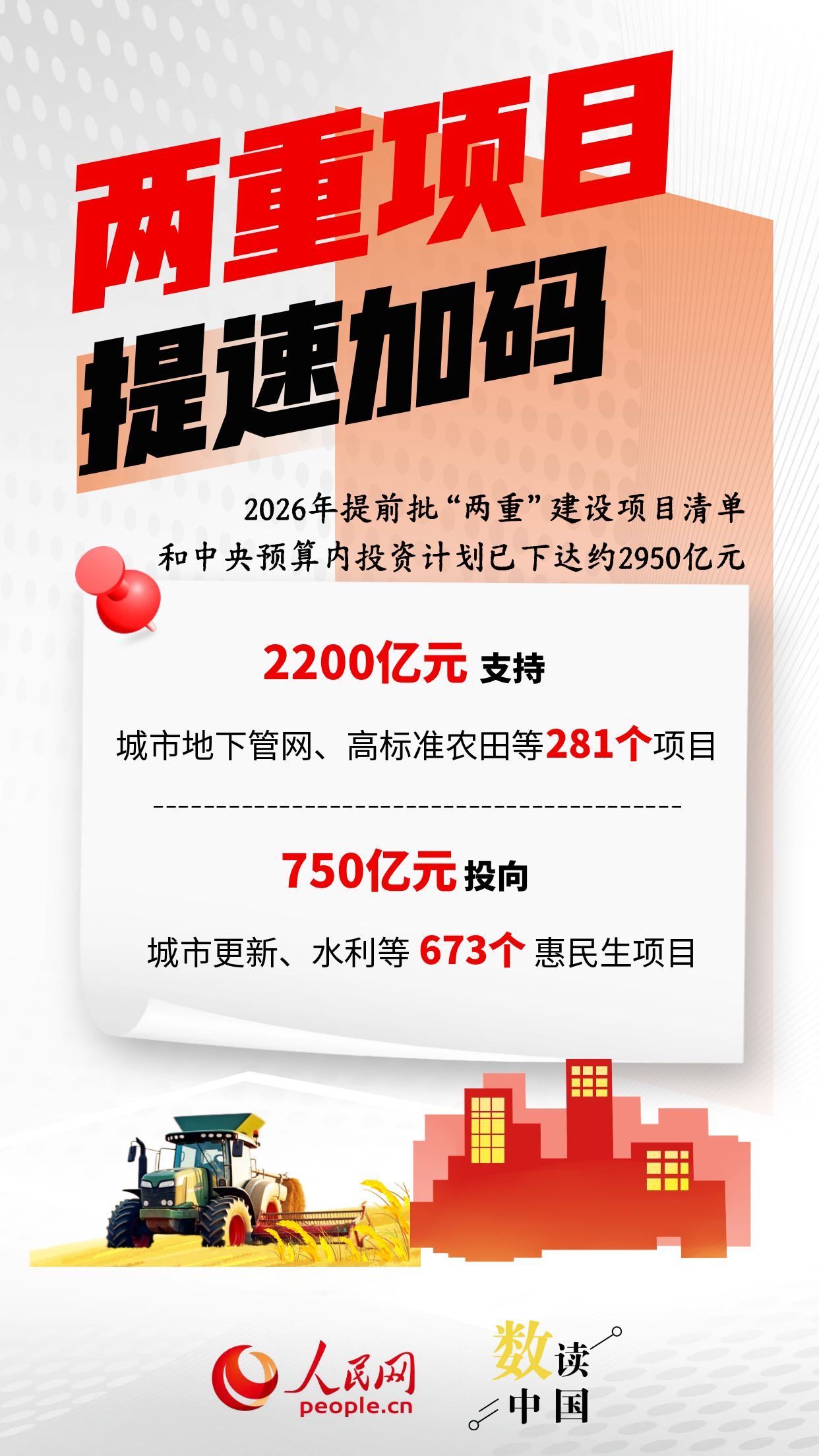
Core Viewpoint - The commencement of major projects across various regions in China at the beginning of 2026, supported by local policies, aims to achieve a strong economic start for the year, with a focus on infrastructure and public service improvements [1][2][3]. Group 1: Major Project Commencement - Multiple regions in China have initiated significant projects in early 2026, focusing on areas such as public welfare, infrastructure, urban renewal, and industrial upgrades [1]. - On January 1, 2026, Yunnan's Lufeng launched 46 new projects with a total investment of 4.94 billion yuan, covering key sectors like industrial upgrades and energy security [1]. - Shanghai's Yangpu District held a ceremony on January 4, 2026, for seven major projects with a total investment exceeding 13 billion yuan, focusing on innovation, commercial, residential, and municipal infrastructure [1]. Group 2: Investment Promotion Measures - Local governments have introduced comprehensive policies to encourage enterprise investment, with Shandong's policy list including a 50 million yuan reward for fixed asset investment assessments [3]. - Xiamen aims to complete over 37 billion yuan in investments for key projects in the first quarter of 2026, including significant infrastructure developments [3]. - The emphasis is on early planning and investment to ensure effective project execution and economic stability in the first quarter [2][3]. Group 3: Investment Growth Outlook - The central government plans to increase the scale of central budget investments and optimize the management of local government special bonds to stabilize investment growth [4][5]. - The National Development and Reform Commission has approved a list of "two重" projects and a central budget investment plan totaling approximately 295 billion yuan to accelerate funding disbursement [5]. - Investment growth is expected to rebound to over 2% in 2026, driven by effective policy integration and support for infrastructure projects [5].
国常会,最新部署!
证券时报· 2025-12-31 13:44
Core Viewpoint - The article discusses the recent State Council meeting led by Premier Li Qiang, focusing on the construction of the national water network and the promotion of cross-border trade facilitation as key strategies for expanding domestic demand and improving the business environment in China [2][3]. Group 1: National Water Network Construction - The construction of the national water network is identified as a strategic measure to optimize water resource allocation, enhance flood prevention and disaster reduction capabilities, and ensure national water security [5]. - The meeting emphasized the need for innovative financing mechanisms to attract investments from state-owned enterprises and private capital, aiming to create a multi-channel funding approach for the water network project [5]. - The Ministry of Finance plans to expand fiscal spending to support necessary expenditures, with expectations for long-term special bonds to become a core financing tool for strategic investments [5]. Group 2: Cross-Border Trade Facilitation - The meeting outlined measures to promote cross-border trade facilitation, highlighting the importance of efficient cross-border logistics and the integration of various transportation methods [8]. - The development of green trade and cross-border e-commerce is encouraged, along with the optimization of special product regulations and the enhancement of smart regulatory services [8]. - The Customs General Administration is set to implement a special action plan for cross-border trade facilitation, aiming to accelerate logistics, optimize the trade environment, and reduce customs costs by 2026 [9].

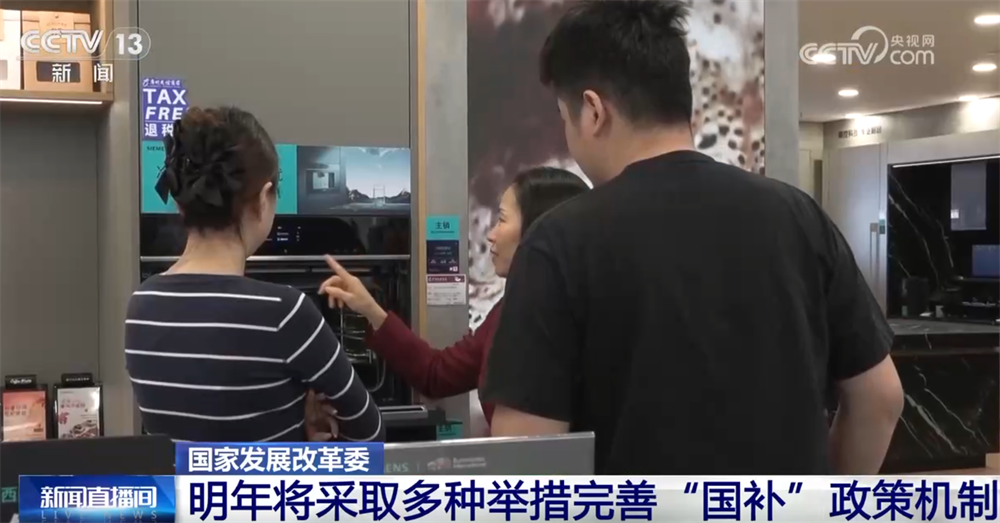
2026年我国将采取多种举措完善“国补”政策机制 均衡有序使用资金
Yang Shi Wang· 2025-12-31 09:34
Group 1 - The core viewpoint is that by 2026, China will optimize the allocation of funds and improve the implementation mechanism of the "national subsidy" policy [1][3] - The National Development and Reform Commission (NDRC) will consider previous policy execution and audit findings to determine the scale of fund allocation for different regions [1] - Regions with serious arrears in payments will face increased supervision and penalties to ensure timely fund distribution [1] Group 2 - The NDRC will guide local governments to balance and orderly spend subsidy funds, ensuring smooth transitions across weeks, months, and quarters [3] - A pre-allocation system for subsidy funds will be established to alleviate the financial burden on enterprises [3] - A special long-term bond plan of 62.5 billion yuan has been allocated to support the consumption of old-for-new goods, with funds already dispatched to localities [3] Group 3 - In 2026, China will strictly combat illegal activities related to fund management, including rigorous fund audits and price management [5] - Violations of price management requirements will lead to immediate disqualification from participation and legal consequences [5] - Strict enforcement and supervision will be applied to fraudulent subsidy claims and other illegal activities, with a commitment to investigate and expose such cases [5]