双碳目标

Search documents
杨雷:建设零碳园区要拥抱“外行创新”丨美丽中国·零碳洞察
中国能源报· 2026-01-26 07:28
Core Viewpoint - The establishment of the first batch of 52 national-level zero-carbon parks marks a transition from strategic planning to implementation in China's zero-carbon park development, which is seen as a key component in achieving carbon neutrality and exploring systemic changes in the energy framework [2]. Group 1: Development Status - The cost of renewable energy has significantly decreased compared to traditional energy sources, providing a solid foundation for zero-carbon parks [4]. - Zero-carbon parks are becoming central to energy transformation, moving from marginal exploration to mainstream implementation, with successful examples across the country, such as the Ordos Zero-Carbon Industrial Park and the Chongqing AI City Park [4][5]. - These parks demonstrate that zero-carbon solutions are practical and replicable, focusing on integrated energy systems and collaborative supply-demand models [5]. Group 2: Challenges Faced - Despite rapid development, zero-carbon parks face multiple challenges, including insufficient flexibility in the energy system, leading to increased curtailment rates of renewable energy [6]. - Technical challenges include inadequate planning for multi-energy conversion and supply-demand coordination, which can result in resource misallocation and high costs [6]. - The complexity of achieving dynamic balance in energy supply and demand exceeds expectations, requiring advanced algorithms and computational power [6]. Group 3: Pathways to Solutions - A three-pronged approach involving technology, mechanisms, and cognitive shifts is necessary to overcome current challenges [8]. - Future energy systems must prioritize flexibility, with cross-disciplinary integration of technologies such as electric heating, hydrogen, and energy storage [8]. - Market mechanisms should be user-centered, allowing distributed energy to participate in real-time pricing systems to enhance flexibility and create new growth opportunities [8]. - Breaking traditional cognitive barriers and embracing innovative thinking is crucial for the development of zero-carbon parks, which should focus on collaborative and integrated energy solutions [8].

干春晖:汽车行业抓住三大潜能实现三个转变
Zhong Guo Qi Che Bao Wang· 2026-01-26 06:48
Group 1 - The core viewpoint is that the automotive industry in China is at a critical juncture, transitioning from scale expansion to quality enhancement, driven by technological innovation, ecological reconstruction, and global competitiveness [11][12] - The three major potentials identified for 2026 are consumption and investment, technology and industry, and urban-rural and regional coordination, which will synergistically promote economic growth and provide key opportunities for the automotive sector [3][6] - The expansion of domestic demand strategy and the adjustment of the "two new" policies are expected to shift the automotive industry from a focus on scale to a focus on quality, enhancing market vitality and promoting a virtuous cycle of supply and demand [7][8][10] Group 2 - The automotive industry is expected to leverage new technologies such as solid-state batteries and L4-level autonomous driving, transforming vehicles into mobile smart terminals and energy carriers [4][5][12] - The integration of technology and industry is reshaping the competitive landscape of the automotive sector, allowing companies to explore new business models and enhance their ecological systems [5][6] - The policy adjustments are designed to address structural contradictions in the industry, such as excess low-end capacity and insufficient high-end supply, by promoting technological upgrades and encouraging consumer confidence [9][10][12] Group 3 - The automotive industry is increasingly focusing on creating a comprehensive ecosystem rather than just manufacturing vehicles, with an emphasis on smart energy and low-altitude economy [2][6] - The development of regional innovation clusters is facilitating the flow of resources and enhancing the industry's resilience to global supply chain changes [5][6] - The shift towards a value-driven market is evident, as policies encourage technological advancements and high-efficiency models, moving away from price wars to value competition [10][12]
山西省新型储能发展指南发布
中关村储能产业技术联盟· 2026-01-26 06:43
Core Viewpoint - The article emphasizes the need for the development of new energy storage in Shanxi Province to transition from "scale construction" to "high-quality development" in order to support the achievement of carbon neutrality goals and promote the healthy development of new energy storage technology and industry [1][14]. Group 1: Opportunities and Challenges in New Energy Storage Development - **Opportunities**: By 2030, Shanxi Province aims to achieve a renewable energy development target of 178 million kilowatts. The rapid growth of renewable energy installations increases the pressure on the power system for peak regulation and supply assurance, making new energy storage a key component in building a new power system and a solid guarantee for achieving carbon neutrality goals [2][15]. - **Challenges**: There are safety risks such as fire hazards due to thermal runaway when constructing new energy storage projects in densely populated areas with concentrated loads and limited renewable energy grid connections. Additionally, large-scale centralized energy storage may lead to limitations in the provincial 500 kV and 220 kV grid structure, resulting in operational restrictions and difficulties in ensuring project profitability [3][16]. Group 2: Energy Storage Capacity Evaluation System - An initial four-level evaluation system for energy storage capacity has been established based on grid carrying capacity, categorized as "Excellent, Good, Medium, and Poor" [4][17]. - **Excellent**: The current grid can accommodate a certain scale of energy storage without operational restrictions [7]. - **Good**: The grid will meet the connection requirements after the commissioning of planned grid projects, but may experience short-term operational restrictions before commissioning [8]. - **Medium**: Energy storage capacity exceeds the current grid carrying capacity, leading to frequent operational restrictions [8]. - **Poor**: Energy storage projects face long-term and high-frequency operational restrictions during peak load periods, impacting grid stability and project profitability [8]. Group 3: Development Recommendations - Based on the energy storage capacity evaluation system, recommendations for energy storage project connections in various districts and counties of Shanxi Province by 2026 have been proposed [5].

易事特成功摘帽伴随国资入主,回归新能源核心赛道
Huan Qiu Wang· 2026-01-26 06:32
Core Viewpoint - Yisite (300376.SZ) has made significant progress by successfully removing its ST label and transferring control to the state-owned assets of Jingzhou, indicating a resolution of governance risks and a solid foundation for future strategic development [1][2] Group 1: Company Developments - Yisite completed the removal of its ST label within a year, showcasing substantial improvements in governance and fundamentals, reflecting the company's commitment to returning to a healthy growth trajectory [1] - The stock price of Yisite has increased by 282.5% from a low of 2 CNY per share to 7.65 CNY, indicating strong market confidence in the company's recovery and the benefits of state-owned capital [1] - The auction of 50.11 million shares by the largest shareholder at a premium price signals a positive shift in the company's equity structure and market recognition of its value [2] Group 2: Strategic Implications - The entry of state-owned capital is seen as a key variable that enhances Yisite's investment value, providing liquidity support and aiding in business expansion and optimization of the industrial chain [2] - Analysts suggest that the interplay between state-owned stability and market capital's value discovery is crucial for Yisite's valuation reconstruction [3] - The removal of the ST label is viewed as a starting point for Yisite to return to the new energy sector and unlock long-term growth potential [3] Group 3: Financial Performance - In the first three quarters of 2025, Yisite achieved a revenue of 2.461 billion CNY and a net profit of 94.27 million CNY, showing signs of operational stability with a continuous growth trend [3] - The company has maintained high R&D investment in strategic areas like energy storage and data center energy management, which supports its transition to a value-driven investment approach [5] - Yisite's energy storage business saw a revenue increase of 153.45% year-on-year, indicating the company's successful capture of opportunities in the growing energy storage market [5]

零碳工厂:工业领域落实“双碳”目标的关键抓手
中国能源报· 2026-01-26 04:24
Core Viewpoint - The article discusses the issuance of the "Guiding Opinions on the Construction of Zero Carbon Factories" by five departments including the Ministry of Industry and Information Technology, marking a significant step in promoting zero carbon factory construction as a national strategic action aimed at achieving carbon neutrality in the industrial sector [1][3]. Summary by Sections Zero Carbon Factory Definition and Goals - A zero carbon factory prioritizes the use of green electricity and energy-saving modifications to reduce carbon emissions, aiming for net-zero emissions through carbon offsetting via green trading [1]. - The construction of zero carbon factories is set to be included in government work reports by 2025, indicating its elevation from industry exploration to a national strategy [1]. Key Tasks and Industry Focus - The "Guiding Opinions" outline three clear aspects: construction objects, goals, and pathways, focusing on key industries such as automotive, lithium batteries, photovoltaics, steel, non-ferrous metals, and petrochemicals, which together account for over 65% of the industrial added value and approximately 50% of total carbon emissions in China [3][4]. Development Goals and Phased Approach - The document sets clear, phased development goals, emphasizing the need to establish low-carbon competitive advantages in sensitive international trade sectors by 2027, particularly in automotive and electronics [4]. - By 2030, the focus will shift to consolidating low-carbon achievements in foundational materials and consumer goods, promoting collaborative carbon reduction across supply chains [4]. Construction Pathways and Mechanisms - The "Guiding Opinions" propose a comprehensive lifecycle approach to carbon reduction, including scientific carbon accounting, source reduction, process reduction, consumption carbon fixation, intelligent carbon control, and efficient carbon management [5]. - It emphasizes the need for differentiated deployment of tasks among various stakeholders, including local authorities, enterprises, industry associations, and research institutions, to create a multi-faceted governance structure for zero carbon factory construction [5]. Four Guiding Principles - The article outlines four guiding principles for zero carbon factory construction: 1. **Prudent Development**: Tailoring strategies to industry characteristics and ensuring steady carbon reduction without compromising economic growth [7]. 2. **Systematic Advancement**: Integrating energy optimization, resource recycling, and supply chain collaboration into a comprehensive carbon reduction strategy [8]. 3. **Soft and Hard Integration**: Combining physical measures with robust carbon management systems to enhance overall carbon management capabilities [9]. 4. **International Leadership**: Establishing standards and databases that reflect China's characteristics and actively participating in international standard-setting [9]. Recommendations for Stakeholders - Local authorities are advised to implement science-based policies that consider regional industrial characteristics and avoid sacrificing normal operations for short-term emission reductions [12]. - Enterprises should focus on enhancing their green competitiveness by aligning with ESG disclosure requirements and establishing effective carbon management systems [12]. - Research institutions are encouraged to innovate standards and frameworks that support zero carbon factory construction, ensuring alignment with international practices [13]. Conclusion - The "Guiding Opinions" serve as a clear action guide and institutional framework, marking a solid step towards zero carbon development in China's industry, with the potential to set a global benchmark for industrial green transformation [13].
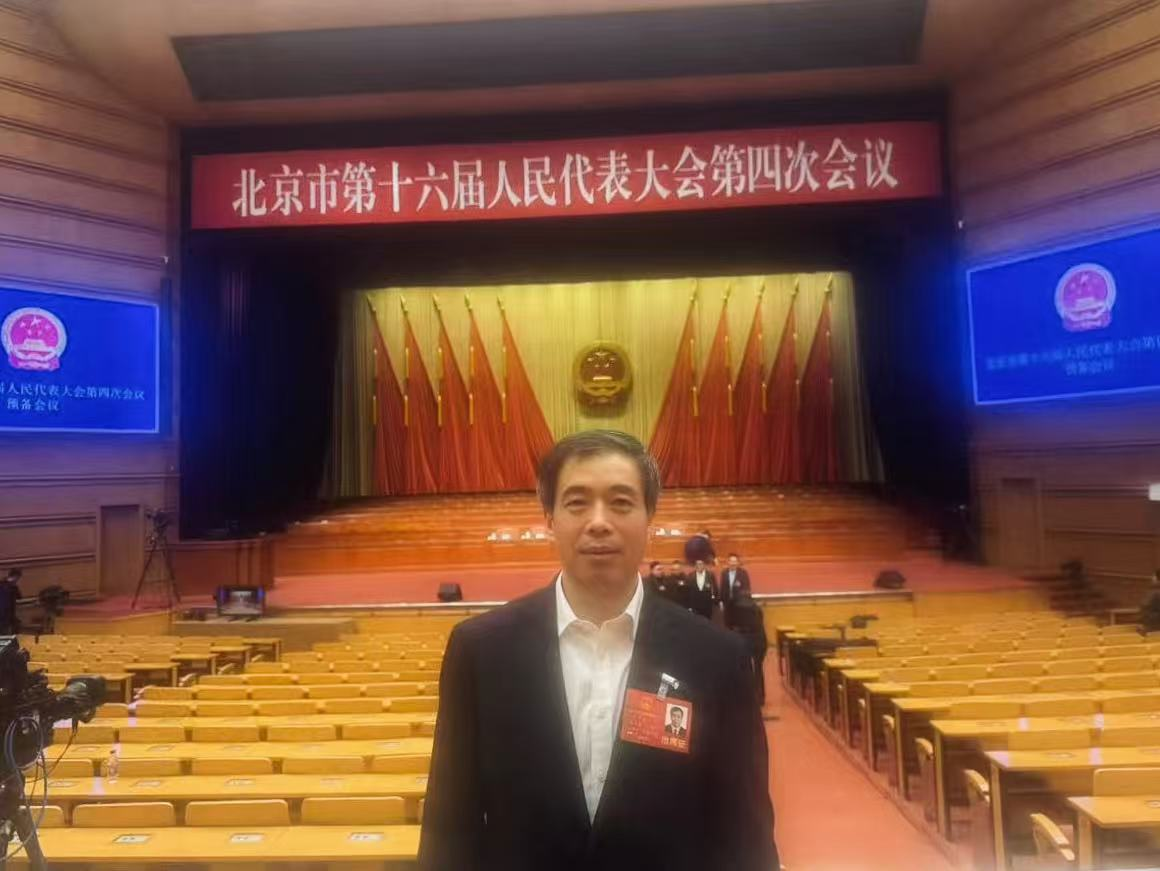
北京市人大代表张夕勇:建议加快推动北京新型储能产业发展
Bei Ke Cai Jing· 2026-01-26 03:19
Core Viewpoint - The proposals submitted by Zhang Xiyong emphasize the need for high-quality development of the new energy storage industry in Beijing and the continuous promotion of the fuel cell vehicle demonstration city cluster in the Beijing-Tianjin-Hebei region, aligning with national strategies and carbon reduction goals [2][3][5]. Group 1: New Energy Storage Industry - The development of the new energy storage industry in Beijing is crucial for enhancing energy security and driving regional collaboration, leveraging the capital's technological innovation and green electricity demand [3][4]. - Zhang Xiyong suggests using the Beijing-Tianjin-Hebei collaborative development as an opportunity to strengthen planning and industrial synergy, capitalizing on Beijing's advantages in innovation and regional resources [4]. Group 2: Fuel Cell Vehicle Demonstration City Cluster - The "14th Five-Year Plan" identifies hydrogen energy as a core direction for future industrial layout, highlighting its strategic significance for clean energy transition in transportation and industry [5]. - The fuel cell vehicle demonstration city cluster in the Beijing-Tianjin-Hebei region has established a self-controlled and efficient industrial ecosystem, significantly contributing to the development of core components, hydrogen infrastructure, and cost optimization [5]. - The completion of the four-year demonstration period presents challenges such as insufficient policy alignment and weakened regional collaboration, making the continued development of the fuel cell vehicle cluster essential for consolidating existing advantages and addressing development bottlenecks [5].
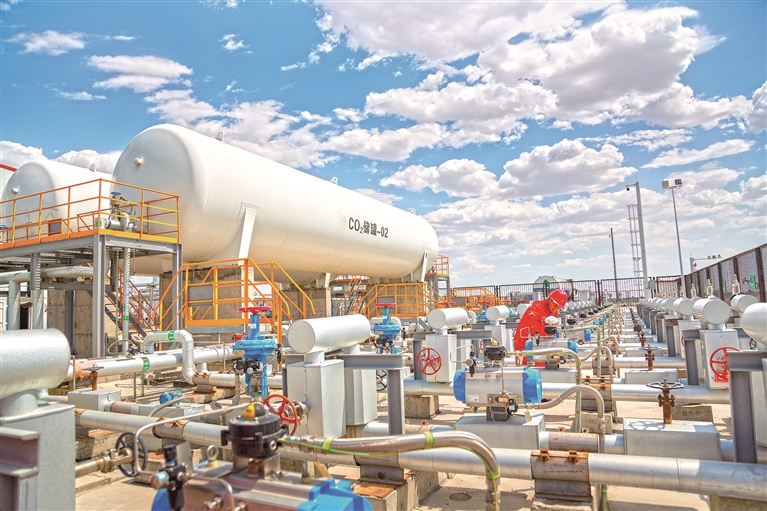
吃碳吐油 变“废”为宝探访我国首个实现年注碳百万吨的油田
Zhong Yang Ji Wei Guo Jia Jian Wei Wang Zhan· 2026-01-26 02:28
Core Viewpoint - The Xinjiang Oilfield has achieved a significant milestone by injecting over 1 million tons of carbon dioxide (CO2) annually by 2025, marking it as China's first oilfield to reach this target, which plays a crucial role in the country's carbon neutrality goals [8][16]. Group 1: CO2 Injection Technology - The CO2 injection method enhances oil recovery by increasing pressure and reducing viscosity, allowing for the extraction of oil that traditional methods cannot reach [9][10]. - Compared to water injection, CO2 injection can improve oil recovery rates by 10% to 20%, achieving total recovery rates of 40% to 60% [10]. - The Xinjiang Oilfield has been utilizing CO2 for enhanced oil recovery since 2019, with successful pilot projects demonstrating significant increases in oil production [12][14]. Group 2: Carbon Capture, Utilization, and Storage (CCUS) - CCUS technology is essential for achieving carbon neutrality, with Xinjiang Oilfield being a pioneer in its application for oil recovery [11][12]. - The CO2 used for injection is sourced from industrial emissions in the surrounding areas, ensuring a sustainable supply for the oilfield [15]. - Approximately 80% of the injected CO2 is permanently stored underground, while the remaining 20% is recycled for further use [15][16]. Group 3: Environmental Impact and Future Prospects - The ongoing CCUS projects in Xinjiang Oilfield are expected to significantly contribute to carbon reduction efforts, with current injection rates reaching over 4,800 tons per day [16]. - The technology not only aids in oil recovery but also provides a pathway for the utilization of industrial CO2 emissions, aligning with national carbon reduction strategies [18][19]. - The successful implementation of CCUS in Xinjiang Oilfield serves as a model for other regions and industries, showcasing the potential for green transformation in the energy sector [19][20].

皖能电力45亿投资聚焦清洁能源业务 安徽国资整合百亿资产解决同业竞争
Chang Jiang Shang Bao· 2026-01-26 00:48
Core Viewpoint - Anhui Guozhi is leading the integration of assets for Waneng Electric Power (000543.SZ) to promote high-quality transformation through a significant investment plan involving the acquisition of a controlling stake in a subsidiary focused on new energy projects [1][4]. Investment Plan - Waneng Electric Power plans to invest a total of 45.41 billion yuan by contributing 100% equity of its wholly-owned subsidiary, Anhui Waneng Energy Trading Co., along with 17.27 billion yuan in cash to increase its stake in Anhui New Energy Venture Investment Co. to 51% [1][2][3]. Business Operations - The Energy Trading Company serves as the core platform for Waneng Electric Power's new energy asset operations, engaging in new energy project investments, electricity spot trading, and carbon emissions quota trading, with a total installed capacity of approximately 1.44 million kW [2][6]. - New Energy Venture focuses on investments, construction, and operation of solar, wind, and energy storage projects across multiple provinces, with a total installed capacity of about 3.46 million kW [2][6]. Financial Performance - For the first nine months of 2025, New Energy Venture reported revenues of 8.37 billion yuan and a net profit of 2.37 billion yuan, with total assets of 121.61 billion yuan and net assets of 40.99 billion yuan as of September 2025 [1][8]. - The Energy Trading Company achieved revenues of 3.03 billion yuan and 1.87 billion yuan in 2024 and the first nine months of 2025, respectively, with net profits of 634.33 million yuan and 846.75 million yuan [2][6]. Strategic Focus - The investment aims to resolve the issue of intra-group competition between Waneng Electric Power and its parent company, Waneng Group, while focusing on clean energy business development [4][5]. - Waneng Electric Power is transitioning towards clean energy, leveraging its stable coal-fired power base to enhance its business structure in line with national carbon reduction goals [6][7]. Future Plans - The company plans to accelerate the integration of wind and solar projects, expanding its clean energy portfolio and enhancing its market competitiveness through various development strategies [7].

“十五五”时期如何充分发挥生态环境政策对扩大内需、拉动增长的作用?
Zhong Guo Huan Jing Bao· 2026-01-25 23:33
Group 1: Economic Development Strategy - The core viewpoint emphasizes the importance of domestic demand-driven economic growth, with a focus on consumption and investment as key drivers for sustainable development [1] - The "15th Five-Year Plan" aims to enhance ecological policies to stimulate domestic demand and promote green transformation [1][3] Group 2: Green Investment and Infrastructure - The construction of ecological infrastructure is identified as a crucial engine for driving green domestic demand, with an estimated investment of 803.74 billion yuan in pollution control for 2024 [4] - The government is expected to play a leading role in guiding social capital towards ecological investments, creating new economic growth points [2][4] Group 3: Green Consumption and Standards - Activating green consumption is essential for linking high-level ecological protection with quality living, with new consumption scenarios emerging from the "Beautiful China" initiative [6][7] - The enhancement of ecological standards is necessary to stimulate greater green consumption, with a focus on electric vehicles and energy-efficient appliances [8][9] Group 4: Technological Innovation - Technological innovation is highlighted as a core driver for green transformation, with a focus on key technology breakthroughs and the commercialization of research outcomes [10] - The establishment of a national platform for ecological technology transfer aims to support enterprises in achieving green and low-carbon development [10] Group 5: Global Green Trade - The expansion of green trade is seen as a way to enhance domestic industries' international competitiveness, with projections indicating a significant market growth for green products by 2030 [11] - The strategy includes aligning domestic green standards with international ones to facilitate better integration into global green trade [11]
耕沃野而兴百业 护青山以泽千秋
Xin Lang Cai Jing· 2026-01-25 22:24
Core Viewpoint - The Agricultural Development Bank of China, Guizhou Branch, has significantly contributed to rural revitalization and agricultural development in Guizhou province through targeted financial support, with a total loan issuance of nearly 300 billion yuan over the past five years, enhancing food security and promoting sustainable agricultural practices [12][14]. Financial Support for Agricultural Development - The bank has provided 82 billion yuan in credit to support the development of the Hongyingzi sorghum industry, facilitating a complete supply chain from production to sales [13]. - A total of 353 billion yuan has been allocated for grain and oil loans, reinforcing the bank's position as a key player in the grain financial market [14]. Rural Infrastructure and Urban-Rural Integration - The bank invested 2.16 billion yuan in upgrading rural infrastructure in Wanfenglin, improving transportation and promoting local tourism [19]. - Over 300 billion yuan has been directed towards water conservancy projects, enhancing water supply systems and ensuring water security for urban and rural areas [20]. Ecological and Environmental Initiatives - The bank has allocated 2.81 billion yuan for ecological restoration projects, including wetland rehabilitation, which has led to the development of an eco-tourism industry [22]. - Innovative financial products like "Green Water and Green Mountain Loans" have been introduced to support ecological protection and sustainable development [23]. Support for Poverty Alleviation and Employment - The bank has provided 456 billion yuan in loans for post-relocation support, aiding displaced populations in establishing stable livelihoods [24]. - The bank's financial services have been tailored to meet the needs of local industries, fostering job creation and economic stability in rural areas [18]. Future Outlook - The bank aims to continue its commitment to rural revitalization and agricultural modernization, focusing on enhancing financial support for key projects and initiatives in Guizhou province [25].