
战略性新兴产业

Search documents
龙江交通:目前处于矿产资源开发初始阶段,高纯石墨是未来努力方向
Zheng Quan Shi Bao Wang· 2025-12-10 06:18
Core Viewpoint - Longjiang Transportation is focusing on the development of the graphite industry as a key area for growth, with significant investments and strategic initiatives aimed at enhancing its operational capabilities and expanding its market presence [1][2][3] Financial Performance - In Q3 2025, Longjiang Transportation achieved an operating income of 225 million yuan and a net profit attributable to shareholders of 62 million yuan [1] - As of the end of Q3 2025, the company's net assets amounted to 4.653 billion yuan, with total assets of 5.479 billion yuan [1] Business Development - The company has improved its highway management and operational capabilities while accelerating the development of new materials and renewable energy sectors [1] - Longjiang Transportation's board approved a project for its subsidiary to invest in a graphite mining project in Heilongjiang Province, with a total investment not exceeding 2.679 billion yuan [2] Industry Focus - The graphite industry is recognized as a strategic emerging industry, with applications expanding in various sectors such as machinery, metallurgy, chemicals, aerospace, new energy, and automotive [2] - Graphite is increasingly used in advanced energy devices like fuel cells and lithium-ion batteries, indicating a broad market potential [2] Research and Development - Longjiang Transportation's subsidiary, Graphite Technology, is the main entity for innovation and R&D in the graphite sector, collaborating with universities and research institutions to enhance production capabilities [3] - The company is focusing on the development of high-purity graphite as a future direction, currently in the initial stages of mineral resource development [3]

重磅!2025年中国及31省市锂电池行业政策汇总及解读(全)政策鼓励锂电池产业安全稳定发展
Qian Zhan Wang· 2025-12-10 06:12
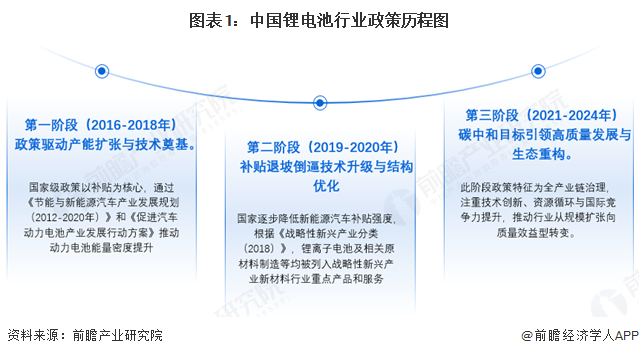
Core Insights - The lithium battery industry has undergone three main policy development phases: capacity expansion and technology foundation (2016-2018), forced technological upgrades and structural optimization due to subsidy reductions (2019-2020), and a focus on high-quality development and ecological restructuring driven by carbon neutrality goals (2021-2024) [1][3] Policy Development Phases - **Phase 1 (2016-2018)**: National policies centered on subsidies, promoting energy density improvements in power batteries, with a focus on rapid capacity expansion and market penetration, albeit with risks of low-end repetitive construction [1] - **Phase 2 (2019-2020)**: Gradual reduction of subsidies led to a push for technological upgrades and structural optimization, with lithium-ion batteries and related materials classified as key products in strategic emerging industries [1][7] - **Phase 3 (2021-2024)**: Policies emphasize green manufacturing, recycling systems, and global layout, with requirements for carbon emission intensity and the establishment of recycling networks for used batteries [1][3] National Policy Summary - A series of national policies have been introduced to support the lithium battery industry, including regulations on battery recycling, safety in transportation, and technological innovation [3][4] - Key policies include the 2024 guidelines for the comprehensive utilization of used power batteries, which set minimum recycling capacities and investment requirements [4][5] Provincial Policy Overview - Local policies have shifted towards precise support, with provinces like Shanghai and Jiangsu focusing on high-end battery materials and collaborative industrial bases to reduce costs [10][11] - Specific targets have been set by provinces, such as Fujian aiming for a lithium battery production capacity of over 500 GWh by 2025, and Guizhou targeting a total output value of over 100 billion yuan [12][15] Industry Development Goals - The industry is moving towards high safety and long-life battery technologies, with significant investments in R&D for new materials and recycling processes [10][12] - The overall goal is to enhance the competitiveness of the lithium battery industry, with a focus on sustainable practices and technological advancements [14][15]

大国五年丨山海协同陆海联动,绘就万里山河新画卷
Xin Hua She· 2025-12-10 00:46
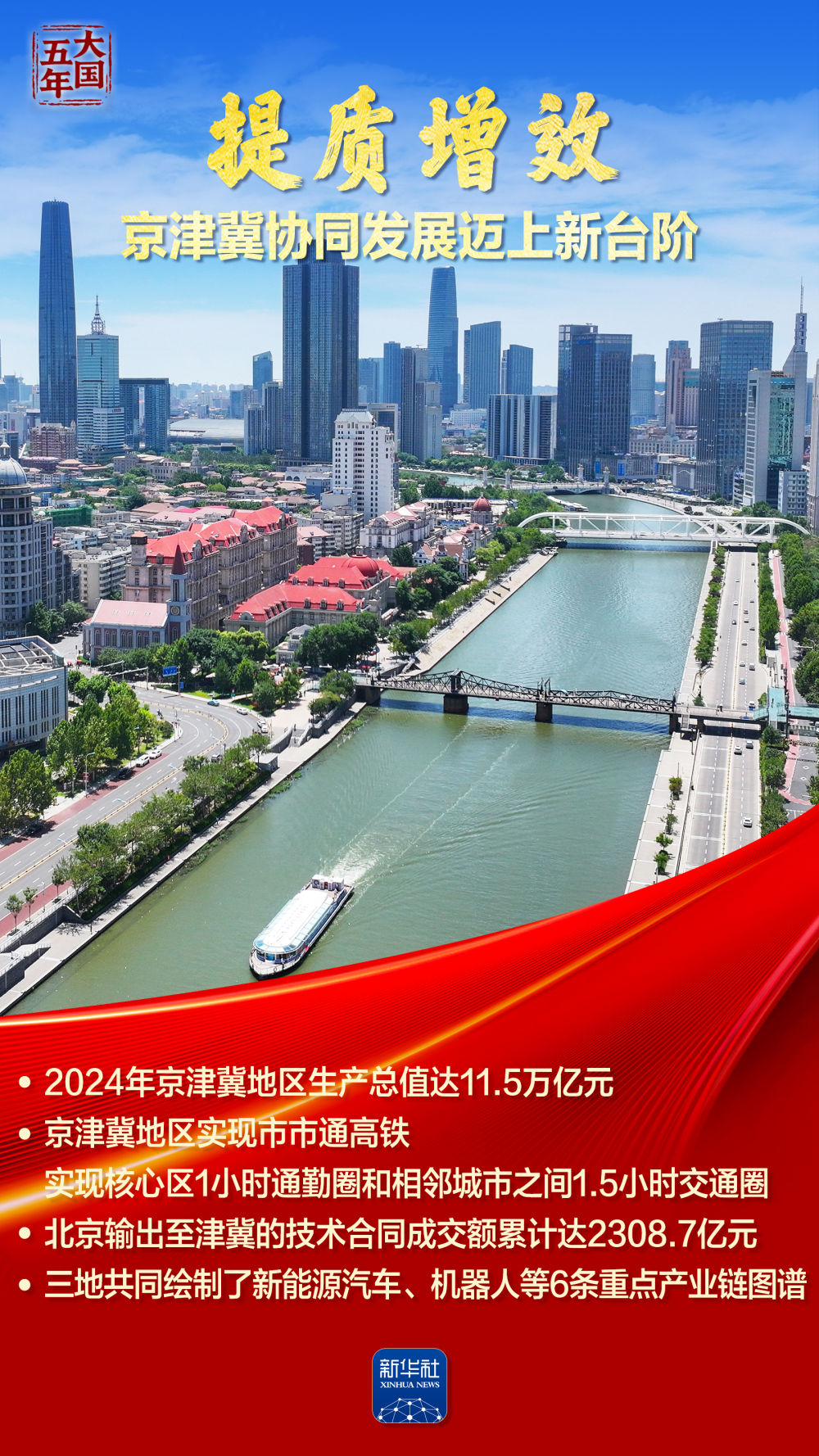
Group 1: Economic Development and Regional Coordination - The economic output of the Beijing-Tianjin-Hebei, Yangtze River Delta, and Guangdong-Hong Kong-Macao Greater Bay Area is expected to exceed 40% of the national total by 2024 [1] - The Northeast region's grain production accounted for 25.3% of the national total last year, indicating a strong strategic support for the region [12] - The "West-East Power Transmission" capacity has surpassed 300 million kilowatts, while the computing power of the "East Data West Calculation" eight major hub nodes accounts for approximately 70% of the national total [16] Group 2: Industry and Innovation - The Yangtze River Delta has a research and development expenditure accounting for 3.34% of its GDP, exceeding the national average by nearly 0.7 percentage points [7] - The economic total of the Guangdong-Hong Kong-Macao Greater Bay Area has surpassed 14 trillion yuan, with the "Shenzhen-Hong Kong-Macao" innovation cluster ranking first globally [8] - The Northeast region is focusing on developing modern agriculture and constructing a modern industrial system with distinctive advantages [12] Group 3: Infrastructure and Connectivity - The Beijing-Tianjin-Hebei region has achieved high-speed rail connectivity between all cities, creating a one-hour commuting circle in the core area and a 1.5-hour transportation circle between neighboring cities [4] - The high-speed rail mileage in the Greater Bay Area exceeds 3,000 kilometers, making the one-hour living circle a reality [10] - Over 60% of the national expressway main lines and high-speed rail main corridors pass through the central region, accelerating the construction of major transportation hubs [14]
21社论丨需重视发挥存量政策和增量政策集成效应
2 1 Shi Ji Jing Ji Bao Dao· 2025-12-08 23:12
Core Viewpoint - The Central Political Bureau of the Communist Party of China emphasizes the need for a stable yet progressive economic strategy for 2026, focusing on enhancing quality and efficiency through proactive fiscal and moderately loose monetary policies [1] Group 1: Economic Policy Direction - The economic policy for 2026 will continue the trend of a more proactive fiscal policy and moderately loose monetary policy, consistent with the 2025 policy direction [1] - The fiscal deficit rate is set to increase from 3% in 2024 to a historical high of 4% in 2025, while the central bank implemented a 0.5 percentage point reserve requirement ratio cut and a 0.1 percentage point reduction in the 7-day reverse repurchase rate in May [1] Group 2: Focus on Domestic Demand and Supply Optimization - The meeting highlights the importance of continuously expanding domestic demand and optimizing supply as strategic bases for constructing a new development pattern and responding to international economic challenges [2] - Recent measures to promote private investment include 13 initiatives aimed at stimulating market-driven effective investment growth, alongside a plan to enhance the adaptability of consumer goods supply and demand [2] Group 3: Key Strategies for Economic Growth - The strategy of "optimizing increment and revitalizing stock" is crucial, which involves developing new productive forces and fostering strategic emerging industries while ensuring reasonable investment growth [2] - Revitalizing stock assets, including idle land, vacant properties, and existing infrastructure, is essential for economic stability, necessitating the optimization and upgrading of traditional industries [3] Group 4: Integration of Policies - The integration of stock and increment policies requires addressing the connection between new and old policies, particularly in sectors like automotive and housing, where existing restrictive measures need adjustment [3] - Effective implementation of increment policies relies on the degree of coordination with stock policies, aiming to enhance resource allocation efficiency and drive high-quality economic development [3]
深赛格(000058.SZ):拟购买八六三81%股权
Ge Long Hui A P P· 2025-12-08 13:27
标的主要从事检验检测业务,拥有材料分析、可靠性、物理、化学、日化等实验室,为客户提供表面分 析、性能测试、可靠性和失效分析、环保和化学测试等分析测试服务的能力。主要面向战略性新兴产业 和未来产业,提供系统化、定制化、线上线下多维度的一站式综合解决方案,是集概念验证、中小试研 发、检测认证、技术咨询、技贸研究、科技成果转化等为一体的公共技术服务平台。 格隆汇12月8日丨深赛格(000058.SZ)公布,围绕公司整体战略,为实现检验检测认证业务的布局优化, 持续拓展新业务领域和市场,为客户提供更加全面、专业、高效的检验检测认证服务,持续提升市场竞 争力和可持续发展能力,推动检验检测认证业务稳健增长。公司拟以自有资金9,752.40万元购买丽星科 技全资子公司八六三81%的股权。本次交易完成后,八六三将成为公司控股子公司并纳入公司合并报表 范围。 ...

全省前三季度社会融资规模增量全国第一
Xin Hua Ri Bao· 2025-12-08 08:27
报告称,今年以来全省金融要素供给充裕、保障有力。前三季度,全省新增本外币贷款2.31万亿元,保 持全国第一;制造业贷款、科技型企业贷款、绿色贷款、普惠小微贷款余额分别较年初增长11.1%、 16.2%、22.9%和11%;非金融企业(不含央企)发行债券1.15万亿元。今年截至目前,全省新增境内上 市公司24家、居全国第一,其中23家属于战略性新兴产业;科创板和北交所上市公司数量分别达114 家、54家,均居全国首位。全国私募创投类基金投资江苏企业的在投本金规模超3000亿元,居各省首 位。 本报讯 (记者 陈月飞) 11月26日,省十四届人大常委会第十九次会议听取了省政府《关于全省金融工 作情况的报告》。报告显示,前三季度,全省社会融资规模增量达2.99万亿元、居全国第一,法人金融 机构总资产超15万亿元,全省银行业不良贷款率0.82%、处于全国较低水平,金融业有力支撑江苏扛起 经济大省挑大梁的责任担当。 地方金融改革向新而行、亮点颇多。通过组建省国金投资集团和江苏农商联合银行,我省国有金融资本 布局进一步优化;通过设立华东地区首家信用增进公司,大力支持中小科创企业债券融资。省战略性新 兴产业基金集群加快发展 ...
险资投资新规释放千亿增量,科创板迎活水!科创50指数ETF(588870)放量涨近2%,年内份额大增170%,断层领先!CPO、半导体等硬科技大涨
Sou Hu Cai Jing· 2025-12-08 07:41
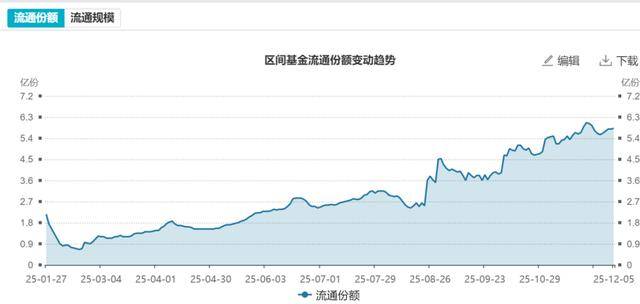
Group 1 - The market continues to rise with major stock indices increasing, particularly the Sci-Tech 50 Index which rose over 2% [1] - The Sci-Tech 50 Index ETF (588870) has seen a year-to-date share increase of 169.80%, leading its peers significantly [1] - Key stocks in the Sci-Tech 50 Index include Baiwei Storage, which rose over 9%, and Cambrian, which rose over 5% [1] Group 2 - Xiangcai Securities indicates that adjustments to insurance company risk factors could increase stock investment scale by approximately 150 billion, boosting the equity market insurance inflow to about 2.15 trillion by 2026 [2] - The electronic sector, the largest in the Sci-Tech 50 Index, is experiencing increased demand due to rising storage prices driven by major manufacturers like SanDisk and Micron [2] - The AI data center construction and deepening AI applications are significantly driving storage demand, with expectations for a continued upward cycle in storage prices through 2026 [2] Group 3 - The Sci-Tech 50 Index ETF (588870) tracks the top 50 stocks on the Sci-Tech board, covering sectors such as electronics, pharmaceuticals, and machinery [3] - The management fee for the Sci-Tech 50 Index ETF is as low as 0.15%, with a custody fee of 0.05%, making it the lowest in the market [3] Group 4 - Recent policy adjustments have lowered the risk factor for insurance companies holding Sci-Tech board stocks for over two years, encouraging more capital flow into strategic emerging industries [4]
私募基金管理规模创新高
Jing Ji Ri Bao· 2025-12-08 01:00
Core Insights - The private equity fund industry in China has reached a record management scale of 22.05 trillion yuan, with a month-on-month increase of 1.31 trillion yuan as of the end of October [1] - The growth in private equity funds is driven by the recovery of existing fund net values rather than new product launches, indicating a solid foundation for the industry [1][2] - The dual drivers of private securities and private equity funds enhance the industry's ability to withstand risks and meet diverse asset allocation needs of investors [1] Fund Management and Scale - As of the end of October, there are 19,367 registered private fund managers managing 137,905 funds, with a total management scale of 22.05 trillion yuan [1] - The private securities investment fund's scale has surpassed 7 trillion yuan for the first time, with new filings in October reaching 429.2 billion yuan, accounting for over 60% of all new filings [1] - The private equity and venture capital funds have respective scales of 11.18 trillion yuan and 3.56 trillion yuan, with month-on-month growth rates of 1.8% and 2.3% [3] Market Dynamics - The recovery of the secondary market and the release of profit-making effects are significant engines for growth, with the A-share market's upward trend boosting the net value of private equity products [2] - Increased investor risk appetite and favorable policies, such as long-term stock investment trials for insurance funds, contribute to the steady expansion of private fund scales [2] Regulatory Environment - The tightening of regulations, including the cleanup of shell private funds and the introduction of new supervisory guidelines, is accelerating the industry's process of elimination [4] - The average management scale of existing fund managers is expanding, indicating a rational selection of large, compliant institutions over smaller ones [4] - The trend of "quality over quantity" reflects a transformation in development logic, promoting a healthier market ecology and enhancing resource allocation efficiency [4] Future Outlook - The main line of development for private equity funds is expected to be regulated and professional internal growth, leading to a more transparent and competitive asset management ecosystem [4]
全省前三季度社会融资规模增量全国第一银行业不良贷款率处于全国较低水平
Xin Hua Ri Bao· 2025-12-07 23:12
Core Insights - The report highlights that Jiangsu province has achieved significant financial growth, with a social financing scale increase of 2.99 trillion yuan, ranking first in the nation [1] - The province's banking sector maintains a low non-performing loan ratio of 0.82%, indicating a stable financial environment [1] Financial Performance - In the first three quarters, Jiangsu's new loans in both domestic and foreign currencies reached 2.31 trillion yuan, also the highest in the country [1] - Loans to the manufacturing sector, technology enterprises, green projects, and small and micro enterprises have seen year-to-date growth rates of 11.1%, 16.2%, 22.9%, and 11% respectively [1] - Non-financial enterprises (excluding state-owned enterprises) issued bonds totaling 1.15 trillion yuan [1] - The province has seen the establishment of 24 new domestic listed companies, leading the nation, with 23 of these in strategic emerging industries [1] Financial Institutions and Services - Jiangsu has 187 legal financial institutions and over 1,500 various local financial organizations [2] - The province is set to have 13 banks listed in the top 1,000 global banks by 2025, leading the country [2] - The government financing guarantee system has been enhanced, with a recorded scale of 137.3 billion yuan in the national financing guarantee fund, maintaining the top position nationally [2] - The provincial comprehensive financial service platform has assisted 74,000 enterprises in obtaining credit worth 447.9 billion yuan [2] Financial Reforms and Innovations - The establishment of the Jiangsu National Financial Investment Group and Jiangsu Rural Commercial Bank has optimized the layout of state-owned financial capital [2] - The province has initiated the first credit enhancement company in East China to support bond financing for small and medium-sized technology enterprises [2] - The strategic emerging industry fund cluster has accelerated development, with a total scale exceeding 100 billion yuan [2] - Jiangsu has been approved to conduct a national-level pilot for a comprehensive intellectual property financial ecosystem [2] Risk Management and Consumer Protection - Jiangsu has implemented policies to optimize the financial ecosystem and promote the creation of financial ecological counties [3] - The province has established 111 financial dispute mediation service points to enhance consumer rights protection [3] - Efforts to strengthen financial support for local debt risk resolution and assist private enterprises in financial distress have been emphasized [3] - A reward mechanism for reporting illegal fundraising activities has been introduced to maintain a strict crackdown on illegal financial activities [3]
聚焦科技创新领域 多地发行专项债投向政府投资基金
Zhong Guo Zheng Quan Bao· 2025-12-07 20:35
Core Viewpoint - The recent acceleration of special bond issuance into government investment funds reflects an optimization of medium-term fiscal planning, supporting major development strategies and fostering new economic growth drivers through strategic emerging industries and technological innovation [1][3]. Group 1: Special Bond Issuance - Multiple regions have accelerated the issuance of special bonds into government investment funds, with Guangdong issuing 10 billion yuan, Sichuan 5 billion yuan, Shanghai 5 billion yuan, Hubei 4 billion yuan, and Shenzhen 6.52 billion yuan [2]. - As of now, 11 regions have disclosed the use of special bond funds for government investment funds, totaling over 80 billion yuan [2]. Group 2: Support for Industry Development - The injection of special bond funds into government investment funds is a significant measure to support industrial development and technological innovation, with a focus on regional industrial characteristics [4]. - Regions like Shenzhen focus on the "20+8" industrial clusters, while Xi'an targets local advantageous industries such as electronics and aerospace [4]. Group 3: Regional and Temporal Characteristics - The distribution of special bond funds shows a clear regional differentiation, with eastern regions like Guangdong, Zhejiang, Shanghai, and Beijing each disclosing amounts of 10 billion yuan [4]. - The issuance period for bonds injected into government investment funds typically ranges from 10 to 30 years, aligning with the long-term investment needs of high-tech industries [4]. Group 4: Coordination Mechanism - The recent acceleration in local special bond issuance reached 492.19 billion yuan in November, a 71% month-on-month increase, with a total issuance of 4,495.8 billion yuan by December 5, achieving 97.7% of the annual target [5]. - Experts emphasize the need for a scientific and reasonable institutional framework to prevent potential debt risks and enhance fund utilization efficiency, suggesting a "special bond + government investment fund" linkage mechanism [6].