
绿色低碳转型

Search documents
兰科公司同宝煤业低浓度瓦斯治理与利用项目成功点火
Xin Lang Cai Jing· 2025-12-19 12:49
(来源:兰花集团) 12月19日,随着锅炉成功点火,兰科公司同宝煤业低浓度瓦斯治理与利用项目正式投入运行。该项目是 股份公司完成对兰科公司全资控股后,由其独立投运的首个重点项目,实现了"当年建设、当年见效", 为集团公司深化瓦斯资源化利用、推动煤炭和新能源融合发展提供了新的实践样板。 (来源:兰花集团) 12月19日,随着锅炉成功点火,兰科公司同宝煤业低浓度瓦斯治理与利用项目正式投入运行。该项目是 股份公司完成对兰科公司全资控股后,由其独立投运的首个重点项目,实现了"当年建设、当年见效", 为集团公司深化瓦斯资源化利用、推动煤炭和新能源融合发展提供了新的实践样板。 本次成功点火,标志着兰科公司在继伯方煤矿项目后,于低浓度瓦斯规模化、安全化利用领域再获关键 突破。作为股份公司在低碳能源领域的重要布局,兰科公司专注于将煤矿瓦斯从安全风险转化为绿色资 源,通过技术模式创新,深耕低浓度瓦斯治理与利用核心业务,并积极拓展余热回收、节能改造服务, 全力落实总公司迅速做大做强兰科公司的战略目标,致力于成为集团培育新质生产力、推动绿色低碳转 型的关键力量,为煤矿企业降低安全隐患、减少碳排放的同时,也创造了显著的经济价值与社会 ...
专访海航董事长丁拥政:封关启新程,新海航锚定“超级承运人”
2 1 Shi Ji Jing Ji Bao Dao· 2025-12-19 12:12
Core Viewpoint - The establishment of the Hainan Free Trade Port (FTP) marks a significant opportunity for Hainan Airlines Group to transform from a traditional airline into a "super carrier" and "industry ecosystem builder" through strategic restructuring and leveraging policy benefits [1][5]. Group 1: Policy Benefits and Cost Optimization - The full closure of the FTP signifies a stable phase for policy implementation, leading to predictable long-term benefits for companies, particularly in cost reduction and efficiency enhancement [2]. - Tax incentives, such as a 15% corporate income tax rate, alleviate financial burdens and attract global talent to Hainan [2]. - The "zero tariff" policy has allowed Hainan Airlines to save over 50 million yuan in taxes on imported aviation materials, with expectations of saving an additional 16 million yuan on new aircraft during the lease period [2]. Group 2: Strategic Reinvestment and Innovation - The company aims to optimize and restructure its supply chain by expanding the "zero tariff" product list to approximately 6,600 items, enhancing logistics and service capabilities for both itself and other airlines [3]. - Hainan Airlines has achieved significant efficiency improvements in its core maintenance business, becoming a key player in the global high-end maintenance market [3]. Group 3: Business Model Innovation - The cargo division is transitioning from traditional transportation to a comprehensive logistics service provider, enhancing capabilities to support local industries such as cross-border e-commerce and cold chain logistics [4]. - The company has reported a 17% year-on-year increase in cargo throughput in Hainan, demonstrating the effectiveness of policy benefits in driving service innovation [4]. Group 4: Market Expansion and Future Goals - The FTP is expected to significantly enhance Hainan's international appeal and economic activity, with a projected explosive growth in business, tourism, and trade flows [5]. - Hainan Airlines holds over 40% of the passenger market share in Hainan and has developed a network of 240 domestic routes and 27 international routes, with a 60% year-on-year increase in international passenger transport [5]. Group 5: Ecosystem Development - The company aims to create a globally attractive aviation maintenance industry cluster, enhancing its service capabilities and attracting global aviation resources [6]. - Hainan Airlines is committed to deepening industry-education integration to ensure a steady supply of skilled talent for the aviation sector [6]. Group 6: Digital and Green Transformation - The company is focusing on digital transformation and green low-carbon initiatives, including the establishment of an AI innovation lab and the introduction of sustainable aviation fuel (SAF) [8]. - Hainan Airlines has implemented measures to reduce carbon emissions, such as a dynamic weight management system that saves over 300 tons of fuel annually [8]. Group 7: Long-term Vision - The ultimate goal for Hainan Airlines is to not only strengthen its role as a "super carrier" but also to become a key integrator and value creator within the global aviation industry chain embedded in the Hainan FTP [9].


宝钢股份:公司一直积极推动钢铁行业的协同和自律规范
Zheng Quan Ri Bao Wang· 2025-12-19 11:43
Core Viewpoint - The company believes that the recent policy marks a new phase in China's steel export management, addressing the need for adaptation to changes in the international trade environment and promoting a green and low-carbon transition in the steel industry [1] Group 1: Industry Collaboration and Self-Regulation - The company is actively promoting collaboration and self-regulation within the steel industry to ensure healthy and stable development [1] Group 2: Strategic Response to Policy Changes - The company views the new policy as a strategic choice to optimize export structure and respond to the realities of the international trade environment [1] Group 3: Preparation for Compliance - The company plans to prepare and operate according to relevant regulations once the authorities clarify the application processes for the products included in the new export product catalog [1]

中企承建突尼斯最大光伏电站全容量并网
Zhong Guo Dian Li Bao· 2025-12-19 10:39
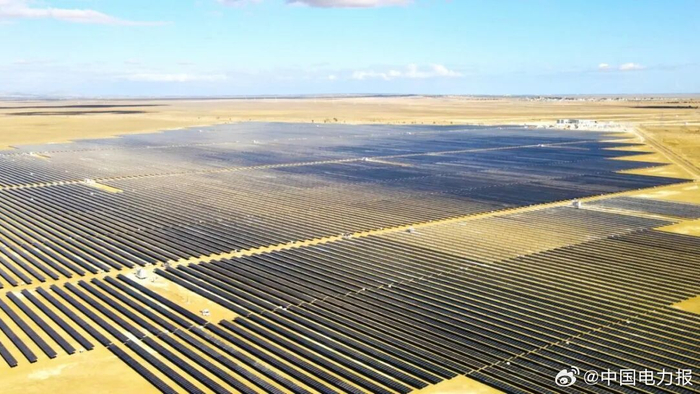
据测算,项目投产后每年可生产2.22亿千瓦时清洁电能,减少二氧化碳排放11.7万吨,将有效推动区域 产业绿色低碳转型,助力突尼斯能源结构优化,为该国实现"2030年新能源发电占比达30%"的战略目标 提供有力支撑。(王可) 项目位于突尼斯中东部凯鲁万市,总装机容量100兆瓦,占地面积约200公顷。建设过程中,项目创新应 用了高电压等级并网、直埋电缆损耗优化、单轴跟踪系统场景化适配及智能运维系统集成等一系列先进 技术。 针对凯鲁万地区膨胀土地质、气候干燥、紫外线强及沙尘频发等特殊环境,项目团队在膨胀土基础处理 与电缆防紫外线、风沙防护等方面开展适应性技术创新,显著提升电站在复杂环境下的运行稳定性。 建设期间,中国能建积极推动中国光伏技术标准在突尼斯的本地化转化与应用,并系统开展安全生产、 运营维护等属地化培训,累计为当地提供就业岗位897个,有效带动了区域就业,为突尼斯光伏产业的 可持续发展培育了本土化专业人才。 【中企承建突尼斯最大光伏项目全容量并网】#电力快讯##能源高质量发展##能源向新力# 记者从@中 国能建 获悉,当地时间12月16日,由中国能建天津电力建设有限公司与中国电力工程顾问集团西北电 力设计 ...
建设美丽中国
Ren Min Ri Bao· 2025-12-19 09:48
Group 1 - The construction of a beautiful China is a significant goal for the comprehensive modernization of the socialist state and is essential for the realization of the Chinese Dream of national rejuvenation [2][3] - Building a beautiful China is a necessary path to embed a green foundation in Chinese-style modernization, emphasizing harmonious coexistence between humans and nature [2] - The construction of a beautiful China is an inherent requirement to meet the growing needs of the people for a better life, with a focus on improving ecological quality and providing high-quality ecological products [3] Group 2 - Significant progress has been made in the construction of a beautiful China since the 18th National Congress, with historical changes in ecological civilization construction [5] - Environmental quality has improved significantly, with PM2.5 concentrations in key cities decreasing by 56% over the past decade, and the proportion of good surface water quality increasing from 64.1% to 90.4% [5] - The green and low-carbon transition is accelerating, with over 96% of coal-fired power units completing ultra-low emissions upgrades and a significant increase in renewable energy capacity [6][7] Group 3 - The quality of ecosystems is steadily improving, with over 30% of land area designated as ecological protection red lines and a forest coverage rate exceeding 25% [7] - The ecological civilization system reform has shown significant results, with a comprehensive legal framework for environmental protection established [8] - China's contributions to global environmental governance are evident, actively participating in international climate negotiations and promoting biodiversity frameworks [9] Group 4 - The "15th Five-Year Plan" emphasizes the importance of achieving significant progress in building a beautiful China, with goals for green production and living styles, carbon peak targets, and a clean energy system [10] - The plan includes strengthening party leadership in ecological construction and establishing a comprehensive responsibility system for environmental protection [11] - Continuous efforts will be made to advance pollution prevention and ecological system optimization, focusing on source governance and multi-pollutant control [12][13]
黑色产业链日报-20251219
Dong Ya Qi Huo· 2025-12-19 09:26
Report Industry Investment Rating No relevant content provided. Core Viewpoints - Steel prices are supported by the cost side but suppressed by weakening demand and potential tightening of steel export expectations, maintaining a volatile trend [3] - After macro - events are settled, the trading logic of iron ore returns to fundamentals. With restrained shipments, steel mills' restocking needs, and coking coal price concessions, the downside space of iron ore prices is expected to be limited [20] - As the terminal winter - storage replenishment approaches, the inventory structure of coking coal is expected to improve. Coke spot still has room for price cuts from a valuation perspective, and attention should be paid to the progress of the steel mills' third - round price cut [29] - The fundamentals of ferroalloys are currently weak. Although the futures prices rebounded due to relevant policies, the rebound may stimulate enterprises to hedge and suppress prices [45] - With the strengthening expectation of new capacity production, the over - supply expectation of soda ash is intensifying. The weakening demand from glass and high inventories restrict the price of soda ash [59] - From December to before the Spring Festival, some glass production lines may undergo cold - repair, which may affect long - term pricing and market expectations. Currently, high intermediate inventories and off - season demand put pressure on the spot market [82] Summary by Directory Steel - **Futures Prices and Spreads** - On December 19, 2025, the closing prices of rebar 01, 05, and 10 contracts were 3120, 3119, and 3151 yuan/ton respectively; the closing prices of hot - rolled coil 01, 05, and 10 contracts were 3276, 3269, and 3282 yuan/ton respectively [4] - The month - spreads of rebar and hot - rolled coil showed different changes compared to the previous day [4] - **Spot Prices and Basis** - Rebar and hot - rolled coil spot prices in different regions had minor changes on December 19, 2025. For example, the rebar summary price in China was 3325 yuan/ton, and the hot - rolled coil summary price in Shanghai was 3270 yuan/ton [8][10] - The basis of rebar and hot - rolled coil also changed slightly [8][10] - **Other Ratios** - The 01, 05, and 10 contract ratios of rebar to iron ore were all 4; the ratios of rebar to coke were all 2 on December 19, 2025 [17] Iron Ore - **Price Data** - On December 19, 2025, the closing prices of 01, 05, and 09 contracts were 798, 780, and 758 yuan/ton respectively, with daily changes of 1, 2.5, and 3 yuan/ton respectively [21] - The basis of different contracts showed a downward trend [21] - **Fundamental Data** - The daily average pig iron output was 226.55 tons, a week - on - week decrease of 2.65 tons; the 45 - port inventory was 15512.63 tons, a week - on - week increase of 81.21 tons [24] Coking Coal and Coke - **Futures Spreads and Ratios** - On December 19, 2025, the spreads of coking coal and coke contracts showed different changes compared to the previous day. For example, the coking coal 09 - 01 spread was 195 yuan/ton [32] - The coking profit, mine - coke ratio, etc. also changed [32] - **Spot Prices and Profits** - The spot prices of coking coal and coke in different regions had minor changes. The immediate coking profit was 24 yuan/ton [35] Ferroalloys - **Silicon Iron** - On December 19, 2025, the silicon iron basis in Ningxia was - 90 yuan/ton, a daily decrease of 48 yuan/ton; the silicon iron spot price in Ningxia was 5300 yuan/ton [46] - **Silicon Manganese** - The silicon manganese basis in Inner Mongolia was 82 yuan/ton, a daily decrease of 28 yuan/ton; the silicon manganese spot price in Ningxia was 5500 yuan/ton [47] Soda Ash - **Futures Prices and Spreads** - On December 19, 2025, the closing prices of soda ash 01, 05, and 09 contracts were 1120, 1176, and 1236 yuan/ton respectively, with daily decreases of 17, 17, and 14 yuan/ton respectively [60] - The month - spreads also changed [60] - **Spot Prices and Basis** - The spot prices of heavy and light soda ash in different regions remained stable. The basis of soda ash in different regions showed a downward trend [60] Glass - **Futures Prices and Spreads** - On December 19, 2025, the closing prices of glass 01, 05, and 09 contracts were 941, 1041, and 1138 yuan/ton respectively, with daily decreases of 12, 21, and 18 yuan/ton respectively [83] - The month - spreads and basis of glass contracts changed [83] - **Sales and Production Data** - The sales - to - production ratios of glass in different regions such as Shahe, Hubei, etc. showed different trends in December 2025 [84]
孙金龙:建设美丽中国
Ren Min Ri Bao· 2025-12-19 08:59
生态环境部党组书记、副部长 孙金龙 党的二十届四中全会通过的《中共中央关于制定国民经济和社会发展第十五个五年规划的建议》(以下 简称《建议》)明确提出,加快经济社会发展全面绿色转型,建设美丽中国。这是以习近平同志为核心 的党中央着眼人与自然和谐共生现代化建设全局作出的重大战略部署。我们要坚持以习近平新时代中国 特色社会主义思想为指导,深入贯彻习近平生态文明思想,准确把握新时代新征程美丽中国建设的重大 意义和目标任务,坚决抓好贯彻落实,加快推动建设美丽中国。 一、充分认识建设美丽中国的重大意义 建设美丽中国是全面建设社会主义现代化国家的重要目标,是实现中华民族伟大复兴中国梦的重要内 容。当前,我国生态文明建设仍处于压力叠加、负重前行的关键期。要把美丽中国建设摆在强国建设、 民族复兴的突出位置,让我们的祖国天更蓝、山更绿、水更清、生态环境更优美。 (一)建设美丽中国是厚植中国式现代化绿色底色的必由之路。中国式现代化是人与自然和谐共生的现 代化,绿色发展是中国式现代化的鲜明底色。我国作为14亿多人口的发展中大国,要整体迈入现代化, 走西方以资本为中心、物质主义膨胀、先污染后治理的现代化发展道路是行不通的。美丽中国建 ...
【践行“两高四着力”郑州实践】碧水蓝天 生态建设增福祉
Zheng Zhou Ri Bao· 2025-12-19 02:18
Core Viewpoint - Zhengzhou has been actively promoting ecological protection and high-quality development strategies in the Yellow River basin since the 14th Five-Year Plan, focusing on creating a park city and enhancing ecological quality through various measures [1]. Environmental Protection and Pollution Control - Zhengzhou's ecological environment bureau has implemented a pollution prevention model that emphasizes both law enforcement and public education, leading to significant improvements in air quality indicators [4]. - The city has achieved a 26.1% reduction in the comprehensive air quality index compared to the baseline of the 14th Five-Year Plan, with PM2.5 concentrations decreasing by 32.2% and nitrogen dioxide by 40% [4]. Renewable Energy and Industrial Transformation - By June 2025, Zhengzhou aims to have a renewable energy installed capacity of 329 megawatts, increasing its share from 5.9% in 2020 to 24.2% [3]. - The city is actively phasing out high-energy-consuming industries, with the proportion of these industries in the regulated industrial sector expected to drop to 20.7% by the end of 2024 [3]. Water Quality Improvement - Zhengzhou has made significant strides in water quality management, with the Yellow River's water quality maintaining a stable level of Class II for five consecutive years from 2021 to 2025 [7]. - The city has eliminated urban black and odorous water bodies, achieving a 100% compliance rate for national and provincial river monitoring sections [7]. Soil and Groundwater Protection - The city has established a comprehensive ecological governance system focusing on soil and groundwater pollution prevention, with a dynamic update of key regulatory units for soil pollution risk control [8]. - Zhengzhou's soil environment quality is improving, with 100% safety utilization rates for polluted farmland and key construction land [8]. Future Goals - During the 15th Five-Year Plan period, Zhengzhou will focus on modernizing ecological governance capabilities and systems, aiming to enhance the construction of beautiful rivers, lakes, and rural areas [9].
生态环境部党组书记孙金龙在《人民日报》发表署名文章《建设美丽中国》
Ren Min Ri Bao· 2025-12-19 01:53
党的二十届四中全会通过的《中共中央关于制定国民经济和社会发展第十五个五年规划的建议》(以下 简称《建议》)明确提出,加快经济社会发展全面绿色转型,建设美丽中国。这是以习近平同志为核心 的党中央着眼人与自然和谐共生现代化建设全局作出的重大战略部署。我们要坚持以习近平新时代中国 特色社会主义思想为指导,深入贯彻习近平生态文明思想,准确把握新时代新征程美丽中国建设的重大 意义和目标任务,坚决抓好贯彻落实,加快推动建设美丽中国。 建设美丽中国(学习贯彻党的二十届四中全会精神) 生态环境部党组书记 孙金龙 充分认识建设美丽中国的重大意义 建设美丽中国是全面建设社会主义现代化国家的重要目标,是实现中华民族伟大复兴中国梦的重要内 容。当前,我国生态文明建设仍处于压力叠加、负重前行的关键期。要把美丽中国建设摆在强国建设、 民族复兴的突出位置,让我们的祖国天更蓝、山更绿、水更清、生态环境更优美。 (一)建设美丽中国是厚植中国式现代化绿色底色的必由之路。中国式现代化是人与自然和谐共生的现 代化,绿色发展是中国式现代化的鲜明底色。我国作为14亿多人口的发展中大国,要整体迈入现代化, 走西方以资本为中心、物质主义膨胀、先污染后治理的 ...
螺纹钢阶段底部渐显 3000元/吨附近或为2605合约的底部区域
Sou Hu Cai Jing· 2025-12-19 00:55
来源:期货日报 12月5日以来,螺纹钢价格出现快速下跌,主力2605合约价格最低下探至3031元/吨,相比月初高点下 跌150元/吨,跌幅约为4.7%。对于后期走势,我们认为,利空充分发酵之后,螺纹钢价格有望在3000 元/吨附近逐步企稳。 近期大跌原因分析 焦煤大幅下跌是螺纹钢价格持续走弱的原因之一。从历史经验看,春节之前下游焦煤的库存水平在15天 左右,目前下游焦煤库存天数在12.51天,仍然有一定的补库空间。上周钢厂和焦化厂的焦煤库存为 1831.95万吨,环比回升24.48万吨,为连续3周下降之后的首次回升,或预示着下游对焦煤的补库已经逐 步开始。 另外,春节之前还有一轮用电高峰,动力煤在750元/吨附近继续向下的空间也比较有限。焦煤和动力 煤现货的比价已经压缩至1.48附近的低位,比价亦不支持焦煤价格继续大幅下跌。 目前,钢厂的铁矿石库存为8834.2万吨,环比回落150.53万吨,可用天数为31.19天。从历史数据看,春 节前钢厂的铁矿石库存可用天数在38~39天。当前距离春节还有9周左右,接近了铁矿石冬储补库启动 的时点。明年1月之后面临外矿发货淡季以及春节之后的钢厂复产。所以,铁矿石未来1个月 ...