AI制药

Search documents
从资本热捧到临床突破:AI 制药商业化如何突围?|AI医疗浪潮
2 1 Shi Ji Jing Ji Bao Dao· 2025-05-29 08:33
Core Insights - The AI pharmaceutical sector is experiencing significant growth, with global AI+pharmaceutical financing events reaching 128 in 2024, totaling $5.795 billion, marking increases of 23.08% and 60.93% compared to 2023, respectively [1] - In China, the AI pharmaceutical financing events are concentrated in economically developed regions such as the Pearl River Delta, Beijing-Tianjin-Hebei, and the Yangtze River Delta [1] - The Shanghai Zhangjiang "Pharmaceutical Valley" is a key player in the domestic pharmaceutical landscape, housing nearly 50 AI new drug companies and facilitating the entry of five AI drugs into clinical phase II [1][3] - The biopharmaceutical industry in China is in a golden development period, driven by AI and supportive policies, focusing on clinical value and commercializing more innovative drugs [1][3] Investment Trends - In Q1 2025, at least 19 financing events occurred in China's innovative drug sector, with total financing exceeding 2 billion yuan, highlighting the capital's interest in AI pharmaceuticals and cutting-edge technologies [1] - The global AI pharmaceutical market is projected to grow from $792 million in 2021 to $1.758 billion in 2024, with a CAGR of approximately 30.45%, and expected to reach $2.994 billion by 2026 [4] - The domestic AI pharmaceutical market is anticipated to grow from 6.7 million yuan in 2019 to 562 million yuan in 2024, with a remarkable CAGR of 53.01% [4] Technological Advancements - AI technologies are significantly improving drug development efficiency, with AI-generated drug molecules showing an 80%-90% success rate in phase I clinical trials, compared to a historical average of 50% [2] - AI can save the pharmaceutical industry up to $26 billion annually in R&D costs, with specific examples showing reductions in drug discovery time and costs [2] - AI is creating strategic opportunities for startups, allowing them to establish early advantages in niche areas by leveraging AI platforms for innovation [3] Challenges and Regulatory Landscape - Despite the growth, the AI pharmaceutical sector faces challenges related to high-risk and long-cycle drug development, with no approved AI drugs yet [1][5] - Data governance and compliance issues are significant hurdles, as the healthcare data landscape is fragmented and subject to strict regulations [5] - The Chinese government is working on initiatives to improve health information connectivity and establish a unified health information platform to facilitate data flow while ensuring privacy and security [5] Business Models and Collaborations - The AI pharmaceutical sector is moving beyond conceptual discussions to practical applications, with various business models emerging, including AI+SaaS, AI+CXO, and AI+Biotech [6] - Companies are increasingly engaging in substantial business development (BD) deals, with examples of partnerships exceeding $500 million for drug development and commercialization rights [6][7] - The collaboration between CROs and innovative pharmaceutical companies is expected to deepen, focusing on shared interests and enhancing the overall value chain [7] International Expansion - Chinese pharmaceutical companies are increasingly looking to expand internationally, with successful examples like BeiGene and Legend Biotech establishing local production capabilities [8] - Challenges in international markets include regulatory barriers and differences in clinical data recognition, necessitating enhanced cooperation between countries to facilitate product approvals [8]
四年走出“冷宫”:多只医药股翻倍涨,创新药基金收益霸榜
Bei Ke Cai Jing· 2025-05-28 12:21
X ► the works of the state of the control of the country of 图/IC 曾经被戏称为"扶不起的阿斗"的医药板块,在历经多年调整后正逐渐走出低谷。 今年一季度,创新药领域和AI医疗领域表现活跃,相关基金产品收益亮眼。年初至今,涨幅靠前的ETF基金当中,港股创新药、生物科技等ETF强势占据前 八位,涨幅均超过32%。与此同时,医药类主题基金也不甘落后,九成年内业绩呈现正增长。 值得注意的是,相比创新药的火热,部分医药类主题基金仍为亏损。有投资者告诉贝壳财经记者,其在2021年4月买入一只生物科技主题指数,今年业绩有 所好转,但目前仍亏损50%;同时,于2022年2月买入的一只医疗主题基金亏了近30%。 今年涨幅已超30%,创新药ETF霸榜 自2021年中以来,医药板块经历了长达四年的调整。此前,一些投资者甚至戏称,"医药就是个坑!谁进谁后悔"。 / R 进入2025年,医药板块整体呈现结构性行情,其中,创新药更是在近日成为市场里"最靓的仔"。 贝壳财经记者据Wind数据梳理,截至目前,14只ETF基金今年以来涨幅超过30%,其中,和创新药有关的ETF几乎霸 ...


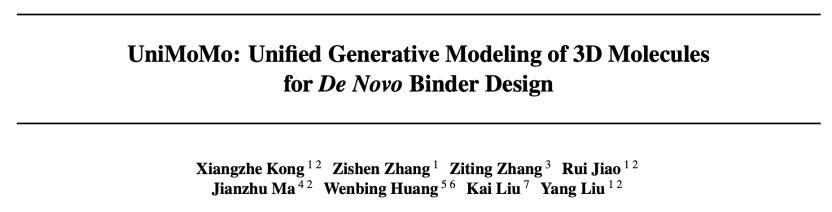
入选ICML 2025,清华/人大/字节提出首个跨分子种类统一生成框架UniMoMo,实现多类型药物分子设计
3 6 Ke· 2025-05-28 10:30
Core Insights - The article discusses the development of a unified generative framework called UniMoMo, which aims to design various types of molecules for drug development by utilizing molecular fragments for unified representation [1][3][8]. Group 1: Framework Overview - UniMoMo is a collaborative effort between Tsinghua University, Renmin University, and ByteDance's AI drug development team, focusing on generating different types of binding molecules for the same target [1][2]. - The framework employs a variational autoencoder to compress the full atomic conformations of molecular fragments and utilizes geometric diffusion modeling in the compressed latent space [1][8]. Group 2: Need for Unified Modeling - Different molecular types have distinct advantages and are suitable for various disease scenarios, necessitating the selection of the most appropriate type for specific therapeutic needs [3][4]. - Existing generative methods typically model only one type of molecule, limiting their ability to meet diverse treatment requirements and leverage commonalities across different molecular types [3][4]. Group 3: Challenges in Generative Modeling - The framework faces significant challenges in molecular representation and the design of generative algorithms due to the structural differences among molecular types [6][7]. - A key challenge is maintaining both atomic-level geometric details and abstracting structural hierarchies in the unified molecular representation [6][7]. Group 4: Design and Performance of UniMoMo - UniMoMo employs a unified representation of all molecular types as graphs composed of molecular fragments, allowing for the retention of atomic-level details and hierarchical structures [8][9]. - The iterative variational autoencoder (IterVAE) compresses all atoms in each block into a point in the latent space, facilitating efficient generative modeling while maintaining structural accuracy [9][11]. Group 5: Evaluation and Results - UniMoMo has been evaluated across multiple structural design tasks, demonstrating superior performance compared to existing single-type generative models in terms of geometric modeling capabilities and cross-modal generalization [11][12]. - In peptide design tasks, UniMoMo achieved significant improvements in key metrics such as structural accuracy and interaction quality, outperforming models like RFDiffusion and PepFlow [12][13]. Group 6: Future Directions - The authors suggest that future work could expand the modeling to include non-natural amino acids and more complex drug forms, enhancing the candidate molecular space [21]. - The unified modeling approach also presents opportunities for improving the controllability and interpretability of generative models, potentially advancing the development of reliable and practical molecular design platforms [21].
减重药的这个生意能玩多久?
Hu Xiu· 2025-05-26 09:26
Core Insights - The market for multi-target drugs is evolving from a focus on entry to a focus on survival amidst complex demands, emphasizing the need for effective and safe drug design [1] - The competition is not just about advanced technology but about identifying and occupying niche markets with lower prices, higher compliance, or more stable efficacy [4][9] - AI plays a crucial role in the early stages of drug development, particularly in multi-target drug design, but its effectiveness diminishes in later stages due to real-world complexities [6][7] Group 1: Multi-Target Drug Development - Multi-target drugs represent a shift towards systematic intervention in metabolic diseases, requiring precise predictions of dynamics and conformational changes [1] - The collaboration between major pharmaceutical companies and AI firms aims to balance safety and efficacy in multi-target drug architectures [1][6] - The design of three-target drugs is seen as a benchmark competition, where the first to market can set pricing and patent advantages [5] Group 2: Market Segmentation and Strategy - Different drug delivery methods cater to distinct patient demographics, with oral medications focusing on adherence and convenience, while long-acting injections target chronic disease management [2] - The launch of new dual-target products like Masitide reflects a strategy to penetrate the market by offering better cost-effectiveness and convenience [2][3] - Companies like Heng Rui and Han Sen are exploring innovative paths to reduce immunogenicity and costs while maintaining long-acting properties [3] Group 3: Future Directions and Challenges - The potential for four-target drugs exists but is currently limited by technological and demand constraints, making it unsuitable as a primary competitive strategy [6] - AI's role is shifting from being the main driver of drug design to supporting structural design, emphasizing the need for a complete data loop and clinical collaboration [6][7] - The success of three-target drugs hinges on a comprehensive understanding of disease networks and the ability to meet clinical needs, rather than merely showcasing technological prowess [7]
医药板块强势崛起 小微盘股分化
Shang Hai Zheng Quan Bao· 2025-05-23 19:32
Market Overview - On May 23, the A-share market showed strong performance before noon but retreated in the afternoon, with the Shanghai Composite Index down 0.94% to 3348.37 points, the Shenzhen Component Index down 0.85% to 10132.41 points, and the ChiNext Index down 1.18% to 2021.50 points [2] - The total market turnover was 118.26 billion yuan, an increase of 42.9 billion yuan compared to the previous trading day [2] - Leading sectors included pharmaceuticals, automotive supply chains, and controllable nuclear fusion, while previously popular micro-cap stocks continued to adjust [2] Pharmaceutical Sector - The pharmaceutical sector experienced a strong surge, with leading innovative drug company Heng Rui Pharmaceutical listing on the Hong Kong Stock Exchange and seeing its stock price rise over 25%, boosting the entire innovative drug industry chain [3] - A-share pharmaceutical stocks rose against the trend, with companies like Hai Chen Pharmaceutical and Zhong Sheng Pharmaceutical hitting the daily limit, while Hua Sen Pharmaceutical and Cheng Da Pharmaceutical also saw gains [3] - Multiple innovative drug companies announced they would showcase their research results at the 2025 American Society of Clinical Oncology (ASCO) annual meeting from May 30 to June 3 [3] - The market's expectations for domestic innovative drugs going global were heightened following the news of a dual-antibody new drug licensing collaboration between Sanofi and Pfizer [3] - According to NextPharma, Chinese pharmaceutical companies completed 41 overseas licensing transactions in Q1 2025, totaling 36.9 billion USD, nearing the total for the entire year of 2023 [3] - From 2015 to 2024, China ranked first globally in the cumulative number of original innovative drugs developed [4] - Zhonghang Securities noted that the innovative drug industry is undergoing profound changes, with companies enhancing their core advantages and transitioning from followers to significant players in international competition [3] Micro-Cap Stocks - Micro-cap stocks initially performed well but began to adjust from mid-week, with high-profile stocks like Nanjing Port and Langsha experiencing significant fluctuations [5] - Wangzi New Materials gained attention from active market funds, achieving a limit-up on May 23 and recording five consecutive trading days of gains, effectively doubling in value [5] - According to Founder Securities, the dominance of micro-cap stocks has been a notable feature of the A-share market this year, with strong mean reversion properties observed in small-cap styles [5] - The outlook for the market suggests that the trend favoring micro-cap stocks may continue, supported by factors such as a stable capital market, ongoing economic transformation, and sustained liquidity [5]




5月23日涨停分析
news flash· 2025-05-23 07:15
Market Overview - A total of 41 stocks hit the daily limit up, with 10 stocks on consecutive limit up days, and 25 stocks failed to close at the limit, resulting in a limit up rate of 62% (excluding ST and delisted stocks) [1] - Focus stocks include significant gains in controllable nuclear fusion concept stocks, with Zhongchao Holdings achieving 9 limit ups in 15 days and Wangzi New Materials achieving 6 limit ups in 10 days [1][17] Chemical and Fiber Sector - The chemical and fiber sector showed strong performance, with Suzhou Longjie achieving 7 limit ups in 11 days and Yong'an Pharmaceutical achieving 6 limit ups in 8 days [2][17] - Recent price fluctuations in certain chemical products have drawn market attention [2] Nuclear Power Sector - The international ITER organization announced the completion of the world's largest and strongest pulsed superconducting magnet system, marking a significant milestone in nuclear fusion research [4] - Stocks related to nuclear power, such as Wangzi New Materials and Shangwei Co., have seen notable increases due to their association with nuclear fusion [5][17] Solid-State Battery Sector - The China Automotive Engineering Society released a group standard for solid-state batteries, defining the technology for the first time [8] - Binhai Energy achieved 5 consecutive limit ups, driven by solid-state battery and merger and acquisition concepts [1][8] Robotics Sector - The CMG World Robot Competition series will take place on May 25 in Hangzhou, with Yushu Technology participating as a partner [9] - Zhongchao Holdings has seen significant stock performance, achieving 9 limit ups in 15 days, attributed to its involvement in robotics and nuclear power [10][17] Pharmaceutical Sector - Heng Rui Pharmaceutical plans to issue 225 million shares in Hong Kong, with its stock rising over 30% upon listing [7] - Stocks like Haishen Pharmaceutical and Haixiang Pharmaceutical have also shown strong performance, driven by their focus on raw materials and CRO services [7][17] Other Notable Stocks - Stocks in the beauty and healthcare sectors, such as Liren Lizhuang and Yixin Hall, have also performed well, with multiple limit ups attributed to their respective market strategies [14][17]



AI医疗概念走高 贝瑞基因涨停
news flash· 2025-05-23 02:40
Core Viewpoint - The stock of Berry Genomics has reached its daily limit, with other companies in the sector such as Celgen, Chuangyi Huikang, Tigermed, Anbiping, Meinian Health, and BGI also experiencing gains. This surge is linked to the announcement from Insilico Medicine's CEO, Alex Zhavoronkov, regarding the potential market entry of the first drugs entirely conceived by artificial intelligence by 2030 [1] Group 1 - Berry Genomics has hit the daily trading limit, indicating strong market interest and investor confidence [1] - Other companies in the healthcare and biotechnology sector, including Celgen, Chuangyi Huikang, Tigermed, Anbiping, Meinian Health, and BGI, have also seen their stock prices rise in response to the news [1] - Insilico Medicine's CEO has projected that the first AI-conceived drugs could be available by 2030, highlighting the growing role of artificial intelligence in drug development [1]

5月17日|财经简报 A股震荡黄金暴跌 国际石油上涨
Sou Hu Cai Jing· 2025-05-17 01:26
Financial Market Dynamics - A-shares experienced fluctuations with the Shanghai Composite Index down by 0.4%, Shenzhen Component down by 0.07%, and ChiNext down by 0.19%, with trading volume shrinking to 1.09 trillion yuan. The logistics, beauty care, insurance, and liquor sectors performed poorly, but over 3,000 stocks rose, including a limit-up for Yuzhisanxia A [1] - COMEX gold futures fell below $3,200 per ounce, marking a four-month low, with technical support seen at $3,140-$3,150, indicating a continued bearish trend [1] Policy and Economic - The first home down payment ratio in China has been reduced to 15%, and 25% for second homes, leading to a rebound in transaction volumes. In Nanjing, new home subscriptions in June increased by 29.8% month-on-month, and second-hand home transactions reached a year-to-date high, showing signs of price stabilization [5] - The Federal Reserve, led by Powell, is set to reassess its monetary policy framework, potentially moving away from the average inflation targeting approach to a more flexible strategy [6] - The U.S. and China have paused some tariff increases, with 24% tariffs suspended for 90 days and remaining tariffs reduced to 10%. China has refused to lift rare earth export controls, and the U.S. attempts to exchange tariff reductions for rare earth concessions have not succeeded [8] Industry and Company Dynamics - Starbucks is considering selling its business in China due to competition from local brands like Luckin Coffee, and is evaluating the sale of part of its stake to address the pressure [9] - AI pharmaceutical company Insilico Medicine has submitted its third IPO application to the Hong Kong Stock Exchange, with its AI-generated drug Rentosertib completing phase II clinical trials but accumulating losses exceeding $450 million [11] - The CEO of Novo Nordisk has resigned due to declining competitiveness in the obesity drug market, with Eli Lilly's Zepbound prescriptions surpassing its Wegovy [12] - Hungary's battery industry has faced a significant downturn, with production plummeting by 41% year-on-year, as government-led green transitions have failed to boost the economy [13] - Canadian oil exports to China have surged, with daily imports reaching 207,000 barrels, significantly exceeding historical levels, driven by tensions in U.S.-Canada relations [13] Company Announcements and Events - Tai Ling Microelectronics has reduced its stake by 2% to 6.95% as part of a divestment by the National Integrated Circuit Industry Investment Fund [14] - A fatal accident occurred at the Mengjin coal mine, a wholly-owned subsidiary of Dayou Energy, leading to a production halt for investigation [15] - Haixing Electric Power has established an industrial fund with an investment of 400 million yuan to focus on new energy and IoT sectors [16]
康弘药业(002773) - 2025年5月15日投资者关系活动记录表
2025-05-15 09:54
Group 1: Clinical Trials and Research - KH631 and KH658 are currently in clinical trials, with safety and efficacy data not yet fully compiled [2] - KH631's clinical data is expected to be disclosed at the 2025 ARVO conference [2] - The company has a diverse R&D system covering traditional Chinese medicine, antibody drugs, gene therapy, and small molecule drugs [10] Group 2: Financial Performance and Projections - In 2024, the company achieved a revenue of CNY 4,452,657,799, a year-on-year increase of 12.51%, and a net profit of CNY 1,191,230,760.93, up 14.02% [14] - For 2025, the company projects a revenue growth of 5%-15% and a net profit growth of 5%-15% compared to 2024 [9] - R&D expenses in 2024 increased by 33.57% to CNY 604,378,287.33 [8] Group 3: Strategic Focus and Market Position - The core competitive advantage lies in strategic layout and continuous innovation across various product lines [3] - The company is focusing on enhancing internal control management and performance assessment to improve overall management efficiency [26] - The company maintains a strong market position in the anti-VEGF sector, with confidence in overcoming competition from global brands [6] Group 4: Product Development and Pipeline - Key products in clinical trials include KH631 for nAMD, KH658 for nAMD, and KH617 for advanced solid tumors [5] - The company is advancing the clinical trials of KH110 for Alzheimer's disease and KH109 for anxiety [15] - The company is actively responding to market competition and regulatory changes, particularly in the traditional Chinese medicine sector [8] Group 5: Future Outlook and Industry Trends - The pharmaceutical industry is viewed as a "perpetual sunrise industry" with significant growth potential [13] - The company is committed to increasing R&D investments to provide high-quality, cost-effective products [22] - The company is exploring international collaboration opportunities to enhance its global market presence [30]

拉脱维亚人,20多岁实现财务自由,又在中国干出一个IPO
创业邦· 2025-05-15 03:11
Core Viewpoint - Insilico Medicine is a generative AI-driven drug discovery company that has recently filed for an IPO in Hong Kong, having achieved a post-financing valuation of over $1.3 billion, marking its status as a unicorn [2][3]. Company Overview - Founded in 2014 by Alex Zhavoronkov, Insilico Medicine initially focused on AI applications in basic biological data but has since evolved into a full-fledged AI-driven drug discovery and development company [5][8]. - The company has developed over 20 drug candidates that are currently in the IND and clinical stages, with eight of these candidates already in clinical trials [2][10]. Funding and Investment - Insilico Medicine has attracted significant investment from various global and domestic capital sources, including A-level Capital, Warburg Pincus, Temasek, and several Chinese state-owned investment firms [3][17]. - The company completed a $123 million E-round financing in early 2025, further solidifying its financial backing and industry position [14]. Business Model and Operations - The company combines its generative AI platform, Pharma.AI, with robust drug development capabilities, allowing it to identify new drug targets and optimize clinical development [18]. - Insilico Medicine has three drug candidates that have been licensed out, with total contract values exceeding $2 billion [18]. Financial Performance - Insilico Medicine's revenue projections for 2022 to 2024 are $30.15 million, $51.18 million, and $85.83 million, respectively, with gross margins improving from 63% to 90% [17]. - Despite revenue growth, the company has reported losses of $220 million, $210 million, and $17.01 million over the past three years, indicating ongoing financial challenges [19]. Industry Context - The AI drug discovery sector is rapidly evolving, with significant investment activity noted in 2023 and 2024, reflecting a growing interest in AI's potential to enhance drug development efficiency [21]. - Insilico Medicine and another company, Crystal Bio, represent leading players in the AI drug discovery space, each adopting different business models—Insilico focuses on self-developed drug pipelines, while Crystal Bio operates on an AI+CRO model [22]. Challenges and Considerations - Industry experts highlight that while AI can significantly improve preclinical research efficiency, the transition to successful clinical outcomes remains uncertain, and the financial burden of multiple drug pipelines may pose risks [23].