
全国统一大市场建设

Search documents
分红稳增显担当 主业提质启新程——辉隆股份以坚实业绩回馈投资者
Quan Jing Wang· 2025-11-18 10:23
Core Viewpoint - The profit distribution plan announced by Huillong Co., Ltd. reflects the company's confidence in its development amidst cyclical fluctuations in the agricultural materials industry, with a cash dividend of 0.5 yuan per 10 shares, totaling nearly 46 million yuan, emphasizing the priority of investor returns [1][2]. Financial Performance - In the first three quarters of 2025, Huillong achieved total operating revenue of 12.26 billion yuan, with a significant increase in core profitability, as the net profit attributable to the parent company reached 80.14 million yuan, a year-on-year growth of 33.63% [1]. - The net cash flow from operating activities was 438 million yuan, an increase of 164.39% year-on-year, providing a solid foundation for the dividend plan and reflecting effective management [1][2]. Business Strategy - Huillong has established a robust distribution network with over 70 distribution centers and more than 4,000 franchise stores across over 20 agricultural provinces in China, maintaining a leading position in the agricultural materials circulation sector [2]. - The company has expanded its fertilizer export scale and optimized its business structure by focusing on high-margin products, supported by six production bases that enhance efficiency and capacity [2]. Future Outlook - The construction of a unified national market and rural revitalization strategy presents long-term opportunities for the agricultural materials industry, while the synergy between distribution channels and refined chemical technology will drive growth [3]. - The profit distribution plan serves as a summary of past performance and a commitment to future development, aiming to deepen core business upgrades and sector collaboration to achieve higher quality growth in agricultural modernization [3].

维护国家法治统一 保障全国统一大市场建设(深入学习贯彻习近平新时代中国特色社会主义思想·原创性概念标识性概念纵横谈)
Ren Min Ri Bao· 2025-11-17 22:01
Core Concept - The concept of "maintaining national legal unity" is a significant theoretical innovation in Xi Jinping's legal thought, emphasizing the importance of a unified legal framework for the socialist market economy [1][2]. Group 1: Importance of National Legal Unity - Maintaining national legal unity is crucial for building a unified national market and ensuring the efficient operation of a high-level socialist market economy [3][4]. - The natural alignment between the universal qualities of law and the demands for market unification highlights the necessity of a unified legal framework to reduce transaction costs and facilitate the free flow of goods and resources [3][4]. Group 2: Strategic Deployment and Legal Mechanisms - The 20th Central Committee's Fourth Plenary Session has strategically deployed measures to strengthen the implementation and supervision of constitutional laws, aiming to enhance the legal mechanisms for maintaining national legal unity [2]. - The establishment of a robust legal framework is essential for accelerating the construction of a unified national market and a high-level socialist market economy [2][4]. Group 3: Challenges and Solutions - Current issues affecting national legal unity include local protectionism and legislative discrepancies that hinder the establishment of a unified market [6]. - To address these challenges, it is necessary to improve the legal system comprehensively, covering the entire process of law creation, implementation, supervision, and guarantee [6][11]. Group 4: Fair Competition and Equal Treatment - The principle of equal treatment for private and public economic entities is fundamental, ensuring that all types of economic organizations have equal legal status and market opportunities [5]. - Strengthening fair competition mechanisms is vital to eliminate local protection and administrative monopolies, thereby fostering a more equitable market environment [5][9]. Group 5: Legislative and Judicial Mechanisms - Enhancing the legislative review system is crucial for maintaining the unity of the legal framework, preventing overreach and redundant legislation [7][8]. - The establishment of a unified legal application mechanism is necessary to resolve discrepancies in judicial decisions, ensuring consistent legal interpretations and applications [12][13]. Group 6: Implementation and Enforcement - The effectiveness of laws relies on their implementation, necessitating a unified enforcement and judicial system to protect the rights of all economic entities [11][12]. - Addressing issues such as inconsistent administrative enforcement and judicial decisions is essential for achieving a cohesive legal environment [12][13]. Group 7: Future Directions - The construction of a unified national market and a high-level socialist market economy is both a challenge and a long-term endeavor, requiring a comprehensive approach to enhance the legal framework [14]. - Continuous efforts to adapt legal mechanisms to changing economic and social structures will be necessary to maintain market unity and economic security [14].
异地国资开始“抱团”设基金
母基金研究中心· 2025-11-17 08:50
Core Viewpoint - A new investment trend is emerging where local government investment funds and state-owned funds are collaborating across regions to establish funds or invest in enterprises, reflecting innovative cooperation models among local governments [1][5]. Group 1: Regional Collaboration - Different regions' guiding funds are increasingly cooperating, allowing for the pooling of resources and achieving complementary advantages and synergies [4][5]. - Guangdong has already implemented regional collaborative funds, with significant initiatives such as the establishment of a "provincial collaborative development mother fund," which is a rare and innovative approach in the country [2][3]. Group 2: Investment Focus and Strategy - The newly established Hubei Jiangcheng Huafa Industrial Investment Fund, with a total scale of 10 billion yuan, focuses on hard technology sectors such as integrated circuits and optical communication [1]. - Local governments are now prioritizing cross-regional cooperation to share resources and facilitate project implementation, moving beyond the previous focus on "fund registration locations" [3][5]. Group 3: Market-Oriented Management - The management of mother funds is evolving, with a shift towards market-oriented decision-making mechanisms, emphasizing the selection of capable management teams to enhance operational efficiency [6]. - Trust and full authorization from local mother funds to management teams are crucial for successful collaboration, as seen in the case of Hubei's government investment guiding fund [6]. Group 4: Future Trends - The cross-regional investment model is expected to become a new norm for local governments, aligning with national policies aimed at building a unified market [5]. - The mother fund industry is maturing, with increased interaction between different regional mother funds, reflecting the evolution and sophistication of the sector [7].


国家统计局:继续扩大国内需求、优化市场竞争环境等,促进物价合理回升
Sou Hu Cai Jing· 2025-11-14 12:30
Core Viewpoint - In October 2025, the Consumer Price Index (CPI) in China showed a year-on-year increase of 0.2%, reversing a previous decline of 0.3% in September, indicating a slight recovery in consumer prices [2] Economic Indicators - The CPI rose by 0.2% month-on-month in October, reflecting a positive change in consumer prices [2] - Despite the increase in CPI, the overall market demand remains insufficient, leading to prices operating at a low level [2] Government Measures - The spokesperson from the National Bureau of Statistics emphasized the need to continue expanding domestic demand and to deepen the construction of a unified national market [2] - There is a focus on optimizing the market competition environment and addressing capacity issues in key industries to improve supply-demand relationships and promote reasonable price recovery [2]
10月全国规模以上工业增加值同比增长4.9%|快讯
Hua Xia Shi Bao· 2025-11-14 03:56
Group 1: Industrial Growth - In October, the industrial added value of large-scale enterprises in China increased by 4.9% year-on-year and 0.17% month-on-month [2] - By sector, mining industry added value grew by 4.5%, manufacturing by 4.9%, and electricity, heat, gas, and water production and supply by 5.4% [2] - Equipment manufacturing added value rose by 8.0%, and high-tech manufacturing increased by 7.2%, outpacing the overall industrial growth by 3.1 and 2.3 percentage points respectively [2] - From January to October, the industrial added value increased by 6.1% year-on-year [2] Group 2: Economic Types and Product Performance - State-owned enterprises saw a 6.7% year-on-year increase in added value, while joint-stock enterprises grew by 5.2%, foreign and Hong Kong, Macao, and Taiwan-invested enterprises by 4.0%, and private enterprises by 2.1% [2] - Notable product performance included 3D printing equipment, which grew by 30.8%, new energy vehicles by 19.3%, and industrial robots by 17.9% [2] Group 3: Service Sector Growth - The service sector also experienced stable growth, with the service production index increasing by 4.6% year-on-year in October [3] - Key sectors within services included information transmission, software, and IT services, which grew by 13.0%, leasing and business services by 8.2%, and financial services by 5.6%, all exceeding the overall service production index growth [3] - From January to October, the service production index increased by 5.7% year-on-year [4]

国家统计局:下阶段要继续扩大国内需求,推进重点行业产能治理,促进物价合理回升
Di Yi Cai Jing· 2025-11-14 03:10
Group 1 - The core viewpoint emphasizes the need to deepen the construction of a unified national market and optimize the market competition environment [1] - The next phase will focus on expanding domestic demand and advancing the governance of production capacity in key industries [1] - The goal is to improve supply-demand relationships and promote a reasonable recovery in prices [1]
权威访谈 | 坚持有效市场和有为政府相结合 推动建设强大国内市场——访国家市场监督管理总局党组书记、局长罗文
Xin Hua She· 2025-11-13 07:16
Group 1: National Unified Market Construction - The construction of a national unified market is a significant strategic decision made by the central government, emphasizing the need to eliminate barriers to market access and enhance market vitality [2][3] - Market regulatory authorities will focus on reforming registration capital systems and improving exit mechanisms for businesses to promote a more dynamic market environment [2] - Efforts will be made to address local government interventions that distort market mechanisms and to enhance fair competition through rigorous policy reviews [3] Group 2: Activating Business Entities - The vitality of business entities is crucial for economic development, and regulatory bodies will ensure equal treatment of various ownership economies to foster complementary advantages [4] - Regular evaluations of business development quality will be conducted to guide entities towards high-quality growth, alongside improvements in corporate governance and risk management [4][5] - Measures will be taken to reduce the burden on businesses by eliminating illegal fees and enhancing communication channels for addressing operational challenges [5][6] Group 3: Quality Improvement Initiatives - The government aims to enhance quality standards as a core element of industrial competitiveness, with a focus on quality-driven enterprise growth [7][8] - Initiatives will include supporting leading enterprises in quality innovation and establishing a collaborative ecosystem for quality management across industries [8] - Local governments will be encouraged to develop quality strategies tailored to their resources, promoting sustainable urban development through quality improvements [8]
坚持有效市场和有为政府相结合 推动建设强大国内市场——访国家市场监督管理总局党组书记、局长罗文
Xin Hua She· 2025-11-13 04:53
Group 1: National Unified Market Construction - The construction of a national unified market is a major strategic decision made by the central government, emphasizing the need to eliminate barriers to market access and improve market quality [2][3] - Market regulatory authorities will focus on reforming the registration capital system and improving the exit mechanisms for businesses to enhance market vitality [2] - Efforts will be made to address local government interventions that distort market mechanisms and to promote fair competition through enhanced regulatory scrutiny [3] Group 2: Activating Business Entities - The market regulatory department aims to enhance the vitality of various business entities by treating all forms of ownership equally and promoting their complementary advantages [4] - Regular evaluations of business entity development quality will be conducted to guide them towards high-quality growth [4][5] - Measures will be taken to reduce the burden on businesses by eliminating illegal fees and improving communication channels for addressing operational challenges [5] Group 3: Quality Improvement Initiatives - The proposal to build a quality-oriented nation is a key initiative for promoting high-quality economic development, with a focus on enhancing quality standards and brand building [6] - The market regulatory department will support leading enterprises in quality innovation and management to improve product reliability and competitiveness [6][7] - Initiatives will be implemented to strengthen quality across supply chains and local governments, promoting sustainable urban development through quality enhancement [7]
中国如何扩内需?外资怎样共享机遇?外国使节追问“十五五”
Nan Fang Du Shi Bao· 2025-11-13 04:16
Group 1 - The core focus of the meeting was on China's economic transformation, particularly in expanding domestic demand and promoting green low-carbon transition, which are crucial for both China's high-quality development and international economic cooperation [1][7][15] - The "15th Five-Year Plan" was highlighted as a significant strategic framework for China's development over the next five years, emphasizing the importance of modernization and international collaboration [4][11] - Specific measures to increase domestic consumption were discussed, including raising residents' income, improving the efficiency of wealth distribution, and removing consumption restrictions [7][8] Group 2 - The meeting addressed the concerns of many developing countries regarding the evolution of cooperation under the Belt and Road Initiative, particularly in manufacturing and digital sectors [11][12] - The discussion included China's resilience in the face of trade wars, with data indicating that approximately 80% of Chinese exports remain competitive even with a 30% price increase [15][16] - The dialogue also covered the challenges of market segmentation and local protectionism, with commitments to address these issues through systematic reforms [15][16]
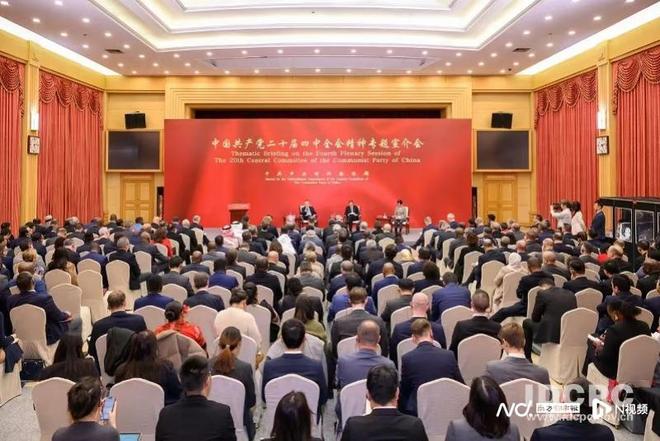
贯彻落实党的二十届四中全会精神权威访谈丨坚持有效市场和有为政府相结合 推动建设强大国内市场——访国家市场监督管理总局党组书记、局长罗文
Xin Hua She· 2025-11-13 02:34
Group 1: National Unified Market Construction - The construction of a national unified market is a significant strategic decision made by the central government, emphasizing the need to eliminate barriers to market access and improve market quality [2][3] - Market regulatory authorities will focus on reforming the registration capital system and improving the exit mechanisms for businesses to enhance market vitality [2] - Efforts will be made to address local government interventions that distort market mechanisms and to promote fair competition through enhanced regulatory scrutiny [3] Group 2: Activating Business Entities - The market regulatory department aims to enhance the vitality of various business entities by treating all forms of ownership equally and promoting their complementary advantages [4] - Regular evaluations of business development quality will be conducted to guide entities towards high-quality growth [4][5] - Measures will be implemented to reduce the burden on businesses, including the elimination of illegal fees and the establishment of effective communication channels for addressing operational challenges [5] Group 3: Quality Improvement Initiatives - The proposal to build a quality-driven economy is a key initiative for high-quality economic development, with a focus on enhancing quality standards and brand building [6][7] - The market regulatory department will support leading enterprises in quality innovation and management, aiming to improve product quality and reliability [6] - Initiatives will be taken to strengthen the quality of industrial chains and local economies, promoting sustainable urban development through quality enhancement strategies [7]