消费升级

Search documents
多项指标折射经济运行向好态势
Zhong Guo Zheng Quan Bao· 2026-01-16 20:47
Group 1 - The core viewpoint of the articles indicates that China's economic growth target for 2025 is expected to be achieved smoothly, with positive signals from various macro indicators and logistics data reflecting a recovery in demand and economic vitality [1][4] - High-frequency data shows that China's exports continue to accelerate, with a total foreign trade import and export value reaching 45.47 trillion yuan in 2025, a historical high, and a year-on-year growth of 3.8% [1][2] - Infrastructure investment is showing signs of recovery, with excavator sales in December 2025 reaching 23,095 units, a year-on-year increase of 19.2%, and domestic sales growing by 10.9% [2] Group 2 - The logistics sector is demonstrating economic vitality, with the postal industry achieving a business income of 1.8 trillion yuan and a delivery volume of 216.5 billion pieces in 2025, reflecting year-on-year growth of 6.4% and 11.5% respectively [3] - The railway sector also reported significant growth, with a freight volume of 4.066 billion tons and a passenger volume of 4.255 billion people in 2025, marking a year-on-year increase of 4.2% [3] - Various policies aimed at promoting economic development have been introduced, including a reduction in structural monetary policy tool rates and early issuance of special bonds to support consumption [5]
准备过年的年轻人,快被高端炒货吓哭了
36氪· 2026-01-16 14:41
Core Viewpoint - The article discusses the transformation of traditional snack brands, particularly high-end roasted seeds and nuts, into luxury products, highlighting the impact on consumer spending and market dynamics [4][25][70]. Group 1: Market Dynamics - The average transaction price for high-end roasted snacks reached 68.3 yuan, a year-on-year increase of 14.7% [24]. - The market for high-end roasted snacks is rapidly growing, with projections indicating that the snack industry in China will approach 1.4 trillion yuan by 2024, with high-end roasted snacks gaining a larger market share [37]. - Brands like Xueji and Qiwang have expanded significantly, with Xueji opening over 1,000 stores and Qiwang exceeding 760 stores, indicating a strong growth trend [12][33]. Group 2: Brand Strategies - Xueji's transformation from a street vendor to a high-end store was facilitated by a 600 million yuan Series A financing round, which allowed for rapid expansion and a focus on high-margin products [30][31]. - Both Xueji and Qiwang have adopted premium pricing strategies, with products like Qiwang's nuts priced above 100 yuan per kilogram, reflecting a shift towards luxury branding [34][36]. - The brands utilize "atmosphere marketing" and "source tracing" to enhance perceived value, with Xueji emphasizing high-quality ingredients from specific regions [43][49]. Group 3: Consumer Behavior - Young consumers, despite having higher incomes, are increasingly cautious about spending on snacks, with many expressing disbelief at the high prices of roasted seeds and nuts [17][21]. - The article notes a shift in consumer perception, where traditional snacks are now viewed as luxury items, leading to a change in purchasing behavior during festive seasons [15][61]. - The high-end positioning of these brands appeals to middle-class consumers who seek to showcase their status through premium purchases, while budget brands target price-sensitive consumers [60][64]. Group 4: Competitive Landscape - The article contrasts high-end brands like Xueji with budget-friendly options that focus on low prices and high volume sales, highlighting the different strategies employed to capture market segments [58][66]. - Xueji's high-cost structure necessitates a focus on premium products, while budget brands benefit from lower operational costs and a focus on community-based sales [69][70]. - Both strategies have proven successful, but they face inherent risks, such as potential consumer fatigue with high prices or increased competition in the budget segment [70][71].


新“国补”落地两周 西安智能家电数码市场换新潮涌动
Xin Lang Cai Jing· 2026-01-16 10:51
Core Viewpoint - The new "national subsidy" policy is stimulating a wave of consumer upgrades in the electronics and home appliance market, effectively activating market potential and driving sustained consumption growth [1]. Group 1: Market Impact - Retailers are integrating national subsidies with manufacturer subsidies and trade-in programs, leading to significant sales increases, with daily sales reaching 100,000 to 150,000 yuan in some stores during the holiday period [3]. - The introduction of the subsidy has made energy-efficient appliances more attractive to consumers, with one customer noting savings of nearly 1,000 yuan when upgrading to a new air conditioner [3]. Group 2: Consumer Behavior - The visibility of subsidy information in stores is enhancing customer engagement, with many consumers preferring face-to-face communication for policy details and product inquiries [5]. - The subsidy policy has not only boosted smartphone sales but also positively impacted the sales of related products such as smartwatches and headphones, indicating a broader ecosystem effect [5]. Group 3: Economic Implications - The ongoing effects of the "national subsidy" policy are transitioning from individual product subsidies to a broader impact on smart ecosystem consumption and lifestyle upgrades, contributing to high-quality economic development [7].
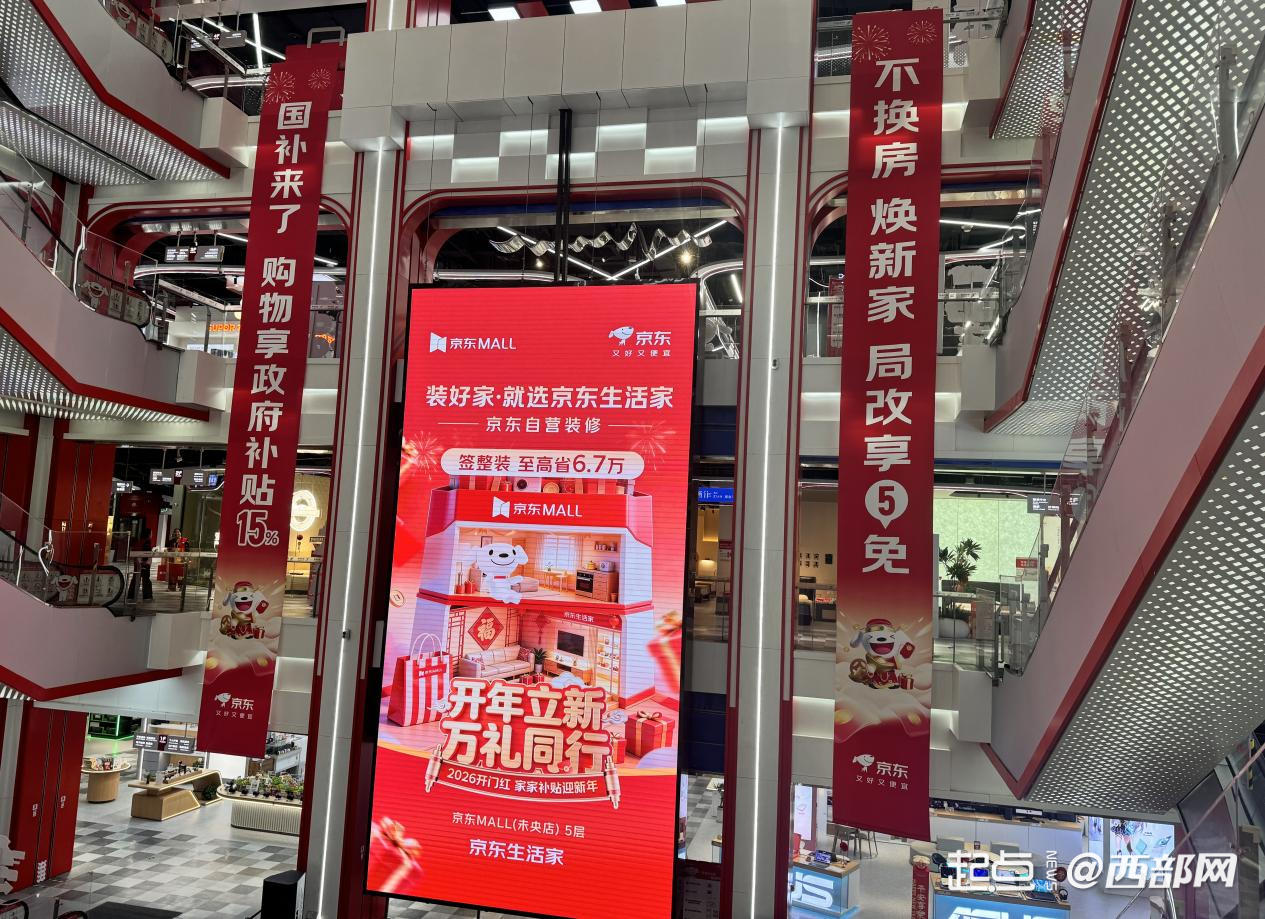
“新国补”政策落地 汽车、家电等消费需求持续升温
Yang Shi Xin Wen· 2026-01-16 06:25
Group 1 - Ningxia's "old for new" policy for automobiles and home appliances has been officially implemented, stimulating consumer demand for cars, home appliances, and digital products [1] - The policy features a more precise implementation method, with subsidies for scrapping and updating cars requiring consumers to obtain qualification through the "My Ningxia" app, and the subsidy for purchasing new energy vehicles can reach up to 12% of the vehicle price, capped at 20,000 yuan [1] - The first phase of the automobile "old for new" program saw over 7,600 registrations, with 4,226 winners selected through a lottery, and home appliance purchases have led to a direct consumption boost of 31.9 million yuan [2] Group 2 - In Anhui's Linquan County, government-issued consumption vouchers have significantly stimulated market activity, with digital product sales increasing as a result [3][4] - The local government has issued consumption vouchers applicable to digital products, leading to a notable rise in sales, with one consumer saving 500 yuan on a smartphone purchase [3][4] - The trend towards quality and smart products is evident, with a shift from traditional goods to intelligent products in rural areas, facilitated by improved supply chains and logistics [4] Group 3 - Guangdong's "Guangdong Goods Go Global" spring consumption promotion event has been launched, aiming to invigorate consumer activity through online and offline collaboration [5] - The first promotional event in Foshan showcased AI home appliances and energy-saving products, with over 6,000 enterprises and major commercial platforms participating in upcoming promotional activities [6] - The government is leveraging subsidies and partnerships with platforms and enterprises to ensure good products are available at competitive prices, enhancing sales channels [6]
扩大优质消费品和服务供给 推动贸易创新发展——访商务部党组书记、部长王文涛
Jing Ji Ri Bao· 2026-01-15 21:30
Core Insights - The article emphasizes the importance of boosting consumption and expanding the supply of quality consumer goods and services as part of China's 14th Five-Year Plan and the 2026 economic work priorities [1][2]. Group 1: Consumption Boosting Strategies - The Ministry of Commerce aims to maintain steady growth in the consumer market, with a projected retail sales total exceeding 50 trillion yuan for the year, reflecting a 4.0% increase in the first 11 months [1][2]. - The focus will be on three key areas: fostering new growth points in service consumption, optimizing the implementation of the old-for-new policy for consumer goods, and stimulating consumption in lower-tier markets [2][3]. Group 2: Service Consumption Growth - The Ministry identifies several fast-growing service consumption sectors, including transportation, housekeeping, and online entertainment, and plans to support these areas through policy improvements and promotional activities [2]. - Events like "Service Consumption Season" and "Chinese Food Festival" will be organized to enhance local service consumption brands [2]. Group 3: Trade Innovation and Development - The Ministry plans to enhance trade through three pillars: goods trade, service trade, and digital trade, while addressing challenges posed by global economic uncertainties [3][4]. - A focus on diversifying markets and promoting balanced trade development will be prioritized, including initiatives to expand imports and support cross-border e-commerce [4][5]. Group 4: High-Level Opening Up - The Ministry will actively expand autonomous opening in various service sectors and promote the implementation of zero-tariff measures for all trading partners in Africa [6]. - Efforts will be made to enhance the global supply chain's efficiency and promote international cooperation in emerging sectors like green development and digital economy [6][7]. Group 5: Global Economic Governance Participation - The Ministry will participate actively in significant upcoming events, including the APEC "China Year" and the 14th WTO Ministerial Conference, to advocate for multilateralism and free trade [7].
光大信用卡激活消费市场内生动力
Xin Lang Cai Jing· 2026-01-15 18:26
Core Viewpoint - The company is enhancing its credit card services to meet diverse consumer needs, focusing on consumption upgrades and providing tailored financial solutions for various demographics, including the elderly and new urban residents [1][2][3][4] Group 1: Consumer Demand and Service Enhancement - The company is leveraging a "dual approach" of "precise profiling + scene penetration" to cater to the evolving consumption patterns, particularly targeting the Z generation as the main consumer force [1] - A three-dimensional service system has been established, integrating card products, scene ecosystems, and payment discounts to create customized solutions for different customer segments [1] - The company is launching a new benefits system on January 1, 2026, expanding the range of benefits to nearly twenty categories, enhancing both the richness of benefits and the coverage of scenarios [2] Group 2: Focus on Elderly and New Urban Residents - The company is addressing the needs of the elderly population, which exceeds 300 million in China, by implementing an "age-friendly innovation" strategy, including a simplified app interface for easier access to financial services [3] - For new urban residents, the company is reducing barriers to access financial services by offering products that cater to their specific needs, such as the Sunshine Classic Platinum Card and Sunshine Elite Platinum Card, which provide various benefits to facilitate their integration into urban life [4] - The comprehensive upgrade of value-added services allows new urban residents to easily access diverse benefits related to travel, dining, and health services, ensuring they receive practical financial support [4]

神宇股份:2025年扣非净利润预计翻倍,主业复苏显著但归属净利微降
Hua Er Jie Jian Wen· 2026-01-15 12:48
Core Viewpoint - The company forecasts a significant increase in non-recurring net profit, while the attributable net profit is expected to decline, indicating a strong recovery in its core business despite accounting discrepancies [1][3]. Financial Performance - Attributable net profit is projected to be between 70.5 million and 79.5 million yuan, a year-on-year decrease of 0.05% to 11.37% [1]. - Non-recurring net profit is expected to increase by 83.86% to 107.47%, reaching between 70.08 million and 79.08 million yuan [1][3]. - The decline in apparent profit is attributed to a significant drop in non-recurring gains from the previous year, where a one-time investment gain of 41.42 million yuan was recorded [2][3]. Business Recovery - The core business revenue has increased year-on-year, driven by expanded downstream demand and consumption upgrades [3]. - The company’s main products, including RF connectors and cable components, are likely benefiting from the recovery in demand related to 5G base station construction and data center expansion [3]. Cost Management - A notable reduction in stock incentive expenses has occurred, which positively impacts profit margins [4]. - The decrease in these non-cash costs suggests either the conclusion of the incentive plan or a failure to meet performance targets, both of which free up profit space in the short term [4]. Concerns and Uncertainties - The close alignment of attributable and non-recurring net profits (a difference of only 420,000 yuan) indicates a lack of non-core income, raising concerns about the sustainability of profit growth [5]. - The company has not disclosed specific growth rates or gross margin changes, leaving questions about the quality and sustainability of the reported growth [5]. - The wide range in the earnings forecast (900 million yuan) suggests uncertainty regarding revenue recognition or cost allocation in the fourth quarter [6]. Future Outlook - The upcoming annual report will provide clarity on the sustainability of the strong growth in non-recurring net profit and the overall health of the core business [7]. - Key questions remain regarding whether the growth is cyclical or structural, the relationship between revenue growth and gross margin, and the performance of cash flow [7].

冲刺“A+H”双融资平台!国恩股份通过港交所聆讯,“一体两翼”构建全球化新版图
Xin Lang Cai Jing· 2026-01-15 12:48
Core Viewpoint - Guoen Technology Co., Ltd. is set to achieve a dual listing in Hong Kong after passing the main board listing hearing, aiming to enhance its "chemical new materials + health" dual business strategy and accelerate overseas capacity layout [1][4]. Group 1: Business Strategy - The company has established a unique "one body, two wings" business structure, leveraging vertical integration to create significant scale advantages [1]. - In the chemical sector, Guoen is the second-largest supplier of organic polymer modified materials and organic polymer composite materials in China, with a market share of approximately 2.5% as of 2024 [1]. - The health segment, through its subsidiary Dongbao Biological, has formed a complete closed loop in the collagen industry, benefiting from domestic substitution and consumption upgrades [2]. Group 2: Financial Performance - Guoen has demonstrated robust revenue growth, with a compound annual growth rate (CAGR) of 19.6% from fiscal year 2022 to fiscal year 2024, achieving revenues of RMB 134.06 billion, RMB 174.39 billion, and RMB 191.88 billion respectively [3]. - The company recorded revenue of RMB 174.44 billion in the first ten months of fiscal year 2025, continuing its stable growth trajectory [3]. - The combination of stable chemical business and high-barrier health business enhances overall operational resilience and profitability [3]. Group 3: Future Outlook and Expansion Plans - The company plans to establish a new production base in Thailand to better serve overseas customers and mitigate trade barriers [4]. - Domestic capacity expansion is planned in Yixing, Jiangsu, to further consolidate market share [5]. - A regional headquarters will be set up in Hong Kong to deepen global research and development and capital operations [6].

时尚消费驱动生活方式全面扩容
Bei Jing Shang Bao· 2026-01-15 12:14
Core Insights - Fashion consumption is becoming a significant driver of economic growth and urban vitality, characterized by a dialectical unity of "change and constancy" [1][2][3] - The current fashion consumption landscape has expanded beyond traditional categories like apparel and jewelry to include lifestyle products and services such as smart wearables, automobiles, home goods, entertainment, sports, and beauty [1][3][4] Industry Trends - Two major transformations in fashion consumption are emerging: 1. The integration of mixed-use formats, such as "retail + dining" and "retail + exhibitions," which deepens the connection between brands and consumers [1][4] 2. Rapid growth in health and self-care service consumption, with new store openings in major cities like Beijing, Shanghai, Guangzhou, and Shenzhen projected to increase by 25% to 55% by Q3 2025, significantly outpacing traditional retail and dining [1][4] Market Opportunities - The Chinese consumption market presents two structural opportunities: 1. Significant room for service consumption upgrade, with a 10-20 percentage point gap compared to developed economies in service expenditure [2][6] 2. Potential for increased spending by international tourists, with a 50% year-on-year growth in inbound visitors following the expansion of visa-free policies [6] Consumer Behavior - The definition of fashion consumption includes both changing trends and the enduring essence of leadership in consumer preferences, with a shift towards lifestyle-oriented consumption as income levels rise and consumer demographics evolve [3][5] - The establishment of flagship stores serves as a barometer for fashion consumption trends, with first-tier cities like Beijing and Shanghai accounting for 55% of new flagship stores in the first half of 2025 [5] City-Level Insights - Fashion consumption in China can be categorized into three tiers: 1. First tier: Beijing and Shanghai, which attract high-net-worth families and international tourists [5] 2. Second tier: Cities like Shenzhen, Chengdu, and Guangzhou, which are economic hubs with high consumer spending potential [5] 3. Third tier: Smaller cities where e-commerce and social media are driving fashion consumption among middle-income groups [5]


中国消费走出新赛道,跳出日本低欲望陷阱,升级逻辑藏惊喜
Sou Hu Cai Jing· 2026-01-15 09:53
Core Insights - The recent discussions around the book "In the Light of Day" highlight concerns about whether China's consumption will fall into a "low-desire" trap similar to Japan's "lost thirty years" [1] Group 1: Consumption Trends - The China Online Consumption Brand Index (CBI) reached 62.65 in Q3 2025, marking a 4.4% increase from the same period in 2023 and a 0.92% increase from 2024, indicating a consistent quarterly growth since 2023 [4] - The CBI focuses on the proportion of high-quality brand purchases, reflecting a shift in consumer preferences towards quality over mere availability [4] - Japanese consumers, often labeled as "low-desire," are also exhibiting similar trends, with a notable presence of new local brands in the fashion market, indicating a preference for design and craftsmanship [6] Group 2: Consumer Behavior - Consumers are becoming more discerning, comparing prices for necessities while being willing to spend on items that provide emotional value [8] - In China, brands like DJI and Pop Mart have entered the top 10 of the CBI 500 list without engaging in price wars, demonstrating a focus on quality and brand value [9] - The Z generation is prioritizing experiential purchases, with travel-related spending accounting for 36.9% of emotional consumption, surpassing traditional material goods [13] Group 3: Market Dynamics - The consumption upgrade in China is supported by strong supply chains and platforms, allowing for rapid product iteration and innovation [16] - Major e-commerce platforms like Taobao and JD.com are shifting their focus towards quality content and brand value, facilitating the entry of new brands and innovative products [18] - The CBI index's characteristics of "month-on-month decline, year-on-year increase" suggest a stable brand foundation, with consumers concentrating on high-value brands during promotional periods [20]