电动化转型

Search documents
欧洲电动车,进退两难
3 6 Ke· 2025-07-14 04:20
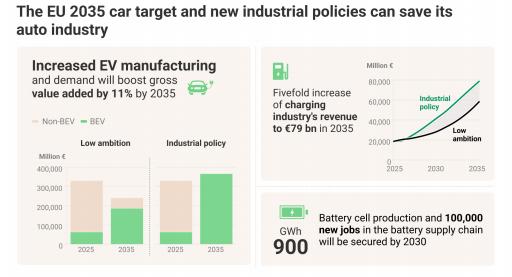
Core Viewpoint - The report by the European Federation for Transport and Environment (T & E) highlights that the European automotive industry is at a critical juncture, where the advancement or delay of the "ban on combustion engines" proposal will significantly impact the industry's future direction [1][2]. Industry Impact - The report indicates a projected decline of 5.9% in electric vehicle sales in the EU for 2024, with the threat of tariffs from the Trump administration further complicating the situation [1][2]. - If the EU abandons the 2035 target to ban the sale of combustion engine vehicles, it could result in the loss of 1 million jobs in the automotive sector and a potential investment loss of up to two-thirds in the new energy sector [2][4]. Employment and Economic Contribution - T & E's report supports the continuation of the "ban on combustion engines," suggesting that adherence to the 2035 clean energy goals could lead to the automotive industry contributing an additional 11% to the European economy by 2035 [4]. - If the ban is enforced until 2030, job losses in traditional automotive manufacturing could be offset by the creation of over 100,000 jobs in battery and electric vehicle sectors, with a total of 120,000 jobs expected in the new energy sector by 2035 [5][6]. Battery Manufacturing and Investment - The report emphasizes that ensuring over 900 GWh of battery manufacturing capacity could create over 100,000 new jobs, with the economic output of the battery industry projected to increase fivefold to €79 billion by 2035 [6][14]. - T & E's analysis of 13 electric vehicle projects in Europe indicates that successful implementation could yield an annual production capacity of at least 2.1 million electric vehicles by 2027, meeting the growing market demand [9][12]. Risk Assessment of Projects - The report categorizes projects into low, medium, and high-risk levels based on various criteria, with low-risk projects expected to generate 390 GWh of capacity and create approximately 43,000 jobs [15][16]. - Medium-risk projects could provide 630 GWh of capacity and support 47,500 jobs, while high-risk projects, still in conceptual stages, could yield 410 GWh of capacity and 37,500 jobs, contingent on future policy decisions [15][16]. Regional Insights - Countries like Poland and Hungary show clearer development prospects in battery manufacturing, with Hungary potentially increasing its capacity by 90 GWh, positioning itself as a new hub for the electric vehicle industry in Europe [19][20].




一汽丰田的中场赛事:变阵、蓄力、冲高
Bei Jing Qing Nian Bao· 2025-07-14 03:12
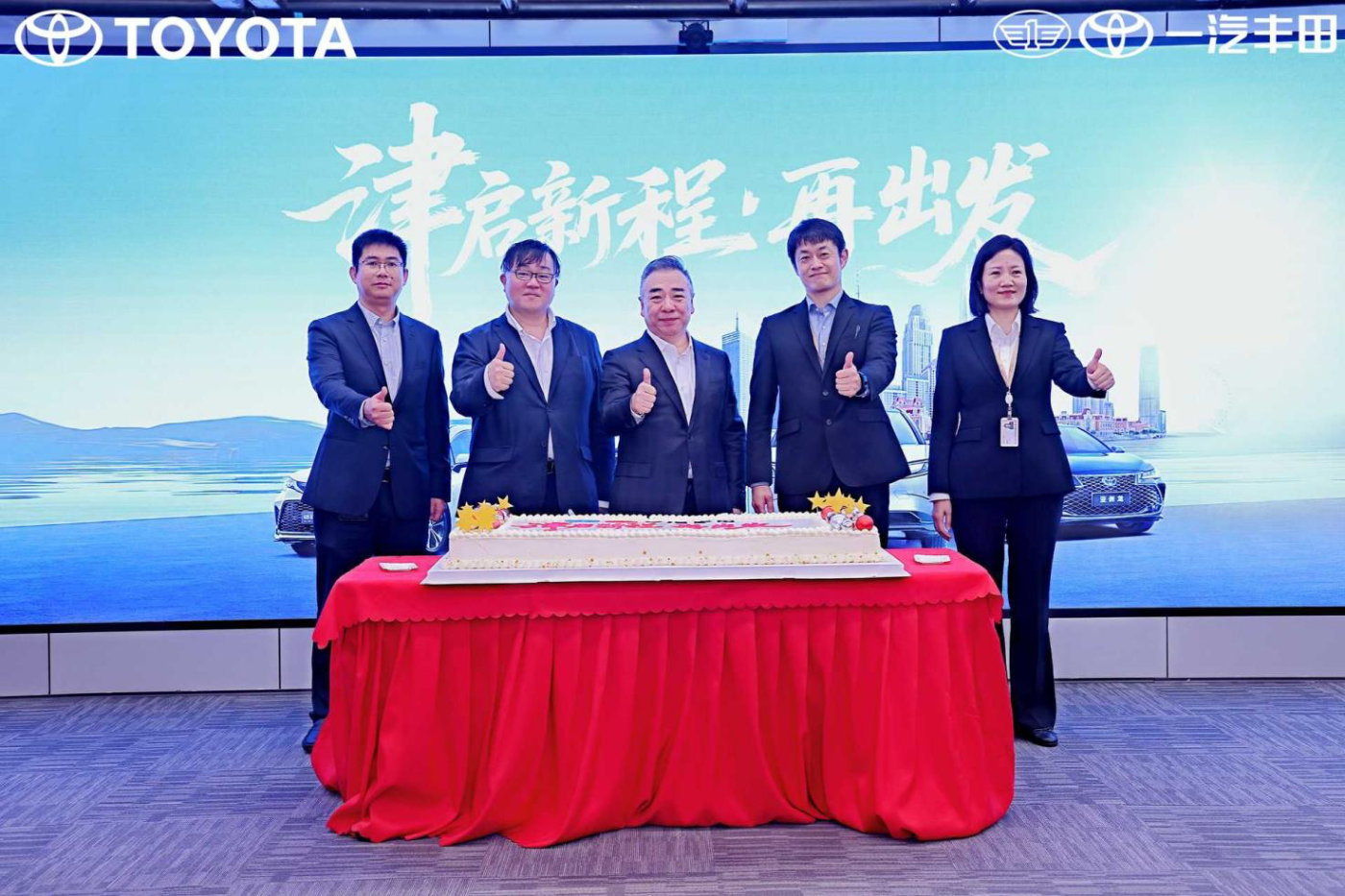
Core Insights - In the first half of the year, FAW Toyota achieved a cumulative sales of nearly 380,000 vehicles, marking a year-on-year increase of 16%, establishing a new record for half-year growth [1][3][12] - The sales of electric vehicles reached 185,000 units, accounting for 49% of total sales, highlighting the company's successful transition towards electrification [3][12] - The launch of the new electric SUV bZ5, priced between 129,800 to 159,800 yuan, has generated significant consumer interest, indicating its potential to become a bestseller [4][12] Sales Performance - FAW Toyota's sales performance outpaced the overall market, making it one of the few mainstream joint venture automakers to achieve positive growth [3][12] - The high-end models based on the TNGA-K platform sold 227,000 units, representing 60% of total sales, showcasing the effectiveness of the company's high-end transformation strategy [6][12] Strategic Developments - The relocation of FAW Toyota's sales office from Beijing to Tianjin aims to shorten decision-making processes, enhancing responsiveness to market changes [6][12] - The establishment of an integrated research, production, and sales mechanism is expected to improve operational efficiency and market adaptability [6][12] New User Insights - FAW Toyota identifies "new users" as a diverse group that values rational decision-making and product quality over marketing gimmicks [9][10] - The RCE (Regional Chief Engineer) system empowers local teams to develop products tailored to Chinese consumer preferences, enhancing the company's market responsiveness [10][11] Marketing Innovations - The "Time Renewal Plan" introduced by FAW Toyota offers innovative trade-in incentives, addressing consumer concerns about vehicle depreciation and enhancing customer loyalty [11][14] - The company emphasizes a long-term commitment to customer satisfaction and sustainable growth, positioning itself as a responsible player in the competitive automotive market [11][12] Future Outlook - FAW Toyota is poised for a strong second half of the year, with plans to leverage the RCE system for both new and updated models, anticipating a new wave of successful product launches [14]
日系三大车企6月在华销量出炉:日产止跌,本田继续承压
Ju Chao Zi Xun· 2025-07-14 03:03
Group 1: Toyota - Toyota's sales in June reached 157,700 units, a year-on-year increase of 3.7% [2] - Cumulative sales for the first half of the year totaled 742,000 units, reflecting a year-on-year growth of 8.63% [2] - Toyota's strong performance is attributed to its continuous investment in electrification and intelligent technology, as well as a diverse product lineup [2] Group 2: Nissan - Nissan sold 53,800 vehicles in June, marking a year-on-year increase of 1.9%, ending a 15-month streak of declining sales [2] - Cumulative sales for the first half of the year were 279,600 units, a year-on-year decline of 21.02% [2] - The recovery in Nissan's sales is likely due to adjustments in product strategy and marketing, including new models that better meet Chinese consumer demands [2] Group 3: Honda - Honda's sales in June fell by 15.2% to 58,500 units, continuing a 17-month decline [3] - Cumulative sales for the first half of the year were 315,200 units, a year-on-year decrease of 24.2% [3] - Challenges for Honda include intensified market competition, slow product updates, and a lag in the transition to electric vehicles, impacting its competitiveness [3] Group 4: Overall Market Trends - The performance of the three major Japanese automakers in China shows a clear divergence, with Toyota maintaining growth, Nissan showing signs of recovery, and Honda facing significant pressure [2][3] - Future success in the Chinese market for these automakers will depend on their speed and effectiveness in transitioning to electrification and intelligent technologies [3]


中国汽车品牌在印尼落地生根
Zhong Guo Qi Che Bao Wang· 2025-07-14 01:22
Core Insights - Indonesia, as Southeast Asia's largest automotive market, is attracting numerous Chinese automotive manufacturers, with GAC Group and XPeng Motors recently launching production and sales initiatives in the country [4][5][8] - The Indonesian automotive market is experiencing a decline in overall sales, projected to drop by 13.9% in 2024, yet electric vehicle (EV) sales are expected to surge by 150%, indicating a shift towards electrification [5][8][9] Industry Overview - Indonesia has a population exceeding 280 million, making it the fourth most populous country globally, with a young demographic and significant consumer potential [5] - The automotive industry is a key sector in Indonesia, which is the second-largest automotive producer and the largest consumer in Southeast Asia [5][8] - The Indonesian government is prioritizing the development of electric vehicles as part of its industrial strategy, aiming for carbon neutrality by 2060 [8][9] Company Activities - GAC Group has established a smart factory in Jakarta, with an initial production capacity of 20,000 vehicles per year, set to expand to 50,000 [6][11] - XPeng Motors has launched its flagship model, the XPeng X9, in Indonesia, with local production set to commence shortly [4][7] - SAIC-GM-Wuling and other Chinese automakers have already localized production in Indonesia, with Wuling's AirEV being the first locally produced electric vehicle [6][8] Market Dynamics - The market share of Japanese automakers in Indonesia remains high, but Chinese and Korean brands are increasingly challenging this dominance, particularly in the EV segment [8][9] - The Indonesian government is implementing tax incentives and subsidies to stimulate investment and consumption in the EV sector, creating opportunities for Chinese manufacturers [8][9] Supply Chain and Resource Utilization - Indonesia's rich mineral resources, particularly nickel and cobalt, position it as a critical player in the global EV supply chain [9][12] - Companies like BYD are planning to establish local supply chains in Indonesia, aiming to reduce production costs by 30% through local sourcing of battery materials [9][12] Strategic Partnerships and Local Ecosystem - Chinese automakers are increasingly focusing on building localized ecosystems rather than merely selling vehicles, as seen in GAC's comprehensive "Indonesia Action" plan [11][12] - Collaborations with local firms for assembly and production are becoming common, with XPeng partnering with Handal Indonesia for local assembly of its models [7][12] Challenges and Recommendations - Chinese automakers face challenges such as strong brand loyalty towards Japanese vehicles, regulatory hurdles, and the need for improved local infrastructure [12][13] - Recommendations for Chinese companies include developing models suited to local preferences, enhancing supply chain localization, and investing in charging infrastructure [13]

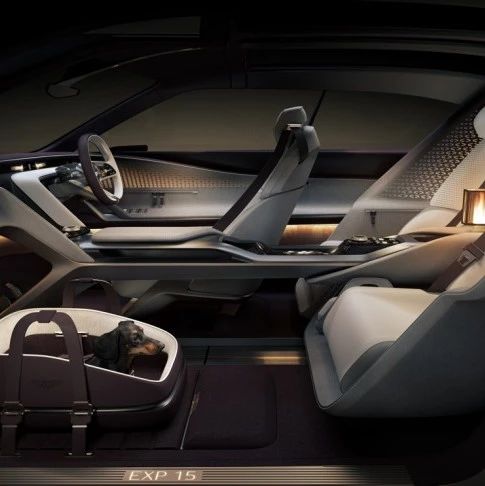
顶奢豪车装X指南:副驾没了,狗窝留着
汽车商业评论· 2025-07-13 15:26
Core Viewpoint - Bentley is redefining luxury with its new electric concept car, the EXP 15, which emphasizes unique design and functionality over traditional luxury features [2][3][4]. Group 1: Design Philosophy - The EXP 15 features an unconventional layout with a single door on the driver's side and two doors on the passenger side, promoting the idea that "less is more" in luxury [5][11]. - The interior design includes a dedicated space for pets or luggage, and the passenger seat can rotate and recline, enhancing comfort for long journeys [6][31]. - The car's design is inspired by the 1930 Bentley Speed Six, aiming to blend classic aesthetics with modern electric vehicle technology [20][32]. Group 2: Strategic Timing and Market Position - Bentley's release of the EXP 15 aligns with its "Beyond100" strategy, which aims for full electrification by 2030, with the first production model expected in 2026 [11][13]. - The company has invested £2.5 billion in electric transformation, indicating readiness in production capacity and technology [13]. - Bentley's cautious approach contrasts with competitors like Tesla and Porsche, focusing on maintaining brand identity while transitioning to electric vehicles [10][14]. Group 3: Future Vision and Market Impact - The EXP 15 is seen as a design declaration for Bentley's future electric models, aiming to redefine long-distance luxury travel with zero-emission power systems [38]. - The car is expected to compete directly with high-end electric models such as the Porsche Taycan and BMW i7, marking a significant shift in the luxury automotive market [37]. - Bentley's design integrates sustainable materials and advanced technology, setting a new standard for luxury electric vehicles [34][35].
从濒临崩盘到集体回暖 合资车企惊天“逆袭”背后
经济观察报· 2025-07-12 07:55
Core Viewpoint - The article discusses the recent recovery in sales of joint venture car manufacturers in China, highlighting the factors contributing to this turnaround and the ongoing challenges in the electric vehicle (EV) transition [1][2]. Sales Performance - In the first half of 2025, most joint venture car manufacturers, except for Honda and Dongfeng Nissan, experienced sales growth, with FAW Toyota leading at a 16% increase [2][3]. - FAW-Volkswagen sold 436,100 vehicles, a 3.5% increase, while SAIC Volkswagen's sales reached 523,000, up 2.3% [3][4]. - The overall retail sales of mainstream joint venture brands in June increased by 5% year-on-year, with classic fuel vehicles like the Lavida and Sagitar performing well [4]. Fuel Vehicle Recovery - Joint venture manufacturers have relied on fuel vehicles to recover from previous declines, with notable increases in market share for brands like FAW-Volkswagen and GAC Toyota [3][4]. - The performance of fuel vehicles has been bolstered by the introduction of intelligent features, as manufacturers recognize the need to enhance competitiveness in this segment [7][8]. Electric Vehicle Challenges - Despite the recovery in fuel vehicle sales, joint venture brands continue to struggle in the EV market, with a penetration rate of only 5.3% compared to 75.4% for domestic brands [4]. - The lack of standout models in the EV segment has hindered growth, with only a few models like Volkswagen's ID series and Toyota's bZ series showing relative success [4]. Strategic Adjustments - Analysts suggest that joint venture manufacturers have adjusted their strategies to focus on fuel vehicle intelligence and have partnered with local tech companies to enhance their offerings [7][9]. - The shift towards localization in management and product development is seen as a crucial factor for improving market performance [9][10]. Future Outlook - The market share of foreign and joint venture brands is projected to decline, with predictions suggesting a drop from 40% to around 10% in the next 3-5 years [13][14]. - The electric vehicle transition remains a critical issue, with many manufacturers reconsidering their aggressive EV plans due to profitability concerns and changing market dynamics [12][14]. - The competition is expected to intensify between domestic EV brands and traditional fuel vehicle manufacturers, with both sides facing unique challenges [14][15].

从濒临崩盘到集体回暖 合资车企惊天“逆袭”背后
Jing Ji Guan Cha Wang· 2025-07-12 01:23
Core Viewpoint - The joint venture automotive companies in China have shown a significant recovery in sales during the first half of 2025, with most brands experiencing growth after a challenging 2024, although some, like Honda and Nissan, continue to struggle [2][3]. Group 1: Sales Performance - In the first half of 2025, major joint venture brands, except for Honda and Dongfeng Nissan, achieved sales growth, with FAW Toyota leading at a 16% increase [2]. - FAW-Volkswagen sold 436,100 units, a 3.5% increase, while SAIC Volkswagen's sales reached 523,000 units, up 2.3% [3]. - GAC Toyota's sales grew by 11%, and SAIC GM saw an 8.6% increase, marking a turnaround from previous declines [2][3]. Group 2: Fuel Vehicle Recovery - Several joint venture companies relied on fuel vehicles for recovery, with FAW-Volkswagen's fuel vehicle market share increasing by 0.7 percentage points to 7.6% [3]. - The sales of classic fuel models like the Lavida and Sagitar contributed significantly to the overall sales increase [3]. - GAC Toyota's fuel models, such as the Camry and Highlander, saw a 30% increase in sales [3]. Group 3: Electric Vehicle Challenges - Despite the recovery in fuel vehicle sales, joint venture brands continue to struggle in the electric vehicle (EV) sector, with a mere 5.3% penetration rate for mainstream brands compared to 75.4% for domestic brands [3][4]. - The overall market share for joint venture brands in the EV segment remains low, with only a few models like Volkswagen's ID series and Toyota's bZ series performing relatively well [4]. Group 4: Strategic Adjustments - Analysts attribute the sales rebound to strategic adjustments, particularly in enhancing the intelligence of fuel vehicles through partnerships with domestic tech companies [5][6]. - Joint venture brands are increasingly localizing their management and product development to better cater to Chinese consumers [7]. Group 5: Pricing Strategies - Many joint venture brands have shifted from aggressive price competition to a "reduce volume to maintain price" strategy, stabilizing terminal prices and improving dealer confidence [8]. - The introduction of fixed pricing models has also helped reduce consumer hesitation and increased foot traffic [8]. Group 6: Future Outlook - Despite the positive sales trends, joint venture brands face a challenging future, with predictions of market share declining from 40% to 10% over the next few years [9][10]. - The need for a robust electric vehicle strategy is critical, as many brands are reconsidering their electric vehicle timelines and focusing on maintaining profitability in the fuel vehicle market [10][11].

中国车企出海势头强劲
Zhong Guo Zheng Quan Bao· 2025-07-11 20:50
Core Insights - The Chinese automotive industry is accelerating its transformation and upgrading, leading the global growth in new energy vehicle production and sales [1][2] - Chinese automotive companies are expanding internationally, moving beyond simple product trade to reshape the global industry landscape [1][3] Industry Performance - China's automotive market has shown a positive development trend, with new energy vehicles (NEVs) driving industry transformation [2] - The production and sales scale of automobiles in China has exceeded 30 million units for two consecutive years, with NEV production and sales surpassing 10 million units [2] - NEVs now account for 10% of total vehicle ownership, with projected sales of 16 million units for the year, potentially exceeding 50% of new car sales [2] - In the first half of the year, China's automobile exports reached 3.083 million units, a year-on-year increase of 10.4%, with NEV exports at 1.06 million units, up 75.2% [2] Global Expansion Strategy - Chinese automotive brands are rapidly entering international markets, becoming new choices for global consumers [2] - Changan Automobile aims to invest over $10 billion in overseas markets by 2030, targeting annual sales of 1.5 million units abroad [3] Challenges and Adaptation - The globalization of the Chinese automotive industry faces challenges such as complex international trade environments, product homogenization, and cultural adaptation [3][4] - Key areas for improvement include local integration, risk management, and building resilient ecosystems through collaboration across the supply chain [4] - Quality management is critical, with challenges in vehicle data transmission and the need for robust cybersecurity measures [4]


申华控股: 申华控股2024年年度报告(修订版)
Zheng Quan Zhi Xing· 2025-07-11 16:13
Core Viewpoint - The annual report of Liaoning Shenhua Holdings Co., Ltd. for 2024 indicates a significant recovery in net profit, despite a decline in revenue, highlighting the company's strategic adjustments and operational improvements in a challenging market environment [1][3]. Company Overview and Financial Indicators - The company reported a net profit attributable to shareholders of 38,598,756.24 yuan for 2024, a 119.42% increase from a loss of 198,775,447.12 yuan in 2023 [2][3]. - Total revenue for 2024 was 4,193,384,127.55 yuan, down 18.43% from 5,140,865,960.51 yuan in 2023 [2][3]. - The company's net assets at the end of the reporting period were 820,890,018.67 yuan, reflecting a 4.75% increase from 783,694,608.57 yuan in 2023 [2][3]. Business Performance - The automotive sales segment generated revenue of 41.44 billion yuan, maintaining stable sales despite market pressures [3][4]. - The company implemented measures such as optimizing vehicle structure and sales rhythm, which contributed to the reduction of losses and improved profitability [3][4]. - The company successfully cleared nine subsidiaries, recovering approximately 30 million yuan through asset management [3][4]. Industry Context - The automotive industry in China faced challenges, with total vehicle production and sales declining by 7.5% in 2024, while new energy vehicle sales reached 12.9 million units, accounting for 40.93% of total sales [5][6]. - The market for office buildings in Shanghai remains under pressure, with a shift towards high-quality projects and flexible office spaces expected to continue [6][7]. Competitive Advantages - The company is one of the largest BMW dealers in China, operating 14 BMW 4S stores, which positions it favorably in the automotive market [7][8]. - The company has enhanced the operational quality of its financial building, maintaining stable occupancy rates despite a sluggish market [7][8]. Financial Analysis - The company’s operating expenses decreased due to effective cost management, with sales expenses down by 17.12% and management expenses reduced by 7.41% [8][9]. - The net cash flow from operating activities increased by 11.85% to 73,781,875.19 yuan, attributed to improved management of receivables [8][9].

奔驰二季度销量下滑9%,中国市场暴跌19%
Xi Niu Cai Jing· 2025-07-11 03:33
Core Insights - Mercedes-Benz's global automotive and van sales declined by 9% year-on-year, totaling 547,100 units in Q2 2025, with a significant drop in battery electric vehicle (BEV) sales by 18% to 41,900 units [1][3] - The North American market saw a 14% decrease in sales, while the Chinese market experienced a severe decline of 19%, contributing significantly to the overall performance downturn [1][3] Sales Performance - Total sales for Mercedes-Benz Group in Q2 2025 were 547,100 units, reflecting a 3% increase from Q1 2025 but a 9% decrease compared to Q2 2024 [3] - BEV sales specifically dropped by 8% from Q1 2025 and 18% from Q2 2024, totaling 41,900 units [3] - Sales by segments showed a mixed performance, with the Top-End segment remaining flat at 64,800 units, while the Core segment increased by 4% to 273,800 units [3] Regional Sales Breakdown - In Europe, sales increased by 7% to 159,700 units, with Germany showing a notable 16% rise [3] - Asia's sales decreased by 5% to 189,200 units, with China experiencing a significant 19% drop to 140,400 units [3] - North America saw a 5% increase in sales to 80,600 units, with the U.S. market up by 11% [3] Quality and Trust Issues - Mercedes-Benz faced quality and trust crises, including recalls affecting 16,100 vehicles due to safety hazards related to the fuse box and battery management system [3][4] - The company also dealt with widespread issues in its vehicle navigation systems, impacting several popular models [4] Strategic Adjustments - To address market changes, Mercedes-Benz plans to reduce production costs by 10% by 2027 and is focusing on enhancing its electric vehicle lineup [5] - The company aims to launch new models, including pure electric and plug-in hybrid vehicles, starting in 2025, and plans to introduce several models tailored for the Chinese market [5] - Despite challenges, Mercedes-Benz remains committed to the Chinese market, with plans for additional investments exceeding 14 billion RMB to enhance local product offerings [5]